

 My Starred Hymns
 My FlexScores
 My Hymnals
 My Purchased Files
Planning worship?
Check out our sister site, ZeteoSearch.org,
for 20+ additional resources related to your search.
- |
User Links
Person Results
Hugh Stowell
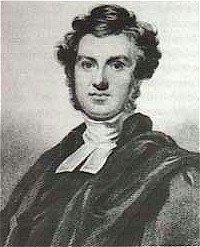
1799 - 1865 Topics: Hymns for the Young The Son - His Example Author of "Jesus is our Shepherd" in The Presbyterian Book of Praise Stowell, Hugh, an able and popular minister of the Church of England, was born at Douglas, Isle of Man, December 3, 1799. He graduated at Oxford in 1822, and took holy orders the following year. He held various offices in his Church; became rector at Salford in 1831; was appointed honorary Canon of Chester Cathedral in 1845, and later Rural Dean of Eccles. He published several volumes. He also edited a book of hymns: A Selection of Psalms and Hymns Suited to the Services of the Church of England, 1831. To the several editions of this book most of his hymns were contributed. He died at Safford October 8, 1865.
From every stormy wind that blows 495
Lord of all power and might 206
Hymn Writers of the Church, 1915 by Charles Nutter
==================================
Stowell, Hugh, M.A., son of Hugh Stowell, Rector of Ballaugh, near Ramsey, was born at Douglas, Isle of Man, Dec. 3, 1799, and educated at St. Edmund Hull, Oxford, B.A. 1822; M.A. 1826. He was ordained in 1823, and held the curacy of Shepscombe, Gloucestershire; and then that of Holy Trinity, Huddersfield. Subsequently he was Curate in charge of St. Stephen's, Salford, and became rector of Christ Church, Salford, in 1831. In 1845 he was appointed Hon. Canon in Chester Cathedral; in 1851 Chaplain to the Bishop of Manchester; and Rural Dean of Eccles. He died at Salford, Oct. 8, 1865. His Memoir, by the Rev. J. B. Marsden, was published in 1868. Canon Stoweli was a popular and effective preacher. His publications included Tractarianism Tested, 1845; A Model for Men of Business, 1854 ; Pleasures of Religion and Other Poems, 1832; The Peaceful Valley, 1826 ; and a large number of single sermons, pamphlets, &c. His Selection of Psalms & Hymns was published as:—
A Selection of Psalms & Hymns Suited to the Services of the Church of England. By the Rev. H. Stowell, M.A., Manchester. Printed by Henry Smith, St. Ann's Square, 1831.
This Selection contained 233 hymns, in addition to versions of the Psalms. Of the hymns the following were by the compiler:—
1. Almighty Shepherd, Who didst give. (1828.) The Good Shepherd.
2. From every stormy wind that blows.
3. Gracious God, look down in kindness. Sunday School Anniversary.
4. Great God, we dare not bow the knee. Holy Communion.
5. Meek Lamb of God, on Thee. Lent.
6. To Thee, 0 God, we raise. Sunday School Anniversary.
7. Tune every heart, wake every tongue. Sunday School Anniversary.
8. When Jesus left the glorious sky. For an Infants’ School.
9. Yes, in the morning of our years. Sunday School Anniversary.
The 12th edition of this Selection published by Canon Stowell in 1864, was increased to 273 hymns, the additional hymns being in nearly every instance his own compositions. In addition to those already given we have:—
10. Again our yearly strain we raise. 1864.
11. Another year has glided past. (Before 1846.)
12. Another year with mercies strown. (Before 1846.)
13. Before Thy throne, 0 Lord, we bend. (Before 1846.)
14. By pressing dangers compassed round. 1843 (?).
15. Come, raise we all the blessed strain. 1862.
16. Hail, hallowed day of heavenly rest. 1844 (?).
17. Hark, how sweet those infant voices. 1841 (?).
18. How fruitless is the ploughman's toil. 1854.
19. How gently in night's silent hours. 1850.
20. Jesus is our Shepherd, Wiping, &c. 1849.
21. Jesus, Lord, Who hast ascended. 1853.
22. Jesus, Lord, we wait on Thee. 1863.
23. Jesus, our Saviour and our Lord. (Before 1846.)
24. Jesus, Prophet of Thy Church. 1861.
25. Lord, if our land be great and free. 1851.
26. Lord, in this dark and stormy day. 1848.
27. Lord, in Thy mercy hear our cry. 1855.
28. Meek Lamb of God, Who dost impart. 1859.
29. 0 God, the liquid sign of grace. 1856.
30. Sailing o'er life's changeful ocean. (Before 1846.)
31. Saviour, guide this little band. (Before 1846.)
32. The day of rest is passed away. (Before 1846.)
33. The morn of our lifetime is fast gliding by. (Before 1846.)
34. Though our lot be poor and lowly. 1847.
35. Thy cross, 0 Lord, the holy sign. 1840.
36. Wake, wake our yearly strain anew. 1852.
37. Wake, wake the joyful song. 1844.
38. We, a little simple throng. (Before 1846.)
39. We, little pilgrims of a day. 1845.
40. We love the holy house of prayer. 1857.
41. We will not weep as others do. 1842.
42. What is your life? It glances by. 1860.
43. What though our earthly lot be low. 1858.
These hymns were all written for the Anniversary Services of Christ Church Sunday Schools, Salford, and are included with others in a special Appendix in the 1877 ed. of the Selection as above.
Other hymns by Canon Stowell are:—
44. Children of old, Hosannah sang. Sunday Schools. 1830.
45. Lord of all power and might, Father of love, &c. Missions. Written for the Jubilee of the B. & F. Bible Society, March 7, 1853.
46. Shepherd of the ransomed sheep. The Good Shepherd.
47. Pilgrims in the narrow way. Sunday School Anniversary. This was his last hymn, and was written for the Christ Church Sunday School Anniversary, 1865.
Of Canon Stowell's hymns the most popular are Nos. 2, 3, 20 and 44. As a writer for children he was very successful. All the foregoing hymns are in the 15th ed. of his Selection edited by his son, Manchester, 1877; and in Hymns. By the late Rev. Canon Stowell, M.A. Manchester, 1868.
-- John Julian, Dictionary of Hymnology (1907)
Hugh Stowell
A. H. Mann
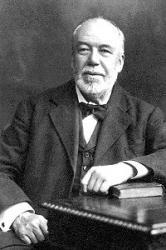
1850 - 1929 Person Name: Arthur Henry Mann Topics: Jesus Christ Example Harmonizer of "IRBY" in Voices United Arthur Henry ‘Daddy’ Mann MusB MusD United Kingdom 1850-1929. Born at Norwich, Norfolk, England, he graduated from New College, Oxford. He married Sarah Ransford, and they had five children: Sarah, Francis, Arthur, John, and Mary. Arthur died in infancy. Mann was a chorister and assistant organist at Norwich Cathedral, then, after short stints playing the organ at St Peter’s, Wolverhampton (1870-71); St. Michael’s Tettenhall Parish Church (1871-75); and Beverley Minster (1875-76); he became organist at King’s College Chapel, Cambridge (1876-1929), Cambridge University organist (1897-1929), and music master and organist at the Leys School, Cambridge (1894-1922). In addition to composing an oratorio and some hymn tunes, he was music editor of the Church of England Hymnal (1894). In 1918 he directed the music and first service of “Nine lessons & carols” at King’s College Chapel. He was an arranger, author, composer, and editor. His wife, Sarah, died in 1918. He died at Cambridge, England.
John Perry
A. H. Mann
Fred Kaan
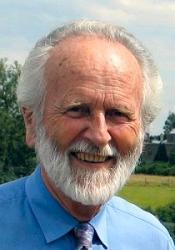
1929 - 2009 Topics: Christ's Example Author of "For the Healing of the Nations" in Moravian Book of Worship Fred Kaan Hymn writer. His hymns include both original work and translations. He sought to address issues of peace and justice. He was born in Haarlem in the Netherlands in July 1929. He was baptised in St Bavo Cathedral but his family did not attend church regularly. He lived through the Nazi occupation, saw three of his grandparents die of starvation, and witnessed his parents deep involvement in the resistance movement. They took in a number of refugees. He became a pacifist and began attending church in his teens.
Having become interested in British Congregationalism (later to become the United Reformed Church) through a friendship, he was attended Western College in Bristol. He was ordained in 1955 at the Windsor Road Congregational Church in Barry, Glamorgan.
In 1963 he was called to be minister of the Pilgrim Church in Plymouth. It was in this congregation that he began to write hymns. The first edition of Pilgrim Praise was published in 1968, going into second and third editions in 1972 and 1975. He continued writing many more hymns throughout his life.
Dianne Shapiro, from obituary written by Keith Forecast in Independent (http://www.independent.co.uk/news/obituaries/fred-kaan-minister-and-celebrated-hymn-writer-1809481.html)
Fred Kaan
A. L. Peace
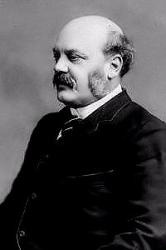
1844 - 1912 Person Name: Albert L. Peace Topics: Christ Example of; Example of Christ Composer of "GREEN HILL" in The Hymnal Albert Lister Peace DMus United Kingdom 1844-1912. Born at Huddersfield, Yorkshire, England, son of a warehouseman and woolstapler, he was extremely gifted as a musician, largely self-taught, playing the organ at Holmfirth Parish Church near Huddersfield at age nine. He married Margaret Martin Steel Gilchrist, and they had three children: Lister, Archibald, and Margaret. In 1865 he was appointed organist of Trinity Congregational Church in Glasgow, Scotland. He obtained his doctorate degree from the University of Oxford in 1875. He became organist at Glasgow Cathedral in 1879. In 1897 he succeeded William Best as organist at St George’s Hall, Liverpool. In later years he was in much demand to play the organ in recitals. He did so at Canterbury Cathedral (1886), Victoria Hall, Hanley, Stoke-on-Trent (1888), and Newcastle Cathedral (1891). He composed orchestrations, sonatas, cantatas, and concert and church service anthems. He was an arranger, author, and editor. He died at Blundelsands, Liverpool, England.
John Perry
A. L. Peace
Thomas T. Lynch
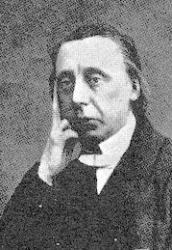
1818 - 1871 Topics: Example of Christ Author of "O where is He that trod the sea" in The Hymnal Lynch, Thomas Toke, was born at Dunmow, Essex, July 5, 1818, and educated at a school at Islington, in which he was afterwards an usher. For a few months he was a student at the Highbury Independent College; but withdrew, partly on account of failing health, and partly because his spirit was too free to submit to the routine of College life. From 1847 to 1849 he was Minister of a small charge at Highgate, and from 1849 to 1852 of a congregation in Mortimer Street, which subsequently migrated to Grafton Street, Fitzroy Square. From 1856 to 1859 he was laid aside by illness. In 1860 he resumed his ministry with his old congregation, in a room in Gower Street, where he remained until the opening of his new place of worship, in 1862, (Mornington Church), in Hampstead Road, London. He ministered there till his death, on the 9th of May, 1871.
The influence of Lynch's ministry was great, and reached far beyond his own congregation (which was never large), since it included many students from the Theological Colleges of London, and thoughtful men from other churches, who were attracted to him by the freshness and spirituality of his preaching. His prose works were numerous, beginning with Thoughts on a Day, 1844, and concluding with The Mornington Lecture, 1870. Several of his works were published after his death. His Memoir, by W. White, was published in 1874.
Lynch's hymns were published in:—
The Rivulet: a Contribution to Sacred Song, London., Longman, 1855, 2nd ed., 1856. This was enlarged by an addition of 67 hymns in 1868.
From the first edition of The Rivulet, 1855, the following hymns have come into common use:—
1. All faded is the glowing light. Second Advent.
2. Be Thy word with power fraught. Before Sermon.
3. Christ in His word draws near. Holy Scripture.
4. Dismiss me not Thy service, Lord. Work for Christ.
5. Gracious Spirit, dwell with me. Holy Spirit's presence desired.
6. How calmly the evening once more is descending. Evening. Sometimes "How calmly once more the night is descending."
7. I give myself to prayer. Prayer in Trouble.
8. Lord, on Thy returning day. Public Worship.
9. Lord, when in silent hours I muse. Resignation.
10. Love me, O Lord, forgivingly. Resignation.
11. Mountains by the darkness hidden. Resignation.
12. Now have we met that we may ask. Public Worship.
13. O, break my heart; but break it as a field. Penitence desired.
14. O Lord, Thou art not fickle. Sympathy.
15. O where is He that trod the sea. Christ Walking on the Sea.
16. Oft when of God we ask. Trust in Trial.
17. Rise, He calleth thee, arise. Blind Bartimaeus.
18. Say not, my soul, from whence. Resignation.
19. Where is thy God, my soul? Resignation and Hope.
There are also from the 1856 and 1868 eds. the following:—
20. A thousand years have come and gone. Christmas.
21. Lift up your heads, rejoice; (1856.) Advent.
22. Praying by the river side. Holy Baptism.
23. The Lord is rich and merciful. Have Faith in God.
24. There is purpose in this waste. Easter.
Lynch's hymns are marked by intense individuality, gracefulness and felicity of diction, picturesqueness, spiritual freshness, and the sadness of a powerful soul struggling with a weak and emaciated body. Although The Rivulet was published for use by his own congregation as a supplement to Watts, more than one half of the hymns were designed for private use only, but were not so distinguished in the work. Its publication caused one of the most bitter hymnological controversies known in the annals of modern Congregationalism. Time, however, and a criticism, broader and more just, have declared emphatically in favour of his hymns as valuable contributions to cultured sacred song. [Rev. W. Garrett Horder]
--John Julian, Dictionary of Hymnology (1907)
==================
Lynch, T. T., p. 705, ii. Other hymns by him in recent books are:—
1. My faith it is an oaken staff. Faith in Christ. In the Rivulet, 1855, p. 78.
2. Together for our country now we pray. National, In the Rivulet, 1868, p. 170. [Rev. James Mearns, M.A.]
--John Julian, Dictionary of Hymnology, New Supplement (1907)
Thomas T. Lynch
Joseph Swain
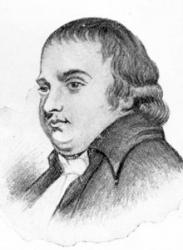
1761 - 1796 Topics: Christians Example of Author of "How sweet, how heavenly is the sight" in Hymnal and Liturgies of the Moravian Church Swain, Joseph, was born at Birmingham in 1761, and after being apprenticed to an engraver, removed to London. After a time he became a decided Christian, and being of an emotional poetic temperament, began to give expression to his new thoughts and feelings in hymns. In 1783 he was baptized by the Rev. Dr. Rippon, and in 1791 became minister of a Baptist congregation in East Street, Walworth. After a short but popular and very useful ministry, he died April 16, 1796 Swain published the following:—
(1) A Collection of Poems on Several Occasions, London, 1781; (2) Redemption, a Poem in five Books, London, 1789; (3) Experimental Essays on Divine Subjects, London, 1791; (4) Walworth Hymns, by J. Swain, Pastor of the Baptist Church Meeting there, London, 1792, 129 hymns; with a Supplement, 1794, 192 hymns; (5) A Pocket Companion and Directory, London, 1794.
In addition to a limited number of Swain's hymns, annotated under their respective first lines, the following, from his Walworth Hymns1792, and the 2nd ed., 1796, are also in common use:—
1. Brethren, while we sojourn here. Mutual Encouragement.
2. Children of the King of grace. Holy Baptism.
3. Christ the Lord will come again. Second Advent.
4. Come, ye souls, by sin afflicted. The Yoke of Christ.
5. How sweet, how heavenly is the sight. Communion of Saints.
6. In expectation sweet. Second Advent.
7. Lift up your heads, ye gates. Ascension.
8. Love is the sweetest bud that blows. A Flower an Emblem of Christ.
9. 0 how the thought that I shall know. Heaven Anticipated. Sometimes it begins with st. ii., "For ever to behold Him shine".
10. On earth the song begins. Heaven Anticipated.
11. On the wings of faith upspringing. Passiontide.
12. Pilgrims we are to Canaan bound. Pilgrimage of Life.
13. Praise ye the Lord, the eternal King. Divinity of Christ.
14. Praise your Redeemer, praise His Name. Praise for Redemption.
15. 'Tis heaven begun below. Heaven Anticipated.
16. What is it for a saint to die? Death and Burial.
17. What must [will] it be to dwell above? Heaven Anticipated.
18. When firm I [we] stand on Zion's hill. Confidence. Sometimes as "I stand on Zion's mount," in American collections.
19. Who can forbear to sing? Praise of Jesus.
From his Redemption, a Poem in Five Books, 1791, the following hymns are also in common use:--
20. 0 Thou in whose presence my soul takes delight. In Affliction.
21. Ye daughters of Zion, declare, have you see? Comfort in Affliction.
Of these hymns the most widely known are Nos. 1, 5, 6, and 20. We may add that several of Swain's hymns appeared in The Theological Miscellany, 1784-1789. [Rev. W. R. Stevenson, M.A.]
-- John Julian, Dictionary of Hymnology (1907)
Joseph Swain
Johann Anastasius Freylinghausen
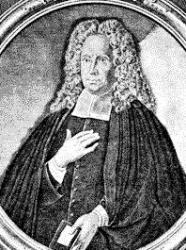
1670 - 1739 Person Name: J. A. Freylinghausen Topics: Christ Example of Arranger of "POSEN" in Trinity Hymnal (Rev. ed.) Freylinghausen, Johann Anastasius, son of Dietrich Freylinghausen, merchant and burgomaster at Gandersheim, Brunswick, was born at Gandersheim, Dec. 2, 1670. He entered the University of Jena at Easter, 1689. Attracted by the preaching of A. H. Francke and J. J. Breithaupt, he removed to Erfurt in 1691, and at Easter, 1692, followed them to Halle. About the end of 1693 he returned to Gandersheim, and employed himself as a private tutor. In 1695 he went to Glaucha as assistant to Francke; and when Francke became pastor of St. Ulrich's, in Halle,1715, Freylinghausen became his colleague, and in the same year married his only daughter. In 1723 he became also sub-director of the Paedagogium and the Orphanage; and after Francke's death in 1727, succeeded him as pastor of St. Ulrich's and director of the Francke Institutions. Under his fostering care these Institutions attained their highest development. From a stroke of paralysis in 1728, and a second in 1730, he recovered in great measure, but a third in 1737 crippled his right side, while the last, in Nov., 1738, left him almost helpless. He died on Feb. 12, 1739, and was buried beside Francke (Koch, vi. 322-334; Allgemine Deutsche Biographie, vii. 370-71; Bode, pp. 69-70; Grote's Introduction, &c.)
Almost all Freylinghausen's hymns appeared in his own hymnbook, which was the standard collection of the Halle school, uniting the best productions of Pietism with a good representation of the older "classical" hymns. This work, which greatly influenced later collections, and was the source from which many editors drew not only the hymns of Pietism, but also the current forms of the earlier hymns (as well as the new "Halle" melodies, a number of which are ascribed to Freylinghausen himself) appeared in two parts, viz.:—
i. Geistreiches Gesang-Buch, den Kern alter und neuer Lieder...in sich haltend &c, Halle. Gedrucktund verlegt im Waysen-Hause, 1704 [Hamburg], with 683 hymns and 173 melodies. To the second edition, 1705 [Rostock University], an Appendix was added with Hymns 684-758, and 21 melodies. Editions 3-18 are practically the same so far as the hymns are concerned, save that in ed. 11, 1719 [Berlin], and later issues, four hymns, written by J. J. Rambach at Freylinghausen's request, replaced four of those in eds. 1-10.
ii. Neues Geistreiches Gesangbuch,&c, Halle . . . 1714 [Berlin], with 815 hymns and 154 melodies. In the 2nd edition, 1719 [Rostock University], Hymns 816-818, with one melody, were added.
In 1741 these two parts were combined by G. A. Francke, seven hymns being added, all but one taken from the first edition, 1718, of the so-called Auszug, which was compiled for congregational use mainly from the original two parts: and this reached a second, and last, edition in 1771. So far as the melodies are concerned, the edition of 1771 is the most complete, containing some 600 to 1582 hymns. (Further details of these editions in the Blätter für Hymnologie, 1883, pp. 44-46, 106-109; 1885, pp. 13-14.) A little volume of notes on the hymns and hymnwriters of the 1771 edition, compiled by J. H. Grischow and completed by J. G. Kirchner, and occasionally referred to in these pages, appeared as Kurzgefasste Nachricht von ältern und ncuern Liederverfassern at Halle, 1771.
As a hymnwriter Freylinghausen ranks not only as the best of the Pietistic school, but as the first among his contemporaries. His finest productions are distinguished by a sound and robust piety, warmth of feeling depth of Christian experience, scripturalness, clearness and variety of style, which gained for them wide acceptance, and have kept them still in popular use. A complete edition of his 44 hymns, with a biographical introduction by Ludwig Grote, appeared as his Geistliche Lieder, at Halle, 1855. A number of them, including No. v., are said to have been written during severe attacks of toothache. Two (“Auf, auf, weil der Tag erschienen"; "Der Tag ist hin") are noted under their own first lines.
i. Hymns in English common use: --
i. Monarche aller Ding. God's Majesty. 1714, as above, No. 139, in 11 stanzas of 6 lines, repeated in Grote, 1855, p. 88, and as No. 38 in the Berlin Geistliche Lieder, ed. 1863. A fine hymn of Praise, on the majesty and love of God. Translated as:—
Monarch of all, with lowly fear, by J. Wesley, in Hymns & Sacred Poems, 1739 (P. Works, 1868-1872, vol. i. p. 104), in 8 stanzas of 4 lines, from st. i., ii., v.-vii., ix.-xi. Repeated in full in the Moravian Hymnbook, 1754, pt. i., No. 456 (1886, No. 176); and in J. A. Latrobe's Collection, 1841. The following forms of this translation are also in common use:--
(1) To Thee, 0 Lord, with humble fear, being Wesley's st. i., iii.-v., vii., viii. altered as No. 156 in Dr. Martineau's Hymns for Christian Church & Home, 1840, and repeated in Miss Courtauld's Psalms, Hymns & Anthems, 1860, and in America in the Cheshire Association Unitarian Collection, 1844.
(2) Thou, Lord, of all the parent art, Wesley's, st. iii.-v., vii. altered in the College Hymnal, N. Y., 1876.
(3) Thou, Lord, art Light; Thy native ray, Wesley's st. iv., v., vii., in Hymns of the Spirit, 1864.
ii. 0 reines Wesen, lautre Quelle. Penitence. Founded on Psalm li. 12, 1714, as above, No. 321, in 7 stanzas of 8 lines, repeated in Grote, 1855, p. 41, and in Bunsen's Versuch, 1833, No. 777 (ed. 1881, No. 435). The only translation in common use is:—
Pure Essence: Spotless Fount of Light. A good and full translation by Miss Winkworth in the first series of her Lyra Germanica, 1855, p. 43, and in her Chorale Book for England, 1863, No. 113.
iii. Wer ist wohl wie du. Names and offices of Christ. One of his noblest and most beautiful hymns, a mirror of his inner life, and one of the finest of the German "Jesus Hymns." 1704, as above, No. 66, in 14 st. of 6 l., repeated in Grote, 1855, p. 33, and is No. 96 in the Berlin Geistliche Lieder, ed. 1863. The translations in common use are:
1. 0 Jesu, source of calm repose, by J. Wesley, being a free translation of st. i., iii., v., viii., xiii. First published in his Psalms & Hymns, Charlestown, 1737 (Poetical Works, 1868-1872, vol. i. p. 161). Repeated in full as No. 462 in pt. i. of the Moravian Hymnbook, 1754. In the 1826 and later editions (1886, No. 233) it begins, "Jesus, Thou source." The original form was included as No. 49 in the Wesley Hymns & Spiritual Songs , 1753, and, as No. 343, in the Wesley Hymnbook, 1780 (1875, No. 353). Varying centos under the original first line are found in Mercer's Church Psalter & Hymn Book, 1855-1864; Kennedy , 1863; Irish Church Hymnal, 1869-1873; J. L. Porter's Collection, 1876, &c. It has also furnished the following centos:—
(1) Messiah! Lord! rejoicing still, being Wesley's st. iv.-vi. altered in Dr. Martineau's Collection of Hymns for Christian Worship, 1840.
(2) Lord over all, sent to fulfil, Wesley's st. iv., iii., v., vi. in the American Methodist Episcopal Hymnbook, 1849.
2. Who is like Thee, Who? a translation of st. i., ii., v., vii., x., xiii., as No. 687, in pt. i. of the Moravian Hymnbook, 1754. Translations of st. xi., xiv. were added in 1789, and the first line altered in 1801(1886, No. 234), to "Jesus, who with Thee." The translations of st. i., ii., x., xiv., from the 1801, altered and beginning, "Jesus, who can be," are included in America in the Dutch Reformed Hymns of the Church, 1869; Hymns & Songs of Praise, N. Y., 1874; and Richards's Collection, N.Y., 1881.
3. Who is there like Thee, a good translation of st. i., ii., viii., xiv., by J. S. Stallybrass, as No. 234 in Curwen's Sabbath Hymnbook, 1859, repeated in the Irish Church Hymnal, 1873, and in W. F. Stevenson's Hymns for Church & Home, 1873.
4. Who is, Jesus blest, a translation of stanzas i., ii., v., vi., xii., xiv., by M. Loy, in the Ohio Lutheran Hymnal, 1880.
5. Who, as Thou, makes blest, a good translation, omitting st. vii., ix., x., contributed by Dr. F. W Gotch to the Baptist Magazine, 1857. Repeated in the 1880 Supplement to the Baptist Psalms & Hymns, 1858.
The translations not in common use are: —
(1) "Whither shall we flee," by Miss Dunn, 1857, p. 55. (2) "Who has worth like Thine," in the U. P. Juvenile Miss. Magazine, 1857, p. 217. (3) "Thou art First and Best," by Miss Winkworth, 1869, p. 267.
ii. Hymns translated into English but not in common use:—
iv. Herr und Gott der Tag und Nächte. Evening. 1705, as above, No. 755, in 6 stanzas, Grote, p. 105. Translated by H. J. Buckoll, 1842, p. 106, beginning with stanza. ii.
v. Mein Herz, gieb dioh rufrieden. Cross and Consolation. First in the Halle Stadt Gesangbuch, 1711, No. 503, in 11 stanzas; repeated 1714, No. 450, and in Grote, p. 71. Translated by Dr. G. Walker, 1860, p. 86.
vi. 0 Lamm, das keine Sünde je beflecket. Passiontide. 1714, No. 85, in 19 stanzas, Grote, p. 14. Translated as, (1) "Lamb, for Thy boundless love I praises offer," of st. xii. as stanza i. of No. 1023 in the Supplement of 1808 to the Moravian Hymn Book, 1801 (1849, No. 121). (2) "O Lamb, whom never spot of sin defiled," in the British Magazine, June, 1838, p. 625.
vii. 0 Lamm, das meine Sündenlast getragen. Easter Eve. 1714, No. 95, in 8 stanzas; Grote, p. 23. Translated as "Christ Jesus is that precious grain," a translation of st. v. by F. W. Foster, as No. 71 in the Moravian Hymnbook, 1789 (1886, No. 921).
viii. Zu dir, Herr Jesu, komme ich. Penitence. Founded on St. Matthew xi. 28-30. 1714, as above, No. 306, in 4 stanzas; Grote, p. 39. Translated by Dr. H. Mills, 1845 (1856, p. 80). [Rev. James Mearns, M.A.]
--John Julian, Dictionary of Hymnology (1907)
Johann Anastasius Freylinghausen
George Frideric Handel
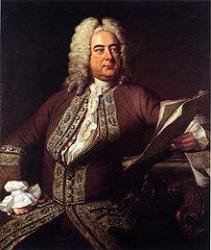
1685 - 1759 Person Name: George Frederick Handel (1685-1759) Topics: Christians Example of Composer of "CHRISTMAS" in Many Voices; or, Carmina Sanctorum, Evangelistic Edition with Tunes George Frideric Handel (b. Halle, Germany, 1685; d. London, England, 1759) became a musician and composer despite objections from his father, who wanted him to become a lawyer. Handel studied music with Zachau, organist at the Halle Cathedral, and became an accomplished violinist and keyboard performer. He traveled and studied in Italy for some time and then settled permanently in England in 1713. Although he wrote a large number of instrumental works, he is known mainly for his Italian operas, oratorios (including Messiah, 1741), various anthems for church and royal festivities, and organ concertos, which he interpolated into his oratorio performances. He composed only three hymn tunes, one of which (GOPSAL) still appears in some modern hymnals. A number of hymnal editors, including Lowell Mason, took themes from some of Handel's oratorios and turned them into hymn tunes; ANTIOCH is one example, long associated with “Joy to the World.”
Bert Polman
George Frideric Handel
Fred Pratt Green
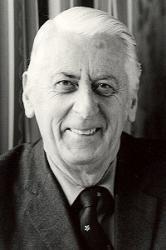
1903 - 2000 Topics: Jesus Christ Example Author of "When Jesus Came to Jordan" in The United Methodist Hymnal The name of the Rev. F. Pratt Green is one of the best-known of the contemporary school of hymnwriters in the British Isles. His name and writings appear in practically every new hymnal and "hymn supplement" wherever English is spoken and sung. And now they are appearing in American hymnals, poetry magazines, and anthologies.
Mr. Green was born in Liverpool, England, in 1903. Ordained in the British Methodist ministry, he has been pastor and district superintendent in Brighton and York, and now served in Norwich. There he continued to write new hymns "that fill the gap between the hymns of the first part of this century and the 'far-out' compositions that have crowded into some churches in the last decade or more."
--Seven New Hymns of Hope , 1971. Used by permission.
Fred Pratt Green
William Walker
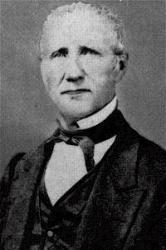
1809 - 1875 Topics: Jesus Christ Example Composer (attributed to) of "COMPLAINER" in The United Methodist Hymnal
William Walker
Pages




