You help make Hymnary.org possible. More than 10 million people from 200+ countries found hymns, liturgical resources and encouragement on Hymnary.org in 2025, including you. Every visit affirms the global impact of this ministry.

If Hymnary has been meaningful to you this year, would you take a moment today to help sustain it? A gift of any size—paired with a note of encouragement if you wish—directly supports the server costs, research work and curation that keep this resource freely available to the world.

Give securely online today, or mail a check to:
Hymnary.org
Calvin University
3201 Burton Street SE
Grand Rapids, MI 49546

Thank you for your partnership, and may the hope of Advent fill your heart.

Person Results

Topics:guidance+in+pilgrimage
In:person

Planning worship? Check out our sister site, ZeteoSearch.org, for 20+ additional resources related to your search.
Showing 61 - 70 of 202Results Per Page: 102050

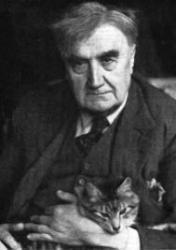
Ralph Vaughan Williams

1872 - 1958 Topics: Church in the World Renewal: Transformation; Assurance; Calling and Response; Christian Experience; Comfort/Consolation; Conversion; Courage; Faith; Guidance; Jesus Christ Friend; Jesus Christ Light; Jesus Christ Love For; Jesus Christ Person; Jesus Christ Presence; Jesus Christ Words of; Joy; Life; Light; Love; Morning; Need for God/Christ; Pilgrimage and Conflict; Promise(s); Renewal; Repentance; Rest; Salvation; Star(s); Sun; Thirst For God; Transformation; Traveller; Trust; Water; Wholeness; Christmas Eve Year A; Christmas 2 Year A; Epiphany Year A; Lent 3 Year A; Lent 4 Year A; Proper 9 Year A; Christmas 2 Year B; Proper 14 Year B; Proper 18 Year B; Epiphany 3 Year C; Proper 6 Year C; Proper 12 Year C; Proper 19 Year C Arranger of "KINGSFOLD" in Voices United Through his composing, conducting, collecting, editing, and teaching, Ralph Vaughan Williams (b. Down Ampney, Gloucestershire, England, October 12, 1872; d. Westminster, London, England, August 26, 1958) became the chief figure in the realm of English music and church music in the first half of the twentieth century. His education included instruction at the Royal College of Music in London and Trinity College, Cambridge, as well as additional studies in Berlin and Paris. During World War I he served in the army medical corps in France. Vaughan Williams taught music at the Royal College of Music (1920-1940), conducted the Bach Choir in London (1920-1927), and directed the Leith Hill Music Festival in Dorking (1905-1953). A major influence in his life was the English folk song. A knowledgeable collector of folk songs, he was also a member of the Folksong Society and a supporter of the English Folk Dance Society. Vaughan Williams wrote various articles and books, including National Music (1935), and composed numerous arrange­ments of folk songs; many of his compositions show the impact of folk rhythms and melodic modes. His original compositions cover nearly all musical genres, from orchestral symphonies and concertos to choral works, from songs to operas, and from chamber music to music for films. Vaughan Williams's church music includes anthems; choral-orchestral works, such as Magnificat (1932), Dona Nobis Pacem (1936), and Hodie (1953); and hymn tune settings for organ. But most important to the history of hymnody, he was music editor of the most influential British hymnal at the beginning of the twentieth century, The English Hymnal (1906), and coeditor (with Martin Shaw) of Songs of Praise (1925, 1931) and the Oxford Book of Carols (1928). Bert Polman

Gregory Murray

1905 - 1992 Person Name: A. Gregory Murray, OSB, 1905-1992 Topics: Body and Blood of Christ; Sacred Heart of Jesus; All Souls November 2nd; Eucharist Sacraments; Pastoral Care of the Sick Sacraments; Funeral Sacraments; Comfort; Communion; Courage; Cross; Eternal Life; Food; Guidance; Homecoming; Hope; Journey, Pilgrimage; Joy; Love of God for Us; Mercy, Forgiveness; Petition, Prayer; Praise; Providence; Reconciliation, Atonement, Forgiveness; Shepherd; Sickness; Trust in Jesus Christ; Worship and Adoration Harmonizer of "ST. COLUMBA" in Lead Me, Guide Me (2nd ed.)

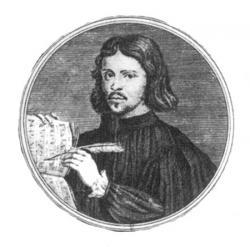
Thomas Tallis

1505 - 1585 Person Name: T. Tallis, c. 1510-85 Topics: God In Creation and Providence; The Christian Life Pilgrimage, Guidance, Perseverance; Times and Seasons Opening and Closing of the Year Composer of "TALLIS` ORDINAL" in The Methodist Hymn-Book with Tunes Thomas Tallis (b. Leicestershire [?], England, c. 1505; d. Greenwich, Kent, England 1585) was one of the few Tudor musicians who served during the reigns of Henry VIII: Edward VI, Mary, and Elizabeth I and managed to remain in the good favor of both Catholic and Protestant monarchs. He was court organist and composer from 1543 until his death, composing music for Roman Catholic masses and Anglican liturgies (depending on the monarch). With William Byrd, Tallis also enjoyed a long-term monopoly on music printing. Prior to his court connections Tallis had served at Waltham Abbey and Canterbury Cathedral. He composed mostly church music, including Latin motets, English anthems, settings of the liturgy, magnificats, and two sets of lamentations. His most extensive contrapuntal work was the choral composition, "Spem in alium," a work in forty parts for eight five-voice choirs. He also provided nine modal psalm tunes for Matthew Parker's Psalter (c. 1561). Bert Polman

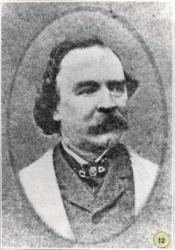
John H. Maunder

1858 - 1920 Person Name: J. H. Maunder, 1858-1920 Topics: God In Creation and Providence; God His Love in Redemption; The Christian Life Pilgrimage, Guidance, Perseverance Composer of "MARTHAM" in The Methodist Hymn-Book with Tunes John Henry Maunder United Kingdom 1858-1920. Born at Chelsea, England,,the son of a carpenter, he attended the Royal Academy of Music. He began his career as a theatre composer, but later specialized in sacred music for the Anglican Church. He became an author and composer, as well as a musician. He was organist at St. Matthew’s, Sydenham (1876-77); St. Paul’s, Forest hill (1878-1879); and at churches in Blackheath and Sutton. He married Ellen Fanny Fulgoux Dakin, and they had a daughter, Winifred. He provided musical accompaniment for concerts in Albert Hall, and, in 1881, conducted the Civil Service Vocal Union. He wrote about 20 church anthems, 10 cantatas, several carols, tunes for around 30 hymns, 19 songs and ballads, 12 services and canticles, two operettas, and six instrumentals. His best known cantata was “Olivet to Calvary”. He was known for his good musical style and great technical facility. His compositions were full of melodic ideas and were written for ease of interpretation. He died at West Brompton, London, England. John Perry

Hugh Wilson

1766 - 1824 Person Name: Hugh Wilson, 1766 - 1824 Topics: The Life in Christ Pilgrimage, Protection, and Guidance Composer of "MARTYRDOM" in The Hymnary of the United Church of Canada Hugh Wilson (b. Fenwick, Ayrshire, Scotland, c. 1766; d. Duntocher, Scotland, 1824) learned the shoemaker trade from his father. He also studied music and mathematics and became proficient enough in various subjects to become a part-­time teacher to the villagers. Around 1800, he moved to Pollokshaws to work in the cotton mills and later moved to Duntocher, where he became a draftsman in the local mill. He also made sundials and composed hymn tunes as a hobby. Wilson was a member of the Secession Church, which had separated from the Church of Scotland. He served as a manager and precentor in the church in Duntocher and helped found its first Sunday school. It is thought that he composed and adapted a number of psalm tunes, but only two have survived because he gave instructions shortly before his death that all his music manuscripts were to be destroyed. Bert Polman

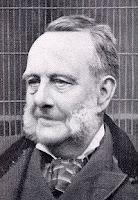
Richard Redhead

1820 - 1901 Topics: Life in Christ Pilgrimage and Guidance Arranger of "ST. FLAVIAN" in The Mennonite Hymnal Richard Redhead (b. Harrow, Middlesex, England, 1820; d. Hellingley, Sussex, England, 1901) was a chorister at Magdalen College, Oxford. At age nineteen he was invited to become organist at Margaret Chapel (later All Saints Church), London. Greatly influencing the musical tradition of the church, he remained in that position for twenty-five years as organist and an excellent trainer of the boys' choirs. Redhead and the church's rector, Frederick Oakeley, were strongly committed to the Oxford Movement, which favored the introduction of Roman elements into Anglican worship. Together they produced the first Anglican plainsong psalter, Laudes Diurnae (1843). Redhead spent the latter part of his career as organist at St. Mary Magdalene Church in Paddington (1864-1894). Bert Polman

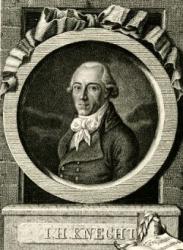
Justin Heinrich Knecht

1752 - 1817 Person Name: Justin Heinrich Knecht, 1752 - 1817 Topics: The Life in Christ Pilgrimage, Protection, and Guidance Composer of "MORLAIX (KNECHT)" in The Hymnary of the United Church of Canada Justin Heinrich Knecht Germany 1752-1817. Born at Biberach Baden-Wurttemberg, Germany, he attended a Lutheran college in Esslingen am Neckar from 1768-1771. Having learned the organ, keyboard, violin and oratory, he became a Lutheran preceptor (professor of literature) and music director in Biberach. It was a free imperial city until 1803 and had a rich cultural life. He became organist of St. Martin’s Church in 1792, used by both Lutherans and Catholics, and was there for many years. He led an energetic, busy musical life, composing for both the theatre and church, organizing subscription concerts, teaching music theory, acoustics, aesthetics, composition, and instruments at the Gymnasium, affiliated to the Musikschule in 1806. He went to Stuttgart in 1806 in hopes of a post there as Kapellmeister, serving two years as Konzertmeister, but he was appointed Direktor Beim Orchester by the King of Wurttemberg in 1807. However, he returned to his former life in 1808 and remained there the rest of his life. He died at Biberach. He wrote 10 vocals, 11 opera and stage works, one symphony, 3 chamber music instrumentals, 7 organ works, 4 piano works, and 6 music theories. He was an author composer, editor, contributor, musician, compiler, and lyricist. John Perry

James P. Davies

b. 1913 Person Name: James P. Davies, 1913- Topics: Guidance in Pilgrimage Arranger of "ALL THE WAY" in The Covenant Hymnal

James Phillip McAuley

1917 - 1976 Person Name: James Philip McAuley, 1917-76 Topics: Faith; Guidance; Heaven; Hope; Jesus Christ Friend and Companion; Jesus Christ Redeemer; Obedience; Pilgrimage; Protection; Trust in God Author of "In faith and hope and love" in Together in Song

Adam Drese

1620 - 1701 Person Name: Adam Drese, 1620 - 1701 Topics: The Life in Christ Pilgrimage, Protection, and Guidance Composer of "SEELENBRÄUTIGAM" in The Hymnary of the United Church of Canada Drese, Adam, was born in Dec. 1620, in Thuringia, probably at Weimar. He was at first musician at the court of Duke Wilhelm, of Sachse-Weimar; and after being sent by the Duke for further training under Marco Sacchi at Warsaw, was appointed his Kapellmeister in 1655. On the Duke's death in 1662, his son, Duke/Bernhard, took Drese with him to Jena, appointed him his secretary, and, in 1672, Town Mayor. After Duke Bernhard's death, in 1678, Drese remained in Jena till 1683, when he was appointed Kapellmeister at Arnstadt to Prince Anton Günther, of Schwarzburg-Sondershausen. He died at Arnstadt, Feb. 15, 1701 (Koch, iv. 270-274; Allg. Deutsche Biog., v. 397; Wetzel, i. 1934, and A. H. , vol. i., pt. iv., pp. 28-30). In 1680, the reading of Spener's writings and of Luther on the Romans led to a change in his religious views, and henceforth under good and evil report he held prayer meetings in his house, which became a meeting-place for the Pietists of the district. "His hymns," says Wetzel, "of which he himself composed not only the melodies, but also, as I have certain information, the text also, were Bung at the meetings of pious persons in his house, before they came into print." One has been translated into English, viz.:— Seelenbräutigam, Jesus, Gottes Lamm, appeared in the Geistreiches Gesang-Buch, Halle, 1697, p. 147, in 15 stanzas of 6 1., repeated (with the well-known melody by himself added, which in the Irish Church Hymnal is called "Thuringia"), in the Darmstadt Gesang-Buch, 1698, p. 134, as No. 197 in Freylinghausen's Gesang-Buch, 1704, and recently as No. 119 in the Berlin G. L.S. , ed. 1863. In Wagner's Gesang-Buch, Leipzig, 1697, vol. iii. p. 420, it begins, "Jesu, Gottes Lamm." The translation in common use is:— Bridegroom, Thou art mine, a translation of stanzas 1, 2, 4, 8, 13-15, by Dr. M. Loy, as No. 283 in the Ohio Lutheran Hymnal, 1880. Another translation is, "God and man indeed," of stanza iii. as stanza i. of No. 463 in the Moravian Hymnbook, 1189 (1886, No. 224). [Rev. James Mearns, M.A.] -- John Julian, Dictionary of Hymnology (1907)

Pages


Export as CSV
It looks like you are using an ad-blocker. Ad revenue helps keep us running. Please consider white-listing Hymnary.org or getting Hymnary Pro to eliminate ads entirely and help support Hymnary.org.