You help make Hymnary.org possible. More than 10 million people from 200+ countries found hymns, liturgical resources and encouragement on Hymnary.org in 2025, including you. Every visit affirms the global impact of this ministry.

If Hymnary has been meaningful to you this year, would you take a moment today to help sustain it? A gift of any size—paired with a note of encouragement if you wish—directly supports the server costs, research work and curation that keep this resource freely available to the world.

Give securely online today, or mail a check to:
Hymnary.org
Calvin University
3201 Burton Street SE
Grand Rapids, MI 49546

Thank you for your partnership, and may the hope of Advent fill your heart.

Person Results

Topics:proper+17
In:person

Planning worship? Check out our sister site, ZeteoSearch.org, for 20+ additional resources related to your search.
Showing 61 - 70 of 205Results Per Page: 102050

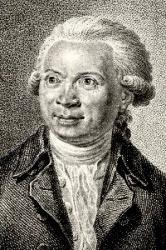
J. A. P. Schulz

1747 - 1800 Person Name: Johann Abraham Peter Schulz Topics: Proper 17 Year B Composer of "WIR PFLÜGEN" in Voices United Johann Abraham Peter Schulz Germany 1747-1800. Born at Luneburg, Germany, son of a baker, he attended St Michaelis school in Luneburg and studied organ, then the Johanneum from 1759-1764. In 1765 he was a student of composer, Johann Kimberger, and then taught in Berlin himself. In 1768 Kimberger recommended Schulz for the position of music teacher and accompanist to the Polish Princess Sapieha Woiwodin von Smolensk. Schulz moved to Berlin and traveled with her for three years performing throughout Europe, where he came in contact with many new musical ideas. He married Catharina Maria Gercken, and they had a daughter, Celle. He served as the conductor of the French Theatre in Berlin from 1776-1780. From 1786-1787 he was the Kapellmeister of Prince Henry in Rheinsberg. He began writing operas in 1785 and became musical director of the Berlin French theatre. Schulz went on to serve as Court Kapellmeister in Copenhagen from 1787-1795 before returning to Berlin. In Copenhagen the music library burned down, and he had a breakdown in health from trying to save it. His health suffered further from the effects of a shipwreck he experienced in 1796. Schulz wrote seven operas, stage music, oratorios, and cantatas, as well as piano pieces, folk songs, and church music. He also wrote articles on music theory for Johann Georg Sulzer’s ‘Allgemeine Theorie der schonen Kunste’ in four volumes. He died at Schwedt an der Oder, Germany. John Perry

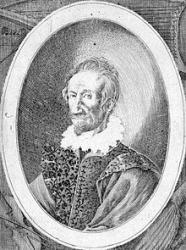
Claude Goudimel

1514 - 1572 Topics: Proper 17 Year A Harmonizer of "DONNE SECOURS" in Voices United The music of Claude Goudimel (b. Besançon, France, c. 1505; d. Lyons, France, 1572) was first published in Paris, and by 1551 he was composing harmonizations for some Genevan psalm tunes-initially for use by both Roman Catholics and Protestants. He became a Calvinist in 1557 while living in the Huguenot community in Metz. When the complete Genevan Psalter with its unison melodies was published in 1562, Goudimel began to compose various polyphonic settings of all the Genevan tunes. He actually composed three complete harmonizations of the Genevan Psalter, usually with the tune in the tenor part: simple hymn-style settings (1564), slightly more complicated harmonizations (1565), and quite elaborate, motet-like settings (1565-1566). The various Goudimel settings became popular throughout Calvinist Europe, both for domestic singing and later for use as organ harmonizations in church. Goudimel was one of the victims of the St. Bartholomew's Day massacre of Huguenots, which oc­curred throughout France. Bert Polman

J. W. Elliott

1833 - 1915 Person Name: James William Elliott Topics: Proper 17 Year C Composer of "DAY OF REST" in Voices United J.W. Elliott was a popular composer of the Victorian period, and is best known for his nursery rhyme music and for his work on hymnals in the 1870s. He was born James William Elliott, in Warwick, England, on February 13, 1833. As a child, he sang as a chorister in the Leamington Parish Church. In those days, choristers were given lessons in all facets of church music, including organ lessons, counterpoint studies, and more in exchange for providing an extraordinary level of service to their parish church (services throughout the week, all holidays, extra services, etc.). The result is that most choristers who completed their studies received an excellent music education, and James was no exception. After starting his career as an organist and choirmaster for a countryside church, his talent became obvious. He moved to London, where he assisted Sir Arthur Sullivan (of Gilbert and Sullivan fame) in editing Church Hymns. In addition, James worked for a music publisher. His compositions include two operettas, numerous anthems, service music, works for instruments including the very popular harmonium, and most particularly for Nursery Rhymes and Nursery Songs, his children’s music score that sets many of the Nursery Rhymes to delightful music. Several of his hymn tunes are still in use today in many hymnals, most notably his hymn tune “Day of Rest.” He was heavily involved in the preparation of the musical edition of Church Hymns in 1874, the Choral Service Book of 1892, and transcriptions of hymn tunes using harmonies different than the traditional ones found in hymnals. He died in St. Marylebone, London, on February 5, 1915. --www.nursery-songs.com/

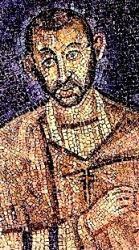
St. Ambrose

340 - 397 Person Name: St Ambrose, c. 340-397 Topics: Year B Proper 17 Author of "O strength and stay" in Complete Anglican Hymns Old and New Ambrose (b. Treves, Germany, 340; d. Milan, Italy, 397), one of the great Latin church fathers, is remembered best for his preaching, his struggle against the Arian heresy, and his introduction of metrical and antiphonal singing into the Western church. Ambrose was trained in legal studies and distinguished himself in a civic career, becoming a consul in Northern Italy. When the bishop of Milan, an Arian, died in 374, the people demanded that Ambrose, who was not ordained or even baptized, become the bishop. He was promptly baptized and ordained, and he remained bishop of Milan until his death. Ambrose successfully resisted the Arian heresy and the attempts of the Roman emperors to dominate the church. His most famous convert and disciple was Augustine. Of the many hymns sometimes attributed to Ambrose, only a handful are thought to be authentic. Bert Polman ===================== Ambrosius (St. Ambrose), second son and third child of Ambrosius, Prefect of the Gauls, was born at Lyons, Aries, or Treves--probably the last--in 340 A.D. On the death of his father in 353 his mother removed to Rome with her three children. Ambrose went through the usual course of education, attaining considerable proficiency in Greek; and then entered the profession which his elder brother Satyrus had chosen, that of the law. In this he so distinguished himself that, after practising in the court of Probus, the Praetorian Prefect of Italy, he was, in 374, appointed Consular of Liguria and Aemilia. This office necessitated his residence in Milan. Not many months after, Auxentius, bishop of Milan, who had joined the Arian party, died; and much was felt to depend upon the person appointed as his successor. The church in which the election was held was so filled with excited people that the Consular found it necessary to take steps fur preserving the peace, and himself exhorted them to peace and order: when a voice suddenly exclaimed, "Ambrose is Bishop," and the cry was taken up on all sides. He was compelled to accept the post, though still only a catechumen; was forthwith baptized, and in a week more consecrated Bishop, Dec. 7, 374. The death of the Emperor Valentinian I., in 375, brought him into collision with Justina, Valentinian's second wife, an adherent of the Arian party: Ambrose was supported by Gratian, the elder son of Valentinian, and by Theodosius, whom Gratian in 379 associated with himself in the empire. Gratian was assassinated in 383 by a partisau of Maximus, and Ambrose was sent to treat with the usurper, a piece of diplomacy in which he was fairly successful. He found himself, however, left to carry on the contest with the Arians and the Empress almost alone. He and the faithful gallantly defended the churches which the heretics attempted to seize. Justina was foiled: and the advance of Maximus on Milan led to her flight, and eventually to her death in 388. It was in this year, or more probably the year before (387), that Ambrose received into the Church by baptism his great scholar Augustine, once a Manichaean heretic. Theodosius was now virtually head of the Roman empire, his colleague Valentinian II., Justina's son, being a youth of only 17. In the early part of 390 the news of a riot at Thessalonica, brought to him at Milan, caused him to give a hasty order for a general massacre at that city, and his command was but too faithfully obeyed. On his presenting himself a few days after at the door of the principal church in Milan, he was met by Ambrose, who refused him entrance till he should have done penance for his crime. It was not till Christmas, eight months after, that the Emperor declared his penitence, and was received into communion again by the Bishop. Valentinian was murdered by Arbogastes, a Frank general, in 392; and the murderer and his puppet emperor Eugenius were defeated by Theodosius in 394. But the fatigues of the campaign told on the Emperor, and he died the following year. Ambrose preached his funeral sermon, as he had done that of Valentinian. The loss of these two friends and supporters was a severe blow to Ambrose; two unquiet years passed, and then, worn with labours and anxieties, he himself rested from his labours on Easter Eve, 397. It was the 4th of April, and on that day the great Bishop of Milan is remembered by the Western Church, but Rome commemorates his consecration only, Dec. 7th. Great he was indeed, as a scholar, an organiser, a statesman; still greater as a theologian, the earnest and brilliant defender of the Catholic faith against the Arians of the West, just as Athanasius (whose name, one cannot but remark, is the same as his in meaning) was its champion against those of the East. We are now mainly concerned with him as musician and poet, "the father of Church song" as he is called by Grimm. He introduced from the East the practice of antiphonal chanting, and began the task, which St. Gregory completed, of systematizing the music of the Church. As a writer of sacred poetry he is remarkable for depth and severity. He does not warm with his subject, like Adam of St. Victor, or St. Bernard. "We feel," says Abp. Trench, "as though there were a certain coldness in his hymns, an aloofness of the author from his subject. "A large number of hymns has been attributed to his pen; Daniel gives no fewer than 92 called Ambrosian. Of these the great majority (including one on himself) cannot possibly be his; there is more or less doubt about the rest. The authorities on the subject are the Benedictine ed. of his works, the Psalterium, or Hymnary, of Cardinal Thomasius, and the Thesaurus Hymnologicus of Daniel. The Benedictine editors give 12 hymns as assignable to him, as follows:—1. Aeterna Christi munera. 2. Aeterne rerum Conditor. 3. Consors Paterni luminii. 4. Deus Creator omnium. 5. Fit porta Christi pervia, 6. Illuminans Altissimus. 7. Jam surgit hora tertia. 8. 0 Lux Beata Trinitas. 9. Orabo mente Dominum. 10. Somno refectis artubus. 11. Splendor Paternae gloriae. 12. Veni Redemptor gentium. Histories of these hymns, together with details of translations into English, are given in this work, and may be found under their respective first lines. The Bollandists and Daniel are inclined to attribute to St. Ambrose a hymn, Grates tibi Jesu novas, on the finding of the relics of SS. Gervasius and Protasius. These, we know, were discovered by him in 386, and it is by no means unlikely that the bishop should have commemorated in verse an event which he announces by letter to his sister Marcellina with so much satisfaction, not to say exultation.A beautiful tradition makes the Te Deum laudamus to have been composed under inspiration, and recited alternately, by SS. Ambrose and Augustine immediately after the baptism of the latter in 387. But the story rests upon a passage which there is every reason to consider spurious, in the Chronicon of Dacius, Bishop of Milan in 550. There is no hint of such an occurrence in the Confessions of St. Augustine, nor in Paulinue's life of St. Ambrose, nor in any authentic writing of St. Ambrose himself. The hymn is essentially a compilation, and there is much reason to believe, with Merati, that it originated in the 5th century, in the monastery of St. Honoratus at Lerins. [Te Deum.] -- John Julian, Dictionary of Hymnology (1907) Also known as: Ambrotio, Ambrosio de Milán Ambrosius Mediolanensis Ambrosius Saint, Bp. of Milan Ambrosius von Mailand Aurelio Ambrogio, Saint, Bishop of Milan Aurelius Ambrosius, Saint, Bishop of Milan Milan, d. 397

John Ellerton

1826 - 1893 Person Name: John Ellerton, 1826-1893 Topics: Year B Proper 17 Translator of "O strength and stay" in Complete Anglican Hymns Old and New John Ellerton (b. London, England, 1826; d. Torquay, Devonshire, England, 1893) Educated at King William's College on the Isle of Man and at Trinity College, Cambridge, England, he was ordained in the Church of England in 1851. He served six parishes, spending the longest time in Crewe Green (1860-1872), a church of steelworkers and farmers. Ellerton wrote and translated about eighty hymns, many of which are still sung today. He helped to compile Church Hymns and wrote its handbook, Notes and Illustrations to Church Hymns (1882). Some of his other hymn texts were published in The London Mission Hymn Book (1884). Bert Polman ========================= Ellerton, John, M.A., son of George Ellerton, was born in London, Dec. 16, 1826, and educated at Trinity College, Cambridge (B.A. 1849; M.A. 1854). Taking Holy Orders he was successively Curate of Easebourne, Sussex, 1850; Brighton, and Lecturer of St. Peter's, Brighton, 1852; Vicar of Crewe Green, and Chaplain to Lord Crewe, 1860; Rector of Hinstock, 1872; of Barnes, 1876; and of White Roding, 1886. Mr. Ellerton's prose writings include The Holiest Manhood, 1882; Our Infirmities, 1883, &c. It is, however, as a hymnologist, editor, hymnwriter, and translator, that he is most widely known. As editor he published: Hymns for Schools and Bible Classes, Brighton, 1859. He was also co-editor with Bishop How and others of the Society for Promoting Christian Knowledge Church Hymns, 1871. His Notes and Illustrations of Church Hymns, their authors and translators, were published in the folio edition of 1881. The notes on the hymns which are special to the collection, and many of which were contributed thereto, are full, accurate, and of special value. Those on the older hymns are too general for accuracy. They are written in a popular form, which necessarily precludes extended research, fulness, and exactness of detail. The result is acceptable to the general public, but disappointing to the hymnological expert. Mr. Ellerton's original hymns number about fifty, and his translations from the Latin ten or more. Nearly every one of these are in common use and include:— 1. Before the day draws near its ending. Afternoon. Written April 22, 1880, for a Festival of Choirs at Nantwich, and first published in the Nantwich Festival Book, 1880. In 1883 it passed into the Westminster Abbey Hymn Book. 2. Behold us, Lord, a little space. General for Weekdays. Written in 1870 for a mid-day service in a City Church, and published in Church Hymns in 1871. It has passed into several collections. 3. Come forth, 0 Christian brothers. Processional for Choral Festival. Written for a Festival of Parochial Choirs held at Chester, May, 1870, and 1st printed in the Service-book of the same. In 1871 it passed into Church Hymns. 4. Father, Name of love and fear. Confirmation. Written in 1871 for a Confirmation in the North of England, and published in Church Hymns, 1871, and other collections. 5. God, Creator and Preserver. In Time of Scarcity. Written for and first published in The Hymnary, 1870; and again in the revised edition, 1872, and other hymnbooks. 6. Hail to the Lord Who comes. Presentation of Christ in the Temple. Written Oct. 6, 1880, for Mrs. Brock's Children's Hymn Book, and published therein, 1881. 7. In the Name which earth and heaven. Foundation of a Church. Written for and first published in Church Hymns, 1871, and repeated in several collections. The hymn sung at the re-opening of the Nave of Chester Cathedral, January 25, 1872, was compiled by Mr. Ellerton from this hymn, and his "Lift the strain of high thanksgiving.” 8 King Messiah, long expected. The Circumcision. Written Jan. 14, 1871, and first published in Church Hymns, 1871. It has passed into other collections. 9. King of Saints, to Whom the number. St. Bartholomew. Written for and first published in Church Hymns., 1871. It is very popular, and has been repeated in many hymnals. 10. Mary at the Master's feet. Catechizing. Written for and first published in Church Hymns, 1871. 11. O Father, all-creating. Holy Matrimony. Written Jan. 29, 1876, at the request of the Duke of Westminster, for the marriage of his daughter to the Marquess of Ormonde. It was published in Thring's Collection, 1880 and 1882. 12 O! how fair the morning broke. Septuagesima. Written March 13, 1880, for Mrs. Brock's Children's Hymn Book, and included therein, 1881. 13. O Lord of life and death, welcome. In Time of Pestilence. Written for and first published in Church Hymns, 1871. 14. O shining city of our God. Concerning the Hereafter. First published in the Rev. R. Brown-Borthwick's Sixteen Hymns with Tunes, &c, 1870; and again in Church Hymns, 1871. 15. O Son of God, our Captain of Salvation. St. Barnabas. Written April 5, 1871, and first published in Church Hymns, 1871; and again in Hymns Ancient & Modern, 1875, Thring's Collection, 1882, and others. 16. O Thou in Whom Thy saints repose. Consecration of a Burial Ground. Written for the consecration of an addition to the Parish Churchyard of Tarporley, Cheshire, 1870, and published in Church Hymns, 1871. 17. O Thou Whose bounty fills the earth. Flower Services. Written for a Flower Service at St. Luke's Church, Chelsea, June 6, 1880, and published in Mrs. Brock's Children's Hymn Book, 1881. 18. Praise to our God, Whose bounteous hand. National Thanksgiving. Written in 1870 for Church Hymns, but first published in the Rev. R. Brown-Borthwick's Select Hymns, &c., 1871, and then in Church Hymns later the same year. 19. The day Thou gavest, Lord, is ended. The darkness, &c. Evening. Written in 1870 for A Liturgy for Missionary Meetings (Frome, Hodges), and revised for Church Hymns, 1871. The revised form has passed into other collections. 20. The Lord be with us when we bend. Close of Afternoon Service. Written [in 1870] at the request of a friend for use at the close of Service on Sunday afternoons when (as in summer) strictly Evening hymns would be unsuitable. It was published in Church Hymns, 1871, Thring's Collection, 1882, and others. 21. This day the Lord's disciples met. Whitsuntide. "Originally written in 1855 for a class of children, as a hymn of 8 verses of 5 lines each, beginning, 'The Fiftieth day was come at last.’ It was abridged, revised, and compressed into C.M. for Mrs. Brock's Children's Hymn Book, 1880," and published therein, 1881. 22. Thou in Whose Name the two or three. Wednesday. Appeared in the Parish Magazine, May, 1871, as a hymn for Wednesday. After revision it was included in Church Hymns, 1871, and repeated in other collections. 23. Thou Who sentest Thine Apostles. SS. Simon and Jude. Written in June, 1874, for the revised edition of Hymns Ancient & Modern, and published in the same in 1875. 24. We sing the glorious conquest. Conversion of St. Paul. Written Feb. 28, 1871, for and published later the same year in Church Hymns. It was repeated in Hymns Ancient & Modern, 1875. 25. When the day of toil is done. Eternal Best. Written in Jan., 1870, and first published in the Rev. R. Brown-Borthwick's Sixteen Hymns with Tunes, &c. 1870, Church Hymns, 1871, and subsequently in several Scottish hymn-books. The tune "Preston," in Church Hymns was written for this hymn. To these hymns must be added those which are annotated under their respective first lines, and the translations from the Latin. The grandest of his original compositions is, "Throned upon the awful tree," and the most beautiful and tender, "Saviour, again to Thy dear Name we raise"; and of his translations, "Sing Alleluia forth in duteous praise," and "Welcome, happy morning, age to age shall say," are the most successful and popular. The subjects of Mr. Ellerton's hymns, and the circumstances under which they were written, had much to do with the concentration of thought and terseness of expression by which they are characterized. The words which he uses are usually short and simple; the thought is clear and well stated; the rhythm is good and stately. Ordinary facts in sacred history and in daily life are lifted above the commonplace rhymes with which they are usually associated, thereby rendering the hymns bearable to the cultured, and instructive to the devout. His antitheses are frequent and terse, almost too much so for devotional verse, and are in danger of interrupting the tranquil flow of devotion. His sympathy with nature, especially in her sadder moods, is great; he loves the fading light and the peace of eve, and lingers in the shadows. Unlike many writers who set forth their illustrations in detail, and then tie to them the moral which they are to teach, he weaves his moral into his metaphor, and pleases the imagination and refreshes the spirit together. Now and again he falls into the weakness of ringing changes on words; but taken as a whole his verse is elevated in tone, devotional in spirit, and elegant in diction. -- John Julian, Dictionary of Hymnology (1907) ===================== Ellerton, John, p. 326, i. Other hymns are:— 1. O Father, bless the children. Holy Baptism. Written in 1886, and published in his Hymns, &c, 1888, in 4 stanzas of 8 lines. Also in the 1889 Suppl. Hymns to Hymns Ancient & Modern. 2. O Thou Who givest food to all. Temperance. Written Aug. 30, 1882, and printed in the Church of England Temperance Chronicle, Sept. 1882. Also in his Hymns, &c, 1888. 3. Praise our God for all the wonders. St. Nicholas's Day. Dated in his Hymns, 1888, "December 1882." It was written for the Dedication Festival of St. Nicholas's Church, Brighton, and first printed as a leaflet in 1882. 4. Praise our God, Whose open hand. Bad Harvest. Written as a hymn for the bad harvest of 1881, and printed in the Guardian in August of that year. Also in his Hymns, &c, 1888. 5. Praise to the Heavenly Wisdom. St. Matthias's Day. Dated in his Hymns, &c, 1888, "January, 1888." Also in the 1889 Suppl. Hymns to Hymns Ancient & Modern. 6. Shine Thou upon us, Lord. For a Teachers' Meeting. Contributed to the 1889 Suppl. Hymns to Hymns Ancient & Modern. 7. Thou Who wearied by the well. Temperance. Written for the Opening of a Workmen's Coffee Tavern, and dated in his Hymns, &c, 1888, "September 23, 1882." It was printed in the Church of England Temperance Chronicle the same year. 8. Throned upon the awful Tree. Good Friday. Written in 1875, and published in the 1875 ed. of Hymns Ancient & Modern. It has passed into many collections, and is one of the finest of Mr. Ellerton's productions. Mr. Ellerton's original and translated hymns to the number of 76 were collected, and published by Skeffington & Son in 1888, as Hymns, Original and Translated. By John Ellerton, Rector of White Roding. --John Julian, Dictionary of Hymnology, Appendix, Part II (1907) =================== Ellerton, J., pp. 326, ii.; 1561, ii. He was appointed Hon. Canon of St. Albans in 1892. and died June 15, 1893. His Life and Works, by H. Housman, was published in 1896. --John Julian, Dictionary of Hymnology, New Supplement (1907)

George Keith

1638 - 1716 Person Name: "K" Topics: Proper 17 Year C Author of "How Firm a Foundation" in Voices United George Keith, according to D. Sedgwick, was the author of "How firm a foundation, ye saints of the Lord." Little is known about Keith, save that he was a publisher, a son-in-law of Dr. Gill, and the composer of several hymns. --Annotations of the Hymnal, Charles Hutchins, M.A. 1872.

Henry Percy Smith

1825 - 1898 Topics: Proper 17 Year C Composer of "MARYTON" in Voices United Henry Percy Smith (b. Malta, 1825; d. Bournemouth, Hampshire, England, 1898) was educated at Balliol College, Oxford, England, and ordained a priest in the Church of England in 1850. He served five churches, including St. Michael's York Town in Farnborough (1851-1868), Great Barton in Suffolk (1868-1882), Christ Church in Cannes, France (1882-1892), and the Cathedral in Gibraltar (1892-1898). MARYTON is his only tune found in contemporary hymnals and is thought to be the only tune he published. Bert Polman

Frederick C. Maker

1844 - 1927 Topics: Year A Proper 17 Composer of "ST. CHRISTOPHER" in The New Century Hymnal Frederick C. Maker (b. Bristol, England, August 6, 1844; d. January 1, 1927) received his early musical training as a chorister at Bristol Cathedral, England. He pursued a career as organist and choirmaster—most of it spent in Methodist and Congregational churches in Bristol. His longest tenure was at Redland Park Congregational Church, where he was organist from 1882-1910. Maker also conducted the Bristol Free Church Choir Association and was a long-time visiting professor of music at Clifton College. He wrote hymn tunes, anthems, and a cantata, Moses in the Bulrushes. Bert Polman

Henry Baker

1835 - 1910 Topics: Proper 17 Year A Composer of "HESPERUS (QUEBEC)" in Voices United Henry Baker, Mus. Bac., son of the Rev. James Baker, Chancellor of the diocese of Durham; born at Nuneham, Oxfordshire; educated at Winchester School; graduated Bachelor in Music at the University of Oxford in 1867. He also worked as a civil engineer. Scottish Church Music, its composers and sources by James Love; William Blackwwod and Sons, Edinburgh and London, 1891

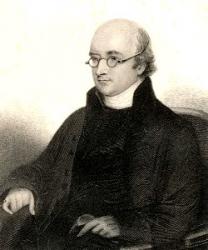
Richard Mant

1776 - 1848 Person Name: Richard Mant, 1776-1848 Topics: Proper 17 Year C Author of "Bright the vision that delighted" in Common Praise Mant, Richard D.D., son of the Rev. Richard Mant, Master of the Grammar School, Southampton, was born at Southampton, Feb. 12, 1776. He was educated at Winchester and Trinity, Oxford (B.A. 1797, M.A., 1799). At Oxford he won the Chancellor's prize for an English essay: was a Fellow of Oriel, and for some time College Tutor. On taking Holy Orders he was successively curate to his father, then of one or two other places, Vicar of Coggeshall, Essex, 1810; Domestic Chaplain to the Archbishop of Canterbury, 1813, Rector of St. Botolph, Bishopsgate, London. 1816, and East Horsley, 1818, Bishop of Killaloe, 1820, of Down and Connor, 1823, and of Dromore, 1842. He was also Bampton Lecturer in 1811. He died Nov. 2, 1848. His prose works were numerous, and although now somewhat obsolete, they were useful and popular in their day. His poetical works, and other works which contain poetical pieces, are:— (1) The Country Curate, 1804; (2) Poems in three Parts, 1806; (3) The Slave, 1807; (4) The Book of Psalms in an English Metrical Version, &c, 1824; (5) The Holydays of the Church; or Scripture Narratives of Our Blessed Lord's Life and Ministry, and Biographical Notices of the Apostles, Evangelists, and Other Saints, with Reflections, Collects, and Metrical Sketches, vol. i., 1828; vol. ii., 1831; (6) The Gospel Miracles in a series of Poetical Sketches, &c., 1832; (7) The British Months, 2 vols., 1836; (8) Ancient Hymns from the Roman Breviary, for Domestick Use. . . .To which are added Original Hymns, principally of Commemoration and Thanksgiving for Christ's Holy Ordinances, 1837: new ed., 1871. (9) The Happiness of the Blessed Dead, 1847. Bishop Mant is known chiefly through his translations from the Latin. He was one of the earliest of the later translators, I. Williams and J. Chandler being his contemporaries. Concerning his translations, Mr. Ellerton, in his Notes on Church Hymns, 1881, p. xlviii. (folio ed.), says justly that:— "Mant had little knowledge of hymns, and merely took those of the existing Roman Breviary as he found them: consequently he had to omit many, and so to alter others that they have in fact become different hymns: nor was he always happy in his manipulation of them. But his book has much good taste and devout feeling, and has fallen into undeserved neglect." His metrical version of the Psalms has yielded very few pieces to the hymnals, the larger portion of his original compositions being from his work of 1837. The most popular of these is "Come Holy Ghost, my soul inspire, Spirit of," &c, and its altered forms; "Bright the vision that delighted," and its altered form of "Round the Lord in glory seated;" and "For all Thy saints, O Lord." His hymns in common use which are not annotated under their respective first lines are:— i. From his Metrical Version of the Psalms, 1824. 1. God, my King, Thy might confessing. Ps. cxlv. 2. Lord, to Thee I make my vows. Ps. xxvii. 3. Blessed be the Lord most High. Ps. xxviii. Pt. ii. 4. My trust is in the highest Name. Ps. xi. 5. Reign, Jehovah, King supreme. Ps. xcix. 6. Thy listening ear, O Lord, incline. Ps. Ixxxvi. 7. To God my earnest voice I raise. Ps. cxlii. 8. To Jehovah hymn the lay. Ps. cxviii. Two centos in Spurgeon's Our Own Hymn Book, 1866. (1) st. i., ii., v.; and (2) "Thee, Jehovah, will I bless" from st. vii.-x. ii. From his Holydays of the Church, &c, 1828-31. 9. Lo, the day the Lord hath made. Easter. 10. There is a dwelling place above. All Saints. iii. From his Ancient Hymns, &c, 1837. 11. Before Thy mercy's throne. Lent. 12. Father of all, from Whom we trace. Unity. 13. For these who first proclaimed Thy word. Apostles. 14. No! when He bids me seek His face. Holy Communion. 15. Oft as in God's own house we sit. Divine Worship. 16. Put off thy shoes, 'tis holy ground. The House of God . 17. Saviour of men, our Hope [Life] and Rest. The Greater Festivals. 18. Thy House each day of hallowed rest. Holy Communion. 19. We bless Thee for Thy Church, 0 Lord. Thanksgiving for the Church. 26. We deem and own it, Lord, a proof. Divine Grace. When all Bishop Mant's translations of original hymns, and versions of the Psalms in common use are taken into account, it is found that he is somewhat strongly represented in modern hymnody. -- John Julian, Dictionary of Hymnology (1907) ==================== http://en.wikipedia.org/wiki/Richard_Mant

Pages


Export as CSV
It looks like you are using an ad-blocker. Ad revenue helps keep us running. Please consider white-listing Hymnary.org or getting Hymnary Pro to eliminate ads entirely and help support Hymnary.org.