You help make Hymnary.org possible. More than 10 million people from 200+ countries found hymns, liturgical resources and encouragement on Hymnary.org in 2025, including you. Every visit affirms the global impact of this ministry.

If Hymnary has been meaningful to you this year, would you take a moment today to help sustain it? A gift of any size—paired with a note of encouragement if you wish—directly supports the server costs, research work and curation that keep this resource freely available to the world.

Give securely online today, or mail a check to:
Hymnary.org
Calvin University
3201 Burton Street SE
Grand Rapids, MI 49546

Thank you for your partnership, and may the hope of Advent fill your heart.

Person Results

Topics:third+sunday+in+advent
In:person

Planning worship? Check out our sister site, ZeteoSearch.org, for 20+ additional resources related to your search.
Showing 61 - 70 of 106Results Per Page: 102050

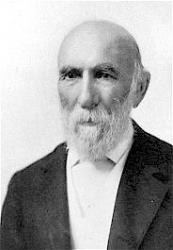
Matthias Loy

1828 - 1915 Person Name: Rev. Matthias Loy, D. D. Topics: The Catechism The Redeemer; Fourth Sunday of Advent; Third Sunday in Lent; Sixth Sunday in Lent Translator of "Jesus, Savior, come to me! " in Evangelical Lutheran hymnal Loy, M., President of the Capital University, Columbus, Ohio, contributed several original hymns, and translations from the German, to the Evangelical Lutheran Hymnal. Published by Order of the Evangelical Lutheran Joint Synod of Ohio and Other States. Columbus, Ohio, 1880. The translations may be found through the Index of Authors, &c.; the original hymns are the following:— 1. An awful mystery is here. Holy Communion. 2. At Jesus' feet our infant sweet. Holy Baptism. 3. Come, humble soul, receive the food. Holy Communion. 4. Give me, 0 Lord, a spirit lowly. Humility desired. 5. God gave His word to holy men. Inspiration of Holy Scripture. 6. God of grace, Whose word is sure. Faithfulness. 7. How matchless is our Saviour's grace. Holy Baptism. 8. I thank Thee, Saviour, for the grief. Lent. 9. Jesus took the lambs and blest them. Holy Baptism. 10. Jesus, Thou art mine for ever. Jesus, All and in All. 11. Launch out into the deep. Call to Duty. 12. Listen to those happy voices. Christmas. 13. O Great High Priest, forget not me. Confirmation. 14. O Lord, Who hast my place assigned. Daily Duties. 15. Our Shepherd of His ransomed flock. Holy Communion. 16. The gospel shows the Father's grace. Holy Scripture. 17. The law of God is good and wise. Holy Scripture. 18. Though angels bright escape our eight. St. Michael and All Angels. 19. When Rome had shrouded earth in night. The Reformation. 20. When souls draw near the holy wave. Confirmation. Several of these hymns, together with some of his translations, previously appeared in the Ohio Synod's preceding Collection of Hymns (3rd ed., 1858; 4th, 1863). --John Julian, Dictionary of Hymnology (1907) ==================== Loy, Matthias, D.D., p. 700, i. Dr. Loy was born in Cumberland County, Pennsylvania, March 17, 1828. He studied at the Evangelical Lutheran Theological Seminary at Columbus, Ohio, of which he became Professor of Theology in 1365. He was appointed President of the Capital University in 1880. --John Julian, Dictionary of Hymnology, Appendix, Part II (1907) ================== See also in: Wikipedia

Bartholomaüs Ringwaldt

1532 - 1599 Person Name: Bart. Ringwald Topics: Første Pinsedag Til Morgengudstjeneste og Høimesse; Pentecost; Fourth Sunday in Advent; Second Sunday after Epiphany; Fifth Sunday after Epiphany; Søndag Seksagesima Til Høimesse -Til Sekund Tekstrækkes Evangelium; Sexagesima Sunday; Sjette Søndag efter Paaske Til Aftengudstjeneste - Til Tredje Tekstrækkes Epistel; Sixth Sunday after Easter; Sixth Sunday after Easter; Trinity Sunday; Fjortende Søndag efter Trefoldiheds Fest Til Høimesse -Til Tredje Teksxtækkes Evangelium; Fjortende Søndag efter Trefoldiheds Fest Til Aftengudstjeneste; Fourteenth Sunday after Trinity Sunday; Fourteenth Sunday after Trinity Sunday; Seventeenth Sunday after Trinity Sunday; All Saints Day; Twenty third Sunday after Trinity Sunday; Vandring I Lyset; Walking in the Light; Alle Helgens Dag Til Høimesse -Til Anden Tekstrækkes Evangelium; Anden Søndag efter Hellig 3 Kongers Dag Til Aftengudstjeneste - Til Anden Tekstrækkes Epistel; Femte Søndag efter Hellig 3 Kongers Dag Til Høimesse -Til Anden Tekstrækkes Evangelium; Fjerde Søndag I Advent Til Aftengudstjeneste - Til Andend Tekstrækkes Epistel; Sjette Søndag efter Paaske Til Høimesse -Til Tredje Teksttækkes Evangelium; Syttende Søndag efter Trefoldiheds Fest Til Høimesse -Til Tredje Teksttækkes Evangelium; Tjuetredje Søndag efter Trefoldiheds Fest Til Høimesse -Til Tredje Teksttækkes Evangelium; Trefoldigheds-Fest Til Aftengudstjeneste - Til Anden Tekstrækkes Epistel Author of "O Helligaand, du Skat saa skjøn" in Salmebog for Lutherske Kristne i Amerika Bartholomew Ringwaldt was born at Frankfort-on-the-Oder, in 1530, and was a Lutheran pastor at Langfield, in Prussia, where he died, 1598. His hymns resemble Luther's in their simplicity and power. Several of them were written to comfort himself and others in the sufferings they endured from famine, pestilence, fire and floods. In 1581, he published "Hymns for the Sundays and Festivals of the whole Year." --Annotations of the Hymnal, Charles Hutchins, M.A. 1872. ============================ Ringwaldt, Bartholomäus (Ringwalt, Ringwald), was born Nov. 28, 1532, at Frankfurt a. Oder. He was ordained in 1557, and was pastor of two parishes before he settled in 1566 as pastor of Langfeld (or Langenfeld), near Sonnenburg, Brandenburg. He was still there in 1597, but seems to have died there in 1599, or at least not later than 1600. (Koch, ii. 182; Goedeke's Grundriss, vol. ii. 1886, p. 512; Blätter fur Hymnologie, 1885. Ringwaldt exercised a considerable influence on his contemporaries as a poet of the people, as well as by his hymns properly so called. He was a true German patriot, a staunch Lutheran, and a man who was quite ready to face the consequences of his plain speaking. His style is as a rule clear and good, though his rhymes are often enough halting; and he possessed considerable powers of observation and description. After 1577 he published various didactic poems, the most important being, (1) Newezeittung: So Hanns Fromman mit sich auss der Hellen unnd dem Himel bracht, Amberg, 1582, and the later editions enlarged and rewritten as Christliche Warnung des Trewen Eckarts, &c, Frankfurt a. Oder, 1588. In various forms and abridgments it passed through at least 34 editions up to 1700. This work is a mirror of the times and of the morals of the people. (2) Die Lauter Warheit, darinnen angezeiget, wie sich ein Weltlicher und Geistlicher Kriegsman in seinen Beruff vorhalten soil, &c, Erfurt, 1586. Of this again at least 18 eds. appeared up to 1700. In it he gives lively pictures of the life of the various ranks and orders of his time, and shows the temptations and failings of each, not by any means sparing his own class, i.e. the Lutheran clergy. As a hymnwriter Ringwaldt was also of considerable importance. He was one of the most prolific hymn-writers of the 16th century. Wackernagel, iv. pp. 906-1065, gives 208 pieces under his name, about 165 of which may be called hymns. A selection of 59 as his Geistliche Lieder, with a memoir by H. Wendebourg, was published at Halle in 1858. A number appeared in the various eds. of his Trewer Echart and Lauter Warheit as above. The rest appeared principally in his (1) Der 91. Psalm neben Siben andern schönen Liedern, &c, Frankfurt,a. Oder, 1577. (2) Evangelia, Auffalle Sontag unnd Fest, Durchs gantze Jahr, &c, Frankfurt a. Oder, N.D. The earliest edition now known is undated, but Wackernagel, i., p. 523, gives it as of 1582. It is marked as a 2nd edition, and has a preface dated Nov. 28, 1581. It contains hymns founded on the Gospels for Sundays and Festivals, &c. (3) Handbüchlin: geistliche Lieder und Gebetlein, Auff der Reiss, &c, Frankfurt a. Oder, 1586 (preface, Feb. 21, 1582). A good many of his hymns passed into German collections of the 16th and 17th centuries, and a number are still in German common use. Those of Ringwaldt's hymns which have passed into English are:— i. Es ist gewisslich an derZeit. Second Advent. The anonymous original of this hymn is one of Zwey schöne Lieder, printed separately circa 1565, and thence in Wackernagel, iv. p. 344. W. von Maltzahn, in his Bücherschatz, 1875, No. 616, p. 93, cites it as in an undated Nürnberg broadsheet, circa 1556. Wackernagel also gives along with the original the revised form in Ringwaldt's Handbüchlin, 1586. Both forms are also in the Unverfälschter Liedersegen, 1851, No. 746, in 7 stanzas of 7 lines. It is based on the "Dies Irae," but can hardly be called a version of it. The original has a picturesqueness and force which are greatly lost in Ringwaldt's revision. It was much used in Germany during the Thirty Years' War, when in these distressful times men often thought the Last Day was at hand. The translations are all, except No. 2, from Ringwaldt's text. They are:— 1. 'Tis sure that awful time will come. In full, by J. C. Jacobi, in his Psalter Germanica, 1722, p. 95 (1732, p. 202). Repeated, altered and abridged, in the Moravian Hymn Book, 1754 to 1886. It is also found in two centos. (1) The waking trumpets all shall hear (st. ii.), in Montgomery's Christian Psalmist, 1825. (2) When all with awe shall stand around (st. v.), from the Moravian Hymn Book, 1801, in the Pennsylvania Lutheran Church Book, 1868. 2. Most surely at th' appointed time. By A. T. Russell, as No. 38 in his Psalms & Hymns, 1851, repeated in the College Hymnal, N. Y., 1876. It is marked a translation from the "Dies Irae," but is really a good translation of st. i., ii., v. of the German of 1565, 3. Behold that awful day draws nigh. A translation of st. i., ii.. v., by W. Sugden, as No. 129 in the Methodist Scholars' Hymn Book, 1870. 4. The day is surely drawing near. In full by P. A. Peter as No. 457 in the Ohio Lutheran Hymnal, 1880. 5. Surely at the appointed time. By H. L. Hastings, made in 1878, and included as No. 722 in his Songs of Pilgrimage, 1886. It condenses iii., iv. as iii. 6. Tho time draws near with quickening pace. By Miss Fry, in her Hymns of the Reformation, 1845, p. 56. A hymn which has been frequently but erroneously called a translation from Ringwaldt's text, is noted as “Great God, what do I see and hear" (p. 454, i.). Hymns not in English common use:-- ii. Allein auf Gott setzt dein Vertraun. The Christian Life. In many of the older Gorman hymnbooks this is ascribed to Ringwaldt, but it is not found in any of his works now extant. Wackernagel, v. p. 327, gives it as anonymous from the Greifswald Gesang-Buch, 1597, where it is entitled "The golden A. B. C. wherein is very in¬geniously comprised what a man needs to know in order to lead an honourable and godly life." It is in 24 stanzas of 4 lines, each stanza beginning with successive letters of the alphabet. Also in Porst's Gesang-Buch, ed. 1855, No. 784. Bäumker, ii. p. 276, cites it as in the manuscript collection of a nun called Catherine Tirs, written in 1588, in the nunnery of Niesing, Münster. There it is in Low German, and begins "Allene up godt hope und truwe." Bäumker thinks Ringwaldt may possibly be the person who made the High German version. Translated as (1) "Alone in God put thou thy trust." By J. C. Jacobi, 1725, p. 29 (1732, p. 110). iii. Der Herr ist mein getreuer Hirt, Hält mich in seiner Hute. Ps. xxiii. Wackernagel, iv. p. 944, prints it from Ringwaldt's Evangelia, N.D., 1582 as above, in 7 st. of 7 1. The first four-lines of st. i. are taken from the older version, "Der Herre ist mein treuer Hirt." In the Minden Kavensberg Gesang-Buch, 1854, No. 512. Translated as (i.) "The Lord He is my Shepherd kind." By Miss Manington, 1863, p. 20. iv. Herr Jesu Christ, du höchstes Gut, Du Brunnquell der Genaden. Lent. One of the finest of German penitential hymns. Wackernagel, iv. p. 1028, gives it, in 8 st. of 7 1., from Ringwaldt's Christliche Warnung, 1588, where it is entitled "A fine hymn [of supplication] for the forgiveness of sins." In Burg's Gesang-Buch, Breslau, 1746, No. 1574. The translations are (1) “Lord Saviour Christ, my sovereign good." In the Supplement to German Psalmody, ed. 1765, p. 39. Rewritten as (2) "Lord Jesus Christ, my sov'reign good," as No. 226 in the Moravian Hymn Book , 1789. In the edition of 1886, No. 278, it begins "Jesus, thou source of every good." (3) "O Christ, thou chiefest good, thou spring." By Dr. G. Walker, 1860, p. 76. (4) "Lord Jesus Christ, thou highest good." By F. W. Young, in the Family Treasury, 1877, p. 653. [Rev. James Mearns, M.A.] --John Julian, Dictionary of Hymnology (1907)

Christopher Tye

1497 - 1572 Topics: The Catechism The Redeemer; Fourth Sunday in Lent; Third Sunday of Advent; Fourteenth Sunday after Trinity; Nineteenth Sunday after Trinity; Twenty First Sunday after Trinity Composer of "DUNDEE" in Evangelical Lutheran hymnal Tye, Christopher, MUS. D., born at Westminster in the reign of Henry VIII. He was celebrated as a musician, and was granted the degree of MUS. D. at Cambridge in 1545. He was musical tutor to King Edward VI., and organist of the Chapel Royal under Queen Elizabeth. Besides composing numerous anthems, he rendered the first fourteen chapters of the Acts of the Apostles into metre, which were set to music by him and sung in Edward 6th's Chapel, and published in 1553. He died circa 1580. -- John Julian, Dictionary of Hymnology (1907)

Hans Thomissøn

1532 - 1573 Person Name: Hans Thomisøn Topics: Third Sunday in Advent Author of "Maria, hun er en Jomfru ren" in Salmebog for Lutherske Kristne i Amerika

Nils J. Holm

1778 - 1845 Person Name: Nils Holm Topics: Third Sunday in Advent Author (attributed to) of "Livets Krone at erlange" in Salmebog for Lutherske Kristne i Amerika

Benjamin Praetorius

1636 - 1674 Person Name: Benj. Prætorius Topics: Third Sunday in Advent; Third Sunday in Advent Author of "Vær i Korset tro og stille" in Salmebog for Lutherske Kristne i Amerika Prätorius, Benjamin, son of Andreas Prätorius, pastor at Obergreieslau near Weissenfels in Saxony, was born at Obergreisslau, January 1, 1636. In 1637. his father was appointed pastor at Gross-Lissa near Delitzsch, in Saxony. Benjamin became a student of theology, and giaduated M.A., probably at Leipzig. In the entry of his marriage in the registers of Gross-Lista, for 1657, he is described as "regularly ordained substitute and future successor of this parish": and he is never described in the registers except as Pastor-substitute. His ninth child was born in 1671, and on Jan. 8, 1675, his son Andreas Benjamin, on acting as godfather, is described as “surviving son" of M. Benjamin Prätorius. It is probable that he died some time in 1674, but as the register of deaths of this period is lost, we are unable to fix the exact date (K. Goedeke's Grundriss, vol. iii., 1887, p. 176; manuscript from Pastor Moebius of Gross-Lissa, &c). According to Wetzel, ii., 314, he was crowned as a poet on Feb. 15, 1661. In the registers for 1663 he first designs himself "poëta Caes." and "Kais. gekrönter Poëta" (i.e. imperial crowned poet), and in 1670 as "poëta Caes. laur. coronatus." His hymns appeared in his (1) Jauchtzendes Libanon, Leipzig, 1659, and (2) Spielende Myrten-Aue, Leipzig, 1663. In the preface to the latter he signs himself as "C. P. Caes. und Diener am Wort daselbst" (minister of the Word), under date “Gross-Lissa, Dec. 24, 1663." The only hymn by him translated into English is:— Sei getreu bis an das Ende. The Reward of the Faithful. In 1659, as above, No. 64, p. 15?, in 9 stanzas of 8 lines, and founded on Rev. ii. 10. In full in the Unverfälschter Liedersegen, 1851, No. 339. It is also often found as "Sei getreu in deinem Leiden," as in the Berlin Geistliche Lieder, ed. 1863, No. 749. This is from Luppius' sGesang-Buch, Wesel, 1692, p. 22, where it is in 7 stanzas (iv., ii., iii., v., ix., i. and a new stanza which begins, "So wohlan, so will ich leiden"), and is erroneously ascribed to J. C. Schade. The original form is tr. as:— Be thou faithful to the end, Let not. By Miss Warner, in her Hymns of the Church Militant, 1858, p. 362, repeated as No. 255, in Bishop Ryle's Collection, 1860. [Rev. James Mearns, M.A.] --John Julian, Dictionary of Hymnology (1907)

Bartholomäus Crasselius

1667 - 1724 Person Name: Bath. Crasselius Topics: Tilføiede Salmer; Added Hymns; Andre Søndag I Advent Til Aftengudstjeneste - Til Sekund Tekstrækkes Lektie; Second Sunday in Advent; Første Søndag efter Hellig 3 Kongers Dag Til Høimesse; First Sunday after Epiphany; Andre Søndag efter Hellig 3 Kongers Dag Til Høimesse -Til Sekund Tekstrækkes Evangelium; Second Sunday after Epiphany; Tredje Søndag efter Hellig 3 Kongers Dag Til Aftengudstjeneste; Third Sunday after Epiphany; Søndag Septuagesima Til Høimesse -Til Sekund Tekstrækkes Evangelium; Septuagesima Sunday; Første Søndag I Faste Til Høimesse -Til Sekund Tekstrækkes Evangelium; First Sunday in Lent; Andre Søndag I Faste Til Høimesse -Til Sekund Tekstrækkes Evangelium; Second Sunday in Lent; Marias Bebudelses Dag Til Høimesse; Annunciation; Skjærtorsdag Til Høimesse -Til Tredje Teksxtækkes Evangelium; Maundy Thursday; Fjerde Søndag efter Paaske Til Aftengudstjeneste - Til Sekund Tekstrækkes Epistel; Fourth Sunday after Easter; Andre Søndag efter Trefoldiheds Fest Til Høimesse -Til Sekund Tekstrækkes Evangelium; Andre Søndag efter Trefoldiheds Fest Til Høimesse -Til Tredje Teksxtækkes Evangelium; Second Sunday after Trinity Sunday; Second Sunday after Trinity Sunday; Fjerde Søndag efter Trefoldiheds Fest Til Høimesse; Fjerde Søndag efter Trefoldiheds Fest Til Høimesse -Til Tredje Teksxtækkes Evangelium; Fourth Sunday after Trinity Sunday; Fourth Sunday after Trinity Sunday; Trettende Søndag efter Trefoldiheds Fest Til Høimesse -Til Sekund Tekstrækkes Evangelium; Thirteenth Sunday after Trinity Sunday; Tjuefjerde Søndag efter Trefoldiheds Fest Til Høimesse -Til Sekund Tekstrækkes Evangelium; Twenty fourth Sunday after Trinity Sunday; Efterfølgelse, Jesu; Obedience of Jesus; Heiliggjørelse; Sanctification; Hengivelse til Jesus; Devotion to Jesus; Legemet I Herrens Tjeneste; The Body in the Lord's Service; Næstekjærlighed; Charity; Renhed; Purity; Sagtmodighed; Meekness; Taalmodighed; Patience; Ydmyghed; Humility Alterer of "Hellig' Jesus, Renheds Kilde" in Salmebog for Lutherske Kristne i Amerika Crasselius, Bartholomäus, son of Johannes Crasselt, sheepmaster at Wemsdorf near Glauchau, Saxony; was born at Wernsdorf, Feb. 21, 1667. After studying at Halle, under A. H. Francke, he became, in 1701, pastor at Nidda, in Wetteravia, Hesse. In 1708 he was appointed Lutheran pastor at Düsseldorf, where he died Nov. 30, 1724, after a somewhat troubled pastorate, during which he felt called upon to testify strongly and somewhat bitterly against the shortcomings of the place and of the times (Koch, iv. 418-421; Allg. Deutsche Biographie, iv. 566-67; Bode, p. 55; manuscript from Pastor Baltzer, Wernsdorf; the second dating his call to Dusseldorf 1706). Of the 9 hymns by him which Freylinghausen included in his Geistreiches Gesang-Buch, 1704, two have been translated:— i. Dir, dir, Jehovah, will ich singen. Prayer. A hymn of supplication for the spirit of grace rightly to praise and worship God, founded on St. John, xvi. 23-28, the Gospel for Rogation Sunday. First published in the Geistreiches Gesang-Buch &., Halle, 1697, p. 587, in 8 stanzas of 6 lines. Repeated as No. 291 in Freylinghausen's Gesang-Buch, 1704, and since in almost all collections, as in the Berlin Geistliche Liedersegen. ed. 1863, No. 936. The well-known tune (known in England as Winchester New as reduced to L. M. in Hymns Ancient & Modern, No. 50) which appeared with this hymn in Freylinghausen, 1704, is altered from a melody to “Wer nur den lieben Gott lasst walten," in the Musicalisch Handbuch der Geistlichen Melodien, Hamburg, 1690. See L. Erk's Choralbuch, 1863, No. 63, and p. 247; also No. 261. The common, but erroneous ascription of this tune to Crasselius arose from confusion between the authorship of the tune and the words. There is no evidence that Crasselius wrote any tunes. Translations in common use:— 1. Jehovah, let me now adore Thee, a good and full translation by Miss Winkworth, as No. 117, in her Chorale Buch for England, 1863, set to the 1704 melody. 2. To Thee, 0 Lord, will I sing praises, in full, by Dr. M. Loy, in the Evangelical Review, Gettysburg, July 1861, and as No. 216 in the Ohio Lutheran Hymnal, 1880. Other translations are:— (i) "To Thee, Jehovah, I'll be singing," in the Supplement to German Psalmody, ed. 1765, p. 41, and in Select Hymns from German Psaltery, Tranquebar, 1754, p. 72. (2) "Draw me, O Father, to the Son," a translation of stanza ii., by P. H. Molther, as No. 185 in the Moravian Hymn Book, 1789. In the ed. of 1886 it is enlarged to 3 stanzas by the addition of the translation of stanzas i. and viii., and in this form it begins:—“To Thee, Jehovah, will I sing." (3) "To Thee, O Lord, I come with singing," by Miss Burlingham, in the British Herald, April, 1866, p. 248, repeated as No. 402 in Reid's Praise Book, 1872. ii. Erwach, 0 Mensch, erwache. Lent. Appeared in Freylinghausen's Gesang-Buch, 1704, No. 266, in 4 stanzas of 9 lines. Included in Bunsen's Versuch, 1833, No. 298, and Allgemeine Gesang-Buch 1846, No. 13. Translated as "Awake, O man, and from thee shake," by Miss Winkworth, 1855, p. 61. The hymn, "Heiligster Jesu, Heiligungsquelle," ascribed to Crasselius, is noted under J. v. Lodenstein. See also "Hallelujah! Lob, Preis und Ehr." [Rev. James Mearns, M.A.] --John Julian, Dictionary of Hymnology (1907)

Philipp Balthazar Sinold von Schütz

1657 - 1742 Person Name: Filip Sinold Topics: Third Sunday in Advent Author of "Hjælp mig, o sødeste Jesus, at vinde!" in Salmebog for Lutherske Kristne i Amerika

B. K. Kaas

Person Name: Birg. Kaas Topics: Third Sunday in Advent For Evening Author of "O Gud, du fromme Gud" in M. B. Landstads Kirkesalmebog og "Nokre Salmar" ved Professor Dr. E. Blix, samt følgende tillæg

B. K. Aegidius

Person Name: Aegidius Topics: Third Sunday in Advent Translator of "O Menneske, bereder " in Salmebog for Lutherske Kristne i Amerika

Pages


Export as CSV
It looks like you are using an ad-blocker. Ad revenue helps keep us running. Please consider white-listing Hymnary.org or getting Hymnary Pro to eliminate ads entirely and help support Hymnary.org.