You help make Hymnary.org possible. More than 10 million people from 200+ countries found hymns, liturgical resources and encouragement on Hymnary.org in 2025, including you. Every visit affirms the global impact of this ministry.

If Hymnary has been meaningful to you this year, would you take a moment today to help sustain it? A gift of any size—paired with a note of encouragement if you wish—directly supports the server costs, research work and curation that keep this resource freely available to the world.

Give securely online today, or mail a check to:
Hymnary.org
Calvin University
3201 Burton Street SE
Grand Rapids, MI 49546

Thank you for your partnership, and may the hope of Advent fill your heart.

Person Results

Topics:unity
In:people

Planning worship? Check out our sister site, ZeteoSearch.org, for 20+ additional resources related to your search.
Showing 61 - 70 of 1,353Results Per Page: 102050

Julia C. Cory

1882 - 1963 Person Name: Julia Cory Topics: Unity Author of "We Praise You, O God" in Voices United Julia C. Cory (Julia Buckley Cady Cory) was born in New York, NY in 1882. She was the daughter of a prominent New York architect, J. Cleveland Cady. Her father was also a Sunday school superintendent and amateur hymnologist. Partly because of his influence Julia began to write hymns at an early age. She was a member of the Brick Presbyterian Church. She married Robert Haskell Cory in 1911 and was a member of the Presbyterian Church in Englewood, NJ for all of her married life. She was a member of the Hymn Society that met in New York City all her adult life and died in Englewood, NJ in 1963. She raised 3 sons and they had 15 grandchildren. Psalter Hymnal Handbook, 1998 and D. Lincoln Cory

Henry Hallam Tweedy

1868 - 1953 Topics: Church Nature and Unity Author of "O Spirit of the Living God" in The New Century Hymnal Born: Au­gust 5, 1868, Bing­ham­ton, New York. Died: Ap­ril 11, 1953, Brat­tle­bo­ro, Ver­mont. Buried: Moun­tain View Cem­e­tery, New Fair­field, Con­nec­ti­cut. Tweedy at­tend­ed Phil­lips An­do­ver Acad­e­my, Yale Un­i­ver­si­ty (BA & MA), Un­ion The­o­lo­gic­al Sem­in­ary, and the Un­i­ver­si­ty of Ber­lin. Or­dained a Con­gre­ga­tion­al­ist min­is­ter in 1898, he pas­tored at Ply­mouth Church, Uti­ca, New York (1892-1902), and South Church, Bridge­port, Con­nec­ti­cut (1902-09). He then be­came Pro­fess­or of Hom­i­le­tics at Yale Di­vin­i­ty School (1909-37). He taught lit­ur­gy, mu­sic, and the arts, and was in­ter­est­ed in re­li­gious ar­chi­tect­ure. His works in­clude: The Min­is­ter and His Hym­nal Christian Wor­ship and Praise, 1939 Lyrics: "Eternal God, Whose Pow­er Up­holds" "O Gra­cious Fa­ther of Man­kind" "O Spir­it of the Liv­ing God" --www.hymntime.com/tch

H. P. Danks

1834 - 1903 Topics: Church Unity of Composer of "[How good and pleasant to the sight]" in Bible Songs

Johannes Thommen

1711 - 1783 Person Name: John Thommen Topics: Church--Unity Composer of "CASSEL" in Moravian Book of Worship Johannes Thommen, Switzerland. A pietist, he traveled through Scandinavia singing hymns and accompanying himself on his 10-string guitar. Contributed to the Zion's Harp, a collection of hymns and songs. John Perry

Nancy E. Krody

Person Name: Nancy Krody Topics: Unity Adapter (vs. 1 and 4) of "In Christ There Is No East Or West" in Catholic Book of Worship III

John Hughes

1873 - 1932 Topics: Christian unity Composer of "CWM RHONDDA" in Celebrating Grace Hymnal John Hughes (b. Dowlais, Glamorganshire, Wales, 1873; d. Llantwit Fardre, Wales, 1932) received little formal education; at age twelve he was already working as a doorboy at a local mining company in Llantwit Fardre. He eventually became an official in the traffic department of the Great Western Railway. Much of his energy was devoted to the Salem Baptist Church in Pontypridd, where he served as both deacon and precentor. Hughes composed two anthems, a number of Sunday school marches, and a few hymn tunes, of which CWM RHONDDA is universally known, the tune was composed in 1905 Baptist Cymanfa Ganu (song festival) in Capel Rhondda, Pontypridd, Wales. Bert Polman

Charles Burney

1726 - 1814 Person Name: Charles Burney, 1726-1814 Topics: Unity Composer of "TRURO" in Hymns of the Saints A music historian and composer, Burney attended Shrewsbury School and the Free School, Chester. He was apprenticed to Thomas Arne from 1744 to 1746. In 1749, he became organist at St. Dionis’ Backchurch, London. In 1751 moved to King’s Lynn, Norfolk, where he taught and played the organ. His works include: Music, Men, and Manners in France and Italy, 1770 A General History of Music, from the Earliest Ages to the Present Period (London: 1776-89) Sources: Findagrave, accessed 18 Nov 2016 Nutter, p. 454 © The Cyber Hymnal™. Used by permission. (www.hymntime.com)

Samuel Wesley

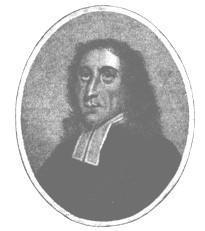
1691 - 1739 Person Name: Samuel S. Wesley Topics: Unity; Week of Prayer for Christian Unity Composer of "AURELIA" in Voices Together Samuel Wesley, M.A., the younger, was the eldest child of Samuel and Susanna Wesley, and was born in or near London in 1691. He received his early education from his mother, who always took a special interest in him as her firstborn. In 1704 he went to Westminster School, where he was elected King's Scholar in 1707. Westminster had, under the mastership of Dr. Busby for 55 years, attained the highest reputation for scholarship, and Samuel Wesley, as a classical scholar, was not unworthy of his school. In 1709, Dr. Spratt, Bishop of Rochester, patronised the young scholar, and frequently invited him to Bromley. In 1711 he went with a Westminster studentship to Christ Church, Oxford, and having taken his degree, returned to Westminster as an Usher. He then received Holy Orders and became an intimate friend of Bishop Atterbury, who was then Dean of Westminster. His intimacy with this prelate was a bar to his advancement, and he was bitterly disappointed at not being appointed undermaster at Westminster when that post was vacant. But he was faithful to his friend in his adversity, and the banished prelate warmly appreciated his attachment. In 1732 he was invited, without solicitation, to accept the headmastership of the Free School at Tiverton, and here he spent the remainder of his life. He strongly disapproved of John and Charles Wesley's proceedings; but though the brothers expressed their opinions to one another with characteristic frankness, the disagreement did not cause any interruption in the friendly relations between them. Samuel Wesley was universally acknowledged to be an honest, conscientious and deeply religious man. He was a most uncompromising High Churchman both in the political and the theological sense of that term; and there is no doubt that he was the mainstay of the Wesley family at Epworth. His kindness to his father and mother was unbounded, and he acted like a father to his younger brothers and sisters. He also took a great interest in works of charity, and was one of the first promoters of the Westminster Infirmary. He died at Tiverton in the 49th year of his age, Nov. 6, 1739. His epitaph in Tiverton Churchyard does not exaggerate his merits, when it describes him as— "a man for his uncommon wit and learning, For the benevolence of his temper, and simplicity of manner, Deservedly loved and esteemed by all: An excellent Preacher; But whose best sermon Was the constant example of an edifying life: So continually and zealously employed In acts of beneficence and charity, That he truly followed His blessed Master's example In going about doing good; Of such scrupulous integrity, That he declined occasions of advancement in the world, Through fear of being involved in dangerous compliances; And avoided the usual ways to preferment As studiously as many others seek them." Samuel Wesley published in 1736 A Collection of Poems on several occasions, some of which are full of a rather coarse humour, but all of a good moral and religious tendency. This work was reprinted in 1743, and again by W. Nichols in 1862. Dr. Adam Clarke specifies eight hymns of S. Wesley's composition which were in use among the Methodists of that time (1823). The Wesleyan Hymn Book of the present day contains five, the best-known of which is "The Lord of Sabbath let us praise." Six of his hymns are in common use, and are annotated as follows:— 1. From whence these dire portents around. 2. Hail, Father, Whose creating call. 3. Hail, God the Son in glory crowned. 4. Hail, Holy Ghost, Jehovah, Third. 5. The Lord of Sabbath, let ns praise. 6. The morning flowers display their sweets. -- Excerpts from John Julian, Dictionary of Hymnology (1907)

Samuel Francis Smith

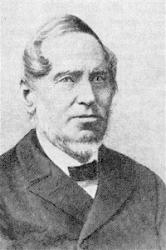
1808 - 1895 Person Name: Samuel Francis Smith (1808-1895) Topics: Church Unity Author of "Grafted in Christ, the living Vine" in Magnify the Lord Smith, Samuel Francis, D.D., was born in Boston, U.S.A., Oct. 21, 1808, and graduated in arts at Harvard, and in theology at Andover. He entered the Baptist ministry in 1832, and became the same year editor of the Baptist Missionary Magazine. He also contributed to the Encyclopaedia Americana. From 1834 to 1842 he was pastor at Waterville, Maine, and Professor of Modern Languages in Waterville College. In 1842 he removed to Newton, Massachusetts, where he remained until 1854, when he became the editor of the publications of the Baptist Missionary Union. With Baron Stow he prepared the Baptist collection known as The Psalmist, published in 1843, to which he contributed several hymns. The Psalmist is the most creditable and influential of the American Baptist collections to the present day. Dr. Smith also published Lyric Gems, 1854, Rock of Ages, 1870, &c. A large number of his hymns are in use in America, and several have passed into some of the English collections. Taking his hymns in common use in alphabetical order, we have the following:— 1. And now the solemn deed is done. Ordination. Given in The Psalmist, 1843, No. 954. In Dr. Hatfield's Church Hymn Book, N. Y., 1872, it is altered to "The solemn service now is done." 2. As flows the rapid river. Life Passing Away. In Christian Psalmody, 1833, No. 33; the Hymns for the Vestry and Fireside, Boston, 1841; and The Psalmist, 1843, No. 1059. Found in a few English hymn-books, and in Lyra Sacra Americana, 1868. 3. Auspicious morning, hail. American National Anniversary. Written for July 4th, 1841, and published in The Psalmist, 1843, No. 1007. 4. Beyond where Cedron's waters flow. Gethsemane. In L. Bacon's Appendix, 1833; the Psalmist, 1843, No. 220, and later collections. 5. Blest is the hour when cares depart. Divine Worship. In The Psalmist, 1843, No. 947, and others. 6. Constrained by love we follow where. Holy Baptism. Appeared in the Baptist edition of the Plymouth Hymn Book, 1857. 7. Down to the sacred wave. Holy Baptism. Contributed to Winchell's Additional Hymns added to his Collection of 1817, in 1832, No. 510; repeated in The Psalmist, 1843, No. 818, and in several collections. Also in Lyra Sacra Americana, 1868. 8. Hail! ye days of solemn meeting. Public Worship. An altered form of No. 26 below, in Spurgeon's Our Own Hymn Book, 1866, as an "American Hymn, 1840." 9. How blest the hour when first we gave. Holy Baptism. Appeared in the Baptist edition of thePlymouth Hymn Book, 1857, No. 1468. 10. How calmly wakes the hallowed morn. Holy Baptism. Given in The Psalmist, 1843, No. 810, in later collections, and in Lyra Sacra Americana, 1868. 11. Jesus, Thou hast freely saved us. Salvation. In Winchell's Additional Hymns, 1832, No. 503, and others. 12. Meekly in Jordan's Holy Stream. Holy Baptism. Contributed to The Psalmist, 1843, No. 808. 13. My country, 'tis of thee. National Hymn. "Written in 1832, and first sung at a children's Fourth of July celebration in Park Street church, Boston." Included in The Psalmist, 1843, No. 1000, and found in a large number of American hymn-books, but not in use in Great Britain. It is one of the most popular of Dr. Smith's compositions. Text, with note in Lyra Sacra Americana, 1868. 14. 0 not my own these verdant hills. Bought with a Price. Appeared in Nason's Congregational Hymn Book, 1857, and given inLaudes Domini, 1884. 15. Onward speed thy conquering flight. Missions. Appeared in The Psalmist, 1843, No. 892, and is found in several modern collections in Great Britain and America. Also in Lyra Sac. Americana, 1868. 16. Planted in Christ, the living Vine. Christian Fellowship; or, For Unity. Given in The Psalmist, 1843, No. 929, inLyra Sacra Americana, 1868, and several hymn-books. Of the hymns contributed by Dr. Smith to The Psalmist this is the best, and one of the most popular. 17. Remember thy Creator. Youthful Piety Enforced. In Christian Psalmody, 1832, No. 32; the Hymns for the Vestry and Fireside, 1841; The Psalmist, 1843, No. 778; Lyra Sac. Americana, 1868, and other collections. 18. Sister, thou wast mild and lovely. Death and Burial. Written on the death of Miss J. M. C. of Mount Vernon School, Boston, July 13,1833, and published in The Psalmist, 1843, No. 1096. 19. Softly fades the twilight ray. Sunday Evening. Written in 1832, and included in The Psalmist, 1843, No. 56. Also in Lyra Sacra Americana, and several hymn-books. 20. Spirit of holiness, descend. Whitsuntide. Appeared in the Hymns for the Vestry and Fireside, 1841, No. 295, and again in The Psalmist, 1843, No. 384. In the Unitarian Hymns for the Church of Christ, Boston, 1853. St. ii., iii., iv. were given as "Spirit of God, Thy churches wait." This form of the text and the original are both in modern hymn-books. 21. Spirit of peace and holiness. Institution of a Minister. Appeared in The Psalmist, 1843, No. 953, and Hatfield's Church Hymn Book, 1872. 22. The morning light is breaking. Missions. Written in 1832, and included in Hastings's Spiritual Songs, 1832-33, No. 253; and The Psalmist, 1843, No. 912. This hymn is very popular and has been translated into several languages. Dr. Smith says of it that “it has been a great favourite at missionary gatherings, and I have myself heard it sung in five or six different languages in Europe and Asia. It is a favourite with the Burmans, Karens, and Telegus in Asia, from whose lips I have heard it repeatedly.” 23. The Prince of Salvation in triumph is riding. Missions. Given in Hastings and Mason's Spiritual Songs, 1832-33, No. 274; The Psalmist, 1843, and later collections. 24. Tis done, the [important] solemn act is done. Ordination. Appeared in The Psalmist 1843, No. 951, and later hymn-books. 25. Today the Saviour calls. Invitation. First sketch by Dr. Smith, the revised text, as in Hastings and Mason's Spiritual Songs, No. 176, and The Psalmist, No. 453, by Dr. T. Hastings (p. 495, i. 19). 26. Welcome, days of solemn meeting. Special Devotional Services. Written in 1834, and given in Dr. Hatfield's Church Hymn Book, 1872. See No. 8. 27. When shall we meet again ? Parting. This is a cento. The first stanza is from Alaric A. Watts's Poetical Sketches, &c, 1822, p. 158 ; and st. ii.-iv. are by Dr. Smith. In this form it was published in L. Bacon's Supplement to Dwight, 1833, No. 489. It is in several American hymn-books; and also the English Baptist Psalms & Hymns, 1858, &c. 28. When the harvest is past and the summer is gone. Close of Worship. Contributed to Hastings and Mason's Spiritual Songs, 1831, No. 244; and repeated in the Fuller and Jeter Supplement to The Psalmist, 1847, No. 22, and later collections. 29. When thy mortal life is fled. The Judgment. Contributed to Winchell's Additional Hymns, 1832, No. 379, and repeated in The Psalmist, 1843, No. 455, and later hymn-books. Also in Lyra Sacra Americana, 1868. 30. While in this sacred rite of Thine. Holy Baptism. Appeared in The Psalmist, 1843, No. 803: Lyra Sacra Americana, 1868, &c. 31. With willing hearts we tread. Holy Baptism. In The Psalmist, 1843, No. 798; and again in the Baptist Praise Book, 1871. 32. Yes, my native land, I love thee. A Missionary's Farewell. Contributed to Winchell's Additional Hymns, 1832, No. 445, and found in later collections. Also in Lyra Sacra Americana, 1868. [Rev. F. M. Bird, M.A.] --John Julian, Dictionary of Hymnology (1907)

F. F. Flemming

1778 - 1813 Person Name: Friedrich F. Flemming Topics: Church, The Fellowship and Unity Composer of "FLEMMING" in Hymns for the Living Church Friedrich Ferdinand Flemming Germany 1778-1813. Born in Neuhausen, Erzgebirge, Germany, he studied medicine at Wittenberg, 1796-1800, Jena, Vienna, and Trieste. He practiced as a physician in Berlin until his death, but, musically, is remembered for his setting of Horace's ode beginning “Integer Vitae”, from which the tune “Flemming” is adapted. He was active in musical circles and composed many songs for a male vocal ensemble, “Liedertafel”. He died in Berlin. John Perry

Pages


Export as CSV
It looks like you are using an ad-blocker. Ad revenue helps keep us running. Please consider white-listing Hymnary.org or getting Hymnary Pro to eliminate ads entirely and help support Hymnary.org.