You help make Hymnary.org possible. More than 10 million people from 200+ countries found hymns, liturgical resources and encouragement on Hymnary.org in 2025, including you. Every visit affirms the global impact of this ministry.

If Hymnary has been meaningful to you this year, would you take a moment today to help sustain it? A gift of any size—paired with a note of encouragement if you wish—directly supports the server costs, research work and curation that keep this resource freely available to the world.

Give securely online today, or mail a check to:
Hymnary.org
Calvin University
3201 Burton Street SE
Grand Rapids, MI 49546

Thank you for your partnership, and may the hope of Advent fill your heart.

Person Results

Tune Identifier:"^gott_sei_dank_freylinghausen$"
In:person

Planning worship? Check out our sister site, ZeteoSearch.org, for 20+ additional resources related to your search.
Showing 61 - 70 of 79Results Per Page: 102050

I. Williams

Person Name: I. Williams, 1802-1865 Translator of "First of martyrs, thou whose name" in CPWI Hymnal

Madeleine Forell Marshall

b. 1946 Translator of "Heaven and Earth, and Sea and Air" in The New Century Hymnal

C. B. Taylor

Author of "Let us sing! the angels sing" in Little Children's Book

Ray Capo

Author of "Christ, whose love upon the tree" in Discipleship Ministries Collection

William Canton

1845 - 1926 Author of "North and South and East and West" in The Smaller Hymnal Canton, William, was b. Oct. 27, 1845, on the Isle of Chusan, China, and now (1906) resides in Highgate, London. He is the author of various volumes of poems, of a History of the British and Foreign Bible Society, 1903, &c. Two of his poems are used as hymns in the English Hymnal, 1906, and others. 1. Hold Thou my hands! [Hold Thou me up.] First published in Good Words, May 1893, p. 333, and reprinted in his The Invisible Playmate, 1894, p. 21. 2. Through the night Thy angels kept. [Morning.] From his The Comrades, 1902, p. 233. [Rev. James Mearns. M.A.] --John Julian, Dictionary of Hymnology, New Supplement (1907)

J. F. Bahnmaier

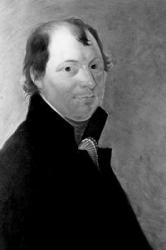
1774 - 1841 Person Name: Jonathan Friederich Bahnmaier Author of "Spread, O spread, thou mighty Word" in Common Service Book of the Lutheran Church Bahnmaier, Jonathan Friedrich, son of J. G. Bahnmaier, Town Preacher at Oberstenfeld, near Bottwar, Württemberg, was born at Oberstenfeld, July 12, 1774. After completing his studies at Tübingen, his first appointment was, in 1798, as assistant to his father. He became Diaconus at Marbach on the Neckar in 1806, and at Ludwigsburg in 1810, where he was for a time the head of a young ladies' school. In 1815 he was appointed Professor of Education and Homiletics at Tübingen, but in the troublous times that followed had to resign his post. He received in 1819 the appointment of Decan and Town Preacher at Kirchheim-unter-Teck, where he continued as a faithful, unwearied, and successful worker for 21 years. He was distinguished as a preacher, and greatly interested in the causes of education, of missions, and of Bible societies. He was also one of the principal members of the committee which compiled the Württemberg Gesang-Buch of 1842. He preached his last sermon at Kirchheim, on the 10th Sunday after Trinity, Aug. 15, 1841. Two days later he held a visitation at Owen. While inspecting the school at the adjacent village of Brucker, he was struck by paralysis, and being conveyed back to Owen, died there, Aug. 18, 1841 (Koch vii. 81-84; Allgemeine Deutsche Biographie, i. 766-767). Of his hymns two have been translated into English: i. Jesu als du wiederkehrtest. [Schools.] First published in his Christliche Blätter aus Tübingen, pts. 9-12 for 1819, p. 85, in 2 stanzas of 8 lines, entitled "Prayer after School"; as one of 7 metrical prayers for Children, and for the School and House. Included as No. 2947 in Knapp's Evanglischer Lieder-Schatz, 1837 (1865, No. 2614), and No. 513 in the Württemberg Gesang-Buch, 1842. The only translation in common use is: Jesu, when Thou once returnest. In full by Miss Winkworth in her Chorale Book for England, 1863, No. 178. ii. Walte, fürder, nah und fern. [Missions.] According to Koch, vii. 84, first printed separately 1827. Included as No. 97 in the Kern des deutschen Ziederschatzes, Nürnberg, 1828, and as No. 260, beginning,"Walte, walte, nah und fern" in Bunsen's Versuch, 1833, in 7 stanzas of 4 line, and since in the Württemberg Gesang-Buch, 1842, and other recent collections. One of the best and most useful of hymns for Foreign Missions. The translations in common use are: 1. Far and near, Almighty Word. A good and full translation by Miss Cox in her Sacred Hymns, Boston, U.S., 1853, and Dean Alford's Year of Praise, 1867, stanza i. was omitted and the hymn thus began, "Word by God the Father sent." 2. Spread thy triumph far and nigh, by H. J. Buckoll. By omitting stanzas ii., iv. as No. 65 in the Rugby School Hymn Book, 1850 (in the Rugby School Hymn Book, 1870, No. 175, the translation is complete). The translations of stanzas iii., v.-vii. altered and beginning "Word of Him whose sovereign will", were included in the Marylebone Collection, 1851, and Burgess and Money's Psalms and Hymns, 1857. The Wellington College Hymn Book, 1863, begins with the translations of stanza v., "Word of life, so pure and free." 3. Spread, oh spread, thou mighty Word. A full and very good translation by Miss Winkworth in her Lyra Germanica, 2nd Series, 1858, p. 60, repeated in her Chorale Book for England, 1863, No. 176. Since included in Kennedy, People's Hymnal, 1867, Horder's Congregational Hymns, 1884, and others; and in America in the Pennsylvania Lutheran Church Book, 1868, Hymns and Songs of Praise, N. Y., 1874, Evangelical Hymnal, and others. In Longfellow and Johnson's Hymns of the Spirit, Boston, 1864, it begins with st. v., "Word of life, most pure, most strong." Other translations are: (1) "Go forth, thou mighty word of grace", by Lady E, Fortescue, 1343 (ed. 1847, p. 31). (2) "0 Word of God, reign everywhere," by Dr. G. Walker, 1860, p. 85. (3) "Word of God! with glory crown'd", in L. Rehfuess's Ch. at Sea, 1868, p. 109. [Rev. James Mearns, M. A.] -- John Julian, Dictionary of Hymnology (1907)

G. W. Moon

Author of "Not forever on thy knees" in Jubilate Deo

Michael Morgan

b. 1948 Author of "How Our Hearts with Joy Abound (Psalm 45)" in Glory to God Michael Morgan (b. 1948) is a church musician, Psalm scholar, and collector of English Bibles and Psalters from Atlanta, Georgia. After almost 40 years, he now serves as Organist Emeritus for Atlanta’s historic Central Presbyterian Church, and as Seminary Musician at Columbia Theological Seminary. He holds degrees from Florida State University and Atlanta University, and did post-graduate study with composer Richard Purvis in San Francisco. He has played recitals, worship services, and master classes across the U. S., and in England, France, Spain, Switzerland, and Germany. He is author of the Psalter for Christian Worship (1999; rev. 2010), and a regular contributor in the field of psalmody (most recently to the Reformed collections Psalms for All Seasons and Lift Up Your Hearts, and the new Presbyterian hymnal, Glory to God). Michael Morgan

Percival Chubb

1860 - 1960 Person Name: Percival Chubb, 1860- Author of "Light of ages, shed by man" in The Beacon Song and Service book Born: June 17, 1860, De­von­port, De­von, Eng­land. Chubb at­tend­ed the Sta­tion­ers’ School in Lon­don, and joined the ci­vil ser­vice in 1878, in the le­gal de­part­ment of the Lo­cal Go­vern­ment Board. He es­tab­lished a cor­res­pon­dence so­ci­e­ty for man­u­script ex­change called the MS Club (1881), was a mem­ber of the Pro­gress­ive As­so­ci­a­tion, (1882); char­ter mem­ber of the Fa­bi­an Society (1884); joined the Lon­don branch of the Fel­low­ship of the New Life, an in­tel­lec­tu­al di­scuss­ion and st­udy group ded­i­cat­ed to de­vel­op­ing mo­dels of al­ter­na­tive so­ci­e­ties (1884-89); mem­ber of the Ethi­cal So­ci­e­ty (1886). He em­i­grat­ed to Amer­i­ca in 1889, and went on to be­come a lec­tur­er at Tho­mas Da­vid­son’s School of the Cul­tural Sci­enc­es, Farm­ing­ton, Con­nec­ti­cut; lec­tur­er at the Brook­lyn, New York, Acad­e­my of Arts and Sci­enc­es (1890-92); head of Eng­lish at the Brook­lyn Man­u­al Train­ing High School (1893-97); prin­ci­pal of the Se­cond Grade, New York So­ci­e­ty’s Eth­i­cal Cul­ture School (1897); lec­tur­er at the Pratt In­sti­tute and New York Un­i­ver­si­ty; As­so­ci­ate Lead­er, So­ci­e­ty for Eth­i­cal Cul­ture of New York (1897-1910); and Pre­si­dent, Dra­ma League of Amer­i­ca (1915-20). Af­ter re­tir­ing in 1932, he served as pre­si­dent of the Amer­i­can Eth­i­cal Un­ion (1934-39). His works inc­lude: Edited Dryden’s Pal­a­mon and Ar­cite; or the Knight’s Tale from Chau­cer (New York, 1908) On the Re­li­gious Fron­tier: From an Out­post of Eth­i­cal Re­li­gion (New York: Mac­mill­an Com­pa­ny, 1931) The Teach­ing of Eng­lish in the El­e­men­tary and Se­con­dary School (New York: Mac­mill­an Com­pa­ny, 1902) Introduction to Se­lect Writ­ings of Ralph Wal­do Em­er­son (1888) Essays of Mon­taigne (ed­it­or), 1893 © The Cyber Hymnal™ (www.hymntime.com/tch)

John Anketell

1835 - 1905 Person Name: John H. Anketell Author of "Jesu! Our Eternal King!" in The Cyber Hymnal Anketell, John, M.A., was born at New Haven, Connecticut, U.S.A., March 8, 1835, and educated at Yale College, and the University of- Halle-Wittenberg, Prussian Saxony. He was ordained deacon of the American Episcopalian Church in 1859, and priest in 1860. He founded (Stanza John's (American) Episcopal Church in Dresden in 1869. Subsequently he became Professor of Hebrew and Greek Exegesis in the Seabury Divinity School. Mr. Anketell published in 1889 Gospel and Epistle Hymns for the Christian Year, N.Y. He has also translated about 120 hymns from the German, Greek, Latin, Hebrew, French, Spanish, Danish, Italian, and Syriac, which were published in the Church Review, N.Y., 1876 and later, and in other periodicals. A few of those from the Latin are noted in Duffield's Latin Hymn-Writers, &c, 1889. Mr. Anketell's original hymns number about 150. Both these and his translations are worthy of notice. He died March 9, 1905. --John Julian, Dictionary of Hymnology, Appendix, Part II (1907)

Pages


Export as CSV
It looks like you are using an ad-blocker. Ad revenue helps keep us running. Please consider white-listing Hymnary.org or getting Hymnary Pro to eliminate ads entirely and help support Hymnary.org.





