

 My Starred Hymns
 My FlexScores
 My Hymnals
 My Purchased Files
Planning worship?
Check out our sister site, ZeteoSearch.org,
for 20+ additional resources related to your search.
- |
User Links
Person Results
Jane Eliza Leeson
1807 - 1882 Person Name: Jane E. Leeson, 1807-1882 Author of "Savior, Teach Me, Day by Day" in Hymnal of the Church of God Leeson, Jane E.. The earliest work by Miss Leeson with which we are acquainted is her Infant Hymnings. Then followed Hymns and Scenes of Childhood, or A Sponsor's Gift (London, James Burns; Nottingham, Dearden), 1842, in which the Infant Hymnings were incorporated. Concerning Pt. ii. of the Hymns and Scenes, &c, Miss Leeson says, "For the best of the Poems in the second part, the Writer is indebted to a friend." In the Rev. Henry Formby's Catholic Hymns arranged in order for the principal Festivals, Feasts of Saints, and other occasions of Devotion throughout the Year, London, Burns and Lambert, N.D. [1851], "Imprimatur, N. Cardinalis Wiseman, May 3rd, 1853," her translation of Victimae Paschali (“Christ the Lord is risen to-day"), and her "Loving Shepherd of Thy Sheep" (also in Hymns & Scenes, 1842), were given under the signature "M. L." Her Paraphrases and Hymns for Congregational Singing (most of " which were re-written from the Scottish Translations and Paraphrases (q.v.), 1781) were published by Wertheimer & Co., London, in 1853. In the Irvingite Hymns for the Use of the Churches, 1864, there are five of her original hymns and four of her translations from the Latin under the signature of "J. E. L.; "and most of these were repeated in the 2nd edition, 1871. In addition Miss Leeson is the author of several other works, including The Christian Child's Book, 1848, The Child's Book of Ballads, 1849, Songs of Christian Chivalry, 1848, Margaret, a Poem, 1850, The Seven Spiritual Works of Mercy, and others. Her hymns in common use include:—
1. A little child may know. God's love of little Children. In Hymns & Scenes of Childhood, 1842, No. 20, in 5 stanzas of 4 lines.
2. Dear Saviour, to Thy little lambs. For Purity. In Hymns & Scenes of Childhood, 1842, No. 19, in 4 stanzas of 8 lines.
3. Father, I [we] love Thy house of prayer. Public Worship. In Hymns & Scenes of Childhood, 1842, No. 76, in 3 stanzas of 12 lines. It is usually abbreviated.
4. Have ye counted the cost? Soldiers of the Cross . In Songs of Christian Chivalry, 1848, p. 8, in 10 stanzas of 9 lines. Usually abbreviated as in the Enlarged London Hymn Book, 1873.
5. In the dark and silent night. Confidence. In The Christian Child's Book, 1848, in 3 stanzas of 3 lines, with the refrain, "Hallelujah." It is in the Irish Church Hymnal , 1873, and other collections.
6. Jesus Christ, my Lord and King. Child's Praise of Christ. In Hymns & Scenes of Childhood, 1842, No. 18, in 6 stanzas of 4 lines.
7. King of Saints and King of glory. All Saints . In her Paraphrases & Hymns, 1853, p. 84, in 2 stanzas of 8 lines.
8. Saviour, teach me day by day. Obedience. In Hymns & Scenes of Childhood, 1842, No. 49, in 4 stanzas of 8 lines. In several hymn-books in Great Britain and America.
9. Songs of glory fill the sky. Christmas. In the Irvingite Hymns for the Use of the Churches, 1864, No. 21, in 3 stanzas of 8 lines, with the refrain "Hail! Lord Jesu."
10. Stand we prepared to see and hear. Advent. In the Irvingite Hymns for the Use of the Churches, 1864, No. 173, in 4 stanzas of 8 lines. Written in 1800.
11. Sweet the lesson Jesus taught. Christ blessing little Children. In Hymns & Scenes of Childhood, 1842, No. 1, in 5 stanzas of 4 lines.
12. Wake the song, 0 Zion's daughter. A cento of much excellence, which see.
13. Wake, ye saints, the song of triumph. Ascension . Written in 1861, and published in the Irvingite Hymns for the Use of the Churches, 1864, No. 60, in 4 stanzas of 6 lines, with the refrain "Hallelujah." In stanza ii., lines 3, 4, and 6 are from C. Wesley's "Hail the day that sees Him rise."
Miss Leeson's most popular hymn, “Loving Shepherd of Thy Sheep," and her translations from the Latin are noted elsewhere in this work. Of Miss Leeson's personal history we can gather nothing. Born 1807; died 1882.
--John Julian, Dictionary of Hymnology (1907)
Jane Eliza Leeson
G. W. Briggs
1875 - 1959 Person Name: Rev. G. W. Briggs Author of "Soul! celestial in thy birth" in Hymnal Amore Dei George Wallace Briggs is a Canon of Worcester Cathedral and one of the most distinguished British hymn writers and hymnologists of today. Six of his hymns appear in the Episcopal Hymnal of 1940 (American). Another hymn on the Bible entitled "Word of the living God" was written for the 25th Anniversary of the British Bible Reading Fellowship and was sung in Westminster Abbey on June 5, 1947. It has been widely used since that time. Canon Briggs is a leading member of the Hymn Society of Great Britain and Ireland. He is also the composer of several hymn times, six of which have appeared in British hymnals. In addition to his work as a clergy man of the Church of England and an hymnologist, he has interest himself actively in the field of religious education, being largely responsible for two books with wide circulation in Britain, "Prayers and Hymns for used in Schools" and "The Daily Service." These books have had great influence on the worship practices of British schools, public and private. It is of historic interest that he is the author of one of the prayers used at the time of the famous meeting of Churchill and Roosevelt on H.M.S. Prince of Wales in 1941 when the Atlantic Charter was framed.
--Ten New Hymns on the Bible, 1952. Used by permission.
G. W. Briggs
Benjamin Williams
1725 - 1795 Author of "Holy, holy, holy Lord!" in Book of Worship with Hymns and Tunes Williams, Benjamin, 1725-1795. Presbyterian minister at Salisbury, who in addition to a volume of Sermons, 1770, and the Salisbury Hymn Book, 1778, published The Book of Psalms as translated, paraphrased or imitated by some of the most eminent English poets, &c. Salisbury, 1781. His best known hymn, "Holy, holy, holy Lord," in celebration of the Divine Goodness, is in his own Collection, Kippis, Martineau’s Hymns for the Christian Church and Home, Martineau’s Hymns of Praise and Prayer, and Belfast Collection.
--John Julian, Dictionary of Hymnology (1907)
Benjamin Williams
Edward Osler
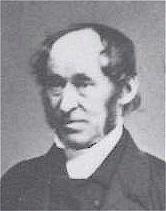
1798 - 1863 Person Name: Edward Osler, 1798-1863 Author of "Pardoned through redeeming grace" in Hymnal and Liturgies of the Moravian Church Osler, Edward, was born at Falmouth in January, 1798, and was educated for the medical profession, first by Dr. Carvosso, at Falmouth, and then at Guy's Hospital, London. From 1819 to 1836 he was house surgeon at the Swansea Infirmary. He then removed to London, and devoted himself to literary pursuits. For some time he was associated with the Society for Promoting Christian Knowledge, both in London and at Bath. In 1841 he became the Editor of the Royal Cornwall Gazette, and took up his residence at Truro. He retained that appointment till his death, at Truro, March 7, 1863. For the Linnaean Society he wrote Burrowing and Boring Marine Animals. He also published Church and Bible; The Voyage: a Poem written at Sea, and in the West Indies, and Illustrated by papers on Natural History, 1830; The Life of Lord Exmouth, 1837, &c. His hymnological work is mainly connected with the Mitre Hymn Book. During 1835-36 he was associated with Prebendary W. J. Hall, the editor, in producing that collection, which was published in 1836 as Psalms and Hymns adapted to The Services of the Church of England. He resided in Mr. Hall's house during the time. From the "hall manuscript" we gather that he contributed 15 versions of the Psalms (5 being rewritten from others), and 50 hymns (a few rewritten). Most of these hymns and Psalm versions, together with others not in the Mitre Hymn Book, were afterwards given in the monthly numbers of his Church and King, from Nov. 1836 to Aug. 1837. The best known of these hymns are, “O God, unseen, yet ever near," and “Worship, honour, glory, blessing." Several of his hymns in common use are:—
1. Father, Whose love and truth fulfil. Holy Baptism.
2. Glory to God! with joyful adoration. Praise to the Father.
3. Great God, o'er earth and heaven supreme. Men the Stewards of God's Bounties.
4. Great God of hosts, our ears have heard. Ps. xliv. Based on the N. Version.
5. Great God, Whose awful mystery. Holy Trinity.
6. I hold the sacred book of God. Martyrs.
7. Jehovah hath spoken, the nations shall hear. Second Advent.
8. Lord, may the inward grace abound. Holy Baptism.
9. May we Thy precepts, Lord, fulfil. Love.
10. Mighty Saviour, gracious King. Advent.
11. 0 God, the help of all Thy Saints. Ps. x.
12. O Thou, the Lord and Life of those. Christ the Life of Men.
13. O Saviour, Who didst come. Easter.
14. Saviour, Whose love could stoop to death. Easter.
15. See, Lord, before Thy mercy seat. For Schools.
16. Set in a high and favoured place. Advent.
17. Wake frem the dead, new life begin. Lent.
18. With trembling awe we come. Lent.
Several of these hymns are not in Osier's Church and King. We have ascribed them and others to him on the authority of the "hall MSS." It must be noted also that the text in the Church and King often differs from that in the Mitre.
--John Julian, Dictionary of Hymnology (1907)
Though not mentioned by Julian, perhaps his most enduring contribution to hymnody is the third stanza of "Praise the Lord! Ye Heavens, Adore Him", whose first two stanzas are of anonymous authorship.
--Leland Bryant Ross (2019)
Edward Osler
Benjamin H. Kennedy
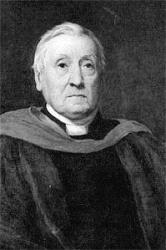
1804 - 1889 Author of "Zion, At Thy Shining Gates" in The Cyber Hymnal Kennedy, Benjamin Hall, D.D., son of the Rev. Raun Kennedy, sometime Incumbent of St. Paul's, Birmingham, and editor of A Church of England Psalm-Book, &c, 1821 (12th ed. 1848), was born at Summer Hill, near Birmingham, Nov. 6, 1804, and educated at King Edward's School, Birmingham; Shrewsbury School; and St. John's College, Cambridge. He graduated B.A. in 1827 (First Class Classical Tripos and First Chancellor's Medallist). He was Fellow of his College 1828-36; Head Master of Shrewsbury School, 1836-66; and Regius Professor of Greek in the University of Cambridge and Canon of Ely , 1867. Dr. Kennedy took Holy Orders in 1829, and was for some time Prebendaiy in Lichfield Cathedral and Rector of West Felton, Salop. He was elected Hon. Fellow of St. John's College, Cambridge, in 1880. Besides his Public School Latin Grammar, Palaestra Latina, Palaestra Stili Latini, &c, his editions of some of the Classics, and University Sermons, Dr. Kennedy published the following:—
(1) The Psalter, or the Psalms of David, in English Verse. By a Member of the University of Cambridge, 1860; (2) Hymnologia Christiana, or Psalms & Hymns Selected and Arranged in the Order of the Christian Seasons (quoted in this Dictionary as Kennedy), 1863.
i. From these two works many psalms and hymns have passed into other collections. The following versions of the Psalms first appeared in The Psalter, 1860, and again in the Hymnologia Christiana 1863. In many instances they have undergone considerable alteration in the latter work, and those of great length are broken into parts:—
1. All ye people, come and clap, &c. Ps. xlvii.
2. Arise, 0 Lord, with healing rod. Ps. x.
3. As pants the hind for cooling streams. Ps. xlii.
4. As Thy mercy lasts for ever. Ps. cix.
5. Be merciful to me, 0 God. Ps. lvii.
6. Be Thou my Judge, and I will strive. Ps. xvii.
7. Bless ye the Lord, His solemn praise record. Ps. cxxxiv.
8. Bow down Thine ear, and hear my cry. Ps. lxxxvi.
9. Come, ye children, list to me. Ps. xxxiv.
10. Ever, O my God and King. Ps. cxlv.
11. Ever will I bless the Lord. Ps. xxxiv.
12. Every king shall bow before Him. Ps. lxxii.
13. Full oft my chafing thoughts, &c. Ps. lxxiii.
14. God, avert the deadly blow. Ps. lix.
15. God, in Judah's homes is known. Ps. lxxvi.
16. God of my righteousness. Ps. iv.
17. Hear Thou my prayer, O Lord. Ps. cxliii.
18. Help us, O Lord, the good decay. Ps. xii.
19. How blest are they who flee, &c. Ps. cxix.
20. How blest the man, who fears to stray. Ps. i.
21. How blest the man whose errors, &c. Ps. xxxii.
22. How good it is to praise the Lord. Ps. xcii.
23. How long art silent, Lord? how long. Ps. xxxv.
24. How long forgotten, Lord, by Thee. Ps. xiii.
25. How long wilt Thou conceal Thy face. Ps. lxxxix.
26. I lift mine eyes unto the hills. Ps. cxxi.
27. I love the Lord, for He is nigh. Ps. cxvi.
28. I muse upon Thine ancient praise. Ps. lxxvii.
29. I praise Thee, Lord, who o'er my foes. Ps. xxx.
30. I trod the path of life, my strength. Ps. cii.
31. In trouble to the Lord I prayed. Ps. cxx.
32. Jehovah reigns, arrayed in light. Ps. xciii.
33. Judge me, O God; maintain my cause. Ps. xliii.
34. Lord, hear my prayer, and let my cry. Ps. cii.
35. Lord, I am not lofty-minded. Ps. cxxxi.
36. Lord, I lift my soul to Thee. Ps. xxv.
37. Lord, my Rock. I cry to Thee. Ps. xxviii.
38. Lord, save me from the foeman's wrath. Ps. cxl.
39. Lord, Thou wilt guard with faithful love. Ps. xxxvii.
40. Lord, Thy love and truth I praise. Ps. ci.
41. My God, my God, to Thee I cry, Ah! why hast Thou, &c. Ps. xxii.
42. My heart is fain, O God, my heart. Ps. cviii.
43. My portion is the living Lord. Ps. cxix.
44. My Saviour is the living Lord. Ps. xi.
45. My Shepherd is the Lord, no care. Ps. xxiii.
46. My trust is in Thy holy Name. Ps. lxxi.
47. My voice to God ascends on high. Ps. lxxvii.
48. Not in envy, not in anger. Ps. xxxvii.
49. Not in Thy fury, Lord, reprove. Ps. xxxviii.
50. O grant us, God of love. Ps. lxvii.
51. O God, be merciful to me. Ps. li.
52. 0 God of hosts, a vine. Ps. lxxx.
53. 0 God, subdue the power of sin. Ps. vii.
54. O Lord, in Thine accepted day. Ps. lxix.
55. 0 Lord our King, how bright Thy fame. Ps. viii.
56. O Lord, the God of my salvation. Ps. lxxxviii.
57. 0 praise ye the Lord, Praise Him in His shrine. Ps. cl.
58. O rejoice, ye righteous, in the Lord. Ps. xxxiii.
59. Oft, as to scatter kings. Ps. lxviii.
60. Out of the depths to Thee I cry. Ps. cxxx.
61. Praise, O my soul, the Lord and all. Ps. ciii.
62. Praise, 0 my soul, the Lord; how great. Ps. civ.
63. Praise the Lord, for good is He. Ps. cxxxvi.
64. Praise the Lord, for it is wise. Ps. cxlvii.
65. Praise the Lord from heaven on high. Ps. cxlviii.
66. Praise the Lord, His people; raise. Ps. cxlvi.
67. Praise ye the Lord, all nations. Ps. cxvii.
68. Praise ye the Lord, for good is He. Ps. cxviii.
69. Praise ye the Lord, for very good. Ps. cvii.
70. Praised be the Lord, my Rock of might. Ps. cxliv.
71. Save me, O God, the dangerous, &c. Ps. lxix.
72. Save me through Thy name, 0 God. Ps. liv.
73. Seek we Jehovah's house, they said. Ps. cxxii.
74. Sing a new song unto the Lord. Ps. xcvi.
75. Sing the Lord, ye sons of heaven. Ps. xxix.
76. Sing unto the Lord with mirth. Ps. c.
77. Take note, O Lord, of all my fears. Ps. lvi.
78. The heavens declare Thy wondrous fame. Ps. lxxxix.
79. The heavens, O God, Thy glory tell. Ps. xxx.
80. The king, 0 Lord, with hymns of praise. Ps. xxi.
81. The life of man is like the grass. Ps. ciii.
82. The Lord in thy distressful day. Ps. xx.
83. The Lord is King; glad earth, and ye. Ps. xcvii.
84. There is no God, so saith the fool. Ps. xiv.
85. Thou searchest all my secret ways. Ps. cxxxix.
86. To Thee I call. O Lord, be swift. Ps. cxli.
87. 'Twas dream-like, when the Lord's decree. Ps. cxxvi.
88. Unless the Lord with us had wrought. Ps. cxxiv.
89. Unto my feet a lantern shines Thy word. Ps. cxix.
90. Unto the Lord I make my moan. Ps. cxlii.
91. We sat and wept by Babel's stream. Ps. cxxxvii.
92. When Israel came from Egypt's strand. Ps. cxiv.
93. When through the dismal waste. Ps. lxviii.
94. Who rules his life by God's behest. Ps. cxxviii.
95. Whoe'er his secret home has made. Ps. xci.
96. With weary care brought low. Ps. lxix.
97. With my whole heart I will praise Thee. Ps. cxxxviii.
98. Within Thy tabernacle, Lord. Ps. xv.
99. Ye Judges of the earth, be still. Ps. lxxxii.
ii. The following also appeared in The Psalter, 1860, and again in Hymnologia Christiana 1863, mostly altered, and based upon the corresponding Psalms by George Sandys (q.v.), published in his Paraphrase upon the Psalms of David, 1636:—
100. Blest he whose timely mercies heed. Ps. xli.
101. Hide not, 0 Lord, Thy cheering face. Ps. xl.
102. I waited for a gentle word. Ps. xl.
103. Israel of God, be Christ your Guide. Ps. cxv.
104. Who in the Lord securely lay. Ps. cxxv.
iii. To the Rev. A. T. Russell's Psalms & Hymns, 1851, Dr. Kennedy was indebted to a limited extent in preparing his Psalter, 1860. In his Preface he says, p. viii.," Mr. Russell's metres, and occasionally his words, have been adopted in the following Psalms: 2, 24, 39, 45, 46, 50, 84, 85, 90, 110, 111, 113." Of these the following, sometimes with alterations of the 1860 text, were given in the
Benjamin H. Kennedy
Samuel Johnson
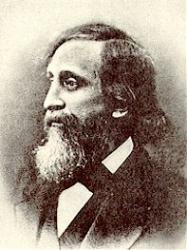
1822 - 1882 Person Name: S. Johnson Author of "Life of Ages, richly poured" in Sacred Songs For Public Worship Johnson, Samuel, M.A, was born at Salem, Massachusetts, Oct. 10, 1822, and educated at Harvard, where he graduated in Arts in 1842, and in Theology in 1846. In 1853 he formed a Free Church in Lynn, Massachusetts, and remained its pastor to 1870. Although never directly connected with any religious denomination, he was mainly associated in the public mind with the Unitarians. He was joint editor with S. Longfellow (q. v.) of A Book of Hymns for Public and Private Devotion, Boston, 1846; the Supplement to the same, 1848; and Hymns of the Spirit, 1864. His contributions to these collections were less numerous than those by S. Longfellow, but not less meritorious. He died at North Andover, Massachusetts, Feb. 19, 1882. His hymns were thus contributed:—
i. To A Book of Hymns, 1846.
1. Father [Saviour] in Thy mysterious presence kneeling. Divine Worship.
2. Go, preach the gospel in my name. Ordination.
3. Lord, once our faith in man no fear could move. In Time of War.
4. O God, Thy children gathered here. Ordination.
5. Onward, Christians, [onward] through the region. Conflict. In the Hymns of the Spirit, 1864, it was altered to "Onward, onward through the region."
6. Thy servants' sandals, Lord, are wet. Ordination.
7. When from Jordan's gleaming wave. Holy Baptism.
ii. To the Supplement, 1848.
8. God of the earnest heart. Trust.
iii. To the Hymns of the Spirit, 1864.
9. City of God, how broad, how far. The Church the City of God.
10. I bless Thee, Lord, for sorrows sent. Affliction— Perfect through suffering.
11. Life of Ages, richly poured. Inspiration.
12. Strong-souled Reformer, Whose far-seeing faith. Power of Jesus.
13. The Will Divine that woke a waiting time. St. Paul.
14. Thou Whose glad summer yields. Prayer for the Church.
15. To light that shines in stars and souls. Dedication of a Place of Worship.
Of these hymns No. 8 was "Written for the Graduating Exercises of the Class of 1846; in Cambridge Divinity Schools ; and No. 10 “Written at the request of Dorothea L. Dix for a collection made by her for the use of an asylum." It is undated. A few only of these hymns are in use in Great Britain. [Rev. F. M. Bird, M.A.]
-- John Julian, Dictionary of Hymnology (1907)
Samuel Johnson
Petrus Herbert
1530 - 1571 Person Name: Petrus Herbert, ?-1571 Author of "Softly Now the Light of Day" in North American Hymnal (2nd ed.) Herbert, Petrus, seems to have been a native of or resident at Fulnek in Moravia. He was ordained priest of the Brethren's Unity in 1562, became a member of the Select Council in 1567, and was latterly Consenior of the Unity. By the Unity he was entrusted with many important missions. He was sent as a deputy to confer with Calvin: and again in 1562 to arrange with Duke Christoph of Württemberg for the education at Tübingen of young men from the Bohemian Brethren. He was also one of the deputies sent to Vienna to present the revised form of the Brethren's Confession of Faith to the Emperor Maximilian II. in 1564, and in 1566 to present their new German Hymn Book. He died at Eibenschütz in 1571 (Koch, ii. 414, Allgemeine Deutsche Biographie, xiii. 263-264, &c.). Herbert was one of the principal compilers of the enlarged edition of the Brethren's German Hymn Book published in 1566 as their Kirchengeseng, and contributed to it some 90 hymns. In the ed. of 1639 there are 104 hymns marked as his. His hymns are distinguished by simplicity and beauty of style. A number are translations from the Bohemian. His hymns translated into English include:—
i. Die Nacht ist kommen drin wir ruhen sollen. [Evening] Written probably under the pressure of persecution and oppression. In the G. 2?., 1566, as above, in 5 stanzas of 7 lines (the last stanza being a versification of the Lord's Prayer), and thence in Wackernagel, iv. p. 442, and the Unverfälschter Liedersegen, 1851, No. 515. In J. H. Schein's Cantiona, 1627, it appears as No. 99, with an additional stanza not by Herbert, which reads—
Denn wir kein besser Zuflucht konnen haben,
,Als zu dir, 0 Herr, in dem Himmel droben,
Du veriest keinen, gibst Acht auff die deinen.
Die dich recht meyuen,"
This stanza is included as stanza v. in the version in Bunsen's Versuch, 1833, No. 43. Translated as:—
1. The night is come, wherein at last we rest, in full from Bunsen by Miss Winkworth in her Lyra Germanica, 2nd Ser., 1858, p. 77, repeated as No. 105 in R. Minton Taylor's Collection, 1872.
2. Now God be with us, for the night is closing, a good translation from Bunsen, in the original metre, by Miss Winkworth, as No. 170 in her Chorale Book for England, 1863, and repeated in her Christian Singers of Germany, 1869, p. 139. This version has been included in various recent collections, though generally abridged or altered, as in the Hymnary, 1872; Thring's Collection, 1882; and in America in the Evangelical Hymnal, N. Y., 1880, &c. In Laudes Domini, N.Y., 1884, it is in two parts (Nos. 209-210), the second beginning, "Father, Thy name be praised, Thy kingdom given." This is stanza vi. with an added doxology, as in the Hymnary, 1872.
Other translations are:—
(1) "The night comes apace," as No. 293 in pt. i. of the Moravian Hymn Book, 1754. (2) “Lo! evening's shades to sleep invite," by H. J. Buckoll, 1842, p. 64.
ii. 0 Christenmensch, merk wie sichs halt. [Faith] 1566, as above, in 18 stanzas of 4 lines, repeated in Wackernagel, iv. p. 433. In Bunsen's Versuch , 1833, No. 390 Allgemeine Gesang-Buch, 1846, No. 130), the hymn begins with stanza iii. altered to "Der Glaub’ ist ein lebend'ge Kraft," and consists of stanzas iii., viii., xi., xii., xvi., xviii. Bunsen calls it "a noble confession of the true Christian faith." Translated as:—
Faith is a living power from heaven. A good translation from Bunsen by Miss Winkworth in her Lyra Germanica, 2nd ser., 1858, p. 160, and thence in her Chorale Book for England, 1863. It is repeated, more or less altered and abridged, in Kennedy, 1863; and in America in the Presbyterian Hymnal, 1874, Baptist Service of Song, 1871, &c.
ii. Hymns not in English common use:—
iii. Des Herren Wort bleibt in Ewigkeit. [Holy Scripture.] 1566, as above, in 25 stanzas, and in Wackernagel, iv. p. 432. Translated as "God's holy Word, which ne’er shall cease," by J. Swertner, as No. 3 in the Moravian Hymn Book1789 (1849, No. 2).
iv. Fürchtet Gott, 0 lieben Leut. [Martyrs.] 1566, as above, in 13 stanzas, and in Wackernagel, iv. p. 429. The translations are, (i.) "O love God, ye people dear," as No. 267 in pt. i. of the Moravian Hymn Book, 1754. (2) "O exalt and praise the Lord" (from the version in the Brüder Gesang-Buch1778, beginning "Liebet Gott"), as No. 871 in the Moravian Hymn Book, 1789 (1886, No. 1306).
v. Lasst uns mit Lust und Freud aus Olauben singen. [Eternal Life.] A fine hymn on the Joys of Heaven. 1566, as above, in 12 stanzas, and in Wackernagel, iv. p. 447. Translated as "In faith we sing this song of thank-fulness," by Mrs. Bevan, 1858, p. 34.
vi. 0 höchster Trost, heiliger Geist [Whitsuntide.] 1566, as above, in 13 stanzas, and Wackernagel, iv. p. 407. The translations are, (1) "O highest comfort, Holy Ghost," as No. 262 in pt. i. of the Moravian Hymn Book, 1754. (2) "O Comforter, God Holy Ghost," as No. 203 in the Moravian Hymn Book, 1789 (1849, No. 265).
Besides the above a number of hymns by Herbert (all of which appeared in the Kirchengeseng, 1566, and are included in Wackernagel’s vol. iv.) were translated in pt. i. of the Moravian Hymn Book, 1754. The numbers in the 1754 are 166, 259, 263, 264, 265, 266, 274, 277, 281, 287, and 294. [Rev. James Mearns, M.A.]
-- John Julian, Dictionary of Hymnology
Petrus Herbert
Thomas Scott
1705 - 1775 Person Name: Rev. Thomas Scott Author of "Angels, Roll The Rock Away" in Reformed Press Hymnal Thomas Scott was born at Norwich, and was the son of a Dissenting minister. After his education he began his ministerial life at Wartmell, in Norfolk, adding also the labours of school-teaching. Subsequently he changed his pastoral relations several times, spending the last years of his life at Hupton, in Norfolk, where he died in 1776. He was the author of some prose works, several poems, and a few hymns.
--Annotations of the Hymnal, Charles Hutchins, M.A., 1872
============================
Scott, Thomas, son of Thomas Scott, Independent Minister at Norwich, brother of Elizabeth Scott, and nephew of Dr. Daniel Scott, was born at Norwich, 1705. As a young man he kept a school at Wortwell, and preached once a month at Harleston, Norfolk. Then, after a short ministry at Lowestoft, he removed in 1734 to Ipswich as co-pastor with Mr. Baxter of the Presbyterian congregation meeting in St. Nicholas Street Chapel. On the death of his senior in 1740 he became sole pastor. In 1774 he retired to Hapton, and died there in 1775. He was the author of various poetical works, including:— (1) The Table of Cebes; or, the Picture of Human Life, in English Verse, with Notes, 1754; (2) The Book of Job, in English Verse; translated from the original Hebrew, with Remarks, Historical, Critical, and Explanatory, 1771; 2nd ed. 1773; (3) Lyric Poems, Devotional and Moral. By Thomas Scott, London, James Buckland, 1773.
To Dr. Enfield's Hymns for Public Worship, Warrington, 1772, he contributed "All-knowing God, 'tis Thine to know" (p. 43, ii.); "Angels! roll the rock away" (p. 69, i.); "As various as the moon " (p. 85, ii.); and the following:—
1. Absurd and vain attempt to bind. Persecution.
2. Behold a wretch in woe. Mercy.
3. Imposture shrinks from light. Private Judgment, its Rights and Duties.
4. Mark, when tempestuous winds arise. Meekness.
5. O come all ye sons of Adam and raise. Universal Praise to God.
6. Th' uplifted eye and bended knee. Devotion vain without Virtue.
7. Was pride,alas, e'er made for man? Humility.
8. Why do I thus perplex? Worldly Anxiety reproved.
In his Preface to his Lyric Poems, 1773, he said that the object of his work was:—
"To form a kind of little poetical system of piety and morals. The work opens with natural religion. Thence it proceeds to the mission of Jesus Christ, his sufferings, his exaltation, and the propagation of his doctrine. Next is the call to repentance, the nature and blessedness of a Christian life, and the entrance into it. These topics are succeeded by the various branches of devotion: after which are ranked the moral duties, personal and social, the happy end of a sincere Christian, and the coming of Jesus Christ to finish his mediatorial kingdom by the general judgment. The whole is closed with a description of the illustrious times, when by means of the everlasting gospel, the earth shall be full of the knowledge of the Lord as the waters cover the sea."
Of Scott's better known hymns this volume contained most of those named above, and:—
9. Hasten, sinner, to be wise. p. 493, ii.
10. Who, gracious Father, can complain? The Divine Dispensation
In the Collection of Hymns and Psalms, &c, 1795, by Kippis, Rees, and others, several of the above were repeated, and the following were new:—
11. If high or low our station be. Justice.
12. Happy the meek whose gentle breast. Meekness.
Doctrinally Scott might be described as an evangelical Arian. Hymns of his appear in most of the old Presbyterian collections at the close of the last century, and in the early Unitarian collections. Several are still in common use in G. Britain and America. [Rev. Valentine D. Davis, B.A.]
-- John Julian, Dictionary of Hymnology (1907)
Thomas Scott
Luise Hensel
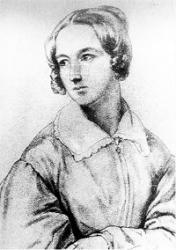
1798 - 1876 Person Name: Louise Hensel Author of "Müde bin ich, geh' zur Ruh'" in Frohe Lieder und Brüder-Harfe Text of "Müde bin ich geh zur Ruh" is printed in Lutheran Service Book, 2006 #887
=============
Hensel, Luise, daughter of J. J. L. Hensel, Lutheran pastor at Linum, near Fehrbellin, Brandenburg, was born at Linum, March 30, 1798, Though confirmed as a Lutheran in her fifteenth year, she gradually approximated to Roman Catholicism, and was formally received into that Communion, Dec. 7, 1818. During the remaining years of her life, she devoted herself mainly to the education of the young and the care of the sick. In 1874 she entered the Union of Daughters of Christian Love at Paderborn, and died at Paderborn, Dec. 18, 1876. (O. Kraus, 1879, pp. 204-211; Allgemeine Deutsche Biographie, xii. 1-3, &c.) Her best hymns were written before she was 23, and in proportion as she became an Ultramontane the poetical value of her productions declined. Her finest productions are distinguished by childlike simplicity, humility, resignation, and deep Christian love. They have won wide acceptance in Germany. The first two of those noted may be regarded as nursery classics.
A number of her hymns came into Clemens Brentano's hands as early as 1819, and were by mistake included as his in his posthumous works. A few were printed in F. Förster's Sängerfahrt, 1818, and a good many more in M. Diepenbrock's Geistlicher Blumenstrauss, Sulzbach, 1829. A complete edition of her hymns was published by Professor C. Schlüter of Münster as her Lieder at Paderborn, 1870 (4th ed., 1879).
i. Hymns in English common use:
i. Immer muss ich wieder lesen. [Holy Scripture.] This beautiful children's hymn on the Life of Christ as narrated in the Gospels, appeared in Diepenbrock, 1829, p. 265, in 7 stanzas of 4 lines (entitled "On the reading of Holy Scripture "); and in her Lieder, 1870, is dated Berlin,
1815. It is repeated in Knapp's Evangelischer Lieder-Schlatz, &, 1837, the Württemberg Gesang-Buch, 1842, &c. Translated as:—
Ever would I fain be reading. A good and full translation by Miss Winkworth in her Lyra Germanica, 2nd Ser., 1858, p. 24. It has been included in full in Psalms & Hymns, Bedford, 1859; Kennedy, 1863; Book of Praise for Children, 1881; and in America in Hatfield's Church Hymn Book, 1872, and others. In some collections it is abridged; and in the Unitarian South Place Collection, 1873, it begins, "Ever find I joy in reading."
Other translations are:—
(1) “O how sweet the wondrous story," by Mrs. Bevan, 1859, p. 142. (2) "In that book so old and holy," in Dr. H. W. Dulcken's Golden Harp, 1864, p. 25. (3) "Still I read, and weary never," by “A. M. A," in the British Herald, Feb. 1868, p. 211.
ii. Müde bin ich, geh' zur Ruh. [Evening.] This beautiful child's evening prayer, the most popular of all her hymns, appeared in Diepenbrock, 1829, p. 270, in 4 stanzas of 4 lines. In her Lieder, 1870, p. 54, dated Berlin, Autumn, 1816. Included in the Unverfälscher Liedersegen, 1851, No. 528. Translated as:—
1. Now that o'er each weary head. A free translation of stanzas i.-iii. as No. 22 in C. H. Bateman's Children's Hymns, 1872.
2. Weary now I go to rest. A good translation of stanzas i.-iii. by E. Cronenwett as No. 324 in the Ohio Lutheran Hymnal 1880.
Other translations are:—
(1) "Now I close my tired eyes," by Mrs. Bevan, 1859, p. 147. (2) "I am tir'd, and so I seek," by Miss Manington, 1863, p. 126. (3) "Weary now I go to bed," in Dr. H. W. Dulcken's Golden Harp, 1864, p. 40. (4) “Now with weariness opprest," a second translation by Dr. Dulcken, p. 72. (5) “Wearied now I seek repose," by J. Kelly, 1885, p. 111.
ii. Hymns not in English common use:
iii. Ich liebe einen Königs Sohn. [Love to Christ.] In Diepenbrock, 1829, p. 304, in 9 stanzas, and in her Lieder, 1870, p. 67, dated Berlin, 1817. Translated as "I love a royal only Son," by E. Massie, 1867, p. 174.
jv. 0 Sonne, wenn von deinem Licht. [Love to Christ.] In Diepenbrock, 1829, p. 257, in 6 stanzas, and in her Lieder, 1870, p. 128, dated Söndermühlen, 1823. Translated as "O Sun, if from thy light a ray," in J. D. Burns's Memoir and Remains, 1869, p. 270.
v. 0 Sorge, die mien niederdrückt. [Encouragement.] In Diepenbrock, 1829, p. 271, in 6 stanzas, and in her Lieder, 1870, p. 13, dated Berlin, 1815. The translations are:—(1l) "O anxious care that weighs me down," by Miss Burlingham, in the British Herald, Sept. 1865, p. 144. (2) "Begone, O load of care, begone," by J. Kelly, 1885, p. 80.
vi. Was verlangst du, warumbangst du. [Cross and Consolation.] In Diepenbrock, 1829, p. 261, in 6 stanzas entitled "Suraum corda." In her Lieder, 1870, p. 43, it is dated Berlin, 1816. Translated as "What seekest thou! Why fearest thou," by C. T. Astley, 1860, p. 28.
vii. Zu dir, zu dir, hinweg von mir. [Consecration to Christ.] In Diepenbrock, 1829, p. 267, in 5 stanzas In her Lieder, 1870, p. 31, dated Berlin, 1816. Translated as "To Thee, to Thee, away from self," by J. Kelly, 1885, p. 72. [Rev. James Mearns, M.A.]
-- John Julian, Dictionary of Hymnology
=====================
Hensel, Luise, p. 510, ii., No. v. "O Sorge," &c, appeared in Förster's Sängerfahrt, 1818, p. 266.
--John Julian, Dictionary of Hymnology, Appendix, Part II (1907)
Luise Hensel
Pages




