You help make Hymnary.org possible. More than 10 million people from 200+ countries found hymns, liturgical resources and encouragement on Hymnary.org in 2025, including you. Every visit affirms the global impact of this ministry.

If Hymnary has been meaningful to you this year, would you take a moment today to help sustain it? A gift of any size—paired with a note of encouragement if you wish—directly supports the server costs, research work and curation that keep this resource freely available to the world.

Give securely online today, or mail a check to:
Hymnary.org
Calvin University
3201 Burton Street SE
Grand Rapids, MI 49546

Thank you for your partnership, and may the hope of Advent fill your heart.

Person Results

Tune Identifier:"^dundee_ravenscroft$"
In:people

Planning worship? Check out our sister site, ZeteoSearch.org, for 20+ additional resources related to your search.
Showing 71 - 80 of 145Results Per Page: 102050

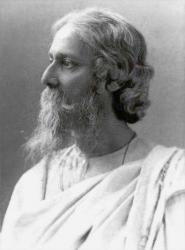
Rabindranath Tagore

1861 - 1941 Person Name: Rabindranath Tagore, 1861-1941 Author of "Your Mercy, Oh Eternal One" in Singing the Living Tradition Bengali poet, novelist, musician, and playwright. Tagore was the first Asian to win the Nobel Prize in Literature, which was awarded to him in 1913..

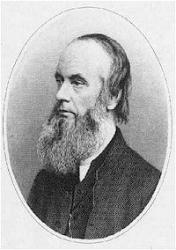
Henry Alford

1810 - 1871 Person Name: H. Alford Author of "In token that thou shalt not fear" in The Church Service Book Alford, Henry, D.D., son of  the Rev. Henry Alford, Rector of Aston Sandford, b. at 25 Alfred Place, Bedford Row, London, Oct. 7, 1810, and educated at Trinity College, Cambridge, graduating in honours, in 1832. In 1833 he was ordained to the Curacy of Ampton. Subsequently he held the Vicarage of Wymeswold, 1835-1853,--the Incumbency of Quebec Chapel, London, 1853-1857; and the Deanery of Canterbury, 1857 to his death, which took. place  at  Canterbury, Jan. 12, 1871.  In addition he held several important appointments, including that of a Fellow of Trinity, and the Hulsean Lectureship, 1841-2. His literary labours extended to every department of literature, but his noblest undertaking was his edition of the Greek Testament, the result of 20 years' labour.    His hymnological and poetical works, given below, were numerous, and included the compiling of collections, the composition of original hymns, and translations from other languages.    As a hymn-writer he added little to his literary reputation. The rhythm of his hymns is musical, but the poetry is neither striking, nor the thought original.   They are evangelical in their teaching,   but somewhat cold  and  conventional. They vary greatly in merit, the most popular being "Come, ye thankful  people, come," "In token that thou  shalt  not fear," and "Forward be our watchword." His collections, the Psalms and Hymns of 1844, and the Year of Praise, 1867, have not achieved a marked success.  His poetical and hymnological works include— (1) Hymns in the Christian Observer and the Christian Guardian, 1830. (2) Poems and Poetical Fragments (no name), Cambridge, J.   J.  Deighton, 1833.  (3) The School of the Heart, and other Poems, Cambridge, Pitt Press, 1835. (4) Hymns for the Sundays and Festivals throughout the Year, &c.,Lond., Longman ft Co., 1836. (5) Psalms and Hymns, adapted for the Sundays and Holidays throughout the year, &c, Lond., Rivington, 1844. (6) Poetical Works, 2 vols., Lond., Rivington, 1845. (7) Select Poetical Works, London, Rivington, 1851. (8) An American ed. of his Poems, Boston, Ticknor, Reed & Field, 1853(9) Passing away, and Life's Answer, poems in Macmillan's Magazine, 1863. (10) Evening Hexameters, in Good Words, 1864. (11) On Church Hymn Books, in the Contemporary Review, 1866. (12) Year of Praise, London, A. Strahan, 1867. (13) Poetical Works, 1868. (14) The Lord's Prayer, 1869. (15) Prose Hymns, 1844. (16) Abbot of Muchelnaye, 1841. (17) Hymns in British Magazine, 1832.   (18) A translation of Cantemus cuncti, q.v. -- John Julian, Dictionary of Hymnology (1907) ================== Alford, Henry, p. 39, ii. The following additional hymns by Dean Alford are in common use:— 1. Herald in the wilderness. St. John Baptist. (1867.) 2. Let the Church of God rejoice. SS. Simon and Jude. (1844, but not in his Psalms & Hymns of that year.) 3. Not in anything we do. Sexagesima. (1867.) 4. O Thou at Whose divine command. Sexagesima. (1844.) 5. 0 why on death so bent? Lent. (1867.) 6. Of all the honours man may wear. St. Andrew's Day. (1867.) 7. Our year of grace is wearing to a close. Close of the Year. (1867.) 8. Saviour, Thy Father's promise send. Whit-sunday. (1844.) 9. Since we kept the Saviour's birth. 1st Sunday after Trinity. (1867.) 10. Thou that art the Father's Word. Epiphany. (1844.) 11. Thou who on that wondrous journey. Quinquagesima. (1867.) 12. Through Israel's coasts in times of old. 2nd Sunday after Epiphany. (1867.) 13. Thy blood, O Christ, hath made our peace. Circumcision . (1814.) 14. When in the Lord Jehovah's name. For Sunday Schools. (1844.) All these hymns are in Dean Alford's Year of Praise, 1867, and the dates are those of their earliest publication, so far as we have been able to trace the same. --Excerpts from John Julian, Dictionary of Hymnology, Appendix, Part II (1907)

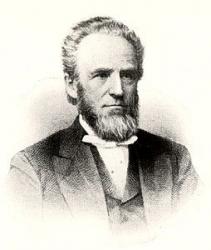
Ray Palmer

1808 - 1887 Author of "Lord, Thou hast taught our hearts to glow" in College Hymnal Ray Palmer (b. Little Compton, RI, 1808; d. Newark, NJ, 1887) is often considered to be one of America's best nineteenth-century hymn writers. After completing grammar school he worked in a Boston dry goods store, but a religious awakening prodded him to study for the ministry. He attended Yale College (supporting himself by teaching) and was ordained in 1835. A pastor in Congregational churches in Bath, Maine (1835-1850), and Albany, New York (1850-1865), he also served as secretary of the American Congregational Union (1865-1878). Palmer was a popular preacher and author, writing original poetry as well as translating hymns. He published several volumes of poetry and hymns, including Sabbath Hymn Book (1858), Hymns and Sacred Pieces (1865), and Hymns of My Holy Hours (1868). His complete poetical works were published in 1876. Bert Polman =================== Palmer, Ray, D.D., son of the Hon. Thomas Palmer, a Judge in Rhode Island, was born at Little Compton, Rhode Island, Nov. 12, 1808. His early life was spent at Boston, where he was for some time clerk in a dry-goods store. At Boston he joined the Park Street Congregational Church, then under the pastoral care of Dr. S. E. Dwight. After spending three years at Phillips Academy, Andover, he entered Yale College, New Haven, where he graduated in 1830. In 1835 he became pastor of the Central Congregational Church, Bath, Maine. During his pastorate there he visited Europe in 1847. In 1850 he was appointed to the First Congregational Church, at Albany, New York, and in 1865 Corresponding Secretary to the American Congregational Union, New York. He resigned in 1878, and retired to Newark, New Jersey. He died at Newark, Mar. 29, 1887. Dr. Palmer's published works in prose and verse include:-- (1) Memoirs and Select Remains of Charles Pond, 1829; (2) The Spirit's Life, a Poem, 1837; (3) How to Live, or Memoirs of Mrs. C. L. Watson, 1839; (4) Doctrinal Text Book, 1839; (5) Spiritual Improvement, 1839, republished as Closet Hours in 185; (6) What is Truth? or Hints on the Formation of Religious Opinions, 1860; (7) Remember Me, or The Holy Communion, 1865; (8) Hymns and Sacred Pieces, with Miscellaneous Poems, 1865; (9) Hymns of my Holy Hours, and Other Pieces, 1868; (10) Home, or the Unlost Paradise, 1873; and (11) Voices of Hope and Gladness, 1881. Most of Dr. Palmer's hymns have passed into congregational use, and have won great acceptance. The best of them by their combination of thought, poetry, and devotion, are superior to almost all others of American origin. The first which he wrote has become the most widely known of all. It is:— 1. My faith looks up to Thee. Faith in Christ. This hymn was written by the author when fresh from College, and during an engagement in teaching in New York. This was in 1830. The author says concerning its composition, "I gave form to what I felt, by writing, with little effort, the stanzas. I recollect I wrote them with very tender emotion, and ended the last line with tears." A short time afterwards the hymn was given to Dr. Lowell Mason for use, if thought good, in a work then being compiled by him and Dr. T. Hastings. In 1831 that work was published as Spiritual Songs for Social Worship: adapted to the use of Families, &c. Words and Music arranged by Thomas Hastings, of New York, and Lowell Mason of Boston. It is No. 141 in 4 stanzas of 8 lines, entitled "Self Consecration," and accompanied with the tune by Dr. L. Mason, there given as "My faith looks up to Thee, "but subsequently known as Olivet. (Orig. text of hymn in Thring's Collection, 1882.) It has passed into most modern collections in all English-speaking countries, and has been rendered into numerous languages. That in Latin, by H. M. Macgill (p. 708, ii.), begins "Fides Te mea spectat." 2. Fount of everlasting love. Praise for renewed Spiritual Life. This also appeared in the Spiritual Songs, &c, 1831, No. 191, in 4 stanzas of 4 lines, and headed "Praise for a Revival." The hymns which are given below are all in Dr. Palmer's Poetical Works, N. Y., 1876, and the dates appended in brackets are those given by him in that work. 3. Thou who roll'st the year around. (1832.) Close of the Year. In several American collections. 4. Away from earth my spirit turns. (1833.) Holy Communion. Appeared in Lowell Mason's Union Hymns, in 4 stanzas of 4 lines. In the Church Praise Book, N. Y.. 1882, it begins with st. ii., "Thou, Saviour, art the Living Bread." 5. Before Thy throne with tearful eyes. (1834.) Liberty of Faith. 6. Stealing from the world away. (1834.) Evening. Written at New Haven in 1834, and is very popular in America. 7. Thine [Thy] holy day's returning. (1834.) Sunday Morning. 8. Wake thee, 0 Zion. (1862.) Zion Exultant. 9. We stand in deep repentance. (1834.) Lent. This last, No. 9, in common with Nos. 10, 11, 12, is marked "original," in the Presbyterian Parish Hymns, 1843. Probably they were given to the editors of that book in manuscript, and had not previously appeared. 10. And is there, Lord, a rest? (1843.) Rest in Heaven. Written at Bath, Maine, in 1843. 11. 0 sweetly breathe the lyres above. Consecration to Christ. This was accidentally omitted from Dr. Palmer's Poetical Works, 18?6. S. W. Duffield says:— "It was written in the winter of 1842-43, at a time of revival. At the previous Communion several had been received under circumstances that made Doddridge's hymn, ‘0 happy day that fixed my choice 'a most appropriate selection. Not caring to repeat it, and needing something similar, Dr. Palmer composed the present hymn." English Hymns, N. Y., 1886, p. 432. 12. When downward to the darksome tomb. (1842.) Death Contemplated. Written at Bath, Maine, 1842. From 1843 there comes a long break, and Dr. Palmer seems to have done no more hymn-writing until called upon by Professors Park and Phelps, of Andover, for contributions to their Sabbath Hymn-Book, 1858. His hymns written for that important collection rank amongst the best that America has produced. This is specially true of the first four (Nos. 13-16) from the Latin. 13. Jesus, Thou joy of loving hearts. (l858.) Translation of a cento from "Jesu dulcis memoria" (p. 588, ii.). 14. 0 Bread to Pilgrims given. (1858.) Translation of “O esca viatorum" (q.v.). 15. 0 Christ our King, Creator Lord. (1858.) Translation of “Rex Christe, factor omnium " 16. Come Holy Ghost, in love. (1858.) Translation of “Veni Sancte Spiritus" (q.v.) 17. Jesus, these eyes have never seen. (1858.) Christ loved, though unseen. This hymn is accounted by many as next in merit and beauty to "My faith looks up to Thee." 18. Lord, my weak thought in vain would climb. (1858.) God Unsearchable. This hymn deals with the mysteries of Predestination in a reverent and devout manner. 19. Thy Father's house! thine own bright home. (1858.) Heaven. The next group, Nos. 20-27, appeared in Dr. Robinson's Songs for the Sanctuary, 1865. 20. Lord, Thou wilt bring the joyful day. (1864.) Contemplation of Heaven. Written in New York City. 21. Eternal Father, Thou hast said. (i860.) Missions. 22. Jesus, Lamb of God, for me. (1863.) Jesus, the Way of Salvation. Written in Albany, New York. 23. Take me, 0 my Father, take me. (1864.) Lent. 24. Wouldst thou eternal life obtain. (1864.) Good Friday. 25. Come Jesus, Redeemer, abide Thou with me. (1864.) Holy Communion. 26. Lord, Thou on earth didst love Thine own. (1864.) Fellowship with Christ. 27. Thou, Saviour, from Thy throne on high. (1864.) Prayer. The next four (Nos. 28-31) present another group. They appeared in D. E. Jones's Songs for the New Life, 1869, and the Reformed Dutch Hymns of the Church, N. Y., 1869. The dates of composition are from Dr. Palmer's Poems, 1876. 28. Lord, Thou hast taught our hearts to glow. (1865.) Ordination, or Meeting of Ministers. 29. When inward turns my searching gaze. (1868.) Evening. 30. 0 Jesus, sweet the tears I shed. (1867.) Good Friday. 31. Jesus, this [my] heart within me burns. (1868.) Love. The hymns which follow are from various sources. 32. 0 Christ, the Lord of heaven, to Thee. (1867.) Universal Praise to Christ. Appeared in the author's Hymns of my Holy Hours, 1867. It is a hymn of great merit, and is widely used. 33. Behold the shade of night is now receding. (1869.) A translation of "Ecce jam noctis." (p. 320, i., and Various). 34. Hid evening shadows let us all be waking. (1869.) A translation of "Nocte surgentes" (p. 809, i.). 35. I give my heart to Thee. (Aug. 20, 1868.) A translation of "Cor meum Tibi dedo," p. 262, ii. 36. Holy Ghost, that promised came. (1873.) Whitsuntide. From the author's Poems, 1876. 37. 0 Holy Comforter, I hear. The Comforter. Appeared in the Boston Congregationalist, September 7th, 1867. 38. Lord, when my soul her secrets doth reveal. (1865.) Holy Communion. Most of the foregoing hymns are in common in Great Britain, and all are found in one or more American hymnbooks of importance. [Rev. F. M. Bird, M.A.] -- John Julian, Dictionary of Hymnology (1907) =================== Palmer, Ray, D.D., p. 877, i. The following original hymns by Dr. Palmer are also in common use:— 1. O Rock of Ages, since on Thee. Faith. From his Poetical Works, 1876, p. 27, where it is dated 1869. Bp. Bickersteth says "This hymn"... is "worthy of Luther." (Note Hymnal Companion, ed. 1876.) 2. Thy holy will, my God, be mine. Resignation. From his Hymns of my Holy Hours, &c, 1868, p. 47. Also in his P. Works, 1876, dated 1867. 3. We praise Thee, Saviour, for Thy grace. Holy Communion. From his Hymns and Sacred Pieces, &c, 1865. Also in P. Works, 1876, dated 1864. --John Julian, Dictionary of Hymnology, Appendix, Part II (1907) ========== Ray Palmer was born at Little Compton, Rhode Island, in 1808. He studied at Phillip's Academy, Andover, Mass., and graduated at Yale College in 1830. In 1835, he was ordained pastor of a Congregational Society in Bath, Maine, from which he removed, in 1850, to the pastorate of a Congregational Society in Albany, N.Y. He has published many hymns, some of his own authorship, and some translations. He has published some sermons and reviews. --Annotations of the Hymnal, Charles Hutchins, M.A. 1872.

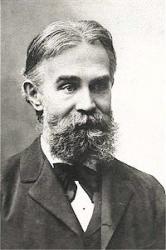
Frederick William Faber

1814 - 1863 Person Name: Frederick W. Faber Author of "My God, How Wonderful Thou Art" in Hymns for the Living Church Raised in the Church of England, Frederick W. Faber (b. Calverly, Yorkshire, England, 1814; d. Kensington, London, England, 1863) came from a Huguenot and strict Calvinistic family background. He was educated at Balliol College, Oxford, and ordained in the Church of England in 1839. Influenced by the teaching of John Henry Newman, Faber followed Newman into the Roman Catholic Church in 1845 and served under Newman's supervision in the Oratory of St. Philip Neri. Because he believed that Roman Catholics should sing hymns like those written by John Newton, Charles Wesley, and William Cowpe, Faber wrote 150 hymns himself. One of his best known, "Faith of Our Fathers," originally had these words in its third stanza: "Faith of Our Fathers! Mary's prayers/Shall win our country back to thee." He published his hymns in various volumes and finally collected all of them in Hymns (1862). Bert Polman ================= Faber, Frederick William, D.D., son of Mr. T. H. Faber, was born at Calverley Vicarage, Yorkshire, June 28, 1814, and educated at Balliol College, Oxford, graduating B.A. in 1836. He was for some time a Fellow of University College, in the same University. Taking Holy Orders in 1837, he became Rector of Elton, Huntingdonshire, in 1843, but in 1846 he seceded to the Church of Rome. After residing for some time at St. Wilfrid's, Staffordshire, he went to London in 1849, and established the London "Oratorians," or, "Priests of the Congregation of St. Philip Neri," in King William Street, Strand. In 1854 the Oratory was removed to Brompton. Dr. Faber died Sept. 26, 1863. Before his secession he published several prose works, some of which were in defence of the Church of England; and afterwards several followed as Spiritual Conferences, All for Jesus, &c. Although he published his Cherwell Waterlily and Other Poems, 1840; The Styrian Lake, and Other Poems, 1842; Sir Lancelot, 1844; and The Rosary and Other Poems, 1845; and his Lives of the Saints, in verse, before he joined the Church of Rome, all his hymns were published after he joined that communion. They were included in his:— (1) A small book of eleven Hymns1849, for the School at St. Wilfrid's, Staffordshire. (2) Jesus and Mary: or, Catholic Hymns for Singing and Reading, London 1849. In 1852 the 2nd edition was published with an addition of 20 new hymns. (3) Oratory Hymns, 1854; and (4) Hymns, 1862, being a collected edition of what he had written and published from time to time. Dr. Faber's account of the origin of his hymn-writing is given in his Preface to Jesus & Mary. After dwelling on the influence, respectively, of St. Theresa, of St. Ignatius, and of St. Philip Neri, on Catholicism; and of the last that "sanctity in the world, perfection at home, high attainments in common earthly callings…was the principal end of his apostolate," he says:— “It was natural then that an English son of St. Philip should feel the want of a collection of English Catholic hymns fitted for singing. The few in the Garden of the Soul were all that were at hand, and of course they were not numerous enough to furnish the requisite variety. As to translations they do not express Saxon thought and feelings, and consequently the poor do not seem to take to them. The domestic wants of the Oratory, too, keep alive the feeling that something of the sort was needed: though at the same time the author's ignorance of music appeared in some measure to disqualify him for the work of supplying the defect. Eleven, however, of the hymns were written, most of them, for particular tunes and on particular occasions, and became very popular with a country congregation. They were afterwards printed for the Schools at St. Wilfrid's, and the very numerous applications to the printer for them seemed to show that, in spite of very glaring literary defects, such as careless grammar and slipshod metre, people were anxious to have Catholic hymns of any sort. The manuscript of the present volume was submitted to a musical friend, who replied that certain verses of all or nearly all of the hymns would do for singing; and this encouragement has led to the publication of the volume." In the same Preface he clearly points to the Olney Hymns and those of the Wesleys as being the models which for simplicity and intense fervour he would endeavour to emulate. From the small book of eleven hymns printed for the schools at St. Wilfrid's, his hymn-writing resulted in a total of 150 pieces, all of which are in his Hymns, 1862, and many of them in various Roman Catholic collections for missions and schools. Few hymns are more popular than his "My God, how wonderful Thou art," "O come and mourn with me awhile," and "Sweet Saviour, bless us ere we go." They excel in directness, simplicity, and pathos. "Hark, hark, my soul, angelic songs are swelling," and "O Paradise, O Paradise," are also widely known. These possess, however, an element of unreality which is against their permanent popularity. Many of Faber's hymns are annotated under their respective first lines; the rest in common use include:— i. From his Jesus and Mary, 1849 and 1852. 1. Fountain of love, Thyself true God. The Holy Ghost. 2. How shalt thou bear the Cross, that now. The Eternal Years. 3. I come to Thee, once more, O God. Returning to God. 4. Joy, joy, the Mother comes. The Purification. 5. My soul, what hast thou done for God? Self-Examination 6. O how the thought of God attract. Holiness Desired. 7. O soul of Jesus, sick to death. Passiontide. Sometimes this is divided into two parts, Pt. ii. beginning, “My God, my God, and can it be." ii. From his Oratory Hymns, 1854. 8. Christians, to the war! Gather from afar. The Christian Warfare. 9. O come to the merciful Saviour that calls you. Divine Invitation. In many collections. 10. O God, Thy power is wonderful. Power and Eternity of God. 11. O it is sweet to think, Of those that are departed. Memory of the Dead. 12. O what are the wages of sin? The Wages of Sin. 13. O what is this splendour that beams on me now? Heaven. 14. Saint of the Sacred Heart. St. John the Evangelist. iii. From his Hymns, 1862. 15. Father, the sweetest, dearest Name. The Eternal Father. 16. Full of glory, full of wonders, Majesty Divine. Holy Trinity. 17. Hark ! the sound of the fight. Processions. 18. How pleasant are thy paths, 0 death. Death Contemplated. 19. O God, Whose thoughts are brightest light. Thinking no Evil. 20. O why art thou sorrowful, servant of God? Trust in God. 21. Souls of men, why will ye scatter? The Divine Call. 22. The land beyond the sea. Heaven Contemplated. 23. The thought of God, the thought of thee. Thoughts of God. 24. We come to Thee, sweet Saviour. Jesus, our Rest. In addition to these there are also several hymns in common use in Roman Catholic hymn-books which are confined to those collections. In the Hymns for the Year, by Dr. Rawes, Nos. 77, 110, 112, 117, 120, 121, 122, 125, 127, 128, 131, 140, 152, 154,169, 170, 174, 179, 180, 192, 222, 226, 230, 271, 272, are also by Faber, and relate principally to the Blessed Virgin Mary. Several of these are repeated in other Roman Catholic collections. --John Julian, Dictionary of Hymnology (1907 ================== Faber, Frederick William, p. 361, i. To this article the following additions have to be made:— 1. Blood is the price of heaven. Good Friday. (1862.) 2. Exceeding sorrowful to death. Gethsemane. This in the Scottish Ibrox Hymnal, 1871, is a cento from "O soul of Jesus, sick to death," p. 362, i., 7. 3. From pain to pain, from woe to woe. Good Friday. (1854.) 4. I wish to have no wishes left. Wishes about death. (1862.) 5. Why is thy face so lit with smiles? Ascension. (1849.) The dates here given are those of Faber's works in which the hymns appeared. In addition to these hymns there are also the following in common use:— 6. Dear God of orphans, hear our prayer. On behalf of Orphans. This appeared in a miscellaneous collection entitled A May Garland, John Philip, n.d. [1863], No. 1, in 7 stanzas of 4 lines. In the Roman Catholic Parochial Hymn Book, 1880, it begins, "O God of orphans, hear our prayer." 7. Sleep, sleep my beautiful babe. Christmas Carol. This carol we have failed to trace. 8. By the Archangel's word of love. Pt. i. Life of our Lord. This, and Pt. ii., “By the blood that flowed from Thee"; Pt. iii., "By the first bright Easter day"; also, "By the word to Mary given"; "By the name which Thou didst take"; in The Crown Hymn Book and other Roman Catholic collections, we have seen ascribed to Dr. Faber, but in the Rev. H. Formby's Catholic Hymns, 1853, they are all signed "C. M. C," i.e. Cecilia M. Caddell (p. 200, i.). --John Julian, Dictionary of Hymnology, Appendix, Part II (1907) ====================== Faber, F. W., pp. 361, i.; 1562, ii. We are informed by members of Dr. Faber's family that his father was Mr. Thomas Henry Faber, sometime Lay Secretary of the Bishop of Durham. In addition to his hymns already noted in this Dictionary, the following are found in various Roman Catholic collections, viz.:— i. From St. Wilfrid's Hymns, 1849:— 1. Dear Father Philip, holy Sire. S. Philip Neri. 2. Hail, holy Joseph, hail. S. Joseph. 3. Mother of Mercy, day by day. Blessed Virgin Mary. ii. Jesus and Mary, 1849:— 4. Ah ! dearest Lord! I cannot pray. Prayer. 5. Dear Husband of Mary. S. Joseph. 6. Dear Little One, how sweet Thou art. Christmas. 7. Father and God! my endless doom. Predestination. 8. Hail, holy Wilfrid, hail. S. Wilfrid. 9. O Jesus, if in days gone by. Love of the World. 10. O turn to Jesus, Mother, turn. B. V. M. 11. Sing, sing, ye angel bands. Assum. B. V. M. iii. Jesus and Mary, 1852:— 12. All ye who love the ways of sin. S. Philip Neri. 13. Day set on Rome! its golden morn. S. Philip Neri. 14. Hail, bright Archangel! Prince of heaven. S. Michael. 15. Hail, Gabriel, hail. S. Gabriel. 16. O Flower of Grace, divinest Flower. B. V. M. 17. Saint Philip! 1 have never known. S. Philip Neri. 18. Sweet Saint Philip, thou hast won us. S. Philip Neri. Previously in the Rambler, May, 1850, p. 425. iv. Oratory Hymns, 1854:— 19. Day breaks on temple roofs and towers. Expect. of B. V. M. 20. How gently flow the silent years. S. Martin and S. Philip. 21. How the light of Heaven is stealing. Grace. 22. Like the dawning of the morning. Expect. of B. V. M. 23. Mother Mary ! at thine altar. For Orphans. 24. My God! Who art nothing but mercy and kindness. Repentance. 25. O blessed Father! sent by God. S. Vincent of Paul. 26. O do you hear that voice from heaven? Forgiveness. 27. The chains that have bound me. Absolution. 28. The day, the happy day, is dawning. B. V. M. 29. The moon is in the heavens above. B. V. M. 30. Why art thou sorrowful, servant of God? Mercy. v. Hymns, 1862:— 31. At last Thou art come, little Saviour. Christmas. 32. By the spring of God's compassions. S. Raphael. 33. Fair are the portals of the day. B. V. M. 34. Father of many children. S. Benedict. 35. From the highest heights of glory. S. Mary Magdalene. 36. Like the voiceless starlight falling. B. V. M. 37. Mary! dearest mother. B. V. M. 38. Mother of God, we hail thy heart. B. V. M. 39. O Anne! thou hadst lived through those long dreary years. S. Anne. Previously in Holy Family Hymns, 1860. 40. O balmy and bright as moonlit night. B. V. M. 41. O Blessed Trinity! Thy children. Holy Trinity. 42. O dear Saint Martha, busy saint. S. Martha 43. O Mother, will it always be. B. V. M. 44. O vision bright. B. V. M. 45. Summer suns for ever shining. B. V. M. 46. There are many saints above. S. Joseph. Previously in Holy Family Hymns, 1860. vi. Centos and altered forms:— 47. Confraternity men to the fight. From "Hark the sound of the fight," p. 362, i. 48. Hail, sainted Mungo, hail. From No. 8. 49. I bow to Thee, sweet will of God. From "I worship Thee," p. 559, ii. 50. They whom we loved on earth. From "0 it is sweet to think," p. 362, i. 51. Vincent! like Mother Mary, thou. From No. 25. When Dr. Faber's hymns which are in common use are enumerated, the total falls little short of one hundred. In this respect he outnumbers most of his contemporaries. [Rev. James Mearns] --John Julian, Dictionary of Hymnology, New Supplement (1907) -------------- See also in: Hymn Writers of the Church

Ehrenfried Liebich

1713 - 1780 Person Name: E. Liebig Author of "Aus Gnaden wird der Mensch gerecht" in Gesangbuch der Evangelischen Gemeinschaft Liebich, Ehrenfried, was born July 15, 1713, at Probsthain, near Goldberg, Silesia, where his father was a miller. He assisted his father in the mill up to his sixteenth year, and was thereafter allowed to study at the Latin school at Schweidnitz, and the St. Elisabeth school at Breslau. At Easter, 1738, he entered the University of Leipzig as a student of Theology, and on concluding his course in 1740, was for some time engaged in private tuition. In April, 1742, he became pastor at Lomnitz and Erdmannsdorf, near Hirschberg, Silesia, and remained there till his death on June 23, 1780 (Koch, vi. 391; Allgemeine Deutsche Biographie, xviii. 584, &c). Liebich is one of the best German hymn-writers of the middle of the 18th century; Scriptural, heartfelt, and good in style, always edifying, if sometimes too didactic. He had begun hymn-writing about 1749, and contributed 8 hymns to the Hirschberg Gesang-Buch, 1752. A copy of this book fell into the hands of C. F. Gellert during a visit to Carlsbad in 1763, and through his encouragement Liebich began again to compose hymns. He published his compositions as: (1) Geistliche Lieder und Oden, &c, Hirschberg and Leipzig, 1768, with 142 hymns. (2) New ed., Liegnitz, 1773; with a second part, entitled, Geistliche Lieder zur Erbauung, Liegnitz, 1774, with 94 hymns. A considerable number of his hymns passed into German common use, and still hold their place. Those which have been translated into English are:— i. Dir, dir, du Geber aller Gaben. Harvest Thanksgiving. 1768, p. 128, in 16 st. of 6 1., entitled, "The Goodness of God in the Harvest." This has passed into English through the following forms. 1. O dass doch bei der reichen Ernte. This is st. xi.-xvi., as altered by J. S. Diterich, in the Berlin Gesang-Buch, 1780, No. 172 ; repeated in the Berlin Geistliche Lieder, ed. 1863. From this form the recasts of st. xii.-xvi., beginning, “Kommt, Christen, Gottes Huld zu feiern," were included, as No. 250, in Bunsen's Versuch, 1833, and translated as: Come, Christians, praise your Maker's goodness. A good translation from Bunsen, by Miss Winkworth, as No. 181, in her Chorale Book for England; repeated in the Ohio Evangelical Lutheran Hymnal,1880. 2. Wir kommen deine Huld zu feiern. This is a very greatly altered form of st. xii. ff., as No. 850, in the Berlin Gesang-Buch, 1829; retaining little either from Liebich or Diterich. It is repeated in Bunsen's Versuch, 1833, No. 666, and the Württemberg Gesang-Buch, 1842, No. 543. The translation in common use from this form is:— We come, our hearts with gladness glowing. A good translation from the text of 1829, by Miss Cox, in her Sacred Hymns from the German, 1841, p. 199; repeated, abridged, in the American Unitarian Hymns for the Church of Christ, Boston, 1853, and in Archdeacon Pott's Collection, 1861. Another translation is: "O Lord, Thy goodness we adore," by Lady E. Fortescue, 1843, p. 29. ii. Gott ist getreu! Sein Herz, sein Vaterherz. Trust in God. 1768, p. 181, in 9 st. of 9 lines, entitled, "The faithful God, 1 Cor. x. 13." It is a beautiful hymn, and has been specially appreciated in Württemberg, where it is found in the Württemberg Gesang-Buch, 1791, No. 24 (1842, No. 45). Lauxmann, in Koch, viii. 416, says it was the favourite hymn of J. C. F. Steudel, Professor of Theology at Tübingen, who died 1837; was sung by the Württemberg contingent at a field service near Toul, in August, 18-70, during the Franco-German War, &c. The translations are:— 1. Our God is true! Them He will ne'er forsake. In full, by Dr. H. Mills, in his Horae Germanica, 1845 (1856, p. 182); repeated, abridged, in the American Lutheran General Synod's Collection, 1852, and the Ohio Evangelical Lutheran Hymnal, 1880. 2. My God is true! His heart, a Father's heart. A good and full translation by R. Massie, in his Lyra Domestica, 2nd Ser., 1864, p. 119; repeated, in full, in Reid's Praise Book, 1872; and abridged in the Ibrox Hymnal, 1871. iii. Hier ist mein Herz! Mein Gott, ich geb' es dir. Self-surrender to God. 1768, p. 79, in 9 st. of 9 1. (11. 1, 9 of each st. being "Hier ist mein Herz"), entitled, “Surrender of the heart to God," and suggested by Proverbs xxiii. 26. Included, as No. 763, in the Berlin Geistliche Lieder, ed. 1863. Translated as :— Here is my heart! my God I give it Thee. A good translation, omitting st. iv., by Mrs. Findlater, in Hymns from the Land of Luther, 1st Ser., 1854, p. 16 (1884, p. 21). Included, in full, in Boardman's Selections, Philadelphia, U.S., 1861; Lyra Eucharistica, 1863 and 1864, &c. The translations of st. i.-iii., v., reduced to 6 8's, and beginning, "Here is my heart, I give it Thee," were included in the American Sabbath Hymn Book, 1858; and, repeated, omitting st. ii., in the Christian Hymn Book, Cincinnati, 1865. iv. So bringen wir den Leib zur Ruh. Burial. 1774, p. 204, in 12 st., entitled, "At the burial of a corpse." In the Bavarian Gesang-Buch., 1854, No. 229, beginning "Nun bringen wir." Translated as, "This body, weary and distressed," by Dr. H. Harbaugh, in the German Reformed Guardian, June, 1863, p. 187. [Rev. James Mearns, M.A.] --John Julian, Dictionary of Hymnology (1907)

John Morison

1750 - 1798 Person Name: John Morison, 1749-1798 Alterer of "The people who in darkness walked" in The Hymnal 1982 Morison, John, D.D., was born in Aberdeenshire in 1749. He studied at the University of Aberdeen (King's College), where he graduated M.A. in 1771. In 1780 he became parish minister of Canisbay, Caithness. He received the degree of D.D. from the University of Edinburgh in 1792. He died at Canisbay, June 12, 1798. He was one of the members added on May 26, 1781, to the Committee appointed by the General Assembly of 1775 to revise the Translations and Paraphrases of 1745. To him are ascribed Nos. 19, 21, 29, 30 and 35, in the 1781 collection, and he is said to have been joint author with John Logan of Nos. 27 and 28. [Rev. James Mearns, M.A.] --John Julian, Dictionary of Hymnology (1907)

John Morrison

Person Name: John Morrison, 1749-1798 Author of "The people that in darkness sat" in CPWI Hymnal

Nicholas Brady

1659 - 1726 Person Name: The Rev. Nicholas Brady, D.D. (1659-1726) Author of "O God! we praise Thee, and confess" in The Evangelical Hymnal with Tunes Nicholas Brady, the son of an officer in the Royalist army, was born in Brandon, Ireland, 1659. He studied at Westminster School, and at Christ Church College, oxford, and graduated at Trinity College, Dublin. He held several positions in the ministry, but later in life retired to Richmond Surrey, where he established a school. Here he translated some of the Psalms. Several volumes of his sermons and smaller works were published, but his chief work, like that of his co-colabourer Tate, was the "Metrical Version of Psalms." This version was authorized by King William in 1696, and has, since that time, taken the place of the earlier translation by Sternhold and Hopkins, which was published in 1562. The whole of the Psalms, with tunes, appeared in 1698, and a Supplement of Church Hymns in 1703. Of this version, which has little poetic merit, Montgomery says "It is nearly as inanimate as the former, though a little more refined." None of the "Metrical Psalms" are to be compared with the Psalms of the Prayer Book Psalter, and very few of them are worthy a place in a collection of hymns. --Annotations of the Hymnal, Charles Hutchins, 1872.

John Austin

1613 - 1669 Author of "Behold, we come, dear Lord, to thee" in The Harvard University Hymn Book See also Birchley, William, 1613-1699 John Austin, born 1613, Walpole, Norfolk; died 1669, London was a Catholic author who wrote under the pseudonym William Birchley. Evangelical Lutheran Hymnal, 1908 ===================== Austin, John, born at Walpole, Norfolk, and educated at St. John's, Cambridge (cr. 1640). He became a Roman Catholic, entered Lincoln's Inn to study for the Bar: subsequently became a tutor, and finally devoted himself to literature. Died in London, 1669. His works include The Christian Moderator, Reflections upon the Oaths of Supremacy, and:— Devotions in the Antient Way of Offices Containing Exercises for every day in the Week. 1668. This last work, through which Austin is associated with hymnody, attained a 2nd ed. in 1672,3rd ed. 1684, and two 4th eds. 1685. (A second part, consisting of a Harmony of the Gospels, was also published, and is of excessive rarity. A third, according to Anthony a Wood, existed in MS.) It was a Roman Catholic Manual, and contained 43 hymns, 39 of which are in the first edition, and those added in the third edition are perhaps by the editor. A few of these were renderings from the Latin by R. Crashaw, altered and adapted by Austin. In 1686 it was adapted for members of the Church of England by Theophilus Dorrington, and again in 1687 by the Lady Susanna Hopton under the editorship of George Hickes, afterwards a Nonjuring Bishop. Of the 5th ed., 1717, of the last adaptation, a reprint was published by Masters in 1856. [William T. Brooke] --John Julian, Dictionary of Hymnology, p. 97 (1907)

William Channing Gannett

1840 - 1923 Author of "The Lord is in his Holy Place" in The Beacon Song and Service book Gannett, William Channing, M.A., s. of Dr. Ezra Stiles Gannett, was b. at Boston, March 13, 1840, and educated at Harvard College, 1860, and the Divinity School, Cambridge. Entered the Unitarian Ministry in 1868, and after filling several pastorates he became Pastor of the Unitarian Church at Rochester, N.Y., 1889. Mr. Gannett's hymns, mainly written for special occasions, were included in great part in The Thought of God in Hymns and Poems, Boston, 1st Series 1885,2nd Series 1894, the combined production of F. L. Hosmer (q.v.) and himself. Of Mr. Gannett's hymns the following are in common use:— 1. Bring, 0 morn, thy music [God Everlasting.] Written in 1893, and printed in A Chorus of Faith, being an account and resume of the Parliament of Religions, held in Chicago, 1893. Included in The Thought of God, 2nd Series, 1894, and again in several hymnals. 2. Clear in memory's silent reaches. [Memory.] Written in 1877 for a Free Religious Assoc. Festival, and published in The Thought of God, 1st Series, 1885. 3. Prom heart to heart, from creed to creed. [Faith.] Written in 1875 for the 150th anniversary of the First Religious Society in Newburyport, and given in The Thought of God, 1ist Series, 1885. Usually st. ii. is omitted. 4. He hides within the lily. [Divine Providence.] "Consider the lilies, how they grow." Written in 1873, and printed for use at the Free Religious Assoc. Festival, May 30th, 1873. Published in The Thought of God, &c, 1st Series, 1885, in 4 stanzas of 8 lines. The most widely used of the author's hymns. 5. I hear it often in the dark. [The Voice of God.] Written at Milwaukee, in 1870, and published in The Thought of God, &c, 1st Series, 1885. Sometimes it begins with st. iii., "0 God within, so close to me," as in Hymns for Church and Home, Boston, 1895. 6. Praise to God and thanksgiving. [ Harvest.] Written in 1872 for a Harvest Festival at St. Paul's, Minn., of which he was then Pastor, and included in The Thought of God &c, 1st Series, 1885. in the Boston Pilgrim Hymnal, 1904, it begins "Praise to God, and thanks we bring." 7. Sleep, my little Jesus. [ Christmas Carol.] Written for the Sunday School, St. Paul's, Minn., in 1882, and given in The Thought of God, 2nd Series, 1894, as "Mary's Manger Song." 8. The Lord is in His holy place. [Dedication of a Place of Worship.] Written for the Dedication of the Rev. C. W. Wendte's Church, Chicago, April 24, 1873, and pub. in The Thought of God, &c, 1st Series, 1885. It is one of the most popular and widely used of the author's hymns. 9. The morning hangs its signal. [Morning.] This is dated by the author "Chicago, July 30, 1886," and printed in Love to God and Love to Man, being No. 28 ot the Chicago "Unity Mission" series of hymns (N.D.). Also included in The Thought of God, &c, 2nd Series, 1894. Although in some sense a Morning hymn, it is adapted for use in Advent. It is usually known as “The Crowning Day." 10. The Truth is the Voice of God. In the "Unity Mission" Series, No. 28 (see above), this is given as No. 33, with the title "Truth and Righteousness and Love," in 4 stanzas of 4 lines and a refrain of 4 lines. These annotations are based upon manuscript notes kindly supplied by the author. The use made of Mr. Gannett's hymns shows that their poetic beauty and loving sympathy with all things beautiful and pure, are widely appreciated in America and to a limited extent in Great Britain also. --John Julian, Dictionary of Hymnology, New Supplement (1907)

Pages


Export as CSV
It looks like you are using an ad-blocker. Ad revenue helps keep us running. Please consider white-listing Hymnary.org or getting Hymnary Pro to eliminate ads entirely and help support Hymnary.org.