You help make Hymnary.org possible. More than 10 million people from 200+ countries found hymns, liturgical resources and encouragement on Hymnary.org in 2025, including you. Every visit affirms the global impact of this ministry.

If Hymnary has been meaningful to you this year, would you take a moment today to help sustain it? A gift of any size—paired with a note of encouragement if you wish—directly supports the server costs, research work and curation that keep this resource freely available to the world.

Give securely online today, or mail a check to:
Hymnary.org
Calvin University
3201 Burton Street SE
Grand Rapids, MI 49546

Thank you for your partnership, and may the hope of Advent fill your heart.

Person Results

Meter:8.7.8.7 with refrain
In:person

Planning worship? Check out our sister site, ZeteoSearch.org, for 20+ additional resources related to your search.
Showing 71 - 80 of 477Results Per Page: 102050

W. S. Marshall

Meter: 8.7.8.7 with refrain Composer of "BLESSED QUIETNESS" in Sing the Faith He composed tunes for gospel lyric writers. John Perry

Valeria A. Foster

Meter: 8.7.8.7 with refrain Arranger of "HEAVEN" in African American Heritage Hymnal

Mylon LeFevre

1944 - 2023 Person Name: Mylon R. LeFevre Meter: 8.7.8.7 with refrain Author of "Without Him" in Baptist Hymnal 1991 Mylon Raymond LeFevre At 17 years old, he wrote his first song, "Without Him." Elvis Presley recorded it in 1963, and within a year, 126 artists had recorded his songs. In the secular world, he played and/or socialized with Eric Clapton, Elton John, Alvin Lee, Billy Joel, Duane Allman, Berry Oakley, Little Richard, the Who, Yes, Ten Years After, Rick Derringer, Traffic, George Harrison, Paul McCartney, Charlie Daniels, Tina Turner, Willie Nelson, Mick Fleetwood, Mountain, ZZ Top, and Grand Funk Railroad. He founded the Christian rock band Mylon and Broken Heart in 1981. In 1988 they received a Grammy for Best Gospel Vocal Performance by a Duo or Group, Choir or Chorus for their album Crack the Sky. Over the next ten years, they received two Dove Awards. He stopped touring and recording with Broken heart in 1992 due to heart problems --Daniel Mahraun (from www.newreleasetuesday.com/)

Tom Fettke

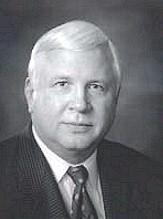
b. 1941 Person Name: Tom Fetke Meter: 8.7.8.7 with refrain Composer of "TELL YOUR CHILDREN" in Psalter Hymnal (Gray) Thomas E. Fettke (b. Bronx, New York City, 1941) Educated at Oakland City College and California State University, in Hayward, CA, Fettke has taught in several public and Christian high schools and served as minister of music in various churches, all in California. He has published over eight hundred composi­tions and arrangements (some under the pseudonyms Robert F. Douglas and David J. Allen) and produced a number of recordings. Fettke was the senior editor of The Hymnal for Worship and Celebration (1986). Bert Polman

Harry S. Mason

1881 - 1964 Meter: 8.7.8.7 with refrain Composer of "BEACON HILL" in Hymns for the Living Church Harry Silvernale Mason

Josephine Pollard

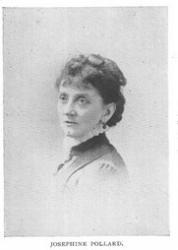
1834 - 1892 Meter: 8.7.8.7 with refrain Author of "Joy-bells! Joy-bells!" in The Book of Praise Josephine Pollard USA 1834-1892. Born at NYC, NY, one of seven children and daughter of an architect, she attended an exclusive girls school, Spingler Institute, and was a lifelong member of the Presbyterian Church. She was a founding member of the professional women’s club, Sorosis. She never married. She became an author, poet, and hymnist, writing many children’s books and for children’s magazines, including Harper’s, Scribner’s, and the New York Ledger. She wrote 44 books, mostly religious, for children, but also about history, birds, sports and games, and adventure stories. She also wrote 100+ hymn lyrics as well. She worked as an editor for the Sunday School Times and for the Methodist Book Concern, where she edited a magazine for African Americans. Her children’s books include: “History of the U.S.” (1884); “The life of George Washington” ; “The life of Christ for young people”; “History of the New Testament in words of one syllable” (1899); “History of the Old Testament in words of one syllable” (1899); “Bible stories for children” (1899). She was in poor health in her latter years. She died at NYC, NY. John Perry =============== Pollard, Josephine, born in New York, circa 1840, is the author of (1) "I stood outside the gate" (Lent), (2) "Joy-bells ringing, Children singing" (Joy) in I. D. Sankey's Sacred Songs and Solos, 1878. --John Julian, Dictionary of Hymnology, Appendix, Part II (1907)

Carrie B. Adams

1859 - 1940 Person Name: C. B. A. Meter: 8.7.8.7 with refrain Author of "Heavenly Father, Hear Thy Children" in The Christian Hymnary Adams, Carrie Belle (Wilson). (Oxford, Ohio, July 28, 1859-1940). Father, David Wilson, song writer, teacher of music. Married, 1880 to Allyn G. Adams, moved to Terre Haute, Indiana. Director and organist, First Congregational Church; Central Christian Church. Teacher (1887-1895), Indiana State Normal School. Wrote many anthems and cantatas, secular and religious, many published by Lorenz. --Keith C. Clark, DNAH Archives =================== Mrs. Carrie B. (Wilson) Adams was born in Oxford, Ohio, July 28, 1859. Her father, Mr. David Wilson, was author of a number of songs and books, also a singing teacher of note in his day, and her mother was quite musically inclined. Her experience with her father in elementary and advanced class work, in children's and harmony classes, her years of musical participation in solo work and in accompanying, in the organization and leadership, not only of choirs, but also of great choral organizations, her close touch with singers of elementary grade, as well as those of great skill and reputation, have given her a breadth of musical thought and practical power of adaptation that constantly enrich her work of composition. Miss Carrie B. Wilson became Mrs. Allyn G. Adams in 1880, and soon after located in Terre Haute, Ind., where her husband was a leading bass singer and interested in large commercial enterprises. Mrs. Adams soon became a leading figure in the musical life of that enterprising city, and has been actively identified with the Choral Club, Treble Clef Club, Rose Polytechnic Glee Club, First Congregational Church and Central Christian Church choirs, as director, chorister and organist. From 1887 to 1895 she occupied the chair of music in the Indiana State Normal School. Her first anthem was published in 1876. Among her best known publications are four anthem books — "Anthem Annual, Nos. 1 and 2," and " Royal Anthems, Nos. 1 and 2" ; "Music for Common Schools"; two sacred cantatas, "Redeemer and King " and "Easter Praise" ; an operetta for church and school use, "The National Flower"; a group of Shakespeare songs from "As You Like it," and a large number of anthems, male choruses, ladies' quartets and miscellaneous pieces in octavo form. http://archive.org/stream/biographyofgospe00hall/biographyofgospe00hall_djvu.txt

J. H. Fillmore

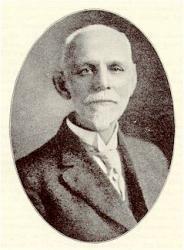
1849 - 1936 Person Name: J. H. F. Meter: 8.7.8.7 with refrain Arranger of "BLESSED QUIETNESS" in The Christian Hymnary James Henry Fillmore USA 1849-1936. Born at Cincinnati, OH, he helped support his family by running his father's singing school. He married Annie Eliza McKrell in 1880, and they had five children. After his father's death he and his brothers, Charles and Frederick, founded the Fillmore Brothers Music House in Cincinnati, specializing in publishing religious music. He was also an author, composer, and editor of music, composing hymn tunes, anthems, and cantatas, as well as publishing 20+ Christian songbooks and hymnals. He issued a monthly periodical “The music messsenger”, typically putting in his own hymns before publishing them in hymnbooks. Jessie Brown Pounds, also a hymnist, contributed song lyrics to the Fillmore Music House for 30 years, and many tunes were composed for her lyrics. He was instrumental in the prohibition and temperance efforts of the day. His wife died in 1913, and he took a world tour trip with single daughter, Fred (a church singer), in the early 1920s. He died in Cincinnati. His son, Henry, became a bandmaster/composer. John Perry

Jack Schrader

b. 1942 Meter: 8.7.8.7 with refrain Arranger of "CECELIA" in The Worshiping Church JACK SCHRADER (b. 1942), arranger, composer, conductor, vocalist, and organist/pianist, is past editor with Hope Publishing Company, retiring in January of 2009. His association with Hope began in 1978. A 1964 graduate of Moody Bible Institute of Chicago, where he majored in Voice and Organ, he also received the Bachelor of Music Education degree from the University of Nebraska (1966). Further studies in theology culminated in Jack's ordination by the Evangelical Free Church of America (1975). Born in St. Louis, Missouri, he now resides in Wheaton, Illinois, with his wife, Karen. They have three children, Beth, Jonathan and Joel, and currently three grandchildren. Jack is the best selling choral composer in the Hope catalog. In addition to choral music Jack has published collections for keyboardists, instrumentalists and vocal soloists. He was a member of the editorial committee for Hope's most recent hymnal, WORSHIP & REJOICE (2001), in which he has 24 hymn credits. His music is heard in hundreds of churches across the country each Sunday, and he can be seen throughout the year as a guest clinician at choral reading sessions and workshops. --www.hopepublishing.com

Lowell Mason

1792 - 1872 Meter: 8.7.8.7 with refrain Composer of "PEREZ" in Songs of Faith and Praise Dr. Lowell Mason (the degree was conferred by the University of New York) is justly called the father of American church music; and by his labors were founded the germinating principles of national musical intelligence and knowledge, which afforded a soil upon which all higher musical culture has been founded. To him we owe some of our best ideas in religious church music, elementary musical education, music in the schools, the popularization of classical chorus singing, and the art of teaching music upon the Inductive or Pestalozzian plan. More than that, we owe him no small share of the respect which the profession of music enjoys at the present time as contrasted with the contempt in which it was held a century or more ago. In fact, the entire art of music, as now understood and practiced in America, has derived advantage from the work of this great man. Lowell Mason was born in Medfield, Mass., January 8, 1792. From childhood he had manifested an intense love for music, and had devoted all his spare time and effort to improving himself according to such opportunities as were available to him. At the age of twenty he found himself filling a clerkship in a banking house in Savannah, Ga. Here he lost no opportunity of gratifying his passion for musical advancement, and was fortunate to meet for the first time a thoroughly qualified instructor, in the person of F. L. Abel. Applying his spare hours assiduously to the cultivation of the pursuit to which his passion inclined him, he soon acquired a proficiency that enabled him to enter the field of original composition, and his first work of this kind was embodied in the compilation of a collection of church music, which contained many of his own compositions. The manuscript was offered unavailingly to publishers in Philadelphia and in Boston. Fortunately for our musical advancement it finally secured the attention of the Boston Handel and Haydn Society, and by its committee was submitted to Dr. G. K. Jackson, the severest critic in Boston. Dr. Jackson approved most heartily of the work, and added a few of his own compositions to it. Thus enlarged, it was finally published in 1822 as The Handel and Haydn Society Collection of Church Music. Mason's name was omitted from the publication at his own request, which he thus explains, "I was then a bank officer in Savannah, and did not wish to be known as a musical man, as I had not the least thought of ever making music a profession." President Winchester, of the Handel and Haydn Society, sold the copyright for the young man. Mr. Mason went back to Savannah with probably $500 in his pocket as the preliminary result of his Boston visit. The book soon sprang into universal popularity, being at once adopted by the singing schools of New England, and through this means entering into the church choirs, to whom it opened up a higher field of harmonic beauty. Its career of success ran through some seventeen editions. On realizing this success, Mason determined to accept an invitation to come to Boston and enter upon a musical career. This was in 1826. He was made an honorary member of the Handel and Haydn Society, but declined to accept this, and entered the ranks as an active member. He had been invited to come to Boston by President Winchester and other musical friends and was guaranteed an income of $2,000 a year. He was also appointed, by the influence of these friends, director of music at the Hanover, Green, and Park Street churches, to alternate six months with each congregation. Finally he made a permanent arrangement with the Bowdoin Street Church, and gave up the guarantee, but again friendly influence stepped in and procured for him the position of teller at the American Bank. In 1827 Lowell Mason became president and conductor of the Handel and Haydn Society. It was the beginning of a career that was to win for him as has been already stated the title of "The Father of American Church Music." Although this may seem rather a bold claim it is not too much under the circumstances. Mr. Mason might have been in the average ranks of musicianship had he lived in Europe; in America he was well in advance of his surroundings. It was not too high praise (in spite of Mason's very simple style) when Dr. Jackson wrote of his song collection: "It is much the best book I have seen published in this country, and I do not hesitate to give it my most decided approbation," or that the great contrapuntist, Hauptmann, should say the harmonies of the tunes were dignified and churchlike and that the counterpoint was good, plain, singable and melodious. Charles C. Perkins gives a few of the reasons why Lowell Mason was the very man to lead American music as it then existed. He says, "First and foremost, he was not so very much superior to the members as to be unreasonably impatient at their shortcomings. Second, he was a born teacher, who, by hard work, had fitted himself to give instruction in singing. Third, he was one of themselves, a plain, self-made man, who could understand them and be understood of them." The personality of Dr. Mason was of great use to the art and appreciation of music in this country. He was of strong mind, dignified manners, sensitive, yet sweet and engaging. Prof. Horace Mann, one of the great educators of that day, said he would walk fifty miles to see and hear Mr. Mason teach if he could not otherwise have that advantage. Dr. Mason visited a number of the music schools in Europe, studied their methods, and incorporated the best things in his own work. He founded the Boston Academy of Music. The aim of this institution was to reach the masses and introduce music into the public schools. Dr. Mason resided in Boston from 1826 to 1851, when he removed to New York. Not only Boston benefited directly by this enthusiastic teacher's instruction, but he was constantly traveling to other societies in distant cities and helping their work. He had a notable class at North Reading, Mass., and he went in his later years as far as Rochester, where he trained a chorus of five hundred voices, many of them teachers, and some of them coming long distances to study under him. Before 1810 he had developed his idea of "Teachers' Conventions," and, as in these he had representatives from different states, he made musical missionaries for almost the entire country. He left behind him no less than fifty volumes of musical collections, instruction books, and manuals. As a composer of solid, enduring church music. Dr. Mason was one of the most successful this country has introduced. He was a deeply pious man, and was a communicant of the Presbyterian Church. Dr. Mason in 1817 married Miss Abigail Gregory, of Leesborough, Mass. The family consisted of four sons, Daniel Gregory, Lowell, William and Henry. The two former founded the publishing house of Mason Bros., dissolved by the death of the former in 1869. Lowell and Henry were the founders of the great organ manufacturer of Mason & Hamlin. Dr. William Mason was one of the most eminent musicians that America has yet produced. Dr. Lowell Mason died at "Silverspring," a beautiful residence on the side of Orange Mountain, New Jersey, August 11, 1872, bequeathing his great musical library, much of which had been collected abroad, to Yale College. --Hall, J. H. (c1914). Biography of Gospel Song and Hymn Writers. New York: Fleming H. Revell Company.

Pages


Export as CSV
It looks like you are using an ad-blocker. Ad revenue helps keep us running. Please consider white-listing Hymnary.org or getting Hymnary Pro to eliminate ads entirely and help support Hymnary.org.