You help make Hymnary.org possible. More than 10 million people from 200+ countries found hymns, liturgical resources and encouragement on Hymnary.org in 2025, including you. Every visit affirms the global impact of this ministry.

If Hymnary has been meaningful to you this year, would you take a moment today to help sustain it? A gift of any size—paired with a note of encouragement if you wish—directly supports the server costs, research work and curation that keep this resource freely available to the world.

Give securely online today, or mail a check to:
Hymnary.org
Calvin University
3201 Burton Street SE
Grand Rapids, MI 49546

Thank you for your partnership, and may the hope of Advent fill your heart.

Person Results

Topics:christian+character
In:people

Planning worship? Check out our sister site, ZeteoSearch.org, for 20+ additional resources related to your search.
Showing 71 - 80 of 327Results Per Page: 102050

Jeremiah Ingalls

1764 - 1838 Person Name: Jer. Ingalls Topics: Living His Life Christian Character Composer of "I LOVE THEE" in Christ in Song Jeremiah Ingalls USA 1764-1838. Born at Andover, MA, his father died of hardships from the American Revolutionary War when he was thirteen. In VT, he worked as a farmer, Cooper, Taverner, and choirmaster. He mastered the bass viol (similar to a cello) and became a composer. He moved to Newbury, VT, in 1787, and in 1791 he married Mary (Polly) Bigelow of Westminster, MA, and they had eleven children (nine living to adulthood): Smith, Jeremiah, Joshua, Jeremiah, Mary, Moses, Elizabeth, John, Almyra, Isaac, and Hannah. He taught singing and began leading the singing at the First Congregational Church there. The choir became well-known, and people came from miles around to hear them sing. In 1800 he built and operated a tavern. He also worked as a cooper. In 1803 he became a deacon, and in 1805 he published a song book, “Christian Harmony”, that contained folk and popular songs with tunes used in spiritual songs sung in early religious revivals and campmeetings, some becoming hymns in later song books. It was said that at times he would be so immersed in his music that his livelihood suffered as a result. He was removed and excommunicated from his church in 1810, having a falling out with the church due to marriage infidelity that he refused to repent of. He ran his tavern for a number of years, but finally sold it and moved to Rochester, VT, in 1819, where he became the first choirmaster of the Church of Christ. His tenure there was successful, and he was a signer of the document establishing construction of the first church building in Rochester (1812). Later, his son, John, succeeded him as choirmaster there. the family’s last move was to a farm near Hancock, VT. He was described as short, portly, good-humored, and absentminded, and having a high voice, but singing bass well. His family was musical, some noted for their musical abilities. A singing society in VT was named for him and promoted singing events. Some of his music became well-known around the world. He died at Hancock, VT. Note: It is said that he wrote a letter to the First Congregational Church in Westminster 18 years after departing repenting of his infidelity (allegedly after his illegitimate son, Thomas, was of age, but the letter was lost in church records, although the church said they had received it. John Perry

A. H. Mann

1850 - 1929 Person Name: Arthur Henry Mann Topics: The Christian Year C; Annunciation; Biblical Characters David; Biblical Characters Mary, Mother of Jesus; Children Praising; Christian Year Christmas; Heaven(s)/Paradise; Jesus Christ Birth and Infancy; Jesus Christ Example; Jesus Christ Reign; Jesus Christ Second Coming; Obedience; Second Coming; Advent 4 Year A; Christmas Eve Year A; Christmas 1 Year A; Christmas 2 Year A; Epiphany Year A; Epiphany 5 Year A; Epiphany 6 Year A; Advent 4 Year B; Christmas Eve Year B; Christmas 1 Year B; Advent 3 Year C; Christmas 1 Year C Harmonizer of "IRBY" in Voices United Arthur Henry ‘Daddy’ Mann MusB MusD United Kingdom 1850-1929. Born at Norwich, Norfolk, England, he graduated from New College, Oxford. He married Sarah Ransford, and they had five children: Sarah, Francis, Arthur, John, and Mary. Arthur died in infancy. Mann was a chorister and assistant organist at Norwich Cathedral, then, after short stints playing the organ at St Peter’s, Wolverhampton (1870-71); St. Michael’s Tettenhall Parish Church (1871-75); and Beverley Minster (1875-76); he became organist at King’s College Chapel, Cambridge (1876-1929), Cambridge University organist (1897-1929), and music master and organist at the Leys School, Cambridge (1894-1922). In addition to composing an oratorio and some hymn tunes, he was music editor of the Church of England Hymnal (1894). In 1918 he directed the music and first service of “Nine lessons & carols” at King’s College Chapel. He was an arranger, author, composer, and editor. His wife, Sarah, died in 1918. He died at Cambridge, England. John Perry

Conrad Kocher

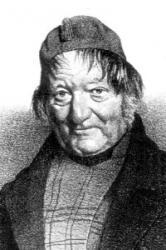
1786 - 1872 Topics: The Christian Year Epiphany; Adoration and Praise; Biblical Characters Wisemen/Sages/Kings; Christian Year Epiphany; City/City of God; Commitment; Consecration; Eternal Life; Hallelujah; Heaven(s)/Paradise; Jesus Christ Youth; Light; Processionals (Opening of Worship); Purity; Redemption; Seeking God; Service Music Offering; Sun; Christmas Day 2 Year A; Epiphany Year A; Baptism of Jesus Year A; Proper 28 Year A; Reign of Christ Year A; Christmas 2 Year B; Epiphany Year B; Epiphany 2 Year B; Proper 24 Year B; Proper 24 Year B; Proper 28 Year B; Reign of Christ Year B Composer of "DIX" in Voices United Trained as a teacher, Conrad Kocher (b. Ditzingen, Wurttemberg, Germany, 1786; d. Stuttgart, Germany, 1872) moved to St. Petersburg, Russia, to work as a tutor at the age of seventeen. But his love for the music of Haydn and Mozart impelled him to a career in music. He moved back to Germany in 1811, settled in Stuttgart, and remained there for most of his life. The prestigious Cotta music firm published some of his early compositions and sent him to study music in Italy, where he came under the influence of Palestrina's music. In 1821 Kocher founded the School for Sacred Song in Stuttgart, which popularized four-part singing in the churches of that region. He was organist and choir director at the Stiftskirche in Stuttgart from 1827 to 1865. Kocher wrote a treatise on church music, Die Tonkunst in der Kirche (1823), collected a large number of chorales in Zions Harfe (1855), and composed an oratorio, two operas, and some sonatas. William H. Monk created the current form of DIX by revising and shortening Conrad Kocher's chorale melody for “Treuer Heiland, wir sind hier,” found in Kocher's Stimmen aus dem Reiche Gottes (1838). Bert Polman

Edward Caswall

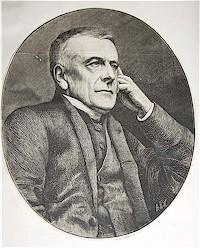
1814 - 1878 Person Name: Edward Caswall, 1814-1878 Topics: Christian Character Translator of "Come, Thou Holy Spirit, Come" in Common Praise (1998) Edward Caswall was born in 1814, at Yately, in Hampshire, where his father was a clergyman. In 1832, he went to Brasenose College, Oxford, and in 1836, took a second-class in classics. His humorous work, "The Art of Pluck," was published in 1835; it is still selling at Oxford, having passed through many editions. In 1838, he was ordained Deacon, and in 1839, Priest. He became perpetural Curate of Stratford-sub-Castle in 1840. In 1841, he resigned his incumbency and visited Ireland. In 1847, he joined the Church of Rome. In 1850, he was admitted into the Congregation of the Oratory at Birmingham, where he has since remained. He has published several works in prose and poetry. --Annotations of the Hymnal, Charles Hutchins, M.A. 1872 ===================== Caswall, Edward, M.A., son of the Rev. R. C. Caswall, sometime Vicar of Yately, Hampshire, born at Yately, July 15, 1814, and educated at Brasenose College, Oxford, graduating in honours in 1836. Taking Holy Orders in 1838, he became in 1840 Incumbent of Stratford-sub-Castle, near Salisbury, and resigned the same in 1847. In 1850 (Mrs. Caswall having died in 1849) he was received into the Roman Catholic communion, and joined Dr. Newman at the Oratory, Edgbaston. His life thenceforth, although void of stirring incidents, was marked by earnest devotion to his clerical duties and a loving interest in the poor, the sick, and in little children. His original poems and hymns were mostly written at the Oratory. He died at Edgbaston, Jan. 2, 1878, and was buried on Jan. 7 at Redwall, near Bromsgrove, by his leader and friend Cardinal Newman. Caswall's translations of Latin hymns from the Roman Breviary and other sources have a wider circulation in modern hymnals than those of any other translator, Dr. Neale alone excepted. This is owing to his general faithfulness to the originals, and the purity of his rhythm, the latter feature specially adapting his hymns to music, and for congregational purposes. His original compositions, although marked by considerable poetical ability, are not extensive in their use, their doctrinal teaching being against their general adoption outside the Roman communion. His hymns appeared in:— (1) Lyra Catholica, which contained 197 translations from the Roman Breviary, Missal, and other sources. First ed. London, James Burns, 1849. This was reprinted in New York in 1851, with several hymns from other sources added thereto. This edition is quoted in the indices to some American hymn-books as Lyra Cath., as in Beecher's Plymouth Collection, 1855, and others. (2) Masque of Mary, and Other Poems, having in addition to the opening poem and a few miscellaneous pieces, 53 translations, and 51 hymns. 1st ed. Lon., Burns and Lambert, 1858. (3) A May Pageant and Other Poems, including 10 original hymns. Lon., Burns and Lambert, 1865. (4) Hymns and Poems, being the three preceding volumes embodied in one, with many of the hymns rewritten or revised, together with elaborate indices. 1st ed. Lon., Burns, Oates & Co., 1873. Of his original hymns about 20 are given in the Roman Catholic Crown of Jesus Hymn Book, N.D; there are also several in the Hymns for the Year, N.D., and other Roman Catholic collections. --John Julian, Dictionary of Hymnology (1907) ====================== Caswall, E. , p. 214, ii. Additional original hymns by Caswall are in the Arundel Hymns, 1902, and other collections. The following are from the Masque of Mary, &c, 1858:— 1. Christian soul, dost thou desire. After Holy Communion. 2. Come, let me for a moment cast. Holy Communion. 3. O Jesu Christ [Lord], remember. Holy Communion. 4. Oft, my soul, thyself remind. Man's Chief End. 5. Sleep, Holy Babe. Christmas. Appeared in the Rambler, June 1850, p. 528. Sometimes given as "Sleep, Jesus, sleep." 6. The glory of summer. Autumn. 7. This is the image of the queen. B. V. M. His "See! amid the winter's snow,” p. 1037, i., was published in Easy Hymn Tunes, 1851, p. 36. In addition the following, mainly altered texts or centos of his translations are also in common use:— 1. A regal throne, for Christ's dear sake. From "Riches and regal throne," p. 870, ii. 2. Come, Holy Ghost, Thy grace inspire. From "Spirit of grace and union," p. 945, i. 3. Hail! ocean star, p. 99, ii,, as 1873. In the Birmingham Oratory Hymn Book, 1850, p. 158. 4. Lovely flow'rs of martyrs, hail. This is the 1849 text. His 1873 text is "Flowers of martyrdom," p. 947, i. 5. None of all the noble cities. From "Bethlehem! of noblest cities," p. 946, ii. 6. O Jesu, Saviour of the World. From “Jesu, Redeemer of the world," p. 228, ii. 7. 0 Lady, high in glory raised. From "O Lady, high in glory, Whose," p. 945, i. The Parochial Hymn Book, 1880, has also the following original hymns by Caswall. As their use is confined to this collection, we give the numbers only:— IS os. 1, 2, 3, 159 (Poems, 1873, p. 453), 209 (1873, p. 288), 299, 324 (1873, p. 323), 357, 402, 554, 555, 558, 569 (1873, p. 334). These are from his Masque of Mary 1858. Nos. 156, 207 (1873, p. 296), 208 (1873, p. 297), 518. These are from his May Pageant, 1865. As several of these hymns do not begin with the original first lines, the original texts are indicated as found in his Poems, 1873. [Rev. James Mearns, M.A.] --John Julian, Dictionary of Hymnology, New Supplement (1907)

Frederick Oakeley

1802 - 1880 Topics: The Christian Year Christmas; Angels; Biblical Characters Shepherds; Choruses and Refrains; Christian Year Christmas; Jesus Christ Birth and Infancy; Jesus Christ Divinity; Jesus Christ Incarnation; Jesus Christ Lord of Life; Music and Singing; Processionals (Opening of Worship); Responses Antiphonal; Service Music Gathering, Call to Worship, Greeting; Advent 4 Year A; Christmas Day 2 Year A; Advent 4 Year B; Christmas Eve Year B; Christmas Day 1 Year B; Advent 1 Year C; Christmas Eve Year C; Christmas Day 2 Year C Translator (into English) of "O Come, All Ye Faithful" in Voices United Frederic Oakeley graduated M.A. at Oxford, and took Orders in the Church of England. He became Prebendary of Lichfield Cathedral, preacher at Whitehall, and incumbent of Margaret Chapel, London. He was active in the "Oxford Movement," and in 1845, called attention to his views for the purpose of seeing if he could continue to hold an Oxford degree, with so great a change in his opinions. The question was tried, and he was perpetually suspended unless he retracted. He then resigned his positions in the Church of England, and entered the Church of Rome, in which he became a Priest, and Canon of the diocese of Westminster. His publications are numerous, and some of them have considerable value. --Annotations of the Hymnal, Charles Hutchins, M.A., 1872 ================= Oakeley, Frederick, D.D., youngest son of Sir Charles Oakeley, Bart., sometime Governor of Madras, was born at Shrewsbury, Sept. 5, 1802, and educated at Christ Church, Oxford (B.A. 1824). In 1825 he gained a University prize for a Latin Essay; and in 1827 he was elected a Fellow of Balliol. Taking Holy Orders, he was a Prebendary of Lichfield Cathedral, 1832; Preacher at Whitehall, 1837; and Minister of Margaret Chapel, Margaret Street, London, 1839. In 1845 he resigned all his appointments in the Church of England, and was received into the Roman Communion. Subsequently he became a Canon of the Pro-Cathedral in the Roman Catholic ecclesiastical district of Westminster. He died January 29, 1880. Miller (Singers and Songs of the Church, 1869, p. 497), writing from information supplied to him by Canon Oakeley, says:— ”He traces the beginning of his change of view to the lectures of Dr. Charles Lloyd, Regius Professor, delivered at Oxford about the year 1827, on the 'History and Structure of the Anglican Prayer Book.' About that time a great demand arose at Oxford for Missals and Breviaries, and Canon Oakeley, sympathising with the movement, co-operated with the London booksellers in meeting that demand.....He promoted the [Oxford] movement, and continued to move with it till, in 1845, he thought it right to draw attention to his views, to gee if he could continue to hold an Oxford degree in conjunction with so great a change in opinion. The question having been raised, proceedings were taken against him in the Court of Arches, and a sentence given that he was perpetually suspended unless he retracted. He then resigned his Prebendal stall at Lichfield, and went over to the Church of Rome." Canon Oakeley's poetical works included:— (1) Devotions Commemorative of the Most Adorable Passion of Our Lord and Saviour Jesus Christ, 1842; (2) The Catholic Florist; (3) The Youthful Martyrs of Rome, a Christian Drama, 1856; (4) Lyra Liturgica; Reflections in Verse for Holy Days and Seasons, 1865. Canon Oakeley also published several prose works, including a translation of J. M. Horst's Paradise of the Christian Soul, London, Burns, 1850. He is widely known through his translation of the “Adeste fideles.” Several of his original hymns are also in Roman Catholic collections. --John Julian, Dictionary of Hymnology (1907)

James Walch

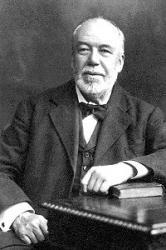
1837 - 1901 Topics: Christian Character Composer of "ST. GEORGE'S, BOLTON" in The Book of Common Praise James Walch was a musician and composer, born near Bolton, Lancashire, England in 1837. He spent his early life in the town and was organist in several churches there, including the parish church of St George’s. From 1870-1877, he was conductor for the Bolton Philharmonic Society. He also composed at least four published hymn tunes, the best known of which is called “Tidings”. Written in 1875, it’s usually used as the tune to a hymn called “O Zion Haste”. James Walch was a musical instrument dealer by trade, and moved to Barrow-in-Furness in 1877. He later moved to Llandudno Junction in North Wales, where he died in August 1901 and was buried locally. His wife later donated money to pay for the organs in two local churches, St Paul's Llandudno and All Saints Deganwy, in his memory. Three decades later, an article in the London Gazette reported on a dispute arising from his will, and mentioned that he had a son, Harry West Walch, who was a pianist and lived in Hereford. St Paul's Church, Llandudno newsletter; used by permission of Christ Dearden (Walch's wife paid for the organ at St. Paul's Church)

Melchior Teschner

1584 - 1635 Topics: The Christian Year Palm Sunday; Adoration and Praise; Angels; Biblical Characters David; Choruses and Refrains; Christian Year Passion/Palm Sunday; Exultation; Jesus Christ Adoration and Praise; Jesus Christ Kingship, Conqueror; Jesus Christ Lord of Life; Jesus Christ Son of God/Man (David); Joy; Music and Singing; Pilgrimage and Conflict; Prayer; Processionals (Opening of Worship); Recessionals; Redemption; Worship; Palm/Passion Sunday Year A; Palm/Passion Sunday Year B; Palm/Passion Sunday Year C Composer of "ST THEODULPH (VALET WILL ICH DIR GEBEN)" in Voices United Melchior Teschner (b. Fraustadt [now Wschowa, Poland], Silesia, 1584; d. Oberpritschen, near Fraustadt, 1635) studied philosophy, theology, and music at the University of Frankfurt an-der-Oder and later studied at the universities of Helmstedt and Wittenberg, Germany. From 1609 until 1614 he served as cantor in the Lutheran church in Fraustadt, and from 1614 until his death he was pastor of the church in Oberpritschen. Bert Polman

Robert Schumann

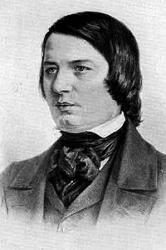
1810 - 1856 Person Name: fr. Schumann Topics: Love, and Communion With Christ; Christ Character of; Christians Love for Christ; Love For the Saviour; Christ Character of; Christians Love for Christ; Love For the Saviour Composer of "CANONBURY" in Laudes Domini Robert Alexander Schumann DM Germany 1810-1856. Born at Swickau, Saxony, Germany, the last child of a novelist, bookseller, and publisher, he began composing music at age seven. He received general music instruction at the local high school and worked to create his own compositions. Some of his works were considered admirable for his age. He even composed music congruent to the personalities of friends, who took note of the anomaly. He studied famous poets and philosophers and was impressed with the works of other famous composers of the time. After his father’s death in 1826, he went to Leipzig to study law (to meet the terms of his inheritance). In 1829 he continued law studies in Heidelberg, where he became a lifelong member of Corps Saxo-Borussia Heidelberg. In 1830 he left the study of law to return to music, intending to pursue a career as a virtuoso pianist. His teacher, Friedrich Wieck, assured him he could become the finest pianist in Europe, but an injury to his right hand (from a practicing method) ended that dream. He then focused his energies on composition, and studied under Heinrich Dorn, a German composer and conductor of the Leipzig opera. Schumann visited relatives in Zwickau and Schneeberg and performed at a concert given by Clara Wieck, age 13 at the time. In 1834 he published ‘A new journal for music’, praising some past composers and deriding others. He met Felix Mendelssohn at Wieck’s house in Leigzig and lauded the greatness of his compositions, along with those of Johannes Brahms. He also wrote a work, hoping to use proceeds from its sale towards a monument for Beethoven, whom he highly admired. He composed symphonies, operas, orchestral and chamber works, and also wrote biographies. Until 1840 he wrote strictly for piano, but then began composing for orchestra and voice. That year he composed 168 songs. He also receive a Doctorate degree from the University of Jena that year. An aesthete and influential music critic, he was one of the most regarded composers of the Romantic era. He published his works in the ‘New journal for music’, which he co-founded. In 1840, against the wishes of his father, he married Clara Wieck, daughter of his former teacher, and they had four children: Marie, Julie, Eugenie, and Felix. Clara also composed music and had a considerable concert career, the earnings from which formed a substantial part of her father’s fortune. In 1841 he wrote 2 of his 4 symphonies. In 1843 he was awarded a professorship in the Conservatory of Music, which Mendelssohn had founded in Leipzig that same year, When he and Clara went to Russia for her performances, he was questioned as to whether he also was a musician. He harbored resentment for her success as a pianist, which exceeded his ability as a pianist and reputation as a composer. From 1844-1853 he was engaged in setting Goethe’s Faust to music, but he began having persistent nervous prostration and developed neurasthenia (nervous fears of things, like metal objects and drugs). In 1846 he felt he had recovered and began traveling to Vienna, Prague, and Berlin, where he was received with enthusiasm. His only opera was written in 1848, and an orchestral work in 1849. In 1850 he succeeded Ferdinand Hiller as musical director at Dusseldorf, but was a poor conductor and soon aroused the opposition of the musicians, claiming he was impossible on the platform. From 1850-1854 he composed a wide variety of genres, but critics have considered his works during this period inferior to earlier works. In 1851 he visited Switzerland, Belgium, and returned to Leipzig. That year he finished his fourth symphony. He then went to Dusseldorf and began editing his complete works and making an anthology on the subject of music. He again was plagued with imaginary voices (angels, ghosts or demons) and in 1854 jumped off a bridge into the Rhine River, but was rescued by boatmen and taken home. For the last two years of his life, after the attempted suicide, Schumann was confined to a sanitarium in Endenich near Bonn, at his own request, and his wife was not allowed to see him. She finally saw him two days before he died, but he was unable to speak. He was diagnosed with psychotic melancholia, but died of pneumonia without recovering from the mental illness. Speculations as to the cause of his late term maladies was that he may have suffered from syphilis, contracted early in life, and treated with mercury, unknown as a neurological poison at the time. A report on his autopsy said he had a tumor at the base of the brain. It is also surmised he may have had bipolar disorder, accounting for mood swings and changes in his productivity. From the time of his death Clara devoted herself to the performance and interpretation of her husband’s works. John Perry

Felix Mendelssohn-Bartholdy

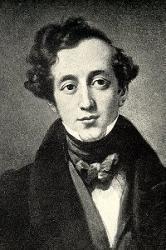
1809 - 1847 Person Name: fr. Mendelssohn Topics: Love, and Communion With Christ; Christ Character of; Christians Love for Christ; Love For the Saviour; Christ Character of; Christians Love for Christ; Love For the Saviour Arranger of "HOLY CROSS" in Laudes Domini Felix Mendelssohn-Bartholdy (b. Hamburg, Germany, 1809; d. Leipzig, Germany, 1847) was the son of banker Abraham Mendelssohn and the grandson of philosopher Moses Mendelssohn. His Jewish family became Christian and took the Bartholdy name (name of the estate of Mendelssohn's uncle) when baptized into the Lutheran church. The children all received an excellent musical education. Mendelssohn had his first public performance at the age of nine and by the age of sixteen had written several symphonies. Profoundly influenced by J. S. Bach's music, he conducted a performance of the St. Matthew Passion in 1829 (at age 20!) – the first performance since Bach's death, thus reintroducing Bach to the world. Mendelssohn organized the Domchor in Berlin and founded the Leipzig Conservatory of Music in 1843. Traveling widely, he not only became familiar with various styles of music but also became well known himself in countries other than Germany, especially in England. He left a rich treasury of music: organ and piano works, overtures and incidental music, oratorios (including St. Paul or Elijah and choral works, and symphonies. He harmonized a number of hymn tunes himself, but hymnbook editors also arranged some of his other tunes into hymn tunes. Bert Polman

Johann Balthasar König

1691 - 1758 Person Name: Johann Balthasar König (1691-1758) Topics: Christian Character Composer of "FRANCONIA" in Common Praise (1998) Johann Balthasar König; b. 1691, Waltershausen, near Gotha; d. 1758, Frankfort Evangelical Lutheran Hymnal, 1908

Pages


Export as CSV
It looks like you are using an ad-blocker. Ad revenue helps keep us running. Please consider white-listing Hymnary.org or getting Hymnary Pro to eliminate ads entirely and help support Hymnary.org.