You help make Hymnary.org possible. More than 10 million people from 200+ countries found hymns, liturgical resources and encouragement on Hymnary.org in 2025, including you. Every visit affirms the global impact of this ministry.

If Hymnary has been meaningful to you this year, would you take a moment today to help sustain it? A gift of any size—paired with a note of encouragement if you wish—directly supports the server costs, research work and curation that keep this resource freely available to the world.

Give securely online today, or mail a check to:
Hymnary.org
Calvin University
3201 Burton Street SE
Grand Rapids, MI 49546

Thank you for your partnership, and may the hope of Advent fill your heart.

Person Results

Topics:conversion+of+st.+paul
In:people

Planning worship? Check out our sister site, ZeteoSearch.org, for 20+ additional resources related to your search.
Showing 71 - 80 of 80Results Per Page: 102050

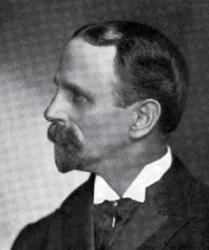
Walter Henry Hall

1862 - 1935 Topics: Holy Days Conversion of St. Paul Composer of "EGBERT" in The Hymnal Born: April 25, 1862, London, England. Died: 1938, New York City. Buried: Boothbay Harbor, Maine, the location of his summer home. Hall studied at the Royal Academy of Music for four years under George Macfarren, H. C. Bannister, Charles Steggall, and others. He emigrated to America in 1883, where he was organist and choirmaster at St. Luke’s Church, Germantown, Pennsylvania; St. Peter’s Church, Albany, New York; Church of the Heavenly Rest, New York City; St. James’ Church, New York City; and Cathedral of St. John the Divine, New York City. He founded and conducted the Brooklyn Oratorio Society, and founded the Cathedral Festival Choir. His works include: Essentials of Choir Boy Training --www.hymntime.com/tch/

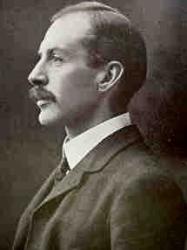
Charles Jeffries

b. 1896 Person Name: Charles J. Jeffries, 1925-1971 Topics: Saints' Days The Conversion of St. Paul Author of "O Lord, Send Forth Your Spirit" in Lutheran Book of Worship Jeffries, Sir Charles Joseph. (Beckenham, Kent, UK, 1896--December 10, 1972, Bromley, London). Church of England. Son of C.D. Jeffries. Married Myrtle Bennett, 1921. Graduated Malvern College and Magdalen College, Oxford. Lieutenant, Wilts Regiment, British Army, 1915-1917; Second Class Clerk, Colonial Office, 1917-1920; Principal, Colonial Office, 1920-1930; Assistant Secretary and Establishment Officer, Colonial Office, 1930-1939; Assistant Under-Secretary of State, Colonial Office, 1939-1947; Joint Department Under-Secretary of State, Colonial Office, 1947-1956. Vice president for many years of the United Society for the Propagation of the Gospel; member of the governing board of the Society for Promoting Christian Knowledge; member of the House of Laity, Anglican Church, 1950-1955. Officer, Order of the British Empire, 1937; Knight Commander of St. Michael and St. George, 1943. He wrote numerous books about Britain's colonial empire, and numerous articles on Christian unity. In his more famous book, Towards the Centre (1958), he described the "Centre" not as Rome, Canterbury, or Jerusalem, but Christ, who draws all men to himself. He wrote one hymn, "Speak Forth Your Word," which was first published in The Hymn Book of the Anglican Church of Canada and the United Church of Canada (1975). --C. Bernard Ruffin, DNAH Archives

A. Sayle

1886 - 1970 Person Name: Amy Sayle, 1886-1970 Topics: Saints' and Other Holy Days Conversion of St. Paul Author of "Paul the preacher, Paul the poet" in CPWI Hymnal

Didrik Petri

1560 - 1617 Person Name: Didrik Pederson of Åbo Topics: Conversion of St. Paul Composer of "SCRIBERE PROPOSUIT" in The Summit Choirbook

David Zimmer

Topics: Conversion of St. Paul Author of "May the Peoples Praise You" in Christian Worship

Frederick G. Russell

1867 - 1929 Person Name: Frederick G. Russell (1867-1929) Topics: Conversion of St. Paul Composer of "LOMBARD STREET" in The Summit Choirbook

Henry W. Mozley

b. 1842 Person Name: H. W. Mozley Topics: Holy Days Conversion of St. Paul Author of "Lord, Who fulfillest thus anew" in The Church Hymnal Mozley, Henry Williams, M.A., b. at Derby, April 22, 1842, Scholar and Fellow of King's College, Camb., graduated B.A. 1864; M.A. 1867; and was Assistant Master at Eton Torn 1864 to 1897. Mr. Mozley has contributed translations of various Medieval Sequences and Hymns to the Monthly Packet, and other publications. His hymns in common use are:— 1. Lord! Who fulflllest thus anew. [Conv. of St. Paul.] First published in the Evening Rest, and then in Hymns Ancient & Modern, 1904, No. 228. 2. Lord, Who while yet a boy wast found. [Confirmation.] One of two hymns written for use before and after the laying on of hands in Confirmation. It was included in Hymns Ancient & Modern 1904, No. 295. For use "Before Confirmation." --John Julian, Dictionary of Hymnology, New Supplement (1907)

Massey Hamilton Shepherd

1913 - 1990 Person Name: Massey H. Shepherd, Jr. Topics: Conversion of St. Paul Author (refrain) of "Let the Peoples Praise You" in Christian Worship

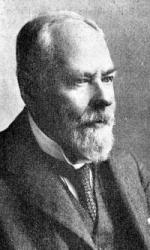
Basil Harwood

1859 - 1949 Person Name: Basil Harwood (1859-1949) Topics: Church Ministry; Evangelism; Forgiveness; Jesus coming again; Jesus Life and Ministry; Other Saints and Festivals St Stephen; Other Saints and Festivals The Conversion of Paul; Other Saints and Festivals Mark the Evangelist; The Church's Ministry and Mission; The Third Sunday before Advent Year B Composer of "THORNBURY" in Ancient and Modern Basil Harwood (11 April 1859 – 3 April 1949) was an English organist and composer. Basil Harwood was born in Woodhouse, Gloucestershire (the second youngest of 12 children) on 11 April 1859. His mother died in 1867 when Basil was eight. His parents were Quakers but his elder sister Ada, on reaching 21 in 1867, converted to the Anglican Church. Basil was allowed to attend the ceremony at the Church of England in Almondsbury and this is where he was first drawn to organ music and choral singing. His father, Edward, remarried two years later in 1869 to a lady from an Anglican family. Basil was now sent to the Montpellier School in Weston-super-Mare for a year. In 1871, at 12 he was enrolled in Clevedon, the preparatory school for Charterhouse where he was first to formally study music. He went up to Charterhouse in 1874 and left in 1876 having won a leaving Exhibition to Trinity College, Oxford where he initially studied Classics (1879) and Modern History (1880). He then studied for a further two years, 1881–1882, at the Leipzig Conservatory under Carl Reinecke and Salomon Jadassohn. It was here in 1882, Basil composed his first anthem for chorus and organ "O Saving Grace." He returned from Leipzig to realise that he had now passed the age limit to study music formally. In 1883, Basil became organist of St. Barnabas Church, Pimlico completing his Sonata in C# Minor here in 1885, selling the copyright to the publisher Schott for one shilling a year or two later. After this success, he then moved to Ely Cathedral in 1887 where he wrote the bulk of Dithyramb, possibly his greatest organ work. His final appointment was as organist at Christ Church, Oxford and as precentor of Keble College, Oxford from 1892 to 1909. Whilst there he co-founded and conducted the Oxford Bach Choir which helped to earn him his degree as Doctor of Music. He conducted the Oxford Orchestral Association (1892–1898). He was musical editor of the 1908 Oxford Hymn Book and Examiner for Musical Degrees (1900–1925). During this time, he met and married Mabel Ada Jennings (the daughter of George Jennings) (who had become a pupil of his in 1896) at All Souls St. Marylebone, London (27 December 1899). Mabel had studied music herself, piano and composition, and was also a writer. She may well have composed lyrics for some of his lesser known tunes. At an advanced age she wrote a small volume of collected poems named Questing Soul. He retired early at 50 (in 1909) after the death of his father, Edward Harwood, from whom he inherited the family estate of Woodhouse having outlived his seven older brothers. Soon after moving in he had a three manual chamber organ built in the library by Bishop & Sons of Ipswich (now in Minehead Parish Church), on which he promptly finished his Sonata in F# Minor. He continued to compose prolifically. He was a keen walker, and named many of his hymn tunes after local places that he loved to visit, the most notable being the hymn tunes such as Tockington, Olveston, Almondsbury and Thornbury. In 1936 advancing in years, he let the Woodhouse estate and moved to Bournemouth. Part of the estate, Woodhouse Down, was later sold to his contemporary Robert Baden-Powell who was two years older than he was and who had also attended Charterhouse School, and is used as a Scout Camp to this day. In 1939, at eighty, he moved to London, taking a flat in Fleet Street. After a long life, he died on 3 April 1949, eight days short of his 90th birthday, at Courtfield Gardens in the Royal Borough of Kensington, London. A memorial service was held in St Paul's Cathedral on 22 April 1949. Mabel survived him, dying shortly before her 103rd birthday on 20 July 1974. He was survived by two sons; Major John Edward Godfrey Harwood (1900–1996) and Basil Antony Harwood (1903–1990) Senior Master of the Supreme Court, Q.B.D. and Queen's Remembrancer. His remains are interred in St. Barnabas Church, Pimlico and marked by a plaque inset in floor of the chancel, close to where he would have stood to conduct the choir. He composed cantatas, church music and works for the organ; his Service in A flat, the anthem O how Glorious and the hymn tunes LUCKINGTON ("Let all the world in every corner sing") and THORNBURY ("Thy hand O God has guided"), first used during a festival of the London Church Choir Association, remain in the Anglican repertory. --en.wikipedia.org/wiki

John S. Arkwright

1872 - 1954 Person Name: John Stanhope Arkwright Topics: Martyrs; National Days; Communion of Saints; Conversion St. Paul The Communion General; Social Religion War and peace; St. Matthias Morning Prayer Closing; The Church Expectant Author of "O valiant hearts, who to your glory came" in The Hymnal of the Protestant Episcopal Church in the United States of America 1940

Pages


Export as CSV
It looks like you are using an ad-blocker. Ad revenue helps keep us running. Please consider white-listing Hymnary.org or getting Hymnary Pro to eliminate ads entirely and help support Hymnary.org.