You help make Hymnary.org possible. More than 10 million people from 200+ countries found hymns, liturgical resources and encouragement on Hymnary.org in 2025, including you. Every visit affirms the global impact of this ministry.

If Hymnary has been meaningful to you this year, would you take a moment today to help sustain it? A gift of any size—paired with a note of encouragement if you wish—directly supports the server costs, research work and curation that keep this resource freely available to the world.

Give securely online today, or mail a check to:
Hymnary.org
Calvin University
3201 Burton Street SE
Grand Rapids, MI 49546

Thank you for your partnership, and may the hope of Advent fill your heart.

Person Results

Topics:death+and+funeral
In:people

Planning worship? Check out our sister site, ZeteoSearch.org, for 20+ additional resources related to your search.
Showing 71 - 80 of 286Results Per Page: 102050

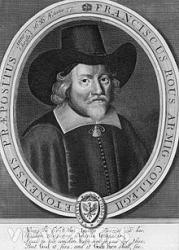
Francis Rous

1579 - 1659 Person Name: Francis Rous, 1579-1659 Topics: The Church of Jesus Christ Marriage; The Church of Jesus Christ Bereavement and Funerals; Living the Christian Life Comfort, Strength and Security; Living the Christian Life Trials and Temptations; Living the Christian Life Heaven and Victory over Death Author of "The Lord's my shepherd" in Complete Mission Praise Rous, Francis (Rouse), was born at Halton, Cornwall, in 1579, and educated at Oxford. He adopted the legal profession, and way M.P. for Truro during the reigns of James and of Charles I. He also represented Truro in the Long Parliament, and took part against the King and the Bishops. He was appointed a member of the Westminster Assembly; of the High Commission; and of the Triers for examining and licensing candidates for the ministry. He also held other appointments under Cromwell, including that of Provost of Eton College. He died at Acton, Jan. 7, 1659, and was buried in the Chapel of Eton College. Wood, in his Athenae Oxmienses, gives a list of his numerous works. --Excerpts from John Julian, Dictionary of Hymnology (1907) ==================== Rous, Francis, pp. 918, ii.; 927, ii.; 979, i., 1023, i. The.history of the Rous version of the Psalms is still rather obscure. At p. 918, ii., it is said to have been first published 1641, and reprinted with "further changes" in 1643. The present writer has been allowed to compare the— Booke of Psalmes in English Meeter. Printed for Henry Tutill, Bookseller at Rotterdam, 1638, with the Psalmes of David in English Meeter, set forth by Francis Rous . . . London, Printed by James Young, for Philip Nevill, at the signe of the Gun in Ivie-lane, 1643. The preface is the same in both, and a careful collation of a considerable number of the versions showed no variations except in spelling, the only variation observed being that the ed. of 1643 adds, after Ps. 150, a supplement of— Psalmes of harder and lesse usuall Tunes corrected, and the Tunes not altered; with versions of Pss. 51, 111, 112, 113, 120, 121, 122, 124, 125, 126, 127, 130, and 148. The Psalter of 1647, said to be in the B. M. by Mr. Glass, p. 85 (see p. 926, ii.), is not by Rous, but is a reprint of the Bay Psalm Book noted by Glass at p. 82. [Rev. James Mearns, M.A.] --John Julian, Dictionary of Hymnology, New Supplement (1907)

Peter Williams

1723 - 1796 Topics: The Glory of the Triune God Providence; New Heaven and a New Earth Death and Eternal Life; Adoration and Praise; Assurance; Funerals and Memorial Services; Guidance; Pilgrimage; Providence Translator of "Guide Me, O Thou Great Jehovah" in The United Methodist Hymnal Peter Williams (b. Llansadurnin, Carmarthanshire, Wales, 1722; d. Llandyfeilog, Wales, 1796) was converted to Christianity by the preaching of George Whitefield and was ordained in the Church of England in 1744. His evangelical convictions soon made him suspect, however, and he left the state church to join the Calvinist Methodists in 1746. He served as an itinerant preacher for many years and was a primary figure in the Welsh revival of the eighteenth century. After being expelled by the Methodists in 1791 on a charge of heresy, he ministered in his own chapel during the last years of his life. He published the first Welsh Bible commentary (1767-1770) and a Bible concordance (1773); he was also one of the annotators for John Canne's Welsh Bible (1790). In addition Williams published a Welsh hymnal, Rhai Hymnau ac Odlau Ysbrydol (1759), as well as Hymns on Various Subjects (1771). Bert Polman

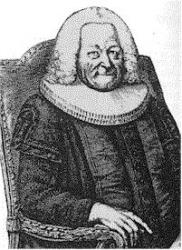
Erdmann Neumeister

1671 - 1756 Person Name: E. Neumeister, 1671-1756 Topics: Death and Funeral Songs Author of "Gott Vater! deine Liebesflammen" in Evang.-Lutherisches Gesangbuch Neumeister, Erdmann, son of Johann Neumeister, schoolmaster, organist, &c, at Uechteritz, near Weissenfels, was born at Uechteritz, May 12, 1671. He entered the University of Leipzig in 1689, graduated M.A. in 1695, and was then for some time University lecturer. In June 1697 he was appointed assistant pastor at Bibra, and in 1698 pastor there, and assistant superintendent of the Eckartsberg district. He was then, in 1704, called by Duke Johann Georg, to Weissenfels as tutor to his only daughter, and assistant court preacher, and shortly afterwards court preacher. After the death of this princess, Neumeister was invited by the Duke's sister (she had married Count Erdmann II. von Promnitz) to Sorau, where on New Year's Day, 1706, he entered on the offices of senior court-preacher, consistorialrath, and superintendent. Finally, in 1715, he accepted the appointment of Pastor of St. James's Church at Hamburg, entering on his duties there Sept. 29, 1715. He died at Hamburg, Aug. 18 (not 28), 1756 (Bode, p. 120; Allgemeine Deutsche Biographie. xxiii. 543, &c). Neumeister was well known in his day as an earnest and eloquent preacher, as a vehement upholder of High Lutheranism, and as a keen controversialist against the Pietists and the Moravians by means of the pulpit as well as the press. His underlying motive was doubtless to preserve the simplicity of the faith from the subjective novelties of the period. He was the author of one of the earliest historico-critical works on German Poetry (1695"); and of many Cantatas for use in church, of which form of Fervice he may be regarded as the originator. He had begun to write hymns during his student days, and in later years their composition was a favourite Sunday employment. He takes high rank among the German hymn-writers of the 18th century, not only for the number of his productions (over 650), but also for their abiding value. A number are founded on well-known hymns of the 16th and 17th century; and many of his later productions are inferior. Of his earlier efforts many soon took and still hold their place as standard German hymns; and deservedly so, for their simple, musical style, scripturalness, poetic fervour, depth of faith and Christian experience, and for their clear-cut sayings which have almost passed into proverbial use. They appeared principally in the following works:— 1. DerZugang zum Gnadenstuhle Jesu Christo. This was a devotional manual of preparation for Holy Communion, with interspersed hymns. The first edition appeared at Weissenfels in 1705, the 2nd 1707, 3rd 1712, 4th 1715. The earliest edition of which precise details are available is the 5th edition 1717, from which Wetzel, ii. 231, quotes the first lines of all the 77 hymns (the page references to the earlier eds. given by Fischer appear to be conjectural); and the earliest ed. available for collation was the 7th edition, 1724 [Göttingen University Library]. In the later editions many hymns are repeated from his other works. 2. Fünffache Kirchen-Andachten, Leipzig 1716 [Wernigerode Library], a collected edition of his Cantatas (Wernigerode Library has the 1704 ed. of his Geistliche Cantaten), and similar productions. A second set (Fortgesetzte) appeared at Hamburg in 1726 [Hamburg Town Library]; and a third set (Dritter Theil) at Hamburg in 1752 [Hamburg Town Library]. 3. Evangelischer Nachklang, Hamburg, 1718 [Hamburg Town Library], with 86 hymns on the Gospels for Sundays and Festivals, originally written to form conclusions to his sermons. A second set of 86 appeared as the Anderer Theil at Hamburg, 1729 [Hamburg Town Library]. Those of Neumeister’s hymns which have passed into English are:— i. Gott verlasst die Seinen nioht, Ei so fahret hin ihr Sorgen. Cross and Consolation. In his Evangelical Nachklang, 1718, No. 71, p. 149, in 5 stanzas of 8 lines, appointed for the 25th Sunday after Trinity, in Burg's Gesang-Buch, Breslau, 1746, it appears in two forms. No. 127 is the original with alterations, and arranged in 11 stanzas of 4 lines, with the refrain "Gott verlässt die Seinen nicht." No. 128 is a form in 3 stanzas of 6 lines, rewritten to the melody, "Jesus meine Zuversicht", and beginning with stanza iii. line 5, of the original, viz. "Gott verlässt die Seinen nicht, Nach dem Seufzen, nach dem Weinen." ii. Jesu, grosser Wunderstern. Epiphany. In his Kirchen-Andachten, 1716, p. 646, in 4 st. of 6 1., with the motto, Auf ihr Christen insgemein! Stellt euch mit den Weisen ein. Jesus muss geschenket sein." It is a hymn on the Gifts of the Magi, and the spiritual sense in which we can offer the same—-the Gold of Faith, the Frankincense of Prayer, the Myrrh of Penitence. In the Berlin Geistliche Lieder, ed. 1863, No. 208. Translated as:— 1. Jesus! great and wondrous star. A good and full translation by E. Cronenwett, as No. 52 in the Ohio Lutheran Hymnal, 1880. iii. Jesus nimmt die Sünder an! Saget doch dies Trostwort Allen. Lent. The best hymn of its author. First published in his Evangelical Nachklang, 1718, No. 47, p. 96, in 8 stanzas of 6 lines, founded on the Gospel for the 3rd Sunday after Trinity (St. Luke xv. 1-7), and also suggested by St. Matt. xi. 28, and Isaiah i. 18. It has come into very extensive German use, especially at Mission services at home and abroad. In the Berlin Geistliche Lieder, ed. 1863, No. 110. The translations are:— 1. This man sinners doth receive. In full by Dr. H. Mills, in his Horae Germanicae, 1845 (1856, p. 73). His translations of stanzas i., ii., iv., v. are included in the American Lutheran General Synod's Collection, 1850-52, No. 844. 2. Jesus sinners doth receive! Spread the word of consolation. A good translation of stanzas i., iii.—v., by A. T. Russell, as No. 47 in the Dalston Hospital Hymn Book, 1848, repeated in his own Psalms & Hymns, 1851. 3. Jesus is the sinner's Friend. A good and full translation by Miss Dunn in her Hymns from the German, 1857, p. 82. Her translations of stanzas i., ii., iv. are No. 46 in Dr. Pagenstecher's Collection, 1864. 4. Sinners Jesus will receive. A full and good translation by Mrs. Bevan in her Songs of Eternal Life, 1858, p. 23. Repeated in full in L. Rehfuess's Church at Sea, 1868, p. 50, and, abridged, in the English Presbyterian Psalms & Hymns, 1867, and Flett's Collection, Paisley, 1871. In Dr. W. F. Stevenson's Hymns for Church & Home, 1873, stanzas i., v., vi., vii. are included, altered, and beginning "Jesus sinners will receive; Say this word of grace to all;" and this form is also in the Baptist Hymnal, 1879. Other translations are :— (l) "My Jesus the sinner receives." By Miss Warner, 1869, p. 51. (2) "Jesus sinners doth receive! Tell to all." By R. Massie in the Day of Rest, 1811. The hymn "Jesus sinners will receive, When they fall," by E. Cronenwett, in 5 stanzas, in the Ohio Lutheran Hymnal, 1880, is marked as a translation of Neumeister. It follows Neumeister in metre, but seems rather a paraphrase of the hymn "Jesus nimmt die Sünder an, Drum so will ich nicht verzagen." This hymn is by Ludwig Heinrich Schlosser [b. Sept. 1, 1663, at Darmstadt; d. Aug. 18,1723, as pastor at Frankfurt am Main], and appeared in the Appendix to the Frankfurt ed., 1693, of Crüger's Praxis, and in his own Stilles Lob Gottes in dern geistlichen Zion, Frankfurt a. M , 1724 (see Wetzel, iv. 433; Kambach's Anthologie, vi p. xi., &c). In Burg's Gesang-Buch, Breslau, 1746, the Neumeister hymn is given as No. 1593 and marked as by G. G. Hofmann, and the Schlosser hymn as No. 1592 and marked as by Neumeister. Hence perhaps the confusion. Hymns not in English common use:--. iv. Bleib, Jesu, bleib bei mir. For the Dying. In his Evangelical Nachklang, 171S, No. 31, p. 64, in 7 st., entitled "For the Second Day of Easter." In the Berlin Geistliche Lieder, ed. 1863, No. 1434. Translated as "Jesus, near me still abide." By Miss Dunn, 1857, p. 117. v, Herr Jesu Christ, mein höchstes Gut. Love to Christ. One of his best and most popular hymns, apparently written for use at the Sunday celebration of Holy Communion in the castle at Weissenfels. It seems to have appeared in his Zugang, 1705 (Wetzel, ii. 232, cites it as in the 5th edition 1717. In the 8th ed. 1724, p. 17, entitled “Hymn of Consolation from Ps. lxxiii. 23-28 ), and is included in the Halle Stadt Gesang-Buch,1711, No. 524 in 6 st. In Freylinghausen, 1714, it begins "Herr Jesu Christ, mein Fleisch und Blut." In Porst's Gesang-Buch,ed. 1855, No. 546. The translations are (1) "All my desires are fix'd on Thee" (st. iii.). By P. H. Molther as pt. ot No. 401 in the Moravian Hymn Book 1801 (1886, No. 448). (2) "Lord Jesus Christ, my spirit's health." By Dr. H. Mills, 1845 (1856, p. 115). vi. Herr Jesu, meines Lebens Heil. Evening. Apparently in his Zugang, 1705 (Wetzel, ii. 232, as in ed. 1717. In ed. 1724, p. 284 in 10 st), and included in the Halle Stadt Gesang-Buch, 1711, No. 426. In Burg's Gesang-Buch, Breslau, 1746, No. 1844. Translated as (1) "Now I'll lie down and sleep in Thee"(st. vi.), as pt. of No. 750 in the Moravian Hymn Book, 1789 (1849, No. 1137). (2) "Lord Jesu! Thou my life's true health." By H. J. Buckoll, 1842, p. 92. vii. Ich bin bei allem Kummer stille. Trust in God. Included in the 5th ed. 1717 of his Zugang (Wetzel, ii. 232), and in the ed. 1724, p. 594, in 6 stanzas, founded on Ps. lxxvii. 11. In the Berlin Geistliche Lieder, ed. 1863, No. 911. It has been translated into English through the recast by J. S. Diterich "Herr, mache meine Seele stille," which is No. 169, in 7 stanzas, in the Berlin Gesang-Buch,1765 (Berlin Gesang-Buch, 1829, No. 599). Translated as "Lord, make my spirit still." By Miss Warner, 1869, p. 26. viii. Ich weiss dass mein Erlöser lebet. For the Dying. In his Evangelical Nachklang, 1718, No. 32, in 5 st., entitled "On the Third Day of Easter." In Bunsen's Allgemeine Gesang-Buch, 1846, No. 437, in 4 stanzas. Translated as "I know that my Redeemer liveth, And as He lives." A good translation from Bunsen in Reid's Praise Book, 1872. ix. Ob Menschen klug und weise sein. Spiritual Wisdom. In his Evangelical Nachklang, 1718, No. 12, p. 24, in 6 stanzas, for the 1st Sunday after Epiphany. In the Berlin Geistliche Lieder, ed. 1863. Translated as “Here many wise and prudent grow." By Dr. H. Mills, 1845 (1856, p. 109). x. So ist die Woche nun geschlossen. Saturday Evening. Apparently in his Zugang, 1705 (Wetzel, ii. 233, cites it as in ed. 1717. In the ed. 1724, p. 552, in 9 st. entitled "Hymn for the close of the Week"). In the Berlin Geistliche Lieder, ed. 1863. Translated as “Thou, Lord, Thy love art still bestowing." By H. J. Buckoll, 1842. xi. Wie Gott will, also will ich sagen. Trust in God. Wetzel ii. 214, cites this as in his Zugang, 1717 (ed. 1724, p. 570, in 8 stanzas). In the Berlin Geistliche Lieder, ed. 1863, No. 919. Translated as “As Thou wilt, my God! I ever say” By Miss Borthwick, in Hymns from the Land of Luther, 1858, p. 44 (1884, p. 166), and thence in Bishop Ryle's Collection 1860, No. 163. [Rev. James Mearns, M.A.] --John Julian, Dictionary of Hymnology (1907)

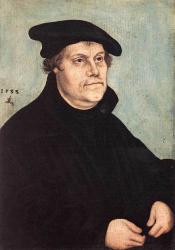
Martin Luther

1483 - 1546 Topics: Death and Funeral Songs Author of "Im Fried bin ich dahin gefahr'n" in Evang.-Lutherisches Gesangbuch Luther, Martin, born at Eisleben, Nov. 10, 1483; entered the University of Erfurt, 1501 (B.A. 1502, M.A.. 1503); became an Augustinian monk, 1505; ordained priest, 1507; appointed Professor at the University of Wittenberg, 1508, and in 1512 D.D.; published his 95 Theses, 1517; and burnt the Papal Bull which had condemned them, 1520; attended the Diet of Worms, 1521; translated the Bible into German, 1521-34; and died at Eisleben, Feb. 18, 1546. The details of his life and of his work as a reformer are accessible to English readers in a great variety of forms. Luther had a huge influence on German hymnody. i. Hymn Books. 1. Ellich cristlich lider Lobgesang un Psalm. Wittenberg, 1524. [Hamburg Library.] This contains 8 German hymns, of which 4 are by Luther. 2. Eyn Enchiridion oder Handbuchlein. Erfurt, 1524 [Goslar Library], with 25 German hymns, of which 18 are by Luther. 3. Geystliche Gesangk Buchleyn. Wittenberg, 1524 [Munich Library], with 32 German hymns, of which 24 are by Luther. 4. Geistliche Lieder auffs new gebessert. Wittenberg. J. Klug, 1529. No copy of this book is now known, but there was one in 1788 in the possession of G. E. Waldau, pastor at Nürnberg, and from his description it is evident that the first part of the Rostock Gesang-Buch, 1531, is a reprint of it. The Rostock Gesang-Buch, 1531, was reprinted by C. M. Wiechmann-Kadow at Schwerin in 1858. The 1529 evidently contained 50 German hymns, of which 29 (including the Litany) were by Luther. 5. Geistliche Lieder auffs new gebessert. Erfurt. A. Rauscher, 1531 [Helmstädt, now Wolfenbüttel Library], a reprint of No. 4. 6. Geistliche Lieder. Wittenberg. J. Klug, 1535 [Munich Library. Titlepage lost], with 52 German hymns, of which 29 are by Luther. 7. Geistliche Lieder auffs new gebessert. Leipzig. V. Schumann, 1539 [Wernigerode Library], with 68 German hymns, of which 29 are by Luther. 8. Geistliche Lieder. Wittenberg. J. Klug, 1543 [Hamburg Library], with 61 German hymns, of which 35 are by Luther. 9. Geystliche Lieder. Leipzig. V. Babst, 1545 [Gottingen Library]. This contains Luther's finally revised text, but adds no new hymns by himself. In pt. i. are 61 German hymns, in pt. ii. 40, of which 35 in all are by Luther. For these books Luther wrote three prefaces, first published respectively in Nos. 3, 4, 9. A fourth is found in his Christliche Geseng, Lateinisch und Deudsch, zum Begrebnis, Wittenberg, J. Klug, 1542. These four prefaces are reprinted in Wackernagel’s Bibliographie, 1855, pp. 543-583, and in the various editions of Luther's Hymns. Among modern editions of Luther's Geistliche Lieder may be mentioned the following:— Carl von Winterfeld, 1840; Dr. C. E. P. Wackernagel, 1848; Q. C. H. Stip, 1854; Wilhelm Schircks, 1854; Dr. Danneil, 1883; Dr. Karl Gerok, 1883; Dr. A. F. W. Fischer, 1883; A. Frommel, 1883; Karl Goedeke, 1883, &c. In The Hymns of Martin Luther. Set to their original melodies. With an English version. New York, 1883, ed. by Dr. Leonard Woolsey Bacon and Nathan H. Allen, there are the four prefaces, and English versions of all Luther's hymns, principally taken more or less altered, from the versions by A. T. Russell, R. Massie and Miss Winkworth [repub. in London, 1884]. Complete translations of Luther's hymns have been published by Dr. John Anderson, 1846 (2nd ed. 1847), Dr. John Hunt, 1853, Richard Massie, 1854, and Dr. G. Macdonald in the Sunday Magazine, 1867, and his Exotics, 1876. The other versions are given in detail in the notes on the individual hymns. ii. Classified List of Luther's Hymns. Of Luther's hymns no classification can be quite perfect, e.g. No. 3 (see below) takes hardly anything from the Latin, and No. 18 hardly anything from the Psalm. No. 29 is partly based on earlier hymns (see p. 225, i.). No. 30 is partly based on St. Mark i. 9-11, and xvi., 15, 16 (see p. 226, ii.). No. 35 is partly based on St. Luke ii. 10-16. The following arrangement, however, will answer all practical purposes. A. Translations from the Latin. i. From Latin Hymns: 1. Christum wir sollen loben schon. A solis ortus cardine 2. Der du bist drei in Einigkeit. O Lux beata Trinitas. 3. Jesus Christus unser Heiland, Der von. Jesus Christus nostra salus 4. Komm Gott Schopfer, heiliger Geist. Veni Creator Spiritus, Mentes. 5. Nun komm der Beidenheiland. Veni Redemptor gentium 6. Was flirchst du Feind Herodes sehr. A solis ortus cardine ii. From Latin Antiphons, &c.: 7. Herr Gott dich loben wir. Te Deum laudamus. 8. Verleih uns Frieden gnädiglich. Dapacem, Domine 9. Wir glauben all an einen Gott. iii. Partly from the Latin, the translated stanzas being adopted from Pre-Reformation Versions: 10. Komm, heiliger Geist, Herre Gott. 11. Mitten wir im Leben sind. Media vita in morte sumus. B. Hymns revised and enlarged from Pre-Reformation popular hymns. 12. Gelobet seist du Jesus Christ. 13. Gott der Vater wohn uns bei. 14. Gott sei gelobet und gebenedeiet. 15. Nun bitten wir den heiligen Geist. C. Psalm versions. 16. Ach Gott vom Himmel, sieh darein. 17. Aus tiefer Noth schrei ich zu dir. 18. Ein' feste Burg ist unser Gott. 19. Es spricht der Unweisen Mund wohl. 20. Es wollt uns Gott genädig sein. 21. War Gott nicht mit uns diese Zeit. 22. Wohl dem, der in Gotten Furcht steht. D. Paraphrases of other portions of Holy Scripture. 23. Diess sind die heilgen zehn Gebot. 24. Jesaia dem Propheten das geschah. 25. Mensch willt du leben seliglich. 26. Mit Fried und Freud ich fahr dahin. 27. Sie ist mir lieb die werthe Magd. 28. Vater unser im Himmelreich. E. Hymns mainly Original. 29. Christ lag in Todesbanden. 30. Christ unser Herr zum Jordan kam. 31. Ein neues Lied wir heben an. 32. Erhalt uns Herr bei deinem Wort. 33. Jesus Christus unser Heiland, Der den, 34. Nun freut euch lieben Christengemein. 35. Vom Himmel hoch da komm ich her. 36. Vom Himmel kam der Engel Schaar. In addition to these — 37. Fur alien Freuden auf Erden. 38. Kyrie eleison. In the Blätter fur Hymnologie, 1883, Dr. Daniel arranges Luther's hymns according to what he thinks their adaptation to modern German common use as follows:— i. Hymns which ought to be included in every good Evangelical hymn-book: Nos. 7-18, 20, 22, 28, 29, 30, 32, 34, 35, 36, 38. ii. Hymns the reception of which into a hymn-book might be contested: Nos. 2, 3, 4, 19, 21, 22, 23, 24, 25, 33. iii. Hymns not suited for a hymn-book: Nos. 1, 5, 6, 27, 31, 37. [Rev. James Mearns, M.A.] --John Julian, Dictionary of Hymnology (1907)

Michael Weisse

1480 - 1534 Person Name: M. Weiß Topics: Death and Funeral Songs Author of "Nun laßt uns den Leib begraben" in Evang.-Lutherisches Gesangbuch Michael Weiss was born at Neisse, in Silesia. He was a pastor among the Bohemian Brethren, and a contemporary with Luther. His hymns have received commendation. He died in 1540. --Annotations of the Hymnal, Charles Hutchins, M.A. 1872. ============ Weisse, Michael (Weiss, Wiss, Wegs, Weys, Weyss), was born circa 1480, in Neisse, Silesia, took priest's orders, and was for some time a monk at Breslau. When the early writings of Luther came into his hands, Weisse, with two other monks, abandoned the convent, and sought refuge in the Bohemian Brethren's House at Leutomischl in Bohemia. He became German preacher (and apparently founder of the German communities) to the Bohemian Brethren at Landskron in Bohemia, and Fulnck in Moravia, and died at Landskron in 1534 (Koch, ii. 115-120; Wackernagel's D. Kirchenlied, i. p. 727; Fontes rerum Austricarum, Scriptores, vol. ii. pt. ii. p. 227, Vienna, 18G3, &c). Weisse was admitted as a priest among the Brethren at the Synod of Brandeis, in 1531, and in 1532 was appointed a member of their Select Council, but he had previously performed important missions for the Brethren. He was, e.g., sent by Bishop Lucas, in 1522, along with J. Roh or Horn, to explain the views of the Bohemian Brethren to Luther; and again, in 1524, when they were appointed more especially to report on the practices and holiness of life of the followers of the German Reformers. He was also entrusted with the editing of the first German hymn-book of the Bohemian Brethren, which appeared as Ein New Gesengbuchlen at Jungen Bunzel (Jung Bunzlau) in Bohemia in 1531. This contained 155 hymns, all apparently either translations or else originals by himself. The proportion of translations is not very clear. In the preface to the 1531, Weisse addressing the German Communities at Fulnek and Landskron says, "I have also, according to my power, put forth all my ability, your old hymn-book as well as the Bohemian hymn-book (Cantional) being before me, and have brought the same sense, in accordance with Holy Scripture, into German rhyme." Luther called Weisse "a good poet, with somewhat erroneous views on the Sacrament" (i.e. Holy Communion); and, after the Sacramental hymns had been revised by Roh (1544), included 12 of his hymns in V. Babst's Gesang-Buch, 1545. Many of his hymns possess considerable merit. The style is flowing and musical, the religious tone is earnest and manly, but yet tender and truly devout, and the best of them are distinguished by a certain charming simplicity of thought and expression. At least 119 passed into the German Lutheran hymnbooks of the 16th and 17th centuries, and many are still in use. The following hymns by Weisse have also passed into English:— i. Christus ist erstanden. Von des Todes Banden. Easter. First published 1531 as above, and thence in Wackernagel, iii. p. 273, in 7 stanzas of 4 lines. It is suggested by the older hymn, "Christ ist erstanden". In the Unverfälschter Liedersegen, 1851, No. 129. The translation in common use is:— Christ the Lord is risen again! This is a full and very good translation by Miss Winkworth, in her Lyra Germanica, 2nd Ser., 1858, p. 37, and her Chorale Book for England, 1863, No. 58. It has been included in many recent English and American hymnals. Other translations are:— (1) "Christ (and 'tis no wonder"). This is No. 260 in pt. i. of the Moravian Hymn Book, 1754. (2) "Christ our Lord is risen," by Dr. H. Mills, 1856, p. 322. ii. Es geht daher des Tages Schein. Morning. 1531 as above, and thence in Wackernagel, iii. p. 318, in 7 stanzas of 4 lines. In the Unverfälschter Liedersegen, 1851, No. 455. The translations in common use are:— 1. The Light of Day again we see. In full, by H. J. Buckoll in his Hymns from German, 1842, p. 14. His translations of stanzas iii., iv., vi., vii., beginning “Great God, eternal Lord of Heaven," were included in the Rugby School Hymn Book, 1843. 2. Once more the daylight shines abroad. This is a full and very good translation by Miss Winkworth, in her Lyra Germanica, 2nd Ser., 1858, p. 69, and her Chorale Book for England, 1863, No. 18. Repeated in Thring's Collection, 1880-82. iii. Gelobt sei Gott im höchsten Thron. Easter. 1531 as above, and thence in Wackernagel, iii. p. 265, in 20 stanzas of 3 lines, with Alleluia. The translations in common use are: — 1. Praise God upon His heavenly throne. This is a free translation of stanzas 1, 4, 10, 19, 20, by A. T. Russell, as No. 112, in his Psalms & Hymns, 1851. 2. Glory to God upon His throne. By Mrs. H. R. Spaeth, in the Southern Lutheran Service and Hymns for Sunday Schools , Philadelphia, 1883. iv. Gott sah zu seiner Zeit. Christmas. 1531 as above, and thence in Wackernagel, iii. p. 244, in 10 stanzas of 9 lines. The translation in common use is:— When the due Time had taken place. By C. Kinchen, omitting stanza v., as No. 169 in the Moravian Hymn Book, 1742 (1849, No. 20). In the ed. of 1886, No. 954 consists of stanza x., beginning “Ah come, Lord Jesus, hear our prayer." v. Lob sei dem allmächtigen Gott. Advent. 1531 as above, and thence in Wackernagel, iii. p. 230, in 14 stanzas of 4 lines. Included in V. Babst's Gesang-Buch, 1545, and recently as No. 12 in the Unverfälschter Liedersegen , 1851. In the larger edition of the Moravian Hymn Book, 1886, it is marked as a translation from a Bohemian hymn, beginning "Cirkev Kristova Boha chval." The translations are:— 1. Praise be to that Almighty God. By J. Gambold, omitting stanza xi.-xiii., as No, 246, in pt. i. of the Moravian Hymn Book, 1754. In the 1789 and later eds. (1886, No. 31), it begins “To God we render thanks and praise." 2. O come, th' Almighty's praise declare. By A. T. Russell, of stanzas i.-iii., v., as No. 26 in his Psalms & Hymns, 1851. vi. O Herre Jesu Christ, der du erschienen bistanza. For Children. On Christ's Example in His early years on earth . 1531 as above, and in Wackernagel, iii. p. 326, in 7 stanzas of 7 lines. The first three stanzas are translated as “Christ Jesus, Lord most dear," in the Moravian Hymn Book, 1754, pt. i., No. 278. The form in common use is that in Knapp's Evangelischer Lieder-Schatz , 1837, No. 2951, which begins "Nun hilf uns, o Herr Jesu Christ," and is in 3 stanzas of 4 lines, entirely recast. This is translated as:— Lord Jesus Christ, we come to Thee . In full from Knapp, by Miss Winkworth, in her Chorale Book for England , 1863, No. 179. Hymns not in English common use:— vii. Den Vater dort oben. Grace after Meat. 1531, and thence in Wackernagel, iii., p. 321, in 5 stanzas of 7 lines. In the Berlin Geistliche Lieder, ed. 1863, No. 1136. Translated as, "Father, Lord of mercy," by J. V. Jacobi, 1122, p. 117. In his edition, 1732, p. 183, slightly altered, and thence in the Moravian Hymn Book, 1754, pt. i., No. 290. viii. Die Sonne wird mit ihrem Schein. Evening. 1531, and thence in Wackernagel, iii., p. 323, in 6 stanzas of 4 lines. In the Unverfälschter Liedersegen, 1851, No. 517. Translated as, "Soon from our wishful eyes awhile," by H. J. Buckoll, 1842. ix. Komm, heiliger Geist, wahrer Gott. Whitsuntide . 1531, and in Wackernagel , iii., p. 282, in 9 stanzas of 5 lines From the Bohemian as noted at p. 157, and partly suggested by the "Veni Sancte Spiritus reple " (q.v.). The translations are: (1) “Come, Holy Ghost, Lord God indeed." This is No. 285 in pt. i. of the Moravian Hymn Book, 1754. (2) "Thou great Teacher, Who instructest." This is a translation of stanza vii., as No. 234 in the Moravian Hymn Book, 1801 (1849, No. 267). x. Lob und Ehr mit stettem Dankopfer. The Creation: Septuagesima . 1531, and in Wackernagel, iii., p. 287, in 5 stanzas of 16 lines. Translated as, “Praise, glory, thanks, be ever paid," by Miss Winkworth, 1869, p. 137. xi. 0 Jesu Christ, der Heiden Licht. Epiphany. 1531, and in Wackernagel , iii. p. 248, in 2 stanzas of 14 lines. Translated as, "0 Jesus Christ, the Gentiles' Light." This is No. 253 in pt. i. of the Moravian Hymn Book, 1754. In the Brüder Gesang-Buch, 1778, No. 1467, stanza ii. was rewritten. This form begins, "Erscheine alien Auserwahlten," and is in 4 stanzas of 4 lines. Translated as, "Lord, to Thy chosen ones appear," by Miss Winkworth, 1869, p. 139. xii. Singet lieben Leut. Redemption by Christ. 1531, and in Wackernagel, iii. p. 243, in 16 stanzas of 4 lines. Translated as, "Sing, be glad, ye happy sheep." This is a translation of stanza xiv., by C. G. Clemens, as No. 299 in the Moravian Hymn Book, 1789. In the 1801 and later editions (1849, No. 403) it begins, "O rejoice, Christ's happy sheep." [Rev. James Mearns, M.A.] -- Excerpts from John Julian, Dictionary of Hymnology (1907)

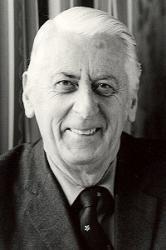
Fred Pratt Green

1903 - 2000 Topics: Life of Discipleship Death and Eternal Life; God's Church Life of Discipleship: Death and Eternal Life; Death; Eternal Life; Faith; Funerals and Memorial Services; Grief; Trust Author of "How Blest Are They Who Trust in Christ" in Chalice Hymnal The name of the Rev. F. Pratt Green is one of the best-known of the contemporary school of hymnwriters in the British Isles. His name and writings appear in practically every new hymnal and "hymn supplement" wherever English is spoken and sung. And now they are appearing in American hymnals, poetry magazines, and anthologies. Mr. Green was born in Liverpool, England, in 1903. Ordained in the British Methodist ministry, he has been pastor and district superintendent in Brighton and York, and now served in Norwich. There he continued to write new hymns "that fill the gap between the hymns of the first part of this century and the 'far-out' compositions that have crowded into some churches in the last decade or more." --Seven New Hymns of Hope , 1971. Used by permission.

Johann Heermann

1585 - 1647 Person Name: J. Heermann, 1585-1647 Topics: Death and Funeral Songs Author of "Gott Lob! die Stund ist kommen" in Evang.-Lutherisches Gesangbuch Johann Heermann's (b. Raudten, Silesia, Austria, 1585; d. Lissa, Posen [now Poland], 1647) own suffering and family tragedy led him to meditate on Christ's undeserved suffering. The only surviving child of a poor furrier and his wife, Heermann fulfilled his mother's vow at his birth that, if he lived, he would become a pastor. Initially a teacher, Heermann became a minister in the Lutheran Church in Koben in 1611 but had to stop preaching in 1634 due to a severe throat infection. He retired in 1638. Much of his ministry took place during the Thirty Years' War. At times he had to flee for his life and on several occasions lost all his possessions. Although Heermann wrote many of his hymns and poems during these devastating times, his personal faith and trust in God continued to be reflected in his lyrics. He is judged to be the finest hymn writer in the era between Martin Luther and Paul Gerhardt, one whose work marks a transition from the objective hymns of the Reformation to the more subjective hymns of the seventeenth century. His hymn texts were published in collections such as Devoti Musica Cordis, Hauss- und Hertz-Musica (1630, expanded in 1636, 1644), and Sontags- und Fest-evangelia (1636). Bert Polman =================== Heermann, Johann, son of Johannes Heermann, furrier at Baudten, near Wohlau, Silesia, was born at Baudten, Oct. 11, 1585. He was the fifth but only surviving child of his parents, and during a severe illness in his childhood his mother vowed that if he recovered she would educate him for the ministry, even though she had to beg the necessary money. He passed through the schools at Wohlau; at Fraustadt (where he lived in the house of Valerius Herberger, q. v., who took a great interest in him); the St. Elizabeth gymnasium at Breslau; and the gymnasium at Brieg. At Easter, 1609, he accompanied two young noblemen (sons of Baron Wenzel von Rothkirch), to whom he had been tutor at Brieg, to the University of Strassburg; but an affection of the eyes caused him to return to Baudten in 1610. At the recommendation of Baron Wenzel he was appointed diaconus of Koben, a small town on the Oder, not far from Baudten, and entered on his duties on Ascension Day, 1611, and on St. Martin's Day, 1611, was promoted to the pastorate there. After 1623 he suffered much from an affection of the throat, which compelled him to cease preaching in 1634, his place being supplied by assistants. In October, 1638, he retired to Lissa in Posen, and died there on Septuagesima Sunday (Feb. 17), 1647. (Koch, iii. 16-36; Allgemeine Deutsche Biographie, xi. 247-249, &c.) Much of Heermann's manhood was spent amid the distressing scenes of the Thirty Years' War; and by his own ill health and his domestic trials he was trained to write his beautiful hymns of “Cross and Consolation." Between 1629 and 1634, Koben was plundered four times by the Lichtenstein dragoons and the rough hordes under Wallenstein sent into Silesia by the King of Austria in order to bring about the Counter-Reformation and restore the Roman Catholic faith and practice; while in 1616 the town was devastated by fire, and in 1631 by pestilence. In these troublous years Heermann several times lost all his moveables; once he had to keep away from Koben for seventeen weeks; twice he was nearly sabred; and once, while crossing the Oder in a frail boat loaded almost to sinking, he heard the bullets of the pursuing soldiers whistle just over his head. He bore all with courage and patience, and he and his were wonderfully preserved from death and dishonour. He was thus well grounded in the school of affliction, and in his House and Heart Music some of his finest hymns are in the section entitled "Songs of Tears. In the time of the persecution and distress of pious Christians." As a hymnwriter Heermann ranks with the beat of his century, some indeed regarding him as second only to Gerhardt. He had begun writing Latin poems about 1605, and was crowned as a poet at Brieg on Oct. 8, 1608. He marks the transition from the objective standpoint of the hymnwriters of the Reformation period to the more subjective and experimental school that followed him. His hymns are distinguished by depth and tenderness of feeling; by firm faith and confidence in face of trial; by deep love to Christ, and humble submission to the will of God. Many of them became at once popular, passed into the hymnbooks, and still hold their place among the classics of German hymnody. They appeared principally in— (1) Devoti Musica Cordis. Hauss-und Hertz-Musica &c. Leipzig and Breslau, 1630, with 49 hymns (2nd edition 1636, with 64; 3rd edition 1644, with 69). The first section is entitled "Hymns of Penitence and Consolation from the words of the Ancient Fathers of the Church." Seven of these, however, have no mention in their individual titles of the sources from which they are derived; and the remainder are mostly based not on Latin hymns, but on the prose meditations in Martin Moller's Meditationes sanctorum patrum, or on the mediaeval compilations known as the Meditationes and the Manuale of St. Augustine. (2) Sontags-und Fest-Evangelia. Leipzig and Breslau, 1636, being hymns on the Gospels for Sundays and festivals. (3) Poetische Erquickstunden, Nürnberg, 1656; and its Fernere Fortsetzung, also Nürnberg, 1656 [both in Wernigerode], are poems rather than hymns. The hymns of the Hauss-und Hertz-Musica, with a representative selection from Heermann's other poetical works, were edited by C. E. P. Wackernagel, prefaced by a long biographical and critical introduction, and published at Stuttgart, 1855. Six of the most important of Heermann's hymns are annotated under their respective first lines. The other hymns by Heermann which have passed into English are :— I. Hymns in English common use:-- i. 0 Jesu, du mein Bräutigam. Holy Communion. In his Devoti Musica Cordis, Breslau, 1630, p. 78, in 12 stanzas of 4 lines. Thence in Mützell, 1858, No. 34, in Wackernagel's ed. of his Geistliche Lieder, No. 22, and the Unverfälschter Liedersegen, 1851, No. 283. Seems to be founded on Meditation xi. in the mediaeval compilation known as St. Augustine's Manuale. Translated as:— 0 Jesu, Lord, who once for me, a good translation of stanzas i., ii., iv., v., viii., by A. T. Russell, as No. 158 in his Psalms & Hymns, 1851. Other translations are: (l) 0 Jesu! Bridegroom of my Soul," by J. C. Jacobi, 1722, p. 44 (1732, p. 73). (2) "Dear Saviour, who for me hast borne," by Miss Dunn, 1857. ii. Rett, 0 Herr Jesu, rett dein Ehr. In Time of Trouble. A prayer for deliverance and peace for the Church. In his Devoti Musica Cordis, 1630, p. 119, in 5 stanzas of 4 lines, among the "Songs of Tears." Thence in Mützell, 1858, No. 48, in Wackernagel’s ed., No. 36, and the Unverfälschter Liedersegen, 1851, No. 245. Translated as:— Thine honour rescue, righteous Lord, in full, by Dr. M. Loy, in the Ohio Lutheran Hymnal, 1880. iii. Treuer Wächter Israel. In Time of War. 1630, p. 115, in 13 stanzas of 7 lines, among the "Songs of Tears." In Mützell, 1858, No. 47; in Wackernagel's edition, No. 35, and the Unverfälschter Liedersegen, 1851, No. 594. Lauxmann, in Koch, viii. 549, says of it:— "It is a powerful hymn filled with that prevailing prayer that takes heaven by force," and relates of st. vii.,11. v-7, "Eine Mauer um uns bau," that on Jan. 6, 1814, the Allied Forces were about to enter Schleswig. A poor widow with her daughter and grandson lived in a little house near the entrance of the town. The grandson was reading in his hymnbook those in time of war, and when he came to this said, “It would be a good thing, grandmother, if our Lord God would build a wall around us." Next day all through the town cries of distress were heard, but all was still before their door. On the following morning they had courage to open the door, and lo a snowdrift concealed them from the view of the enemy. On this incident Clemens Brentano composed a beautiful poem "Draus vor Schleswig." It is translated as:— Jesu! as a Saviour, aid. A good tr. of st; vii., viii., xiii., by A. T. Russell, as No. 138 in his Psalms & Hymns, 1851. iv. Zionklagt mit Angst und Schmerzen. Church of Christ. First published in his Devoti Musica Cordis, 2nd ed., 1636 (1644, p. 196), in 6 stanzas of 8 lines, entitled, "From the beautiful golden saying of Isaiah, Chapter xlix." In Mützell, 1858, No. 101, in Wackernagel’s ed., No. 53, and the Unverfälschter Liedersegen, 1851, No. 256. Translated as:— Sion bow'd with anguish weepeth A good translation of stanzas i., iii., v., by A. T. Russell, as No. 141 in his Psalms & Hymns, 1851. Another translation is: "Zion mourns in fear and anguish," by Miss Winkworth, 1869, p. 198. II. Hymns not in English common use:-- v. Ach Jesu! dessen Treu. Love to Christ. 1630, p. 144, in 33 stanzas. One of his finest hymns, full of deep love to Christ, but from its great length very little used in Germany. Translated as, "Ah! Jesus! Lord! whose faithfulness," by Miss Burlingham, in the British Herald, May, 1867, p. 72. vi. Der Tod klopft bei mir an. For the Dying. 1656, p. 22, in 121. Translated as, "That Death is at my door," by Miss Winkworth, 1869, p. 201. vii. Du weinest für Jerusalem. Christ weeping over Jerusalem. 1630, p. 81, in 6 stanzas, entitled, "On the Tears of Christ." Founded on St. Luke xix. 41-44, part of the Gospel for the 10 Sundays after Trinity. The translations are: (1) "With tears o'er lost Jerusalem," by Miss Cox, 1841, p. 159. (2) "Our Lord wept o'er Jerusalem," by Dr. H. Mills, 1845 (1856, p. 295). (3) "Thou weepest o'er Jerusalem," by Miss Winkworth, 1855,p. 70. viii. Herr Jesu Christe mein getreuer Hirte. Holy Communion. 1630, p. 74, in 9 stanzas, founded on M. Moller's Meditationes sanctorum patrum, pt. i. c. 11, and pt. v. c. 2. The translations are: (1) "Dear Saviour, Thou my faithful Shepherd, come” by Miss Dunn, 1857, p. 111. (2) "Lord Jesus Christ, my faithful Shepherd, hear," by Miss Winkworth, 1858, p. 93, repeated in Lyra Eucharistica, 1863-64. ix. Herr unser Gott, lass nicht zu Schanden werden. Christ's Church. 1630, p. 114, as one of the "Songs of Tears," in 5 stanzas. Translated as, "Ah! Lord our God, let them not be confounded," by Miss Winkworth, 1869, p. 197. x. Hilf mir, mein Oott, hilf dass nach dir. Christian Conduct. 1630, p. 32, in 7 stanzas, entitled, "For a better life. From the words of Augustine." Founded on No. i. of the Meditationes current under the name of St. Augustine. This meditation is apparently by St. Anselm of Canterbury. Translated as, "Lord, raise in me a constant Flame," by J. C. Jacobi, 1725, p. 27 (1732, p. 105). xi. Jesu, der du tausend Schmerzen. In Sickness. 1656, in the Fernere Fortsetzung, p. 79, in 12 lines, entitled, "In great bodily pain." Translated as, “Jesu, who didst stoop to prove," by Miss Winkworth, 1869, p. 200. xii. Jesu Tilger meiner Sünden. Lent. 1656, in the Fernere Fortsetzung, p. 1, in 10 lines, entitled, "For Victory in Temptation." Translated as, "Jesu, Victor over sin," by Miss Winkworth, 1869, p. 201. xiii. 0 Jesu, Jesu, Gottes Sohn. Love to Christ, 1630, p. 83, in 7 stanzas, entitled, “Of the Love, which a Christian heart bears to Christ, and will still bear." A beautiful expansion of his motto "Mihi omnia Jesus." The translations are: (1) "What causes me to mourn is this," a translation of stanza ii. by P. H. Molther, as No. 371, in the Moravian Hymn Book, 1789 (1886, No. 461). (2) "O Jesus, Jesus, Son of God," by Miss Burlingham, in the British Herald, Oct. 1865, p. 153, and in Reid's Praise Book, 1872. xiv. Treuer Gott ich muss dir klagen. In Trouble. 1630, p. 103, in 12 stanzas, entitled, "Hymn of a sorrowful heart for increase of faith." Translated as, "Faithful God! I lay before Thee," by J. C. Jacobi, 1720, p. 9(1722, p. 70; 1732, p. 117), and as No. 538 in pt. i. of the Moravian Hymn Book, 1754. xv. Wollt ihr euch nicht, o ihr frommen Christen. Second Advent. 1636, p. 210, in 9 stanzas, entitled, "On the day of the Holy Bishop Nicolaus. Gospel of Luke, 12 Chapter." Translated as: (l) "0 dear Christians, as 'tis needful, wou'd ye," as No. 153 in pt. i. of the Moravian Hymn Book, 1754. (2) “Help us, 0 Christ, to watch and pray," a tr. of st. ix. as st. iii. of No. 868 in the Moravian Hymn Book, 1789 (1849, No. 1221). xvi. Wo soll ich fliehen hin. Lent. 1630, p. 20, in 11 stanzas, entitled, "A hymn of consolation in which a troubled heart lays all its sins in true faith upon Christ. From Tauler." Based on M. Moller's Meditationes, vol. i. pt. i., No. 10. Translated as, "0 whither shall I fly," as No. 447 in pt. i. of the Moravian Hymn Book, 1754. In 1886, No. 279, it begins with "0 Jesus, source of Grace" (stanza ii.). [Rev. James Mearns, M.A.] --John Julian, Dictionary of Hymnology (1907)

James Leith Macbeth Bain

1840 - 1925 Person Name: James Leith Macbeth Bain (1860-1925) Topics: Assurance; Children and All-Age Worship; Comfort and Consolation; Death and Bereavement; God Presence of; Providence; Trust and Confidence; Funerals and The Departed Composer of "BROTHER JAMES'S AIR" in Ancient and Modern James Leith Macbeth Bain (b. Scotland, c. 1840; d. Liverpool, England, 1925), was a healer, mystic, and poet known simply as Brother James. The tune BROTHER JAMES AIR was first published in his volume The great peace: being a New Year's greeting ... (1915). Born in a devout Christian home, Bain came to doubt the faith but later regained a mystical belief with the aid of the Christo Theosophic Society. He founded the Brotherhood of Healers, and he and his fellow healers often sang to their patients during healing sessions. In the latter years of his life he worked among the poor in the slums of Liverpool. He published a book on healing entitled The Brotherhood of Healers ... (1906). Psalter Hymnal Handbook, 1988

Orin Johnson

b. 1973 Person Name: Orin Johnson, b. 1973 Topics: Church Year Good Friday; Church Year Lent; Church Year Passion/Palm Sunday; Comfort and Encouragement; Courage; Cry to God; Enemies; Freedom; God as Refuge; God as Rock; God as Shelter; God's Sorrow; God's Armor; God's Faithfulness; God's Love; God's Protection; Lament General; Lament Illness; Lament Individual; Life Stages Death; Mercy; Occasional Services Funerals; People of God / Church Serving; People of God / Church Suffering; Prayer; Rest; Salvation; Sorrow; Suffering; Temptation And Trial; Trust; Year A, B, C, Holy Week, Holy Saturday; Year A, B, C, Lent, Liturgy of the Passion; Year A, Easter, 5th Sunday; Year A, Ordinary Time after Epiphany, 9th Sunday; Year A, Ordinary Time after Pentecost, May 29-June 4 Author of "I Give My Spirit" in Psalms for All Seasons

George Nelson Allen

1812 - 1877 Person Name: George N. Allen Topics: The Cross; Cry to God; Daily Prayer Evening; Darkness; Death and Dying; Difficult Times; New Heaven and Earth; Occasional Services Funeral/Witness to the Resurrection; Old Age; Trials Composer of "PRECIOUS LORD" in Lift Up Your Hearts George Nelson Allen (1812-1871), studied at Western Reserve Academy in Hudson, Oh OH and with Lowell Mason in Boston. Allen gave a strong musical foundation to Oberlin College in its earliest years; in addition to being Professor of Music he also served as Professor of Geology and Natural History, Secretary and Treasurer. In 1835 he compiled The Oberlin Social and Sabbath Hymn Book, in which appeared his most well known tune MAITLAND (also known as CROSS AND CROWN or WESTERN MELODY) with the text "Must Jesus bear the cross alone?". This was adapted by Thomas A. Dorsey in 1938 for his hymn "Precious Lord, take my hand". hand." He composed anthems and wrote some additional music for Isaac Woodbury's Oratorio "Absalom." He compiled a small 3" x 4" hymnal that every student should keep in his pocket that went through several printings. Mary Louise VanDyke

Pages


Export as CSV
It looks like you are using an ad-blocker. Ad revenue helps keep us running. Please consider white-listing Hymnary.org or getting Hymnary Pro to eliminate ads entirely and help support Hymnary.org.