You help make Hymnary.org possible. More than 10 million people from 200+ countries found hymns, liturgical resources and encouragement on Hymnary.org in 2025, including you. Every visit affirms the global impact of this ministry.

If Hymnary has been meaningful to you this year, would you take a moment today to help sustain it? A gift of any size—paired with a note of encouragement if you wish—directly supports the server costs, research work and curation that keep this resource freely available to the world.

Give securely online today, or mail a check to:
Hymnary.org
Calvin University
3201 Burton Street SE
Grand Rapids, MI 49546

Thank you for your partnership, and may the hope of Advent fill your heart.

Person Results

Topics:first+sunday+in+lent
In:people

Planning worship? Check out our sister site, ZeteoSearch.org, for 20+ additional resources related to your search.
Showing 71 - 80 of 112Results Per Page: 102050

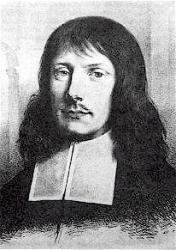
J. J. Rambach

1693 - 1735 Person Name: Johann Rambach Topics: First Sunday in Lent Author of "Jeg er frelst og dyrekjøbt" in Salmebog for Lutherske Kristne i Amerika Rambach, Johann Jakob, D.D., son of Hans Jakob Rambach, cabinet maker at Halle on the Saale, was born at Halle, Feb. 24, 1693. In 1706 he left school and entered his father's workshop, but, in the autumn of 1707, he dislocated his ankle. During his illness he turned again to his schoolbooks; the desire for learning reawoke; and on his recovery, early in 1708, he entered the Latin school of the Orphanage at Halle (Glaucha). On Oct. 27, 1712, he matriculated at the University of Halle as a student of medicine, but soon turned his attention to theology. He became specially interested in the study of the Old Testament under J. H. Michaelis. In May 1715 he became one of Michaelis's assistants in preparing his edition of the Hebrew Bible, for which he wrote the commentary on Ruth, Esther, Nehemiah, &c. His health began to suffer in the spring of 1719, and he gladly accepted the invitation of Count von Heukel to stay at Polzig, near Ronneburg, where he spent several months. By August he had quite recovered, and went to pay a visit to Jena, where a number of the students asked him to lecture to them. For this purpose he settled at Jena in Oct., 1719, and lived in the house of Professor Buddeus (J. F. Budde). He graduated M.A. in March 1720. In 1723 he was appointed adjunct of the Theological Faculty at Halle, as also inspector of the Orphanage; in 1726 extraordinary professor of theology; and in 1727, after A. H. Francke's death, ordinary professor as well as preacher at the Schulkirche. Here he was very popular, both as preacher and professor, but the jealousy of his colleagues induced him to accept an offer from the Landgrave Ernst Ludwig of Hesse, who, in 1731, invited him to Giessen as superintendent and first professor of theology (before leaving Halle he graduated D.D., June 28, 1731), and in Aug., 1732, appointed him also director of the Paedagogium at Giessen. In 1734 he was, for various reasons, greatly inclined to accept the offer of the first professorship of theology in the newly-founded University of Göttingen, but eventually, at the earnest request of the Landgrave, remained in Giessen, where he died of fever, April 19, 1735 (Die Familie Rambach. By Dr. T. Hansen, Gotha, 1875: Allgemeine Deutsche Biographie, xxvii. 196; Blätter fur Hymnologie, 1883, pp. 113, 129, 145, 163, 186; 1884, p. 20; 1885, p. 13, &c.) Rambach was a voluminous author in various departments of practical theology, e.g. his Institutiones hermeneuticae sacrae, Jena, 1724, which passed through four editions in his lifetime; hisErbauliches Handbüchlein fur Kinder, 1734 (see below), which reached an eighth edition in 1736, and a 14th in 1766; his various volumes of sermons, &c. He justly earned his popularity by the thoroughness of his researches, and the clear and concise way in which he set forth the results of his investigations. It is however as a hymnwriter that his name is likely to be best known. While not entitled to rank with the best hymn-writers of the 16th and 17th centuries, he yet takes a high place among his contemporaries, and deserves to be remembered as much as almost any of the 18th cent, hymnwriters. His style is good and dignified; his thought is profound yet clearly expressed. While his hymns are often sufficiently didactic, they are generally scriptural and churchly in tone, and are characterised by lyric force, lively imagination, and earnest, sober piety. Of hymns, in the strict sense, he wrote over 180, a large number of which passed into the German hymn-books of the 18th cent. (e.g. the Hannover Gesang-Buch, 1740, and Lüneburg Gesang-Buch, 1767, contains 52 by him), and a good many are still found in modern hymn-books. Of these Dr. J. L. Pasig gives 165 in his edition of Rambach's Geistliche Lieder, Leipzig, 1844, and the rest are printed by Hansen as above, while the first lines of the whole are given in the Blätter as above. Four are recasts (practically originals), made for the 11th edition, 1719, of Freylinghausen's Gesang-Buch, to replace similar hymns in the ed. of 1705. The rest principally appeared in the following works by Rambach, viz.: (1) Geistliche Poesien, Halle. 1720 [British Museum] The first part contains 72 cantatas on the Gospels for Sundays and festivals; the second part includes 20 hymns, mostly written at Polzig in 1719. (2) Poetische Fest-Gedancken. Jena and Leipzig, 1723 [Royal Library, Berlin]. Included are 15 pieces which may be called hymns. The second edition of 1727 [Brit. Mus.] has 28 new hymns; and the 3rd ed., 1729 [Gottingen Library], has 22 more. (3) Erbauliches Handbuchlein für Kinder, Giessen, 1734 [Hamburg Library]. The 3rd part contains 8 new hymns. (4) Geistreiches Haus-Gesang-Buch, Frankfurt and Leipzig, 1735 [Hamburg Library], with a preface dated April 10, 1735. This contains 112 hymns by Rambach, of which 58 are practically new, 11 of these, however, being recasts of his own earlier hymns. (5) Wander der bis zum Tode des Kreutzes erniedrigten Liebe, Giessen, 1750 [Berlin Library]. This includes 27 new hymns. Rambach's hymns …which have passed into English are:— i. Auf! Seele, schicke dich. Holy Communion. Written, by request for the eleventh edition, 1719, of Freylinghausen's Gesang-Buch, 1704, as No. 229, in 16 stanzas of 6 lines in order to replace the hymn "Auf, Seele, sey gerüst." This hymn, by George Heine, was included in the Geistreiches Gesang-Buch, Halle, 1697, p. 433. In the second ed., 1771, of the complete book formed by the fusion of pt. i., 1704, and its supplement of 1705 with pt. ii., 1714, of Freylinghausen's Gesang-Buch, both hymns are given, Heine's as No. 524, and Rambach's as No. 522, both marked as being No. 229 in pt. i., 1704. Rambach's hymn is in his Haus Gesang-Buch, 1735, No. 369; the Berlin Geistliche Lieder, ed. 1863, No. 471, &c. In Pasig's edition of his Geistliche Lieder, 1844, p. 112, entitled "Before the reception of Holy Communion." It has been translated as:— My soul prepare to meet. Omitting st. i., 11. 4-6 ; ii., 11. 4-6; vii., xiv., as No. 570 in the Moravian Hymn Book, 1789 (1849, No. 966). In the edition of 1886, No. 979 begins with st. iv., "How should I, slaughtered Lamb"; and No. 1012 with st. xi., "Lord, of Thy wondrous love." ii. Mein Jesu, der du vor dem Scheiden. Holy Communion. Appeared in Freylinghausen's Gesang-Buch, 11th ed., 1719, as No. 238, in 9 st. of 6 1. It was written to replace the hymn "Mein Jesn, hier sind deine Brüder" (Geistreiches Gesang-Buch, Halle, 1697, p. 363), in the first edition of Freylinghausen's Gesang-Buch. It is in his Haus Gesang-Buch, 1735, No. 365; the Berlin Geistliche Lieder, ed. 1863, No. 1601; and in Pasig, 1844, p. 110, entitled, "On the treasures of Grace in Holy Communion." The translations are:— 1. Lord Jesus, Who before Thy passion. Omitting st. ix., this is No. 1181 in the Supplement of 1808 to the Moravian Hymn Book, 1801 (1886, No. 963). 2. 0 Lord, Who on that last sad eve. A good translation omitting st. ix., by Miss Cox, contributed to Lyra Eucharistica, 1863, p. 15, and repeated in her Hymns from the German, 1864, p. 75. Included, omitting st. iii., in G. S. Jellicoe's Collection, 1867. iii. 0 Lehrer, dem kein Andrer gleich. Christ our Prophet. In his Haus Gesang-Buch1735, No. 107, in 8 st. of 6 1., entitled, "On the prophetical office of Jesus Christ." Repeated in the Berlin Geistliche Lieder, ed. 1863, No. 118, and in Pasig, 1844, p. 51. Translated as:— Surely none like Thee can teach. By Miss Fry, in 102 lines, in her Hymns of the Reformation,1845, p. 126. A recast in 3 st. of 8 1., beginning, "Saviour, none like Thee can teach," was included in J. Whittemore's Supplement to all Hymn Books, 1860, No. 263, and repeated in the Methodist New Congregational Hymn Book, 1863, No. 62. iv. Wie herrlich ists ein Schäflein Christi werden. Joy in Believing. In his Poetiche Fest-Gedancken, 2nd ed. 1727, p. 131, in 6 st. of 6 l., entitled, "The Blessedness of the Sheep of Christ. John x. 28, ‘I give my sheep eternal life.'" In his Haus Gesang-Buch 1735, No. 325; the Berlin Geistliche Lieder, ed. 1863, No. 645; and Pasig, 1844, p. 139. Translated as:— How great the bliss to be a sheep of Jesus. A translation of st. i., ii., v., by C. J. Latrobe, as No. 293, in the Moravian Hymn Book, 1789 (1886, No. 385). Hymns not in English common use:— v. Allwissender, vollkommner Geist. The Omniscient One. In his Haus Gesang-Buch, 1735, No. 12, in 6 stanzas; the Berlin Geistliche Lieder, ed. 1863; and in Pasig, p. 8. Translated as, "Thou Spirit, perfect and allwise." By Dr. H. Mills, 1856, p. 11. vi. Frommes Lamm, von was für Hunden. Passiontide. In his Poetische Fest-Gedancken, 2nd ed., 1727, p. 49, in 8 st. In his Haus Gesang-Buch, 1735, No. 151, it begins, "Frommes Lamm, durch dessen Wunden." Also in Pasig, p. 67. Translated as, "Great Thy sorrows, injur'd Jesus." By Dr. H. Mills, 1845 (1856, p. 297). vii. Gesetz und Evangelium, Law and Gospel. In his Haus Gesang-Buch, 1735, No. 356, in 10 st.; the Berlin Geistliche Lieder, ed. 1863; and Pasig, p. 105. Translated as, "The holy law and gospel, both." By Dr. II. Mills, 1845 (1856, p. 27.) viii. Herr, du hast nach dem Fall. Before Work. In his Haus Gesang-Buch, 1735, No. 565, in 4 st.; and Pasig, p. 150. In the Berlin Gesang-Buch, 1765, No. 206, it is altered (probably by J. S. Diterich), and begins "Du hast uns, Heir die Pflicht." This is translated as, “Lord, Thou hast bid us labour, bid us toil." By Miss Warner, 1858, p. 230. ix. Hier bin ich Herr, du rufest mir. Christian Work. In his Haus Gesang-Buch, 1735, No. 269, in 6 st.; the Württemberg Gesang-Buch, 1842, No. 306; and Pasig, p. 119. The translations are (1) "Here am I, Lord, Thou callest me, Thou drawest me." By Miss Warner, 1858, p. 209. (2) "Here am I, Lord, Thou callest me, Thou drawest and." By Mrs. Findlater, in Hymns from the Land of Luther, 4th series, 1862. x. Höchste Vollkommenheit, reineste Sonne. God's Majesty . Written for the 11th ed., 1719, of Freylinghausen's Gesang-Buch, No. 170 (in 20 st.), to replace an anonymous hymn in the first edition, 1704, which began "Höchste Vollkommenheit, alles in Einem." In his Haus Gesang-Buch 1735, No. 8, Rambach reduced it to 12 st., and rewrote it to an easier metre, so as to begin "Höchstes Wesen, reinste Sonne." Both forms are in Pasig, pp. 3-6. Translated as "If Heav'ns and Earths there were innumerable," a tr. of st. iii., viii., xi., xv., xvii., xix., xx., as No. 672, in pt. i. of the Moravian Hymn Book, 1754. xi. O grosser Geist, dess Wesen Alles füllet. The Omnipresent One. In his Geistliche Poesien, 1720, p. 330, in 9 st.; his Haus Gesang-Buch, 1735, No. 13; the Württemberg Gesang-Buch, 1842, No. 44 ; and Pasig, p. 7. Translated as, “Eternal God, Thy dwelling-place." By Dr. G. Walker, 1860, p. 73. xii. 0 grosser Geist! O Ursprung aller Dinge. God's Holiness. In his Geistliche Poesien, 1729, p. 327, in 9 st.; his Haus Gesang-Buch, 1735, No. 19; and Pasig, p. 15. Translated as, "O mighty Spirit! Source whence all things sprung." By Miss Winkworth, 1858, p. 153. xiii. Verklärte Majestät, anbetungs-würdigst Wesen. God's Majesty. Founded on 1 Tim. vi. 15, 16. In his Geistliche Poesien, 1720, p. 303, in 11 st.; his Haus Gesang-Buch, 1735, No. 7; and Pasig, p. 2. The form translation is "Anbetungswürdger Gott," a recast (probablv by J. S. Diterich), which is No. l in the Berlin Gesang-Buch 1765, and No. 5 in the Berlin Geistliche Lieder, ed. 1863. Translated as, "Dread Majesty above." By Dr. H. Mills, 1845 (1856, p. 8). xiv. Wirf, blöder Sinn, den Kummer hin. Christmas. In his Haus Gesang-Buch, 1735, No. 129, in 6 st. (founded on Rom. viii. 31, 32). In Pasig, p. 6, and the Unverfälschter Liedersegen 1851, No. 60. Translated as, "Throw, soul, I say, thy fears away." By Miss Manington, 1864, p. 28. [Rev. James Mearns, M.A.] --John Julian, Dictionary of Hymnology (1907

Joachim Neander

1650 - 1680 Person Name: J. Neander Topics: Second Sunday in Lent High Mass; Anden Søndag i Faste Til Høimesse; Bønnen; Prayer; 21 Søndag efter Trefoldigheds Fest Til Hoimesse; Twenty-first Sunday after Trinity Sunday High Mass Author of "Jeg er rede til at bede" in M. B. Landstads Kirkesalmebog og "Nokre Salmar" ved Professor Dr. E. Blix, samt følgende tillæg Neander, Joachim, was born at Bremen, in 1650, as the eldest child of the marriage of Johann Joachim Neander and Catharina Knipping, which took place on Sept. 18, 1649, the father being then master of the Third Form in the Paedagogium at Bremen. The family name was originally Neumann (Newman) or Niemann, but the grandfather of the poet had assumed the Greek form of the name, i.e. Neander. After passing through the Paedagogium he entered himself as a student at the Gymnasium illustre (Academic Gymnasium) of Bremen in Oct. 1666. German student life in the 17th century was anything but refined, and Neander seems to have been as riotous and as fond of questionable pleasures as most of his fellows. In July 1670, Theodore Under-Eyck came to Bremen as pastor of St. Martin's Church, with the reputation of a Pietist and holder of conventicles. Not long after Neander, with two like-minded comrades, went to service there one Sunday, in order to criticise and find matter of amusement. But the earnest words of Under-Eyck touched his heart; and this, with his subsequent conversations with Under-Eyck, proved the turning-point of his spiritual life. In the spring of 1671 he became tutor to five young men, mostly, if not all, sons of wealthy merchants at Frankfurt-am-Main, and accompanied them to the University of Heidelberg, where they seem to have remained till the autumn of 1673, and where Neander learned to know and love the beauties of Nature. The winter of 1673-74 he spent at Frankfurt with the friends of his pupils, and here he became acquainted with P. J. Spener (q.v.) and J. J. Schütz (q.v.) In the spring of 1674 he was appointed Rector of the Latin school at Düsseldorf (see further below). Finally, in 1679, he was invited to Bremen as unordained assistant to Under-Eyck at St. Martin's Church, and began his duties about the middle of July. The post was not inviting, and was regarded merely as a stepping stone to further preferment, the remuneration being a free house and 40 thalers a year, and the Sunday duty being a service with sermon at the extraordinary hour of 5 a.m. Had he lived, Under-Eyck would doubtless have done his best to get him appointed to St. Stephen's Church, the pastorate of which became vacant in Sept., 1680. But meantime Neander himself fell into a decline, and died at Bremen May 31, 1680 (Joachim Neander, sein Leben und seine Lieder. With a Portrait. By J. F. Iken, Bremen, 1880; Allgemeine Deutsche Biographie, xxiii. 327, &c.) Neander was the first important hymn-writer of the German Reformed Church since the times of Blaurer and Zwick. His hymns appear to have been written mostly at Düsseldorf, after his lips had been sealed to any but official work. The true history of his unfortunate conflict has now been established from the original documents, and may be summarized thus. The school at Düsseldorf was entirely under the control of the minister and elders of the Reformed Church there. The minister from about July, 1673, to about May, 1677, was Sylvester Lürsen (a native of Bremen, and only a few years older than Neander), a man of ability and earnestness, but jealous, and, in later times at least, quarrelsome. With him Neander at first worked harmoniously, frequently preaching in the church, assisting in the visitation of the sick, &c. But he soon introduced practices which inevitably brought on a conflict. He began to hold prayer meetings of his own, without informing or consulting minister or elders; he began to absent himself from Holy Communion, on the ground that he could not conscientiously communicate along with the unconverted, and also persuaded others to follow this example; and became less regular in his attendance at the ordinary services of the Church. Besides these causes of offence he drew out a new timetable for the school, made alterations on the school buildings, held examinations and appointed holidays without consulting any one. The result of all this was a Visitation of the school on Nov. 29, 1676, and then his suspension from school and pulpit on Feb. 3, 1677. On Feb. 17 he signed a full and definite declaration by which "without mental reservations" he bound himself not to repeat any of the acts complained of; and thereupon was permitted to resume his duties as rector but not as assistant minister. The suspension thus lasted only 14 days, and his salary was never actually stopped. The statements that he was banished from Düsseldorf, and that he lived for months in a cave in the Neanderthal near Mettmann are therefore without foundation. Still his having had to sign such a document was a humiliation which he must have felt keenly, and when, after Lürsen's departure, the second master of the Latin school was appointed permanent assistant pastor, this feeling would be renewed. Neander thus thrown back on himself, found consolation in communion with God and Nature, and in the composition of his hymns. Many were without doubt inspired by the scenery of the Neanderthal (a lovely valley with high rocky sides, between which flows the little river Düssel); and the tradition is probable enough that some of them were composed in a cave there. A number were circulated among his friends at Düsseldorf in MS., but they were first collected and published after his removal to Bremen, and appeared as:— A und Ώ, Joachimi Neandri Glaub-und Liebesübung: — auffgemuntert durch ein fällige Bundes Lieder und Danck-Psalmen, Bremen, Hermann Brauer, 1680; 2nd ed. Bremen, 1683 ; 3rd ed. Bremen, 1687; 4th ed. Frankfurt, 1689. These editions contain 57 hymns. In the 5th ed., Frankfurt and Leipzig, 1691, edited by G. C. Strattner, eight hymns were added as being also by Neander. [The whole of these eds. are in the Royal Library, Berlin. The so-called 3rd. ed. at Wesel, 1686, also found in Berlin, was evidently pirated.] Other editions rapidly followed till we find the complete set (i.e. 57 or 58) formally incorporated as part of a hymnbook, e.g. in the Marburg Reformed Gesang-Buch, 1722, where the first part consists of Lobwasser's Psalter, the second of Neander's Bundeslieder, and the third of other hymns. Neander's Bundeslieder also form a division of the Lemgo Reformed Gesang-Buch, 1722; and of a favourite book used in the meetings conducted by G. Tersteegen, which in the 5th ed., Solingen, 1760, has the title Gott-geheiligtes Harfen-Spiel der Kinder Zion; bestehend in Joachimi Neandri sämtlichen Bundes-Liedern, &c. In this way, especially in the district near Düsseldorf and on the Ruhr, Neander's name was honoured and beloved long after it had passed out of memory at Bremen. Many of Neander's hymns were speedily received into the Lutheran hymnbooks, and are still in universal use. The finest are the jubilant hymns of Praise and Thanksgiving, such as his "Lobe den Herren”, and those setting forth the Majesty of God in His works of beauty and wonder in Nature, such as his "Himmel, Erde", and "Unbegreiflich Gut"; while some of his hymns of Penitence, such as his "Sieh hier bin ich, Ehrenkönig" (q.v.), are also very beautiful. Many are of a decidedly subjective cast, but for this the circumstances of their origin, and the fact that the author did not expect them to be used in public worship, will sufficiently account. Here and there there are doubtless harshnesses, and occasionally imagery which is rather jarring; and naturally enough the characteristic expressions and points of view of German 17th cent. Pietism and of the "Covenant Theology" are easily enough detected. But the glow and sweetness of his better hymns, their firm faith, originality, Scripturalness, variety and mastery of rhythmical forms, and genuine lyric character fully entitled them to the high place they hold. Of the melodies in the original edition of 1680 there are 19 by Neander himself, the best known being those to Nos. viii. and xi. below. The hymns by Neander which have passed into English, and have not already been referred to, are:— Hymns in English common use: i. Meine Hoffnung stehet feste. Thanksgiving. Founded on 1 Tim. vi. 17. 1680 as above, p. 115, in 5 stanzas of 7 lines, entitled "Grace after meat." In the Unverfälschter Liedersegen, 1851, No. 712. Translated as:— All my hope is grounded surely. A full and good translation by Miss Winkworth, as No. 8 in her Chorale Book for England, 1863. Another translation is: "All my Hope is fix'd and grounded." By J. C. Jacobi, 1720, p. 17, repeated in his ed., 1732, p. 64, altered and beginning, "All my Hope is firmly grounded." ii. Unbegreiflich Gut, wahrer Gott alleine. Summer. According to tradition this was written in the summer of 1677, in a cave in the Neanderthal near Düsseldorf, while Neander was in enforced absence from his school duties (Koch, vi. 20). It is founded on Ps. civ. 24. 1680, p. 165, in 12 stanzas of 6 lines, and entitled, "The Joys of Summer and Autumn in Field and Forest." The following note shows that the "Feeling for Nature" is not entirely modern. “It is also a travelling hymn in summer or autumn for those who, on their way to Frankfurt on the Main, go up and down the river Rhine, where between Cologne and Mainz, mountains, cliffs, brooks and rocks are to be beheld with particular wonder; also in the district of Berg in the rocky region [the ‘Gestein' now called the Neanderthal], not far from Düsseldorf." The hymn is in Knapp's Evangelischer Lieder-Schatz 1850, No. 2163 (1865, No. 2231), omitting st. x. Translated as:-— 0 Thou true God alone. A very good translation, omitting st. x., by Miss Winkworth, in her Christian Singers, 1869, p. 286. Her translation of st. i., iii.-v. altered in metre, and beginning "Thou true God alone," are No. 53 in M. W. Stryker's Christian Chorals, 1885. Hymns not in English common use:—— iii. Auf, auf, mein Geist, erhebe dich zum Himmel. Holy Communion. Founded on Ps. xxiii. 6. 1860, as above, p. 27, in 5 stanzas, entitled, "The soul strengthened and refreshed. After the reception of the Holy Communion." In Porst's Gesang-Buch, ed. 1855, No. 218. In the Moravian London Gesang-Buch, 1753, No. 697, it begins, "Den Himmels-Vorschmack hab' ich auf der Erde," and in the Brüder Gesang-Buch, 1778, No. 1178, it was further recast (by C. Gregor?) and altered to "hab'ich schon hinieden." Translated as "Heav'n's foretaste I may here already have." By F W. Foster & J. Miller, as No. 596, in the Moravian Hymn Book, 1789. In the 1801 ed. (1849, No. 1003) it begins, “Since Jesus dy'd, my guilty soul to save." iv. Der Tag ist hin, mein Jesu, bei mir bleibe. Evening. Founded on St. Luke xxiv. 29. 1680, p. 15, in 6 stanzas entitled, "The Christian returning thanks at eventide." In the Unverfälschter Liedersegen, 1851, No. 512. The translations are: (1) "The Day is gone, come Jesu my Protector." In the Supplement to German Psalmody, ed. 1765, p. 72. (2) "The day is past, Thou Saviour dear, still dwell my breast within." By H. J. Buckoll, 1842, p. 82. (3) "The day is gone, abide with me tonight." By E. Massie, 1867, p. 192. (4) "The day is gone, abide with me, 0 Jesus." By R. Massie, in the Day of Rest, 1877. v. Grosser Prophete, mein Herze begehret. Love to Christ. Founded on 1 Cor. xvi. 22. 1680, p. 191, in 4 stanzas. Translated as “Heavenly Prophet, my Heart is desiring." By J. C. Jacobi, 1720, p. 40. vi. Jehovah ist mein Licht und Gnadensonne. God's Perfections. Founded on 1 John i. 7. 1680, p. 19 in 4 stanzas, entitled, "Walking in the Light." Translated as, "Jehovah is my light, salvation showing." By Dr. H. Mills, 1845 (1856, p. 6). vii. 0 allerhöchster Menschenhüter. Morning. A hymn of praise to our Almighty Preserver. 1680, p. 11, in 6 stanzas, founded on Ps. lix. 16; and entitled, "The Christian singing at Morning." Translated as, "O Thou Most Highest! Guardian of mankind." By Miss Winkworth, 1858, p. 72. viii. Unser Herrscher, unser König. Thanksgiving. Founded on Acts viii. 2. 1680, p. 147, in 6 stanzas, entitled, "The glorious Jehovah." In the Unverfälschter Liedersegen 1851, No. 344. The well-known melody (in the Society for Promoting Christian Knowledge Church Hymns called Munich) is also by Neander, and appeared along with the hymn. Translated as, "Sovereign Ruler, King victorious," in the British Herald, Dec, 1865, p. 185, and Reid's Praise Book, 1872. ix. Wie fleucht dahin der Menschenzeit. For the Dying. A powerful hymn on the vanity of the earthly, founded on Ps. xc. 12. 1680, p. 174, in 7 stanzas, entitled, "He that counts his days." In the Unverfälschter Liedersegen, 1851, No. 845. The translations are: (1) "This life is like a flying dream" (beginning with st. ii. "Das Leben ist gleich wie ein Traum"). By Mrs. Findlater, in Hymns from the Land of Luther, 1858, p. 24 (1884, p. 146). (2) "Though hastening onward to the grave." By E. Massie, 1867, p. 36. x. Wo soil ich hin? wer helfet mir? Lent. Founded on Romans vii. 24. 1680, p. 51, in 5 st. entitled “The distressed one longing for Redemption." In the Unverfälschter Liedersegen, 1851, No. 393. The translations are: (1) "For help, O whither shall I flee." By Dr. H. Mills, 1845 (1856, p. 146). (2) "How shall I get there? who will aid?" By Miss Warner, 1858, p. 52. xi. Wunderbarer König. Thanksgiving. Founded on Ps. cl. 6. 1680, p. 159, in 4 stanzas, entitled, "Inciting oneself to the Praise of God." In the Unverfälschter Liedersegen, 1851, No. 787. The melody, a very fine one (called by Mr. Mercer Groningen), is also by Neander, and appeared along with the hymn. The translations are: (1) "Wonderful Creator." By J. C. Jacobi, 1722, p. 88. (2) "Wonderful and blessed." By J. D. Burns in his Memoir and Remains, 1869, p. 230. (3) "Wondrous King Almighty." By N. L. Frothingham, 1870, p. 266. [Rev. James Mearns, M.A.] --John Julian, Dictionary of Hymnology (1907)

Johann D. Meyer

1636 - 1696 Person Name: Johan Meier Topics: First Sunday in Lent Author of "Jesus, du min Lust i Live" in Salmebog for Lutherske Kristne i Amerika

Gioacchino A. Rossini

1792 - 1868 Person Name: Gioachimo Rossini, 1792-1808 Topics: The Catechism Faith; Third Sunday after Epiphany; Second Sunday in Lent; Twenty First Sunday after Trinity Composer of "MANOAH" in Evangelical Lutheran hymnal Gioacchino A. Rossini; b. 1792, Pesaro; d. 1868, Ruelle near Parise Evangelical Lutheran Hymnal, 1908

Christopher Tye

1497 - 1572 Topics: The Catechism The Redeemer; Fourth Sunday in Lent; Third Sunday of Advent; Fourteenth Sunday after Trinity; Nineteenth Sunday after Trinity; Twenty First Sunday after Trinity Composer of "DUNDEE" in Evangelical Lutheran hymnal Tye, Christopher, MUS. D., born at Westminster in the reign of Henry VIII. He was celebrated as a musician, and was granted the degree of MUS. D. at Cambridge in 1545. He was musical tutor to King Edward VI., and organist of the Chapel Royal under Queen Elizabeth. Besides composing numerous anthems, he rendered the first fourteen chapters of the Acts of the Apostles into metre, which were set to music by him and sung in Edward 6th's Chapel, and published in 1553. He died circa 1580. -- John Julian, Dictionary of Hymnology (1907)

Johann Andreas Rothe

1688 - 1758 Person Name: John Andrew Rothe Topics: The Order of Salvation Faith and Justification; Sundays in Lent; Lent, First Sunday; Lent, Second Sunday; Lent, Fifth Sunday; Passion Week Author of "Jesus, I know, hath died for me" in Church Book Rothe, Johann Andreas, son of Aegidius Rother, pastor at Lissa, near Görlitz, in Silesia, was born at Lissa, May 12, 1688. He entered the University of Leipzig in 1708, as a student of Theology, graduated M.A., and was then, in 1712, licensed at Gorlitz as a general preacher. In 1718 he became tutor in the family of Herr von Schweinitz at Leube, a few miles south of Gorlitz, and while there frequently preached in neighbouring churches. During 1722 Count N. L. von Zinzendorf, happening to hear him preach at Gross-Hennersdorf, was greatly pleased with him, and when the pastorate at Berthelsdorf became vacant shortly thereafter, gave him the presentation. He entered on his duties at Berthelsdorf Aug. 30, 1722. There he took a great interest in the Moravian community at Herrnhut, which formed part of his parish. But when, in 1737, he had to report to the higher ecclesiastical authorities regarding the doctrinal views of the Moravians, Zinzendorf showed his resentment in various ways, so that Kothe was glad to accept a call to Hermsdorf, near Gorlitz. Finally, in 1739, Count von Promnitz appointed him assistant pastor at Thommendorf, near Bunzlau, where he became chief pastor in 1742, and died there July 6, 1758. (Koch, v. 240; Wetzel’s Analecta Hymnica, ii. 756, &c.) Rothe was a man of considerable gifts and of unbending integrity, a good theologian, and an earnest, fearless, and impressive preacher. His hymns, about 40 in number, though they can hardly be said to rank high as poetry, are yet often characterised by glow and tenderness of feeling, and by depth of Christian experience. They are somewhat akin to Zinzendorf s better productions, but this resemblance may arise from the alterations which Zinzendorf seems to have made in them. The be6t known of them first appeared in Zinzendorf's hymn-books, and were for a time looked upon with suspicion, because as Zinzendorf did not affix authors' names, the new hymns were at first all ascribed to himself. Those of Rothe's hymns which have passed into English are:— i. Ich habe nun den Grand gefunde. Joy in Believing. …At first the Lutherans suspected it, thinking that it was by Zinzendorf, but on discovering that it was by Rothe, soon adopted it. It is a powerful and beautiful hymn, is found in many recent German collections (e.g. the Berlin Geistliche Lieder, ed. 1863, No. 78), and in its English forms has found a very wide acceptance, and proved a comfort and blessing to many. It was doubtless suggested by Heb. vi. 19. Rothe's hymn under consideration ("Ich habe nun ") has been translated as:— 1. Now I have found the ground wherein. A fine but somewhat free translation of st. i., ii., iv., v., vi., x., by J. Wesley. It has also appeared in full, or abridged, under the following first lines:— (1) Now I have found the blessed ground (st. i ). Lady Huntingdon's Selections, 1780. (2) Now have I found the ground wherein (st. i.). W. F. Stevenson's Hymns for Church & Home, 1873. (3) 0 Lord I Thy everlasting grace (st. ii.). Horder's Congregational Hymns, 1884. (4) Father, Thine everlasting grace (st. ii.). J. Bickersteth's Psalms & Hymns1832. (5) 0 Love, thou bottomless abyss (st. iii.). Evangelical Union Hymnal, 1878. (6) Jesus, I know hath died for me (st. iv.). Pennsylvanian Lutheran Church Book, 1868. (7) Though waves and storms go o'er my head (st. v.). Andover Sabbath Hymn Book, 1858. 2. I now have found, for hope of heaven. In full, by Dr. H. Mills, in theEvang. Review, Gettys¬burg, Jan. 1850, and in his Horae Germanica, 1850, p. 68. 3. My soul hath now the ground attained. A good tr. of st. i., iii., v., x., by A. T. Russell, as No. 167 in his Psalms & Hymns, 1851. 4. My soul hath found the steadfast ground. A good tr, (omitting st. v.-ix., and with a st. iv. not by Rothe), by Mrs. Bevan, in her Songs of Eternal Life, 1858, p. 55. 5. Now I have found the firm foundation. By G. F. Krotel, as No. 251 in the OhioLutheran Hymnal, 1880, omitting st. vi.-viii. 6. Now I have found the ground to hold. By J. Sheppard, in his Foreign Sacred Lyre, 1857, p. 91. ii. Vor wahrer Herzensanderung. The Forgiveness of Sin. first pub. as No. 448 in the 3rd ed., 1731, of Zinzendorf's Sammlung as above, and in 7 stanzas of 4 lines. In the Brüder Gesang-Buch , 1778, it is No. 392. The translations are:— (1) "Thanks be to Thee, Thou slaughtered Lamb!" (st. vii.). This is No. 345 in pt. ii., 1746, of the Moravian Hymn Book, (2) "Before conversion of the heart." A tr. of st. i., iv., by B. Latrobe, as No. 255 in the Moravian Hymn Book,1789, with the above tr. of st. vii. added. In the 1801 and later eds. (1886, No. 426) the tr. of st. vii. was alone retained. iii. Wenn kleine Himmelserben. Death of a Child. Written on the death of one of his daughters. The trs. are:— (1) "When children, bless'd by Jesus." This is No. 1196 in the Supplement of 1808 to the Moravian Hymn Book, 1801 (1886, No. 1258). (2) "When summons hence by Death is given." By E. Massie, 1867, p. 105. [Rev. James Mearns, M.A.] --excerpts from John Julian, Dictionary of Hymnology (1907)

Hans Chr. Sthen

1544 - 1610 Person Name: Hans Sthen Topics: First Sunday in Lent Author of "Guds Naade jeg altid prise vil" in Salmebog for Lutherske Kristne i Amerika

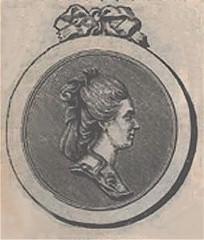
Birgitte K. Boye

1742 - 1824 Person Name: Birgitte Boye Topics: First Sunday in Lent Translator of "Jeg er frelst og dyrekjøbt" in Salmebog for Lutherske Kristne i Amerika Birgitte was born on March 7, 1742, in Gen­tofte, Den­mark. She was the daughter of Jens Jo­han­sen. Boye mar­ried a su­preme court judge in Co­pen­ha­gen, Den­mark. She found time to study German, French and English and translated hymns into Danish from these languages. As a hym­nist, she was in­volved with Guld­bergs og Har­boes Psalm­e­bog (Ove Guld­berg’s and Lud­vig Har­boe’s Psalt­er), to which she con­trib­ut­ed 146 hymns. She al­so pro­duced "na­tion­al dra­ma­tic writ­ing." She died on Oc­to­ber 17, 1824. Sources: Julian, p. 1001 & Stulken, p. 145

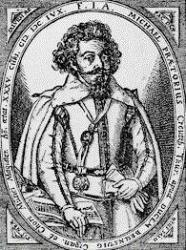
Benjamin Praetorius

1636 - 1674 Person Name: Benj. Prætorius Topics: First Sunday in Lent; First Sunday in Lent Author of "Vær i Korset tro og stille" in Salmebog for Lutherske Kristne i Amerika Prätorius, Benjamin, son of Andreas Prätorius, pastor at Obergreieslau near Weissenfels in Saxony, was born at Obergreisslau, January 1, 1636. In 1637. his father was appointed pastor at Gross-Lissa near Delitzsch, in Saxony. Benjamin became a student of theology, and giaduated M.A., probably at Leipzig. In the entry of his marriage in the registers of Gross-Lista, for 1657, he is described as "regularly ordained substitute and future successor of this parish": and he is never described in the registers except as Pastor-substitute. His ninth child was born in 1671, and on Jan. 8, 1675, his son Andreas Benjamin, on acting as godfather, is described as “surviving son" of M. Benjamin Prätorius. It is probable that he died some time in 1674, but as the register of deaths of this period is lost, we are unable to fix the exact date (K. Goedeke's Grundriss, vol. iii., 1887, p. 176; manuscript from Pastor Moebius of Gross-Lissa, &c). According to Wetzel, ii., 314, he was crowned as a poet on Feb. 15, 1661. In the registers for 1663 he first designs himself "poëta Caes." and "Kais. gekrönter Poëta" (i.e. imperial crowned poet), and in 1670 as "poëta Caes. laur. coronatus." His hymns appeared in his (1) Jauchtzendes Libanon, Leipzig, 1659, and (2) Spielende Myrten-Aue, Leipzig, 1663. In the preface to the latter he signs himself as "C. P. Caes. und Diener am Wort daselbst" (minister of the Word), under date “Gross-Lissa, Dec. 24, 1663." The only hymn by him translated into English is:— Sei getreu bis an das Ende. The Reward of the Faithful. In 1659, as above, No. 64, p. 15?, in 9 stanzas of 8 lines, and founded on Rev. ii. 10. In full in the Unverfälschter Liedersegen, 1851, No. 339. It is also often found as "Sei getreu in deinem Leiden," as in the Berlin Geistliche Lieder, ed. 1863, No. 749. This is from Luppius' sGesang-Buch, Wesel, 1692, p. 22, where it is in 7 stanzas (iv., ii., iii., v., ix., i. and a new stanza which begins, "So wohlan, so will ich leiden"), and is erroneously ascribed to J. C. Schade. The original form is tr. as:— Be thou faithful to the end, Let not. By Miss Warner, in her Hymns of the Church Militant, 1858, p. 362, repeated as No. 255, in Bishop Ryle's Collection, 1860. [Rev. James Mearns, M.A.] --John Julian, Dictionary of Hymnology (1907)

J. N. Frantzen

Person Name: Johan Frantzen Topics: First Sunday in Lent; First Sunday in Lent Author of "Satan skal i Støvet trædes" in Salmebog for Lutherske Kristne i Amerika

Pages


Export as CSV
It looks like you are using an ad-blocker. Ad revenue helps keep us running. Please consider white-listing Hymnary.org or getting Hymnary Pro to eliminate ads entirely and help support Hymnary.org.