

 My Starred Hymns
 My FlexScores
 My Hymnals
 My Purchased Files
Planning worship?
Check out our sister site, ZeteoSearch.org,
for 20+ additional resources related to your search.
- |
User Links
Person Results
Martin Madan
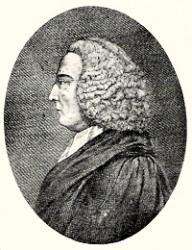
1726 - 1790 Topics: Adoration and Praise; Christian Year Advent; Communion of Saints; God Kingdom, Majesty, Realm; God Majesty; Hallelujah; Jesus Christ Kingship, Conqueror; Jesus Christ Second Coming; Judgment; Kingdom of God; Redemption; Advent 2 Year A; Advent 4 Year A; Easter 2 Year A; Proper 27 Year A; Reign of Christ Year A; Advent 1 Year B; Easter 2 Year B; Proper 27 Year B; Proper 28 Year B; Reign of Christ Year B; Advent 1 Year C; Easter 2 Year C Alterer of "Lo, He Comes with Clouds Descending" in Voices United Madan, Martin, son of Colonel Martin Madan, and brother of Dr. Spencer Madan, sometime Bishop of Peterborough, was born in 1726. He was to have qualified for the Bar, but through a sermon by J. Wesley on the words "Prepare to meet thy God," the whole current of his life was changed. After some difficulty he received Holy Orders, and subsequently founded and became chaplain of the Lock Hospital, Hyde Park Corner. He was popular as a preacher, and had no inconsiderable reputation as a musical composer. He ceased preaching on the publication of his work Thelyphthora, in which he advocated the practice of polygamy. He died in 1790. He published A Commentary on the Articles of the Church of England; A Treatise on the Christian Faith, &c, and:- A Collection of Psalms and Hymns Extracted from Various Authors, and published by the Reverend Mr. Madan. London, 1760.
This Collection contained 170 hymns thrown together without order or system of any kind. In 1763 he added an Appendix of 24 hymns. This Collection, referred to as Madam’s Psalms & Hymns, had for many years a most powerful influence on the hymnody of the Church of England. Nearly the whole of its contents, together with its extensively altered texts, were reprinted in numerous hymnbooks for nearly one hundred years. At the present time many of the great hymns of the last century are in use as altered by him in 1760 and 1763. Although several hymns have been attributed to him, we have no evidence that he ever wrote one. His hymnological labours were employed in altering, piecing, and expanding the work of others. And in this he was most successful.
-- John Julian, Dictionary of Hymnology (1907)
============================
Martin Madan
Thomas Olivers
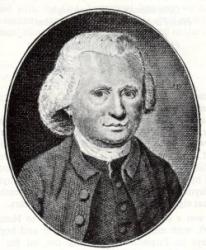
1725 - 1799 Topics: Adoration and Praise; Christian Year Advent; Communion of Saints; God Kingdom, Majesty, Realm; God Majesty; Hallelujah; Jesus Christ Kingship, Conqueror; Jesus Christ Second Coming; Judgment; Kingdom of God; Redemption; Advent 2 Year A; Advent 4 Year A; Easter 2 Year A; Proper 27 Year A; Reign of Christ Year A; Advent 1 Year B; Easter 2 Year B; Proper 27 Year B; Proper 28 Year B; Reign of Christ Year B; Advent 1 Year C; Easter 2 Year C Arranger of "HELMSLEY" in Voices United Thomas Olivers was born in Tregonan, Montgomeryshire, in 1725. His youth was one of profligacy, but under the ministry of Whitefield, he was led to a change of life. He was for a time apprenticed to a shoemaker, and followed his trade in several places. In 1763, John Wesley engaged him as an assistant; and for twenty-five years he performed the duties of an itinerant ministry. During the latter portion of his life he was dependent on a pension granted him by the Wesleyan Conference. He died in 1799.
--Annotations of the Hymnal, Charles Hutchins, M.A., 1872.
==================
Olivers, Thomas, was born at Tregynon, near Newtown, Montgomeryshire, in 1725. His father's death, when the son was only four years of age, followed by that of the mother shortly afterwards, caused him to be passed on to the care of one relative after another, by whom he was brought up in a somewhat careless manner, and with little education. He was apprenticed to a shoemaker. His youth was one of great ungodliness, through which at the age of 18 he was compelled to leave his native place. He journeyed to Shrewsbury, Wrexham, and Bristol, miserably poor and very wretched. At Bristol he heard G. Whitefield preach from the text "Is not this a brand plucked out of the fire?" That sermon turned the whole current of his life, and he became a decided Christian. His intention at the first was to join the followers of Whitefield, but being discouraged from doing so by one of Whitefield's preachers, he subsequently joined the Methodist Society at Bradford-on-Avon. At that town, where he purposed carrying on his business of shoemaking, he met John Wesley, who, recognising in him both ability and zeal, engaged him as one of his preachers. Olivers joined Wesley at once, and proceeded as an evangelist to Cornwall. This was on Oct. 1, 1753. He continued his work till his death, which took place suddenly in London, in March 1799. He was buried in Wesley's tomb in the City Road Chapel burying ground, London. Olivers was for some time co-editor with J. Wesley of the Arminian Magazine, but his lack of education unfitted him for the work. As the author of the tune Helmsley, and of the hymn “The God of Abraham praise," he is widely known. He also wrote “Come Immortal King of glory;" and "O Thou God of my salvation," whilst residing at Chester; and an Elegy on the death of John Wesley. His hymns and the Elegy were reprinted (with a Memoir by the Rev. J. Kirk) by D. Sedgwick, in 1868.
--John Julian, Dictionary of Hymnology (1907)
Thomas Olivers
Henry Francis Lyte
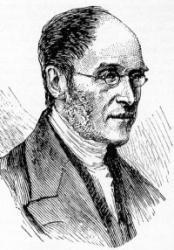
1793 - 1847 Person Name: Henry F. Lyte Topics: Blessing; Church Year Pentecost; Church Year Transfiguration; Daily Prayer Midday Prayer; Earth; Elements of Worship Praise and Adoration; Elements of Worship Preparation for Blessing; Elements of Worship Sending; Freedom; God Light from; God as King; God's Safety; God's Sovereignty; God's Triumph; God's Face; God's Justice; God's Name; God's People (flock, sheep); God's Power; God's Promise of Redemption; God's Way; Grace; Gratitude; Hymns of Praise; Jesus Christ Incarnation; Joy; Judgment; Mercy; Mission; Occasional Services Christian Marriage; Occasional Services Civic / National Occasions; Occasional Services Commissioning; Occasional Services New Year; Occasional Services Thanksgving Day / Harvest Festival; People of God / Church Family of God; People of God / Church Witnessing; The Incarnation; Witness; Worship; Year A, Ordinary Time after Pentecost, August 14-20; Year C, Easter, 6th Sunday Author of "God of Mercy, God of Grace" in Psalms for All Seasons Lyte, Henry Francis, M.A., son of Captain Thomas Lyte, was born at Ednam, near Kelso, June 1, 1793, and educated at Portora (the Royal School of Enniskillen), and at Trinity College, Dublin, of which he was a Scholar, and where he graduated in 1814. During his University course he distinguished himself by gaining the English prize poem on three occasions. At one time he had intended studying Medicine; but this he abandoned for Theology, and took Holy Orders in 1815, his first curacy being in the neighbourhood of Wexford. In 1817, he removed to Marazion, in Cornwall. There, in 1818, he underwent a great spiritual change, which shaped and influenced the whole of his after life, the immediate cause being the illness and death of a brother clergyman. Lyte says of him:—
"He died happy under the belief that though he had deeply erred, there was One whose death and sufferings would atone for his delinquencies, and be accepted for all that he had incurred;"
and concerning himself he adds:—
"I was greatly affected by the whole matter, and brought to look at life and its issue with a different eye than before; and I began to study my Bible, and preach in another manner than I had previously done."
From Marazion he removed, in 1819, to Lymington, where he composed his Tales on the Lord's Prayer in verse (pub. in 1826); and in 1823 he was appointed Perpetual Curate of Lower Brixham, Devon. That appointment he held until his death, on Nov. 20, 1847. His Poems of Henry Vaughan, with a Memoir, were published in 1846.
His own Poetical works were:—
(1) Poems chiefly Religious 1833; 2nd ed. enlarged, 1845. (2) The Spirit of the Psalms, 1834, written in the first instance for use in his own Church at Lower Brixham, and enlarged in 1836; (3) Miscellaneous Poems (posthumously) in 1868. This last is a reprint of the 1845 ed. of his Poems, with "Abide with me" added. (4) Remains, 1850.
Lyte's Poems have been somewhat freely drawn upon by hymnal compilers; but by far the larger portion of his hymns found in modern collections are from his Spirit of the Psalms. In America his hymns are very popular. In many instances, however, through mistaking Miss Auber's (q. v.) Spirit of the Psalms, 1829, for his, he is credited with more than is his due. The Andover Sabbath Hymn Book, 1858, is specially at fault in this respect. The best known and most widely used of his compositions are "Abide with me, fast falls the eventide;” “Far from my heavenly home;" "God of mercy, God of grace;" "Pleasant are Thy courts above;" "Praise, my soul, the King of heaven;" and "There is a safe and secret place." These and several others are annotated under their respective first lines: the rest in common use are:—
i. From his Poems chiefly Religious, 1833 and 1845.
1. Above me hangs the silent sky. For Use at Sea.
2. Again, 0 Lord, I ope mine eyes. Morning.
3. Hail to another Year. New Year.
4. How good, how faithful, Lord, art Thou. Divine care of Men.
5. In tears and trials we must sow (1845). Sorrow followed by Joy.
6. My [our] rest is in heaven, my [our] rest is not here. Heaven our Home.
7. 0 Lord, how infinite Thy love. The Love of God in Christ.
8. Omniscient God, Thine eye divine. The Holy Ghost Omniscient.
9. The leaves around me falling. Autumn.
10. The Lord hath builded for Himself. The Universe the Temple of God.
11. Vain were all our toil and labour. Success is of God.
12. When at Thy footstool, Lord, I bend. Lent.
13. When earthly joys glide swift away. Ps. cii.
14. Wilt Thou return to me, O Lord. Lent.
15. With joy we hail the sacred day. Sunday.
ii. From his Spirit of the Psalms, 1834.
16. Be merciful to us, O God. Ps. lvii.
17. Blest is the man who knows the Lord. Ps. cxii.
18. Blest is the man whose spirit shares. Ps. xli.
19. From depths of woe to God I cry. Ps. cxxxx.
20. Gently, gently lay Thy rod. Ps. vi.
21. Glorious Shepherd of the sheep. Ps. xxiii.
22. Glory and praise to Jehovah on high. Ps. xxix.
23. God in His Church is known. Ps. lxxvi.
24. God is our Refuge, tried and proved. Ps. xlvi.
25. Great Source of my being. Ps. lxxiii.
26. Hear, O Lord, our supplication. Ps. lxiv.
27. How blest the man who fears the Lord. Ps.cxxviii.
28. Humble, Lord, my haughty spirit. Ps. cxxxi.
29. In this wide, weary world of care. Ps. cxxxii.
30. In vain the powers of darkness try. Ps.lii.
31. Jehovah speaks, let man be awed. Ps. xlix.
32. Judge me, O Lord, and try my heart. Ps. xxvi.
33. Judge me, O Lord, to Thee I fly. Ps. xliii.
34. Lord, I have sinned, but O forgive. Ps. xli.
35. Lord, my God, in Thee I trust. Ps. vii.
36. Lord of the realms above, Our Prophet, &c. Ps.xlv.
37. Lone amidst the dead and dying. Ps. lxii.
38. Lord God of my salvation. Ps. lxxxviii.
39. Lord, I look to Thee for all. Ps. xxxi.
40. Lord, I would stand with thoughtful eye. Ps. lxix.
41. Lord, my God, in Thee I trust. Ps. vii.
42. My God, my King, Thy praise I sing. Ps. cviii.
43. My God, what monuments I see. Ps. xxxvi.
44. My spirit on [to] Thy care. Ps. xxxi.
45. My trust is in the Lord. Ps. xi.
46. Not unto us, Almighty Lord [God]. Ps. cxv.
47. O God of glory, God of grace. Ps. xc.
48. O God of love, how blest are they. Ps. xxxvii.
49. O God of love, my God Thou art. Ps. lxiii.
50. O God of truth and grace. Ps. xviii.
51. O had I, my Saviour, the wings of a dove. Ps. lv.
52. O how blest the congregation. Ps. lxxxix.
53. O how safe and [how] happy he. Ps. xci.
54. O plead my cause, my Saviour plead. Ps. xxxv.
55. O praise the Lord, 'tis sweet to raise. Ps. cxlvii.
56. O praise the Lord; ye nations, pour. Ps. cxvii.
57. O praise ye the Lord With heart, &c. Ps. cxlix.
58. O that the Lord's salvation. Ps. xiv.
59. O Thou Whom thoughtless men condemn. Ps. xxxvi.
60. Of every earthly stay bereft. Ps. lxxiv.
61. Our hearts shall praise Thee, God of love. Ps. cxxxviii.
62. Pilgrims here on earth and strangers. Ps. xvi.
63. Praise for Thee, Lord, in Zion waits. Ps. lxv.
64. Praise to God on high be given. Ps. cxxxiv.
65. Praise ye the Lord, His servants, raise. Ps. cxiii.
66. Redeem'd from guilt, redeem'd from fears. Ps. cxvi.
67. Save me by Thy glorious name. Ps. liv.
68. Shout, ye people, clap your hands. Ps. xlvii.
69. Sing to the Lord our might. Ps. lxxxi.
70. Strangers and pilgrims here below. Ps. cix.
71. Sweet is the solemn voice that calls. Ps. cxxii.
72. The Church of God below. Ps. lxxxvii.
73. The Lord is King, let earth be glad. Ps. xcvii.
74. The Lord is on His throne. Ps. xciii.
75. The Lord is our Refuge, the Lord is our Guide. Ps. xlvii.
76. The mercies of my God and King. Ps. lxxxix.
77. The Lord Who died on earth for men. Ps. xxi.
78. Tis a pleasant thing to fee. Ps. cxxxiii.
79. Thy promise, Lord, is perfect peace. Ps. iii.
80. Unto Thee I lift mine [my] eyes. Ps. cxxiii.
81. Whom shall [should] we love like Thee? Ps. xviii.
Lyte's versions of the Psalms are criticised where their sadness, tenderness and beauty are set forth. His hymns in the Poems are characterized by the same features, and rarely swell out into joy and gladness.
--John Julian, Dictionary of Hymnology (1907)
==================
Lyte, Henry Francis, p. 706, i. Additional versions of Psalms are in common use:--
1. Lord, a thousand foes surround us. Psalms lix.
2. Praise, Lord, for Thee in Zion waits. Psalms lxv.
3. The Christian like his Lord of old. Psalms cxl.
4. The Lord of all my Shepherd is. Psalms xxiii.
5. The Lord of heaven to earth is come. Psalms xcviii.
6. Thy mercy, Lord, the sinner's hope. Psalms xxxvi.
7. To Thee, O Lord, in deep distress. Psalms cxlii. Sometimes given as "To God I turned in wild distress."
8. Uphold me, Lord, too prone to stray. Psalms i.
9. When Jesus to our [my] rescue came. Psalms cxxvi. These versions appeared in the 1st edition of Lyte's Spirit of the Psalms, 1834. It must be noted that the texts of the 1834, the 1836, and the 3rd ed., 1858, vary considerably, but Lyte was not responsible for the alterations and omissions in the last, which was edited by another hand for use at St. Mark's, Torquay.
Lyte's version of Psalms xxix., "Glory and praise to Jehovah on high" (p. 706, ii., 22), first appeared in his Poems, 1st ed., 1833, p. 25. Read also No. 39 as "Lord, I look for all to Thee."
--John Julian, Dictionary of Hymnology, Appendix, Part II (1907)
Henry Francis Lyte
Lowell Mason
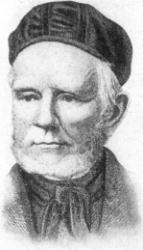
1792 - 1872 Topics: Adoration; Christ Ascension of; Christ Glorying in; Christ Power of; Christ Ressurection of; Christ Worshiped; Church Divinely Furnished; Faith Act of; Faith Blessedness of; God Adored and Exalted; God Glorious; God Kingly Character of; Gospel Gracious Fruit of; Liberality; Missions Encouragements of; Missions Influence of; Missions Triumphs of; Nations Owe Allegiance to Christ; Nations Ultimate Subjection of; Offerings; Praise By Men; Praise Calls to; Praise For Spiritual Blessings; Praise For Works of Providence; Royalty of Christ Guarantee of Salvation; Royalty of Christ In His Church; Royalty of Christ Judgment the Prerogative of; Royalty of Christ Universal Domain of; Salvation God's Gift; Strength in God; Thanksgiving Declared; Worship Call to ; Worship Delightful to Saints Composer of "MISSIONARY HYMN" in The Psalter Dr. Lowell Mason (the degree was conferred by the University of New York) is justly called the father of American church music; and by his labors were founded the germinating principles of national musical intelligence and knowledge, which afforded a soil upon which all higher musical culture has been founded. To him we owe some of our best ideas in religious church music, elementary musical education, music in the schools, the popularization of classical chorus singing, and the art of teaching music upon the Inductive or Pestalozzian plan. More than that, we owe him no small share of the respect which the profession of music enjoys at the present time as contrasted with the contempt in which it was held a century or more ago. In fact, the entire art of music, as now understood and practiced in America, has derived advantage from the work of this great man.
Lowell Mason was born in Medfield, Mass., January 8, 1792. From childhood he had manifested an intense love for music, and had devoted all his spare time and effort to improving himself according to such opportunities as were available to him. At the age of twenty he found himself filling a clerkship in a banking house in Savannah, Ga. Here he lost no opportunity of gratifying his passion for musical advancement, and was fortunate to meet for the first time a thoroughly qualified instructor, in the person of F. L. Abel. Applying his spare hours assiduously to the cultivation of the pursuit to which his passion inclined him, he soon acquired a proficiency that enabled him to enter the field of original composition, and his first work of this kind was embodied in the compilation of a collection of church music, which contained many of his own compositions. The manuscript was offered unavailingly to publishers in Philadelphia and in Boston. Fortunately for our musical advancement it finally secured the attention of the Boston Handel and Haydn Society, and by its committee was submitted to Dr. G. K. Jackson, the severest critic in Boston. Dr. Jackson approved most heartily of the work, and added a few of his own compositions to it. Thus enlarged, it was finally published in 1822 as The Handel and Haydn Society Collection of Church Music. Mason's name was omitted from the publication at his own request, which he thus explains, "I was then a bank officer in Savannah, and did not wish to be known as a musical man, as I had not the least thought of ever making music a profession." President Winchester, of the Handel and Haydn Society, sold the copyright for the young man. Mr. Mason went back to Savannah with probably $500 in his pocket as the preliminary result of his Boston visit.
The book soon sprang into universal popularity, being at once adopted by the singing schools of New England, and through this means entering into the church choirs, to whom it opened up a higher field of harmonic beauty. Its career of success ran through some seventeen editions. On realizing this success, Mason determined to accept an invitation to come to Boston and enter upon a musical career. This was in 1826. He was made an honorary member of the Handel and Haydn Society, but declined to accept this, and entered the ranks as an active member. He had been invited to come to Boston by President Winchester and other musical friends and was guaranteed an income of $2,000 a year. He was also appointed, by the influence of these friends, director of music at the Hanover, Green, and Park Street churches, to alternate six months with each congregation. Finally he made a permanent arrangement with the Bowdoin Street Church, and gave up the guarantee, but again friendly influence stepped in and procured for him the position of teller at the American Bank.
In 1827 Lowell Mason became president and conductor of the Handel and Haydn Society. It was the beginning of a career that was to win for him as has been already stated the title of "The Father of American Church Music." Although this may seem rather a bold claim it is not too much under the circumstances. Mr. Mason might have been in the average ranks of musicianship had he lived in Europe; in America he was well in advance of his surroundings. It was not too high praise (in spite of Mason's very simple style) when Dr. Jackson wrote of his song collection: "It is much the best book I have seen published in this country, and I do not hesitate to give it my most decided approbation," or that the great contrapuntist, Hauptmann, should say the harmonies of the tunes were dignified and churchlike and that the counterpoint was good, plain, singable and melodious.
Charles C. Perkins gives a few of the reasons why Lowell Mason was the very man to lead American music as it then existed. He says, "First and foremost, he was not so very much superior to the members as to be unreasonably impatient at their shortcomings. Second, he was a born teacher, who, by hard work, had fitted himself to give instruction in singing. Third, he was one of themselves, a plain, self-made man, who could understand them and be understood of them."
The personality of Dr. Mason was of great use to the art and appreciation of music in this country. He was of strong mind, dignified manners, sensitive, yet sweet and engaging.
Prof. Horace Mann, one of the great educators of that day, said he would walk fifty miles to see and hear Mr. Mason teach if he could not otherwise have that advantage.
Dr. Mason visited a number of the music schools in Europe, studied their methods, and incorporated the best things in his own work. He founded the Boston Academy of Music. The aim of this institution was to reach the masses and introduce music into the public schools. Dr. Mason resided in Boston from 1826 to 1851, when he removed to New York. Not only Boston benefited directly by this enthusiastic teacher's instruction, but he was constantly traveling to other societies in distant cities and helping their work. He had a notable class at North Reading, Mass., and he went in his later years as far as Rochester, where he trained a chorus of five hundred voices, many of them teachers, and some of them coming long distances to study under him. Before 1810 he had developed his idea of "Teachers' Conventions," and, as in these he had representatives from different states, he made musical missionaries for almost the entire country. He left behind him no less than fifty volumes of musical collections, instruction books, and manuals.
As a composer of solid, enduring church music. Dr. Mason was one of the most successful this country has introduced. He was a deeply pious man, and was a communicant of the Presbyterian Church. Dr. Mason in 1817 married Miss Abigail Gregory, of Leesborough, Mass. The family consisted of four sons, Daniel Gregory, Lowell, William and Henry. The two former founded the publishing house of Mason Bros., dissolved by the death of the former in 1869. Lowell and Henry were the founders of the great organ manufacturer of Mason & Hamlin. Dr. William Mason was one of the most eminent musicians that America has yet produced.
Dr. Lowell Mason died at "Silverspring," a beautiful residence on the side of Orange Mountain, New Jersey, August 11, 1872, bequeathing his great musical library, much of which had been collected abroad, to Yale College.
--Hall, J. H. (c1914). Biography of Gospel Song and Hymn Writers. New York: Fleming H. Revell Company.
Lowell Mason
John Bacchus Dykes
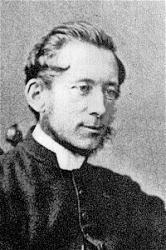
1823 - 1876 Person Name: John B. Dykes Topics: Adoration; Christ Exaltation of; Christ Present in His Church; Christ Worshiped; Christians Duties of; Church As Abode of God; God Adored and Exalted; God Glorious; God Holiness of; God the judge; God Kingly Character of; God Love and Mercy; God Sovereignty of ; Nations Owe Allegiance to Christ; Pardon Set Forth; Praise By Men; Praise Calls to; Praise For God's Holiness; Royalty of Christ In His Church; Royalty of Christ Judgment the Prerogative of; Worship Acts of; Worship Call to ; Worship Sincerity in Composer of "NICÆA" in The Psalter As a young child John Bacchus Dykes (b. Kingston-upon-Hull' England, 1823; d. Ticehurst, Sussex, England, 1876) took violin and piano lessons. At the age of ten he became the organist of St. John's in Hull, where his grandfather was vicar. After receiving a classics degree from St. Catherine College, Cambridge, England, he was ordained in the Church of England in 1847. In 1849 he became the precentor and choir director at Durham Cathedral, where he introduced reforms in the choir by insisting on consistent attendance, increasing rehearsals, and initiating music festivals. He served the parish of St. Oswald in Durham from 1862 until the year of his death. To the chagrin of his bishop, Dykes favored the high church practices associated with the Oxford Movement (choir robes, incense, and the like). A number of his three hundred hymn tunes are still respected as durable examples of Victorian hymnody. Most of his tunes were first published in Chope's Congregational Hymn and Tune Book (1857) and in early editions of the famous British hymnal, Hymns Ancient and Modern.
Bert Polman
John Bacchus Dykes
Melchior Vulpius
1570 - 1615 Person Name: Melchoir Vulpius Topics: Anniversaries; Assurance; Church Year Lent; Church Year Transfiguration; Conflict; Courage; Darkness; Elements of Worship Call to Worship; Elements of Worship Confession (Individual); Elements of Worship Gathering; Elements of Worship Prayer for Illumination; Enemies; Freedom from Fear; God Dependence on; God as Refuge; God as Shelter; God's Armor; God's Love; God's Presence; God's Protection; God's Strength; Hope; Joy; Judgment; Lament Individual; Mercy; Occasional Services Dedication / Consecration / Anniversary; Occasional Services Funerals; Occasional Services Ordination and/or Installation; Peace; People of God / Church Suffering; Prayer; Temptation And Trial; Truth; Year A, Ordinary Time after Epiphany, 3rd Sunday; Year C, Lent, 2nd Sunday Composer of "CHRISTUS, DER IST MEIN LEBEN" in Psalms for All Seasons Born into a poor family named Fuchs, Melchior Vulpius (b. Wasungen, Henneberg, Germany, c. 1570; d. Weimar, Germany, 1615) had only limited educational opportunities and did not attend the university. He taught Latin in the school in Schleusingen, where he Latinized his surname, and from 1596 until his death served as a Lutheran cantor and teacher in Weimar. A distinguished composer, Vulpius wrote a St. Matthew Passion (1613), nearly two hundred motets in German and Latin, and over four hundred hymn tunes, many of which became popular in Lutheran churches, and some of which introduced the lively Italian balletto rhythms into the German hymn tunes. His music was published in Cantiones Sacrae (1602, 1604), Kirchengesangund Geistliche Lieder (1604, enlarged as Ein schon geistlich Gesanglmch, 1609), and posthumously in Cantionale Sacrum (1646).
Bert Polman
Melchior Vulpius
Conrad Kocher
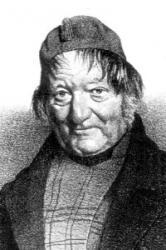
1786 - 1872 Topics: Blessing; Church Year Pentecost; Church Year Transfiguration; Daily Prayer Midday Prayer; Earth; Elements of Worship Praise and Adoration; Elements of Worship Preparation for Blessing; Elements of Worship Sending; Freedom; God Light from; God as King; God's Safety; God's Sovereignty; God's Triumph; God's Face; God's Justice; God's Name; God's People (flock, sheep); God's Power; God's Promise of Redemption; God's Way; Grace; Gratitude; Hymns of Praise; Jesus Christ Incarnation; Joy; Judgment; Mercy; Mission; Occasional Services Christian Marriage; Occasional Services Civic / National Occasions; Occasional Services Commissioning; Occasional Services New Year; Occasional Services Thanksgving Day / Harvest Festival; People of God / Church Family of God; People of God / Church Witnessing; The Incarnation; Witness; Worship; Year A, Ordinary Time after Pentecost, August 14-20; Year C, Easter, 6th Sunday Composer of "DIX" in Psalms for All Seasons Trained as a teacher, Conrad Kocher (b. Ditzingen, Wurttemberg, Germany, 1786; d. Stuttgart, Germany, 1872) moved to St. Petersburg, Russia, to work as a tutor at the age of seventeen. But his love for the music of Haydn and Mozart impelled him to a career in music. He moved back to Germany in 1811, settled in Stuttgart, and remained there for most of his life. The prestigious Cotta music firm published some of his early compositions and sent him to study music in Italy, where he came under the influence of Palestrina's music. In 1821 Kocher founded the School for Sacred Song in Stuttgart, which popularized four-part singing in the churches of that region. He was organist and choir director at the Stiftskirche in Stuttgart from 1827 to 1865. Kocher wrote a treatise on church music, Die Tonkunst in der Kirche (1823), collected a large number of chorales in Zions Harfe (1855), and composed an oratorio, two operas, and some sonatas. William H. Monk created the current form of DIX by revising and shortening Conrad Kocher's chorale melody for “Treuer Heiland, wir sind hier,” found in Kocher's Stimmen aus dem Reiche Gottes (1838).
Bert Polman
Conrad Kocher
John Cennick

1718 - 1755 Topics: Adoration and Praise; Christian Year Advent; Communion of Saints; God Kingdom, Majesty, Realm; God Majesty; Hallelujah; Jesus Christ Kingship, Conqueror; Jesus Christ Second Coming; Judgment; Kingdom of God; Redemption; Advent 2 Year A; Advent 4 Year A; Easter 2 Year A; Proper 27 Year A; Reign of Christ Year A; Advent 1 Year B; Easter 2 Year B; Proper 27 Year B; Proper 28 Year B; Reign of Christ Year B; Advent 1 Year C; Easter 2 Year C Author of "Lo, He Comes with Clouds Descending" in Voices United John Cennick was born at Reading, Berkshire, in the year 1717. He became acquainted with Wesley and Whitefield, and preached in the Methodist connection. On the separation of Wesley and Whitefield he joined the latter. In 1745, he attached himself to the Moravians, and made a tour in Germany to fully acquaint himself with the Moravian doctrines. He afterwards ministered in Dublin, and in the north of Ireland. He died in London, in 1755, and was buried in the Moravian Cemetery, Chelsea. He was the author of many hymns, some of which are to be found in every collection.
--Annotations of the Hymnal, Charles Hutchins, M.A. 1872.
=======================
Cennick, John, a prolific and successful hymnwriter, was descended from a family of Quakers, but brought up in the Church of England. He assisted J. Wesley and then G. Whitefield in their labours for a time, and then passed over to, and died as a minister of, the Moravian Church. Born at Reading, Dec. 12, 1718, he was for some time a land surveyor at Reading, but becoming acquainted with the Wesleys in 1739, he was appointed by J. Wesley as a teacher of a school for colliers' children at Kingswood in the following year. This was followed by his becoming a lay preacher, but in 1740 he parted from the Wesleys on doctrinal grounds. He assisted Whitefield until 1745, when he joined the Mora¬vians, and was ordained deacon, in London, in 1749. His duties led him twice to Germany and also to the North of Ireland. He died in London, July 4, 1755. In addition to a few prose works, and some sermons, he published:— (1) Sacred Hymns, for the Children of God in the Days of their Pilgrimage, Lond., J. Lewis, n.d. (2nd ed. Lond., B. Milles, 1741), Pts. ii., iii., 1742; (2) Sacred Hymns for the Use of Religious Societies, &c, Bristol, F. Farley, 1743; (3) A Collection of Sacred Hymns, &c, Dublin, S. Powell, 3rd ed., 1749; (4) Hymns to the honour of Jesus Christ, composed for such Little Children as desire to be saved. Dublin, S. Powell, 1754. Additional hymns from his manuscripts were published by his son-in-law, the Rev. J. Swertner, in the Moravian Hymn Book, 1789, of which he was the editor. There are also 16 of his hymns in his Sermons, 2 vols., 1753-4, some being old hymns rewritten, and others new.
Many of Cennick's hymns are widely known, as, "Lo, He cometh, countless trumpets;" “Brethren, let us join to bless;" "Jesus, my all, to heaven is gone;" "Children of the heavenly King;" "Ere I sleep, for every favour;" "We sing to Thee, Thou Son of God;" and the Graces: " Be present at our table, Lord;" and "We thank Thee, Lord;" &c. Some of the stanzas of his hymns are very fine, but the hymns taken as a whole are most unequal. Some excellent centos might be compiled from his various works. His religious experiences were given as a preface to his Sacred Hymns, 1741. In addition to the hymns named, and others annotated under their first lines, the following are in common use:—
1. Be with me [us] Lord, where'er I [we] go. Divine Protection. [1741.]
2. Cast thy burden on the Lord. Submission. [1743.]
3. Not unto us, but Thee alone. Praise to Jesus. [1743.]
4. Thou dear Redeemer, dying Lamb. Priesthood of Christ. [1743.]
5. We sing to Thee, Thou Son of God. Praise to Jesus. [1743.]
6. When, 0 dear Jesus, when shall I? Sunday Evening. [1743.]
--John Julian, Dictionary of Hymnology (1907)
John Cennick
Philipp Nicolai
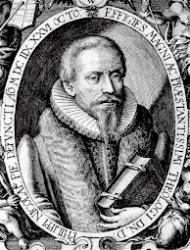
1556 - 1608 Person Name: Phillip Nicolai, 1556-1608 Topics: 1st Sunday in Advent; Advent Coming; Joy in Christ; Judgment; Kingdom of God Author of "Wake, Awake, for Night is Flying" in The Covenant Hymnal Philipp Nicolai (b. Mengeringhausen, Waldeck, Germany, 1556; d. Hamburg, Germany, 1608) lived an eventful life–he fled from the Spanish army, sparred with Roman Catholic and Calvinist opponents, and ministered to plague-stricken congregations. Educated at Wittenberg University, he was ordained a Lutheran pastor in 1583 in the city of Herdecke. However, he was soon at odds with the Roman Catholic town council, and when Spanish troops arrived to reestablish Roman dominance, Nicolai fled. In 1588 he became chief pastor at Altwildungen and court preacher to Countess Argaretha of Waldeck. During that time Nicolai battled with Calvinists, who disagreed with him about the theology of the real presence of Christ in the Lord's Supper. These doctrinal controversies were renewed when he served the church in Unna, Westphalia. During his time as a pastor there, the plague struck twice, and Nicolai wrote both "How Bright Appears the Morning Star" and "Wake, Awake." Nicolai's last years were spent as Pastor of St. Katherine's Church in Hamburg.
Bert Polman
=====================
Nicolai, Philipp, D.D., son of Dieterich Nicolai, sometime Lutheran pastor at Herdecke, in Westphalia, and after 1552, at Mengeringhausen in Waldeck, was born at Mengeringhausen, August 10, 1556. (The father was son of Nicolaus Rafflenbol, of Rafflenbol, near Hagen, in Westphalia, and in later life had adopted the Latinised form Nicolai of his father's Christian name as his own surname.) In 1575 Nicolai entered the University of Erfurt, and in 1576 he went to Wittenberg. After completing his University course in 1579 (D.D. at Wittenberg July 4, 1594), he lived for some time at Volkliardinghausen, near Mengeringhausen, and frequently preached for his father. In August, 1583, he was appointed Lutheran preacher at Herdecke, but found many difficulties there, the members of the Town Council being Roman Catholics. After the invasion by the Spanish troops in April, 1586, his colleague re-introduced the Mass, and Nicolai resigned his post. In the end of 15S6 he was appointed diaconus at Niederwildungen, near Waldeck, and in 1587 he became pastor there. He then became, in Nov. 1588, chief pastor at Altwildungen, and also court preacher to the widowed Countess Margafetha of Waldeck, and tutor to her son, Count Wilhelm Ernst. Here he took an active part on the Lutheran side in the Sacramentarian controversy, and was, in Sept. 1592, inhibited from preaching by Count Franz of Waldeck, but the prohibition was soon removed, and in the Synod of 1593 held at Mengeringhausen, he found all the clergy of the principality of Waldeck willing to agree to the Formula of Concord.
In October, 1596, he became pastor at Unna, in Westphalia, where he again became engaged in heated controversy with the Calvinists; passed through a frightful pestilence (see below); and then on Dec. 27, 1598, had to flee before the invasion of the Spaniards, and did not return till the end of April, 1599. Finally, in April 1601, he was elected chief pastor of St. Katherine's Church, at Hamburg, where he entered on his duties Aug. 6, 1601. On Oct. 22, 1608, he took part in the ordination of a colleague in the St. Katherine's Church, the diaconus Penshora, and returned home feeling unwell. A violent fever developed itself, under which he sank, and died Oct. 26, 1608 (D. Philipp Nicolai’s Leben und Lieder, by L. Curtze, 1859; Koch, ii. 324; Allgemeine Deutsche Biographie xxiii. 607, &c).
In Hamburg Nicolai was universally esteemed, was a most popular and influential preacher, and was regarded as a "pillar" of the Lutheran church. In his private life he seems to have been most lovable and estimable. Besides his fame as a preacher, his reputation rests mainly on his hymns. His printed works are mostly polemical, often very violent and acrid in tone, and such as the undoubted sincerity of his zeal to preserve pure and unadulterated Lutheranism may explain, but cannot be said to justify. Of his hymns only four seem to have been printed.
Three of Nicolai's hymns were first published in his devotional work entitled Frewden-Spiegel dess ewigen Lebens, published at Frankfurt-am-Main, 1599 (see further below). The two noted here ("Wachet auf” and “Wie schon") rank as classical and epoch-making. The former is the last of the long series of Watchmen's Songs. The latter marks the transition from the objective churchly period to the more subjective and experimental period of German hymn writing; and begins the long series of Hymns of Love to Christ as the Bridegroom of the Soul, to which Franck and Scheffler contributed such beautiful examples. Both are also worthy of note for their unusual and perfect rhythms, and for their splendid melodies.
They are:—
i. Wachet auf, ruft uns die Stimme. Eternal Life. This beautiful hymn, one of the first rank, is founded on St. Matt. xxv. 1-13; Rev. xix. 6-9, and xxi. 21; 1 Cor. ii. 9; Ezek. iii. 17; and Is. lii. 8. It first appeared in the Appendix to his Frewden-Spiegel, 1599, in 3 st. of 10 1., entitled "Of the Voice at Midnight, and the Wise Virgins who meet their Heavenly Bridegroom. Matt. 25." Thence in Wackernagel v. p. 259, the Unverfälschter Liedersegen, 1851, No. 690, and most German collections.
It is a reversed acrostic, W. Z. G. for the Graf zu Waldeck, viz. his former pupil Count Wilhelm Ernst, who died at Tübingen Sept. 16, 1598, in his fifteenth year. It seems to have been written in 1597 at Unna, in Wesphalia, where Nicolai was then pastor; and during the terrible pestilence which raged there from July, 1597, to January, 1598, to which in July 300, in one week in August 170, and in all over 1300 fell victims. Nicolai's parsonage overlooked the churchyard, and there daily interments took place, often to the number of thirty. In these days of distress, when every household was in mourning, Nicolai's thoughts turned to Death, and thence to God in Heaven, and to the Eternal Fatherland. Jn the preface (dated Aug. 10, 1598) to his Frewden-Spiegel he says: "There seemed to me nothing more sweet, delightful and agreeable, than the contemplation of the noble, sublime doctrine of Eternal Life obtained through the Blood of Christ. This I allowed to dwell in my heart day and night, and searched the Scriptures as to what they revealed on this matter, read also the sweet treatise of the ancient doctor Saint Augustine [De Civitate Dei].
..... Then day by day I wrote out my meditations, found myself, thank God! wonderfully well, comforted in heart, joyful in spirit, and truly content; gave to my manuscript the name and title of a Mirror of Joy, and took this so composed Frewden-Spiegel to leave behind me (if God should call me from this world) as the token of my peaceful, joyful, Christian departure, or (if God should spare me in health) to comfort other sufferers whom He should also visit with the pestilence .... Now has the gracious, holy God most mercifully preserved me amid the dying from the dreadful pestilence, and wonderfully spared me beyond all my thoughts and hopes, so that with the Prophet David I can say to Him "0 how great is Thy goodness, which Thou hast laid up for them that fear Thee," &c.
The hymn composed under these circumstances (it may be stated that Curtze thinks both hymns were written in 1596, while Nicolai was still at Alt-Wildungen) soon became popular, and still retains its place, though often altered in the 3rd stanza. Probably the opening lines;
"Wachet auf! ruft uns die Stimme Der Wachter sehr hoch auf der Zinne" are borrowed from one of the Wächter-Lieder, a form of lyric popular in the Middle Ages, introduced by Wolfram von Eschenbach. (See K. Goedeke's Deutsche Dichtung im Mittelalter, 1871, p. 918.) But while in the Songs the voice of the Watchman from his turret summons the workers of darkness to flee from discovery, with "Nicolai it is a summons to the children of light to awaken to their promised reward and full felicity.
The melody appeared first along with the hymn, and is also apparently by Nicolai, though portions of it (e.g. 1. 1 by the Gregorian Fifth Tone) may have been suggested by earlier tunes. It has been called the King of Chorales, and by its majestic simplicity and dignity it well deserves the title. Since its use by Mendelssohn in his St. Paul it has become well known in England, and, in its original form, is given in Miss Winkworth's Chorale Book for England, 1863 (see below).
Translations in common use:—
1. Sleepers wake, a voice is calling. This is an unrhymed translation of st. i. by W. Ball in his book of words to Mendelssohn's oratorio of St. Paul, 1836. This form is in Horder's Congregational Hymns, 1884, and others. In the South Place [London] Collection, 1873, it is a recast by A. J. Ellis, but opens with the same first line. In the Parish Hymn Book, 1875, a translation of st. ii., also unrhymed, is added.
2. "Wake ye holy maidens, wake ye. A good translation contributed by Philip Pusey to A. R. Reinagle's Collection of Psalm and Hymn Tunes, Oxford, 1840, p. 134. It was considerably altered, beginning "Wake, ye holy maidens, fearing" in the Salisbury Hymn Book, 1857, and this is repeated, with further alterations, in Kennedy, 1863, and the Sarum Hymnal, 1868.
3. Wake, arise! the call obeying. A good translation by A. T. Russell, as No. 110 in the Dalston Hospital Hymn Book 1848.
4. Wake, oh wake; around are flying. This is a recast, by A. T. Russell, not for the better, from his 1848 translation, as No. 268 in his Psalms & Hymns. 1851, st. iii. being omitted. Thence, unaltered, in the New Zealand Hymnal, 1872.
5. Wake, awake, for night is flying. A very good translation by Miss Winkworth, in her Lyra Germanica, 2nd Ser., 1858, p. 225, repeated in her Chorale Book for England, 1863, No. 200, with st. ii., 11. 7, 8, rewritten. Included in the English Presbyterian Psalms & Hymns, 1867; Scottish Presbyterian Hymnal, 1876, &c.; and in America, in Laudes Domini, 1884, and others. In the Cantate Domino, Boston, U. S., 1859, it begins "Awake, awake, for night is flying."
6. Wake! the startling watch-cry pealeth. By Miss Cox, in Lyra Messianica, 1864, p. 4, and her Hymns from the German, 1864, p. 27; repeated in W. F. Stevenson's Hymns for Church and Home, 1873. The version in J. L. Porter's Collection, 1876, takes st. i., 11. 1-4 from Miss Cox. The rest is mainly from R. C. Singleton's translation in the Anglican Hymn Book, but borrows lines also from Miss Winkworth, and from the Hymnary text.
7. Wake! the watchman's voice is sounding. By R. C.Singleton. This is No. 259 in the Anglican Hymn Book, 1868, where it is marked as a "versification by R. C. Singleton, 1867."
8. Wake, awake, for night is flying. This is by Canon W. Cooke, in the Hymnary, 1871, and signed A. C. C. In the edition of 1872, 11. 7, 8 of st. ii. are recast, and the whole is marked as " based on E. A. Dayman." It is really a cento, four lines of the 1872 text (i., 1. 5; ii., 11. 7, 8; iii., 1. 9) being by Canon Cooke; and the rest being adapted from the versions of P. Pusey as altered in the Sarum Hymnal, of Miss Winkworth, of Miss Cox, and of R. C. Singleton. It may be regarded as a success, and as passed into the Society for Promoting Christian Knowledge Church Hymns, 1871; the 1874 Appendix to the New Congregational Hymn Book; Horder's Congregational Hymns, 1884, and others.
9. Wake, arise! the voice is calling. This is an anonymous translation in the Ohio Lutheran Hymnal, 1880.
10. Slumberers, wake, the Bridegroom cometh. A spirited version, based on Miss Winkworth (and with an original st. as iv.), by J. H. Hopkins in his Carols, Hymns & Songs, 3rd ed., 1882. p. 88, and dated 1866. Repeated in the Hymnal Companion (Reformed Episcopal) Philadelphia, U.S., 1885.
Other translations are:—
(1) “Awake, the voice is crying." In Lyra Davidica, 1108, p. 73. (2) "Awake! awake! the watchman calls." By Miss Fry, 1845, p. 33. (3) "Hark! the trump of God is sounding." By Dr. H. Mills, 1845 (1856, p. 269. This is from the altered form by F. G. Klopstock, in his Geistliche Lieder, 1758, p. 246, as further altered in Zollikofer's Gesang-Buch, 1766, No. 303, where it begins "Wachet auf! so ruft." (4) "Awake, arise, the voice gives warning." In the United Presbyterian Juvenile Missionary Magazine, 1857, p. 193; repeated in 1859, p. 171, beginning, “Awake, arise, it is the warning." (5) “Waken! From the tower it soundeth." By Mrs. Bevan, 1858, p. 1. (6) Up! awake! his summons hurried." By J. D.Burns, in the Family Treasury, 1860, p. 84, and his Memoir & Remains, 1869, p. 234.
11. Wie schön leuchtet der Morgenstern, Voll Gnad und Wahrheit von dem Herrn. Love to Christ. First published in theAppendix to his Frewden-Spiegel, 1599, in 7 stanzas of 10 lines entitled "A spiritual bridal song of the believing soul concerning Jesus Christ, her heavenly Bridegroom, founded on the 45th Psalm of the prophet David." Lauxmann, in Koch, viii. 271, thus gives an account of it as written during the Pestilence of 1597. He says Nicola was
"One morning in great distress and tribulation in his quiet study. He rose in spirit from the distress and death which surrounded him to his Redeemer and Saviour, and while he clasped Him in ardent love there welled forth from the inmost depths of his heart this precious hymn of the Saviour's love and of the joys of Heaven. He was so entirely absorbed in this holy exaltation that he forgot all around him, even his midday meal, and allowed nothing to disturb him in his poetical labours till the hymn was completed "—-three hours after midday.
As Nicolai was closely connected with Waldeck he formed with the initial letters of his stanzas the acrostic W. E. G. U. H. Z. W., viz. Wilhelm Ernst Graf Und Herr Zn Waldeck— his former pupil.
The hymn has reminiscences of Eph. v., of Canticles, and of the Mediaeval Hymns to the Blessed Virgin Mary. It became at once a favourite in Germany, was reckoned indispensable at weddings, was often sung around death beds, &c. The original form is in Wackernagel v. p. 258, and the Unverfälschter Liedersegen, 1851, No. 437; but this (as will be seen by comparing Miss Winkworth's version of 1869) is hardly suited for present day congregational use. In Bunsen's Versuch, 1833, No. 554, it is slightly altered. The form in Knapp's Evangelischer Lieder-Schatz, 1837, No. 2074 (1865, No. 1810) is a recast by Knapp made on Jan. 14, 1832, and published in his Christoterpe, 1833, p. 285, preceded by a recast of "Wachet auf!"; both being marked as “rewritten according to the requirements of our times."
The popularity of the hymn was greatly aided by its beautiful chorale (named by Mr. Mercer, Frankfort), which has been called "The Queen of Chorales," and to which many city chimes in Germany were soon set. It was published with the hymn, and is probably an original tune by Nicolai, though portions may have been suggested by earlier melodies, especially by the "Resonet in laudibus," which is probably of the 14th cent. (Bäumker i., No. 48, cites it from the Obsequiale, Ingolstadt, 1570. In Alton's Congregational Psalmist named Arimathea).
Translations in common use:—
1. How bright appears the Morning Star! This is a full and fairly close version by J. C. Jacobi, in his Psalter Germanica, 1722, p. 90 (1732, p. 162); repeated, with alterations, in the Moravian Hymn Book, 1754, pt. i., No. 317 (1886, No. 360). The versions of st. v., vii. beginning, "The Father from eternity," are included in Aids to the Service of Song, Edinburgh N.D., but since 1860. In 1855 Mercer gave in his The Church Psalter & Hymn Book., as No. 15, a hymn in 4 stanzas of 10 lines, of which five lines are exactly from Jacobi. St. i., l1. 1-3; ii., .11. 8, 9 ; iii., 11. 2, 3, 6 ; iv., 1. 10, are exactly; and i., 1. 9; ii., 11. 2, 3, 6, 10; iii., II. 1, 4, 5; iv., 11. 7, 9 are nearly from the Moravian Hymn Book, 1801. The interjected lines are by Mercer, but bear very slight resemblance either to Nicolai's original text, or to any version of the German that we have seen. In his 1859 edition he further recast it, leaving only the first line unaltered from Jacobi; and this form is in his Oxford edition, 1864, No. 121, in the Irish Church Hymnal, 1869 and 1873, and in the Hymnal Companion 1870 and 1876. In Kennedy, 1863, the text of 1859 is given with alterations, and begins "How brightly dawns the Morning Star;" and this form is in the People's Hymnal, 1867; Dale's English Hymn Book 1874, &c.
2. How graciously doth shine afar. By A. T. Russell, as No. 8 in the Dalston Hospital Hymn Book, 1848, and repeated in the Cheltenham College Hymn Book, No. 37. It is a free translation of st. i., vi., v.
3. How lovely shines the Morning Star! A good and full translation by Dr. H. Harbaugh (from the text in Dr. Schaff’s Deutsches Gesang-Buch, 1860), in the German Reformed Guardian, May, 1860, p. 157. Repeated in full in Schaff's Christ in Song, 1869, and abridged in Adams's Church Pastorals, Boston, U.S.A., 1864.
4. 0 Morning Star! how fair and bright. A somewhat free translation of st. i., iii., iv., vii., by Miss Winkworth, as No.149 in her Chorale Book for England, 1863. Repeated in the Pennsylvania Lutheran Church Book, 1868; Ohio Lutheran Hymnal,1880, &c.
5. How brightly shines the Morning Star, In truth and mercy from afar. A translation of st. i., iii., iv., vii., by Miss Borthwick, as No. 239 in Dr. Pagenstecher's Collection, 1864.
6. How brightly glows the Morning Star. In full, from Knapp's German recast, by M. W. Stryker, in his Hymns & Verses, 1883, p. 52; repeated, omitting st. ii., iv., in his Christian Chorals, 1885, No. 145.
Other translations are:—
(1) "How fairly shines the Morning Star." In Lyra Davidica, 1708, p. 40. (2) "As bright the star of morning gleams" (st. i.) By W. Bartholomew, in his book of words to Mendelssohn's oratorio of Christus, 1852, p. 11. (3) "How lovely now the Morning Star." By Miss Cox, 1864, p. 229. (4) "How beauteous shines the Morning Star." By Miss Burlingham, in the British Herald, Oct. 1865, p. 152, and Reid's Praise Book, 1872. (5) "0 Morning Star, how fair and bright." By MissWinkworth, 1869, p. 160. (6) "How bright appears our Morning Star." By J. H. Hopkins, in his Carols, Hymns and Songs, 3rd ed., 1882, p. 168, and dated 1866.
There are also three hymns in common use, which have generally been regarded as translations from Nicolai. They are noted as follows:—i. "Behold how glorious is yon sky" (see p. 127, ii.). ii. "How beautiful the Morning Star". iii. "How brightly shines the Morning Star! What eye descries it from afar". [Rev. James Mearns, M.A.]
--John Julian, Dictionary of Hymnology (1907)
Philipp Nicolai
John Newton
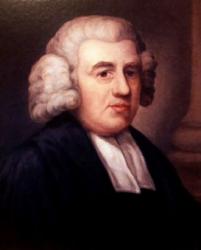
1725 - 1807 Topics: Christ Judge; Day of Wrath; Judgment; Wrath Of God Author of "Day of judgment--day of wonders" in Book of Worship with Hymns and Tunes John Newton (b. London, England, 1725; d. London, 1807) was born into a Christian home, but his godly mother died when he was seven, and he joined his father at sea when he was eleven. His licentious and tumultuous sailing life included a flogging for attempted desertion from the Royal Navy and captivity by a slave trader in West Africa. After his escape he himself became the captain of a slave ship. Several factors contributed to Newton's conversion: a near-drowning in 1748, the piety of his friend Mary Catlett, (whom he married in 1750), and his reading of Thomas à Kempis' Imitation of Christ. In 1754 he gave up the slave trade and, in association with William Wilberforce, eventually became an ardent abolitionist. After becoming a tide-surveyor in Liverpool, England, Newton came under the influence of George Whitefield and John and Charles Wesley and began to study for the ministry. He was ordained in the Church of England and served in Olney (1764-1780) and St. Mary Woolnoth, London (1780-1807). His legacy to the Christian church includes his hymns as well as his collaboration with William Cowper (PHH 434) in publishing Olney Hymns (1779), to which Newton contributed 280 hymns, including “Amazing Grace.”
Bert Polman
==================
Newton, John, who was born in London, July 24, 1725, and died there Dec. 21, 1807, occupied an unique position among the founders of the Evangelical School, due as much to the romance of his young life and the striking history of his conversion, as to his force of character. His mother, a pious Dissenter, stored his childish mind with Scripture, but died when he was seven years old. At the age of eleven, after two years' schooling, during which he learned the rudiments of Latin, he went to sea with his father. His life at sea teems with wonderful escapes, vivid dreams, and sailor recklessness. He grew into an abandoned and godless sailor. The religious fits of his boyhood changed into settled infidelity, through the study of Shaftesbury and the instruction of one of his comrades. Disappointing repeatedly the plans of his father, he was flogged as a deserter from the navy, and for fifteen months lived, half-starved and ill-treated, in abject degradation under a slave-dealer in Africa. The one restraining influence of his life was his faithful love for his future wife, Mary Catlett, formed when he was seventeen, and she only in her fourteenth year. A chance reading of Thomas à Kempis sowed the seed of his conversion; which quickened under the awful contemplations of a night spent in steering a water-logged vessel in the face of apparent death (1748). He was then twenty-three. The six following years, during which he commanded a slave ship, matured his Christian belief. Nine years more, spent chiefly at Liverpool, in intercourse with Whitefield, Wesley, and Nonconformists, in the study of Hebrew and Greek, in exercises of devotion and occasional preaching among the Dissenters, elapsed before his ordination to the curacy of Olney, Bucks (1764).
The Olney period was the most fruitful of his life. His zeal in pastoral visiting, preaching and prayer-meetings was unwearied. He formed his lifelong friendship with Cowper, and became the spiritual father of Scott the commentator. At Olney his best works—-Omicron's Letters (1774); Olney Hymns (1779); Cardiphonia, written from Olney, though published 1781—were composed. As rector of St. Mary Woolnoth, London, in the centre of the Evangelical movement (1780-1807) his zeal was as ardent as before. In 1805, when no longer able to read his text, his reply when pressed to discontinue preaching, was, "What, shall the old African blasphemer stop while he can speak!" The story of his sins and his conversion, published by himself, and the subject of lifelong allusion, was the base of his influence; but it would have been little but for the vigour of his mind (shown even in Africa by his reading Euclid drawing its figures on the sand), his warm heart, candour, tolerance, and piety. These qualities gained him the friendship of Hannah More, Cecil, Wilberforce, and others; and his renown as a guide in experimental religion made him the centre of a host of inquirers, with whom he maintained patient, loving, and generally judicious correspondence, of which a monument remains in the often beautiful letters of Cardiphonia. As a hymnwriter, Montgomery says that he was distanced by Cowper. But Lord Selborne's contrast of the "manliness" of Newton and the "tenderness" of Cowper is far juster. A comparison of the hymns of both in The Book of Praise will show no great inequality between them. Amid much that is bald, tame, and matter-of-fact, his rich acquaintance with Scripture, knowledge of the heart, directness and force, and a certain sailor imagination, tell strongly. The one splendid hymn of praise, "Glorious things of thee are spoken," in the Olney collection, is his. "One there is above all others" has a depth of realizing love, sustained excellence of expression, and ease of development. "How sweet the name of Jesus sounds" is in Scriptural richness superior, and in structure, cadence, and almost tenderness, equal to Cowper's "Oh! for a closer walk with God." The most characteristic hymns are those which depict in the language of intense humiliation his mourning for the abiding sins of his regenerate life, and the sense of the withdrawal of God's face, coincident with the never-failing conviction of acceptance in The Beloved. The feeling may be seen in the speeches, writings, and diaries of his whole life. [Rev. H. Leigh Bennett, M.A.]
A large number of Newton's hymns have some personal history connected with them, or were associated with circumstances of importance. These are annotated under their respective first lines. Of the rest, the known history of which is confined to the fact that they appeared in the Olney Hymns, 1779, the following are in common use:—
1. Be still, my heart, these anxious cares. Conflict.
2. Begone, unbelief, my Saviour is near. Trust.
3. By the poor widow's oil and meal. Providence.
4. Chief Shepherd of Thy chosen sheep. On behalf of Ministers.
5. Darkness overspreads us here. Hope.
6. Does the Gospel-word proclaim. Rest in Christ.
7. Fix my heart and eyes on Thine. True Happiness.
8. From Egypt lately freed. The Pilgrim's Song.
9. He Who on earth as man was Known. Christ the Rock.
10. How blest are they to whom the Lord. Gospel Privileges.
11. How blest the righteous are. Death of the Righteous.
12. How lost was my [our] condition. Christ the Physician.
13. How tedious and tasteless the hours. Fellowship with Christ.
14. How welcome to the saints [soul] when pressed. Sunday.
15. Hungry, and faint, and poor. Before Sermon.
16. In mercy, not in wrath, rebuke. Pleading for Mercy.
17. In themselves, as weak as worms. Power of Prayer.
18. Incarnate God, the soul that knows. The Believer's Safety.
19. Jesus, Who bought us with His blood. The God of Israel. "Teach us, 0 Lord, aright to plead," is from this hymn.
20. Joy is a [the] fruit that will not grow. Joy.
21. Let hearts and tongues unite. Close of the Year. From this "Now, through another year," is taken.
22. Let us adore the grace that seeks. New Year.
23. Mary to her [the] Saviour's tomb. Easter.
24. Mercy, 0 Thou Son of David. Blind Bartimeus.
25. My harp untun'd and laid aside. Hoping for a Revival. From this "While I to grief my soul gave way" is taken.
26. Nay, I cannot let thee go. Prayer. Sometimes, "Lord, I cannot let Thee go."
27. Now may He Who from the dead. After Sermon.
28. 0 happy they who know the Lord, With whom He deigns to dwell. Gospel Privilege.
29. O Lord, how vile am I. Lent.
30. On man in His own Image made. Adam.
31. 0 speak that gracious word again. Peace through Pardon.
32. Our Lord, Who knows full well. The Importunate Widow. Sometimes altered to "Jesus, Who knows full well," and again, "The Lord, Who truly knows."
33. Physician of my sin-sick soul. Lent.
34. Pleasing spring again is here. Spring.
35. Poor, weak, and worthless, though I am. Jesus the Friend.
36. Prepare a thankful song. Praise to Jesus.
37. Refreshed by the bread and wine. Holy Communion. Sometimes given as "Refreshed by sacred bread and wine."
38. Rejoice, believer, in the Lord. Sometimes “Let us rejoice in Christ the Lord." Perseverance.
39. Salvation, what a glorious plan. Salvation.
40. Saviour, shine and cheer my soul. Trust in Jesus. The cento "Once I thought my mountain strong," is from this hymn.
41. Saviour, visit Thy plantation. Prayer for the Church.
42. See another year [week] is gone. Uncertainty of Life.
43. See the corn again in ear. Harvest.
44. Sinner, art thou still secure? Preparation for the Future.
45. Sinners, hear the [thy] Saviour's call. Invitation.
46. Sovereign grace has power alone. The two Malefactors.
47. Stop, poor sinner, stop and think. Caution and Alarm.
48. Sweeter sounds than music knows. Christmas.
49. Sweet was the time when first I felt. Joy in Believing.
50. Ten thousand talents once I owed. Forgiveness and Peace.
51. The grass and flowers, which clothe the field. Hay-time.
52. The peace which God alone reveals. Close of Service.
53. Thy promise, Lord, and Thy command. Before Sermon.
54. Time, by moments, steals away. The New Year.
55. To Thee our wants are known. Close of Divine Service.
56. We seek a rest beyond the skies. Heaven anticipated.
57. When any turn from Zion's way. Jesus only.
58. When Israel, by divine command. God, the Guide and Sustainer of Life.
59. With Israel's God who can compare? After Sermon.
60. Yes, since God Himself has said it. Confidence.
61. Zion, the city of our God. Journeying Zionward.
-- John Julian, Dictionary of Hymnology (1907)
=================
Newton, J., p. 803, i. Another hymn in common use from the Olney Hymns, 1779, is "Let me dwell on Golgotha" (Holy Communion).
--John Julian, Dictionary of Hymnology, Appendix, Part II (1907)
-----
John Newton was born in London, July 24, 1725. His mother died when he was seven years old. In his eleventh year he accompanied his father, a sea captain, on a voyage. For several years his life was one of dissipation and crime. He was disgraced while in the navy. Afterwards he engaged in the slave trade. Returning to England in 1748, the vessel was nearly wrecked in a storm. This peril forced solemn reflection upon him, and from that time he was a changed man. It was six years, however, before he relinquished the slave trade, which was not then regarded as an unlawful occupation. But in 1754, he gave up sea-faring life, and holding some favourable civil position, began also religious work. In 1764, in his thirty-ninth year, he entered upon a regular ministry as the Curate of Olney. In this position he had intimate intercourse with Cowper, and with him produced the "Olney Hymns." In 1779, Newton became Rector of S. Mary Woolnoth, in London, in which position he became more widely known. It was here he died, Dec. 21, 1807, His published works are quite numerous, consisting of sermons, letters, devotional aids, and hymns. He calls his hymns "The fruit and expression of his own experience."
--Annotations of the Hymnal, Charles Hutchins, M.A. 1872
See also in:
Hymn Writers of the Church
=======================
John Newton
Pages




