You help make Hymnary.org possible. More than 10 million people from 200+ countries found hymns, liturgical resources and encouragement on Hymnary.org in 2025, including you. Every visit affirms the global impact of this ministry.

If Hymnary has been meaningful to you this year, would you take a moment today to help sustain it? A gift of any size—paired with a note of encouragement if you wish—directly supports the server costs, research work and curation that keep this resource freely available to the world.

Give securely online today, or mail a check to:
Hymnary.org
Calvin University
3201 Burton Street SE
Grand Rapids, MI 49546

Thank you for your partnership, and may the hope of Advent fill your heart.

Person Results

Topics:power+of+god
In:people

Planning worship? Check out our sister site, ZeteoSearch.org, for 20+ additional resources related to your search.
Showing 71 - 80 of 792Results Per Page: 102050

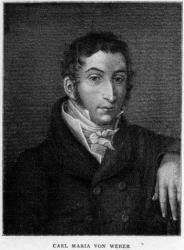
Carl Maria von Weber

1786 - 1826 Person Name: Carl M. von Weber, 1786-1826 Topics: Consecration Of Powers; Consecration Of Self; Consecration Entire; Consecration Of Goods; The Church and the Kingdom of God Evangelism; Giving Our best to Christ; Self-Dedication ; Love Consecrated; Love To Christ; Voice, of Jesus Consecrated; Life Consecrated; Will, consecrated to God Composer of "WEBER" in Methodist Hymn and Tune Book Carl Maria von Weber; b. 1786, Oldenburg; d. 1826, London Evangelical Lutheran Hymnal, 1908

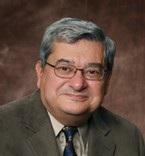
Robert J. Batastini

b. 1942 Person Name: Robert J. Batastini, b. 1942 Topics: Angels; Ascension; Christ the King; Eucharist; Holy Name; Jesus Christ; Majesty and Power; Martyrs; People of God; Praise; Saints; Song Harmonizer of "DIADEM" in RitualSong Robert J. Batastini is the retired vice president and senior editor of GIA Publications, Inc., Chicago. Bob has over fifty-five years of service in pastoral music ministry, having served several parishes in the Archdiocese of Chicago and one in the Diocese of Joliet. He served as executive editor and project director for the Worship hymnals (three editions), Gather hymnals (three editions), Catholic Community Hymnal, and as executive editor of RitualSong. In 1993 he became the first recipient of the Father Lawrence Heimann Citation for lifetime contribution to church music and liturgy in the U.S., awarded by St. Joseph's College, Rensselaer, Indiana, and was named "Pastoral Musician of the Year-2000" by the National Association of Pastoral Musicians (NPM). At its 2006 conference, he was named a Fellow of the Hymn society in the United States and Canada. In his retirement he is active in the music ministry of St. Francis de Sales Parish, Holland, MI. Nancy Naber, from www.giamusic.com/bios/

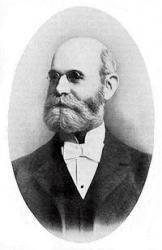
William J. Kirkpatrick

1838 - 1921 Person Name: William James Kirkpatrick, 1838-1921 Topics: God Majesty and Power of Composer of "[Hallelujah, praise Jehovah]" in Hymnal of the Church of God William J. Kirkpatrick (b. Duncannon, PA, 1838; d. Philadelphia, PA, 1921) received his musical training from his father and several other private teachers. A carpenter by trade, he engaged in the furniture business from 1862 to 1878. He left that profession to dedicate his life to music, serving as music director at Grace Methodist Church in Philadelphia. Kirkpatrick compiled some one hundred gospel song collections; his first, Devotional Melodies (1859), was published when he was only twenty-one years old. Many of these collections were first published by the John Hood Company and later by Kirkpatrick's own Praise Publishing Company, both in Philadelphia. Bert Polman

Ruth C. Duck

1947 - 2024 Person Name: Ruth Duck, b. 1947 Topics: Power of God Author of "Arise, Your Light Has Come!" in One Lord, One Faith, One Baptism

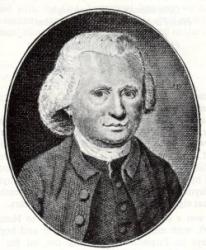
Thomas Olivers

1725 - 1799 Person Name: Thomas Olivers, 1725-1799 Topics: Power of God; Power of God; Power of God Author of "The God of Abraham Praise" in Journeysongs (2nd ed.) Thomas Olivers was born in Tregonan, Montgomeryshire, in 1725. His youth was one of profligacy, but under the ministry of Whitefield, he was led to a change of life. He was for a time apprenticed to a shoemaker, and followed his trade in several places. In 1763, John Wesley engaged him as an assistant; and for twenty-five years he performed the duties of an itinerant ministry. During the latter portion of his life he was dependent on a pension granted him by the Wesleyan Conference. He died in 1799. --Annotations of the Hymnal, Charles Hutchins, M.A., 1872. ================== Olivers, Thomas, was born at Tregynon, near Newtown, Montgomeryshire, in 1725. His father's death, when the son was only four years of age, followed by that of the mother shortly afterwards, caused him to be passed on to the care of one relative after another, by whom he was brought up in a somewhat careless manner, and with little education. He was apprenticed to a shoemaker. His youth was one of great ungodliness, through which at the age of 18 he was compelled to leave his native place. He journeyed to Shrewsbury, Wrexham, and Bristol, miserably poor and very wretched. At Bristol he heard G. Whitefield preach from the text "Is not this a brand plucked out of the fire?" That sermon turned the whole current of his life, and he became a decided Christian. His intention at the first was to join the followers of Whitefield, but being discouraged from doing so by one of Whitefield's preachers, he subsequently joined the Methodist Society at Bradford-on-Avon. At that town, where he purposed carrying on his business of shoemaking, he met John Wesley, who, recognising in him both ability and zeal, engaged him as one of his preachers. Olivers joined Wesley at once, and proceeded as an evangelist to Cornwall. This was on Oct. 1, 1753. He continued his work till his death, which took place suddenly in London, in March 1799. He was buried in Wesley's tomb in the City Road Chapel burying ground, London. Olivers was for some time co-editor with J. Wesley of the Arminian Magazine, but his lack of education unfitted him for the work. As the author of the tune Helmsley, and of the hymn “The God of Abraham praise," he is widely known. He also wrote “Come Immortal King of glory;" and "O Thou God of my salvation," whilst residing at Chester; and an Elegy on the death of John Wesley. His hymns and the Elegy were reprinted (with a Memoir by the Rev. J. Kirk) by D. Sedgwick, in 1868. --John Julian, Dictionary of Hymnology (1907)

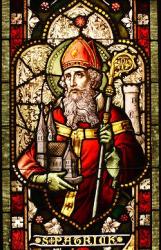
Saint Patrick

372 - 466 Person Name: St Patrick (372-466) Topics: God Power of Author (attributed to) of "I bind unto myself today" in Ancient and Modern Patrick, St., the 2nd Bishop and Patron Saint of Ireland, was the son of Calpurnius, a deacon, and grandson of Potitus, a presbyter, and great grandson of Odissus, a deacon, was born most probably near Dumbarton, in North Britain, in 372. According to his epistle to Coroticus, his father was also a decurio, a member of the local town council, and a Roman by descent. Hence probably the name Patricius. St. Patrick alludes in Coroticus, § 5, to his having been originally a freeman, and of noble birth. His birthplace is termed in his Confession, § 1, Bannavem Taberniæ. Some have identified that place with Boulogne-sur-Mer, in France. His mother's name was Concessa, said to have been sister of St. Martin of Tours. According to Tirechan's Collections (circa A.D. 690), Patrick had four names—-(1) Magonus, which Tirechan explains by clarus, illustrious; (2) Sucat (Succetus), god of war, or brave in war, said to have been his baptismal name; (3) Patricius; and (4) Cothraige (Cothrighe), given because he had been a slave to four masters. At the age of 16 he was carried off with many others to Ireland, and sold as a slave. There he remained six years with Milcho, or Miliuc. He was engaged in feeding cattle (pecora), though the later writers say that he fed swine. In his captivity he became acquainted with the Irish language. His misfortunes were the means of leading him to Christ, and be devoted himself to prayer, and often frequented, for that purpose, the woods on Mount Slemish. Having escaped after six years, he spent some years with his parents, and then was stirred up, when still a youth (puer), to devote himself to the evangelisation of Ireland. According to Secundinus's Hymn (St. Sechnall), which is probably not much later than the age of St. Patrick himself, the saint received his apostleship "from God," like St. Paul. No reference is made in that hymn, or in the later so-called Hymn of St. Fiacc, to any commission received from Pope Celestine, as is asserted by later writers. St. Patrick does not in his own writings allude to the external source whence he obtained ordination, and, as he speaks of his Roman descent, it would be strange for him not to have mentioned his Roman consecration, if it had been a fact. From some “sayings" of his, preserved on a separate page of the Book of Armagh, it is probable that he travelled through Gaul and Italy, and that he was ordained in Gaul as deacon, priest, and, afterwards, as bishop. He was probably a bishop when he commenced his missionary labours in Ireland. There were, however, Christians in Ireland before that period. Palladius, the senior Patrick, who preceded our saint by a few years, was, according to the chronicle of Prosper (the secretary of Pope Celestine), "ordained and sent to the Scots (the Irish) believing in Christ, by Pope Celestine, as their first bishop." Palladius's mission was a failure, while that of the second Patrick, which was quite independent of the former, was successful in a high degree. Its success, however, has been greatly exaggerated; for St. Patrick, in the close of his Confession, or autobiography, written in old age, speaks of the high probability of his having to lay down his life as a martyr for Christ. The date of St. Patrick's mission is not certain, but the internal evidence of his writings indicate that it was most probably about A.D. 425. The day and month of his death (March 17), but not the year [466] is mentioned in the Book of Armagh. St. Patrick's claim to a record in this Dictionary is associated with the celebrated hymn or “Breastplate," a history of which we now subjoin. 1. St. Patrick's Irish Hymn is referred to in Tirechan's Collections (A.D. 690). It was directed to be sung in "all monasteries and churches through the whole of Ireland," "canticum ejus scotticum semper canere," which is a proof that it was at that time universally acknowledged to be his composition. That regulation was very naturally lost sight of when the old Celtic Church lapsed into the Roman, (a) The expressions used in the hymn correspond entirely with the circumstances under which St. Patrick visited Tara. (b) Moreover, although all the ancient biographies of St. Patrick (with the exception of his own Confession, and of Secundinus's Hymn) speak of him as a worker of miracles, and as having performed miracles at Tara, there is no trace of such a fact in St. Patrick's Hymn, (c) Further, the phrase, "creator of doom," which twice occurs in it, according to the most approved translation, curiously corresponds with another fact that, "my God's doom," or “the doom," or "judgment of my God," was, according to the ancient biographies, one of St. Patrick's favourite expressions. 2. The first notice of the existence at the present time of an ancient manuscript copy of St. Patrick's "Hymn or Breastplate," was made known by the late Dr. Petrie in his Memoir of Tara, published in the Transactions of the Royal Irish Academy, 1839, vol. xviii. Dr. Petrie gave the original in Irish characters, an interlineary Latin version and an English translation by himself, together with copious notes. Dr. Petrie found the original in the Liber Hymnorum, in the Library of Trinity College, Dublin (iv. E. 4, 2, fol. 19 b). “The tradition respecting its primary use by the saint is that he recited it on Easter Sunday, when proceeding to encounter the droidical fire-worshippers, with their pagan king, Laoghaire, and his court, at Tara, the royal residence." (Lyra Hibernica Sacra, 1878, p. 2.) 3. Dr. Todd in his work, S. Patrick, Apostle of Ireland, 1864, gives a metrical rendering of the “Breastplate” which begins:— "I bind to myself today, The strong power of an invocation of the Trinity, The faith of the Trinity in Unity, The Creator of the elements." The translation, which extends to 78 lines, was mainly the work of Dr. Whitley Stokes. A more correct version by the same scholar is given in the Rolls's edition of the Tripartite Life, 1887; and that revised version, with a few modifications, accompanied with critical notes, explanatory of the alterations made on the former version, is given in the 2nd and 3rd editions of the Writings of St. Patrick, by Dr. V. H. H. Wright. Dr. Whitley Stokes, therefore, is to be regarded as the real translator from the original Irish. Dr. Petrie's translation, though highly meritorious as a first attempt, has been proved in many particulars to be erroneous. There is no mention of Tara in the hymn. An uncertainty yet exists as to the meaning of a few words. 4. In Dr. W. MacIlwaine's Lyra Hibernica Sacra, 1878, Dr. Todd's translation was repeated (with notes), together with a second translation by James Clarence Mangan, the opening lines of which are:— "At Tara to-day, in this awful hour, I call on the Holy Trinity! Glory to Him Who reigneth in power, The God of the elements, Father, and Son, And Paraclete Spirit, which Three are the One, The everlasting Divinity." 5. A popular version of the hymn for congregational use was written by Mrs. Cecil F. Alexander, for St. Patrick's Day, 1889, and sung generally throughout Ireland on that day. The opening lines are:— "I bind unto myself to-day The strong Name of the Trinity, By invocation of the same, The Three in One and One in Three. ”I bind this day to me for ever, By power of faith, Christ's Incarnation; His baptism in Jordan river; His death on Cross for my salvation; His bursting from the spiced tomb; His riding up the heav'nly way; His coming at the day of doom; I bind unto myself to-day." Mrs. Alexander's version is given, along with that of James Clarence Mangan, in the Appendix to the Writinqs of St. Patrick, edited by Dr. C. H. H. Wright (R.T.S.), 1889. 6. Another metrical version of this hymn was given in the Irish Ecclesiastical Gazette for April 5, 1889. It is by Joseph John Murphy, and the opening lines are:— "I bind as armour on my breast The Threefold Name whereon I call, Of Father, Son, and Spirit blest, The Maker and the Judge of all." 7. The translation in Stokes and Wright's edition of St. Patrick's writings was set to music as a cantata by Sir R. Stewart, and was performed for the first time in St. Patrick's Cathedral, Dublin, on St. Patrick's Day, 1888. 8. Mr. Thomas French, Assistant Librarian of Trinity College, Dublin, writes as follows respecting this hymn:— "The manuscript called the 'Liber Hymnorum' belonged to Archbishop Ussher, and forms one of the volumes of the Ussher Collection now in the Library of Trinity College, Dublin. There is no interlineary Latin translation in the original. It was given by Petrie in his account of the hymn 'for the satisfaction of the learned’ [The St. Patrick authorship is tradition only, so far as I know.] Dr. Todd in his S. Patrick, Apostle of Ireland, p. 426, says ‘It is undoubtedly of great antiquity, although it may now be difficult, if not impossible, to adduce proof in support of the tradition that St. Patrick was its author.'...... Petrie and Todd make the age of the manuscript 9th or 10th century, Whitley Stokes 11th or 12th." We may add that St. Patrick's Latin works were published by Sir James Ware, 1656, in the Acta Sanctorum of the Bollandist Fathers, 1668, by Villanueva, 1835, and by others, as B. S. Nicholson, 1868, Miss Cusack, 1871, and, above all, by Dr. Whitley Stokes, in the Rolls' Edition of the Tripartite Life, 1887. The latter three works contain also translations. Translations of the whole, or a portion of St. Patrick's writings, have been published by Rev. T. Olden, 1876; Sir S. Ferguson, LL.D. Transactions of Royal Irish Academy, 1885, and more completely in the Writings of St. Patrick, edited by Prof. G. T. Stokes and Dr. C. H. H. Wright, 1st ed. 1887, 2nd ed. 1888, 3rd ed., edited, with notes critical and historical, and an introduction by Dr. C. H. H. Wright revised and enlarged. London: Religious Tract Society, 1889. [Rev. Charles H. H. Wright, D.D., Ph.D.] --John Julian, Dictionary of Hymnology (1907) ==================== Patrick, St., p. 885, ii. (l) In the Oxford University Herald of April 6, 1889, is an anonymous paraphrase in 7 stanzas of 4 lines of a portion of "St. Patrick's Hymn," beginning- "Father, Son, and Holy Ghost! May Thine overshadowing might Be as armour to my soul, Be my weapon in the fight." (2) Note concerning § 3, on p. 885, i., that Dr., W. Stokes's translation appeared in its original form in the Saturday Review, Sept. 5, 1857. In his Goidilica, Calcutta, 1866, p. 66, in an altered form to that of 1857 and 1864. --John Julian, Dictionary of Hymnology, Appendix, Part II (1907)

Keith Getty

b. 1974 Topics: Power of God Author of "The Power of the Cross" in The Sing! Hymnal Keith Getty (b. December 16, 1974) is a world-renowned modern hymn writer. Keith developed a passion for writing good songs for the church in his twenties, and began writing for his small Baptist church. He writes and performs with his wife, Kristyn and they regularly tour the United States and the United Kingdom. (Also known as Julian Keith Getty) Laura de Jong

Juan Bautista Cabrera Ivars

1837 - 1916 Person Name: Juan Bautista Cabrera, 1837-1916 Topics: Alabanza; Praise; Comfort; Consuelo; Confianza; Trust; Courage; Valor; Dios el Padre Creador; God the Father Creator; Ecumenism; Ecumenismo; Esperanza; Hope; Faith; Fe; Fortaleza; Strength; Jesucristo; Jesus Christ; Lucha; Struggle; Majestad y Poder; Majesty and Power; Palabra de Dios; Word of God; Providence; Providencia; Reign of God; Reino de Dios Translator (Spanish) of "A Mighty Fortress Is Our God (Castillo Fuerte Es Nuestro Dios)" in Oramos Cantando = We Pray In Song Juan Bautista Cabrera Ivars was born in Benisa, Spain, April 23, 1837. He attended seminary in Valencia, studying Hebrew and Greek, and was ordained as a priest. He fled to Gibraltar in 1863 due to religious persecution where he abandoned Catholicism. He worked as a teacher and as a translator. One of the works he translated was E.H. Brown's work on the thirty-nine articles of the Anglican Church, which was his introduction to Protestantism. He was a leader of a Spanish Reformed Church in Gibraltar. He continued as a leader in this church when he returned to Spain after the government of Isabel II fell, but continued to face legal difficulties. He then organized the Spanish Reformed Episcopal Church and was consecrated as bishop in 1894. He recognized the influence of music and literature on evangelism which led him to write and translate hymns. Dianne Shapiro, from Real Academia de la Historia (https://dbe.rah.es/biografias/39825/juan-bautista-cabrera-ivars) and Himnos Cristanos (https://www.himnos-cristianos.com/biografia-juan-bautista-cabrera/) (accessed 7/30/2021)

Conrad Kocher

1786 - 1872 Topics: Blessing; Church Year Pentecost; Church Year Transfiguration; Daily Prayer Midday Prayer; Earth; Elements of Worship Praise and Adoration; Elements of Worship Preparation for Blessing; Elements of Worship Sending; Freedom; God Light from; God as King; God's Safety; God's Sovereignty; God's Triumph; God's Face; God's Justice; God's Name; God's People (flock, sheep); God's Power; God's Promise of Redemption; God's Way; Grace; Gratitude; Hymns of Praise; Jesus Christ Incarnation; Joy; Judgment; Mercy; Mission; Occasional Services Christian Marriage; Occasional Services Civic / National Occasions; Occasional Services Commissioning; Occasional Services New Year; Occasional Services Thanksgving Day / Harvest Festival; People of God / Church Family of God; People of God / Church Witnessing; The Incarnation; Witness; Worship; Year A, Ordinary Time after Pentecost, August 14-20; Year C, Easter, 6th Sunday Composer of "DIX" in Psalms for All Seasons Trained as a teacher, Conrad Kocher (b. Ditzingen, Wurttemberg, Germany, 1786; d. Stuttgart, Germany, 1872) moved to St. Petersburg, Russia, to work as a tutor at the age of seventeen. But his love for the music of Haydn and Mozart impelled him to a career in music. He moved back to Germany in 1811, settled in Stuttgart, and remained there for most of his life. The prestigious Cotta music firm published some of his early compositions and sent him to study music in Italy, where he came under the influence of Palestrina's music. In 1821 Kocher founded the School for Sacred Song in Stuttgart, which popularized four-part singing in the churches of that region. He was organist and choir director at the Stiftskirche in Stuttgart from 1827 to 1865. Kocher wrote a treatise on church music, Die Tonkunst in der Kirche (1823), collected a large number of chorales in Zions Harfe (1855), and composed an oratorio, two operas, and some sonatas. William H. Monk created the current form of DIX by revising and shortening Conrad Kocher's chorale melody for “Treuer Heiland, wir sind hier,” found in Kocher's Stimmen aus dem Reiche Gottes (1838). Bert Polman

Benjamin Beddome

1717 - 1795 Topics: Admonition; Admonition; Admonition; Admonition; Adoration; Adoration; Adoration; Adoration; Adoration; Adoration; Adoration; Adoration; Adoration; Adoration; Adoration; Adoration; Adoration; Adoration; Adoration; Adoration; Adoration; Church Faith of; Church Fellowship and Unity; Church Fellowship and Unity; Church Fellowship and Unity; Church Fellowship and Unity; Church Fellowship and Unity; Church Fellowship and Unity; Church Fellowship and Unity; Church Militant & Trumphant; Church Militant & Trumphant; Church Militant & Trumphant; Church Militant & Trumphant; Church Militant & Trumphant; Church Militant & Trumphant; Church Militant & Trumphant; Church Militant & Trumphant; Choir; Choir; Cross of Believer; Cross of Believer; Cross of Believer; Cross of Believer; Cross of Believer; Cross of Believer; Cross of Believer; Cross of Believer; Cross of Believer; Cross of Believer; Cross of Believer; Cross of Believer; Cross of Christ; Cross of Christ; Cross of Christ; Cross of Christ; Cross of Christ; Devotional; Devotional; Devotional; Doxologies; Evening hymns; Faithfulness of the believer; Faithfulness of the believer; Faithfulness Of God; Fellowship of Believers; Fellowship with God; Fellowship with God; Fellowship with God; Funeral; God Holiness; God Holiness; God Love and Mercy; God Love and Mercy; God Majesty and Power; God Majesty and Power; God Trinity; God Trinity; Invitation for Consecration; Invitation for Consecration; Jesus Christ Deity; Jesus Christ Guide; Jesus Christ Guide; Jesus Christ Guide; Jesus Christ Guide; Jesus Christ Life and Ministry; Jesus Christ Life and Ministry; Jesus Christ Life and Ministry; Jesus Christ Light of the World; Jesus Christ Light of the World; Jesus Christ Teacher; Jesus Christ Teacher; Jesus Christ Triumphal Entry; Meditation; Meditation; Meditation; National Hymns; National Hymns; National Hymns; National Hymns; National Hymns; National Hymns; National Hymns; Hymns about Prayer; Hymns of Prayer; Hymns of Prayer; Hymns of Prayer; Hymns of Prayer; Hymns of Prayer; Hymns of Prayer; Praise of Christ; Praise of Christ; Praise of Christ; Praise of Christ; Praise of Christ; Praise of Christ; Praise of Christ; Repentance; Repentance; Scripture Songs; Scripture Songs; Scripture Songs; Scripture Songs; Scripture Songs; Scripture Songs; Scripture Songs; Scripture Songs; Scripture Songs; Scripture Songs; Scripture Songs; Scripture Songs; Scripture Songs; Scripture Songs; Thankfulness, Thanksgiving; Thankfulness, Thanksgiving; Thankfulness, Thanksgiving; Thankfulness, Thanksgiving; Thankfulness, Thanksgiving; Thankfulness, Thanksgiving; Warfare, Spiritual; Warfare, Spiritual; Warfare, Spiritual; Warfare, Spiritual; Warfare, Spiritual; Warfare, Spiritual; Warfare, Spiritual; Wedding; Worship; Worship; Worship; Worship; Worship; Worship; Worship; Worship; Worship; Worship; Worship; Worship; Worship; Worship of "The Final Sentence" Benjamin Beddome was born at Henley-in Arden, Warwickshire, January 23, 1717. His father was a Baptist minister. He studied at various places, and began preaching in 1740. He was pastor of a Baptist society at Bourton-on-the-Water, Gloucestershire, until his death in 1795. In 1770, he received the degree of M.A. from the Baptist College in Providence, Rhode Island. He published several discourses and hymns. "His hymns, to the number of 830, were published in 1818, with a recommendation from Robert Hall." Montgomery speaks of him as a "writer worthy of honour both for the quantity and the quality of his hymns." --Annotations of the Hymnal, Charles Hutchins, M.A. 1872. ========================= Beddome, Benjamin , M.A. This prolific hymnwriter was born at Henley-in-Arden, Warwickshire, Jan. 23, 1717, where his father, the Rev. John Beddome, was atthat time Baptist Minister. He was apprenticed to a surgeon in Bristol, but removing to London, he joined, in 1739, the Baptist church in Prescott St. At the call of this church he devoted himself to the work of the Christian ministry, and in 1740 began to preach at Bourton-on-the-Water, in Gloucestershire. Declining invitations to remove to London or elsewhere, he continued pastor at Bourton until his death, on Sep. 3, 1795, at the age of 78. Mr. Beddome was for many years one of the most respected Baptist ministers in the West of England. He was a man of some literary culture. In 1770 he received the degree of M.A. from Providence College, Rhode Island. He was the author of an Exposition of the Baptist Catechism, 1752, in great repute at the time, and reprinted by Dr. C. Evans in 1772. It was his practice to prepare a hymn every week to be sung after his Sunday morning sermon. Though not originally intended for publication, he allowed thirteen of these to appear in the Bristol Baptist Collection of Ash & Evans (1769), and thirty-six in Dr. Rippon's Baptist Selection (1787), whence a number of them found their way into the General Baptist Hymn Book of 1793 and other collections. In 1817, a posthumous collection of his hymns was published, containing 830 pieces, with an introduction by the Rev. Robert Hall, and entitled "Hymns adapted to Public Worship or Family Devotion, now first published from the Manuscripts of the late Rev. B. Beddome, M.A." Preface dated "Leicester, Nov. 10, 1817." Some of the early copies bear the same date on the title page. Copies bearing both the 1817 and 1818 dates are in the British Museum. The date usually given is 1818. Some hymns are also appended to his Sermons, seven volumes of which were published l805—1819; and over twenty are given in the Baptist Register of various dates. Beddome's hymns were commended by Montgomery as embodying one central idea, "always important, often striking, and sometimes ingeniously brought out." Robert Hall's opinion is just, when in his "Recommendatory Preface" to the Hymns, &c, he says, p. vii.:— "The man of taste will be gratified with the beauty and original turns of thought which many of them ex¬hibit, while the experimental Christian will often perceive the most secret movements of his soul strikingly delineated, and sentiments pourtrayed which will find their echo in every heart." With the exception of a few composed for Baptisms and other special occasions, their present use in Great Britain is limited, but in America somewhat extensive. One of the best is the Ordination Hymn, "Father of Mercies, bow Thine ear." Another favourite is “ My times of sorrow and of joy," composed, by a singular coincidence, to be sung on Sunday, Jan. 14, 1778, the day on which his son died, most unexpectedly, in Edinburgh. "Let party names no more," is very popular both in Great Brit, and America. "Faith, His a precious gift," "Witness, ye men and angels, now," and the hymn for Holy Baptism, "Buried beneath the yielding wave," are also found in many collections. Beddome's popularity is, however, now mainly in America. [Rev. W. R. Stevenson, M.A.] Beddome is thus seen to be in common use to the extent of about 100 hymns. In this respect he exceeds every other Baptist hymnwriter; Miss Steele ranking second. The authorities for Beddome's hymns are: (1) A Collection of Hymns adapted to Public Worship, Bristol, W. Pine, 1769, the Collection of Ash & Evans; (2) Dr. Rippon's Selections 1787, and later editions; (3) Sermons printed from the Manuscripts of the late Rev. Benjamin Beddome, M.A.,... with brief Memoir of the Author, Dunstable & Lond., 1805-1819; (4) Dr. Rippon's Baptist Register, 1795, &c.; (5) The Beddome Manuscripts, in the Baptist College, Bristol; (6) and Hymns adapted to Public Worship, or Family Devotion now first published, from Manuscripts of the late Rev. B. Beddome, A.M. With a Recommendatory Preface by the Rev. R. Hall, A.M. Lond., 1817. In his Preface, Mr. Hall gives this account of the Beddome Manuscript:— "The present Editor was entrusted several years ago with the MSS, both in prose and verse, with permission from the late Messrs. S. & B. Beddome, sons of the Author, to publish such parts of them as he might deem proper. He is also indebted to a descendant of the Rev. W. Christian, formerly pastor of the Baptist Church at Sheepshead, Leicestershire, for some of the Author's valuable hymns, which had been carefully preserved in the family. From both these sources, as well as others of less consequence, the present interesting volume has been derived." -- Excerpts from John Julian, Dictionary of Hymnology (1907) ======================= Beddome, Benjamin, pp. 121-124. Other hymns in common use:— 1. Great God, before Thy mercy-seat. (1817). Lent. 2. Great God, oppressed with grief and fear. (1787.) Reading H. Scripture. 3. How glorious is Thy word, 0 God. Holy Scripture. From "When Israel, &c," p. 124, i. 4. In God I ever will rejoice. Morning. From his Hymns, &c, 1817. 5. Jesus, my Lord, divinely fair. (1817.) Jesus the King of Saints. Begins with stanza ii. of “Listen, ye mortals, while I sing." 6. Rejoice, for Christ the Saviour reigns. Missions. Altered form of "Shout, for the blessed, &c," p. 123, ii. 7. Satan, the world, and sin. (1817.) In Temptation. 8. Thou, Lord of all above. (1817.) Lent. 9. Unto Thine altar, Lord. (1787.) Lent. 10. Ye saints of every rank, with joy. (1800.) Public Worship. The dates given above are, 1787 and 1800, Rippon's Selection; and 1817 Beddome's Hymns. --John Julian, Dictionary of Hymnology, Appendix, Part II

Pages


Export as CSV
It looks like you are using an ad-blocker. Ad revenue helps keep us running. Please consider white-listing Hymnary.org or getting Hymnary Pro to eliminate ads entirely and help support Hymnary.org.