You help make Hymnary.org possible. More than 10 million people from 200+ countries found hymns, liturgical resources and encouragement on Hymnary.org in 2025, including you. Every visit affirms the global impact of this ministry.

If Hymnary has been meaningful to you this year, would you take a moment today to help sustain it? A gift of any size—paired with a note of encouragement if you wish—directly supports the server costs, research work and curation that keep this resource freely available to the world.

Give securely online today, or mail a check to:
Hymnary.org
Calvin University
3201 Burton Street SE
Grand Rapids, MI 49546

Thank you for your partnership, and may the hope of Advent fill your heart.

Person Results

Topics:psalm+paraphrases
In:people

Planning worship? Check out our sister site, ZeteoSearch.org, for 20+ additional resources related to your search.
Showing 71 - 80 of 118Results Per Page: 102050

John B. Wilkes

1785 - 1869 Person Name: John Wilkes Topics: Psalter/Psalm Paraphrases Adapter of "MONKLAND" in Voices United John Bernard Wilkes (1785-1869). Not to be confused with John Wilkes (?-1882).

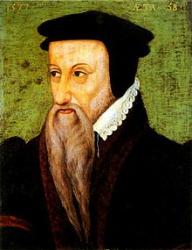
Théodore de Bèze

1519 - 1605 Topics: Psalter/Psalm Paraphrases Author (French) of "Psalm 100: Vous, qui sur la terre habitez (All People That on Earth do Dwell)" in Voices United Bèze, Théodore de, born at Vezelay, in Burgundy, 1519; died 1605. Bèze’s father was of noble birth. He occupied the post of bailiff at Vezelay. Bèza received a first-rate classical education under Melchior Wolmar. Before he was 20 he wrote some poetry in imitation of Catullus and Ovid, the licentiousness of which he mourned and condemned in alter years. A brilliant prospect of Church emoluments turned his attention from the distasteful study of law. The income of the Priory of Longjumeau made him rich, and he became a prominent member of the literary world at Paris. But his entrance into Orders was barred by a secret marriage with Claudine Denosse. Subsequently, when the offer of the abbey of Froidmont by his uncle made it necessary for him to decide between avowing his marriage and renouncing the prospect, or repudiating his wife, he decided, under the solemn conversion produced by a dangerous illness, to abandon the Roman Church, and break with his whole past life. He left for Geneva (1548), and there publicly married. His first scheme for a living was to join his old comrade Jean Crespin, then at Geneva, in printing; but his appointment to the Professorship of Greek at Lausanne (1549), left the printing office in the hands of Crespin. Before his departure fiom Geneva ho had been on intimate terms with Calvin; and the discovery of a metrical rendering of Ps. 16 on Beza's table at Geneva led Calvin to suggest to him the completion of Marot's Psalms. At Lausanne he became a friend of Viret. He stayed there ten years, during which he wrote a tragi-comedy, and 40 of his metrical Psalms (36 published in 1551, 6 more in 1554). He had whilst at Lausanne a narrow escape from death by the plague. In 1557 he went with Karel and Budams to ask for the intercession of the German Protestant Princes in behalf of the persecuted Hugue-nots, and had interviews with Melanchthon. In 1559 he was appointed pastor at Geneva, Assistant Professor of Theology to Calvin, and the first Rector of the newly founded College of Geneva. With Peter Martyr and others he represented the Huguenots in the conference with the Queen-Mother and Cardinal Lorraine, at Poissy (1561), and remained at Paris nearly two years afterwards. His French metrical Psalter, in continuation of Marot, was completed in 1562. Calvin's death, 1564, left Beza the foremost figure at Geneva. In 1571, at the summons of the King of Navarre, he presided at the Synod of the Reformed Churches at Rochelle; and again (1572) at Nismes. His wife died in 1588, and he married again soon afterwards. His public life, as a theologian, a preacher, and administrator, ceased about 1598, though he preached again for the last time in 1600. He was honoured till his death; only three years before which the Landgrave of Hesse visited him, when passing through Geneva. The works of Beza are very numerous. As a controversialist, a commentator, an investigator of the text of the New Testament, he occupied a high place in his time. Among his chief works are: Annotationes in N. T.., 1556; Novum Testamentum, 1556; Psalms, with paraphrase in Latin, 1579; Life of Calvin, 1563. [Rev. H. Leigh Bennett, M.A.] -- John Julian, Dictionary of Hymnology (1907)

Mark Andrews

1875 - 1939 Topics: Psalm Paraphrases Composer of "LAUDA ANIMA (ANDREWS)" in Great Songs of the Church (Revised) Mark Andrews was born in Erith, Kent, England in 1875 and emigrated to the United States in 1903. Trained at Westminster Abbey under organist John Thomas Ruch, he served as organist for St. Luke’s Episcopal, First Baptist, and First Congregational churches in Montclair, New Jersey. Andrews was a Fellow of the American Guild of Organists and an Associate of the Royal College of Organists, and he taught many pupils who became noted church musicians. A prolific composer of more than three hundred works, Andrews is remembered for hymn tunes such as Audrey (likely memorializing his daughter), Exultation, Fosdick, Whitney, and a distinct tune also titled Lauda Anima, written as an alternative setting for “Praise, My Soul, the King of Heaven.” His music reflects the English cathedral tradition blended with American congregational song, and several of his tunes remain in hymnals today. J.S. McDuff (from Montclair church archives and early 20th-century hymnals including Hymns of the Living Church 1910, retrieved 9/15/2025)

B. Schumacher

1886 - 1978 Person Name: Bernhard Schumacher, 1886-1978 Topics: Psalm paraphrase Author (st. 4) of "Let Children Hear the Mighty Deeds" in Lutheran Service Book Bernhard Schumacher wrote a 4th stanza to "Let Children Hear the Mighty Deeds" which appears in Evangelical Lutheran Humnary, 1996, #180 and Lutheran Service Book, 2006, #867.

James Drummond Burns

1823 - 1864 Person Name: James D. Burns Topics: Psalm Paraphrases Author of "Still With Thee, O My God" in Great Songs of the Church (Revised) Burns, James Drummond, M.A., was born at Edinburgh, February 18, 1823. He studied and graduated M.A. at the University of Edinburgh. In 1845 he became Free Church minister of Dunblane, but resigned through failing health, in 1848, and took charge of the Presbyterian Church at Funchal, Madeira. In 1855 he became minister of Hampstead Presbyterian Church, London. Died at Mentone, Nov. 27, 1864, and was buried in Highgate Cemetery, London. His hymns appeared in:— (l) The Vision of Prophecy: and other Poems (Edin., Edmonston and Douglas). This was originally published in 1854, and enlarged in 1858. The Poems are distinguished by vivid colouring and poetic imagination, along with directness, delicacy of execution, pensive sweetness, and tenderness. They have never however become widely popular. Included are 29 "Hymns and Meditations," many of which rank among the very best of our modern hymns for beauty, simplicity of diction, and depth of religious feeling. (2) The Evening Hymn (Lond., T. Nelson & Sons), 1857. This consists of an original hymn and an original prayer for every evening in the month— 31 in all. The Hymns and Prayers alike are characterised by reverence, beauty, simplicity, and pathos. Some of the hymns in this volume are now well known; e.g. "Still with Thee, 0 my God," "Hushed was the evening hymn," "As helpless as a child who clings." (3) Memoir and Remains of the late Rev. James D. Burns, M.A., of Hampstead. By the late Rev. James Hamilton, D.D. (London, J. Nisbet & Co.), 1869. Besides 13 Sermons and the Memoir, this work includes 40 “Hymns and Miscellaneous Pieces." A number of these had appeared in periodicals. Some of them are very good though not equal to those previously published. Also 39 translations of German hymns, which appeared in the Family Treasury, &c., are rendered exactly in the metres of the originals and many had not previously been translated. The translations are generally very good. (4) Burns also wrote the article Hymn in the 8th edition of the Encyclopedia Britannica. [Rev. James Mearns, M.A.] -- John Julian, Dictionary of Hymnology (1907) ===================== Burns, James Drummond, p, 197, i. Additional hymns in common use are:— 1. Not, Lord, unto that mount of dread. Safety in Christ. From Vision of Prophecy, 1st ed., 1854, p. 266. 2. O Thou whose tender [sacred] feet have trod. Resignation. From Vision of Prophecy, 1st ed., 1854, p. 227. 3. Thou, Lord, art love, and everywhere. Divine Love. From Vision of Prophecy, 2nd ed., 1858, p. 275. --John Julian, Dictionary of Hymnology, Appendix, Part II (1907) See also in: Hymn Writers of the Church

Jessie Seymour Irvine

1836 - 1887 Topics: Psalter/Psalm Paraphrases Composer of "CRIMOND" in Voices United Jessie Seymour Irvine United Kingdom 1836-1887. Born at Dunnottar, Kincardineshire, Scotland, the daughter of a parish minister of the Church of Scotland who served at Dunottar, Peterhead, and Crimond in Aberdeenshire, she became an organist, in training at the town of Banff. In 1871, while living in Crimond, she composed a tune for the metrical version of Psalm 23 as an exercise for a composition class. It was first performed at evening worship at Auchterless Parish Church. Not satisfied with her own work, she asked for help to reharmonize it from musician, David Grant, from Aberdeen. At the time, Grant was collaborating with associates compiling hymns and metrical Psalms from across north Scotland intending to publish them in a new hymnal. “The Northern Psalter” was published in 1872, became popular, and over 70,000 copies were sold. For years the hymn tune was credited to Grant, but Jessie’s sister wrote a letter to the hymnal editors claiming her sister wrote the tune, harmonized by Grant. She is now credited by most as the original composer. She died in Aberdeen, Scotland. She is commemorated by a set of four etched glass panels installed inside Crimond Parish Church in 2002. The hymn was played at Princess Elizabeth’s wedding (later Queen Elizabeth) to Philip Mountbatten in 1947. John Perry

Leonhard Schröter

1532 - 1601 Person Name: Leonhart Schröter, c. 1532-c. 1601 Topics: Psalm paraphrase Psalm 72 Composer of "FREUT EUCH, IHR LIEBEN" in Lutheran Service Book b. ca. 1532, Torgau, d. ca. 1601, Magdeburg

Les Garrett

Topics: Psalm Paraphrases Paraphraser (st. 1) of "This Is the Day" in The New Century Hymnal Rv Les Garrett New Zealand/Australia. Born at Matamata, New Zealand, he graduated from New Life Word of Faith Bible School at Tuaranga, NZ. He married wife, Marjorie (last name not found), and they had three children: Julie, Joy, and Mark. He moved to Western Australia and became a minister at Christian Family Center, Maddington, Perth, Australia. He also evangelized around the world, preaching at various places in Ireland, India, South Africa, and SE Asia. He traveled often, speaking at churches and various conventions, typically Baptist. For 10 years he lectured at Hebron Bible College, Perth, Australia. He was an author, writing on Bible translation, and published a songbook: ‘Scripture in Song’ (1967). Another, ‘Sound of Loving Waters’, was later published (1974). For a time, he lived at Narrogin, Australia. For 20 years he served his community as an active member of the Angaston Garden Society. He died at Angaston, South Australia. John Perry

Christian Friedrich Witt

1660 - 1717 Person Name: Christian F. Witt Topics: Psalm Paraphrases Composer (attributed to) of "STUTTGART" in The New Century Hymnal Christian F. Witt (b. Altenburg, Germany, d. 1660; d. Altenburg, 1716) was an editor and compiler of Psalmodia Sacra (1715); about 100 (of the 774) tunes in that collection are considered to be composed by him, including STUTTGART, which was set to the text "Sollt' es gleich." Witt was chamber organist and later Kapellmeister at the Gotha court. He composed vocal and instrumental music, including some sixty-five cantatas. Bert Polman

Thomas Sternhold

1449 - 1549 Topics: Psalm Paraphrases Author of "My Shepherd Is the Living God" in The New Century Hymnal Thomas Sternhold was Groom of the Robes to Henry VIII and Edward VI. With Hopkins, he produced the first English version of the Psalms before alluded to. He completed fifty-one; Hopkins and others composed the remainder. He died in 1549. Thirty-seven of his psalms were edited and published after his death, by his friend Hopkins. The work is entitled "All such Psalms of David as Thomas Sternhold, late Groome of the King's Majestye's Robes, did in his Lyfetime drawe into Englyshe Metre." Of the version annexed to the Prayer Book, Montgomery says: "The merit of faithful adherence to the original has been claimed for this version, and need not to be denied, but it is the resemblance which the dead bear to the living." Wood, in his "Athenae Oxonlenses" (1691, vol. I, p. 62), has the following account of the origin of Sternhold's psalms: "Being a most zealous reformer, and a very strict liver, he became so scandalized at the amorous and obscene songs used in the Court, that he, forsooth, turned into English metre fifty-one of David's psalms, and caused musical notes to be set to them, thinking thereby that the courtiers would sing them instead of their sonnets; but they did not, some few excepted. However, the poetry and music being admirable, and the best that was made and composed in these times, they were thought fit to be sung in all parochial churches." Of Sternhold and Hopkins, old Fuller says: "They were men whose piety was better than their poetry, and they had drunk more of Jordan than of Helicon." Sternhold and Hopkins may be taken as the representatives of the strong tendency to versify Scripture that came with the Reformation into England--a work men eagerly entered on without the talent requisite for its successful accomplishment. The tendency went so far, that even the "Acts of the Apostles" was put into rhyme, and set to music by Dr. Christopher Tye. --Annotations of the Hymnal, Charles Hutchins, M.A. 1872.

Pages


Export as CSV
It looks like you are using an ad-blocker. Ad revenue helps keep us running. Please consider white-listing Hymnary.org or getting Hymnary Pro to eliminate ads entirely and help support Hymnary.org.