You help make Hymnary.org possible. More than 10 million people from 200+ countries found hymns, liturgical resources and encouragement on Hymnary.org in 2025, including you. Every visit affirms the global impact of this ministry.

If Hymnary has been meaningful to you this year, would you take a moment today to help sustain it? A gift of any size—paired with a note of encouragement if you wish—directly supports the server costs, research work and curation that keep this resource freely available to the world.

Give securely online today, or mail a check to:
Hymnary.org
Calvin University
3201 Burton Street SE
Grand Rapids, MI 49546

Thank you for your partnership, and may the hope of Advent fill your heart.

Person Results

Topics:self dedication+
In:people

Planning worship? Check out our sister site, ZeteoSearch.org, for 20+ additional resources related to your search.
Showing 71 - 80 of 206Results Per Page: 102050

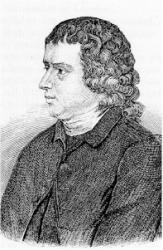
Robert Robinson

1735 - 1790 Topics: Self-Dedication Author of "Come, thou Fount of ev'ry blessing, Tune my heart to sing thy grace" in Magnify the Lord Robert Robinson was born at Swaffham, Norfolk, in 1735. In 1749, he was apprenticed to a hairdresser, in Crutched Friars, London. Hearing a discourse preached by Whitefield on "The Wrath to Come," in 1752, he was deeply impressed, and after a period of much disquietude, he gave himself to a religious life. His own peculiar account of this change of life is as follows:--"Robertus Michaelis Marineque Robinson filius. Natus Swaffhami, comitatu Norfolciae, Saturni die Sept. 27, 1735. Renatus Sabbati die, Maii 24, 1752, per predicationem potentem Georgii Whitefield. Et gustatis doloribus renovationis duos annos mensesque septem, absolutionem plenam gratuitamque, per sanguinem pretiosum i secula seculorum. Amen." He soon after began to preach, and ministered for some time in connection with the Calvinistic Methodists. He subsequently joined the Independents, but after a short period preferred the Baptist connection. In 1761, he became pastor of a Baptist congregation at Cambridge. About the year 1780, he began to incline towards Unitarianism, and at length his people deemed it essential to procure his resignation. While arrangements for this purpose were in progress he died suddenly at Bingham, in June 1790. He wrote and published a good many works of ability. --Annotations of the Hymnal, Charles Hutchins, M.A. 1872. ============================= Robinson, Robert, the author of "Come, Thou fount of every blessing," and "Mighty God, while angels bless Thee," was born at Swaffham, in Norfolk, on Sept. 27, 1735 (usually misgiven, spite of his own authority, as Jan. 8), of lowly parentage. Whilst in his eighth year the family migrated to Scarning, in the same county. He lost his father a few years after this removal. His widowed mother was left in sore straits. The universal testimony is that she was a godly woman, and far above her circumstances. Her ambition was to see her son a clergyman of the Church of England, but poverty forbade, and the boy (in his 15th year) was indentured in 1749 to a barber and hairdresser in London. It was an uncongenial position for a bookish and thoughtful lad. His master found him more given to reading than to his profession. Still he appears to have nearly completed his apprenticeship when he was released from his indentures. In 1752 came an epoch-marking event. Out on a frolic one Sunday with like-minded companions, he joined with them in sportively rendering a fortune-telling old woman drunk and incapable, that they might hear and laugh at her predictions concerning them. The poor creature told Robinson that he would live to see his children and grandchildren. This set him a-thinking, and he resolved more than ever to "give himself to reading”. Coincidently he went to hear George Whitefield. The text was St. Matthew iii. 7, and the great evangelist's searching sermon on "the wrath to come" haunted him blessedly. He wrote to the preacher six years later penitently and pathetically. For well nigh three years he walked in darkness and fear, but in his 20th year found "peace by believing." Hidden away on a blank leaf of one of his books is the following record of his spiritual experience, the Latin doubtless having been used to hold it modestly private:— "Robertus, Michaelis Mariseque Robinson filius. Natus Swaffhami, comitatu Norfolciae, Saturni die Sept. 27, 1735. Renatus Sabbati die, Maii 24,1752, per predicationem potentem Georgii Whitefield. Et gustatis doloribus renovationis duos annosque septem absolutionem plenam gratuitamque, per sanguinem pretiosum Jesu Christi, inveni (Tuesday, December 10, 1755) cui sit honor et gloria in secula seculorum. Amen." Robinson remained in London until 1758, attending assiduously on the ministry of Gill, Wesley, and other evangelical preachers. Early in this year he was invited as a Calvinistic Methodist to the oversight of a chapel at Mildenhall, Norfolk. Thence he removed within the year to Norwich, where he was settled over an Independent congregation. In 1759, having been invited by a Baptist Church at Cambridge (afterwards made historically famous by Robert Hall, John Foster, and others) he accepted the call, and preached his first sermon there on Jan. 8, 1759, having been previously baptized by immersion. The "call" was simply "to supply the pulpit," but he soon won such regard and popularity that the congregation again and again requested him to accept the full pastoral charge. This he acceded to in 1761, alter persuading the people to "open communion." In 1770 he commenced his abundant authorship by publishing a translation from Saurin's sermons, afterwards completed. In 1774 appeared his masculine and unanswerable Arcana, or the Principles of the Late Petitioners to Parliament for Relief in the matter of Subscription. In 1776 was published A Plea for the Divinity of our Lord Jesus Christ in a Pastoral Letter to a Congregation of Protestant Dissenters at Cambridge. Dignitaries and divines of the Church of England united with Nonconformists in lauding this exceptionally able, scholarly, and pungently written book. In 1777 followed his History and Mystery of Good Friday. The former work brought him urgent invitations to enter the ministry of the Church of England, but he never faltered in his Nonconformity. In 1781 he was asked by the Baptists of London to prepare a history of their branch of the Christian Church. This resulted, in 1790, in his History of Baptism and Baptists, and in 1792, in his Ecclesiastical Researches. Other theological works are included in the several collective editions of his writings. He was prematurely worn out. He retired in 1790 to Birmingham, where he was somehow brought into contact with Dr. Priestley, and Unitarians have made much of this, on exceedingly slender grounds. He died June 9, 1790. His Life has been fully written by Dyer and by William Robinson respectively, both with a bias against orthodoxy. His three changes of ecclesiastical relationship show that he was somewhat unstable and impulsive. His hymns are terse yet melodious, evangelical but not sentimental, and on the whole well wrought. His prose has all…that vehement and enthusiastic glow of passion that belongs to the orator. (Cf. Dyer and Robinson as above, and Gadsby's Memoirs of Hymn-Writers(3rd ed., 1861); Belcher's Historical Sketches of Hymns; Millers Singers and Songs of the Church; Flower's Robinson's Miscellaneous Works; Annual Review, 1805, p. 464; Eclectic Review, Sept. 1861. [Rev. A. B. Grosart, D.D., LL.D.] --John Julian, Dictionary of Hymnology (1907)

Eleanor Hull

1860 - 1935 Topics: Self-Dedication Translator of "Be thou my vision, O Lord of my heart" in Magnify the Lord

Mary E. Byrne

1880 - 1931 Topics: Self-Dedication Versifier of "Be thou my vision, O Lord of my heart" in Magnify the Lord Mary Elizabeth Byrne, M.A. (July 2, 1880 – January 19, 1931) was born in Ireland. She translated the Old Irish Hymn, "Bí Thusa 'mo Shúile," into English as "Be Thou My Vision" in Ériu (the journal of the School of Irish Learning), in 1905. See also in: Wikipedia

Bianco da Siena

1350 - 1434 Topics: Self-Dedication Author of "Come down, O love divine, Seek thou this soul of mine" in Magnify the Lord Bianco da Siena (b. Anciolina, circa 1350; d. Venice, Italy, circa 1434), an Italian poet and wool worker who was born at Anciolina, in the Val d'Arno. In 1367 he entered the Order of Jesuates, consisting of unordained men who followed the rule of St. Augustine. This order was instituted in that year by one John Colombinus of Siena, and suppressed by Pope Clement IX, possibly because of fear of not being able to control their mystical fervor. Little is known of Bianco beyond the fact that he is said to have lived in Venice for some years, and died there in 1434. His hymns were published at Lucca, in 1851, and edited by T. Bini, under the title, Laudi spirituali del Bianco da Siena. Emily Brink ============== Bianco da Siena, born at Anciolina, in the Val d'Arno, date unknown. In 1367 he entered the Order of Jesuates, consisting of unordained men who followed the rule of St. Augustine. This order was instituted in that year by one John Colombinus of Siena, and suppressed by Pope Clement IX. in 1668. Little is known of Bianco beyond the fact that he is said to have lived in Venice for some years, and died there in 1434. His hymns were published at Lucca, in 1851, and edited by T. Bini, under the title, Laudi spirituali del Bianco da Siena. This work contains 92 pieces. Of these the following have been translated into English, and have come into common use:— 1. Discendi, Amor santo. The Holy Spirit desired. This is No. 35 in the above work and is in 8 stanzas. Of these, Dr. Littledale gave 4 in the People's Hymnal, 1867, No. 473, as, "Come down, 0 Love Divine." 2. Gesil Christo amoroso. Missions. This is No. 79 of the above wdrk. It has been rendered into English by Dr. Littledale, and was published in the People's Hymnal, 1867, No. 400, as, "0 Jesu Christ, the loving.” 3. Vergine santa, sposa dell’ Agnello. St. Lucy. V. M . This is also from the foregoing work, No. 74, in 15 stanzas of 3 lines. Dr. Littledale's translation in the People's Hymnal, 1867, No. 226, is in 7 stanzas of 4 lines, and begins, "0 Virgin Spouse of Christ the Lamb." 4. Ama Jesu el tuo sposo diletto. Love for Jesus . This is No. 45 in the above work, in 33 stanzas. In 1866 Dr. Littledale contributed a cento therefrom to R. Brett's Office of the Moat Holy Name. This was transferred to Brooke's Churchman's Manual of Private & Family Devotion, 1882. It begins, "Love Jesus, Who hath sought thee so." Although the translations Nos. 1-3 have not gone any further than the People's Hymnal, Nos. 1 and 2 are worthy of more extended use. [Rev. John Julian, D.D.] -- John Julian, Dictionary of Hymnology (1907)

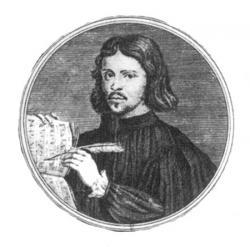
Thomas Tallis

1505 - 1585 Topics: Self-Dedication Composer of "TALLIS' CANON" in Magnify the Lord Thomas Tallis (b. Leicestershire [?], England, c. 1505; d. Greenwich, Kent, England 1585) was one of the few Tudor musicians who served during the reigns of Henry VIII: Edward VI, Mary, and Elizabeth I and managed to remain in the good favor of both Catholic and Protestant monarchs. He was court organist and composer from 1543 until his death, composing music for Roman Catholic masses and Anglican liturgies (depending on the monarch). With William Byrd, Tallis also enjoyed a long-term monopoly on music printing. Prior to his court connections Tallis had served at Waltham Abbey and Canterbury Cathedral. He composed mostly church music, including Latin motets, English anthems, settings of the liturgy, magnificats, and two sets of lamentations. His most extensive contrapuntal work was the choral composition, "Spem in alium," a work in forty parts for eight five-voice choirs. He also provided nine modal psalm tunes for Matthew Parker's Psalter (c. 1561). Bert Polman

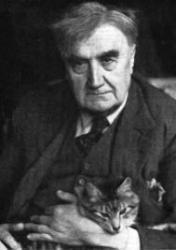
Ralph Vaughan Williams

1872 - 1958 Topics: Self-Dedication Composer of "DOWN AMPNEY" in Magnify the Lord Through his composing, conducting, collecting, editing, and teaching, Ralph Vaughan Williams (b. Down Ampney, Gloucestershire, England, October 12, 1872; d. Westminster, London, England, August 26, 1958) became the chief figure in the realm of English music and church music in the first half of the twentieth century. His education included instruction at the Royal College of Music in London and Trinity College, Cambridge, as well as additional studies in Berlin and Paris. During World War I he served in the army medical corps in France. Vaughan Williams taught music at the Royal College of Music (1920-1940), conducted the Bach Choir in London (1920-1927), and directed the Leith Hill Music Festival in Dorking (1905-1953). A major influence in his life was the English folk song. A knowledgeable collector of folk songs, he was also a member of the Folksong Society and a supporter of the English Folk Dance Society. Vaughan Williams wrote various articles and books, including National Music (1935), and composed numerous arrange­ments of folk songs; many of his compositions show the impact of folk rhythms and melodic modes. His original compositions cover nearly all musical genres, from orchestral symphonies and concertos to choral works, from songs to operas, and from chamber music to music for films. Vaughan Williams's church music includes anthems; choral-orchestral works, such as Magnificat (1932), Dona Nobis Pacem (1936), and Hodie (1953); and hymn tune settings for organ. But most important to the history of hymnody, he was music editor of the most influential British hymnal at the beginning of the twentieth century, The English Hymnal (1906), and coeditor (with Martin Shaw) of Songs of Praise (1925, 1931) and the Oxford Book of Carols (1928). Bert Polman

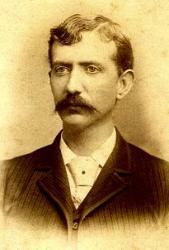
J. W. Elliott

1833 - 1915 Person Name: James William Elliott Topics: Self-Dedication Composer of "DAY OF REST" in The Hymnal of the Protestant Episcopal Church in the United States of America 1940 J.W. Elliott was a popular composer of the Victorian period, and is best known for his nursery rhyme music and for his work on hymnals in the 1870s. He was born James William Elliott, in Warwick, England, on February 13, 1833. As a child, he sang as a chorister in the Leamington Parish Church. In those days, choristers were given lessons in all facets of church music, including organ lessons, counterpoint studies, and more in exchange for providing an extraordinary level of service to their parish church (services throughout the week, all holidays, extra services, etc.). The result is that most choristers who completed their studies received an excellent music education, and James was no exception. After starting his career as an organist and choirmaster for a countryside church, his talent became obvious. He moved to London, where he assisted Sir Arthur Sullivan (of Gilbert and Sullivan fame) in editing Church Hymns. In addition, James worked for a music publisher. His compositions include two operettas, numerous anthems, service music, works for instruments including the very popular harmonium, and most particularly for Nursery Rhymes and Nursery Songs, his children’s music score that sets many of the Nursery Rhymes to delightful music. Several of his hymn tunes are still in use today in many hymnals, most notably his hymn tune “Day of Rest.” He was heavily involved in the preparation of the musical edition of Church Hymns in 1874, the Choral Service Book of 1892, and transcriptions of hymn tunes using harmonies different than the traditional ones found in hymnals. He died in St. Marylebone, London, on February 5, 1915. --www.nursery-songs.com/

Thomas O. Chisholm

1866 - 1960 Person Name: T. O. Chisholm Topics: Consecration Dedication of Self Author of "Living For Jesus" in Christian Service Songs Thomas O. Chisholm was born in Franklin, Kentucky in 1866. His boyhood was spent on a farm and in teaching district schools. He spent five years as editor of the local paper at Franklin. He was converted to Christianity at the age of 26 and soon after was business manager and office editor of the "Pentecostal Herald" of Louisville, Ky. In 1903 he entered the ministry of the M. E. Church South. His aim in writing was to incorporate as much Scripture as possible and to avoid flippant or sentimental themes. Dianne Shapiro, from "The Singers and Their Songs: sketches of living gospel hymn writers" by Charles Hutchinson Gabriel (Chicago: The Rodeheaver Company, 1916) ============================== Signed letter from Chisholm dated 9 August 1953 located in the DNAH Archives.

Edwin George Monk

1819 - 1900 Person Name: Edwin George Monk (1819-1900) Topics: Dedication Festival; Saints St Michael and All Angels; Angels; Arts and Creativity; Church Worship; God in majesty; Music and Song; Other Saints and Festivals Joseph of Nazareth; Other Saints and Festivals Michael and all Angels; Other Saints and Festivals Luke the Evangelist; Praise; Proper 15 Year B; Self-offering Composer of "ANGEL VOICES" in Ancient and Modern

George Croly

1780 - 1860 Topics: Self-Dedication Author of "Spirit of God, descend upon my heart" in Magnify the Lord Croly, George, LL.D., born in Dublin, Aug. 17, 1780, and educated at the Dublin University (M.A. 1804, LL.D. 1831). After taking Holy Orders, he laboured in Ireland till about 1810, when he took up his residence in London, and devoted himself to literature. In 1835 he succeeded to the united benefices of St. Stephen's, Walbrook, and St. Benet Sherehog, retaining the same till his death, which occurred suddenly in the public street, Holborn, Nov. 24, 1860. His prose publications, in addition to contributions to Blackwood's Magazine, were numerous, and dealt with biographical, historical, and scriptural subjects. His hymns were given in his— Psalms and Hymns for Public Worship. Written and compiled by the Rev. George Croly, LL.D. London Kendrick, 1854. This collection contained 25 psalms, 50 hymns, and 6 poems. Of these 10 psalms, 12 hymns, and the 6 poems bear Dr. Croly's initial. The following have come into common use mainly through Windle's Collection:— 1. Be still, be still, impatient soul. Patience. 2. Behold me, Lord, and if thou find. Lent. 3. Lift up your heads, ye gates of light. Ascension. 4. Lord, who hast sought us out, unsought. Public Worship. 5. Teach us, O Lord, this day. Sunday. 6. Thou, Lord of mercy and of might. Lent. All these date from 1854, with the exception of No. 6, which appeared in his Scenes from Scripture and other Poems, 1851. -- John Julian, Dictionary of Hymnology (1907)

Pages


Export as CSV
It looks like you are using an ad-blocker. Ad revenue helps keep us running. Please consider white-listing Hymnary.org or getting Hymnary Pro to eliminate ads entirely and help support Hymnary.org.