You help make Hymnary.org possible. More than 10 million people from 200+ countries found hymns, liturgical resources and encouragement on Hymnary.org in 2025, including you. Every visit affirms the global impact of this ministry.

If Hymnary has been meaningful to you this year, would you take a moment today to help sustain it? A gift of any size—paired with a note of encouragement if you wish—directly supports the server costs, research work and curation that keep this resource freely available to the world.

Give securely online today, or mail a check to:
Hymnary.org
Calvin University
3201 Burton Street SE
Grand Rapids, MI 49546

Thank you for your partnership, and may the hope of Advent fill your heart.

Person Results

Topics:christian+year -return+of+christ
In:people

Planning worship? Check out our sister site, ZeteoSearch.org, for 20+ additional resources related to your search.
Showing 71 - 80 of 707Results Per Page: 102050

Sylvia G. Dunstan

1955 - 1993 Person Name: Sylvia Dunstan Topics: The Christian Year Reign of Christ; Christian Year Transfiguration; Christian Year Christ the King/Reign of Christ; Jesus Christ Lamb of God; Jesus Christ Shepherd; Epiphany Last/Transfig. Year A; Lent 2 Year A; Proper 11 Year B; Lent 5 Year C; Easter 7 Year C; Reign of Christ Year C Author of "You, Lord, Are Both Lamb and Shepherd" in Voices United After a brief, arduous battle with liver cancer, Canadian Sylvia Dunstan died in 1993 at the age of 38. For thirteen years, Dunstan had served the United Church of Canada as a parish minister and prison chaplain. She is remembered by those who knew her for her passion for those in need, her gift of writing, and her love of liturgy. Sing! A New Creation

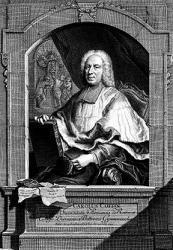
Charles Coffin

1676 - 1749 Person Name: Charles Coffin, 1676-1749 Topics: Advent; Christ--Redeemer; Christian year--Advent; Christian year--Advent; Christian year--Baptism of the Lord; Healing; Redemption of humankind Author of "On Jordan's Banks the Baptist's Cry" in Moravian Book of Worship Coffin, Charles, born at Buzaney (Ardennes) in 1676, died 1749, was principal of the college at Beauvais, 1712 (succeeding the historian Rollin), and rector of the University of Paris, 1718. He published in 1727 some, of his Latin poems, for which he was already noted, and in 1736 the bulk of his hymns appeared in the Paris Breviary of that year. In the same year he published them as Hymni Sacri Auctore Carolo Coffin, and in 1755 a complete ed. of his Works was issued in 2 vols. To his Hymni Sacri is prefixed an interesting preface. The whole plan of his hymns, and of the Paris Breviary which he so largely influenced, comes out in his words. "In his porro scribendis Hymnis non tam poetico indulgendunv spiritui, quam nitoro et pietate consulendum esse existimavi. Pleraque igitur, argumentis convenientia e purissiinis Scripturae Sacrae fontibus deprompsi quac idoneis Ecclesiae cantui numeris alligarem." His hymns are described by a French critic as having less brilliancy than those of Santüil (q.v.), but more simplicity and unction. They number 100 in the edition of 1736. Translated into English by J. Chandler, I. Williams and others, are noted under their respective Latin first lines. [William T. Brooke] -- John Julian, Dictionary of Hymnology (1907)

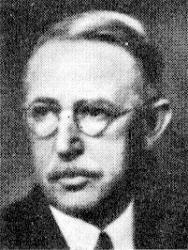
C. Austin Miles

1868 - 1946 Topics: 예 수 의 이 름; Christian Life; Christian Year Easter; Jesus Christ Friend; Jesus Christ Name of; Trust and Assurance; 그리스도인의 삶; 교회 년 부활절; 예 수 그 리 스 도 친 구; 신 뢰 와 확신 Author of "저 장 미 꽃 위 에 이 슨 (In the Garden (I Come to the Garden Alone))" in 찬송과 예배 = Chansong gwa yebae = Come, Let Us Worship Charles Austin Miles USA 1868-1946. Born at Lakehurst, NJ, he attended the Philadelphia College of Pharmacy and the University of PA. He became a pharmacist. He married Bertha H Haagen, and they had two sons: Charles and Russell. In 1892 he abandoned his pharmacy career and began writing gospel songs. At first he furnished compositions to the Hall-Mack Publishing Company, but soon became editor and manager, where he worked for 37 years. He felt he was serving God better in the gospel song writing business, than as a pharmacist. He published the following song books: “New songs of the gospel” (1900), “The service of praise” (1900), “The voice of praise” (1904), “The tribute of song” (1904), “New songs of the gospel #2” (1905), “Songs of service” (1910), “Ideal Sunday school hymns” (1912). He wrote and/or composed 400+ hymns. He died in Philadelphia, PA. John Perry

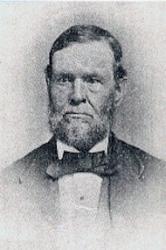
James Ellor

1819 - 1899 Topics: Reign of Christ; Christ--Adoration and praise; Christ--Name of Jesus; Christ--Victorious; Christian year--Reign of Christ; Salvation Composer of "DIADEM" in Moravian Book of Worship James Ellor United Kingdom 1819-1899. Born at Droylesden, Lancashire, England, he was trained as a hat maker. By age 18 he was leading the Methodist Wesleyan Chapel choir. He later worked for the railroad. In 1838 he brought his choir a new tune he had written for the hymn, “All hail the power of Jesus' name”. It became well received and has been used with the hymn ever since. In 1843 he emigrated to America and resumed the hat making trade. He died in New York City. It is the only hymn he is now remembered for. John Perry

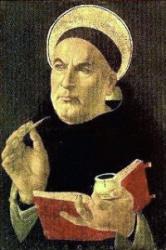
Thomas Aquinas

1225 - 1274 Topics: Christian Year Reign of Christ; Eucharist; Forgiveness; Lord's Supper; Love for God; Communion Author (attributed to) of "Thee We Adore, O Hidden Savior, Thee" in Glory to God Thomas of Aquino, confessor and doctor, commonly called The Angelical Doctor, “on account of," says Dom Gueranger, "the extraordinary gift of understanding wherewith God had blessed him," was born of noble parents, his father being Landulph, Count of Aquino, and his mother a rich Neapolitan lady, named Theodora. The exact date of his birth is not known, but most trustworthy authorities give it as 1227. At the age of five he was sent to the Benedictine monastery at Monte Cassino to receive his first training, which in the hands of a large-hearted and God-fearing man, resulted in so filling his mind with knowledge and his soul with God, that it is said the monks themselves would often approach by stealth to hear the words of piety and wisdom that fell from the lips of the precocious child when conversing with his companions. After remaining at Monte Cassino for seven years, engaged in study, St. Thomas, "the most saintly of the learned, and the most learned of the saints," returned to his family, in consequence of the sack of the abbey by the Imperial soldiers. From thence he was sent by his parents to the University of Naples then at the height of its prosperity, where, becoming intimate with the Fathers of the Dominican Order, and being struck, probably, by the devotedness and ability of the Dominican Professors in the University, he was induced to petition for admission into that order, though he was at that time not more than seventeen years of age. This step gave such umbrage to his mother that she caused him to be waylaid on the road to Paris (whither he was being hurried to escape from her), and to be kept for more than two years in prison, during which time his brothers, prompted by their mother, used all means, even the most infamous, to seduce him from religion. At last the Dominicans' influence with the Pope induced the latter to move the Emperor Frederick to order his release, when St. Thomas was at once hurried back to Naples by the delighted members of his order. He was afterwards sent to Rome, then to Paris, and thence to Cologne. At Cologne his studies were continued under the celebrated Albertus Magnus, with whom, in 1245, he was sent by the Dominican Chapter once more to Paris for study, under his direction, at the University. In 1248, when he had completed his three years' curriculum at Paris, St. Thomas was appointed, before he was twenty-three years of age, second professor and “magister studentium,” under Albertus, as regent, at the new Dominican school (on the model of that at Paris), which was established by the Dominicans in that year at Cologne. There he achieved in the schools a great reputation as a teacher, though he by no means confined himself to such work. He preached and wrote; his writings, even at that early age, were remarkable productions and gave promise of the depth and ability which mark his later productions. His sermons also at that time enabled him to attract large congregations into the Dominican church. In 1248 he was directed to take his degree at Paris; and though his modesty and dislike of honour and distinction made the proposal distasteful to him, he set out and begged his way thither; but it was not until October 23rd, 1257, that he took his degree. The interval was filled by such labours in writing, lecturing, and preaching, as to enable him by the time he became a doctor to exercise an influence over the men and ideas of his time which we at this time can scarcely realise. So much was this the case that Louis IX. insisted upon St. Thomas becoming a member of his Council of State, and referred every question that came up for deliberation to him the night before, that he might reflect on it in solitude. At this time he was only thirty-two years of age. In 1259 he was appointed, by the Dominican Chapter at Valenciennes, a member of a Commission, in company with Albertus Magnus and Pierre de Tarentaise, to establish order and uniformity in all schools of the Dominicans. In 1261 the Pope, Urban IV., immediately upon his election to the Pontifical throne, sent for St. Thomas to aid him in his project for uniting into one the Eastern and Western Churches. St. Thomas in that same year came to Rome, and was at once appointed by the General of his Order to a chair of theology in the Dominican College in that city, where he obtained a like reputation to that which he had secured already at Paris and Cologne. Pope Urban being anxious to reward his services offered him, first the Patriarchate of Jerusalem, and then a Cardinal's hat, but he refused both. After lecturing, at the request of the Pope, with great success at Vitervo, Orvieto, Perugia, and Fondi, he was sent, in 1263, as "Definitor," in the name of the Roman Province, to the Dominican Chapter held in London. Two years later Clement IV., who succeeded Urban as Pope, appointed him, by bull, to the archbishopric of Naples, conferring on him at the same time the revenues of the convent of St. Peter ad Aram. But this appointment he also declined. In 1269 he was summoned to Paris—his last visit— to act as "Definitor" of the Roman Province at the General Chapter of his Order, and he remained there until 1271, when his superiors recalled him to Bologna. In 1272, after visit¬ing Rome on the way, he went to Naples to lecture at the University. His reception in that city was an ovation. All classes came out to welcome him, while the King, Charles I., as a mark of royal favour bestowed on him a pension. He remained at Naples until he was summoned, in 1274, by Pope Gregory X., by special bull, to attend the Second Council of Lyons, but whilst on the journey thither he was called to his rest. His death took place in the Benedictine Abbey of Fossa Nuova in the diocese of Terracina, on the 7th of March 1274, being barely forty-eight years of age. St. Thomas was a most voluminous writer, his principal work being the celebrated Summa Theologiae, which, although never completed, was accepted as such an authority as to be placed on a table in the council-chamber at the Council of Trent alongside of the Holy Scriptures and the Decrees of the Popes. But it is outside the province of this work to enlarge on his prose works. Though not a prolific writer of hymns, St. Thomas has contributed to the long list of Latin hymns some which have been in use in the services of the Church of Rome from his day to this. They are upon the subject of the Lord's Supper. The best known are:— Pange lingua gloriosi Corporis Mysterium; Adoro te devote latens Deitas; Sacris sollemniis juncta sint gaudia; Lauda Sion Salvatorem; and Verbum supernum prodiens. The 1st, 3rd, and 5th of these are found in the Roman Breviary, the 2nd, 4th, and 5th in Newman's Hymni Ecclesiae; the 4th in the Roman Missal; all of them appear in Daniel; the 2nd and 4th in Mone; and the 2nd, 4th, and 5th in Königsfeld. Of these hymns numerous translations have been made from time to time, and amongst the translators are found Caswall, Neale, Woodford, Morgan, and others. [Rev. Digby S. Wrangham, M.A.] -- Excerpts from John Julian, Dictionary of Hymnology (1907)

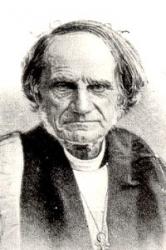
Christopher Wordsworth

1807 - 1885 Topics: The Christian Year Baptism of Jesus; Biblical Characters David; Biblical Places Bethlehem; Biblical Places Jordan; Christian Year Epiphany; Christian Year Baptism of the Lord; God Presence; Healing; Jesus Christ Baptism; Jesus Christ High Priest; Jesus Christ Incarnation; Jesus Christ Kingship, Conqueror; Jesus Christ Miracles; Jesus Christ Prophet; Jesus Christ Signs and Wonders; Jesus Christ Youth; Music and Singing; Praise; Salvation; Satan/Demonic Forces/Devil; Thankfulness; Baptism of Jesus Year A; Epiphany 2 Year A; Epiphany 3 Year A; Epiphany Last/Transfig. Year A; Advent 2 Year B; Advent 3 Year B; Epiphany 7 Year B; Epiphany 9 Year B; Epiphany Last/Transfig. Year B; Lent 2 Year B; Proper 4 Year B; Epiphany 2 Year C; Epiphany 8 Year C; Epiphany 9 Year C; Lent 2 Year C Author of "Songs of Thankfulness and Praise" in Voices United Christopher Wordsworth--nephew of the great lake-poet, William Wordsworth--was born in 1807. He was educated at Winchester, and at Trinity College, Cambridge, where he graduated B.A., with high honours, in 1830; M.A. in 1833; D.D. in 1839. He was elected Fellow of his College in 1830, and public orator of the University in 1836; received Priest's Orders in 1835; head master of Harrow School in 1836; Canon of Westminster Abbey in 1844; Hulsean Lecturer at Cambridge in 1847-48; Vicar of Stanford-in-the-Vale, Berks, in 1850; Archdeacon of Westminster, in 1865; Bishop of Lincoln, in 1868. His writings are numerous, and some of them very valuable. Most of his works are in prose. His "Holy Year; or, Hymns for Sundays, Holidays, and other occasions throughout the Year," was published in [1862], and contains 127 hymns. --Annotations of the Hymnal, Charles Hutchins, M.A., 1872. =================== Wordsworth, Christopher, D.D., was born at Lambeth (of which parish his father was then the rector), Oct. 30, 1807, and was the youngest son of Christopher Wordsworth, afterwards Master of Trinity College, Cambridge, and Priscilla (née Lloyd) his wife. He was educated at Winchester, where he distinguished himself both as a scholar and as an athlete. In 1826 he matriculated at Trinity College, Cambridge, where his career was an extraordinarily brilliant one. He swept off an unprecedented number of College and University prizes, and in 1830 graduated as Senior Classic in the Classical Tripos, and 14th Senior Optime in the Mathematical, won the First Chancellor's Medal for classical studies, and was elected Fellow of Trinity. He was engaged as classical lecturer in college for some time, and in 1836 was chosen Public Orator for the University. In the same year he was elected Head Master of Harrow School, and in 1838 he married Susan Hatley Freere. During his head-mastership the numbers at Harrow fell off, but he began a great moral reform in the school, and many of his pupils regarded him with enthusiastic admiration. In 1844 he was appointed by Sir Robert Peel to a Canonry at Westminster; and in 1848-49 he was Hulsean lecturer at Cambridge. In 1850 he took the small chapter living of Stanford-in-the-Vale cum Goosey, in Berkshire, and for the next nineteen years he passed his time as an exemplary parish priest in this retired spot, with the exception of his four months' statutable residence each year at Westminster. In 1869 he was elevated to the bishopric of Lincoln, which he held for more than fifteen years, resigning it a few months before his death, which took place on March 20th, 1885. As bearing upon his poetical character, it may be noted that he was the nephew of the poet-laureate, William Wordsworth, whom he constantly visited at Rydal up to the time of the poet's death in 1850, and with whom he kept up a regular and lengthy correspondence. Christopher Wordsworth was a very voluminous writer, his principal works being:— (1) Athens and Attica, 1836; (2) Pompeian Inscriptions, 1837; (3) Greece Pictorial and Descriptive, 1839; (4) King Edward VIth's Latin Grammar, 1841; (5) Bentley's Correspondence, 1842; (6) Theophilus Anglicanus, 1843; (7) Memoirs of William Wordsworth, 1851; (8) Hippolytus, 1853; (9) Notes at Paris, 1854; (10) A Commentary on the whole Bible, 1856-1870; (11) The Holy Year, 1862; (12) Church History, 1881-1883; many volumes of Sermons, and an enormous amount of Pamphlets, Addresses, Letters, Speeches, on almost every subject in which the interests of the church were concerned, and also on subjects connected with classical literature. Of his many works, however, the only one which claims notice from the hynmologist's point of view is The Holy Year, which contains hymns, not only for every season of the Church's year, but also for every phase of that season, as indicated in the Book of Common Prayer. Dr. Wordsworth, like the Wesleys, looked upon hymns as a valuable means of stamping permanently upon the memory the great doctrines of the Christian Church. He held it to be "the first duty of a hymn-writer to teach sound doctrine, and thus to save souls." He thought that the materials for English Church hymns should be sought (1) in the Holy Scriptures, (2) in the writings of Christian Antiquity, and (3) in the Poetry of the Ancient Church. Hence he imposed upon himself the strictest limitations in his own compositions. He did not select a subject which seemed to him most adapted for poetical treatment, but felt himself bound to treat impartially every subject, and branch of a subject, that is brought before us in the Church's services, whether of a poetical nature or not. The natural result is that his hymns are of very unequal merit; whether his subject inspired him with poetical thoughts or not, he was bound to deal with it; hence while some of his hymns (such as "Hark! the sound of holy voices," &c, “See the Conqueror mounts in triumph," &c, "O, day of rest and gladness") are of a high order of excellence, others are prosaic. He was particularly anxious to avoid obscurity, and thus many of his hymns are simple to the verge of baldness. But this extreme simplicity was always intentional, and to those who can read between the lines there are many traces of the "ars celans artem." It is somewhat remarkable that though in citing examples of early hymnwriters he almost always refers to those of the Western Church, his own hymns more nearly resemble those of the Eastern, as may be seen by comparing The Holy Year with Dr. Mason Neale's Hymns of the Eastern Church translated, with Notes, &c. The reason of this perhaps half-unconscious resemblance is not far to seek. Christopher Wordsworth, like the Greek hymnwriters, drew his inspiration from Holy Scripture, and he loved, as they did, to interpret Holy Scripture mystically. He thought that ”the dangers to which the Faith of England (especially in regard to the Old Testament) was exposed, arose from the abandonment of the ancient Christian, Apostolic and Patristic system of interpretation of the Old Testament for the frigid and servile modern exegesis of the literalists, who see nothing in the Old Testament but a common history, and who read it (as St. Paul says the Jews do) ‘with a veil on their heart, which veil' (he adds) 'is done away in Christ.'" In the same spirit, he sought and found Christ everywhere in the New Testament. The Gospel History was only the history of what "Jesus began to do and to teach" on earth; the Acts of the Apostles and all the Epistles were the history of what he continued to do and to teach from Heaven; and the Apocalypse (perhaps his favourite book) was "the seal and colophon of all." Naturally he presents this theory, a theory most susceptible of poetical treatment, in his hymns even more prominently than in his other writings. The Greek writers took, more or less, the same view; hence the resemblance between his hymns and those of the Eastern Church. [Rev. J. H. Overton, D.D.] During the time that Bishop Wordsworth was Canon of Westminster, and Vicar of Stanford-in-the-Vale cum Goosey, he published his collection of hymns as:— The Holy Year; or Hymns for Sundays and Holy-days, And other Occasions. London, Rivingtons, 1862. This work contained an extended Preface; a Calendar of Hymns; 117 Original Compositions; and a Supplement of 82 hymns from other sources. In the 3rd edition, 1863, the Supplement was omitted, and the Original hymns were increased to 127. Several of these hymns are annotated under their respective first lines, the rest in common use are:— From The Holy Year, first edition, 1862:— 1. Five pebbles from the brook. Temptation. Stanza ix. added in 1863. 2. Giver of law is God's [Thy] dear Son. Circumcision. Doxology added in 1863. 3. Gracious Spirit, Holy Ghost. Quinquagesima. 4. Holy, holy, holy, Lord, God of Hosts, Eternal King. Holy Trinity. 5. Holy of Holies! awful name. Epistle 5th Sunday in Lent. 6. How blest are hearts which Christ the Lord. Holy Matrimony. In 1863 in two parts, Pt. ii. being "Bless these Thy servants, gracious Lord." 7. How blessed is the force of prayer. St. Peter. In 1863, in two parts, Pt. i. being "Behold! at hand is Herod's doom." 8. How wondrous and mysterious are. Holy Baptism. In the 1863 ed. it is divided into four parts:— Pt. ii. "In Jordan Thou didst sanctify"; Pt. iii. "Thee, risen in triumph from the grave"; Pt. iv." Baptized in Christ we put on Christ." The cento, "By Water and the Holy Ghost," is also from this hymn. 9. In sorrow and distress. Ash Wednesday. 10. In Thy glorious Resurrection . Easter. In the 1863 ed. it begins, "Lord, Thy glorious Resurrection," and the doxology was added. 11. Lord, may we never, save to One. Against False Worship. Stanza viii. was added in 1863. 12. Lord not with [by] poor and paltry gifts. Offertory. 13. Lord, Who didst the Prophets teach. 2nd Sunday in Advent, or, Holy Scripture. The doxology was added in 1863. 14. Man fell from grace by carnal appetite. Gospel 1st S. in Lent. 15. Mankind in Adam fell. Good Friday. In the 1863 ed. it is divided into three parts: Pt. ii. being "We fell by Adam's sin;" and Pt. iii. "Thy Cross a Trophy is." 16. Not bound by chains, nor pent in cells. The Gifts of the Holy Ghost. This hymn is preceded by a special note on the Holy Spirit and His gifts. 17. Not gifts of prophecy can save. Self Discipline, or, 8th Sunday after Trinity. 18. 0 Jerusalem beloved, joyful morn has dawned on Thee. Purification of Blessed Virgin Mary, or, The Presentation. In the 1863 edition it is divided into two parts, Pt. ii. Being “Light the Gentile world to lighten, and thy glory Israel." 19. 0 Saviour, Who at Nain's gate. The Raising of the Widow's Son. 20. 0 Son of God, the Eternal Word. The Queen's Accession. 21. Once all the nations were as one. Babel and Sion a Contrast. 22. Sing, 0 sing this blessed morn. Christmas. In the 1863 edition a doxology was added, and the hymn was divided into two parts, Pt. ii. being, "God comes down that man may rise." 23. The banner of the Cross. Missions. In the 1863 ed. it is in three parts, Pt. ii., "Now for the Lord our God"; Pt. iii. "The earth from East to West." 24. The Galilean Fishers toil. Collect 4th Sunday in Advent. From this "0 Lord, when storms around us howl" is taken. 25. Thou bidd'st us visit in distress. The Promise of the Comforter, or, Sunday before Ascension. In the 1863 edition it is in two parts, Pt. ii. being “At Thy first birth, Thou, Lord, didst wait." 26. Thou hast a Temple founded. The Christian Temple; or, Epistle 11th Sunday after Trinity. 27. To-day, 0 Lord, the Holy James. St. James. In the 1863 ed. in two parts, Pt. ii. being "God in His word does not display." 28. Today with bright effulgence shine. Conversion of St. Paul. In the 1863 ed. it begins "Today in Thine Apostle shine," and is in two parts, Pt. ii being "From East to West, from North to South." 29. Upon the sixth day of the week. Easter Eve. Stanzas x., xi. of the 1863 text were added then, and the hymn was given in two parts, Pt. ii. being "By tasting the forbidden fruit." 30. We hear the tolling bell. Burial. The doxology was added in 1863, and the hymn was divided, Pt. ii. being "0 gracious Lord, to Thee." The cento "We see the open grave" is from this hymn. 31. When from the City of our God. The Good Samaritan. From this is taken “What beams of grace and mercy, Lord." 32. When Thou, 0 Lord, didst send the Twelve. SS. Simon and Jude. In the 1863 ed. stanza x. is new, and Pt. ii. begins, "Zeal, swollen with passion's cloudy smoke." ii. From the Holy Year, 3rd ed., 1863. 33. Heavenly Father, send Thy blessing. For Schools. In extensive use. 34. Holy, holy, holy Lord, Maker of this worldly frame. Septuagesima. Based on the Epistle and Gospel of the week. 35. Lo He comes! Whom every nation. Advent. This is headed "The First Advent of Christ, coming to save." 36. 0 fear not though before thee lies. Communion of the Sick. Pt. ii. begins, "The Resurrection and the Life." 37. On every new-born babe of earth. Churching of Women. Pt. ii. begins, "Bright angels of the King of kings." 38. Peace to this house! O Thou Whose way. Visitation of the Sick. Pt. ii. "0 Conqueror by suffering; Pt. iii. "Restore us to Thine house of prayer." 39. The day is gently sinking to a close. Evening. A beautiful hymn. 40. We all, 0 God, unrighteous are. The Lord our Righteousness. Sometimes "We all, O Lord, unrighteous are." Based upon the Epistle of the Sunday next before Advent. Pt. ii. begins "Behold the day, the glorious day." In addition to many of the hymns in the 1863 edition of The Holy Year being divided into parts, the texts of most of them were revised by the author, and are authorized. -- John Julian, Dictionary of Hymnology (1907) ================ Wordsworth, Bp. C. (Lincoln) , p. 1294, i. Of his hymns, noted on p. 1294, i., ii., we find that No. 39 appeared in his Holy Year in 1864; and Nos. 34, 35, and 40 in 1862. The first edition in which the longer hymns were divided into parts was that of 1868. With regard to the date of Bp. Wordsworth's death, we find this reference thereto in his Biography: "He expired soon after midnight on Friday, March 20, or perhaps, it might be said, early on the Saturday morning." This gives the date of his death as March 21, 1885. --John Julian, Dictionary of Hymnology, New Supplement (1907) =========================== See also in: Hymn Writers of the Church

John Chandler

1806 - 1876 Person Name: John Chandler (1806-1876) Topics: Life in Christ Christ Incarnate - Public Ministry; Christian Year Lent; Christian Year Season of Epiphany; Jesus baptism Translator of "On Jordan's bank the Baptist's cry" in Church Hymnary (4th ed.) John Chandler, one of the most successful translators of hymns, was born at Witley in Surrey, June 16, 1806. He was educated at Corpus Christi College, Oxford, B.A. 1827, M.A. 1830. Ordained deacon in 1831 and priest in 1832, he succeeded his father as the patron and vicar of Whitley, in 1837. His first volume, entitled The Hymns of the Primitive Church, now first Collected, Translated and Arranged, 1837, contained 100 hymns, for the most part ancient, with a few additions from the Paris Breviary of 1736. Four years later, he republished this volume under the title of hymns of the Church, mostly primitive, collected, translated and arranged for public use, 1841. Other publications include a Life of William of Wykeham, 1842, and Horae sacrae: prayers and meditations from the writings of the divines of the Anglican Church, 1854, as well as numerous sermons and tracts. Chandler died at Putney on July 1, 1876. --The Hymnal 1940 Companion =============== Chandler, John, M.A.,one of the earliest and most successful of modern translators of Latin hymns, son of the Rev. John F. Chandler, was born at Witley, Godalming, Surrey, June 16, 1806, and educated at Corpus Christi College, Oxford, where he graduated in 1827. He took Holy Orders in 1831, and became Vicar of Witley in 1837. He died at Putney, July 1, 1876. Besides numerous Sermons and Tracts, his prose works include Life of William of Wykeham, 1842; and Horae Sacrae; Prayers and Meditations from the writings of the Divines of the Anglican Church, with an Introduction, 1844. His translations, he says, arose out of his desire to see the ancient prayers of the Anglican Liturgy accompanied by hymns of a corresponding date of composition, and his inability to find these hymns until he says, "My attention was a short time ago directed to some translations [by Isaac Williams] which appeared from time to time in the British Magazine, very beautifully executed, of some hymns extracted from the Parisian Breviary,with originals annexed. Some, indeed, of the Sapphic and Alcaic and other Horatian metres, seem to be of little value; but the rest, of the peculiar hymn-metre, Dimeter Iambics, appear ancient, simple, striking, and devotional—in a word in every way likely to answer our purpose. So I got a copy of the Parisian Breviary [1736], and one or two other old books of Latin Hymns, especially one compiled by Georgius Cassander, printed at Cologne, in the year 1556, and regularly applied myself to the work of selection and translation. The result is the collection I now lay before the public." Preface, Hymns of the Primitive Church, viii., ix. This collection is:— (1) The Hymns of the Primitive Church, now first Collected, Translated, and Arranged, by the Rev. J. Chandler. London, John W. Parker, 1837. These translations were accompanied by the Latin texts. The trsanslations rearranged, with additional translations, original hymns by Chandler and a few taken from other sources, were republished as (2) The Hymns of the Church, mostly Primitive, Collected, Translated, and Arranged/or Public Use, by the Rev. J. Chandler, M.A. London, John W. Parker, 1841. From these works from 30 to 40 translations have come gradually into common use, some of which hold a foremost place in modern hymnals, "Alleluia, best and sweetest;" "Christ is our Corner Stone;" "On Jordan's bank the Baptist's cry;" "Jesus, our Hope, our hearts' Desire;" "Now, my soul, thy voice upraising;" "Once more the solemn season calls;" and, "O Jesu, Lord of heavenly grace;" being those which are most widely used. Although Chandler's translations are somewhat free, and, in a few instances, doctrinal difficulties are either evaded or softened down, yet their popularity is unquestionably greater than the translations of several others whose renderings are more massive in style and more literal in execution. --John Julian, Dictionary of Hymnology (1907)

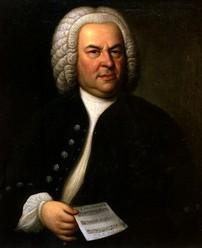
Johann Sebastian Bach

1685 - 1750 Topics: Atonement; Christian Year Easter Vigil; Christian Year Resurrection/Easter; Christian Year Reign of Christ; Grace; Jesus Christ Resurrection; Joy; Christian Year Easter Adapter and Harmonizer of "CHRIST LAG IN TODESBANDEN" in Glory to God Johann Sebastian Bach was born at Eisenach into a musical family and in a town steeped in Reformation history, he received early musical training from his father and older brother, and elementary education in the classical school Luther had earlier attended. Throughout his life he made extraordinary efforts to learn from other musicians. At 15 he walked to Lüneburg to work as a chorister and study at the convent school of St. Michael. From there he walked 30 miles to Hamburg to hear Johann Reinken, and 60 miles to Celle to become familiar with French composition and performance traditions. Once he obtained a month's leave from his job to hear Buxtehude, but stayed nearly four months. He arranged compositions from Vivaldi and other Italian masters. His own compositions spanned almost every musical form then known (Opera was the notable exception). In his own time, Bach was highly regarded as organist and teacher, his compositions being circulated as models of contrapuntal technique. Four of his children achieved careers as composers; Haydn, Mozart, Beethoven, Mendelssohn, Schumann, Brahms, and Chopin are only a few of the best known of the musicians that confessed a major debt to Bach's work in their own musical development. Mendelssohn began re-introducing Bach's music into the concert repertoire, where it has come to attract admiration and even veneration for its own sake. After 20 years of successful work in several posts, Bach became cantor of the Thomas-schule in Leipzig, and remained there for the remaining 27 years of his life, concentrating on church music for the Lutheran service: over 200 cantatas, four passion settings, a Mass, and hundreds of chorale settings, harmonizations, preludes, and arrangements. He edited the tunes for Schemelli's Musicalisches Gesangbuch, contributing 16 original tunes. His choral harmonizations remain a staple for studies of composition and harmony. Additional melodies from his works have been adapted as hymn tunes. --John Julian, Dictionary of Hymnology (1907)

John Stainer

1840 - 1901 Topics: The Christian Year Christmas; Annunciation; Biblical Characters Mary, Mother of Jesus; Biblical Characters Shepherds; Choruses and Refrains; Christian Year Christmas; Gift(s); Jesus Christ Birth and Infancy; Jesus Christ Incarnation; Jesus Christ Kingship, Conqueror; Jesus Christ Lord of Life; Salvation; Word of God; Advent 4 Year A; Christmas Eve Year A; Christmas 1 Year A; Epiphany Year A; Christmas Eve Year B; Christmas Day 1 Year B; Christmas Day 1 Year C; Epiphany Year C Harmonizer (attributed to) of "GREENSLEEVES" in Voices United

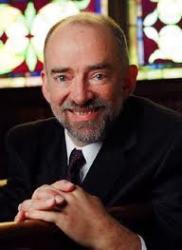
Dan Damon

b. 1955 Person Name: Daniel Charles Damon Topics: The Christian Year Reign of Christ; Christian Year Christ the King/Reign of Christ; Fasting; Humility; Jesus Christ Love For; Jesus Christ Love of; Jesus Christ Reign; Light; Pardon; Suffering; Temptation; Truth; Victory; Reign of Christ Year A; Reign of Christ Year B; Reign of Christ Year C Author of "Eternal Christ, You Rule" in Voices United Daniel Charles Damon (b. 1955) is an internationally published writer of hymn texts and tunes and is Associate Editor of Hymnody for Hope Publishing Company, Carol Stream, Illinois. Damon is also a jazz pianist and has played in many hotels and clubs in the San Francisco Bay area. He holds degrees from Greenville College, Greenville, Illinois (BME, 1977) and Pacific School of Religion, Berkeley, California (MDiv, 1987). He is an ordained Elder in the United Methodist Church in the San Francisco Bay area and a life member of the Hymn Society in the United States and Canada. Several single-author collections of Damon's hymns have been published: Faith Will Sing (Carol Stream, 1993), The Sound of Welcome (Carol Stream, 1998), To the Thirsty World (Nashville, 2002), Fields of Mercy (Carol Stream, 2007), and Garden of Joy (Carol Stream, 2011). He collaborated with text writer Gracia Grindal in A Treasury of Faith: Lectionary Hymns Series A (Colfax. 2012). Damon's hymns have been included in several major hymnals and supplements. He has also written hymn translations from Vietnamese, Portuguese, and Shona languages, and, with Patrick Matsikenyiri, edited Njalo, A Collection of 16 Hymns in the African Tradition (Nashville, 1996). He has released three recordings of hymns, carols, and traditional songs, and a solo piano recording of jazz standards (available at www.damonstuneshop.com). Damon has presented his work at national conferences of the Hymn Society in the United States and Canada and the Fellowship of United Methodists in Music and Worship Arts. He is a contributor to the Canterbury Dictionary of Hymnology. In 2016, Damon was made a Fellow of the hymn Society, the highest honor The Hymn Society can confer. Dan Damon

Pages


Export as CSV
It looks like you are using an ad-blocker. Ad revenue helps keep us running. Please consider white-listing Hymnary.org or getting Hymnary Pro to eliminate ads entirely and help support Hymnary.org.