You help make Hymnary.org possible. More than 10 million people from 200+ countries found hymns, liturgical resources and encouragement on Hymnary.org in 2025, including you. Every visit affirms the global impact of this ministry.

If Hymnary has been meaningful to you this year, would you take a moment today to help sustain it? A gift of any size—paired with a note of encouragement if you wish—directly supports the server costs, research work and curation that keep this resource freely available to the world.

Give securely online today, or mail a check to:
Hymnary.org
Calvin University
3201 Burton Street SE
Grand Rapids, MI 49546

Thank you for your partnership, and may the hope of Advent fill your heart.

Person Results

Topics:god+as+creator
In:people

Planning worship? Check out our sister site, ZeteoSearch.org, for 20+ additional resources related to your search.
Showing 71 - 80 of 254Results Per Page: 102050

Robert Robinson

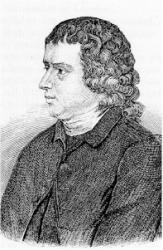
1735 - 1790 Topics: Angels; Christ As Creator; Christ Deity of; Christ Praise of; God; God Being of; God Perfections of; God Praises of Author of "Mighty God, While Angels Bless You" in Trinity Psalter Hymnal Robert Robinson was born at Swaffham, Norfolk, in 1735. In 1749, he was apprenticed to a hairdresser, in Crutched Friars, London. Hearing a discourse preached by Whitefield on "The Wrath to Come," in 1752, he was deeply impressed, and after a period of much disquietude, he gave himself to a religious life. His own peculiar account of this change of life is as follows:--"Robertus Michaelis Marineque Robinson filius. Natus Swaffhami, comitatu Norfolciae, Saturni die Sept. 27, 1735. Renatus Sabbati die, Maii 24, 1752, per predicationem potentem Georgii Whitefield. Et gustatis doloribus renovationis duos annos mensesque septem, absolutionem plenam gratuitamque, per sanguinem pretiosum i secula seculorum. Amen." He soon after began to preach, and ministered for some time in connection with the Calvinistic Methodists. He subsequently joined the Independents, but after a short period preferred the Baptist connection. In 1761, he became pastor of a Baptist congregation at Cambridge. About the year 1780, he began to incline towards Unitarianism, and at length his people deemed it essential to procure his resignation. While arrangements for this purpose were in progress he died suddenly at Bingham, in June 1790. He wrote and published a good many works of ability. --Annotations of the Hymnal, Charles Hutchins, M.A. 1872. ============================= Robinson, Robert, the author of "Come, Thou fount of every blessing," and "Mighty God, while angels bless Thee," was born at Swaffham, in Norfolk, on Sept. 27, 1735 (usually misgiven, spite of his own authority, as Jan. 8), of lowly parentage. Whilst in his eighth year the family migrated to Scarning, in the same county. He lost his father a few years after this removal. His widowed mother was left in sore straits. The universal testimony is that she was a godly woman, and far above her circumstances. Her ambition was to see her son a clergyman of the Church of England, but poverty forbade, and the boy (in his 15th year) was indentured in 1749 to a barber and hairdresser in London. It was an uncongenial position for a bookish and thoughtful lad. His master found him more given to reading than to his profession. Still he appears to have nearly completed his apprenticeship when he was released from his indentures. In 1752 came an epoch-marking event. Out on a frolic one Sunday with like-minded companions, he joined with them in sportively rendering a fortune-telling old woman drunk and incapable, that they might hear and laugh at her predictions concerning them. The poor creature told Robinson that he would live to see his children and grandchildren. This set him a-thinking, and he resolved more than ever to "give himself to reading”. Coincidently he went to hear George Whitefield. The text was St. Matthew iii. 7, and the great evangelist's searching sermon on "the wrath to come" haunted him blessedly. He wrote to the preacher six years later penitently and pathetically. For well nigh three years he walked in darkness and fear, but in his 20th year found "peace by believing." Hidden away on a blank leaf of one of his books is the following record of his spiritual experience, the Latin doubtless having been used to hold it modestly private:— "Robertus, Michaelis Mariseque Robinson filius. Natus Swaffhami, comitatu Norfolciae, Saturni die Sept. 27, 1735. Renatus Sabbati die, Maii 24,1752, per predicationem potentem Georgii Whitefield. Et gustatis doloribus renovationis duos annosque septem absolutionem plenam gratuitamque, per sanguinem pretiosum Jesu Christi, inveni (Tuesday, December 10, 1755) cui sit honor et gloria in secula seculorum. Amen." Robinson remained in London until 1758, attending assiduously on the ministry of Gill, Wesley, and other evangelical preachers. Early in this year he was invited as a Calvinistic Methodist to the oversight of a chapel at Mildenhall, Norfolk. Thence he removed within the year to Norwich, where he was settled over an Independent congregation. In 1759, having been invited by a Baptist Church at Cambridge (afterwards made historically famous by Robert Hall, John Foster, and others) he accepted the call, and preached his first sermon there on Jan. 8, 1759, having been previously baptized by immersion. The "call" was simply "to supply the pulpit," but he soon won such regard and popularity that the congregation again and again requested him to accept the full pastoral charge. This he acceded to in 1761, alter persuading the people to "open communion." In 1770 he commenced his abundant authorship by publishing a translation from Saurin's sermons, afterwards completed. In 1774 appeared his masculine and unanswerable Arcana, or the Principles of the Late Petitioners to Parliament for Relief in the matter of Subscription. In 1776 was published A Plea for the Divinity of our Lord Jesus Christ in a Pastoral Letter to a Congregation of Protestant Dissenters at Cambridge. Dignitaries and divines of the Church of England united with Nonconformists in lauding this exceptionally able, scholarly, and pungently written book. In 1777 followed his History and Mystery of Good Friday. The former work brought him urgent invitations to enter the ministry of the Church of England, but he never faltered in his Nonconformity. In 1781 he was asked by the Baptists of London to prepare a history of their branch of the Christian Church. This resulted, in 1790, in his History of Baptism and Baptists, and in 1792, in his Ecclesiastical Researches. Other theological works are included in the several collective editions of his writings. He was prematurely worn out. He retired in 1790 to Birmingham, where he was somehow brought into contact with Dr. Priestley, and Unitarians have made much of this, on exceedingly slender grounds. He died June 9, 1790. His Life has been fully written by Dyer and by William Robinson respectively, both with a bias against orthodoxy. His three changes of ecclesiastical relationship show that he was somewhat unstable and impulsive. His hymns are terse yet melodious, evangelical but not sentimental, and on the whole well wrought. His prose has all…that vehement and enthusiastic glow of passion that belongs to the orator. (Cf. Dyer and Robinson as above, and Gadsby's Memoirs of Hymn-Writers(3rd ed., 1861); Belcher's Historical Sketches of Hymns; Millers Singers and Songs of the Church; Flower's Robinson's Miscellaneous Works; Annual Review, 1805, p. 464; Eclectic Review, Sept. 1861. [Rev. A. B. Grosart, D.D., LL.D.] --John Julian, Dictionary of Hymnology (1907)

Chas. H. Gabriel

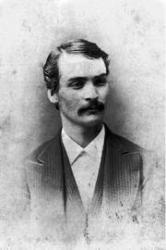
1856 - 1932 Person Name: Charles H. Gabriel, 1856-1932 Topics: God as Creator Composer of "ARLES" in Psalms for All Seasons Pseudonyms: C. D. Emerson, Charlotte G. Homer, S. B. Jackson, A. W. Lawrence, Jennie Ree ============= For the first seventeen years of his life Charles Hutchinson Gabriel (b. Wilton, IA, 1856; d. Los Angeles, CA, 1932) lived on an Iowa farm, where friends and neighbors often gathered to sing. Gabriel accompanied them on the family reed organ he had taught himself to play. At the age of sixteen he began teaching singing in schools (following in his father's footsteps) and soon was acclaimed as a fine teacher and composer. He moved to California in 1887 and served as Sunday school music director at the Grace Methodist Church in San Francisco. After moving to Chicago in 1892, Gabriel edited numerous collections of anthems, cantatas, and a large number of songbooks for the Homer Rodeheaver, Hope, and E. O. Excell publishing companies. He composed hundreds of tunes and texts, at times using pseudonyms such as Charlotte G. Homer. The total number of his compositions is estimated at about seven thousand. Gabriel's gospel songs became widely circulated through the Billy Sunday­-Homer Rodeheaver urban crusades. Bert Polman

Iona Community

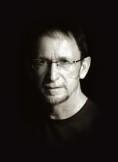
Topics: God as Creator Author of "Psalm 50:1-15, 22-23 (A Responsorial Setting) " in Psalms for All Seasons Iona Community, an ecumenical Christian group of men and women based on the small island of Iona off the coast of Scotland. The community began in 1938 when the Rev. George MacLeod of the Church of Scotland began a ministry among the unemployed poor who had been neglected by the church. He took a handful of men to the island to rebuild the ruins of a thousand-year-old abbey church. That rebuilding became a metaphor for the rebuilding of the common life, a return to the belief that daily activity is the stuff of godly service – work, and worship. The Community has since grown to include a group of members, associates, and friends all over the United Kingdom and many other countries. In addition to many conferences that attract people to Iona from around the world, the Community is known for its publishing of new songs and prayers for worship, both developed in community and gathered from around the world. For more information on the Iona Community, check their website: www.iona.org.uk. John Bell is probably the community’s most well-known member, having composed and arranged much of the community’s music. Sing! A New Creation

Graham Kendrick

b. 1950 Topics: God as Creator Author of "The Earth Is the Lord's" in Psalms for All Seasons Graham Kendrick (b. England, August 2, 1950), the son of a Baptist minister in Northamptonshire, is one of the most prolific Christian singer-songwriters in the United Kingdom. He’s written music for over thirty years, and to date has released thirty-eight albums. He is best known for his songs “Shine, Jesus, Shine,” “Knowing You,” and “The Servant King.” Kendrick has received honorary doctorates in divinity from Brunel University and Wycliffe College. In 1987 he helped co-found the March for Jesus, which today is a global phenomenon in which Christians take their faith to the streets in a celebration of Christ. In 1995 Kendrick received a Dove Award for his international work, and he remains an active advocate for Compassion International, which is a Christian child sponsorship organization dedicated to the long-term development of children living in poverty around the world, and also is a contributor to CompassionArt, an organization with the aim of generating income from works of art to assist in the relief of suffering around the planet. Laura de Jong

Keith Getty

b. 1974 Topics: God as Creator Author of "The Perfect Wisdom of Our God" in The Sing! Hymnal Keith Getty (b. December 16, 1974) is a world-renowned modern hymn writer. Keith developed a passion for writing good songs for the church in his twenties, and began writing for his small Baptist church. He writes and performs with his wife, Kristyn and they regularly tour the United States and the United Kingdom. (Also known as Julian Keith Getty) Laura de Jong

Stuart Townend

Topics: God as Creator Author of "The Perfect Wisdom of Our God" in The Sing! Hymnal Stuart Townend (b. 1963) grew up in West Yorkshire, England, the youngest son of an Anglican vicar. He started learning piano at a young age, and began writing music at age 22. He has produced albums for Keith Routledge and Vinesong, among many others, and has also released eight solo albums to date. Some of his better-known songs include “How Deep the Father’s Love,” “The King of Love,” and “The Power of the Cross.” He continues to work closely with friends Keith and Kristyn Getty, and is currently a worship leader in Church of Christ the King in Brighton, where he lives with wife Caroline, and children Joseph, Emma and Eden. Laura de Jong

Craig Sellar Lang

1891 - 1971 Person Name: Craig S. Lang, 1891-1971 Topics: God as Creator Composer (descant) of "LOBE DEN HERREN" in Lift Up Your Hearts Craig S. Lang (b. Hastings, New Zealand, 1891; d. London, England, 1971), was educated at Clifton College, Bristol, England, and earned his D.Mus. at the Royal College of Music in London. Throughout his life he was an organist and a music educator as well as a composer of organ, piano, and choral works. Lang was also music editor of The Public School Hymn Book (1949). He named many of his hymn tunes after Cornish villages. Bert Polman

Stopford A. Brooke

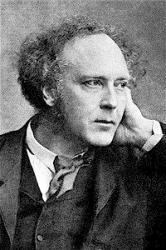
1832 - 1916 Topics: God as Creator Author of "Let the Whole Creation Cry" in The Sing! Hymnal Brooke, Stopford Augustus, M.A., was born at Letterkenny, Donegal, Nov. 14, 1832, and educated at Trinity College, Dublin, graduating B.A. 1856; M.A. 1858. He carried off the Downes prize and the Vice-Chancellor's prize for English verse. On taking Holy Orders he was successively Curate of St. Matthew's, Marylebone, 1857-59; of Kensington, 1860-63; Chaplain to the British Embassy at Berlin, 1863-65; Minister of St. James's Chapel, York Street, London, 1866-75; and of Bedford Chapel, 1876. He was also appointed Chaplain in Ordinary to the Queen, in 1872. In 1865 he published the Life and Letters of the late F. W. Robertson; in 1874, Theology in the English Poets; in 1876, Primer of English Literature, &c. On seceding from the Church of England in 1881, he published for the use of his congregation, Christian Hymns, a collection of 269 pieces. Of these he is the author of:— 1. Immortal Love, within Whose righteous will. Resignation and Prayer for Guidance. No. 183, in 4 stanzas of 6 lines. It has a strong likeness to Card. Newman's "Lead, kindly light," is in the same metre, and might be called a companion hymn thereto. It was repeated in Horder's Congregational Hymns, 1884. 2. It fell upon a summer day. Christ blessing little children. No. 250, in 10 stanzas of 4 lines. 3. It is finished, all the pain. Good Friday. No. 80, in 6 stanzas of 4 lines. 4. Let the whole creation cry. Invitation to Praise God. An imitation of Ps. 148. It is No. 47, in 10 stanzas of 4 lines, and is of special merit. In st. iv., 11. 3, 4 are from another source. 5. Mysterious Spirit, unto Whom. Rest and Joy in God. Based on a translation by J. G. Whittier from Lamartine. It is No. 159, in 3 stanzas of 8 lines. It was repeated in Horder's Congregational Hymns, 1884. 6. Now that day its wings has furled. Evening. No. 13, in 5 stanzas of 4 lines. 7. 0 God, Whose love is near. Divine protection desired. No. 103, in 7 stanzas of 4 lines. This is Toplady's "Your harps, ye trembling Saints" re-written, only st. i. and iv. being absolutely by Mr. Brooke. 8. 0 that Thou would'st the heavens rend And comfort, &c. Peace desired. No. 149, in 4 stanzas of 4 lines. The first line is from C. Wesley; also stanzas ii., 1. 4, but the rest of the hymn is original. 9. 0 Who is this that on a tree. Good Friday. No. 79, in 8 stanzas of 4 lines. 10. Oft as we run the weary way. Heavenly Witnesses of the struggles of Men. No. 188, in 6 stanzas of 6 lines. 11. Still the night, holy the night. Christmas Carol. No. 55, in 3 stanzas of 8 lines. It is a translation from the German, and is noticed under Mohr, Joseph. 12. Through the starry midnight dim. Christmas. No. 53, in 6 stanzas of 3 lines, and the refrain "Hallelujah." 13. When the Lord of Love was here. Life of Christ. No. 66, in 6 stanzas of 4 lines. It has passed into The Norwood Hymnal; and with the omission of st. vi. and the transposition of st. iv. and v. into Horder's Congregational Hymns, 1884. This is his finest hymn. In addition, Mr. Brooke has made extensive alterations in the text of the hymns which he has adopted from other writers, and has also inserted in many instances additional stanzas into well-known lyrics, and thereby brought them, to some extent, into harmony with his theological views. His own compositions are marked by great freshness of thought and tenderness of expression. [Rev. W. Garrett Horder] -- John Julian, Dictionary of Hymnology (1907)

Raquel Mora Martínez

b. 1940 Person Name: Raquel Martinez Topics: God as Creator Arranger of "ROSAS" in Lift Up Your Hearts Raquel Martinez (b. January 17, 1940) is a well-known composer and arranger of Hispanic songs and hymns. She has degrees from the University of Texas at El Paso and Perkins School of Theology and the School of the Arts, Southern Methodist University. She served as editor of the official United Methodist hymnal, Mil Voces Para Celebrar (Nashville: Abingdon Press, 1996). --www.gbod.org/lead-your-church/hymn-studies/

Jeffery W. Rowthorn

1934 - 2025 Person Name: Jeffrey W. Rowthorn Topics: Creation God as Creator Author of "Creating God, Your Fingers Trace" in Voices Together

Pages


Export as CSV
It looks like you are using an ad-blocker. Ad revenue helps keep us running. Please consider white-listing Hymnary.org or getting Hymnary Pro to eliminate ads entirely and help support Hymnary.org.