You help make Hymnary.org possible. More than 10 million people from 200+ countries found hymns, liturgical resources and encouragement on Hymnary.org in 2025, including you. Every visit affirms the global impact of this ministry.

If Hymnary has been meaningful to you this year, would you take a moment today to help sustain it? A gift of any size—paired with a note of encouragement if you wish—directly supports the server costs, research work and curation that keep this resource freely available to the world.

Give securely online today, or mail a check to:
Hymnary.org
Calvin University
3201 Burton Street SE
Grand Rapids, MI 49546

Thank you for your partnership, and may the hope of Advent fill your heart.

Person Results

Topics:proper+24
In:people

Planning worship? Check out our sister site, ZeteoSearch.org, for 20+ additional resources related to your search.
Showing 71 - 80 of 218Results Per Page: 102050

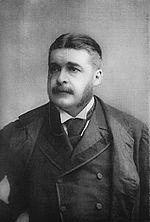
Arthur Sullivan

1842 - 1900 Person Name: Arthur Seymour Sullivan, 1842-1900 Topics: Year C Proper 24 Composer of "ST GERTRUDE" in Complete Anglican Hymns Old and New Arthur Seymour Sullivan (b Lambeth, London. England. 1842; d. Westminster, London, 1900) was born of an Italian mother and an Irish father who was an army band­master and a professor of music. Sullivan entered the Chapel Royal as a chorister in 1854. He was elected as the first Mendelssohn scholar in 1856, when he began his studies at the Royal Academy of Music in London. He also studied at the Leipzig Conservatory (1858-1861) and in 1866 was appointed professor of composition at the Royal Academy of Music. Early in his career Sullivan composed oratorios and music for some Shakespeare plays. However, he is best known for writing the music for lyrics by William S. Gilbert, which produced popular operettas such as H.M.S. Pinafore (1878), The Pirates of Penzance (1879), The Mikado (1884), and Yeomen of the Guard (1888). These operettas satirized the court and everyday life in Victorian times. Although he com­posed some anthems, in the area of church music Sullivan is best remembered for his hymn tunes, written between 1867 and 1874 and published in The Hymnary (1872) and Church Hymns (1874), both of which he edited. He contributed hymns to A Hymnal Chiefly from The Book of Praise (1867) and to the Presbyterian collection Psalms and Hymns for Divine Worship (1867). A complete collection of his hymns and arrangements was published posthumously as Hymn Tunes by Arthur Sullivan (1902). Sullivan steadfastly refused to grant permission to those who wished to make hymn tunes from the popular melodies in his operettas. Bert Polman

Tom Colvin

1925 - 2000 Topics: Proper 24 Year B Translator of "Jesu, Jesu, Fill Us with Your Love" in Voices United Tom Colvin (b. 1925; d. 2000) was trained as an engineer and worked in that profession in Burma and Singa­pore from 1945 to 1948. After studying theology at Trinity College, Glasgow University, he was ordained in the Church of Scotland in 1954. He served as missionary in Nyasa­land (now Malawi) from 1954 to 1958, in Ghana from 1958 to 1964, and again in Nyasa­land from 1964 to 1974. His work there included preaching, education, and community development. After completing his missionary work, Colvin became a minister in the United Reformed Church of England and served an inner-city church in London. He returned to Africa in 1984 as a development consultant to the Zimbabwe Christian Council. Colvin's writings include Christ's Work in Free Africa (1964) and three collections of hymns, many written in collaboration with African Christians–Free to Serve (1966), Leap My Soul (1976), and Fill Us with Your Love (1983). Bert Polman

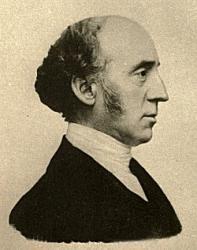
Henry Percy Smith

1825 - 1898 Topics: Proper 24 Year B; Proper 24 Year C Composer of "MARYTON" in Voices United Henry Percy Smith (b. Malta, 1825; d. Bournemouth, Hampshire, England, 1898) was educated at Balliol College, Oxford, England, and ordained a priest in the Church of England in 1850. He served five churches, including St. Michael's York Town in Farnborough (1851-1868), Great Barton in Suffolk (1868-1882), Christ Church in Cannes, France (1882-1892), and the Cathedral in Gibraltar (1892-1898). MARYTON is his only tune found in contemporary hymnals and is thought to be the only tune he published. Bert Polman

Ralph Harrison

1748 - 1810 Person Name: Ralph Harrison, 1748-1810 Topics: Proper 24 Year A; Proper 24 Year C Composer of "WARRINGTON" in Common Praise

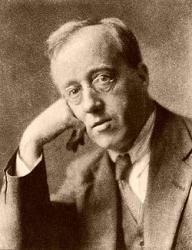
Gustav Holst

1874 - 1934 Person Name: Gustav Holst (1874-1934) Topics: Proper 24 Year C Composer of "THAXTED" in Ancient and Modern Gustav Holst (b. Chelteham, Gloucestershire, England, September 21, 1874, d. London, England, May 25, 1934) was a renowned British composer and musician. Having studied at Cheltenham Grammar School, he soon obtained a professional position as an organist, and later as choirmaster. In 1892, Holst composed a two-act operetta, which so impressed his father that he borrowed the money to send Holst to the Royal College of Music. Severe neuritis in his right hand later caused him to give up the keyboard, and Holst turned to the trombone and composing. In 1895 Holst met Ralph Vaughan Williams, and the two became lifelong friends. Vaughan Williams helped Holst land his first job as a singing teacher. Holst became very interested in Indian and Hindu culture, and composed a number of operas translated from Sanksrit myths. These were not received well in England, however. Holst is best known for his composition, The Planets, as well as

Richard Gillard

b. 1953 Person Name: Richard A. M. Gillard (b. 1953) Topics: Proper 24 Year B Author of "Brother, sister, let me serve you" in Ancient and Modern Gillard, Richard. (Malmesbury, Wiltshire County, England, May 22, 1953- ). The eldest of six children, he emigrated to New Zealand with his family when he was three years old. Writes, "I've had almost no formal musical training. I'm a self-taught guitarist and play mostly in a folk style." Regarding "The Servant Song," he says it "was first published in 1978 on a record album by Scripture in Song called "Father Make Us One" and has appeared subsequently in other Scripture in Song publications including a song book entitled "Songs of Praise" which is widely used by New Zealand congregations. It has also been recorded by the St. Pauls Singers of St Pauls Anglican Church. This album, called New Harvest introduces songs and hymns from their own songbook of the same name." --Letter from Richard Gillard to Mary Louise VanDyke, 25 March 1987, DNAH Archives

Julia C. Cory

1882 - 1963 Person Name: Julia Cory Topics: Proper 24 Year A Author of "We Praise You, O God" in Voices United Julia C. Cory (Julia Buckley Cady Cory) was born in New York, NY in 1882. She was the daughter of a prominent New York architect, J. Cleveland Cady. Her father was also a Sunday school superintendent and amateur hymnologist. Partly because of his influence Julia began to write hymns at an early age. She was a member of the Brick Presbyterian Church. She married Robert Haskell Cory in 1911 and was a member of the Presbyterian Church in Englewood, NJ for all of her married life. She was a member of the Hymn Society that met in New York City all her adult life and died in Englewood, NJ in 1963. She raised 3 sons and they had 15 grandchildren. Psalter Hymnal Handbook, 1998 and D. Lincoln Cory

James R. Murray

1841 - 1905 Topics: Proper 24 Year B Harmonizer of "LACQUIPARLE" in Voices United L.P.M. (1905, April 12). Obituary. New Church Messenger, p.209. Murray.--At Cincinnati, March 10, 1905, James Ramsey Murray. Funeral services in the Church of the New Jersualem, March 13th. James R. Murray was widely known in the musical world as the author of many songs and song books, and in the New Church in Chicago and Cincinnati as an affectionate, intelligent, and loyal New Churchman. He was born in Andover (Ballard Vale), Mass., March 17, 1841. In early life he developed musical talent, and composed many minor pieces for local and special occasions. Later at North Reading, Mass., he attended Dr. George F. Root's School of Music, and was associated with William Bradbury and Dr. Lowell Mason. He enlisted in the Fourteenth Regiment of infantry, commonly known as the Essex County Regiment, and afterwards was changed to the First Regiment, Massachusetts Heavy Artillery, which was engaged in most of the battles fought by the Second Army Corps up to the surrender of General Lee. "Daisy Deane," the first and most popular of his early song successes, was composed in 1863 in Virginia while in camp, words by his cousin, Thomas F. Winthrop. This song is known all over the world, and the Salvation Army is using an arrangement of it for one of their war cry songs. In 1868 Mr. Murray married Isabella Maria Taylor of Andover; and they removed to Chicago. Here three children were born to them, two passing early to their heavenly home, the youngest, Winthrop Root Murray, is still living. It was during these first years in Chicago that Mr. and Mrs. Murray became interested in the New Church, while he was engaged with Root and Cady as editor of the Long Visitor, afterwards merged with the Musical Visitor. After the great fire of 1871 Mr. and Mrs. Murray returned East, where he was engaged in teaching in Lawrence and Andover, and as organist at the Old South Church in Andover. In 1881 they removed to Cincinnati and Mr. Murray became the editor of the Musical Viistor [sic] and head of the publication department of the John Church Company. Among the most popular of his books are "Pure Diamonds," "Royal Gems," "The Prize" and "Murray's Sacred Songs." The following titles will recall some of his best loved sacred songs: "At Last," "Calm on the Listening Ear of Night," "I Shall Be Satisfied," "There Shall No Evil Befall Thee," "Thine, O Lord, Is the Greatness," "The Way Was Mine," "How Beautiful Upon the Mountains," "Angels from the Realms of Glory." His last great labor in the publishing department of the John Church Company was the seeing through the press five volumes of Wagner's music dramas, with full score and original German text, and an English translation. The immense and careful labor involved in the preparation of these volumes, with a really smooth and excellent English translation, had perhaps, as it was done under pressure, something to do with Mr. Murray's breakdown. Although for some reason Mr. Murray's name does not appear on the title page of these volumes, his friends knew of the place the work held in his affections and ambition. Mr. Murray was a member of the Church Council of the Cincinnati Society for the last four years and took a deep interest in the building of the New Church, and in the inauguration of services, with all the changes looking to the improvement of the musical part of the service. The vested choir, organized by Mr. and Mrs. Lawson, which Mr. Murray as councilman had urged from the beginning, in their entrance to the church each Sunday singing the processional hymn participated in the funeral service, with a congregation of brethren and friends, all moved by deep love and profound respect for the consistent life and faith of a worthy Churchman and beloved friend. --DNAH Archives =================================== For a discussion of Murray and the tune MUELLER, see: Stulken, M.K. (1981). Hymnal companion to the Lutheran Book of Worship. Philadelphia : Fortress Press, p.170. =================================== Also available in the DNAH Archives: 1. An excerpt from Christie, George A. (1927). New Free Church. In Music in Andover. Papers read at "Fagot Party" of the Andover Natural History Society. 2. Unsourced essay about Murray written soon after his death, likely from Andover, Mass., perhaps authored by Charlotte Helen Abbott.

Edward Hodges

1796 - 1867 Topics: Proper 24 Year B Adapter of "HYMN TO JOY" in Voices United Born: Ju­ly 20, 1796, Bris­tol, Eng­land. Died: Sep­tem­ber 1, 1867, Clif­ton, Bris­tol, Eng­land. Buried: Church of St. Mary the Vir­gin, Stan­ton Drew (about eight miles south of Bristol). Hodges’ mu­sic­al gift showed it­self at an ear­ly age; by 1819, he was play­ing the or­gan at St. James’ Church in Bris­tol, and at St. Nicholas’, 1821-1838. He al­so had an in­ter­est­ing me­chan­ic­al bent, and spurred sev­er­al tech­ni­cal im­prove­ments in or­gan de­sign. He com­posed a num­ber of serv­ic­es and an­them piec­es, and Cam­bridge Un­i­ver­si­ty award­ed him a doc­tor­ate in mu­sic in 1825. Hodges event­u­al­ly em­i­grat­ed, ac­cept­ing a post at the ca­thed­ral in To­ron­to, Ca­na­da, in 1838. The next year, he be­came mu­sic di­rect­or at Trin­i­ty Par­ish in New York Ci­ty. He be­came the or­gan­ist at Trin­i­ty Church when it opened in 1846 (the church had its or­gan built to his spe­ci­fi­ca­tions). He re­tired for health rea­sons in 1859, and re­turned to his native Eng­land in 1863. Hodges’ works in­clude: An Apol­o­gy for Church Mu­sic and Mu­sic­al Fes­tiv­als, in Ans­wer…to the Stan­dard and the Re­cord (Lond­on: 1834) Essays on the Ob­jects of Mu­sic­al Study (Bris­tol, Eng­land: 1838) An Es­say on the Cul­ti­va­tion of Church Mu­sic (New York: 1841) Contributions to the Quar­ter­ly Mu­sic­al Mag­a­zine & Mu­sic­al World Trin­i­ty Col­lect­ion of Church Mu­sic (Bos­ton, Mass­a­chu­setts: 1864) (ed­it­or) Music-- BRISTOL GLOUCESTER HABAKKUK HYMN TO JOY --www.hymntime.com/

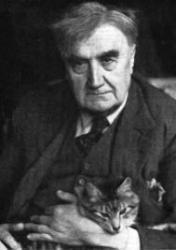
Ralph Vaughan Williams

1872 - 1958 Person Name: Ralph Vaughan Williams, 1872-1958 Topics: Proper 24 Year B Arranger of "HERONGATE" in Common Praise Through his composing, conducting, collecting, editing, and teaching, Ralph Vaughan Williams (b. Down Ampney, Gloucestershire, England, October 12, 1872; d. Westminster, London, England, August 26, 1958) became the chief figure in the realm of English music and church music in the first half of the twentieth century. His education included instruction at the Royal College of Music in London and Trinity College, Cambridge, as well as additional studies in Berlin and Paris. During World War I he served in the army medical corps in France. Vaughan Williams taught music at the Royal College of Music (1920-1940), conducted the Bach Choir in London (1920-1927), and directed the Leith Hill Music Festival in Dorking (1905-1953). A major influence in his life was the English folk song. A knowledgeable collector of folk songs, he was also a member of the Folksong Society and a supporter of the English Folk Dance Society. Vaughan Williams wrote various articles and books, including National Music (1935), and composed numerous arrange­ments of folk songs; many of his compositions show the impact of folk rhythms and melodic modes. His original compositions cover nearly all musical genres, from orchestral symphonies and concertos to choral works, from songs to operas, and from chamber music to music for films. Vaughan Williams's church music includes anthems; choral-orchestral works, such as Magnificat (1932), Dona Nobis Pacem (1936), and Hodie (1953); and hymn tune settings for organ. But most important to the history of hymnody, he was music editor of the most influential British hymnal at the beginning of the twentieth century, The English Hymnal (1906), and coeditor (with Martin Shaw) of Songs of Praise (1925, 1931) and the Oxford Book of Carols (1928). Bert Polman

Pages


Export as CSV
It looks like you are using an ad-blocker. Ad revenue helps keep us running. Please consider white-listing Hymnary.org or getting Hymnary Pro to eliminate ads entirely and help support Hymnary.org.