

 My Starred Hymns
 My FlexScores
 My Hymnals
 My Purchased Files
Planning worship?
Check out our sister site, ZeteoSearch.org,
for 20+ additional resources related to your search.
- |
User Links
Person Results
Frances Ridley Havergal
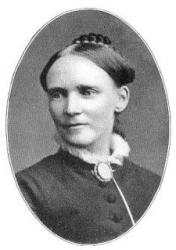
1836 - 1879 Topics: The Second Coming of Christ Author of "Thou art Coming, O my Saviour" in Redemption Hymnal Havergal, Frances Ridley, daughter of the Rev. W. H. Havergal, was born at Astley, Worcestershire, Dec. 14, 1836. Five years later her father removed to the Rectory of St. Nicholas, Worcester. In August, 1850, she entered Mrs. Teed's school, whose influence over her was most beneficial. In the following year she says, "I committed my soul to the Saviour, and earth and heaven seemed brighter from that moment." A short sojourn in Germany followed, and on her return she was confirmed in Worcester Cathedral, July 17, 1853. In 1860 she left Worcester on her father resigning the Rectory of St. Nicholas, and resided at different periods in Leamington, and at Caswall Bay, Swansea, broken by visits to Switzerland, Scotland, and North Wales. She died at Caswell Bay, Swansea, June 3, 1879.
Miss Havergal's scholastic acquirements were extensive, embracing several modern languages, together with Greek and Hebrew. She does not occupy, and did not claim for herself, a prominent place as a poet, but by her distinct individuality she carved out a niche which she alone could fill. Simply and sweetly she sang the love of God, and His way of salvation. To this end, and for this object, her whole life and all her powers were consecrated. She lives and speaks in every line of her poetry. Her poems are permeated with the fragrance of her passionate love of Jesus.
Her religious views and theological bias are distinctly set forth in her poems, and may be described as mildly Calvinistic, without the severe dogmatic tenet of reprobation. The burden of her writings is a free and full salvation, through the Redeemer's merits, for every sinner who will receive it, and her life was devoted to the proclamation of this truth by personal labours, literary efforts, and earnest interest in Foreign Missions.
[Rev. James Davidson, B.A.]
Miss Havergal's hymns were frequently printed by J. & R. Parlane as leaflets, and by Caswell & Co. as ornamental cards. They were gathered together from time to time and published in her works as follows:—
(1) Ministry of Song, 1869; (2) Twelve Sacred Songs for Little Singers, 1870; (3) Under the Surface, 1874; (4) Loyal Responses, 1878; (5) Life Mosaic, 1879; (6) Life Chords, 1880; (7) Life Echoes, 1883.
About 15 of the more important of Miss Havergal's hymns, including "Golden harps are sounding," "I gave my life for thee," "Jesus, Master, Whose I am," "Lord, speak to me," "O Master, at Thy feet," "Take my life and let it be," "Tell it out among the heathen," &c, are annotated under their respective first lines. The rest, which are in common use, number nearly 50. These we give, together with dates and places of composition, from the Havergal mss. [manuscript], and the works in which they were published. Those, and they are many, which were printed in Parlane's Series of Leaflets are distinguished as (P., 1872, &c), and those in Caswell’s series (C., 1873, &c).
1. A happy New Year! Even such may it be. New Year. From Under the Surface, 1874.
2. Certainly I will be with thee. Birthday. Sept. 1871, at Perry Barr. (P. 1871.) Published in Under the Surface, 1874, and Life Mosaic, 1879.
3. Church of God, beloved and chosen. Sanctified in Christ Jesus, 1873. (P. 1873.) Published in Under the Surface, 1874, and Life Mosaic, 1879.
4. God Almighty, King of nations. Sovereignty of God. 1872. Published in Under the Surface, 1874, and Life Mosaic, 1879.
5. God doth not bid thee wait. God faithful to His promises. Oct. 22, 1868, at Oakhampton. (P. 1869.) Published in Ministry of Song, 1869, and Life Mosaic, 1879.
6. God of heaven, hear our singing. A Child's hymn for Missions. Oct. 22, 1869, at Leamington. Published in her Twelve Sacred Songs for Little Singers, 1870, and her Life Chords, 1880.
7. God will take care of you, All through the day. The Good Shepherd. In Mrs. Brock's Children's Hymn Book, 1881.
8. God's reiterated all. New Year. 1873, at Winterdyne. (C. 1873.) Published in Loyal Responses, 1878, and Life Mosaic, 1879.
9. Have you not a word for Jesus? Boldness for the Truth. Nov. 1871, at Perry Barr. (P. 1872.) Published in Under the Surface, 1874, and Life Mosaic, 1879.
10. He hath spoken in the darkness. Voice of God in sorrow. June 10,1869, at Neuhausen. (P. 1870.) Published in Under the Surface, 1874, and in Life Mosaic, 1879.
11. Hear the Father's ancient promise. Promise of the Holy Spirit. Aug. 1870. Published in Under the Surface, 1874, and Life Mosaic, 1879.
12. Holy and Infinite! Viewless, Eternal. Infinity of God. 1872. Published in Under the Surf ace, 1874, and L. Mosaic, 1879.
13. Holy brethren, called and chosen. Election a motive for Earnestness. 1872. Published in Snepp's Songs of Grace & Glory, 1876.
14. I am trusting Thee, Lord Jesus. Faith. Sept. 1874, at Ormont Dessona. (P. 1874.) Published in Loyal Responses, 1878, and Life Chords, 1880. Miss Havergal’s tune, Urbane (Snepp's Songs of Grace & Glory, 1048), was composed for this hymn. The hymn was the author's "own favourite," and was found in her pocket Bible after her death.
15. I bring my sins to Thee. Besting all on Jesus. June, 1870. (P. 1870.) Printed in the Sunday Magazine, 1870, and Home Words, 1872. Published in Under the Surface, 1874, and Life Chords, 1880.
16. I could not do without Thee. Jesus All in All. May 7, 1873. (P. 1873.) Printed in Home Words, 1873, and published in Under the Surface, 1874, and Life Mosaic, 1879.
17. In full and glad surrender. Confirmation. Miss Havergal's sister says this hymn was “The epitome of her [Miss F. R. H.'s] life and the focus of its sunshine." It is a beautiful hymn of personal consecration to God at all times.
18. In the evening there is weeping. Sorrow followed by Joy. June 19, 1869, at the Hotel Jungfraublick, Interlaken. "It rained all day, except a very bright interval before dinner. Curious long soft white clouds went slowly creeping along the Scheinige Platte; I wrote “Evening Tears and Morning Songs” (Marg. reading of Ps. xxx. 5.)" (P. 1870.) Published in Under the Surface, 1874.
19. Increase our faith, beloved Lord. Increase of Faith desired. In Loyal Responses, 1878, in 11 stanzas of 4 lines, on St. Luke xvii. 5. It is usually given in an abridged form.
20. Is it for me, dear Saviour? Heaven anticipated. Nov. 1871, at Perry Barr. (P. 1872.) Published in Under the Surface, 1874, and Life Mosaic, 1879.
21. Israel of God, awaken. Christ our Righteousness. May, 1871, at Perry Barr. (P. 1872.) Published in Under the Surface, 1874, and Life Mosaic, 1879.
22. Jehovah's covenant shall endure. The Divine Covenant, 1872. Published in Snepp's Songs of Grace & Glory, 1876.
23 Jesus, blessed Saviour. New Year, Nov. 25, 1872, at Leamington. (P. 1873.) Printed in the Dayspring Magazine, Jan. 1873, and published in Life Chords, 1880.
24. Jesus only! In the shadow. Jesus All in All. Dec. 4, 1870, at Pyrmont Villa. (P. & C. 1871.) Published in Under the Surface, 1874, and in Life Mosaic, 1879.
25. Joined to Christ by [in] mystic union. The Church the Body of Christ. May, 1871, at Perry Barr. (P. 1872.) Published in Under the Surface, 1874, Life Mosaic, 1879.
26. Just when Thou wilt, 0 Master, call. Resignation. In Loyal Responses, 1878, in 5 stanzas of 4 lines, and Whiting's Hymns for the Church Catholic, 1882.
27. King Eternal and Immortal. God Eternal. Written at Perry Villa, Perry Barr, Feb. 11, 1871, and Published in Snepp's Songs of Grace & Glory, 1876; Under the Surface, 1874 ; and Life Mosaic, 1879.
28. Light after darkness, Gain after loss. Peace in Jesus, and the Divine Reward. In Sankey's Sacred Songs and Solos, from her Life Mosaic, 1879.
29. Like a river glorious, Is God's perfect Peace. Peace. In her Loyal Responses, 1878, in 3 st. of 8 1., with the chorus, "Stayed upon Jehovah." In several collections.
30. Master, speak! Thy servant heareth. Fellowship with and Assistance from Christ desired. Sunday evening, May 19, 1867, at Weston-super-Mare. Published in Ministry of Song, 1869, and L. Mosaic, 1879. It is very popular.
31. New mercies, new blessings, new light on thy way. New Life in Christ. 1874, at Winterdyne. (C. 1874.) Published in Under His Shadow, 1879, Life Chords, 1880.
32. Not your own, but His ye are. Missions. Jan. 21, 1867. (C. 1867.) Published in Ministry of Song, 1869; Life Mosaic, 1879; and the Hymnal for Church Missions, 1884.
33. Now let us sing the angels' song. Christmas. In her Life Mosaic, 1879; and W. B. Stevenson's School Hymnal, 1880.
34. Now the daylight goes away. Evening. Oct. 17, 1869, at Leamington. Published in Songs for Little Singers, 1870, and Life Chords, 1880. It originally read, " Now the light has gone away."
35. Now the sowing and the weeping. Sorrow followed by Joy. Jan. 4, 1870, at Leamington. Printed in Sunday at Home, 1870 ; and published in Under the Surface, 1874, and L. Mosaic, 1879.
36. 0 Glorious God and King. Praise to the Father, Feb. 1872. Published in Under the Surface, 1874, and Life Mosaic, 1879.
37. 0 Saviour, precious [holy] Saviour. Christ worshipped by the Church. Nov. 1870, at Leamington. (P. 1870.) Published in Under the Surface, 1874, and Life Mosaic, 1879.
38. O thou chosen Church of Jesus. Election. April 6, 1871. Published in Under the Surface, 1874, and L. Mosaic, 1879.
39. O what everlasting blessings God outpoureth on His own. Salvation everlasting. Aug. 12, 1871, at Perry Barr. (P. 1871.) Published in Under the Surface, 1874, and L. Mosaic, 1879.
40. Our Father, our Father, Who dwellest in light. The blessing of the Father desired. May 14, 1872. Published in Under the Surface, 1874, and Life Mosaic, 1879. Miss Havergal's tune, Tertius, was composed for this hymn.
41. Our Saviour and our King. Presentation of the Church to the Father. (Heb. ii. 13.) May, 1871, at Perry Barr. (P. 1871.) Published in Under the Surface, 1874, and L. Mosaic, 1879.
42. Precious, precious blood of Jesus. The precious Blood. Sept. 1874, at Ormont Dessons. (C.) Published in Loyal Responses, 1878, and Life Chords, 1880.
43. Sing, O heavens, the Lord hath done it. Redemption. In her Life Mosaic, 1879, and the Universal Hymn Book, 1885.
44. Sit down beneath His shadow. Holy Communion. Nov. 27, 1870, at Leamington. (P. 1870.) Published in Under the Surface, 1874, and Life Mosaic, 1879.
45. Sovereign Lord and gracious Master. Grace consummated in Glory. Oct. 22, 1871. (P. 1872.) Published in Under the Surface, 1874, and Life Mosaic, 1879.
46. Standing at the portal of the opening year. New Year. Jan. 4, 1873. Published in Under the Surface, 1874, and Life Chords, 1880.
47. To Thee, 0 Comforter divine. Praise to the Holy Spirit. Aug. 11, 1872, at Perry Barr. Published in Under the Surface 1874, and Life Mosaic, 1879. Miss Havergal's tune, Tryphosa, was written for this hymn.
48. True-hearted, whole-hearted, faithful and loyal. Faithfulness to the Saviour. In her Loyal Responses, 1878, and the Universal Hymn Book, 1885.
49. What know we, Holy God, of Thee? God's Spirituality, 1872. Published in Under the Surface, 1874, and Life Mosaic, 1879.
50. Who is on the Lord's side? Home Missions. Oct. 13, 1877. Published in Loyal Responses, 1878, andLife Chords, 1880.
51. With quivering heart and trembling will. Resignation. July, 10, 1866, at Luccombe Rectory. (P. 1866.) Published in Ministry of Song, 1869, and Life Mosaic, 1879.
52. Will ye not come to Him for life? The Gospel Invitation. 1873. Published in Snepp's Songs of Grace and Glory, 1876.
53. Worthy of all adoration. Praise to Jesus as the Lamb upon the throne. Feb. 26 1867, at Oakhampton. Published in Ministry of Song, 1869, and Life Mosaic, 1874. It is pt. iii. of the "Threefold Praise," and was suggested by the "Worthy is the Lamb," the "Hallelujah" and "Amen" choruses in Handel's Messiah.
54. Ye who hear the blessed call. The Invitation of the Spirit and the Bride. March, 1869, at Leamington. (P. 1869.) Published in Ministry of Song, 1869, and Life Mosaic, 1879. Suggested by, and written for, the Young Men's Christian Association.
55. Yes, He knows the way is dreary. Encouragement. 1867. Published in Ministry of Song, 1869.
Most of these hymns are given in Snepp's Songs of Grace and Glory, 1872]and 1876, his Appendix, 1874, and the Musical edition, 1880, and many of them are also in several other hymnbooks, including Hymns Ancient & Modern, Thring, Church Hymns, Hymnal Companion, &c, and some of the leading American collections.
--John Julian, Dictionary of Hymnology (1907)
==============================
Havergal, Frances Ridley, p. 496, i. Miss Havergal's Poetical Works were published in 2 vols. in 1884 (Lond., J. Nisbet); and the hymns therein are accompanied by notes. From these volumes, and the Havergal manuscript, we gather the following facts concerning additional hymns in common use:
1. In God's great field of labour. Work for Christ.
Written Feb. 27, 1867, and published in her Ministry of Song, I860, and later works. In Snepp's Songs of Grace and Glory, 1872, it begins with stanza ii., "Sing to the little children." “The poem expresses her own life-ministry of song, and relates true incidents" in that life. [Hav. mss.]
2. Only a mortal's power. Consecration of Self to Christ. Published in her Loyal Responses, 1878, in 7 stanzas of 4 lines, and headed "Only.” In Common Praise, 1879, stanzas ii.-vi., are given for Confirmation as, "Only one heart to give."
3. Through the yesterday of ages. Jesus always the same. Written at Leamington, Nov. 1876, and published in her Loyal Responses, 1878.
4. What hast Thou done for me, 0 Thou my mighty Friend. Good Friday. Written at Leamington, Jan. 1877, and pub. in Loyal Responses, 1878.
5. Yes, He knows the way is dreary, p. 498, i. 55. This hymn was written at Shareshill Parsonage, Nov. 17, 1865, and first printed as one of Parlane's leaflets; then in Lyra Britannica, 1867; and later, in several of her books. It was "suggested by a letter from her niece, A. M. S., at school, and written to console her when weary, lonely, and the only absentee at the rejoicings for her brother J. H. S.'s coming of age." [Hav. mss.]
--John Julian, Dictionary of Hymnology, Appendix, Part II (1907)
===================
Havergal, Frances R., pp. 426, ii., 1569, ii. During the past fifteen years Miss Havergal's hymns have been in great request by compilers of hymnals for Missions and Conventions. In addition to the large number already annotated in this Dictionary, the following are also in common use:—
1. Begin at once! in the pleasant days. [Temperance.] From her Poetical Works, vol. i., p. 303, into The Sunday School Hymnary, 1905. In her Poetical Works. It is given as a "Band of Hope Song," and dated "May, 1876."
2. God in heaven, hear our singing. An altered form of her "God of heaven, hear our singing," p. 497, i. 6.
3. Holy Father, Thou hast spoken. [Holy Spirit desired.] Written May 5, 1876. P. Works, 1874, ii., p. 261.
4. I love. I love my Master. [Jesus the object of love.] Written at Fins, Hants., July 16, 1876. In her Loyal Responses, 1878, and her Poetical Works, 18S4, ii., p. 274.
5. I love to feel that I am taught. [Love of Divine Teaching.] Written at Morecambe Bay, Aug., 1867, for her Ministry of Song, 1869. Included in her Poetical Works, 1884, i., p. 36.
6. Jesus, Thy life is mine. [Union with Christ.] Written June 2, 1876. Poetical Works, 1884, ii., p. 268.
7. Looking unto Jesus, Never need we yield. [Jesus, All in All.] Dated 1876. P. Works, 1884, ii., p. 253.
8. Master, how shall I bless Thy Name! [Holy Service.] Written at Whitby, Sept. 27, 1875. A long hymn of 17 stanzas of 6 lines. P. Works, 1884, ii., p. 280.
9. Resting on the faithfulness. [Union with Christ.] A metrical epitome of a dozen or more of the attributes of Our Lord and His manifestation of loving kindness towards men, in which the word "Resting" is used eighteen times. Written June 11, 1876. Poetical Works, 1884, ii., p. 260.
10. Singing for Jesus, our Saviour and King. [Praise of Jesus.] Written at Winterdyne, June 12. 1872; published in her Under the Surface, 1874, p. 94, and her P. Works, 1884, ii., p. 70.
11. Unfurl the Christian Standard with firm and fearless hand. [Courage for the Christian Warfare. This begins with st. iv. of her hymn, "Unfurl the Christian Standard, lift it manfully on high," written at Perry Barr, Sep. 23, 1872 ; published in her Under the Surface, 1874; and her Poetical Works, 1884, ii.
12. Unto him that hath Thou givest. [Growth in Grace.] Written at Leasowes, April 12, 1876. P. Works, 1884, ii. 259.
Of these hymns Nos. 3, 4, 6, 7, 8, 9, and 12 were published in the first instance in J. Mountain's Hymns of Consecration and Faith, 1876. At the present time (1907) the number of Miss Havergal's hymns in common use reaches nearly one hundred.
--John Julian, Dictionary of Hymnology, New Supplement (1907)
Frances Ridley Havergal
Timothy R. Matthews
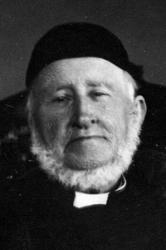
1826 - 1910 Person Name: T. Richard Matthews Topics: Christ Second Coming and Judgment of Composer of "MARGARET" in Trinity Hymnal Timothy Richard Matthews MusB United Kingdom 1826-1910. Born at Colmworth, England, son of the Colmworth rector, he attended the Bedford and Gonville Schools and Caius College, Cambridge. In 1853 he became a private tutor to the family of Rev Lord Wriothesley Russell, a canon of St. George’s Chapel, Windsor Castle, where he studied under organist, George Elvey, subsequently a lifelong friend. He married Margaret Mary Thompson, and they had 11 children: Norton, Mary, George, Cecil, Evelyn, Eleanor, Anne, Arthur, Wilfred, Stephen, and John. Matthews served as Curate and Curate-in-Charge of St Mary’s Church, Nottingham (1853-1869). While there, he founded the Nottingham Working Men’s Institute. He became Rector at North Coates, Lincolnshire (1869-1907). He retired in 1907 to live with his eldest son, Norton, at Tetney vicarage. He edited the “North Coates supplemental tune book” and “Village organist”. An author, arranger, and editor, he composed morning and evening services, chants, and responses, earning a reputation for simple but effective hymn tunes, writing 100+. On a request he wrote six tunes for a children’s hymnal in one day. He composed a Christmas carol and a few songs. His sons, Norton, and Arthur, were also known as hymn tune composers. He died at Tetney, Lincolnshire, England.
John Perry
Timothy R. Matthews
William Henry Monk
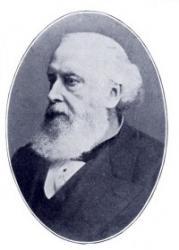
1823 - 1889 Person Name: William H. Monk Topics: The Second Coming of Christ Composer of "BEVERLEY" in Redemption Hymnal William H. Monk (b. Brompton, London, England, 1823; d. London, 1889) is best known for his music editing of Hymns Ancient and Modern (1861, 1868; 1875, and 1889 editions). He also adapted music from plainsong and added accompaniments for Introits for Use Throughout the Year, a book issued with that famous hymnal. Beginning in his teenage years, Monk held a number of musical positions. He became choirmaster at King's College in London in 1847 and was organist and choirmaster at St. Matthias, Stoke Newington, from 1852 to 1889, where he was influenced by the Oxford Movement. At St. Matthias, Monk also began daily choral services with the choir leading the congregation in music chosen according to the church year, including psalms chanted to plainsong. He composed over fifty hymn tunes and edited The Scottish Hymnal (1872 edition) and Wordsworth's Hymns for the Holy Year (1862) as well as the periodical Parish Choir (1840-1851).
Bert Polman
William Henry Monk
William Farley Smith
1941 - 1997 Person Name: William F. Smith, b. 1941 Topics: Eternal Life/Heaven; Exile/Exodus; Kingdom/Reign of God; Musical Style Gospel; Rites of the Church Order of Christian Funerals: Funeral Liturgy for Adults; Second Coming; The Liturgical Year Advent (Sundays and Weekdays); The Liturgical Year Our Lord Jesus Christ, King of the Universe Adapter of "SOON AND VERY SOON" in Journeysongs (3rd ed.)
William Farley Smith
Emily Crawford
1864 - 1927 Person Name: Emily May Crawford Topics: The Second Coming of Christ Author of "In the Advent Light, O Saviour" in Redemption Hymnal Emily May Grimes Crawford is described in the author index of the Book of Common Praise (Toronto, 1938) as a Canadian Anglican [as author of "The Master comes! He calls for thee], which she altogether was nor was not. The hymn was first published in London by the Church Missionary Society (CMS) in 1890, before Emily May Grimes had ever left her native England. In 1893, she went to South Africa under CMS sponsorship to work among the Pondo tribe; then, in 1904, she married T.W.W. Crawford, M.D., and went to work with him among the Kikuyu of Kenya. Her career thus far is outlined in Julian (1907), p. 1712.
The mission station at which the bride arrived had indeed been started by the CMS, but had been turned over to the newly-formed missionary department of the Church of England in Canada (MSCC); most of her colleagues were Canadian-born like her husband--to add a grace note of confusion--his brother! Both hailed from western Ontario, where Thomas had trained in medicine at the University of Western Ontario (London), while Edward took theology at Huron College. Thus all three of them were working under Canadian sponsorship until 1913, when Thomas and Emily left for England, she in quest of treatment for arthritis, he for further medical training--which perhaps he needed, if he thought the English climate would help anybody's arthritis! Rev. E.W. Crawford continued on in Kenya; his subsequent career can be traced through Crockford's Clerical Dictionary.
Whatever plans for their future they may have made were necessarily altered by the outbreak of World War I, which found, and kept, them in England. They may have intended to come to Canada when they could, but in fact they never did: they were still in England when Emily died in 1927. She wrote, and the British Museum Catalogue lists, under her maiden name, all the books she published after her marriage.
Although at the time a woman automatically acquired the citizenship of the man she married, Emily was never a Canadian citizen: no such status existed until twenty years after she died. Although she and Dr. Crawford hailed from different parts of the Empire, they were both British subjects by birth, and remained such. Therefore her connection with Canada was never more than indirect, though this may not have been what she intended.
--Hugh McKellar, DNAH Archives
Emily Crawford
Philipp Friedrich Hiller
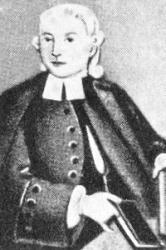
1699 - 1769 Person Name: Philipp F. Hiller Topics: Second Coming of Christ Author of "O Son of God, we wait for Thee" in The Lutheran Hymnary Hiller, Philipp Friedrich, son of Johann Jakob Hiller, pastor at Mühlhausen on the the Enz, Württemberg, was born at Mühlhausen, Jan. 6, 1699. He was educated at the clergy training schools at Denkendorf (under J. A. Bengel) and Maulbronn, and the University of Tübingen (M.A. 1720). His first clerical appointment was as assistant at Brettach, near Neckarsulm, 1724-27. He afterwards held similar posts at Hessigheim and elsewhere, and was also, from 1729-31, a private tutor at Nürnberg. He was then, on St. Bartholomew's Day, 1732, instituted as pastor of Neckargröningen, on the Neckar, near Marbach. In 1736 he became pastor of his native place, and in 1748 pastor at Steinheim, near Heidenheim. In his third year of residence at Steinheim he lost his voice, and had to employ an assistant to preach. He died at Steinheim, April 24, 1769. (Koch, v. 107-126; Allgemeine Deutsche Biographie, xii. 425-426, &c.) Of Hiller’s hymns the best appeared in:—
(1) Arndt's Paradiss-Gartlein…..in teutsche Lieder, Nürnberg, N.D. [the copy in Berlin has a frontispiece dated 1730]. This was written during the time he was tutor at Nürnberg. P. Gerhardt had founded the fine hymn "O Jesu Christ, mein schönstes Licht,"
(q.v.) on one of the prayers in the volume of devotions which Johann Arndt had published, 1612, under the title of Paradies-Gärtlein; and Gerhardt's example led Hiller to think of turning the whole of these prayers into hymns. The book is in four parts, and contains 301 hymns, 297 being founded on Arndt and four original. (2) Geistliches Liederkästlein, Stuttgart, 1762, and a second series, Stuttgart, 1767. Each series contains 366 short hymns, one for each day of the year. A complete reprint of these and the other hymns of Hiller (1075 in all) wased. by C. C. E. Ehmann in 1844 (2nd ed. 1858).
Hiller is the most productive and most important of the earlier hymnwriters of Württemberg; and is the poetical exponent of the practical theology of his friend J. A. Bengel. The hymns of his Paradiss-Gärtlein, while clear and Scriptural, are decidedly spun out (see No. xii. below). His Liederkästlein, contains the hymns of his riper years, and reveals a depth of spiritual wisdom, an almost proverbial conciseness, an adaptation to console and direct in the most diverse events of life, and the most varied experiences of the soul, a suitability as a manual for daily devotion, and a simple popularity of style that speedily endeared it to the pious in Southern Germany. It has passed through many editions in Germany, while colonists (especially from Württemberg) have carried it from thence wherever they went. It is said, e.g., that when a German colony in the Caucasus was attacked by a hostile Circassian tribe some fifty years ago the parents cut up their copies of the Liederkästlein and divided the leaves among their children as they were being torn from them into slavery.
The use of Hiller's hymns in Germany has principally been in the hymnbooks of Württemberg, and, through J. J. Bambach's Haus Gesang-Buch, 1735, in Hannover.
The following have passed into English:—
I. Hymns in English common use:
i. Herr über Leben und der Tod. Cross and Consolation. 1730, pt. iii. p. 332, founded on Arndt's Prayer, 26 (28) of Class iii. The part translated is stanzas viii.-xiv., "Herr, meine Burg, Herr Zebaoth," which is founded on the fourth part of the third section of Arndt's Prayer. The text is in Ehmann's Hiller, Nos. 885, 886. Translated as:—
0 God of Hosts! 0 mighty Lord, a translation of stanzas viii., xiii., xiv., signed "F. C. C.," as No. 162 in Dr. Pagenstecher's Collection, 1864.
ii. Mein Gott in deine Hände. For the Dying. Liederkästlein, pt. ii., 1767, for August 3, in 9 stanzas of 4 lines, founded on Ps. xxxi. 6. In Ehmann, No. 986, and in Knapp's Evangelischer Lieder-Schatz, 1837 and 1865. Translated as:—
My God, to Thee I now commend, a good translation of stanzas i., iii., iv., vi., viii., ix., by Miss Winkworth, in her Lyra Germanica, 1st Ser., 1855, p. 245. In her 2nd ed., 1856, she substituted a translation of st. vii. for that of stanza vi. The text of 1856 is in her Chorale Book for England, 1863, No. 194, and in the Ohio Evangelical Lutheran Hymnal, 1880; and the text of 1855 in the Pennsylvania Lutheran Church Book, 1868.
Another translation is: "My God, within Thy hand," by Miss Warner, 1858, p. 480.
iii. Mein Hers, du mustt im Himmel sein. Eternal Life. Liederkästlein, p. ii., 1767, for Jan. 26, in 4 stanzas of 7 lines, founded on St. Matt. vi. 21. In Ehmann, No. 639, and Knapp's Evangelischer Lieder-Schatz, 1837. Translated as :—
Aspire, my heart, on high to live, in full, by Dr. H. Mills, in his Horae Germanicae, 1845 (1856, p. 86), repeated, omitting stanzas iv., as No. 220 in the American Lutheran General Synod's Collection, 1850-52.
iv. Wir warten dein, o Gottes Sehn. Second Advent. Liederkästlein, pt. ii., 1767, for Jan. 24, in 4 stanzas of 8 lines, founded on 1 Thess. i. 9, 10. In Ehmann, No. 1041, and the Württemberg Gesang-Buch, 1842, No. 640. Translated as:-—
We wait for Thee, all glorious One, a good and full translation by J. D. Burns, in the Family Treasury, 1859, pt. ii. p. 111, and his Remains, 1869, p. 264. Included in the Christian Hymn Book, Cincinnati, 1865, and in H. L. Hastings's Songs of Pilgrimage, 1886.
Another translation is: "We wait for Thee, O Son of God," in the British Herald, April, 1866, p. 252, and Reid's Praise Book, 1872. This follows the altered form in C. B. Garve's Christliche Gesänge, 1825.
II. Hymns not in English common use:
v. Abgrund wesentlicher Liebe. Love of God. 1730, pt. ii. p. 25, founded on Prayer 4 in Class II. of Arndt, which is "Thanksgiving for the Love of God, and prayer for it." Translated as, "Thou fathomless Abyss of Love," by Miss Winkworth, 1869, p. 281.
vi. Angenehmes Krankenbette. For the Sick. Liederkästlein, 1762, p. 338, for Dec. 3, in 3 stanzas, founded on St. Luke v. 18. Translated as, "Bed of Sickness! thou art sweet," by Miss Winkworth, 1869, p. 283.
vii. Betet an, verlorne Sünder. Lent. Liederkästlein, 1762, p. 43, for Feb. 18, in 3 stanzas, founded on St. Matt, xviii. 14. Translated as, "Sinners, pray! for mercy pleading," by Dr. H. Mills, 1856, p. 50.
viii. Das Lamm, am Kreuzesstamme. For the Dying. Liederkästlein, pt. ii., 1767, for Feb. 12, in 8 stanzas, founded on Acts vii. 59. In the Württemberg Gesang-Buch, 1842, No. 609, altered to “Der Hirt, am Kreuz gestorben." This form is translated as, "The Shepherd by His passion," by J. D. Burns, in the Family Treasury, 1859, pt. ii. p. 61, and his Remains, 1869, p. 266.
ix. Die Liebe darf wohl weinen. Burial of the Dead. Liederkästlein, 1762, p. 286, for Oct. 12, in 7 stanzas, founded on l Thess. iv. 13. Translated as, "Love over the departed," by J. D. Burns in his Remains, 1869, p. 253.
x. Die Welt kommt einst zusammen. Second Advent. Liederkästlein, pt. ii., 1767, for Jan. 2, in 5 stanzas, founded on 2 Cor. v. 10. Translated as, "The world shall yet be cited," by J. D. Burns in the Family Treasury, 1859, pt. ii. P. 111, and his Remains, 1869, p. 263.
xi. Herr, meine Leibeshütte. For the Dying. Liederkästlein, pt. ii., 1767, for Feb. 18, in 8 stanzas, founded on 2 Peter, i. 14. The translations are: (l) "Lord, my house of clay," by Miss Warner, 1858, p. 605. (2) "My fleshly house is sinking now," by Dr. G. Walker, 1860, p. 102.
xii. Mein Jesus sitzt zur rechten Hand. Ascensiontide. 1730, pt iii. p. 408, as stanzas 118-125 of the hymn on Arndt's prayer 27 (29) in Class III. This prayer is a long paraphrase of the Apostles' Creed. Translated as, "Our Jesus now at God's right hand," by Dr. H. Mills, 1845 (1856, p. 330).
xiii. Singet Gott, denn Gott ist liebe. The Love of God. Liederkästlein, 1762, p. 51, for Feb. 20, in 3 stanzas, founded on 1 John iv. 16. The translations are: (1) "God is love—-then sing His praises," by Dr. H. Mills, 1845 (1856, p. 16). (2) "God is love, sing loud before Him," by J. D. Burns in his Remains, 1869, p. 231.
xiv. Singt doch unserm König. Ascensiontide. Liederkästlein, 1762, p. 328, for Nov. 23, in 3 stanzas, founded on Ps. xcvi. 10. Translated as, “Laud your King and Saviour," by J. Sheppard in bis Foreign Sacred Lyre. 1857, p. 94.
xv. Untheilbare Dreifaltigkeit. Trinity Sunday. 1730, pt. ii. p. 226, founded on Arndt’s prayer 25 in Class II., entitled “Thanksgiving for the revelation of the Holy Trinity." The translation is from the recast of st. vi.-xii. made by J. S. Diterich for the Berlin Gesang-Buch, 1765, No. 51, and beginning "Lob, Ehre, Preis und Dank sel dir." Translated as, "Love, honour, thanks, to Thee we raise," by Dr. H. Mills, 1845 (1856, p. 110).
xvi. Was freut mich noch wenn du's nicht bist. Joy in God. Liederkästlein, 1762, for June 20, in 2 stanzas, founded on Ps. xliii. 4. Translated as, "What earthly joy can fill my heart," by R. Massie in the British Herald, Nov. 1865, p. 175.
xvii. Wer ausharrt bis ans Ende. Cross and Consolation. Liederkästlein, pt. ii., 1767, for May 19, in 4 stanzas, founded on St. Matt. xxiv. 13. Translated as,"He who to death maintaineth," by J. D. Burns in his Remains, 1869, p. 261.
xviii. Wer kann dein Thun begreifen. God's Power. Liederkästlein, 1762, p. 18, for Jan. 18, in 3 stanzas, founded on Is. xlv. 7. Translated as, "Who, Lord, Thy deeds can measure," by Dr. H. Mills, 1845 (1856, p. 15). [Rev. James Mearns, M.A.]
--John Julian, Dictionary of Hymnology (1907)
===============================
Hiller, Philipp F., p. 524, ii. His hymn "Gottes Sohn, in Fleisch gekleidet" (Christmas), from his Liederkastlein, 1762, is translation by Dr. Loy, in the Ohio Lutheran Hymnal, 1880, as "God in human flesh appearing."
--John Julian, Dictionary of Hymnology, Appendix, Part II (1907)
Philipp Friedrich Hiller
Dmitriĭ Stepanovich Bortnianskiĭ
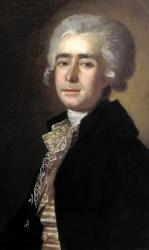
1751 - 1825 Person Name: D. S. Bortniansky, 1752—1828 Topics: Second Coming of Christ Composer of "[O come, O come, Immanuel]" in The Lutheran Hymnary Dimitri Stepanovitch Bortniansky (1751-1825) Ukraine 1751-1825
Born in Glukhov, Ukraine, he joined the imperial choir at age 8 and studied with Galuppi, who later took the lad with him to Italy, where he studied for 10 years, becoming a composer, harpsichordist, and conductor. While in Italy he composed several operas and other instrumental music, composing more operas and music later in Russia. In 1779 he returned to Russia, where he was appointed Director to the Imperial Chapel Choir, the first as a native citizen. In 1796 he was appointed music director. With such a great instrument at his disposal, he produced many compositions, 100+ religious works, sacred concertos, cantatas, and hymns. He influenced Rachmaninoff and Tchaikovshy, the latter editing Bortniansky's sacred work, amassing 10 volumnes. He died in St. Petersburg. He was so popular in Russia that a bronze statue was erected in his honor in the Novgorod Kremlin. He composed in different musical styles, including choral works in French, Italian, Latin, German, and Church Slavonic.
John Perry
Dmitriĭ Stepanovich Bortnianskiĭ
Charles V. Stanford
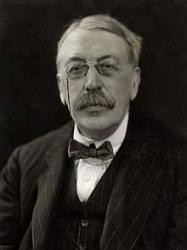
1852 - 1924 Person Name: Sir Charles Villiers Stanford, 1852- Topics: Second Coming of Christ Composer of "ENGELBERG" in Methodist Hymn and Tune Book Sir Charles Villiers Stanford (30 September 1852 – 29 March 1924) was an Irish composer, teacher and conductor. Born to a well-off and highly musical family in Dublin, Stanford was educated at the University of Cambridge before studying music in Leipzig and Berlin. He was instrumental in raising the status of the Cambridge University Musical Society, attracting international stars to perform with it.
While still an undergraduate, Stanford was appointed organist of Trinity College, Cambridge. In 1882, aged 29, he was one of the founding professors of the Royal College of Music, where he taught composition for the rest of his life. From 1887 he was also the professor of music at Cambridge. As a teacher, Stanford was sceptical about modernism, and based his instruction chiefly on classical principles as exemplified in the music of Brahms. Among his pupils were rising composers whose fame went on to surpass his own, such as Gustav Holst and Ralph Vaughan Williams. As a conductor, Stanford held posts with the Bach Choir and the Leeds triennial music festival.
Stanford composed a substantial number of concert works, including seven symphonies, but his best-remembered pieces are his choral works for church performance, chiefly composed in the Anglican tradition. He was a dedicated composer of opera, but none of his nine completed operas has endured in the general repertory. Some critics regarded Stanford, together with Hubert Parry and Alexander Mackenzie, as responsible for a renaissance in English music. However, after his conspicuous success as a composer in the last two decades of the 19th century, his music was eclipsed in the 20th century by that of Edward Elgar as well as former pupils.
Stanford was born in Dublin, the only son of John James Stanford and his second wife, Mary, née Henn. John Stanford was a prominent Dublin lawyer, Examiner to the Court of Chancery in Ireland and Clerk of the Crown for County Meath. His wife was the third daughter of William Henn, Master of the High Court of Chancery in Ireland. Both parents were accomplished amateur musicians; John Stanford was a cellist and a noted bass singer who was chosen to perform the title role in Mendelssohn's Elijah at the Irish premiere in 1847. Mary Stanford was an amateur pianist, capable of playing the solo parts in concertos at Dublin concerts.
The young Stanford was given a conventional education at a private day school in Dublin run by Henry Tilney Bassett, who concentrated on the classics to the exclusion of other subjects. Stanford's parents encouraged the boy's precocious musical talent, employing a succession of teachers in violin, piano, organ and composition. Three of his teachers were former pupils of Ignaz Moscheles, including his godmother Elizabeth Meeke, of whom Stanford recalled, "She taught me, before I was twelve years old, to read at sight. … She made me play every day at the end of my lesson a Mazurka of Chopin: never letting me stop for a mistake. … By the time I had played through the whole fifty-two Mazurkas, I could read most music of the calibre my fingers could tackle with comparative ease." One of the young Stanford's earliest compositions, a march in D♭ major, written when he was eight years old, was performed in the pantomime at the Theatre Royal, Dublin three years later. At the age of nine, Stanford gave a piano recital for an invited audience, playing works by Beethoven, Handel, Mendelssohn, Moscheles, Mozart and Bach. One of his songs was taken up by the University of Dublin Choral Society and was well received.
In the 1860s Dublin received occasional visits from international stars, and Stanford was able to hear famous performers such as Joseph Joachim, Henri Vieuxtemps and Adelina Patti. The annual visit of the Italian Opera Company from London, led by Giulia Grisi, Giovanni Matteo Mario and later Thérèse Tietjens, gave Stanford a taste for opera that remained with him all his life. When he was ten, his parents took him to London for the summer, where he stayed with his mother's uncle in Mayfair. While there he took composition lessons from the composer and teacher Arthur O'Leary, and piano lessons from Ernst Pauer, professor of piano at the Royal Academy of Music (RAM). On his return to Dublin, his godmother having left Ireland, he took lessons from Henrietta Flynn, another former Leipzig Conservatory pupil of Moscheles, and later from Robert Stewart, organist of St Patrick's Cathedral, as well as from a third Moscheles pupil, Michael Quarry. During his second spell in London two years later, he met the composer Arthur Sullivan and the musical administrator and writer George Grove, who later played important parts in his career.
John Stanford hoped that his son would follow him into the legal profession but accepted his decision to pursue music as a career. However, he stipulated that Stanford should have a conventional university education before going on to musical studies abroad. Stanford tried unsuccessfully for a classics scholarship at Trinity Hall, Cambridge, but gained an organ scholarship, and later a classics scholarship, at Queens' College. By the time he went up to Cambridge he had written a substantial number of compositions, including vocal music, both sacred and secular, and orchestral works (a rondo for cello and orchestra and a concert overture).
Stanford immersed himself in the musical life of the university to the detriment of his Latin and Greek studies. He composed religious and secular vocal works, a piano concerto, and incidental music for Longfellow's play A Spanish Student. In November 1870 he appeared as piano soloist with the Cambridge University Musical Society (CUMS), and quickly became its assistant conductor and a committee member. The society had declined in excellence since its foundation in 1843. Its choir consisted solely of men and boys; the lack of women singers severely limited the works that the society could present. Stanford was unable to persuade the members to admit women, and so he staged what The Musical Times called "a bloodless revolution." In February 1872 he co-founded a mixed choir, the Amateur Vocal Guild, whose performances immediately put those of the CUMS singers in the shade. The members of CUMS rapidly changed their minds, and agreed to a merger of the two choirs, with women given associate membership of the society.
The conductor of the combined choir was John Larkin Hopkins, who was also organist of Trinity College. He became ill, and handed over the conductorship to Stanford in 1873. Stanford was also appointed Hopkins's deputy organist at Trinity, and moved from Queens' to Trinity in April 1873. In the summer of that year Stanford made his first trip to continental Europe. He went to Bonn for the Schumann Festival held there, where he met Joachim and Brahms. His growing love of the music of Schumann and Brahms marked him as a classicist at a time when many music-lovers were divided into the classical or the modernist camps, the latter represented by the music of Liszt and Wagner. Stanford was not constrained by the fashion for belonging to one camp or the other; he immensely admired Die Meistersinger though he was unenthusiastic about some of Wagner's other works. After leaving Bonn he returned home by way of Switzerland and then Paris, where he saw Meyerbeer's Le prophète.
Hopkins's illness proved fatal, and after his death the Trinity authorities invited Stanford to take over as organist of the college. He accepted with the proviso that he was to be released each year for a spell of musical study in Germany. The fellows of the college resolved on 21 February 1874:
Two days after his appointment, Stanford took the final examinations for his classics degree. He ranked 65th of 66, and was awarded a third-class degree.
On the recommendation of Sir William Sterndale Bennett, former professor of music at Cambridge and now director of the Royal Academy of Music, Stanford went to Leipzig in the summer of 1874 for lessons with Carl Reinecke, professor of composition and piano at the Leipzig Conservatory. The composer Thomas Dunhill commented that by 1874 it was "the tail-end of the Leipzig ascendancy, when the great traditions of Mendelssohn had already begun to fade." Nevertheless, Stanford did not seriously consider studying anywhere else. Neither Dublin nor London offered any comparable musical training; the most prestigious British music school, the RAM, was at that time hidebound and reactionary. He was dismayed to find in Leipzig that Bennett had recommended him to a German pedant no more progressive than the teachers at the RAM. Stanford said of Reinecke, "Of all the dry musicians I have ever known he was the most desiccated. He had not a good word for any contemporary composer… He loathed Wagner … sneered at Brahms and had no enthusiasm of any sort." Stanford's biographer Paul Rodmell suggests that Reinecke's ultra-conservatism may have been unexpectedly good for his pupil "as it may have encouraged Stanford to kick against the traces." During his time in Leipzig Stanford took piano lessons from Robert Papperitz (1826–1903), organist of the city's Nikolaikirche, whom he found more helpful.
Among Stanford's compositions in 1874 was a setting of part one of Longfellow's poem "The Golden Legend." He intended to set the entire poem, but gave up, defeated by Longfellow's "numerous but unconnected characters." Stanford ignored this and other early works when assigning opus numbers in his mature years. The earliest compositions in his official list of works are a four-movement Suite for piano and a Toccata for piano, which both date from 1875.
After a second spell in Leipzig with Reinecke in 1875, which was no more productive than the first, Stanford was recommended by Joachim to study in Berlin the following year with Friedrich Kiel, whom Stanford found "a master at once sympathetic and able … I learnt more from him in three months, than from all the others in three years."
Returning to Cambridge in the intervals of his studies in Germany, Stanford had resumed his work as conductor of CUMS. He found the society in good shape under his deputy, Eaton Faning, and able to tackle demanding new works. In 1876 the society presented one of the first performances in Britain of the Brahms Requiem. In 1877 CUMS came to national attention when it presented the first British performance of Brahms's First Symphony.
During the same period, Stanford was becoming known as a composer. He was composing prolifically, though he later withdrew some of his works from these years, including a violin concerto which, according to Rodmell, suffered from "undistinguished thematic material." In 1875 his First Symphony won the second prize in a competition held at the Alexandra Palace for symphonies by British composers, although he had to wait a further two years to hear the work performed. In the same year Stanford directed the first performance of his oratorio "The Resurrection," given by CUMS. At the request of Alfred Tennyson, he wrote incidental music for Tennyson's drama Queen Mary, performed at the Lyceum Theatre, London in April 1876.
In April 1878, despite the disapproval of his father, Stanford married Jane Anna Maria Wetton, known as Jennie, a singer whom he had met when she was studying in Leipzig. They had a daughter, Geraldine Mary, born in 1883 and a son, Guy Desmond, born in 1885.
In 1878 and 1879 Stanford worked on his first opera, The Veiled Prophet, to a libretto by his friend William Barclay Squire. It was based on a poem by Thomas Moore with characters including a virgin priestess and a mystic prophet, and a plot that culminates in poisoning and stabbing. Stanford offered the work to the opera impresario Carl Rosa, who refused it and suggested that the composer should try to have it staged in Germany: "Its success will (unfortunately) have much greater chances here if accepted abroad." Referring to the enormous popularity of Sullivan's comic operas, Rosa added, "If the work was of the Pinafore style it would be quite another matter." Stanford had greatly enjoyed Sullivan's Cox and Box, but The Veiled Prophet was intended to be a serious work of high drama and romance. Stanford had made many useful contacts during his months in Germany, and his friend the conductor Ernst Frank got the piece staged at the Königliches Schauspiel in Hanover in 1881. Reviewing the premiere for The Musical Times, Stanford's friend J A Fuller Maitland wrote, "Mr. Stanford's style of instrumentation … is built more or less on that of Schumann; while his style of dramatic treatment bears more resemblance to Meyerbeer than to that of any other master." Other reviews were mixed, and the opera had to wait until 1893 for its English premiere. Stanford nevertheless continued to seek operatic success throughout his career. In his lifelong enthusiasm for opera he differed strikingly from his contemporary Hubert Parry, who made one attempt at composing opera and then renounced the genre.
By the early 1880s, Stanford was becoming a major figure in the British musical scene. His only major rivals were seen as Sullivan, Frederic Hymen Cowen, Parry, Alexander Mackenzie and Arthur Goring Thomas. Sullivan was by this time viewed with suspicion in high-minded musical circles for composing comic rather than grand operas; Cowen was regarded more as a conductor than as a composer; and the other three, though seen as promising, had not so far made a clear mark as Stanford had done. Stanford helped Parry in particular to gain recognition, commissioning incidental music from him for a Cambridge production of Aristophanes' The Birds and a symphony (the "Cambridge") for the musical society. At Cambridge Stanford continued to raise the profile of CUMS, as well as his own, by securing appearances by leading international musicians including Joachim, Hans Richter, Alfredo Piatti and Edward Dannreuther. The society attracted further attention by premiering works by Cowen, Parry, Mackenzie, Goring Thomas and others. Stanford was also making an impression in his capacity as organist of Trinity, raising musical standards and composing what his biographer Jeremy Dibble calls "some highly distinctive church music" including a Service in B♭ (1879), the anthem "The Lord is my shepherd" (1886) and the motet Justorum animae (1888).
In the first half of the 1880s, Stanford collaborated with the author Gilbert à Beckett on two operas, Savonarola, and The Canterbury Pilgrims. The former was well received at its premiere in Hamburg in April 1884, but received a critical savaging when staged at Covent Garden in July of the same year. Parry commented privately, "It seems very badly constructed for the stage, poorly conceived and the music, though clean and well-managed, is not striking or dramatic." The most severe public criticism was in The Theatre, whose reviewer wrote, "The book of Savonarola is dull, stilted, and, from a dramatic point of view, weak. It is not, however, so crushingly tiresome as the music fitted to it. Savonarola has gone far to convince me that opera is quite out of [Stanford's] line and that the sooner he abandons the stage for the cathedral, the better for his musical reputation." The Canterbury Pilgrims had been premiered in London in April 1884, three months before Savonarola was presented at Covent Garden. It had a better reception than the latter, though reviews pointed out Stanford's debt to Die Meistersinger, and complained of a lack of emotion in the love music. George Grove agreed with the critics, writing to Parry, "Charlie's music contains everything but sentiment. Love not at all – that I heard not a grain of. … And I do think that there might be more tune. Melody is not a thing to be avoided surely." In 1896 a critic wrote that the opera had "just such a 'book' as would have suited the late Alfred Cellier. He would probably have made of it a charming light English opera. But Dr. Stanford has chosen to use it for the exemplification of those advanced theories which we know him to hold, and he has given us music which would incline us to think that Die Meistersinger had been his model. The effect of the combination is not happy."
In 1883, the Royal College of Music was set up to replace the short-lived and unsuccessful National Training School for Music (NTSM). Neither the NTSM nor the longer-established Royal Academy of Music had provided adequate musical training for professional orchestral players, and the founder-director of the college, George Grove, was determined that the new institution should succeed in doing so. His two principal allies in this undertaking were the violinist Henry Holmes and Stanford. In a study of the founding of the college, David Wright notes that Stanford had two main reasons for supporting Grove's aim. The first was his belief that a capable college orchestra was essential to give students of composition the chance to experience the sound of their music. His second reason was the severe contrast between the competence of German orchestras and the performance of their British counterparts. He accepted Grove's offer of the posts of professor of composition and (with Holmes) conductor of the college orchestra. He held the professorship for the rest of his life; among the best known of his many pupils were Samuel Coleridge-Taylor, Gustav Holst, Ralph Vaughan Williams, John Ireland, Frank Bridge and Arthur Bliss.
Stanford was never an easy-going teacher. He insisted on one-to-one tutorials, and worked his pupils hard. One of them, Herbert Howells, recalled, "Corner any Stanford pupil you like, and ask him to confess the sins he most hated being discovered in by his master. He will tell you 'slovenliness' and 'vulgarity.' When these went into the teacher's room they came out, badly damaged. Against compromise with dubious material or workmanship Stanford stubbornly set his face." Another pupil, Edgar Bainton, recalled:
Stanford's teaching seemed to be without method or plan. His criticism consisted for the most part of "I like it, my boy," or "It's damned ugly, my boy" (the latter in most cases). In this, perhaps, lay its value. For in spite of his conservatism, and he was intensely and passionately conservative in music as in politics, his amazingly comprehensive knowledge of musical literature of all nations and ages made one feel that his opinions, however irritating, had weight.
To Stanford's regret, many of his pupils who achieved eminence as composers broke away from his classical, Brahmsian precepts, as he had himself rebelled against Reinecke's conservatism. The composer George Dyson wrote, "In a certain sense the very rebellion he fought was the most obvious fruit of his methods. And in view of what some of these rebels have since achieved, one is tempted to wonder whether there is really anything better a teacher can do for his pupils than drive them into various forms of revolution." The works of some of Stanford's pupils, including Holst and Vaughan Williams, entered the general repertory in Britain, and to some extent elsewhere, as Stanford's never did. For many years after his death it seemed that Stanford's greatest fame would be as a teacher. Among his achievements at the RCM was the establishment of an opera class, with at least one operatic production every year. From 1885 to 1915 there were 32 productions, all of them conducted by Stanford.
In 1887 Stanford was appointed professor of music at Cambridge in succession to Sir George Macfarren who died in October of that year. Up to this time, the university had awarded music degrees to candidates who had not been undergraduates at Cambridge; all that was required was to pass the university's music examinations. Stanford was determined to end the practice, and after six years he persuaded the university authorities to agree. Three years' study at the university became a prerequisite for sitting the bachelor of music examinations.
During the last decades of the 19th century, Stanford's academic duties did not prevent him from composing or performing. He was appointed conductor of the Bach Choir, London, in 1885, succeeding its founding conductor Otto Goldschmidt. He held the post until 1902. Hans von Bülow conducted the German premiere of Stanford's Irish Symphony in Hamburg in January 1888, and was sufficiently impressed by the work to programme it in Berlin shortly afterwards. Richter conducted it in Vienna, and Mahler later conducted it in New York. For the Theatre Royal, Cambridge, Stanford composed incidental music for productions of Aeschylus's The Eumenides (1885), and Sophocles' Oedipus Tyrannos (1887). The Times said of the former, "Mr. Stanford's music is dramatically significant, as well as beautiful in itself. It has, moreover, that quality so rare among modern composers – style." In both sets of music Stanford made extensive use of leitmotifs, in the manner of Wagner; the critic of The Times noted the Wagnerian character of the prelude to Oedipus.
In the 1890s, Bernard Shaw writing as "Corno di Bassetto", music critic of The World, voiced mixed feelings about Stanford. In Shaw's view, the best of Stanford's works displayed an uninhibited, Irish, character. The critic was dismissive of the composer's solemn Victorian choral music. In July 1891, Shaw's column was full of praise for Stanford's capacity for spirited tunes, declaring that Richard D'Oyly Carte should engage him to succeed Sullivan as the composer of Savoy operas. In October of the same year, Shaw attacked Stanford's oratorio Eden, bracketing the composer with Parry and Mackenzie as a mutual admiration society, purveying "sham classics":
[W]ho am I that I should be believed, to the disparagement of eminent musicians? If you doubt that Eden is a masterpiece, ask Dr Parry and Dr Mackenzie, and they will applaud it to the skies. Surely Dr Mackenzie’s opinion is conclusive; for is he not the composer of Veni Creator, guaranteed as excellent music by Professor Stanford and Dr Parry? You want to know who Parry is? Why, the composer of "Blest Pair of Sirens," as to the merits of which you only have to consult Dr Mackenzie and Professor Stanford.
To Fuller Maitland, the trio of composers lampooned by Shaw were the leaders of an English musical renaissance (although neither Stanford nor Mackenzie was English). This view persisted in some academic circles for many years.
Stanford returned to opera in 1893, with an extensively revised and shortened version of The Veiled Prophet. It had its British premiere at Covent Garden in July. His friend Fuller Maitland was by this time the chief music critic of The Times, and the paper's review of the opera was laudatory. According to Fuller Maitland The Veiled Prophet was the best novelty of an opera season that had also included Leoncavallo's Pagliacci, Bizet's Djamileh and Mascagni's I Rantzau. Stanford's next opera was Shamus O'Brien (1896), a comic opera to a libretto by George H. Jessop. The conductor was the young Henry Wood, who recalled in his memoirs that the producer, Sir Augustus Harris, managed to quell the dictatorial composer and prevent him from interfering with the staging. Stanford attempted to give Wood lessons in conducting, but the young man was unimpressed. The opera was successful, running for 82 consecutive performances. The work was given in German translation in Breslau in 1907; Thomas Beecham thought it "a colourful, racy work", and revived it in his 1910 opéra comique season at His Majesty's Theatre, London.
At the end of 1894, Grove retired from the Royal College of Music. Parry was chosen to succeed him, and although Stanford wholeheartedly congratulated his friend on his appointment, their relations soon deteriorated. Stanford was known as a hot-tempered and quarrelsome man. Grove had written of a board meeting at the Royal College "where somehow the spirit of the d----l himself had been working in Stanford all the time – as it sometimes does, making him so nasty and quarrelsome and contradictious as no one but he can be! He is a most remarkably clever and able fellow, full of resource and power – no doubt of that – but one has to purchase it often at a very dear price." Parry suffered worse at Stanford's hands with frequent rows, deeply upsetting to the highly-strung Parry. Some of their rows were caused by Stanford's reluctance to accept the authority of his old friend and protégé, but on other occasions Parry seriously provoked Stanford, notably in 1895 when he reduced the funding for Stanford's orchestral classes.
In 1898, Sullivan, ageing and unwell, resigned as conductor of the Leeds triennial music festival, a post which he had held since 1880. He believed that Stanford's motive for accepting the conductorship of the Leeds Philharmonic Society the previous year was to position himself to take over the festival. Stanford later felt obliged to write to The Times, denying that he had been party to a conspiracy to oust Sullivan. Sullivan was by then thought to be a dull conductor of other composers' music, and although Stanford's work as a conductor was not without its critics, he was appointed in Sullivan's place. He remained in charge until 1910. His compositions for the festival included "Songs of the Sea" (1904), "Stabat Mater" (1907) and "Songs of the Fleet (1910)." New works by other composers presented at Leeds during Stanford's years in charge included pieces by Parry, Mackenzie, and seven of Stanford's former pupils. The best-known new work from Stanford's time is probably Vaughan Williams's A Sea Symphony, premiered in 1910.
In 1901 Stanford returned once again to opera, with a version of Much Ado About Nothing, to a libretto by Julian Sturgis that was exceptionally faithful to Shakespeare's original. The Manchester Guardian commented, "Not even in the Falstaff of Arrigo Boito and Giuseppe Verdi have the characteristic charm, the ripe and pungent individuality of the original comedy been more sedulously preserved."
Despite good notices for the opera, Stanford's star was waning. In the first decade of the century, his music became eclipsed by that of a younger composer, Edward Elgar. In the words of the music scholar Robert Anderson, Stanford "had his innings with continental reputation in the latter decades of the nineteenth century, but then Elgar bowled him out." When Elgar was struggling for recognition in the 1890s, Stanford had been supportive of his younger colleague, conducting his music, putting him forward for a Cambridge doctorate, and proposing him for membership of the exclusive London club, the Athenaeum. He was, however, put out when Elgar's success at home and abroad eclipsed his own, with Richard Strauss (whom Stanford detested) praising Elgar as the first progressive English composer. When Elgar was appointed professor of music at Birmingham University in 1904, Stanford wrote him a letter that the recipient found "odious". Elgar retaliated in his inaugural lecture with remarks about composers of rhapsodies, widely seen as denigrating Stanford. Stanford later counter-attacked in his book A History of Music, writing of Elgar, "Cut off from his contemporaries by his religion and his want of regular academic training, he was lucky enough to enter the field and find the preliminary ploughing done."
Though bitter about being sidelined, Stanford continued to compose. Between the turn of the century and the outbreak of the First World War in 1914 his new works included a violin concerto (1901), a clarinet concerto (1902), a sixth and a seventh (and last) symphony (1906 and 1911), and his second piano concerto (1911). In 1916 he wrote his penultimate opera, The Critic. It was a setting of Sheridan's comedy of the same name, with the original text left mostly intact by the librettist, Lewis Cairns James. The work was well received at the premiere at the Shaftesbury Theatre, London, and was taken up later in the year by Beecham, who staged it in Manchester and London.
The First World War had a severe effect on Stanford. He was frightened by air-raids, and had to move from London to Windsor to avoid them. Many of his former pupils were casualties of the fighting, including Arthur Bliss, injured, Ivor Gurney, gassed, and George Butterworth, killed. The annual RCM operatic production, which Stanford had supervised and conducted every year since 1885, had to be cancelled. His income declined, as the fall in student numbers at the college reduced the demand for his services. After a serious disagreement at the end of 1916, his relationship with Parry deteriorated to the point of hostility. Stanford's magnanimity, however, came to the fore when Parry died two years later and Stanford successfully lobbied for him to be buried in St Paul's Cathedral.
After the war, Stanford handed over much of the direction of the RCM's orchestra to Adrian Boult, but continued to teach at the college. He gave occasional public lectures, including one on "Some Recent Tendencies in Composition", in January 1921 which was belligerently hostile to most of the music of the generation after his own. His last public appearance was on 5 March 1921 conducting the Royal Choral Society in his new cantata, At the Abbey Gate. Reviews were polite but unenthusiastic. The Times said, "we could not feel that the music had enough emotion behind it", The Observer thought it "quite appealing even though one feels it to be more facile than powerful."
In September 1922, Stanford completed the sixth Irish Rhapsody, his final work. Two weeks later he celebrated his 70th birthday; thereafter his health declined. On 17 March 1924 he suffered a stroke and on 29 March he died at his home in London, survived by his wife and children. He was cremated at Golders Green Crematorium on 2 April and his ashes were buried in Westminster Abbey the following day. The orchestra of the Royal College of Music, conducted by Boult, played music by Stanford, ending the service with a funeral march that he had written for Tennyson's Becket in 1893. The grave is in the north choir aisle of the Abbey, near the graves of Henry Purcell, John Blow and William Sterndale Bennett. The Times said, "the conjunction of the music of Stanford with that of his great predecessors showed how thoroughly as composer he belonged to their line."
Stanford's last opera, The Travelling Companion, composed during the war, was premiered by amateur performers at the David Lewis Theatre, Liverpool in 1925 with a reduced orchestra. The work was given complete at Bristol in 1928 and at Sadler's Wells Theatre, London, in 1935.
Stanford received many honours, including honorary doctorates from Oxford (1883), Cambridge (1888), Durham (1894), Leeds (1904), and Trinity College, Dublin (1921). He was knighted in 1902 and in 1904 was elected a member of the Royal Academy of Arts, Berlin.
In Stanford's music the sense of style, the sense of beauty, the feeling of a great tradition is never absent. His music is in the best sense of the word Victorian, that is to say it is the musical counterpart of the art of Tennyson, Watts and Matthew Arnold.
Stanford composed about 200 works, including seven symphonies, about 40 choral works, nine operas, 11 concertos and 28 chamber works, as well as songs, piano pieces, incidental music, and organ works. He suppressed most of his earliest compositions; the earliest of works that he chose to include in his catalogue date from 1875.
Throughout his career as a composer, Stanford's technical mastery was rarely in doubt. The composer Edgar Bainton said of him, "Whatever opinions may be held upon Stanford's music, and they are many and various, it is, I think, always recognised that he was a master of means. Everything he turned his hand to always 'comes off.'" On the day of Stanford's death, one former pupil, Gustav Holst, said to another, Herbert Howells, "The one man who could get any one of us out of a technical mess is now gone from us."
After Stanford's death most of his music was quickly forgotten, with the exception of his works for church performance. His Stabat Mater and Requiem held their place in the choral repertoire, the latter championed by Sir Thomas Beecham. Stanford's two sets of sea songs and the song "The Blue Bird" were still performed from time to time, but even his most popular opera, Shamus O'Brien came to seem old fashioned with its "stage-Irish" vocabulary. However, in his 2002 study of Stanford Dibble writes that the music, increasingly available on disc if not in live performance, still has the power to surprise. In Dibble's view, the frequent charge that Stanford is "Brahms and water" was disproved once the symphonies and concertos, much of the chamber music and many of the songs became available for reappraisal when recorded for compact disc. In 2002, Rodmell's study of Stanford included a discography running to 16 pages.
The criticism most often made of Stanford's music by writers from Shaw onwards is that his music lacks passion. Shaw praised "Stanford the Celt" and abominated "Stanford the Professor", who reined in the emotions of the Celt. In Stanford's church music, the critic Nicholas Temperley finds "a thoroughly satisfying artistic experience, but one that is perhaps lacking in deeply felt religious impulse." In his operas and elsewhere, Grove, Parry and later commentators found music that ought to convey love and romance failing to do so. Like Parry, Stanford strove for seriousness, and his competitive streak led him to emulate Sullivan not in comic opera, for which Stanford had a real gift, but in oratorio in what Rodmell calls grand statements that "only occasionally matched worthiness with power or profundity."
--excerpts from en.wikipedia.org
Charles V. Stanford
J. M. Neale
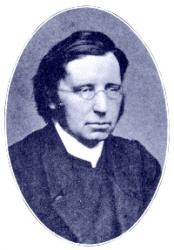
1818 - 1866 Person Name: Dr. J. M. Neale, 1818-1866 Topics: Advent Second Coming of Christ; Second Coming of Christ Translator of "Rejoice! Rejoice, Emmanuel" in Methodist Hymn and Tune Book John M. Neale's life is a study in contrasts: born into an evangelical home, he had sympathies toward Rome; in perpetual ill health, he was incredibly productive; of scholarly temperament, he devoted much time to improving social conditions in his area; often ignored or despised by his contemporaries, he is lauded today for his contributions to the church and hymnody. Neale's gifts came to expression early–he won the Seatonian prize for religious poetry eleven times while a student at Trinity College, Cambridge, England. He was ordained in the Church of England in 1842, but ill health and his strong support of the Oxford Movement kept him from ordinary parish ministry. So Neale spent the years between 1846 and 1866 as a warden of Sackville College in East Grinstead, a retirement home for poor men. There he served the men faithfully and expanded Sackville's ministry to indigent women and orphans. He also founded the Sisterhood of St. Margaret, which became one of the finest English training orders for nurses.
Laboring in relative obscurity, Neale turned out a prodigious number of books and artic1es on liturgy and church history, including A History of the So-Called Jansenist Church of Holland (1858); an account of the Roman Catholic Church of Utrecht and its break from Rome in the 1700s; and his scholarly Essays on Liturgiology and Church History (1863). Neale contributed to church music by writing original hymns, including two volumes of Hymns for Children (1842, 1846), but especially by translating Greek and Latin hymns into English. These translations appeared in Medieval Hymns and Sequences (1851, 1863, 1867), The Hymnal Noted (1852, 1854), Hymns of the Eastern Church (1862), and Hymns Chiefly Medieval (1865). Because a number of Neale's translations were judged unsingable, editors usually amended his work, as evident already in the 1861 edition of Hymns Ancient and Modern; Neale claimed no rights to his texts and was pleased that his translations could contribute to hymnody as the "common property of Christendom."
Bert Polman
========================
Neale, John Mason, D.D., was born in Conduit Street, London, on Jan. 24, 1818. He inherited intellectual power on both sides: his father, the Rev. Cornelius Neale, having been Senior Wrangler, Second Chancellor's Medallist, and Fellow of St. John's College, Cambridge, and his mother being the daughter of John Mason Good, a man of considerable learning. Both father and mother are said to have been "very pronounced Evangelicals." The father died in 1823, and the boy's early training was entirely under the direction of his mother, his deep attachment for whom is shown by the fact that, not long before his death, he wrote of her as "a mother to whom I owe more than I can express." He was educated at Sherborne Grammar School, and was afterwards a private pupil, first of the Rev. William Russell, Rector of Shepperton, and then of Professor Challis. In 1836 he went up to Cambridge, where he gained a scholarship at Trinity College, and was considered the best man of his year. But he did not inherit his father's mathematical tastes, and had, in fact, the greatest antipathy to the study; and as the strange rule then prevailed that no one might aspire to Classical Honours unless his name had appeared in the Mathematical Tripos, he was forced to be content with an ordinary degree. This he took in 1840; had he been one year later, he might have taken a brilliant degree, for in 1841 the rule mentioned above was rescinded. He gained, however, what distinctions he could, winning the Members' Prize, and being elected Fellow and Tutor of Downing College; while, as a graduate, he won the Seatonian Prize no fewer than eleven times. At Cambridge he identified himself with the Church movement, which was spreading there in a quieter, but no less real, way than in the sister University. He became one of the founders of the Ecclesiological, or, as it was commonly called, the Cambridge Camden Society, in conjunction with Mr. E. J. Boyce, his future brother-in-law, and Mr. Benjamin Webb, afterwards the well-known Vicar of St. Andrew's, Wells Street, and editor of The Church Quarterly Review. In 1842 he married Miss Sarah Norman Webster, the daughter of an evangelical clergyman, and in 1843 he was presented to the small incumbency of Crawley in Sussex. Ill health, however, prevented him from being instituted to the living. His lungs were found to be badly affected; and, as the only chance of saving his life, he was obliged to go to Madeira, where he stayed until the summer of 1844. In 1846 he was presented by Lord Delaware to the Wardenship of Sackville College, East Grinstead. This can hardly be considered as an ecclesiastical preferment, for both his predecessor and his successor were laymen. In fact the only ecclesiastical preferment that ever was offered to him was the Provostship of St. Ninian's, Perth. This was an honourable office, for the Provostship is equivalent to a Deanery in England, but it was not a lucrative one, being worth only £100 a year. He was obliged to decline it, as the climate was thought too cold for his delicate health. In the quiet retreat of East Grinstead, therefore, Dr. Neale spent the remainder of his comparatively short life, dividing his time between literary work, which all tended, directly or indirectly, to the advancement of that great Church revival of which he was so able and courageous a champion, and the unremitting care of that sisterhood of which he was the founder. He commenced a sisterhood at Rotherfield on a very small scale, in conjunction with Miss S. A. Gream, daughter of the rector of the parish; but in 1856 he transferred it to East Grinstead, where, under the name of St. Margaret's, it has attained its present proportions. Various other institutions gradually arose in connection with this Sisterhood of St. Margaret's, viz., an Orphanage, a Middle Class School for girls, and a House at Aldershot for the reformation of fallen women. The blessing which the East Grinstead Sisters have been to thousands of the sick and suffering cannot here be told. But it must be mentioned that Dr. Neale met with many difficulties, and great opposition from the outside, which, on one occasion, if not more, culminated in actual violence. In 1857 he was attending the funeral of one of the Sisters at Lewes, when a report was spread that the deceased had been decoyed into St. Margaret's Home, persuaded to leave all her money to the sisterhood, and then purposely sent to a post in which she might catch the scarlet fever of which she died. To those who knew anything of the scrupulously delicate and honourable character of Dr. Neale, such a charge would seem absurd on the face of it; but mobs are not apt to reflect, and it was very easy to excite a mob against the unpopular practices and sentiments rife at East Grinstead; and Dr. Neale and some Sisters who were attending the funeral were attacked and roughly handled. He also found opponents in higher quarters; he was inhibited by the Bishop of the Diocese for fourteen years, and the Aldershot House was obliged to be abandoned, after having done useful work for some years, in consequence of the prejudice of officials against the religious system pursued. Dr. Neale's character, however, was a happy mixture of gentleness and firmness; he had in the highest degree the courage of his convictions, which were remarkably definite and strong; while at the same time he maintained the greatest charity towards, and forbearance with, others who did not agree with him. It is not surprising, therefore, that he lived all opposition down; and that, while from first to last his relations with the community at East Grinstead were of the happiest description, he was also, after a time, spared any molestation from without. The institution grew upon his hands, and he became anxious to provide it with a permanent and fitting home. His last public act was to lay the foundation of a new convent for the Sisters on St. Margaret's Day (July 20), 1865. He lived long enough to see the building progress, but not to see it completed. In the following spring his health, which had always been delicate, completely broke down, and after five months of acute suffering he passed away on the Feast of the Transfiguration (Aug. 6), 1866, to the bitter regret of the little community at East Grinstead and of numberless friends outside that circle. One trait of his singularly lovable character must not pass unnoticed. His charity, both in the popular and in the truer Christian sense of the word, was unbounded; he was liberal and almost lavish with his money, and his liberality extended to men of all creeds and opinions; while it is pleasing to record that his relations with his ecclesiastical superiors so much improved that he dedicated his volume of Seatonian Poems to the bishop of the diocese. If however success in life depended upon worldly advantages, Dr. Neale's life would have to be pronounced a failure; for, as his old friend, Dr. Littledale, justly complains, "he spent nearly half his life where he died, in the position of warden of an obscure Almshouse on a salary of £27 a year." But, measured by a different standard, his short life assumes very different proportions. Not only did he win the love and gratitude of those with whom he was immediately connected, but he acquired a world-wide reputation as a writer, and he lived to see that Church revival, to promote which was the great object of his whole career, already advancing to the position which it now occupies in the land of his birth.
Dr. Neale was an industrious and voluminous writer both in prose and verse; it is of course with the latter class of his writings that this sketch is chiefly concerned; but a few words must first be said about the former.
I.— Prose Writings.— His first compositions were in the form of contributions to The Ecclesiologist, and were written during his graduate career at Cambridge. Whilst he was in Madeira he began to write his Commentary on the Psalms, part of which was published in 1860. It was afterwards given to the world, partly written by him and partly by his friend, Dr. Littledale, in 4 vols., in 1874, under the title of A Commentary on the Psalms, from Primitive and Mediaeval Writers. This work has been criticised as pushing the mystical interpretation to an extravagant extent. But Dr. Neale has anticipated and disarmed such criticism by distinctly stating at the commencement that "not one single mystical interpretation throughout the present Commentary is original;" and surely such a collection has a special value as a wholesome correction of the materialistic and rationalistic tendencies of the age. His next great work, written at Sackville College, was The History of the Holy Eastern Church. The General Introduction was published in 1847; then followed part of the History itself, The Patriarchate of Alexandria, in 2 vols.; and after his death another fragment was published, The History of the Patriarchate of Antioch, to which was added, Constantius's Memoirs of the Patriarchs of Antioch, translated from the Greek, edited by the Rev. G. Williams, 1 vol. The whole fragment was published in 5 vols. (1847-1873). The work is spoken very highly of, and constantly referred to, by Dean Stanley in his Lectures on the History of the Eastern Church. Dr. Neale was naturally in strong sympathy with the struggling Episcopal Church of Scotland, and to show that sympathy he published, in 1856, The Life and Times of Patrick Torry, D.D., Bishop of St. Andrews, &c, with an Appendix on the Scottish Liturgy. In the same direction was his History of the so-called Jansenist Church in Holland, 1858. Next followed Essays on Liturgiology and Church History, with an Appendix on Liturgical Quotations from the Isapostolical Fathers by the Rev. G. Moultrie, 1863, a 2nd edition of which, with an interesting Preface by Dr. Littledale, was published in 1867. It would be foreign to the purpose of this article to dwell on his other prose works, such as his published sermons, preached in Sackville College Chapel, his admirable little devotional work, Readings for the Aged, which was a selection from these sermons; the various works he edited, such as the Tetralogia Liturgica, the Sequentiae ex Missalibus Germanicis, Anglicis, Gallicis, aliisque Medii Aevi Collectae; his edition of The Primitive Liturgies of S. Mark, S. Clement, S. James, S. Chrysostom and S. Basil, with a Preface by Dr. Littledale; his Translation of the same; his many stories from Church History, his Voices from the East, translated from the Russ, and his various articles contributed to the Ecclesiologist, The Christian Remembrance, The Morning Chronicle, and The Churchman's Companion. It is time to pass on to that with which we are directly concerned.
II. —Poetical Writings.— As a sacred poet, Dr. Neale may be regarded under two aspects, as an original writer and as a translator.
i. Original Writer.—Of his original poetry, the first specimen is Hymns for Children, published in 1842, which reached its 10th edition the year after his death. It consists of 33 short hymns, the first 19 for the different days of the week and different parts of the day, the last 14 for the different Church Seasons. This little volume was followed in 1844 by Hymns for the Young, which was intended to be a sequel to the former, its alternative title being A Second Series of Hymns for Children; but it is designed for an older class than the former, for young people rather than for children. The first 7 hymns are "for special occasions," as "on goiug to work," “leaving home” &c.; the next 8 on "Church Duties and Privileges," "Confirmation," "First Holy Communion," &c, the last 13 on "Church Festivals,” which, oddly enough, include the Four Ember Seasons, Rogation Days, and the Sundays in Advent. In both these works the severe and rigid style, copied, no doubt, from the old Latin hymns, is very observable. Perhaps this has prevented them from being such popular favourites as they otherwise might have been; but they are quite free from faults into which a writer of hymns for children is apt to fall. They never degenerate into mere prose in rhyme; and in every case the purity as well as the simplicity of their diction is very remarkable. In the same year (1844) he also published Songs and Ballads for Manufacturers, which were written during his sojourn in Madeira, and the aim of which (he tells us) was "to set forth good and sound principles in metaphors which might, from their familiarity, come home to the hearts of those to whom they were addressed." They are wonderfully spirited both in matter and manner, and their freedom of style is as remarkable as the rigidity of the former works. They were followed eleven years later (1855) by a similar little work entitled Songs and Ballads for the People. This is of a more aggressive and controversial character than the previous ones, dealing boldly with such burning questions as "The Teetotallers," "Why don't you go to Meeting?" &c. Passing over the Seatonian Poems, most of which were of course written before those noticed above, we next come to the Hymns for the Side, which is a fitting companion to the Readings for the Aged, and then to Sequences, Hymns, and other Ecclesiastical Verses, which was published just after the author's death (1866), and may be regarded as a sort of dying legacy to the world. In fact, the writer almost intimates as much in the preface, where he speaks of himself as "one who might soon be called to have done with earthly composition for ever." Many of the verses, indeed, were written earlier, "forty years ago," he says, which is evidently intended for twenty. The preface is dated "In the Octave of S. James, 1866," and within a fortnight, on the Feast of the Transfiguration, “the veil” (to use the touching words of his old friend, Dr. Littledale) "was withdrawn from before his eyes, and the song hushed on earth is now swelling the chorus of Paradise." Was it an accident that these verses dwell so much on death and the life beyond the grave? or did the coming event cast its shadow before? Not that there is any sadness of tone about them; quite the reverse. He contemplates death, but it is with the eye of a Christian from whom the sting of death has been removed. Most of the verses are on subjects connected with the Church Seasons, especially with what are called the "Minor Festivals:" but the first and last poems are on different subjects. The first, the "Prologue," is "in dear memory of John Keble, who departed on Maundy Thursday, 1866, "and is a most touching tribute from one sacred poet to another whom he was about to follow within a few months to the "land that is very far off." The last is a poetical version of the legend of "the Seven Sleepers of Ephesus," and is, the writer thinks, "the first attempt to apply to primitive Christianity that which is, to his mind, the noblest of our measures." That measure is the hexameter, and undoubtedly Dr. Neale employed it, as he did all his measures, with great skill and effect; but it may be doubted whether the English language, in which the quantities of syllables are not so clearly defined as in Latin and Greek, is quite adapted for that measure. Throughout this volume, Dr. Neale rises to a far higher strain than he had ever reached before.
ii. Translations.— It is in this species of composition that Dr. Neale's success was pre-eminent, one might almost say unique. He had all the qualifications of a good translator. He was not only an excellent classical scholar in the ordinary sense of the term, but he was also positively steeped in mediaeval Latin. An anecdote given in an appreciative notice by "G. M." [Moultrie] happily illustrates this:—
Dr. Neale "was invited by Mr. Keble and the Bishop of Salisbury to assist them with their new hymnal, and for this purpose he paid a visit to Hursley Parsonage." On one occasion Mr. Keble "having to go to another room to find some papers was detained a short time. On his return Dr. Neale said, ‘Why, Keble, I thought you told me that the "Christian Year" was entirely original.' ‘Yes,' he answered, 'it certainly is.' ‘Then how comes this?' and Dr. Neale placed before him the Latin of one of Keble's hymns. Keble professed himself utterly confounded. He protested that he had never seen this 'original,' no, not in all his life. After a few minutes Neale relieved him by owning that he had just turned it into Latin in his absence."
Again, Dr. Neale's exquisite ear for melody prevented him from spoiling the rhythm by too servile an imitation of the original; while the spiritedness which is a marked feature of all his poetry preserved that spring and dash which is so often wanting in a translation.
(i.) Latin.— Dr. Neale's translations from the Latin include
(1.) Mediaeval Hymns and Sequences (1851). He was the, first to introduce to the English reader Sequences, that is, as he himself describes them, " hymns sung between the Epistle and Gospel in the Mass," or, as he explains more definitely, "hymns whose origin is to be looked for in the Alleluia of the Gradual sung between the Epistle and the Gospel." He was quite an enthusiast about this subject:—
"It is a magnificent thing,” he says, "to pass along the far-stretching vista of hymns, from the sublime self-containedness of S. Ambrose to the more fervid inspiration of S. Gregory, the exquisite typology of Venantius Fortunatus, the lovely painting of St. Peter Damiani, the crystal-like simplicity of S. Notker, the scriptural calm of Godescalcus, the subjective loveliness of St. Bernard, till all culminate in the full blaze of glory which surrounds Adam of S. Victor, the greatest of them all."
Feeling thus what a noble task he had before him, it is no wonder that he spared no pains over it, or that he felt it his duty to adopt "the exact measure and rhyme of the original, at whatever inconvenience and cramping." That he succeeded in his difficult work, the verdict of the public has sufficiently proved. Of all the translations in the English language no one has ever been so popular as that of the Hora Novissima, in this volume, afterwards (1858) published separately, under the title of the Rhythm of Bernard de Morlaix, Monk of Cluny. Some original hymns may be as well known as "Jerusalem the Golden," "For thee, O dear, dear country," or "Brief life is here our portion,” but it would be hard to find any translations which come near them for extensive use. A second edition of the Mediaeval Hymns, much improved, came out in 1863, and a third, "with very numerous additions and corrections," in 1867.
(2.) We next come to the Hymnal Noted, in which 94 out of the 105 hymns are the work of Dr. Neale. These are all translations from the Latin. The first part appeared in 1852, the second in 1854. Dr. Neale has himself given us an interesting account of his connection with this work:—
"Some," he writes, "of the happiest and most instructive hours of my life were spent in the Sub-Committee of the Ecclesiological Society, appointed for the purpose of bringing out the Second Part of the Hymnal Noted It was my business to lay before them the translations I had prepared, and theirs to correct. The study which this required drew out the beauties of the original in a way which nothing else could have done, and the friendly collisions of various minds elicited ideas which a single translator would in all probability have missed." Preface, Mediaeval Hymns & Sequences
(3.) The last volume of translations from the Latin published by Dr. Neale appeared in 1865, under the title of Hymns, chiefly Mediaeval, on the Joys and Glories of Paradise. It was intended to be a companion volume to the Rhythm of Bernard of Cluny. In this work the writer gives the general reader an opportunity of comparing the translation with the original by printing the two together in parallel pages.
Before quitting the subject of Dr. Neale's translations from the Latin, it is only fair to notice that while they have been almost universally accepted by the English Church, and some of them adopted by dissenting congregations, they called down upon the translator a storm of indignation from an opposite quarter. The Roman Catholics accused him of deliberate deception because he took no pains to point out that he had either softened down or entirely ignored the Roman doctrines in those hymns. So far, they said, as the originals were concerned, these translations were deliberate misrepresentations. As however the translations were intended for the use of the Anglican Church, it was only to be expected that Neale should omit such hymns or portions of hymns as would be at variance with her doctrines and discipline.
(ii.) Greek.— Dr. Neale conferred even a greater boon upon the lovers of hymnology than by his translations from the Latin, when he published, in 1862, his Hymns of the Eastern Church. In his translations from the Latin he did what others had done before; but in his translations from the Greek he was opening entirely new ground. "It is," he says in his preface to the first edition, "a most remarkable fact, and one which shows how very little interest has been hitherto felt in the Eastern Church, that these are literally, I believe, the only English versions of any part of the treasures of Oriental Hymnology." As early as 1853 he had printed a few of his versions in The Ecclesiastic, but it was not till the appearance of the complete volume that the interest of the general public was awakened in them. Then they became wonderfully popular. His translations "Christian, dost thou see them?" "The day is past and over," "'Tis the day of Resurrection," and his Greek-inspired "Art thou weary," and "O happy band of pilgrims," are almost as great favourites as "Jerusalem the golden," and the first in his Hymns of the Eastern Church, "Fierce was the wild billow," deserves to be. Dr. Neale had a far more difficult task before him when he undertook these Greek hymns than he had with the Latin, and he appeals to the reader "not to forget the immense difficulty of an attempt so perfectly new as the present, when I have had no predecessors and therefore could have no master." That difficulty in comparison with the Latin cannot be better stated than in his own words:—
"Though the superior terseness and brevity of the Latin hymns renders a translation which shall represent those qualities a work of great labour, yet still the versifier has the help of the same metre; his version may be line for line; and there is a great analogy between the collects and the hymns, most helpful to the translator. Above all, we have examples enough of former translation by which we may take pattern. But in attempting a Greek canon, from the fact of its being in prose (metrical hymns are unknown) one is all at sea. What measure shall we employ? Why this more than that? Might we attempt the rhythmical prose of the original, and design it to be chanted? Again, the great length of the canons renders them un suitable for our churches as wholes. Is it better simply to form centos of the more beautiful passages? or can separate odes, each necessarily imperfect, be employed as separate hymns? . . . My own belief is that the best way to employ Greek hymnology for the uses of the English Church would be by centos."
That, in spite of these difficulties, Dr. Neale succeeded, is obvious. His Greek hymns are, indeed, adaptations rather than translations; but, besides their intrinsic beauty, they at any rate give some idea of what the Greek hymn-writers were. In this case, as in his translations from the Latin, he omitted what he held was not good from his Anglican point of view, e.g., the Doxologies to the Blessed Virgin Mary.
One point strikes us as very remarkable in these hymns, and indeed in all Dr. Neale's poetry, viz., its thorough manliness of tone. Considering what his surroundings were, one might have expected a feminine tone in his writings. Dr. Littledale, in his most vivid and interesting sketch of Dr. Neale's life, to which the present writer is largely indebted, has remarked the same with regard to his teaching: "Instead of committing the grave error of feminising his sermons and counsels [at St. Margaret's] because he had only women to deal with, he aimed at showing them the masculine side of Christianity also, to teach them its strength as well as its beauty."
In conclusion, it may be observed that no one had a higher opinion of the value of Dr. Neale's labours in the field of ancient and mediaeval hymnology than the one man whose competency to speak with authority on such a point Dr. Neale himself would assuredly have rated above that of all others. Over and over again Dr. Neale pays a tribute to the services rendered by Archbishop Trench in this domain; and the present sketch cannot more fitly close than with the testimony which Archbishop Trench has given of his sense of the services rendered by Dr. Neale. The last words of his preface to his Sacred Latin Poetry (ed. 1864) are:—" I will only, therefore, mention that by patient researches in almost all European lands, he [Dr. Neale] has brought to light a multitude of hymns unknown before: in a treatise on sequences, properly so-called, has for the first time explained their essential character; while to him the English reader owes versions of some of the best hymns, such as often successfully overcome the almost insuperable difficulties which many among them present to the translator." [Rev. J. H. Overton, D.D.]
Dr. Neale's original hymns and translations appeared in the following works, most of which are referred to in the preceding article, and all of which are grouped together here to facilitate reference:—
(1) Hymns for Children. Intended chiefly for Village Schools. London, Masters, 1842. (2) Hymns for the Sick. London, Masters, 1843, improved ed. 1849. (3) Hymns for the Young. A Second Series of Hymns for Children. London, Masters, 1844. (4) Songs and Ballads for Manufacturers. London, Masters, 1844. (5) Hymns for Children. A Third Series. London, Masters, 1846. (6) Mediaeval Hymns and Sequences. London, Masters. 1851; 2nd ed. 1861; 3rd. ed. 1863. (7) Hymnal Noted. London, Masters & Novello, 1852: enlarged 1854. Several of the translations were by other hands. Musical editions edited by the Rev. T. Helmore. It is from this work that a large number of Dr. Neale's translations from the Latin are taken. (8) Carols for Christmas and Eastertide. 1853. (9) Songs and Ballads for the People. 1855. (10) The Rhythm of Bernard de Morlaix, Monk of Cluny, on the Celestial Country. London, Hayes, 1st ed. 1858: 3rd ed., with revision of text, 1861. It contains both the Latin and the English translation. (11) Hymns of The Eastern Church, Translated with Notes and an Introduction. London, Hayes, 1862: 2nd ed. 1862: 3rd ed. 1866 : 4th ed., with Music and additional notes, edited by The Very Rev. S. G. Hatherly, Mus. B., Archpriest of the Patriarchal (Ecumenical Throne. London, Hayes, 1882. Several of these translations and notes appeared in The Ecclesiastic and Theologian, in 1853. (12) Hymns, Chiefly Mediaeval, on the Joys and Glories of Paradise. London, Hayes, 1865. This work contains notes on the hymns, and the Latin texts of the older amongst them. (13) Original Sequences, Hymns, and other Ecclesiastical Verses. London, Hayes, 1866. This collection of Original verse was published posthumously by Dr. Littledale.
In addition to these works Dr. Neale published collections of Latin verse as:—
1.) Hymni Ecclesiae e Breviariis quibusdam et Missalibus Gallicanis, Germanis, Hispanis, Lusitanis, desumpti. Oxford & Lond. J. H. Parker, 1851: and (2) Sequentiae e Missalibus Germanicis, Anglicis, Gallicis, aliisque Medii Aevi collectae. Oxford & Lond. J. H. Parker, 1852.
A few of his translations appeared from time to time in The Ecclesiastic; and a few of his original hymns in The Christian Remembrancer. In the collection compiled for use at St. Margaret's, East Grinstead, St. Margaret's Hymnal, Printed Privately for the use of the Community only, 1875, there are several of his hymns not traceable elsewhere. [Many of his translations and original compositions are not listed here].
Some of the original hymns in common use which remain to be noted are:—
i. From Hymns for Children, 1842.
1. No more sadness now, nor fasting. Christmas.
2. 0 Thou, Who through this holy week. Passiontide.
3. The day, 0 Lord, is spent. Evening.
4. The grass so green, the trees so tall. Morning of the Third Day.
5. Thou art gone up, 0 Lord, on high. Evening.
6. Thou, Who earnest from above. Whitsuntide.
7. With Thee, 0 Lord, begins the year. Circumcision, or, the New Year.
ii. From Hymns for the Sick, 1843.
8. By no new path untried before. Support in Sickness.
9. Count not, the Lord's Apostle saith. Communion of the Sick.
10. Lord, if he sleepeth, he shall sure do well. Watching.
11. 0 Thou, Who rising long before the day. In a sleepless Night.
12. The Lord hath given, the Lord hath taken away. Death and Burial.
13. There is a stream, whose waters rise. In dangerous Sickness or Fever.
14. They slumber not nor sleep. Guardian Angels.
15. Thy servants militant below. In Affliction.
iii. From Hymns for the Young, 2nd series, 1844.
16. Lord Jesus, Who shalt come with power. Ember Week in Advent.
17. 0 God, in danger and distress. In time of Trouble.
18. 0 God, we raise our hearts to Thee. Ember-Week in Advent. From this, "0 Lord, we come before Thee now” is taken.
19. 0 God, Who lovest to abide. Dedication of a Church.
20. 0 our Father, hear us now. Rogation. The first of three hymns on The Lord's Prayer.
21. 0 Saviour, Who hast call'd away. Death of a Minister.
22. 0 Thou, Who lov'st to send relief. In Sickness.
23. 0 Thou, Who once didst bless the ground. Ember-Week in September.
24. 0 Thou, Who, when Thou hadst begun. On going to Work.
25. Still, 0 Lord of hosts, we share. Rogation. The Second of his hymns on The Lord's Prayer.
26. Strangers and pilgrims here below. On entering a new Dwelling to reside there.
27. They whose course on earth is o'er. Communion of Saints. From this, "Those whom many a land divides," is taken.
2S. Till its holy hours are past. Rogation. The third of his hymns on The Lord's Prayer.
iv. Songs and Ballads for Manufacturers, 1844.
29. Work is over; God must speed it. Evening.
v. Hymns for Children, 3rd series, 1846.
30. Before Thy Face, 0 God of old. St. John the Baptist.
31. By pain, and weariness, and doubt. St. Stephen.
32. First of the twelvefold band that trod. St. James.
33. Four streams through happy Eden flow'd. St. Mark.
34. Is there one who sets his face. St. Bartholomew. From this "He, for man who suffered woe," is taken.
35. Not a single sight we view. St. Matthias.
36. 0 Great Physician of the soul. St. Luke.
37. 0 Heavenly Wisdom, hear our cry. Christmas. “0 Sapientia."
38. 0 Key of David, hailed by those. Christmas. "0 Clavis David."
39. 0 Root of Jesse, Thou on Whom. Christmas. “O Radix Jesse."
40. 0 Thou, on Whom the nations [Gentiles] wait. Christmas. "0 Rex Gentium."
41. 0 Thou, Who earnest down of old [to call] . Christmas. "0 Adonai."
42. 0 Thou, Whose Name is God with us. Christmas. "0 Emmanuel."
43. 0 Very God of Very God. Christmas. "0 Oriens."
44. Saints of God, whom faith united. SS. Simon and Jude.
45. Since the time that first we came. St. Andrew. From this, "Every bird that upward springs," is taken.
46. That love is mighty love indeed. St. Barnabas.
47. We cannot plead, as others may. St. Matthew.
48. We have not seen, we cannot see. St. Thomas.
49. Would we go when life is o'er? St. Peter.
v. Carols for Christmas and Eastertide. 1853.
50. Gabriel's message does away. Christmas.
51. Joy and gladness be to king and peasant. Christmas.
52. Joy to thee, joy to thee, Day of our victory. Easter.
53. Sing Alleluia, all ye lands. Easter.
54. The world itself keeps Easter Day. Easter. From this "There stood three Marys by the tomb," is taken.
55. With Christ we share a mystic grave. Easter or Holy Baptism.
vi. From Sequences, Hymns, &c, 1866.
56. Can it, Master, can it be? Maundy Thursday.
57. Need it is we raise our eyes. All Saints.
58. Prostrate fell the Lord of all things. Maundy Thursday.
59. Rear the column, high and stately. All Saints.
60. The Paschal moonlight almost past. Easter.
61. Though the Octave-rainbow sometimes. Low Sunday.
62. When the earth was full of darkness. St. Margaret.
63. Young and old must raise the lay. Christmas Carol.
vi. From the St. Margaret's Hymnal, 1875.
64. O gracious God, Who bid'st me now. On Leaving Some.
65. Thou Who came to save Thy people. For a School.
66. Thy praise the holy Infants shewed. Holy Innocents.
These 66 hymns now in common use by no means represent Dr. Neale's position in modern hymnody. Many others must be added thereto. Even then, although the total is very large, it but feebly represents and emphasises the enormous influence which Di. Neale has exercised over modern hymnody.
--John Julian, Dictionary of Hymnology (1907)
J. M. Neale
John S. B. Monsell
1811 - 1875 Person Name: J.S.B. Monsell Topics: Second Coming of Christ Author of "O'er the distant mountains breaking" in The Lutheran Hymnary John Samuel Bewley Monsell (b. St. Colomb's, Londonderry, Ireland, 1811; d. Guilford, Surrey, England, 1875) was educated at Trinity College in Dublin and served as a chaplain and rector of several churches in Ireland after his ordination in 1835. Transferred to England in 1853, he became rector of Egham in Surrey and was rector of St. Nicholas Church in Guilford from 1870 until his death (caused by a construction accident at his church). A prolific poet, Monsell published his verse in eleven volumes. His three hundred hymns, many celebrating the seasons of the church year, were issued in collections such as Hymns and Miscellaneous Poems (1837), Spiritual Songs (1857), Hymns of Love and Praise (1863), and The Parish Hymnal (1873).
Bert Polman
===============================
Monsell, John Samuel Bewley, L.L.D., son of Thomas Bewley Monsell, Archdeacon of Londonderry, was born at St. Columb's, Londonderry, March 2,1811, and educated at Trinity College, Dublin (B.A. 1832, LL.D. 1856). Taking Holy Orders in 1834, "he was successively Chaplain to Bishop Mant, Chancellor of the diocese of Connor, Rector of Ramoan, Vicar of Egham, diocese Worcester, and Rector of St. Nicholas's, Guildford. He died in consequence of a fall from the roof of his church, which was in the course of rebuilding, April 9, 1875. His prose works include Our New Vicar, 1867; The Winton Church Catechist, &c. His poetical works are:—
(1) Hymns and Miscellaneous Poems, Dublin, W. Curry, Jun., & Co., 1837; (2) Parish Musings, or Devotional Poems, 1850; (3) Spiritual Songs for the Sundays and Holy Days throughout the Year. 1857 (People's Ed., 1875); (4) His Presence, not His Memory, 1855, 1858; (5) Hymns of Love and Praise for the Church's Year, 1863 (2nd ed. 1866); (6) The Passing Bell; Ode to The Nightingales, and Other Poems, 1867; (7) Litany Hymns, 1869; (8) The Parish Hymnal after the Order of The Book of Common Prayer, 1873; (9)Watches by the Cross, 1874; (10) Simon the Cyrenian; and Other Poems; (11) Nursery Carols.
In these works several hymns which appeared in the earlier books are repeated in the later, and thus at first sight his compositions seem to be more in number than they really are. The total amounts to nearly 300, and of these about one-fourth are in common use. The most popular of these are, "God is love; that anthem olden"; "God of that glorious gift of grace"; "Holy offerings, rich and rare"; “Lord of the living harvest"; "Mighty Father, Blessed Son"; and "Sing to the Lord a joyful song." In addition to those which are annotated under their respective first lines, the following are in common use:—
i. Appeared in his Hymns and Miscellaneous Poems, Dublin, 1837.
1. Birds have their quiet nests. Humility of Christ.
2. Dark and dim the day-light rose. Good Friday.
3. Friend of the friendless and the lone. Jesus, the Friend.
4. My God, what wondrous love was Thine. Whitsuntide.
5. O for a heart more fervent. Holiness desired.
6. O for the time when on the world. Missions.
7. The springtide hour brings leaf and flower. Spring.
8. This day the Lord is risen. Easter.
9. When cold our hearts and far from Thee. Teach us to Pray.
10. Why restless, why so weary? Providence.
11. Yes, I do feel, my God, that I am Thine. Assurance.
ii. Appeared in his Parish Musings, 1850.
12. In Thee, my [O] God, will we rejoice. Trust in God.
13. Lord, dependent on Thy promise. Holy Baptism.
14. Members of Christ, Children of God. Confirmation.
15. So teach me, Lord, to number. The Old and New Year.
16. Soon [soon] and for ever. Death anticipated.
17. The broken, contrite heart oppress'd. Promises of God.
18. Thou art near, yes, Lord, I feel it. Divine Support.
19. Would'st thou learn the depths of sin? Passiontide.
iii. Appeared in his Spiritual Songs, 1857.
20. A few bright leaders of her host. All Saints.
21. A happy, happy [merry, merry] Christmas. New Year's Day.
22. Blessed hope, that we the fallen [sinful]. Hope.
23. Heart in heart, and hand in hand. SS. Simon and Jude.
24. Jesus, my loving Lord! I know. Resignation.
25. Last Sunday of the work-day year. Sunday after Christmas Day.
26. Loved by God the Father. Holy Baptism.
27. Mercy, mercy, God the Father. Lent.
28. My head is low, my heart is sad. Confirmation. (Penitential.)
29. Oft doth the Christian's heart inquire. Christian Duty.
30. 0 God, most mighty, listen now. Charities. From "When languid frame or throbbing pulse."
31. 0 holy Sabbath day. Sunday.
32. 0 Lord, what records of Thy love. St. Barnabas. Sometimes, “Lord God, what records of Thy love."
33. 0 love, divine and golden. Holy Matrimony. From this, "Love divine and tender" is taken.
34. One lesson more the Church must learn. Waiting on God. From this, “One lesson Christ His own would teach" is taken.
35. Proudly in his [the] hall of judgment. Tuesday before Easter.
36. Sinful, sighing to be blest. Lent.
37. The Church of God, with equal care. St. James.
38. The journey done; The rest begun. Burial.
39. The simple trust that can confide. Trust.
40. Weary and sad, a wanderer from Thee. Lent.
iv. Appeared, in his Hymns of Love and Praise, 1863, and 2nd ed., 1866.
41. Bounteous blesser of the seedtime. Sexagesima. Seed Time.
42. Brightly hopeful for the future. God's mercy through life.
43. Christ is risen! Alleluia! Easter.
44. Come and deck the grave with flowers. Easter Eve.
45. Fight the good fight with all thy might. Fight of Faith.
46. Holy Spirit, long expected. Whitsuntide.
47. Hours and days and months and years. The Circumcision.
48. I have no comfort but Thy love. The Comfort of Love.
49. I knew Thee in the land of drought. A Song of Love.
60. I think of Thee, my God by night. Evening.
61. Jesu, gentle Sufferer, say. Good Friday.
52. Labouring and heavy-laden. Lent.
53. Light of the world, we hail Thee. Missions.
54. Lord, to whom except to Thee? Holy Communion.
55. My sins, my sins, my Saviour. Ash Wednesday.
56. O'er the distant mountains breaking. Second Advent.
57. Other Name than our dear Lord's. Jesus All and in All.
58. Pity on us, heavenly Father. Litany Hymn for Lent.
59. Praise the Lord, rejoice, ye Gentiles. Advent, or Missions.
60. Rest of the weary, joy of the sad. Jesus, the Saviour and Friend.
61. Shadow of a mighty Rock. Jesus, the Rock of Ages.
62. Sing, 0 heaven; 0 earth rejoice. Ascension.
63. Sweet is the gentle voice of spring. Seed Time.
64. Sweet is Thy mercy, Lord. Divine Mercy.
65. Teach me to do the thing that pleaseth Thee. Divine Teaching.
66. The good old times, how glorious. Advent.
67. The world may in its wealth delight. Rejoicing in the Lord. An altered form of "Let others in their wealth delight."
68. Though Thou slay me, I will trust. Faith.
69. To Christ the Lord! The Incarnate Word. Christmas.
70. When I had wandered from His fold. The Love of God.
v. Appeared in his Litany Hymns, 1869.
71. Lay the precious body, In the quiet grave. Burial.
72. My sins have taken such a hold on me. Litany of Repentance.
vi. Appeared in his Parish Hymnal, 1873.
73. I hunger and I thirst. Septuagesima.
Dr. Monsell’s hymns are as a whole bright, joyous, and musical; but they lack massiveness, concentration of thought, and strong emotion. A few only are of enduring excellence.
--John Julian, Dictionary of Hymnology 1907
=====================
Monsell, J, S. B., p. 762, ii. Additional hymns in common use include:—
1. Blessed Lord, Who, till the morning. Holy Scriptures. From his Spiritual Songs, 1857.
2. Christ incarnate in His poor. Christ in His Poor. From his Hymns of Love and Praise, 1863.
3. We ask for life, and mean thereby. Life and Work. From his Hymns of Love and Praise, 1863.
--John Julian, Dictionary of Hymnology, Appendix, Part II (1907)
====================
Monsell, J. S. B. Since the article on pp. 762-3 was written, copies of the original editions of Dr. Monsell's works have come into our hands, and from them we have to make the following corrections, the numbers following being those given to the first lines of the hymns on pp. 762-3:—
15. So teach me, &c. Hymns and Misc. Poems, 1837, p. 30.
17. The broken, &c. Hymns and Misc. Poems, 1837, p. 49.
18. Thou art near, &c. Hymns and Misc. Poems, 1837, p. 21.
19. Would'st thou, &c. Hymns and Misc. Poems, 1837, p. 14.
26. Loved by God, &c. Parish Hymnal, 1873, No. 181.
27. Mercy, mercy, &c. Prayers and Litanies, 1861,
p. 119.
28. My head is low, &c. Hymns of Love and Praise, 1866,
p. 125.
33. O Love divine, &c. Hymns of Love and Praise, p. 131.
38. The journey done, &c. Hymns of Love and Praise, p. 134.
40. Weary and sad, &c. Parish Hymnal, 1873, No. 209.
41-50. Hymns of Love and Praise, 1863.
51. See "Day of loss," &c, p. 282, i.
52. Labouring, &c. Prayers and Litanies, 1861, p. 116. 53-57. Hymns of Love and Praise, 1863.
58. Pity on us, &c. Prayers and Litanies, 1861, p. 125.
59. Praise the Lord, &c. Hymns of Love and Praise, 1863,
p. 13.
60. 61, 62, 64, 65. Prayers and Litanies, 1861.
63, 66-70. Hymns of Love and Praise, 1863.
72. My sins, &c. Hymns of Love and Praise, 1866, p. 34.
73. I hunger, &c. Hymns of Love and Praise, 1866, p. 128.
It will be seen from this list of additions and corrections that Dr. Monsell multiplied his works by giving much the same material under new titles, and that his Prayers and Litanies of 1861 were unknown to us when the original article was written. "We can sincerely add that few hymn writers are so perplexing to the annotator as Dr. Monsell. [Rev. James Mearns, M.A.]
--John Julian, Dictionary of Hymnology, New Supplement (1907)
John S. B. Monsell
Pages




