You help make Hymnary.org possible. More than 10 million people from 200+ countries found hymns, liturgical resources and encouragement on Hymnary.org in 2025, including you. Every visit affirms the global impact of this ministry.

If Hymnary has been meaningful to you this year, would you take a moment today to help sustain it? A gift of any size—paired with a note of encouragement if you wish—directly supports the server costs, research work and curation that keep this resource freely available to the world.

Give securely online today, or mail a check to:
Hymnary.org
Calvin University
3201 Burton Street SE
Grand Rapids, MI 49546

Thank you for your partnership, and may the hope of Advent fill your heart.

Person Results

Topics:trinity
In:people

Planning worship? Check out our sister site, ZeteoSearch.org, for 20+ additional resources related to your search.
Showing 71 - 80 of 1,864Results Per Page: 102050

George Duffield

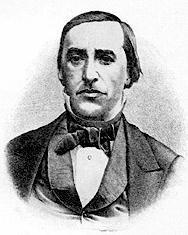
1818 - 1888 Person Name: George Duffield, Jr., Topics: Trinity IX The Holy Communion Closing; Trinity XV The Holy Communion Closing Author of "Stand up, stand up, for Jesus" in The Hymnal of the Protestant Episcopal Church in the United States of America 1940 Duffield, George, Jr., D.D., son of the Rev. Dr. Duffield, a Presbyterian Minister, was born at Carlisle, Pennsylvania, Sept. 12, 1818, and graduated at Yale College, and at the Union Theological Seminary, New York. From 1840 to 1847 he was a Presbyterian Pastor at Brooklyn; 1847 to 1852, at Bloomfield, New Jersey; 1852 to 1861, at Philadelphia; 1861 to 1865, at Adrian, Michigan; 1865 to 1869, at Galesburg, Illinois; 1869, at Saginaw City, Michigan; and from 1869 at Ann Arbor and Lansing, Michigan. His hymns include;— 1. Blessed Saviour, Thee I love. Jesus only. One of four hymns contributed by him to Darius E. Jones's Temple Melodies, 1851. It is in 6 stanzas of 6 lines. In Dr. Hatfield's Church Hymnbook it is given in 3 stanzas. The remaining three hymns of the same date are:— 2. Parted for some anxious days. Family Hymn. 3. Praise to our heavenly Father, God. Family Union. 4. Slowly in sadness and in tears. Burial. 5. Stand up, stand up for Jesus. Soldiers of the Cross. The origin of this hymn is given in Lyra Sac. Americana, 1868, p. 298, as follows:— "I caught its inspiration from the dying words of that noble young clergyman, Rev. Dudley Atkins Tyng, rector of the Epiphany Church, Philadelphia, who died about 1854. His last words were, ‘Tell them to stand up for Jesus: now let us sing a hymn.' As he had been much persecuted in those pro-slavery days for his persistent course in pleading the cause of the oppressed, it was thought that these words had a peculiar significance in his mind; as if he had said, ‘Stand up for Jesus in the person of the downtrodden slave.' (Luke v. 18.)" Dr. Duffield gave it, in 1858, in manuscript to his Sunday School Superintendent, who published it on a small handbill for the children. In 1858 it was included in The Psalmist, in 6 stanzas of 8 lines. It was repeated in several collections and in Lyra Sac. Amer., 1868, from whence it passed, sometimes in an abbreviated form, into many English collections. [Rev. F. M. Bird, M.A.] - John Julian, Dictionary of Hymnology (1907) See also in: Hymn Writers of the Church

Lewis Hartsough

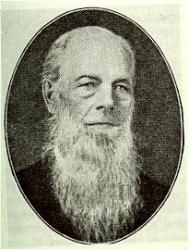
1828 - 1919 Person Name: Rev. Lewis Hartsough Topics: The Holy Trinity Author of "I am coming, Lord" in Alleluia Hartsough, Lewis, was born at Ithaca, New York, Aug. 31, 1823. Of his hymns the following are in common use:—- 1. I hear Thy welcome voice. The Divine Invitation. 2. In the rifted Rock I'm resting. Safety in Jesus. 3. Lead me to the Rock that's higher. Safety in Jesus. 4. O who'll stand up for Jesus? All for Jesus Nos. 1-3 are in I. D. Sankey's Sacred Songs & Solos, 1878 (1 and 3 with music by Hartsough). --John Julian, Dictionary of Hymnology, Appendix, Part II (1907) ================= Hartsough, Lewis, p. 1569, ii. Mr. Hartsough entered the ministry of the Methodist Episcopal Church in 1851, and is now (1905) residing in Mount Vernon, Indiana. He was musical editor of J. Hillman's Revivalist, Troy, 1868, and co-editor of The Sacred Harmonist, Boston, 1864, and Beulah Songs, Phila., 1879. In addition to the hymns named on p. 1569, ii., "Let me go where saints are going" [Heav'n desired] (1861) has come into common use. It appeared in W. B. Bradbury's Clarion, 1867, p. 83. Concerning his hymn, "I hear Thy welcome voice," Mr. Sankey says in his My Life and Sacred Songs, 1906, p. 11(3:— The words and music of this beautiful hymn were first published in a monthly, entitled, Guide to Holiness, a copy of which was sent to me in England. I immediately adopted it, and had it published in Sacred Songs and Solos. It proved to be one of the most helpful of the revival hymns, and was often used as an invitation hymn in England and America." [Rev. L. F. Benson, D.D.] --John Julian, Dictionary of Hymnology, New Supplement (1907) ================ Hartsough, Lewis. (August 31, 1823--January 1, 1919). Details of his early life are lacking. After being admitted to the Oneida, New York, Conference of the Methodist Episcopal Church in 1851 and serving several pastorates in that state, his health failed and he went to Utah where he was influential in establishing the Utah Mission, later becoming its superintendent. Upon relinquishing that position he moved to Mt. Vernon, Iowa, where he spent the remainder of his life. Bird's statement that he lived in Indiana is erroneous. He was minister of the South Street Methodist Episcopal Church, Utica, New York, when he first became associated with Joseph Hillman, who chose him to act as musical editor of The Revivalist, a gospel hymn book which went through eleven editions in five years, 1868-1872. This book had a remarkable sale and was doubtless used in more churches during the 1870s than any other of similar character. To it the Reverend Hartsough contributed, in one edition, twelve texts, fourteen tunes, and thirty arrangements of tunes, several of the latter being of the religio-folk variety which had been so popular in the early camp meetings. It is a valuable source work. "I love to think of the heavenly land" (p.1573) is by Hartsough. "I hear thy welcome voice (p.1569), originally in six four-line stanzas, with Refrain, in full S/1931; with the first three stanzas, slightly emended, Brethren/1951; with stanzas 1, 2, 3, and 5, also emended, in Hymns of the Living Faith, 1951. Writeen in 1872 with musical settings by the author, it is the only one of his many songs which has continued in use. Source: Metcalf, Frank J. American Writers and Compilers of Sacred Music; several editions of The Revivalist. --Robert G. McCutchan, DNAH Archives

J. Sebastian B. Hodges

1830 - 1915 Person Name: John S. B. Hodges Topics: Trinity 7 Gospel Composer of "EUCHARISTIC HYMN" in Magnify the Lord Born: 1830, Bristol, Gloucestershire, England. Died: May 1, 1915, Baltimore, Maryland. Buried: Allegheny Cemetery, Pittsburgh, Pennsylvania. Son of composer Edward Hodges, John emigrated to America in 1845, and attended Columbia University and the General Theological Seminary in New York City. Ordained an Episcopal minister in 1854, he served at the Grace/Second Episcopal Church, Newark, New Jersey (1860-70), and was Rector of St. Paul’s, Baltimore, Maryland, for 35 years. His works include: The Book of Common Praise, 1869 The revised edition of Hymn Tunes, 1903 --www.hymntime.com/tch

Michael Praetorius

1571 - 1621 Topics: Trinity XIX The Communion Opening; Trinity XV Morning Prayer Opening Adapter of "PUER NOBIS" in The Hymnal of the Protestant Episcopal Church in the United States of America 1940 Born into a staunchly Lutheran family, Michael Praetorius (b. Creuzburg, Germany, February 15, 1571; d. Wolfenbüttel, Germany, February 15, 1621) was educated at the University of Frankfort-an-der-Oder. In 1595 he began a long association with Duke Heinrich Julius of Brunswick, when he was appoint­ed court organist and later music director and secretary. The duke resided in Wolfenbüttel, and Praetorius spent much of his time at the court there, eventually establishing his own residence in Wolfenbüttel as well. When the duke died, Praetorius officially retained his position, but he spent long periods of time engaged in various musical appointments in Dresden, Magdeburg, and Halle. Praetorius produced a prodigious amount of music and music theory. His church music consists of over one thousand titles, including the sixteen-volume Musae Sionae (1605-1612), which contains Lutheran hymns in settings ranging from two voices to multiple choirs. His Syntagma Musicum (1614-1619) is a veritable encyclopedia of music and includes valuable information about the musical instruments of his time. Bert Polman

Greville Cooke

1894 - 1992 Person Name: Greville Cooke (born 1894) Topics: Trinity Sunday The Trinity Composer of "IVINGHOE" in Hymns for Today's Church (2nd ed.)

A. Ewing

1830 - 1895 Person Name: A. Ewing (1830-1895) Topics: Trinity Sunday The Trinity Composer of "EWING" in Hymns for Today's Church (2nd ed.) Alexander C (Rex) Ewing United Kingdom 1830-1895. Born at Aberdeen,Scotland, he studied music and German at Heidelberg University and law in Aberdeen. However, he did not qualify as a lawyer. A member of the Aberdeen Harmonic Choir and the Hadyn Society of Aberdeen, he was regarded as the most talented young musician in the city. He became an author, musician, editor, composer, and translator. He married Juliana Horatia Gatty in 1867. She died in 1885, and he remarried Elizabeth Margaret Cumby in 1886. He was a career officer in the British Army's Commissariat Department and subsequently the Army Pay Corps. He served at Constantinople during the Crimean War, thereafter in China for six years, then in Ireland during the Fenian Uprising. He was then in New Brunswick just after England created the British North American Act, creating the Dominion of Canada. He then went to Fredericton, where he played the organ and sang at Christ Church Cathedral. He was transferred to Aldershot. In 1879 he went to Malta, then served in Ceylon before returning to England. He reached the rank of Lt. Col. He translated several works by other authors. He retired and spent the last six years of his life in Taunton, England, where he died. John Perry

Janet Wyatt

b. 1934 Topics: Church Year Trinity Sunday Arranger of "JERUSALEM" in Psalms for All Seasons

Federico J. Pagura

1923 - 2016 Topics: Year A, Ordinary Time after Pentecost, June 12-18 (if ater Trinity Sunday) Translator (into Spanish) of "All People That on Earth Do Dwell" in Psalms for All Seasons Federico José Pagura was an Argentine Methodist bishop and author and translator of hymns. Leland Bryant Ross

Daniel ben Judah

Topics: Trinity Author of "The God of Abraham Praise" in Common Praise (1998) Born in Italy, a Jewish liturgical poet who lived in Rome. One of his hymns, “Yigdal Elohim Hai” contains the 13 articles of belief of Maimonides. The poem forms part of the morning prayer of Ashkenazims, sung by the Sephardim on Sabbath eves and holy days, included in the Romaniot fritual for Saturday evenings. John Perry

David Peacock

b. 1949 Person Name: David Peacock (born 1942) Topics: Trinity Sunday The Trinity Arranger of "COME TOGETHER" in Hymns for Today's Church (2nd ed.)

Pages


Export as CSV
It looks like you are using an ad-blocker. Ad revenue helps keep us running. Please consider white-listing Hymnary.org or getting Hymnary Pro to eliminate ads entirely and help support Hymnary.org.