You help make Hymnary.org possible. More than 10 million people from 200+ countries found hymns, liturgical resources and encouragement on Hymnary.org in 2025, including you. Every visit affirms the global impact of this ministry.

If Hymnary has been meaningful to you this year, would you take a moment today to help sustain it? A gift of any size—paired with a note of encouragement if you wish—directly supports the server costs, research work and curation that keep this resource freely available to the world.

Give securely online today, or mail a check to:
Hymnary.org
Calvin University
3201 Burton Street SE
Grand Rapids, MI 49546

Thank you for your partnership, and may the hope of Advent fill your heart.

Person Results

Topics:works+of+god+
In:people

Planning worship? Check out our sister site, ZeteoSearch.org, for 20+ additional resources related to your search.
Showing 71 - 80 of 692Results Per Page: 102050

Nicolaus Decius

1485 - 1541 Person Name: N. Decius Topics: Trinity, Works of god, Praise and Worship Author of "All glory be to God on high" in Church Hymnal for Lutheran Services Decius, Nicolaus (Nicolaus a Curia or von Hofe, otherwise Hovesch, seems to have been a native of Hof, in Upper Franconia, Bavaria, and to have been originally called Tech. He became a monk, and was in 1519 Probst of the cloister at Steterburg, near Wolfenbüttel. Becoming favourable to the opinions of Luther, he left Steterburg in July, 1522, and went to Brunswick, where he was appointed a master in the St. Katherine and Egidien School. In 1523 he was invited by the burgesses of Stettin to labour there as an Evangelical preacher along with Paulus von Rhode. He became preacher at the Church of St. Nicholas; was probably instituted by the Town Council in 1526, when von Rhode was instituted to St. Jacob's; and at the visitation in 1535 was recognized as pastor of St. Nicholas'. He died suddenly at Stettin, March 21, 1541, with some suspicion of being poisoned by his enemies of the Roman Catholic faction (Koch, i. 419-421, 471, 472; ii. 483; Allg. Deutsche Biography, iii. 791-793).He seems to have been a popular preacher and a good musician. Three hymns are ascribed to him. These are versions of the “Sanctus," the "Gloria in excelsis," and the "Agnus Dei." The second and third are noted under these Latin first lines. He is also said to have composed or adapted the melodies set to them.      [Rev. James Mearns, M.A.] -- John Julian, Dictionary of Hymnology (1907)

Ludvig Mathias Lindeman

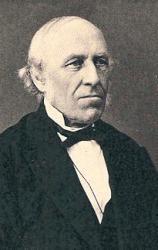
1812 - 1887 Person Name: Ludvig M. Lindeman, (1812-1887) Topics: Church Year Holy Week; Holy Week; Good Friday; Trinity, Eleventh Sunday; Blood of Christ; Christ Work of; Names and Office of Christ Brother; Covenant Christ's; Mercy of God; Sin Forgiveness of Composer of "NAAR MIT ØIE, TRAET AF MØIE" in The Hymnal and Order of Service Ludvig M. Lindeman (b. 1812; d. 1887) was a Norwegian composer and organist. Born in Trondheim, he studied theology in Oslo where he remained the rest of his life. In 1839 he succeeded his brother as the organist and cantor of Oslo Cathedral, a position he held for 48 years up until his death. Lindeman was appointed Knight of the Royal Norwegian Order of St. Olav, and was invited to both help christen the new organ in Royal Albert Hall in London, as well as compose for the coronation of King Oscar II and Queen Sophie of Sweden. In 1883, he and his son started the Organist School in Oslo. Lindeman is perhaps best known for his arrangements of Norwegiam folk tales; over the course of his life he collected over 3000 folk melodies and tunes. Laura de Jong

Samuel Medley

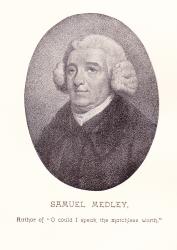
1738 - 1799 Person Name: Samuel Medley, 1738-1799 Topics: Christ, the Lord Jesus Love and Grace of; God: His Being, Word and Works God the Son: His Praise; Grace Refreshing; Salvation by Grace Author of "Awake, my soul, in joyful lays" in The Book of Praise Medley, Samuel, born June 23, 1738, at Cheshunt, Herts, where his father kept a school. He received a good education; but not liking the business to which he was apprenticed, he entered the Royal Navy. Having been severely wounded in a battle with the French fleet off Port Lagos, in 1759, he was obliged to retire from active service. A sermon by Dr. Watts, read to him about this time, led to his conversion. He joined the Baptist Church in Eagle Street, London, then under the care of Dr. Gifford, and shortly afterwards opened a school, which for several years he conducted with great success. Having begun to preach, he received, in 1767, a call to become pastor of the Baptist church at Watford. Thence, in 1772, he removed to Byrom Street, Liverpool, where he gathered a large congregation, and for 27 years was remarkably popular and useful. After a long and painful illness he died July 17, 1799. Most of Medley's hymns were first printed on leaflets or in magazines (the Gospel Magazine being one). They appeared in book form as:— (1) Hymns, &c. Bradford, 1785. This contains 42 hymns. (2) Hymns on Select Portions of Scripture by the Rev. Mr. Medley. 2nd ed. Bristol. W. Pine. 1785. This contains 34 hymns, and differs much from the Bradford edition both in the text and in the order of the hymns. (3) An enlargement of the same in 1787. (4) A small collection of new Hymns, London, 1794. This contains 23 hymns. (5) Hymns. The Public Worship and Private Devotion of True Christians Assisted in some thoughts in Verse; principally drawn from Select Passages of the Word of God. By Samuel Medley. London. Printed for J. Johnson. 1800. A few of his hymns are also found in a Collection for the use of All Denominations, published in London in 1782. Medley's hymns have been very popular in his own denomination, particularly among the more Calvinistic churches. In Denham's Selections there are 48, and in J. Stevens's Selections, 30. Their charm consists less in their poetry than in the warmth and occasional pathos with which they give expression to Christian experience. In most of them also there is a refrain in the last line of each verse which is often effective. Those in common use include:— 1. Come, join ye saints, with heart and voice. (1800). Complete in Christ. 2. Death is no more among our foes. Easter. 3. Eternal Sovereign Lord of all. (1789). Praise for Providential Care. 4. Far, far beyond these lower skies. (1789). Jesus, the Forerunner. 5. Father of mercies, God of love, whose kind, &c. (1789.) New Year. 6. Great God, today Thy grace impart. Sermon. 7. Hear, gracious God! a sinner's cry. (1789). Lent. 8. In heaven the rapturous song began. Christmas. 9. Jesus, engrave it on my heart. (1789). Jesus, Needful to all. 10. Mortals, awake, with angels join. (1782). Christmas. 11. My soul, arise in joyful lays. (1789). Joy in God. 12. Now, in a song of grateful praise. Praise to Jesus. In the Gospel Magazine, June, 1776. 13. O could I speak the matchless worth. (1789.) Praise of Jesus. 14. O for a bright celestial ray. Lent. 15. O God, Thy mercy, vast and free. (1800). Dedication of Self to God. 16. O let us tell the matchless love. Praise to Jesus. 17. O what amazing words of grace. (1789). Foutain of Living Waters. 18. Saints die, and we should gently weep. (1800). Death and Burial. From his "Dearest of Names, Our Lord and King." 19. See a poor sinner, dearest Lord. Lent. 20. Sing the dear Saviour's glorious fame. (1789). Jesus the Breaker of bonds. In 1800 a Memoir of Medley was published by his son, which is regarded by members of the family now living as authoritative. But in 1833 appeared another Memoir by Medley's daughter Sarah, to which are appended 52 hymns for use on Sacramental occasions. These she gives as her father's. But 8 of them are undoubtedly by Thos. Kelly, published by him in 1815, and reprinted in subsequent editions of his Hymns. The remainder are by Medley. Nearly all of these 52 hymns (both Medley's and Kelly's) have been altered in order to adapt them to Sacramental use. In Sarah Medley's volume, Kelly's hymns all follow one another, and three of them are in a metre which Medley apparently never used. What could have been Sarah Medley's motive in all this it is hard to divine. She is said to have been a clever, though unamiable woman, and was herself the author of a small volume of Poems published in 1807. In the Memoir she does not conceal her hatred of her brother. [Rev. W. R. Stevenson, M.A.] -- John Julian, Dictionary of Hymnology (1907)

Charles Coffin

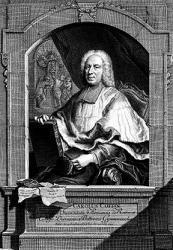
1676 - 1749 Person Name: Charles Coffin (1676-1749) Topics: Church Year Pentecost; God Love of; Holy Spirit Invocation of; Love for Others; Pentecost and the Work of the Holy Spirit; Unity Author of "O Holy Spirit, Lord of grace" in Ancient and Modern Coffin, Charles, born at Buzaney (Ardennes) in 1676, died 1749, was principal of the college at Beauvais, 1712 (succeeding the historian Rollin), and rector of the University of Paris, 1718. He published in 1727 some, of his Latin poems, for which he was already noted, and in 1736 the bulk of his hymns appeared in the Paris Breviary of that year. In the same year he published them as Hymni Sacri Auctore Carolo Coffin, and in 1755 a complete ed. of his Works was issued in 2 vols. To his Hymni Sacri is prefixed an interesting preface. The whole plan of his hymns, and of the Paris Breviary which he so largely influenced, comes out in his words. "In his porro scribendis Hymnis non tam poetico indulgendunv spiritui, quam nitoro et pietate consulendum esse existimavi. Pleraque igitur, argumentis convenientia e purissiinis Scripturae Sacrae fontibus deprompsi quac idoneis Ecclesiae cantui numeris alligarem." His hymns are described by a French critic as having less brilliancy than those of Santüil (q.v.), but more simplicity and unction. They number 100 in the edition of 1736. Translated into English by J. Chandler, I. Williams and others, are noted under their respective Latin first lines. [William T. Brooke] -- John Julian, Dictionary of Hymnology (1907)

John Chandler

1806 - 1876 Person Name: John Chandler (1806-1876) Topics: Church Year Pentecost; God Love of; Holy Spirit Invocation of; Love for Others; Pentecost and the Work of the Holy Spirit; Unity Translator of "O Holy Spirit, Lord of grace" in Ancient and Modern John Chandler, one of the most successful translators of hymns, was born at Witley in Surrey, June 16, 1806. He was educated at Corpus Christi College, Oxford, B.A. 1827, M.A. 1830. Ordained deacon in 1831 and priest in 1832, he succeeded his father as the patron and vicar of Whitley, in 1837. His first volume, entitled The Hymns of the Primitive Church, now first Collected, Translated and Arranged, 1837, contained 100 hymns, for the most part ancient, with a few additions from the Paris Breviary of 1736. Four years later, he republished this volume under the title of hymns of the Church, mostly primitive, collected, translated and arranged for public use, 1841. Other publications include a Life of William of Wykeham, 1842, and Horae sacrae: prayers and meditations from the writings of the divines of the Anglican Church, 1854, as well as numerous sermons and tracts. Chandler died at Putney on July 1, 1876. --The Hymnal 1940 Companion =============== Chandler, John, M.A.,one of the earliest and most successful of modern translators of Latin hymns, son of the Rev. John F. Chandler, was born at Witley, Godalming, Surrey, June 16, 1806, and educated at Corpus Christi College, Oxford, where he graduated in 1827. He took Holy Orders in 1831, and became Vicar of Witley in 1837. He died at Putney, July 1, 1876. Besides numerous Sermons and Tracts, his prose works include Life of William of Wykeham, 1842; and Horae Sacrae; Prayers and Meditations from the writings of the Divines of the Anglican Church, with an Introduction, 1844. His translations, he says, arose out of his desire to see the ancient prayers of the Anglican Liturgy accompanied by hymns of a corresponding date of composition, and his inability to find these hymns until he says, "My attention was a short time ago directed to some translations [by Isaac Williams] which appeared from time to time in the British Magazine, very beautifully executed, of some hymns extracted from the Parisian Breviary,with originals annexed. Some, indeed, of the Sapphic and Alcaic and other Horatian metres, seem to be of little value; but the rest, of the peculiar hymn-metre, Dimeter Iambics, appear ancient, simple, striking, and devotional—in a word in every way likely to answer our purpose. So I got a copy of the Parisian Breviary [1736], and one or two other old books of Latin Hymns, especially one compiled by Georgius Cassander, printed at Cologne, in the year 1556, and regularly applied myself to the work of selection and translation. The result is the collection I now lay before the public." Preface, Hymns of the Primitive Church, viii., ix. This collection is:— (1) The Hymns of the Primitive Church, now first Collected, Translated, and Arranged, by the Rev. J. Chandler. London, John W. Parker, 1837. These translations were accompanied by the Latin texts. The trsanslations rearranged, with additional translations, original hymns by Chandler and a few taken from other sources, were republished as (2) The Hymns of the Church, mostly Primitive, Collected, Translated, and Arranged/or Public Use, by the Rev. J. Chandler, M.A. London, John W. Parker, 1841. From these works from 30 to 40 translations have come gradually into common use, some of which hold a foremost place in modern hymnals, "Alleluia, best and sweetest;" "Christ is our Corner Stone;" "On Jordan's bank the Baptist's cry;" "Jesus, our Hope, our hearts' Desire;" "Now, my soul, thy voice upraising;" "Once more the solemn season calls;" and, "O Jesu, Lord of heavenly grace;" being those which are most widely used. Although Chandler's translations are somewhat free, and, in a few instances, doctrinal difficulties are either evaded or softened down, yet their popularity is unquestionably greater than the translations of several others whose renderings are more massive in style and more literal in execution. --John Julian, Dictionary of Hymnology (1907)

Thomas Tallis

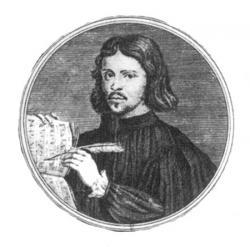
1505 - 1585 Person Name: Thomas Tallis (c. 1505-1585) Topics: Church Year Pentecost; God Love of; Holy Spirit Invocation of; Love for Others; Pentecost and the Work of the Holy Spirit; Unity Composer of "TALLIS'S ORDINAL" in Ancient and Modern Thomas Tallis (b. Leicestershire [?], England, c. 1505; d. Greenwich, Kent, England 1585) was one of the few Tudor musicians who served during the reigns of Henry VIII: Edward VI, Mary, and Elizabeth I and managed to remain in the good favor of both Catholic and Protestant monarchs. He was court organist and composer from 1543 until his death, composing music for Roman Catholic masses and Anglican liturgies (depending on the monarch). With William Byrd, Tallis also enjoyed a long-term monopoly on music printing. Prior to his court connections Tallis had served at Waltham Abbey and Canterbury Cathedral. He composed mostly church music, including Latin motets, English anthems, settings of the liturgy, magnificats, and two sets of lamentations. His most extensive contrapuntal work was the choral composition, "Spem in alium," a work in forty parts for eight five-voice choirs. He also provided nine modal psalm tunes for Matthew Parker's Psalter (c. 1561). Bert Polman

Mrs. Barbauld

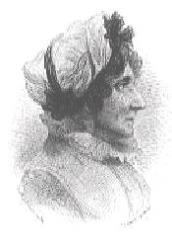
1743 - 1825 Person Name: Anna L. Barbauld Topics: God Love and Grace of; Works of Providence Author of "Praise to God, immortal praise" in Trinity Hymnal Barbauld, Anna Laetitia, née Aikin, daughter of the Rev. John Ailrin, D.D., a dissenting minister, was b. at Kibworth-Harcourt, Leicestershire, June 20, 1743. In 1753 Dr. Aikin became classical tutor at a dissenting academy at Warrington. During her residence there she contributed five hymns to Dr. W. Enfield's Hymns for Public Worship, &c, Warrington, 1772. In the following year these were included in her Poems, Lond., J. Johnson, 1773. In May, 1774, Miss Aikin was married to the Rev. Rochemont Barbauld, a descendant of a French Protestant family, and a dissenting minister. For some years Mr. Barbauld conducted, in addition to his pastoral work, a boarding school at Palgrave, Suffolk. From this he retired in 1785. In 1786 he undertook the charge of a small congregation at Hampstead, and from thence he passed to the dissenting chapel (formerly Dr. Price's) at Newington Green, in 1802. He d. Nov. 11, 1808. Mrs. Barbauld continued to reside in the neighbourhood until her death, March 9, 1825. In the latter part of the same year her niece published The Works of Anna Laetitia Barbauld, with Memoir, by Lucy Aikin, 2 vols., Lond., Longman, 1825. As a writer of hymns Mrs. Barbauld was eminently successful. Their use, however, with the exception of five contributed to Dr. W. Enfield's collection, is almost exclusively confined to the Unitarian hymnals of Great Britain and America. Including these hymnals, the whole of her hymns are still in common use. These hymns appeared thus:— i. In Dr. W. Enfield's Hymns, &c., 1772. 1. Again the Lord of life and light. Easter. 2. Awake, my soul, lift up thine eyes. Conflict. 3. Behold, where breathing love divine. Christian Charity. 4. Jehovah reigns, let every nation hear. God's Dominion. A part of this was given in Collyer's Sel., 1812, No. 586, as:— 5. This earthly globe, the creature of a day. 6. Praise to God, Immortal praise. Harvest. ii. Poems, 1773 (Preface dated Dec. 1, 1772). The whole of the above, and also:— 7. God of my life and author of my days. To God the Father. This is an “Address to the Deity," in 80 1. It is given in Martineau's Collection, 1840 and 1873. From it the following centos were given in Collyer's Selection> 1812:— 8. God, our kind Master, merciful as just. 9. If friendless in the vale of tears I stray. iii. Poems revised 1792. 10. Come, said [says] Jesus' sacred voice. Invitation. 11. How blest the sacred tie that binds. Christian Fellowship. 12. Lo where a crowd of pilgrims toil. Pilgrimage of Life. From this is taken:— 13. Our country is Immanuel's ground [land]. iv. Leisure Hour Improved (Ironbridge), 1809. 14. Sweet is the scene when virtue dies. Death. v. Supplement to the Unitarian Coll. of Kippis, Bees, and others, 1807. 15. When as returns the solemn day. Sunday. 16. Sleep, sleep to day, tormenting cares. Sunday. 17. How may earth and heaven unite. Worship. vi. Works, with Memoir, 1825. In vol. i. most of the above are reprinted, and the following are added :— 18. Joy to the followers of the Lord. Joy. (c. 1820.) 19. Pure spirit, O where art thou now. Bereavement. This is dated 1808. 20. Salt of the earth, ye virtuous few. Salt of the Earth. 21. When life as opening buds is sweet. Death. This is dated " November, 1814." The more important of these hymns are annotated in this Dictionary under their first lines. Mrs. Barbauld's Hymns in Prose for Children, originally published in 1781, were long popular and have been translated into French, Italian, Spanish, and other languages. -- John Julian, Dictionary of Hymnology (1907) =================== Barbauld, Anna L., p. 113, ii. No. 18 on p. 114, i.,should be dated circa 1820. Another hymn in common use from Mrs. Barbauld's Works, &c, 1825, is, "O Father! though the anxious fear" (E. Taylor, p. 1117, in error). --John Julian, Dictionary of Hymnology, Appendix, Part II (1907) See also in: Hymn Writers of the Church

John Hughes

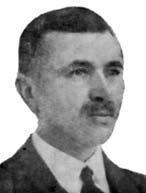
1873 - 1932 Person Name: John Hughes, 1873-1932 Topics: Courage; Fear; Freedom; God's Glory, Majesty and Power; God's Grace; Guidance; Mission; Obedience; Wisdom; Witness; Work; Zion-Reign of God Composer of "CWM RHONDDA" in Community of Christ Sings John Hughes (b. Dowlais, Glamorganshire, Wales, 1873; d. Llantwit Fardre, Wales, 1932) received little formal education; at age twelve he was already working as a doorboy at a local mining company in Llantwit Fardre. He eventually became an official in the traffic department of the Great Western Railway. Much of his energy was devoted to the Salem Baptist Church in Pontypridd, where he served as both deacon and precentor. Hughes composed two anthems, a number of Sunday school marches, and a few hymn tunes, of which CWM RHONDDA is universally known, the tune was composed in 1905 Baptist Cymanfa Ganu (song festival) in Capel Rhondda, Pontypridd, Wales. Bert Polman

Johann Sebastian Bach

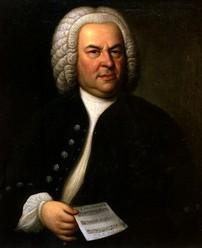
1685 - 1750 Person Name: J. S. Bach, 1685-1750 Topics: Penance Sacraments; Daily Life and Work; Ecumenism; Guidance; Healing; Hope; Jesus Christ; Labor; Mercy, Forgiveness; Peace; Petition, Prayer; Reconciliation, Atonement, Forgiveness; Redemption; Second Coming; Sickness; Understanding; Word of God; Gospel Harmonizer of "PASSION CHORALE" in Lead Me, Guide Me (2nd ed.) Johann Sebastian Bach was born at Eisenach into a musical family and in a town steeped in Reformation history, he received early musical training from his father and older brother, and elementary education in the classical school Luther had earlier attended. Throughout his life he made extraordinary efforts to learn from other musicians. At 15 he walked to Lüneburg to work as a chorister and study at the convent school of St. Michael. From there he walked 30 miles to Hamburg to hear Johann Reinken, and 60 miles to Celle to become familiar with French composition and performance traditions. Once he obtained a month's leave from his job to hear Buxtehude, but stayed nearly four months. He arranged compositions from Vivaldi and other Italian masters. His own compositions spanned almost every musical form then known (Opera was the notable exception). In his own time, Bach was highly regarded as organist and teacher, his compositions being circulated as models of contrapuntal technique. Four of his children achieved careers as composers; Haydn, Mozart, Beethoven, Mendelssohn, Schumann, Brahms, and Chopin are only a few of the best known of the musicians that confessed a major debt to Bach's work in their own musical development. Mendelssohn began re-introducing Bach's music into the concert repertoire, where it has come to attract admiration and even veneration for its own sake. After 20 years of successful work in several posts, Bach became cantor of the Thomas-schule in Leipzig, and remained there for the remaining 27 years of his life, concentrating on church music for the Lutheran service: over 200 cantatas, four passion settings, a Mass, and hundreds of chorale settings, harmonizations, preludes, and arrangements. He edited the tunes for Schemelli's Musicalisches Gesangbuch, contributing 16 original tunes. His choral harmonizations remain a staple for studies of composition and harmony. Additional melodies from his works have been adapted as hymn tunes. --John Julian, Dictionary of Hymnology (1907)

William B. Bradbury

1816 - 1868 Person Name: William Batchelder Bradbury (1816-1868) Topics: God Works of Composer of "FULTON" in Songs of Praise with Tunes William Batchelder Bradbury USA 1816-1868. Born at York, ME, he was raised on his father's farm, with rainy days spent in a shoe-shop, the custom in those days. He loved music and spent spare hours practicing any music he could find. In 1830 the family moved to Boston, where he first saw and heard an organ and piano, and other instruments. He became an organist at 15. He attended Dr. Lowell Mason's singing classes, and later sang in the Bowdoin Street church choir. Dr. Mason became a good friend. He made $100/yr playing the organ, and was still in Dr. Mason's choir. Dr. Mason gave him a chance to teach singing in Machias, ME, which he accepted. He returned to Boston the following year to marry Adra Esther Fessenden in 1838, then relocated to Saint John, New Brunswick. Where his efforts were not much appreciated, so he returned to Boston. He was offered charge of music and organ at the First Baptist Church of Brooklyn. That led to similar work at the Baptist Tabernacle, New York City, where he also started a singing class. That started singing schools in various parts of the city, and eventually resulted in music festivals, held at the Broadway Tabernacle, a prominent city event. He conducted a 1000 children choir there, which resulted in music being taught as regular study in public schools of the city. He began writing music and publishing it. In 1847 he went with his wife to Europe to study with some of the music masters in London and also Germany. He attended Mendelssohn funeral while there. He went to Switzerland before returning to the states, and upon returning, commenced teaching, conducting conventions, composing, and editing music books. In 1851, with his brother, Edward, he began manufacturring Bradbury pianos, which became popular. Also, he had a small office in one of his warehouses in New York and often went there to spend time in private devotions. As a professor, he edited 59 books of sacred and secular music, much of which he wrote. He attended the Presbyterian church in Bloomfield, NJ, for many years later in life. He contracted tuberculosis the last two years of his life. John Perry

Pages


Export as CSV
It looks like you are using an ad-blocker. Ad revenue helps keep us running. Please consider white-listing Hymnary.org or getting Hymnary Pro to eliminate ads entirely and help support Hymnary.org.