

 My Starred Hymns
 My FlexScores
 My Hymnals
 My Purchased Files
Planning worship?
Check out our sister site, ZeteoSearch.org,
for 20+ additional resources related to your search.
- |
User Links
Person Results
Richard Redhead
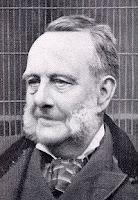
1820 - 1901 Topics: Aspirations For Grace; Aspirations For Holiness; Aspirations For the Holy Spirit; Assurance Desired; Baptism; Cares; Character Depraved from Birth; Character New Birth Essential to Good; Christians Duties of; Christians Graces of; Christians Saved by Grace; Deliverance From Sin; Faith Act of; Faith Walking by; God Love and Mercy; Gospel Freeness of ; Gospel Sanctifying and Saving; Grace Abounding; Grace Justifying; Grace Redeeming; Grace Restoring; Heart Broken and Contrite; Heart Claimed of God; Heart Good, Perfect, Pure and Upright; Holiness Of Christians; Humility; Joy Prayer for; Man Sinful and Lost Condition; Mercy of God Prayer for; Pardon Sought; Parents and Children; Penitence; Prayer Confession in; Prayer For Grace and Salvation; Prayer For Pardon; Prayer Promise to; Regeneration; Repentance; Revival; Sin Confession of; Sin Conviction of; Sin Hatred of; Sin Original; Sin Salvation from; Sin Washed away; Truth; Worship Sincerity in Composer of "AJALON" in The Psalter Richard Redhead (b. Harrow, Middlesex, England, 1820; d. Hellingley, Sussex, England, 1901) was a chorister at Magdalen College, Oxford. At age nineteen he was invited to become organist at Margaret Chapel (later All Saints Church), London. Greatly influencing the musical tradition of the church, he remained in that position for twenty-five years as organist and an excellent trainer of the boys' choirs. Redhead and the church's rector, Frederick Oakeley, were strongly committed to the Oxford Movement, which favored the introduction of Roman elements into Anglican worship. Together they produced the first Anglican plainsong psalter, Laudes Diurnae (1843). Redhead spent the latter part of his career as organist at St. Mary Magdalene Church in Paddington (1864-1894).
Bert Polman
Richard Redhead
Thomas Hastings
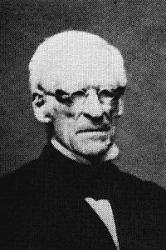
1784 - 1872 Topics: Aspirations For Grace; Aspirations For Holiness; Aspirations For the Holy Spirit; Assurance Desired; Baptism; Cares; Character Depraved from Birth; Character New Birth Essential to Good; Christians Duties of; Christians Graces of; Christians Saved by Grace; Deliverance From Sin; Faith Act of; Faith Walking by; God Love and Mercy; Gospel Freeness of ; Gospel Sanctifying and Saving; Grace Abounding; Grace Justifying; Grace Redeeming; Grace Restoring; Heart Broken and Contrite; Heart Claimed of God; Heart Good, Perfect, Pure and Upright; Holiness Of Christians; Humility; Joy Prayer for; Man Sinful and Lost Condition; Mercy of God Prayer for; Pardon Sought; Parents and Children; Penitence; Prayer Confession in; Prayer For Grace and Salvation; Prayer For Pardon; Prayer Promise to; Regeneration; Repentance; Revival; Sin Confession of; Sin Conviction of; Sin Hatred of; Sin Original; Sin Salvation from; Sin Washed away; Truth; Worship Sincerity in Composer of "TOPLADY" in The Psalter Hastings, Thomas, MUS. DOC., son of Dr. Seth Hastings, was born at Washington, Lichfield County, Connecticut, October 15, 1784. In 1786, his father moved to Clinton, Oneida Co., N. Y. There, amid rough frontier life, his opportunities for education were small; but at an early age he developed a taste for music, and began teaching it in 1806. Seeking a wider field, he went, in 1817, to Troy, then to Albany, and in 1823 to Utica, where he conducted a religious journal, in which he advocated his special views on church music. In 1832 he was called to New York to assume the charge of several Church Choirs, and there his last forty years were spent in great and increasing usefulness and repute. He died at New York, May 15, 1872. His aim was the greater glory of God through better musical worship; and to this end he was always training choirs, compiling works, and composing music. His hymn-work was a corollary to the proposition of his music-work; he wrote hymns for certain tunes; the one activity seemed to imply and necessitate the other. Although not a great poet, he yet attained considerable success. If we take the aggregate of American hymnals published duriug the last fifty years or for any portion of that time, more hymns by him are found in common use than by any other native writer. Not one of his hymns is of the highest merit, but many of them have become popular and useful. In addition to editing many books of tunes, Hastings also published the following hymnbooks:—
(1) Spiritual Songs for Social Worship: Adapted to the Use of Families and Private Circles in Seasons of Revival, to Missionary Meetings, &c, Utica, 1831-2, in which he was assisted by Lowell Mason; (2) The Mother's Hymn-book, 1834; (3) The Christian Psalmist; or, Watts's Psalms and Hymns, with copious Selections from other Sources, &c, N. Y., 1836, in connection with "William Patton; (4) Church Melodies, N. Y., 1858, assisted by his son, the Rev. T. S. Hastings; (5) Devotional Hymns and Poems, N. Y., 1850. The last contained many, but not all, of his original hymns. (6) Mother's Hymn-book, enlarged 1850.
The authorship of several of Hastings's hymns has been somewhat difficult to determine. All the hymns given in the Spiritual Songs were without signatures. In the Christian Psalmist some of his contributions were signed "Anon." others "M. S.," whilst others bore the names of the tune books in which they had previously appeared; and in the Church Melodies some were signed with his name, and others were left blank. His MSS [manuscript] and Devotional Hymns, &c, enable us to fix the authorship of over 50 which are still in common use. These, following the chronological order of his leading work, are:—
i. From the Spiritual Songs, 1831:—
1. Before Thy footstool kneeling. In Sickness. No. 358, in 3 stanzas of 8 lines.
2. Bleeding hearts defiled by sin. Fulness of Christ. No. 261, in 5 stanzas of 4 lines.
3. Child of sin and sorrow, Filled with dismay. Lent. No. 315, in 2 stanzas of 8 lines. It is sometimes given as "Child of sin and sorrow, Where wilt thou flee?" It is in extensive use.
4. Delay not, delay not, 0 sinner draw near. Exhortation to Repentance. No. 145, in 5 stanzas of 4 lines. Given in several important collections.
5. Forgive us, Lord, to Thee we cry. Forgiveness desired. No. 165, in 4 stanzas of 4 lines.
6. Gently, Lord, 0 gently lead us. Pilgrimage of Life. No. 29, in 2 stanzas of 8 lines. It is given in several collections. The first two lines are taken from a hymn which appeared in the Christian Lyre, 1830.
7. Go forth on wings of fervent prayer. For a blessing on the distribution of Books and Tracts. No. 250, in 4 stanzas of 5 lines. It is sometimes given as “Go forth on wings of faith and prayer," as in the Baptist Praise Book, N. Y., 1871, No. 1252; but the alterations are so great as almost to constitute it a new hymn.
8. Hail to the brightness of Zion's glad morning. Missionary Success. No. 239, in 4 stanzas of 4 lines. In several hymnbooks in Great Britain and America.
9. How calm and beautiful the morn. Easter. No. 291, in 5 stanzas of 6 lines. Very popular.
10. In this calm, impressive hour. Early Morning. No. 235, pt. i. in 3 stanzas of 6 lines. In several collections.
11. Jesus, save my dying soul. Lent. No. 398, in 4 stanzas of 4 lines. A deeply penitential hymn.
12. Now be the gospel banner. Missions. No. 178, in 2 stanzas of 8 lines. In several collections (see below).
13. Now from labour, and from care. Evening. No. 235. Pt. ii. in 3 stanzas of 6 lines. This hymn, with No. 10 above, "In this calm," &c, constitute one hymn of 6 st. in the Spiritual Songs, but divided into two parts, one for Morning and the other for Evening. Both parts are popular as separate hymns.
14. 0 God of Abraham, hear. Prayer on behalf of Children. No. 288, in 5 stanzas of 4 lines. In use in Great Britain.
15. 0 tell me, Thou Life and delight of my soul. Following the Good Shepherd. No. 151, in 5 stanzas of 4 lines, on Cant. i. 7, 8.
16. Return, O wanderer, to thy home. The Prodigal recalled. No. 183, in 3 stanzas of 4 lines, with the refrain, " Return, return " (see below).
17. Soft and holy is the place. Public Worship. No. 351, in 4 stanzas of 4 lines. In Dr. Hatfield's Church Hymn Book, N. Y., 1872, and some other collections, the opening line is altered to "Sweet and holy is the place."
18. That warning voice, 0 sinner, hear. Exhortation to Repentance. No. 231, in 4 stanzas of 6 lines.
19. To-day the Saviour calls. Lent. No. 176, in 4 stanzas of 4 lines. Dr. Hastings says, in a communication to Dr. Stevenson (Hymns for Church and Home, 1873), this hymn “was offered me in a hasty sketch which I retouched." The sketch was by the Rev. S. F. Smith.
20. Why that look of sadness. Consolation. No. 268, in 3 stanzas of 8 lines.
21. Zion, dreary and in anguish. The Church Comforted. No. 160, in 4 stanzas of 4 lines.
Concerning the two hymns, No. 12, "Now be the gospel banner"; and No. 16, "Beturn, O wanderer, to thy home," Dr. Stevenson has the following note in his Hymns for Church and Home, London, 1873:—
"In a letter to the Editor, Dr. Hastings wrote, not more than a fortnight before his death, 'These two hymns of mine were earlier compositions, the former ["Now be," &c.] for a Utica Sunday School celebration, the latter ["Return, 0 wanderer," &c.] after hearing a stirring revival sermon on the Prodigal Son, by the Rev. Mr. Kint, at a large union meeting in the Presbyterian Church, where two hundred converts were present. The preacher at the close eloquently exclaimed with tender emphasis, "Sinner, come home! come home! come home!" It was easy afterwards to write, "Return, 0 wanderer."'"
Several additional hymns in the Spiritual Songs, 1831, have been ascribed to Dr. Hastings, but without confirmation. The sum of what can be said on his behalf is that the hymns are in his style, and that they have not been claimed by others. They are:—
22. Drooping souls, no longer mourn. Pardon promised. No. 40, in 3 stanzas of 8 1., of which st. i., ii. are altered from J. J. Harrod's Public, Parlour, and Cottage Hymns, Baltimore, 1823, that is, 8 years before the Spiritual Songs were published.
23. Dying souls, fast bound in sin. Pardon offered. No. 41, in 5 stanzas of 8 lines. It is usually given in an abridged form.
ii. From his Mother's Hymn Book, 1834:—-
24. Forbid them not, the Saviour cried. Holy Baptism. No. 44.
25. God of mercy, hear our prayer. On behalf of Cliildrcn, No. 48, in 5 stanzas of 4 lines. It was included in J. Campbell's Comprehensive Hymn Book, Lond., 1837, and subsequently in several collections.
26. God of the nations, bow Thine ear. Missions. No. 115, in 4 stanzas of 6 lines. In several collections.
27. How tender is Thy hand. Affliction. No. 99, in 5 stanzas of 41.
28. Jesus, while our hearts are bleeding. Death. Resignation. No. 95, in 5 stanzas of 4 lines. This is in extensive use and is one of his best and most popular hymns.
29. Lord, I would come to Thee. Self-dedication of a Child. No. 72, in 4 stanzas of 4 lines.
30. 0 Lord, behold us at Thy feet. Lent. No. 59, in 4 stanzas of 4 lines. It is doubtful if this is by Hastings. It is sometimes signed "Mrs. T."
31. The rosy light is dawning. Morning. No. 11, in 3 stanzas of 8 lines.
32. The Saviour bids us [thee] watch and pray. Watch and Pray. No. 119, in 4 stanzas of 4 lines.
33. Thou God of sovereign grace. On behalf of Children. No. 66, in 6 stanzas of 4 lines.
34. Wherever two or three may meet. Divine Service. No. 56.
35. Within these quiet walls, 0 Lord. Mothers' Meetings. No. 58, in 5 stanzas of 4 lines. In Spurgeon's Our Own Hymn Book, 1866, No. 1010, it begins, "Within these peaceful walls." This reading is from J. Campbell's Comprehensive Hymn Book, London, 1837. It is very doubtful if this is by Hastings.
iii. From the Christian Psalmist, 1836:—
36. Children, hear the melting story. On the life of Christ. No. 430, in 3 stanzas of 6 lines. It is given as from the Union Minstrel, and the statement that it is by Hastings is very doubtful, no evidence to that effect being in the possession of his family. Dr. Hatfield, in his Church Hymn Book, dates it 1830, and gives it as "Anon."
37. Go, tune thy voice to sacred song. Praise No. 190, in 5 stanzas of 5 lines, and given as from "ms."
38. He that goeth forth with weeping. Missions No. 212, in 2 stanzas of 8 lines, and given as from "ms." It is in several collections.
39. I love the Lord, Whose gracious ear. Ps. cxvi. Page 186, in 4 stanzas of 6 lines, as from "ms."
40. Lord of the harvest, bend Thine ear. For the Increase of the Ministry. No. 407, in 6 stanzas of 4 lines, as from "ms." This hymn Dr. Hastings altered for his Devotional Hymns & Poems, 1850, but it has failed to replace the original in the hymnbooks.
iv. From the Reformed Dutch Additional Hymns, 1846:—
41. Child of sorrow, child of care [woe]. Trust. No. 168, in 2 stanzas of 8 lines, appeared in W. Hunter's Minstrel of Zion, 1845.
42. Heirs of an immortal crown. Christian Warfare. No. 136, in 2 stanzas of 8 lines.
43. O Saviour, lend a listening ear. Lent. No. 175. Stanzas vi., i., iv., v., altered.
44. The Lord Jehovah lives. Ps. xviii. No. 26, in 4 stanzas of 6 lines.
These three hymns, together with many others, are given in the Dutch Reformed Hymns of the Church, N. Y., 1869. In the 1847 Psalms & Hymns there were, including these, 38 hymns by Hastings, and 2 which are doubtful.
v. From Dr. Hastings's Devotional Hymns and Religious Poems, 1850:—
45. In time of fear, when trouble's near. Encouragement in Trial. Page 95, in 3 stanzas of 4 lines. In use in Great Britain.
vi. From Church Melodies, 1858:—-
46. For those in bonds as bound with them. Missions. No. 416, in 5 stanzas of 4 lines, on Heb. xiii. 3.
47. Forget thyself, Christ bids thee come. Holy Communion. No. 683, in 3 stanzas of 6 lines.
48. Jesus, Merciful and Mild. Leaning on Christ. No. 585, in 4 stanzas of 8 1. In several collections.
49. Pilgrims in this vale of sorrow. Self-denial. No. 397, in 4 stanzas of 4 lines.
50. Saviour, I look to Thee. Lent. In time of Trouble. No. 129, in 4 stanzas of 7 lines.
51. Saviour of our ruined race. Holy Communion. No. 379, in 3 stanzas of 6 lines.
52. Why that soul's commotion? Lent. No. 211, in 3 stanzas of 8 lines. It is doubtful if this is by Hastings.
vii. In Robinson's Songs of the Church, 1862:
53. Be tranquil, 0 my soul. Patience in Affliction. No. 519, in 4 stanzas of 4 lines. Altered in Robinson's Songs for the Sanctuary, 1865.
54. Peace, peace, I leave with you. Peace, the benediction of Christ. No. 386, in 3 stanzas of 7 lines.
55. Saviour, Thy gentle voice. Christ All in All. No. 492, in 3 stanzas of 7 lines.
viii. In Bobinson's Songs for the Sanctuary, 1865:—
56. God of the morning ray. Morning. No. 53, in 2 stanzas of 7 lines.
Of Hastings's hymns about 40 are in the Reformed Dutch Psalms & Hymns, 1847; 39 in Robinson's Songs for the Sanctuary, 1865; 15 in Hatfield's Church Hymn Book, 1872; and 13 in the Lyra Sacra Americana, 1868. They are also largely represented in other collections. Many other of his compositions are found in collections now or recently in common use, but these are not of the highest merit. [Rev. F. M. Bird, M.A.]
--John Julian, Dictionary of Hymnology (1907)
========================
Hastings, T., p. 494, i. Additional hymns are:—
1. Children hear the wondrous story; and "Sinners, hear the melting story," are altered forms of No. 36, on p. 495, i.
2. Father, we for our children plead. On behalf of Children.
3. Forgive my folly, O Lord most holy. Lent.
4. Hosanna to the King, That for, &c. Praise to Jesus.
5. I look to Thee, O Lord, alone. Pardon desired.
6. Jesus, full of every grace. Pardon desired.
7. O why should gloomy thoughts arise? The Mourner Encouraged.
8. Peace to thee, O favoured one. Peace in Jesus.
9. Saviour, hear us through Thy merit. Forgiveness. Of these hymns, No. 3 is in Hasting’s Spiritual Songs, 1831; No. 9 in his Mother's Hymn Book, 1834, and his Devotional Hymns, 1850; and Nos. 4, 5 & 8 in his Devotional Hymns, 1850.
--John Julian, Dictionary of Hymnology, Appendix, Part II (1907)
Thomas Hastings
Joseph Haydn
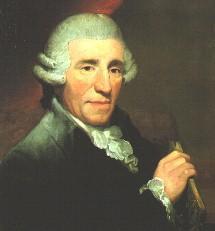
1732 - 1809 Person Name: Josef Haydn Topics: Adoration; Christ Atonement of; Christ Exaltation of; Christ Judgeship of; Christ Power of; Christ Second Coming of; Christ The Saviour; Christ Worshiped; Christians Duties of; God Adored and Exalted; God Glorious; God Kingly Character of; God Love and Mercy; God Righteousness of; Gospel Freeness of ; Gospel Invitations of ; Gospel Prevalence and Power of; Judgment Day; Mercy of God Celebrated; Missions Encouragements of; Missions Triumphs of; Nations Owe Allegiance to Christ; Praise By Men; Praise Calls to; Praise For Spiritual Blessings; Praise For Work of Redemption; Revival; Royalty of Christ Guarantee of Salvation; Royalty of Christ Judgment the Prerogative of; Salvation Thanksgiving for; The Sea; Temperance Songs; Truth; Worship Call to Composer of "AUSTRIAN HYMN" in The Psalter Franz Joseph Haydn (b. Rohrau, Austria, 1732; d. Vienna, Austria, 1809) Haydn's life was relatively uneventful, but his artistic legacy was truly astounding. He began his musical career as a choirboy in St. Stephen's Cathedral, Vienna, spent some years in that city making a precarious living as a music teacher and composer, and then served as music director for the Esterhazy family from 1761 to 1790. Haydn became a most productive and widely respected composer of symphonies, chamber music, and piano sonatas. In his retirement years he took two extended tours to England, which resulted in his "London" symphonies and (because of G. F. Handel's influence) in oratorios. Haydn's church music includes six great Masses and a few original hymn tunes. Hymnal editors have also arranged hymn tunes from various themes in Haydn's music.
Bert Polman
Joseph Haydn
Felice Giardini
1716 - 1796 Person Name: Felice Gieadini Topics: Adoration; Children Piety in; Christ Communion with; Christ Worshiped; Christians Blessedness of; Church Beloved of God; Church Triumph of; God Adored and Exalted; God Glorious; God Kingly Character of; Gospel Gracious Fruit of; Gospel Invitations of ; Joy Exhortations to; Meekness; Mercy of God Celebrated; Praise By Saints; Praise Calls to; Praise For Works of Providence; Praise For Work of Redemption; Salvation God's Gift; Thanksgiving Declared; Worship Call to ; Worship Private Composer of "ITALIAN HYMN" in The Psalter Felice Giardini, born in Italy. When young, he studied singing, harpsichord, and violin. He became a composer and violin virtuoso. By age 12 he was playing in theatre orchestras. His most instructive lesson: While playing a solo passage during an opera, he decided to show off his skills by improvising several bravura variations that the composer, Jommelli, had not written . Although the audience applauded loudly, Jomelli, who happened to be there, went up and slapped Giardini in the face. He learned a lesson from that. He toured Europe as a violinist, considered one of the greatest musical artists of his time. He served as orchestra leader and director of the Italian Opera in London, giving concerts. He tried to run a theatre in Naples, but encountered adversity. He went to Russia, but had little fortune there, where he died.
John Perry
Felice Giardini
William B. Bradbury

1816 - 1868 Topics: Adoration; Afflictions Promises for; Assurance Enjoyed; Bible A Guide; Bible Instrument of Salvation; Christians Conscious of Safety; Church Christ the Head of; Covenant Promises; Faith Walking by; God Adored and Exalted; God Glorious; God Our Guardian; God Hearer of Prayer; God Kingly Character of; Gospel Fulness of ; Gospel Prevalence and Power of; Grace Quickening; Grace Sustaining; Humility; Mercy of God Everlasting; Missions Influence of; Missions Triumphs of; Nations Conversion of; Patience; Praise By Nations; Praise For God's Mercy; Pride; Revival; Royalty of Christ Bible His Law; Royalty of Christ Civil Rulers in Relation to; Royalty of Christ Nations Subject to; Strength in God; Truth; Worship Acts of Composer of "THE SOLID ROCK" in The Psalter William Batchelder Bradbury USA 1816-1868. Born at York, ME, he was raised on his father's farm, with rainy days spent in a shoe-shop, the custom in those days. He loved music and spent spare hours practicing any music he could find. In 1830 the family moved to Boston, where he first saw and heard an organ and piano, and other instruments. He became an organist at 15. He attended Dr. Lowell Mason's singing classes, and later sang in the Bowdoin Street church choir. Dr. Mason became a good friend. He made $100/yr playing the organ, and was still in Dr. Mason's choir. Dr. Mason gave him a chance to teach singing in Machias, ME, which he accepted. He returned to Boston the following year to marry Adra Esther Fessenden in 1838, then relocated to Saint John, New Brunswick. Where his efforts were not much appreciated, so he returned to Boston. He was offered charge of music and organ at the First Baptist Church of Brooklyn. That led to similar work at the Baptist Tabernacle, New York City, where he also started a singing class. That started singing schools in various parts of the city, and eventually resulted in music festivals, held at the Broadway Tabernacle, a prominent city event. He conducted a 1000 children choir there, which resulted in music being taught as regular study in public schools of the city. He began writing music and publishing it. In 1847 he went with his wife to Europe to study with some of the music masters in London and also Germany. He attended Mendelssohn funeral while there. He went to Switzerland before returning to the states, and upon returning, commenced teaching, conducting conventions, composing, and editing music books. In 1851, with his brother, Edward, he began manufacturring Bradbury pianos, which became popular. Also, he had a small office in one of his warehouses in New York and often went there to spend time in private devotions. As a professor, he edited 59 books of sacred and secular music, much of which he wrote. He attended the Presbyterian church in Bloomfield, NJ, for many years later in life. He contracted tuberculosis the last two years of his life.
John Perry
William B. Bradbury
Jakob Hintze
1622 - 1702 Topics: The Christian Year Baptism of Jesus; Biblical Characters David; Biblical Places Bethlehem; Biblical Places Jordan; Christian Year Epiphany; Christian Year Baptism of the Lord; God Presence; Healing; Jesus Christ Baptism; Jesus Christ High Priest; Jesus Christ Incarnation; Jesus Christ Kingship, Conqueror; Jesus Christ Miracles; Jesus Christ Prophet; Jesus Christ Signs and Wonders; Jesus Christ Youth; Music and Singing; Praise; Salvation; Satan/Demonic Forces/Devil; Thankfulness; Baptism of Jesus Year A; Epiphany 2 Year A; Epiphany 3 Year A; Epiphany Last/Transfig. Year A; Advent 2 Year B; Advent 3 Year B; Epiphany 7 Year B; Epiphany 9 Year B; Epiphany Last/Transfig. Year B; Lent 2 Year B; Proper 4 Year B; Epiphany 2 Year C; Epiphany 8 Year C; Epiphany 9 Year C; Lent 2 Year C Composer of "SALZBURG (HINTZE)" in Voices United Partly as a result of the Thirty Years' War and partly to further his musical education, Jakob Hintze (b. Bernau, Germany, 1622; d. Berlin, Germany, 1702) traveled widely as a youth, including trips to Sweden and Lithuania. In 1659 he settled in Berlin, where he served as court musician to the Elector of Brandenburg from 1666 to 1695. Hintze is known mainly for his editing of the later editions of Johann Crüger's Praxis Pietatis Melica, to which he contributed some sixty-five of his original tunes.
Bert Polman
Jakob Hintze
James Montgomery
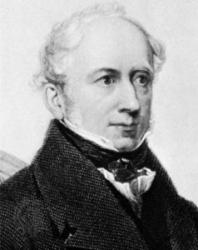
1771 - 1854 Topics: The Christian Year Advent; Biblical Characters David; Christian Year Advent; Christian Year Epiphany; Covenant; Freedom; God Sovereignty; Jesus Christ Adoration and Praise; Jesus Christ Kingship, Conqueror; Jesus Christ Lord of Life; Jesus Christ Love of; Jesus Christ name; Jesus Christ Reign; Jesus Christ Second Coming; Jesus Christ Son of God/Man (David); Jesus Christ Youth; Justice; Kingdom of God; Oppression; Prayer; Prisoner(s); Processionals (Opening of Worship); Salvation; Second Coming; Time; Vision/Dream; Water; Advent 1 Year A; Advent 2 Year A; Epiphany Year A; Epiphany 5 Year A; Epiphany 6 Year A; Lent 4 Year A; Reign of Christ Year A; Advent 4 Year B; Epiphany Year B; Baptism of Jesus Year B; Proper 6 Year B; Proper 9 Year B; Proper 11 Year B; Reign of Christ Year B; Advent 3 Year C; Epiphany Year C; Epiphany Last/Transfig. Year C; Lent 5 Year C; Proper 27 Year C; Reign of Christ Year C; Monday in Holy Week Year ABC Author of "Hail to God's Own Anointed" in Voices United James Montgomery (b. Irvine, Ayrshire, Scotland, 1771; d. Sheffield, Yorkshire, England, 1854), the son of Moravian parents who died on a West Indies mission field while he was in boarding school, Montgomery inherited a strong religious bent, a passion for missions, and an independent mind. He was editor of the Sheffield Iris (1796-1827), a newspaper that sometimes espoused radical causes. Montgomery was imprisoned briefly when he printed a song that celebrated the fall of the Bastille and again when he described a riot in Sheffield that reflected unfavorably on a military commander. He also protested against slavery, the lot of boy chimney sweeps, and lotteries. Associated with Christians of various persuasions, Montgomery supported missions and the British Bible Society. He published eleven volumes of poetry, mainly his own, and at least four hundred hymns. Some critics judge his hymn texts to be equal in quality to those of Isaac Watts and Charles Wesley . Many were published in Thomas Cotterill's Selection of Psalms and Hymns (1819 edition) and in Montgomery's own Songs of Zion (1822), Christian Psalmist (1825), and Original Hymns (1853).
Bert Polman
========================
Montgomery, James, son of John Montgomery, a Moravian minister, was born at Irvine, Ayrshire, Nov. 4, 1771. In 1776 he removed with his parents to the Moravian Settlement at Gracehill, near Ballymena, county of Antrim. Two years after he was sent to the Fulneck Seminary, Yorkshire. He left Fulneck in 1787, and entered a retail shop at Mirfield, near Wakefield. Soon tiring of that he entered upon a similar situation at Wath, near Rotherham, only to find it quite as unsuitable to his taste as the former. A journey to London, with the hope of finding a publisher for his youthful poems ended in failure; and in 1792 he was glad to leave Wath for Shefield to join Mr. Gales, an auctioneer, bookseller, and printer of the Sheffield Register newspaper, as his assistant. In 1794 Mr. Gales left England to avoid a political prosecution. Montgomery took the Sheffield Register in hand, changed its name to The Sheffield Iris, and continued to edit it for thirty-one years. During the next two years he was imprisoned twice, first for reprinting therein a song in commemoration of "The Fall of the Bastille," and the second for giving an account of a riot in Sheffield. The editing of his paper, the composition and publication of his poems and hynms, the delivery of lectures on poetry in Sheffield and at the Royal Institution, London, and the earnest advocacy of Foreign Missions and the Bible Society in many parts of the country, gave great variety but very little of stirring incident to his life. In 1833 he received a Royal pension of £200 a year. He died in his sleep, at the Mount, Sheffield, April 30, 1854, and was honoured with a public funeral. A statue was erected to his memory in the Sheffield General Cemetery, and a stained glass window in the Parish Church. A Wesleyan chapel and a public hall are also named in his honour. Montgomery's principal poetical works, including those which he edited, were:—
(1) Prison Amusements, 1797; (2) The Wanderer of Switzerland, 1806; (3) The West Indies, 1807; (4) The World before the Flood, 1813; (5) Greenland and Other Poems, 1819; (6) Songs of Zion, 1822; (7) The Christian Psalmist, 1825; (8) The Christian Poet, 1825; (9) The Pelican Island, 1828; (10) The Poet’s Portfolio, 1835; (11) Original Hymns for Public, Private, and Social Devotion, 1853. He also published minor pieces at various times, and four editions of his Poetical Works, the first in 1828, the second in 1836, the third in 1841, and the fourth in 1854. Most of these works contained original hymns. He also contributed largely to Collyer's Collection, 1812, and other hymnbooks published during the next 40 years, amongst which the most noticeable was Cotterill's Selections of 1819, in which more than 50 of his compositions appeared. In his Christian Psalmist, 1825, there are 100 of his hymns, and in his Original Hymns, 1853, 355 and 5 doxologies. His Songs of Zion, 1822, number 56. Deducting those which are repeated in the Original Hymns, there remain about 400 original compositions.
Of Montgomery's 400 hymns (including his versions of the Psalms) more than 100 are still in common use. With the aid of Montgomery's MSS. we have given a detailed account of a large number. The rest are as follows:—
i. Appeared in Collyer's Collection, 1812.
1. Jesus, our best beloved Friend. Personal Dedication to Christ.
2. When on Sinai's top I see. Sinai, Tabor, and Calvary.
ii. Appeared in Cotterill's Selection, 1819.
3. Come to Calvary's holy mountain. The Open Fountain.
4. God in the high and holy place. God in Nature. The cento in Com. Praise, 1879, and others, "If God hath made this world so fair," is from this hymn.
5. Hear me, O Lord, in my distress. Ps. cxliii.
6. Heaven is a place of rest from sin. Preparation for Heaven.
7. I cried unto the Lord most just. Ps. cxlii.
8. Lord, let my prayer like incense rise. Ps. cxxxix.
9. O bless the Lord, my soul! His grace to thee proclaim. Ps. ciii.
10. Out of the depths of woe. Ps. cxxx. Sometimes "When from the depths of woe."
11. The world in condemnation lay. Redemption.
12. Where are the dead? In heaven or hell? The Living and the Dead.
iii. Appeared in his Songs of Zion, 1822.
13. Give glory to God in the highest. Ps. xxix.
14. Glad was my heart to hear. Ps. cxxii.
15. God be merciful to me. Ps. lxix.
16. God is my strong salvation. Ps. xxvii.
17. Hasten, Lord, to my release. Ps. lxx.
18. Have mercy on me, O my God. Ps. li.
19. Hearken, Lord, to my complaints. Ps. xlii.
20. Heralds of creation cry. Ps. cxlviii.
21. How beautiful the sight. Ps. cxxxiii.
22. How precious are Thy thoughts of peace. Ps. cxxxix.
23. I love the Lord, He lent an ear. Ps. cxvi.
24. In time of tribulation. Ps. lxxvii.
25. Jehovah is great, and great be His praise. Ps. xlviii. Sometimes, "0 great is Jehovah, and great is His Name."
26. Judge me, O Lord, in righteousness. Ps. xliii.
27. Lift up your heads, ye gates, and wide. Ps.xxiv.
28. Lord, let me know mine [my] end. Ps. xxxi.
29. Of old, 0 God, Thine own right hand. Ps. lxxx.
30. O God, Thou art [my] the God alone. Ps. lxiii.
31. 0 Lord, our King, how excellent. Ps. viii. Sometimes, "0 Lord, how excellent is Thy name."
32. O my soul, with all thy powers. Ps. ciii.
33. One thing with all my soul's desire. Ps. xxvii. From this, "Grant me within Thy courts a place."
34. Searcher of hearts, to Thee are known. Ps. cxxxix.
35. Thank and praise Jehovah's name. Ps. cvii.
36. Thee will I praise, O Lord in light. Ps. cxxxviii.
37. The Lord is King; upon His throne. Ps. xciii.
38. The Lord is my Shepherd, no want shall I know. Ps. xxiii.
39. The tempter to my soul hath said. Ps. iii.
40. Thrice happy he who shuns the way. Ps. i.
41. Thy glory, Lord, the heavens declare. Ps. xix.
42. Thy law is perfect, Lord of light. Ps. xix.
43. Who make the Lord of hosts their tower. Ps. cxxv.
44. Yea, I will extol Thee. Ps. xxx.
iv. Appeared in his Christian Psalmist. 1825.
45. Fall down, ye nations, and adore. Universal adoration of God desired.
46. Food, raiment, dwelling, health, and friends. The Family Altar.
47. Go where a foot hath never trod. Moses in the desert. Previously in the Leeds Congregational Collection, 1822.
48. Green pastures and clear streams. The Good Shepherd and His Flock.
49. Less than the least of all. Mercies acknowledged.
50. Not to the mount that burned with fire [flame]. Communion of Saints.
51. On the first Christian Sabbath eve. Easter Sunday Evening.
52. One prayer I have: all prayers in one. Resignation.
53. Our heavenly Father hear. The Lord's Prayer.
54. Return, my soul, unto thy rest. Rest in God.
55. Spirit of power and might, behold. The Spirit's renewing desired.
56. The Christian warrior, see him stand. The Christian Soldier. Sometimes, "Behold the Christian warrior stand."
57. The days and years of time are fled. Day of Judgment.
58. The glorious universe around. Unity.
59. The pure and peaceful mind. A Children's Prayer.
60. This is the day the Lord hath made (q. v.). Sunday.
61. Thy word, Almighty Lord. Close of Service.
62. What secret hand at morning light ? Morning.
63. While through this changing world we roam. Heaven.
64. Within these walls be peace. For Sunday Schools.
v. Appeared in his Original Hymns, 1853.
65. Behold yon bright array. Opening a Place of Worship.
66. Behold the book whose leaves display. Holy Scriptures.
67. Come ye that fear the Lord. Confirmation.
68. Home, kindred, friends, and country, these. Farewell to a Missionary.
69. Let me go, the day is breaking. Jacob wrestling.
70. Not in Jerusalem alone. Consecration of a Church.
71. Praise the high and holy One. God the Creator.
In common with most poets and hymnwriters, Montgomery strongly objected to any correction or rearrangement of his compositions. At the same time he did not hesitate to alter, rearrange, and amend the productions of others. The altered texts which appeared in Cotterill's Selections, 1819, and which in numerous instances are still retained in some of the best hymnbooks, as the "Rock of Ages," in its well-known form of three stanzas, and others of equal importance, were made principally by him for Cotterill's use. We have this confession under his own hand.
As a poet, Montgomery stands well to the front; and as a writer of hymns he ranks in popularity with Wesley, Watts, Doddridge, Newton, and Cowper. His best hymns were written in his earlier years. In his old age he wrote much that was unworthy of his reputation. His finest lyrics are "Angels from the realms of glory," "Go to dark Gethsemane," "Hail to the Lord's Anointed," and "Songs of praise the angels sang." His "Prayer is the soul's sincere desire," is an expanded definition of prayer of great beauty; and his "Forever with the Lord" is full of lyric fire and deep feeling. The secrets of his power as a writer of hymns were manifold. His poetic genius was of a high order, higher than most who stand with him in the front rank of Christian poets. His ear for rhythm was exceedingly accurate and refined. His knowledge of Holy Scripture was most extensive. His religious views were broad and charitable. His devotional spirit was of the holiest type. With the faith of a strong man he united the beauty and simplicity of a child. Richly poetic without exuberance, dogmatic without uncharitableness, tender without sentimentality, elaborate without diffusiveness, richly musical without apparent effort, he has bequeathed to the Church of Christ wealth which could onlv have come from a true genius and a sanctified! heart.
--John Julian, Dictionary of Hymnology (1907)
James Montgomery
John Francis Wade
1711 - 1786 Topics: The Christian Year Christmas; Angels; Biblical Characters Shepherds; Choruses and Refrains; Christian Year Christmas; Jesus Christ Birth and Infancy; Jesus Christ Divinity; Jesus Christ Incarnation; Jesus Christ Lord of Life; Music and Singing; Processionals (Opening of Worship); Responses Antiphonal; Service Music Gathering, Call to Worship, Greeting; Advent 4 Year A; Christmas Day 2 Year A; Advent 4 Year B; Christmas Eve Year B; Christmas Day 1 Year B; Advent 1 Year C; Christmas Eve Year C; Christmas Day 2 Year C Author of "O Come, All Ye Faithful" in Voices United John Francis Wade (b. England, c. 1711; d. Douay, France, 1786) is now generally recognized as both author and composer of the hymn "Adeste fideles," originally written in Latin in four stanzas. The earliest manuscript signed by Wade is dated about 1743. By the early nineteenth century, however, four additional stanzas had been added by other writers. A Roman Catholic, Wade apparently moved to France because of discrimination against Roman Catholics in eighteenth-century England—especially so after the Jacobite Rebellion of 1745. He taught music at an English college in Douay and hand copied and sold chant music for use in the chapels of wealthy families. Wade's copied manuscripts were published as Cantus Diversi pro Dominicis et Festis per annum (1751).
Bert Polman
John Francis Wade
Cecil Frances Alexander
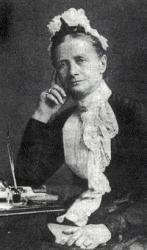
1818 - 1895 Topics: The Christian Year C; Annunciation; Biblical Characters David; Biblical Characters Mary, Mother of Jesus; Children Praising; Christian Year Christmas; Heaven(s)/Paradise; Jesus Christ Birth and Infancy; Jesus Christ Example; Jesus Christ Reign; Jesus Christ Second Coming; Obedience; Second Coming; Advent 4 Year A; Christmas Eve Year A; Christmas 1 Year A; Christmas 2 Year A; Epiphany Year A; Epiphany 5 Year A; Epiphany 6 Year A; Advent 4 Year B; Christmas Eve Year B; Christmas 1 Year B; Advent 3 Year C; Christmas 1 Year C Author of "Once in Royal David's City" in Voices United As a small girl, Cecil Frances Humphries (b. Redcross, County Wicklow, Ireland, 1818; Londonderry, Ireland, 1895) wrote poetry in her school's journal. In 1850 she married Rev. William Alexander, who later became the Anglican primate (chief bishop) of Ireland. She showed her concern for disadvantaged people by traveling many miles each day to visit the sick and the poor, providing food, warm clothes, and medical supplies. She and her sister also founded a school for the deaf. Alexander was strongly influenced by the Oxford Movement and by John Keble's Christian Year. Her first book of poetry, Verses for Seasons, was a "Christian Year" for children. She wrote hymns based on the Apostles' Creed, baptism, the Lord's Supper, the Ten Commandments, and prayer, writing in simple language for children. Her more than four hundred hymn texts were published in Verses from the Holy Scripture (1846), Hymns for Little Children (1848), and Hymns Descriptive and Devotional ( 1858).
Bert Polman
==================
Alexander, Cecil Frances, née Humphreys, second daughter of the late Major John Humphreys, Miltown House, co. Tyrone, Ireland, b. 1823, and married in 1850 to the Rt. Rev. W. Alexander, D.D., Bishop of Derry and Raphoe. Mrs. Alexander's hymns and poems number nearly 400. They are mostly for children, and were published in her Verses for Holy Seasons, with Preface by Dr. Hook, 1846; Poems on Subjects in the Old Testament, pt. i. 1854, pt. ii. 1857; Narrative Hymns for Village Schools, 1853; Hymns for Little Children, 1848; Hymns Descriptive and Devotional, 1858; The Legend of the Golden Prayers 1859; Moral Songs, N.B.; The Lord of the Forest and his Vassals, an Allegory, &c.; or contributed to the Lyra Anglicana, the S.P.C.K. Psalms and Hymns, Hymns Ancient & Modern, and other collections. Some of the narrative hymns are rather heavy, and not a few of the descriptive are dull, but a large number remain which have won their way to the hearts of the young, and found a home there. Such hymns as "In Nazareth in olden time," "All things bright and beautiful," "Once in Royal David's city," "There is a green hill far away," "Jesus calls us o'er the tumult," "The roseate hues of early dawn," and others that might be named, are deservedly popular and are in most extensive use. Mrs. Alexander has also written hymns of a more elaborate character; but it is as a writer for children that she has excelled.
- John Julian, Dictionary of Hymnology (1907)
===============
Alexander, Cecil F., née Humphreys, p. 38, ii. Additional hymns to those already noted in this Dictionary are in common use:—
1. Christ has ascended up again. (1853.) Ascension.
2. His are the thousand sparkling rills. (1875.) Seven Words on the Cross (Fifth Word).
3. How good is the Almighty God. (1S48.) God, the Father.
4. In [a] the rich man's garden. (1853.) Easter Eve.
5. It was early in the morning. (1853.) Easter Day.
6. So be it, Lord; the prayers are prayed. (1848.) Trust in God.
7. Saw you never in the twilight? (1853.) Epiphany.
8. Still bright and blue doth Jordan flow. (1853.) Baptism of Our Lord.
9. The angels stand around Thy throne. (1848.) Submission to the Will of God.
10. The saints of God are holy men. (1848.) Communion of Saints.
11. There is one Way and only one. (1875.) SS. Philip and James.
12. Up in heaven, up in heaven. (1848.) Ascension.
13. We are little Christian children. (1848.) Holy Trinity.
14. We were washed in holy water. (1848.) Holy Baptism.
15. When of old the Jewish mothers. (1853.) Christ's Invitation to Children.
16. Within the Churchyard side by side. (1848.) Burial.
Of the above hymns those dated 1848 are from Mrs. Alexander's Hymns for Little Children; those dated 1853, from Narrative Hymns, and those dated 1875 from the 1875 edition of Hymns Ancient & Modern.
Several new hymns by Mrs. Alexander are included in the 1891 Draft Appendix to the Irish Church Hymnal.
--John Julian, Dictionary of Hymnology, Appendix, Part II (1907)
=============
Alexander, Cecil F. , p. 38, ii. Mrs. Alexander died at Londonderry, Oct. 12, 1895. A number of her later hymns are in her Poems, 1896, which were edited by Archbishop Alexander.
--John Julian, Dictionary of Hymnology, New Supplement (1907)
See also in:Hymn Writers of the Church
Cecil Frances Alexander
Phillips Brooks
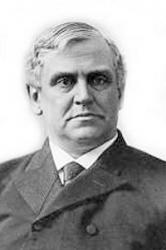
1835 - 1893 Topics: The Christian Year Christmas; Angels; Biblical Characters Mary, Mother of Jesus; Biblical Places Bethlehem; Christian Year Christmas; City/City of God; Good News, Gospel; Jesus Christ Birth and Infancy; Jesus Christ Incarnation; Jesus Christ Life In; Jesus Christ Presence; Light; Peace (Inner, Calmness, Serenity; Regeneration; Service Music Prayer Responses; Advent 4 Year A; Christmas Eve Year A; Christmas Eve Year B; Christmas Day 1 Year B; Advent 4 Year C; Christmas Day 1 Year C Author of "O Little Town of Bethlehem" in Voices United Brooks, Phillips, D.D., was born at Boston, Dec. 13, 1835, graduated at Harvard College 1855, and was ordained in 1859. Successively Rector of the Church of the Advent, Philadelphia, and Trinity Church, Boston, he became Bishop of Mass. in 1891, and died at Boston in Jan., 1893. His Carol, "O little town of Bethlehem," was written for his Sunday School in 1868, the author having spent Christmas, 1866, at Bethlehem. His hymn, "God hath sent His angels to the earth again," is dated 1877.
--John Julian, Dictionary of Hymnology, New Supplement (1907)
Phillips Brooks
Pages




