

 My Starred Hymns
 My FlexScores
 My Hymnals
 My Purchased Files
Planning worship?
Check out our sister site, ZeteoSearch.org,
for 20+ additional resources related to your search.
- |
User Links
Person Results
W. Howard Doane
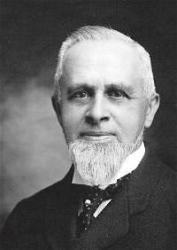
1832 - 1915 Person Name: W. H. Doane Topics: Helpfulness Composer of "[O softly the Spirit is whisp’ring to me]" in The Praise Book An industrialist and philanthropist, William H. Doane (b. Preston, CT, 1832; d. South Orange, NJ, 1915), was also a staunch supporter of evangelistic campaigns and a prolific writer of hymn tunes. He was head of a large woodworking machinery plant in Cincinnati and a civic leader in that city. He showed his devotion to the church by supporting the work of the evangelistic team of Dwight L. Moody and Ira D. Sankey and by endowing Moody Bible Institute in Chicago and Denison University in Granville, Ohio. An amateur composer, Doane wrote over twenty-two hundred hymn and gospel song tunes, and he edited over forty songbooks.
Bert Polman
============
Doane, William Howard, p. 304, he was born Feb. 3, 1832. His first Sunday School hymn-book was Sabbath Gems published in 1861. He has composed about 1000 tunes, songs, anthems, &c. He has written but few hymns. Of these "No one knows but Jesus," "Precious Saviour, dearest Friend," and "Saviour, like a bird to Thee," are noted in Burrage's Baptist Hymn Writers. 1888, p. 557.
--John Julian, Dictionary of Hymnology, Appendix, Part II (1907)
===================
Doane, W. H. (William Howard), born in Preston, Connecticut, 1831, and educated for the musical profession by eminent American and German masters. He has had for years the superintendence of a large Baptist Sunday School in Cincinnati, Ohio, where he resides. Although not a hymnwriter, the wonderful success which has attended his musical setting of numerous American hymns, and the number of his musical editions of hymnbooks for Sunday Schools and evangelistic purposes, bring him within the sphere of hymnological literature. Amongst his collections we have:—
(1) Silver Spray, 1868; (2) Pure Gold, 1877; (3) Royal Diadem, 1873; (4) Welcome Tidings, 1877; (5) Brightest and Best, 1875; (6) Fountain of Song; (7) Songs of Devotion, 1870; (8) Temple Anthems, &c.
His most popular melodies include "Near the Cross," "Safe in the Arms of Jesus," "Pass me Not," "More Love to Thee," "Rescue the Perishing," "Tell me the Old, Old Story," &c.
- John Julian, Dictionary of Hymnology (1907)
W. Howard Doane
William Croft
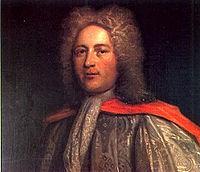
1678 - 1727 Topics: God, Our Help Composer of "ST. ANNE" in Baptist Hymnal 2008 William Croft, Mus. Doc. was born in the year 1677 and received his musical education in the Chapel Royal, under Dr. Blow. In 1700 he was admitted a Gentleman Extraordinary of the Chapel Boyd; and in 1707, upon the decease of Jeremiah Clarke, he was appointed joint organist with his mentor, Dr. Blow. In 1709 he was elected organist of Westminster Abbey. This amiable man and excellent musician died in 1727, in the fiftieth year of his age. A very large number of Dr. Croft's compositions remain still in manuscript.
Cathedral chants of the XVI, XVII & XVIII centuries, ed. by Edward F. Rimbault, London: D. Almaine & Co., 1844
William Croft
William Daman
1540 - 1591 Topics: Jesus Help of Composer of "SOUTHWELL" in Magnify the Lord Aliases: Damon; Damano; Demaunde; Damond; Dymond
Born: ca.1540
Died: 1591
Damon was a foreign composer resident in England. He arrived probably in England in 1566 as a servant of Sir Thomas Sackville. In 1576 he became a recorder player at the Court of Elizabeth I.
He was described as having been born in "Luke" and "Lewklande" and, on the assumption that these names refer to Luik or Liège, it has been inferred that he was a Walloon. However contemporary London records describe him as an Italian and a later reference refers to him having been born in "Luke in Italy", i.e. Lucca. His unanglicised name may have been Gulielmo (or Gulielmus) Damano.
Daman died from the effects of an ulcer and was buried at St Peter-le-Poer, London, on 26 March 1591.
List of choral works:
Beati omnes qui timent Dominum
Confitebor tibi Domine
Miserere nostri Domine
Omnis caro gramen sit
Praedicabo laudes tuae Domine
Spem in alium
Publications:
The Psalmes of David in English Metre (1579)
The Former Booke of Musicke of M. William Damon (1591)
The Second Booke of Musicke of M. William Damon (1591)
--www3.cpdl.org/wiki/index.php/
William Daman
Johann Franck
1618 - 1677 Topics: Jesus Help of Author of "Jesus, priceless treasure, Fount of purest pleasure" in Magnify the Lord Johann Franck (b. Guben, Brandenburg, Germany, 1618; d. Guben, 1677) was a law student at the University of Köningsberg and practiced law during the Thirty Years' War. He held several positions in civil service, including councillor and mayor of Guben. A significant poet, second only to Paul Gerhardt in his day, Franck wrote some 110 hymns, many of which were published by his friend Johann Crüger in various editions of the Praxis Pietatis melica. All were included in the first part of Franck’s Teutsche Gedichte bestehend im geistliche Sion (1672).
Bert Polman
=============
Franck, Johann, son of Johann Franck, advocate and councillor at Guben, Brandenburg, was born at Guben, June 1, 1618. After his father's death, in 1620, his uncle by marriage, the Town Judge, Adam Tielckau, adopted him and sent him for his education to the schools at Guben, Cottbus, Stettin and Thorn. On June 28, 1638, he matriculated as a student of law at the University of Königsberg, the only German university left undisturbed by the Thirty Years' War. Here his religious spirit, his love of nature, and his friendship with such men as Simon Dach and Heinrich Held, preserved him from sharing in the excesses of his fellow students. He returned to Guben at Easter, 1640, at the urgent request of his mother, who wished to have him near her in those times of war during which Guben frequently suffered from the presence of both Swedish and Saxon troops. After his return from Prague, May, 1645, he commenced practice as a lawyer. In 1648 he became a burgess and councillor, in 1661 burgomaster, and in 1671 was appointed the deputy from Guben to the Landtag (Diet) of Lower Lusatia. He died at Guben, June 18, 1677; and on the bicentenary of his death, June 18, 1877, a monumental tablet to his memory was affixed to the outer wall of the Stadtkirche at Guben (Koch, iii. 378-385; Allgemeine Deutsche Biographie, vii. 211-212; the two works by Dr. Hugo Jentsch of Guben, Johann Franck, 1877, and Die Abfassungszeit der geistlichen Lieder Johann Franck's, 1876).
Of Franck's secular poems those before 1649 are much the best; his later productions becoming more and more affected and artificial, long-winded and full of classical allusions, and much inferior to those of Dach or Opitz. As a hymn writer he holds a high rank and is distinguished for unfeigned and firm faith, deep earnestness, finished form, and noble, pithy, simplicity of expression. In his hymns we miss the objectivity and congregational character of the older German hymns, and notice a more personal, individual tone; especially the longing for the inward and mystical union of Christ with the soul as in his "Jesus, meine Freude." He stands in close relationship with Gerhardt, sometimes more soaring and occasionally more profound, but neither on the whole so natural nor so suited for popular comprehension or Church use.
His hymns appeared mostly in the works of his friends Weichmann, Crüger and Peter. They were collected in his Geistliches Sion, Guben, 1674, to the number of 110; and of these the 57 hymns (the other 53 being psalm versions of no great merit) were reprinted with a biographical preface by Dr. J. L. Pasig as Johann Franck's Geistliche Lieder, Grimma, 1846. Two of those translated into English are from the Latin of J. Campanus (q. v.). Four other hymns are annotated under their own first lines:—"Brunquell aller Güter"; "Dreieinigkeit der Gottheit wahrer Spiegel"; "Jesu, meine Freude"; "Schmücke dich, o liebe Secle." The rest are:—
i. Hymns in English common use: --
i. Erweitert eure Pforten . [Advent]. Founded on Psalm xxiv. 7-10. First published in C. Peter's Andachts-Zymbeln, Freiberg, 1655, p. 25, in 7 stanzas of 8 lines; repeated 1674, p. 3, and 1846, p. 3, as above. Included in the 1688 and later editions of Crüger's Praxis pietatis, in Bollhagen's Gesang-Buch, 1736, &c.
The only translation in common use is:—-
Unfold your gates and open, a translation of st. 1, 3, 6, by A. T. Russell, as No. 30 in his Hymns & Psalms, 1851; repeated altered as No. 30 in Kennedy, 1863, and thus as No. 102 in Holy Song, 1869.
ii. Herr Gott dich loben wir, Regier. Thanksgiving for Peace. Evidently written as a thanksgiving for the conclusion of the Thirty Years' War, by the Peace of Westphalia, Oct. 24, 1648. First published in the Crüger-Runge Gesang-Buch, Berlin, 1653, No. 306, in 9 st. of 8 l., as the first of the "Hymns of Thanksgiving for Peace attained"; and repeated 1674, p. 182, and 1846, p. 77, as above. Included in Crüger's Praxis, 1653, and many later collections, and, as No. 591, in the Unverfälschter Liedersegen, 1851. The only translation in common use is:—
Lord God, we worship Thee, a very good version of st. 2, 3, 6, 8, by Miss Winkworth in her Chorale Book for England, 1863, No. 183. Repeated in full in the Society for Promoting Christian Knowledge Church Hymns, 1871; the Hymnary, 1872; the Psalmist, 1878; and in America in the Pennsylvania Lutheran Church Book, 1868. In the American Protestant Episcopal Collection, 1871; the Hymns & Songs of Praise, N. Y. 1874; and the Ohio Lutheran Hymnal, 1880, the translation of stanza 8 is omitted.
iii. Herr ich habe missgehandelt. Lent. Of this fine hymn of penitence stanza i. appeared as No. 19 in Cruger's Geistliche Kirchenmelodien , Leipzig, 1649. The full form in 8 stanzas of 6 lines is No. 41 in the Crüger-Runge Gesang-Buch, Berlin, 1653, entitled "For the forgiveness of sins," repeated 1674, p. 39, and 1846, p. 37, as above. Included in Crüger's Praxis, 1653, and others, and in the Unverfälschter Liedersegen, 1851. The only translation in common use is:—
Lord, to Thee I make confession, a very good translation, omitting st. 4, 5, 6, by Miss Winkworth in her Chorale Book for England, 1863, No. 44, repeated in the Appendix to the Hymnal for St. John's, Aberdeen, 1865-1870; and in the Pennsylvania Lutheran Ch. Book, 1868; Evangelical Hymnal, N. Y., 1880; Ohio Lutheran Hymnal, 1880. Another translation is: "Lord, how oft I have offended," by N. L. Frothingham, 1870, p. 177.
iv. Herr Jesu, Licht der Heiden. Presentation in the Temple. Founded on the account in St. Luke ii., and probably the finest hymn on the subject. Dr. Jentsch, 1876, p. 9, thinks it was written before Dec. 8, 1669, as C. Peter, who died then, left a melody for it. We have not found the full text earlier than 1674, as above, p. 10, in 6 stanzas of 8 lines, entitled "On the Festival of the Purification of Mary" (1846, p. 10). Included in the 1688 and later editions of Crüger's Praxis, and in the Unverfälschter Liedersegen, 1851, No. 197. The translations in common use are:—
1. Light of the Gentile world , a translation, omitting st. 6, by Miss Winkworth in the first service of her Lyra Germanica, 1855, p. 193 (ed. 1876, p. 195), and thence as No. 147 in the Pennsylvania Lutheran Hymn Book, 1865. This version is in S.M. Double.
2. Light of the Gentile Nations, a good translation, omitting st. 6, by Miss Winkworth in her Chorale Book for England, 1863, No. 80. Repeated in Dr. Thomas's Augustine Hymn Book, 1866, and in America in the Pennsylvania Lutheran Church Book, 1868, and the Ohio Lutheran Hymnal, 1880.
ii. Hymns not in English common use:
v. Du geballtes Weltgebäude. Christ above all earthly things. Stanza i. in Cruger's Kirchenmelodien, 1649, No. 116. The full text (beginning "Du o schönes) is No. 239 in the Crüger-Runge Gesang-Buch, 1653, in 8 stanzas, entitled "Longing after Eternal Life." Repeated, 1674, p. 194, and 1846, p. 60, as above. The translations are: (1) "Let who will in thee rejoice," by Miss Winkworth, 1855, p. 180 (1876, p. 182). (2) "O beautiful abode of earth," by Miss Warner, 1858 (1861, p. 233). (3) "Thou, O fair Creation-building," by N. L. Frothingham, 1870, p. 232.
vi. Unsre müden Augenlieder. Evening. Probably written while a student at Königsberg. First published in J. Weichmann's Sorgen-lägerin, Königsberg, 1648, Pt. iii., No. 4, in 7 st.; repeated 1674, p. 213, and 1846, p. 91, as above. The only translation is by H. J. Buckoll, 1842, p. 79, beginning with st. vi., "Ever, Lord, on Thee relying." [Rev. James Mearns, M.A.]
--John Julian, Dictionary of Hymnology (1907)
Johann Franck
Horace Clarence Boyer
1935 - 2009 Person Name: Horace Boyer (1935- ) Topics: Jesus Help of Arranger of "SPARROW" in Magnify the Lord Horace Boyer (b. Winter Park, Flordia, July 28, 1935; d. Amherst, Massachusetts, July 21, 2009) was professor of music at the University of Massachussetts, Amhurst, editor of the African American hymnal Lift Every Voice and Sing, Lift Every Voice and Sing II, and author of How Sweet the Sound: The Golden Age of Gospel (Elliot & Clark, 1995).
Sing! A New Creation
Horace Clarence Boyer
Ralph Vaughan Williams
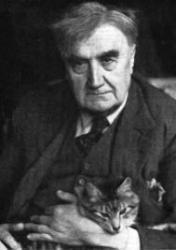
1872 - 1958 Topics: Jesus Help of Arranger of "KINGSFOLD" in Magnify the Lord Through his composing, conducting, collecting, editing, and teaching, Ralph Vaughan Williams (b. Down Ampney, Gloucestershire, England, October 12, 1872; d. Westminster, London, England, August 26, 1958) became the chief figure in the realm of English music and church music in the first half of the twentieth century. His education included instruction at the Royal College of Music in London and Trinity College, Cambridge, as well as additional studies in Berlin and Paris. During World War I he served in the army medical corps in France. Vaughan Williams taught music at the Royal College of Music (1920-1940), conducted the Bach Choir in London (1920-1927), and directed the Leith Hill Music Festival in Dorking (1905-1953). A major influence in his life was the English folk song. A knowledgeable collector of folk songs, he was also a member of the Folksong Society and a supporter of the English Folk Dance Society. Vaughan Williams wrote various articles and books, including National Music (1935), and composed numerous arrangements of folk songs; many of his compositions show the impact of folk rhythms and melodic modes. His original compositions cover nearly all musical genres, from orchestral symphonies and concertos to choral works, from songs to operas, and from chamber music to music for films. Vaughan Williams's church music includes anthems; choral-orchestral works, such as Magnificat (1932), Dona Nobis Pacem (1936), and Hodie (1953); and hymn tune settings for organ. But most important to the history of hymnody, he was music editor of the most influential British hymnal at the beginning of the twentieth century, The English Hymnal (1906), and coeditor (with Martin Shaw) of Songs of Praise (1925, 1931) and the Oxford Book of Carols (1928).
Bert Polman
Ralph Vaughan Williams
Electress Luise Henriette
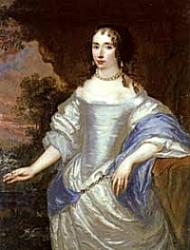
1627 - 1667 Person Name: Luise Henriette Topics: Jesus Help of Author of "Jesus Christ, my sure defense" in Magnify the Lord Luise Henriette, Electress of Brandenburg, daughter of Friedrich Heinrich, Prince of Nassau-Orange and Stadtholder of the United Netherlands, was born at 'S Gravenhage (The Hague), Nov. 27, 1627. She received a careful Christian training, not only in literature, but also in domestic economy and feminine handicrafts. On Dec. 7, 1646, she was married, at the Hague, to the Elector Friedrich Wilhelm of Brandenburg, who was then residing at Cleve, but remained at the Hague to nurse her father, who died March 14, 1647. She then, in June, 1647, joined her husband at Cleve, where her first child, Wilhelm Heinrich, was born in May 1648. In the autumn of 1619 she set out with her husband and child on the way to Berlin, but in the inclement weather the child sickened and died at Wesel, Oct. 24,1649, and it was not till April 10, 1650, that she entered Berlin. On the birth of her second son, Carl Emil (who died 1674), at Oranienburg, near Berlin, on Feb. 16, 1655, she founded an orphanage there as a thank-offering (now the Oranienburg Orphanage at Berlin). On July 11, 1657, her third son, afterwards King Friedrich I. of Prussia, was born at Königsberg. After the birth of her youngest son, Ludwig, at Cleve, in 1666, she never entirely recovered. In the spring of 1667 she was conveyed to Berlin in a litter, and died there June 18, 1667. (Koch, iv. 158; Allgemeine Deutsche Biographie, xix. 623; Goedeke's Grundrias, vol. iii., 1887, p. 319, &c.)
Luise Henriette was a woman of noble character; a devoted wife who accompanied her husband in many of his expeditions, and was his right-hand counsellor in matters of state; and a true mother of her people, introducing the culture of the potato, founding model farms, establishing elementary schools, and in many ways interesting herself in restoring their welfare after the ravages of the Thirty Years' War. She was, like the Elector, a member of the Reformed Church, but earnestly desired to promote peace between the Lutheran and Reformed communions, and exerted herself especially on behalf of P. Gerhardt. Another of her efforts in this direction was by means of the Union Hymn Book, which Christoph Runge edited at her direction, and published in 1653. To this book she herself contributed four hymns. In his dedication to the Electress, Runge says she had "augmented and adorned it with your own hymns, viz.: ‘Ein ander stelle sein Vertrauen'; ‘Gott der Reichthumb deiner Güter'; 'Jesus meine Zuversicht'; 'Ich wil von meiner Missethat.' Your Electoral Highness has not only in those your now mentioned hymns (itzt gemeldten geistreichen Ihren eigenen Liedern) made known to all the world your Christian spirit; how your confidence is directed to God alone; how you ascribe to him with thankful heart all the benefits you enjoy; and how you rest the hope of your future everlasting life in Heaven on Christ alone as on a steadfast rock, but have also," &c. &c.
The question however remains. Did Runge here mean more than that she had sent for insertion certain hymns which were favourites of her own, perhaps written for her, but not necessarily written by her? Such cases were common enough at an earlier period. It is certainly strange that her name should not be given in any of the many hymn-books in which the third of these ("Jesus meine Zuversicht") was included during the next century. It was not till 1769 that Runge's dedication suggested to D. G. Schöber, and, after him, to other compilers, the idea of the Electress's authorship; but once suggested it was soon generally accepted. Fischer, i. 390-396, gives various additional reasons that make this theory unlikely; such as that while in Runge's dedication they are mentioned as above, yet her name is not affixed to the individual hymns in the body of the book; that in the funeral oration by her private chaplain, no mention is made of her poetical gifts; that Crüger gave them in his Praxis pietatis melica without her name (in the 1664 and later editions the first was omitted), and that in particular the third is too classic and correct in style to have been written by so poor a German scholar as the Electress. This last objection would of course be met if we could suppose with Koch (iv. p. 169) that the hymn was originally written in Dutch, or with Dutch idioms, and was revised and corrected by her minister, Otto von Schwerin, or by Runge.
In view of the present evidence we can only say that if the Electress were not the author of these hymns there is at least no proof of any kind to show that they were composed by any of those whose names have sometimes been attached to them; such as Otto von Schwerin (b. 1616, d. 1679), Caspar Ziegler (b. 1621, d. 1690), Hans von Assig (b. 1650, d. 1694), and others. In this state of uncertainty the case must be left till definite proof be forthcoming.
Two of these hymns have passed into English, viz.:—
i. Ich will von meiner Missethat. Lent. This beautiful hymn first appeared in the Crüger-Runge Gesang-Buch, 1653, No. 45, in 16 st. of 7 1., entitled, "Hymn of Penitence," and without signature. Koch, iv. 160, conjectures that it may have been written at Cleve in 1648. In the Unverfälschter Liedersegen 1851, No. 380. The translations are :—
(1) "With sorrow now for past misdeeds," by Miss Cox, 1864, p, 204. (2) "I will return unto the Lord," by Miss Winkworth, 1869, p. 221.
ii. Jesus meine Zuversicht. Easter. This beautiful hymn, founded on Job xix. 25-27 and 1 Cor. xv. 35 ff., appeared in the Crüger-Runge Gesang-Buch, 1653, No. 140, in 10 st. of 6 l., and without signature. Its origin is thus given by Lauxmann, in Koch, viii. 69:—
"It dates from the early years of her married life. In the autumn of 1649 she lost her first child, the Crown Prince Wilhelm Heinrich, at Wesel, while on her journey [to Berlin], by which death for a long time the hope of succession in the Electoral House and in the Hohenzollern family line seemed to be lost. At Tangermünde, in the Altmark [on the Elbe], she had to spend some quiet winter months, and here probably the princess of twenty-two years poured out her heart before the Lord in this hymn."
This, however, is conjecture rather than history; for, as stated above, it is not yet clearly proved that the Electress wrote any hymns. The hymn itself is of the first rank; and A. J. Rambach calls it "an acknowledged masterpiece of Christian poetry;" while C. von Winterfeld says, "it will ever remain a treasure among the hallowed songs of the Evangelical Church." It bears a certain resemblance to the concluding section of the Apotheosis of A. C. Prudentius (lines 1063-1085, with the subtitle "De resurrectione carnis humanae," and beginning, "Nosco meum in Christo corpus consurgere. Quid me"); but can hardly be called a translation of it. It was included in Crüger's Praxis, 1656, No. 182, passed into almost all later hymn-books, and is No. 866 in the Unverfälschter Liedersegen, 1851.
The beautiful chorale (as in the Chorale Book for England) appeared in its first form in 1653, along with the hymn. C. von Winterfeld conjectured that it may have been by the Electress. The form now in use is modified from that given by Crüger in his Praxis, 1656. Translated as:—
1. Christ, my Rock, my sure Defence. Omitting st. ix., as No. 51 in the Moravian Hymn Book 1769. In the edition of 1789. No. 833, st. viii. was omitted, and a translation from Christian Gregor’s "Nein, ach nein, er lasst mich nicht," was added as st. iii. (ed. 1886, No. 1241). Abridged forms are in J. A. Latrobe's Collection, 1841, and Dr. Hook's Church School Hymn Book, 1850.
2. Jesus, on Whose name I rest. A good translation of st. i.-iv., vi., by A. T. Russell, as No. 264, in his Psalms & Hymns, 1851.
3. Jesus, my Redeemer, lives. A good translation, omitting st. iv., v., by Miss Winkworth, in her Lyra Germanica 1st Ser., 1855, p. 93. Repeated, in full, in the Ohio Evangelical Lutheran Hymnal
Electress Luise Henriette
Frederic Henry Hedge
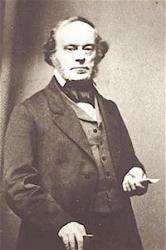
1805 - 1890 Person Name: Frederick H. Hedge Topics: God Guardian/Help Translator of "A Mighty Fortress Is Our God" in Voices United Hedge, Frederick Henry, D.D., son of Professor Hedge of Harvard College, was born at Cambridge, Massachusetts, 1805, and educated in Germany and at Harvard. In 1829 he became pastor of the Unitarian Church, West Cambridge. In 1835 he removed to Bangor, Maine; in 1850 to Providence, and in 1856 to Brookline, Mass. He was appointed in 1857, Professor of Ecclesiastical History at Cambridge (U.S.), and in 1872, Professor of German Literature at Harvard. Dr. Hedge is one of the editors of the Christian Examiner, and the author of The Prose Writers of Germany, and other works. In 1853 he edited, with Dr. F. D. Huntington, the Unitarian Hymns for the Church of Christ, Boston Crosby, Nichols & Co. To that collection and the supplement (1853) he contributed the following translations from the German:—
1. A mighty fortress is our God. (Ein feste Burg.)
2. Christ hath arisen! joy to, &c. (Goethe's Faust.)
3. The sun is still for ever sounding. (Goethe's Faust.)
There is also in the Unitarian Hymn [& Tune] Book for The Church & Home, Boston, 1868, a translation from the Latin.
4. Holy Spirit, Fire divine. (“Veni Sancte Spiritus.")
Dr. Hedge's original hymns, given in the Hymns for the Church, 1853, are:—
5. Beneath Thine hammer, Lord, I lie. Resignation.
6. Sovereign and transforming grace. Ordination. Written for the Ordination of H. D. Barlow at Lynn, Mass., Dec. 9, 1829. It is given in several collections.
7. 'Twas in the East, the mystic East. Christmas.
8. 'Twas the day when God's anointed. Good Friday. Written originally for a Confirmation at Bangor, Maine, held on Good Friday, 1843. The hymn "It is finished, Man of Sorrows! From Thy cross, &c," in a few collections, including Martineau's Hymns, &c, 1873, is composed of st. iv.-vi. of this hymn. [Rev. F. M. Bird, M.A.]
--John Julian, Dictionary of Hymnology (1907)
Frederic Henry Hedge
Thomas Moore
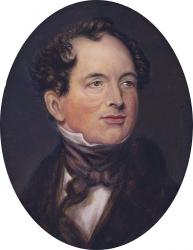
1779 - 1852 Topics: Help in Afflictions Author (sts. 1-2) of "Come, Ye Disconsolate, Where'er Ye Languish" in Psalter Hymnal (Red) Thomas Moore United Kingdom 1779-1852. Born at Dublin, Ireland, the son of a grocer, he showed an early interest in music and acting. He was educated at a private school and Trinity College, Dublin. He read at the Middle Temple for the Bar. Moore did not profess religious piety. His translations of ‘Anacreon’ (celebrating wine, women, and song) were published in 1800, with a dedication to the Prince of Wales. He also wrote a comic opera, “the gypsy prince”, staged that year. In 1801 he published a collection of his own verse, “Poetical works of the late Thomas Little Esq”. A Catholic patriot, he defended the Church of Ireland, especially in later politics. In 1803 he held a post under the Government in Bermuda as registrar of the Admiralty Prize Court. He was bored of it within six months and appointed a deputy to take his place while he left for a tour of North America. He secured high society introductions and even met with President, Thomas Jefferson. Returning to England in 1804, he published “Epistles, Odes, & other poems” in 1806. Moore criticized American slavery and was accused of licentious writings, veiled as refinement. Francis Jeffrey denounced Moore’s writings in the ‘Edinburgh Review’, and Moore challenged him to a duel, but it never happened, and they became friends. Between 1808-1810 he was found acting in various plays, favoring comic roles. He met the sister of one of the actresses and, in 1811, they married. Elizabeth ‘Bessy’ Dyke, was an actress. She had no dowry, and Moore kept their marriage secret from his parents for some time, as his wife was Protestant. Bessie shrank from fashionable society, but those who met her held her in high regard. They had five children, but none survived to adulthood. Three girls died young, and both sons lost their lives as young men. One son, Tom, died in some disgrace in the French Foreign Legion in Algeria. Despite these losses, their marriage was said to be a happy one. He also had political trouble. The man he appointed as his replacement in Bermuda was found to have embezzled 6000 pounds sterling, a large sum, for which Moore was liable. He left for France in 1819 to escape debtor’s prison. He also met Lord Byron in Venice and was entrusted with a manuscript of his memoirs, which he promised to have published after Byron’s death. Moore’s wife and children joined him in Paris, where he learned that some of the debt was repaid with help from Lord Lansdowne, whom Moore had given a draft of money from payment by his publisher. The family returned to England a year later. To support his family Moore entered the field of ‘squib writing’ on behalf of his Whig friends. This resulted in years of political debate about Catholics and Protestants in government. Nearly persuaded to forego his Catholic allegiance in favor of Protestantism, he finally concluded that Protestants did not make a sound case for their faith, as they denounced Catholics so vociferously for erroneous teaching. From 1835 -1846 Moore published a four volume “History of Ireland”, which was basically an indictment of English rule over Ireland. He was primarily a writer, poet, entertainer, and composer, considered politically as a writer for the aristocratic Whigs. His “Sacred songs” (32) were published in 1816, and again, in his “collected works” in 1866. His “Memoirs, Journal, and Correspondence” were published by Lord John Russell in 1855. Moore is essentially remembered for his highly-praised lyrics written for Irish melodies, as requested by his publishers, and his memoirs of Lord Byron, his friend. He died at Bromham, Wilshire, England.
John Perry
==================
Moore, Thomas, son of John Moore, a small tradesman at Dublin, was born in that city, May 28, 1779, educated at a private school and Trinity College, Dublin; read at the Middle Temple for the Bar; held a post under the Government in Bermuda for a short time, and died Feb. 26, 1852. His Memoirs, Journal, and Correspondence were published by Lord John Russell in 1855. In that work every detail concerning himself and his numerous publications, most of them of high poetical merit, will be found. His connection with hymnody is confined to his Sacred Songs, which were published in 1816, and again in his Collected Works, 1866. These Songs were 32 in all, and were written to popular airs of various nations. Of these Songs the following have passed into a few hymnbooks, mainly in America:—
1. As down in the sunless retreats of the ocean. Private Prayer.
2. But who shall see the glorious day. The Final Bliss of Man.
3. Come, ye disconsolate, where'er you languish. Belief in Prayer. In American hymnbooks the text is sometimes as in T. Hastings and Lowell Mason's Spiritual Songs, 1831. This may be distinguished from the original by the third stanza, which reads, "Here see the Bread of life; see waters flowing," &c.
4. Fallen is thy throne, O Israel. Israel in Exile.
5. Like morning when her early breeze. Power of Divine Grace.
6. O Thou Who driest the mourner's tear. Lent.
7. Since first Thy word [grace] awaked my heart. God All and in All.
8. Sound the loud timbrel o'er Egypt's dark sea. Deliverance of Israel.
9. The bird [dove] let loose in eastern skies. Prayer for Constancy.
10. The turf shall be my fragrant shrine. The Temple of Nature. From this "There's nothing bright above, below" is taken.
11. Thou art, O God, the Life and Light. God, the Light and Life of Men.
12. Were not the sinful Mary's tears? Lent.
Of these hymns No. 11 has attained the greatest popularity.
--John Julian, Dictionary of Hymnology (1907)
Thomas Moore
Henry J. Gauntlett
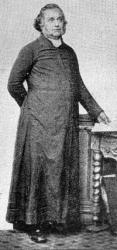
1805 - 1876 Person Name: Henry John Gauntlett, 1805-1876 Topics: God Guardian / Help Composer of "ST. GEORGE" in The Book of Praise Henry J. Gauntlett (b. Wellington, Shropshire, July 9, 1805; d. London, England, February 21, 1876) When he was nine years old, Henry John Gauntlett (b. Wellington, Shropshire, England, 1805; d. Kensington, London, England, 1876) became organist at his father's church in Olney, Buckinghamshire. At his father's insistence he studied law, practicing it until 1844, after which he chose to devote the rest of his life to music. He was an organist in various churches in the London area and became an important figure in the history of British pipe organs. A designer of organs for William Hill's company, Gauntlett extended the organ pedal range and in 1851 took out a patent on electric action for organs. Felix Mendelssohn chose him to play the organ part at the first performance of Elijah in Birmingham, England, in 1846. Gauntlett is said to have composed some ten thousand hymn tunes, most of which have been forgotten. Also a supporter of the use of plainchant in the church, Gauntlett published the Gregorian Hymnal of Matins and Evensong (1844).
Bert Polman
Henry J. Gauntlett
Pages




