

 My Starred Hymns
 My FlexScores
 My Hymnals
 My Purchased Files
Planning worship?
Check out our sister site, ZeteoSearch.org,
for 20+ additional resources related to your search.
- |
User Links
Person Results
Conrad Kocher
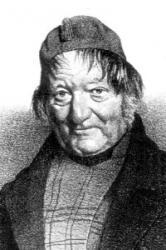
1786 - 1872 Topics: Blessing; Church Year Pentecost; Church Year Transfiguration; Daily Prayer Midday Prayer; Earth; Elements of Worship Praise and Adoration; Elements of Worship Preparation for Blessing; Elements of Worship Sending; Freedom; God Light from; God as King; God's Safety; God's Sovereignty; God's Triumph; God's Face; God's Justice; God's Name; God's People (flock, sheep); God's Power; God's Promise of Redemption; God's Way; Grace; Gratitude; Hymns of Praise; Jesus Christ Incarnation; Joy; Judgment; Mercy; Mission; Occasional Services Christian Marriage; Occasional Services Civic / National Occasions; Occasional Services Commissioning; Occasional Services New Year; Occasional Services Thanksgving Day / Harvest Festival; People of God / Church Family of God; People of God / Church Witnessing; The Incarnation; Witness; Worship; Year A, Ordinary Time after Pentecost, August 14-20; Year C, Easter, 6th Sunday Composer of "DIX" in Psalms for All Seasons Trained as a teacher, Conrad Kocher (b. Ditzingen, Wurttemberg, Germany, 1786; d. Stuttgart, Germany, 1872) moved to St. Petersburg, Russia, to work as a tutor at the age of seventeen. But his love for the music of Haydn and Mozart impelled him to a career in music. He moved back to Germany in 1811, settled in Stuttgart, and remained there for most of his life. The prestigious Cotta music firm published some of his early compositions and sent him to study music in Italy, where he came under the influence of Palestrina's music. In 1821 Kocher founded the School for Sacred Song in Stuttgart, which popularized four-part singing in the churches of that region. He was organist and choir director at the Stiftskirche in Stuttgart from 1827 to 1865. Kocher wrote a treatise on church music, Die Tonkunst in der Kirche (1823), collected a large number of chorales in Zions Harfe (1855), and composed an oratorio, two operas, and some sonatas. William H. Monk created the current form of DIX by revising and shortening Conrad Kocher's chorale melody for “Treuer Heiland, wir sind hier,” found in Kocher's Stimmen aus dem Reiche Gottes (1838).
Bert Polman
Conrad Kocher
Oliver Holden
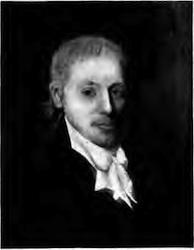
1765 - 1844 Topics: Christ Conqueror; Christ Power of; Doxologies; God Adored and Exalted; Gospel Prevalence and Power of; Missions Triumphs of; Nations Owe Allegiance to Christ; Nations Ultimate Subjection of; Royalty of Christ Mediatorial; Royalty of Christ Ultimate Acknowledgement of; The Seasons Composer of "CORONATION" in The Psalter Holden, Oliver, one of the pioneers of American psalmody, was born in 1765, and was brought up as a carpenter. Subsequently he became a teacher and music-seller. He died at Charlestown, Massachusetts, 1844. His published works are American Harmony, 1793; the Worcester Collection, 1797; and other Tune books. One of his most popular tunes is "Coronation." It is thought that he edited a small hymn-book, published at Boston before 1808, in which are 21 of his hymns with the signature "H." A single copy only of this book is known, and that is without title-page. Of his hymns the following are in common use:—
1. All those who seek a throne of grace. [God present where prayer is offered.] Was given in Peabody's Springfield Collection, 1835, No. 92, in a recast form as, “They who seek the throne of grace." This form is in extensive use in America, and is also in a few collections in Great Britain.
2. With conscious guilt, and bleeding heart. [Lent.] This, although one of the best of Holden's hymns, has passed out of use. It appeared, with two others, each bearing bis signature, in the Boston Collection (Baptist), 1808.
3. Within these doors assembled now. [Divine Worship.] [Rev. F. M. Bird, M.A.]
-- John Julian, Dictionary of Hymnology
Oliver Holden
John H. Stockton
1813 - 1877 Topics: Adoration; Afflictions Comfort under; Christ Grace and Love of; Christ Minstry of; Christ Power of; Christ Preciousness of; Christ Providences of; Christ Worshiped; Christians Graces of; Church Beloved of God; Church Divinely Furnished; Church Saved by Grace; Faith Blessedness of; Godly Fear Blessedness of; God Adored and Exalted; God Compassion of ; God Goodness of; God Love and Mercy; God Source of All Good; God Works of; Gospel Fulness of ; Gospel Gracious Fruit of; Gospel Invitations of ; Gospel Prevalence and Power of; Gospel Privileges of; Heart Broken and Contrite; Humility; Meekness; Mercy of God Celebrated; Mercy of God Great; Missions Influence of; Nature Revelation of God in; Praise Calls to; Praise Fitness of; Praise For God's Goodness; Praise for temporal blessings; Praise For Works of Creation; Praise For Works of Providence; Praise Pleasantness of; Pride; Providence of God Over His Creatures; Revival; Royalty of Christ In His Church; Royalty of Christ Providential; Royalty of Christ Universal Domain of; Thanksgiving Declared; Worship Call to Composer of "MINERVA" in The Psalter Stockton, John Hart, a Methodist minister, was born in 1813, and died in 1877. He was a member of the New Jersey Annual Conference of the Methodist Episcopal Church, and the successive pastoral charges that he filled as a member of that Conference are found in the Conference Journal. He was not only a preacher, but a musician and composer of tunes, as well as hymn writer. He published two gospel song books: Salvation Melodies, 1874, and Precious Songs, 1875.
Hymn Writers of the Church by Charles Nutter, 1911
===============
Stockton, John Hart, b. April 19, 1813, and d. March 25, 1877, was the author of "Come, every soul by sin oppressed" (Invitation), in I.D. Sankey's Sacred Songs and Solos, 1878, and of "The Cross, the Cross, the blood¬stained Cross" (Good Friday) in the same collection.
--John Julian, Dictionary of Hymnology, Appendix, Part II (1907)
===============
Stockton, John Hart. (New Hope, Pennsylvania, April 19, 1813--March 25, 1877). Born of Presbyterian parents, he was converted at a Methodist camp meeting in 1838, being received into full membership in the New Jersey Conference in 1857. Because of ill health he twice took the "supernumerary relations." He withdrew from actual pastoral work in 1874 and engaged in compiling and publishing gospel hymn books, issuing Salvation Melodies that year and Precious Songs in 1875, writing both words and music for a number of the songs. He died suddenly after attending a Sunday morning service at Arch Street Church, Philadelphia. Our Hymnody, McCutchan, has, perhaps, the fullest account of him readily available.
--Robert G. McCutchan, DNAH Archives
John H. Stockton
Samuel Sebastian Wesley
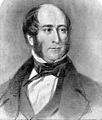
1810 - 1876 Person Name: Samuel S. Wesley, 1810-1876 Topics: Power of God Composer of "AURELIA" in One Lord, One Faith, One Baptism Samuel Sebastian Wesley (b. London, England, 1810; d. Gloucester, England, 1876) was an English organist and composer. The grandson of Charles Wesley, he was born in London, and sang in the choir of the Chapel Royal as a boy. He learned composition and organ from his father, Samuel, completed a doctorate in music at Oxford, and composed for piano, organ, and choir. He was organist at Hereford Cathedral (1832-1835), Exeter Cathedral (1835-1842), Leeds Parish Church (1842-1849), Winchester Cathedral (1849-1865), and Gloucester Cathedral (1865-1876). Wesley strove to improve the standards of church music and the status of church musicians; his observations and plans for reform were published as A Few Words on Cathedral Music and the Music System of the Church (1849). He was the musical editor of Charles Kemble's A Selection of Psalms and Hymns (1864) and of the Wellburn Appendix of Original Hymns and Tunes (1875) but is best known as the compiler of The European Psalmist (1872), in which some 130 of the 733 hymn tunes were written by him.
Bert Polman
Samuel Sebastian Wesley
Anonymous
Person Name: Anon. Topics: God the Father Power of God in Nature Translator, v. 2 of "Can You Count the Stars?" in Seventh-day Adventist Hymnal In some hymnals, the editors noted that a hymn's author is unknown to them, and so this artificial "person" entry is used to reflect that fact. Obviously, the hymns attributed to "Author Unknown" "Unknown" or "Anonymous" could have been written by many people over a span of many centuries.
Anonymous
Herman G. Stuempfle
1923 - 2007 Person Name: Herman G. Stuempfle, Jr., 1923-2007 Topics: Power of God Author of "O God, Whose Healing Power" in One Lord, One Faith, One Baptism Rev. Dr. Herman G. Stuempfle, Jr., 83, died Tuesday, March 13, 2007, after a long illness. Born April 2, 1923, in Clarion, he was the son of the late Herman G. and Helen (Wolfe) Stuempfle, Sr. Stuempfle lived most of his life in Gettysburg, PA. He served as President of the Lutheran Theological Seminary in Gettysburg. He attended Hughesville public schools, and was a graduate of Susquehanna University and the Lutheran Theological Seminary at Gettysburg. He received additional advanced degrees from Union Theological Seminary in New York and a doctoral degree at Southern California School of Theology at Claremont. He retired in 1989. Rev. Dr. Stuempfle was the author of several books and numerous articles and lectures on preaching, history, and theology. He was also among the most honored and respected hymn writers of the 20th and 21st centuries. Rev. Dr. Stuempfle was known for his leadership in community and civic projects. Always taking an active stance on social issues, he participated in the creation of day care centers, served on the Gettysburg interchurch social action committee, helped create and support prison ministries and a homeless shelter, and tutored young people in the after school program of Christ Lutheran Church, where he was a long time member.
--Excerpts from his obituary published in Evening Sun from Mar. 15 to Mar. 16, 2007
Herman G. Stuempfle
Franklin L. Sheppard
1852 - 1930 Person Name: Franklin L. Sheppard (1852-1930) Topics: God the Father Power of God in Nature Composer of "TERRA BEATA" in Seventh-day Adventist Hymnal Franklin L. Sheppard (b. Philadelphia, PA, 1852; d. Germantown, PA, 1930) arranged the tune for Babcock's text and published it in the Presbyterian church school hymnal Alleluia (1915), edited by Sheppard (Babcock and Sheppard were friends).
After graduating from the University of Pennsylvania, Philadelphia, Sheppard entered the family foundry business in Baltimore, Maryland, in 1875. He was organist at Zion Episcopal Church and later was an elder and music director of the Second Presbyterian Church in Baltimore. President of the Presbyterian Board of Publications, Sheppard also served on the committee that prepared the Presbyterian Hymnal of 1911. In the history of hymnody he is remembered primarily for arranging the tune TERRA BEATA for “This Is My Father's World.”
Bert Polman
Franklin L. Sheppard
Edward Hodges
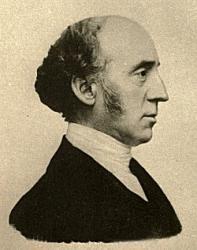
1796 - 1867 Person Name: Edward Hodges, 1796-1867 Topics: Power of God; Power of God; Power of God Adapter of "HYMN TO JOY" in Journeysongs (2nd ed.) Born: July 20, 1796, Bristol, England.
Died: September 1, 1867, Clifton, Bristol, England.
Buried: Church of St. Mary the Virgin, Stanton Drew (about eight miles south of Bristol).
Hodges’ musical gift showed itself at an early age; by 1819, he was playing the organ at St. James’ Church in Bristol, and at St. Nicholas’, 1821-1838. He also had an interesting mechanical bent, and spurred several technical improvements in organ design. He composed a number of services and anthem pieces, and Cambridge University awarded him a doctorate in music in 1825.
Hodges eventually emigrated, accepting a post at the cathedral in Toronto, Canada, in 1838. The next year, he became music director at Trinity Parish in New York City. He became the organist at Trinity Church when it opened in 1846 (the church had its organ built to his specifications). He retired for health reasons in 1859, and returned to his native England in 1863. Hodges’ works include:
An Apology for Church Music and Musical Festivals, in Answer…to the Standard and the Record (London: 1834)
Essays on the Objects of Musical Study (Bristol, England: 1838)
An Essay on the Cultivation of Church Music (New York: 1841)
Contributions to the Quarterly Musical Magazine & Musical World
Trinity Collection of Church Music (Boston, Massachusetts: 1864) (editor)
Music--
BRISTOL
GLOUCESTER
HABAKKUK
HYMN TO JOY
--www.hymntime.com/
Edward Hodges
William Owen
1813 - 1893 Person Name: William Owen, 1814-1893 Topics: God Power / Might of Composer of "BRYN CALFARIA" in The Book of Praise Owen, William (‘William Owen of Prysgol,’ 1813-1893), musician; b. 12? Dec. 1813 [in Lônpopty], Bangor, the son of William and Ellen Owen. The father was a quarryman at Cae Braich-y-cafn quarry, Bethesda, and the son began to work in the same quarry when he was ten years old. He learnt music at classes held by Robert Williams (Cae Aseth), at Carneddi, and from William Roberts, Tyn-y-maes, the composer of the hymn-tune ‘Andalusia.’ He wrote his first hymn-tune when he was 18 — it was published in Y Drysorfa for June 1841. After the family had [removed] to [Caesguborwen], Bangor, [sometimes called Cilmelyn] — they had spent some years [at Tŷhen] near the quarry — William Owen formed a temperance choir which sang ‘Cwymp Babilon,’ the work of the conductor, at the Caernarvon temperance festival, 1849. In 1852, with the help of some friends at Bethesda, he published Y Perl Cerddorol yn cynnwys tonau ac anthemau, cysegredig a moesol; of this 3,000 copies were sold, A solfa edition appeared in 1886 of which 4,000 copies were sold. He composed several temperance pieces, some of which were sung in the Eryri temperance festivals held at Caernarvon castle. His anthem, ‘Ffynnon Ddisglair,’ and the hymn-tunes ALMA and DEEMSTER became popular, but it was the hymn-tune called BRYN CALFARIA which made the composer famous; this continues to have a considerable vogue in Wales and in England. He married the daughter of the house called Prysgol and went there to live; he also became precentor at Caeathro C.M. chapel. He died 20 July 1893, and was buried in Caeathro chapel burial ground.
--wbo.llgc.org.uk/en/
William Owen
James Montgomery
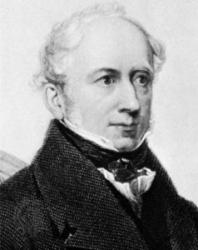
1771 - 1854 Topics: God Power of Author of "Call Jehovah thy Salvation" in Trinity Hymnal James Montgomery (b. Irvine, Ayrshire, Scotland, 1771; d. Sheffield, Yorkshire, England, 1854), the son of Moravian parents who died on a West Indies mission field while he was in boarding school, Montgomery inherited a strong religious bent, a passion for missions, and an independent mind. He was editor of the Sheffield Iris (1796-1827), a newspaper that sometimes espoused radical causes. Montgomery was imprisoned briefly when he printed a song that celebrated the fall of the Bastille and again when he described a riot in Sheffield that reflected unfavorably on a military commander. He also protested against slavery, the lot of boy chimney sweeps, and lotteries. Associated with Christians of various persuasions, Montgomery supported missions and the British Bible Society. He published eleven volumes of poetry, mainly his own, and at least four hundred hymns. Some critics judge his hymn texts to be equal in quality to those of Isaac Watts and Charles Wesley . Many were published in Thomas Cotterill's Selection of Psalms and Hymns (1819 edition) and in Montgomery's own Songs of Zion (1822), Christian Psalmist (1825), and Original Hymns (1853).
Bert Polman
========================
Montgomery, James, son of John Montgomery, a Moravian minister, was born at Irvine, Ayrshire, Nov. 4, 1771. In 1776 he removed with his parents to the Moravian Settlement at Gracehill, near Ballymena, county of Antrim. Two years after he was sent to the Fulneck Seminary, Yorkshire. He left Fulneck in 1787, and entered a retail shop at Mirfield, near Wakefield. Soon tiring of that he entered upon a similar situation at Wath, near Rotherham, only to find it quite as unsuitable to his taste as the former. A journey to London, with the hope of finding a publisher for his youthful poems ended in failure; and in 1792 he was glad to leave Wath for Shefield to join Mr. Gales, an auctioneer, bookseller, and printer of the Sheffield Register newspaper, as his assistant. In 1794 Mr. Gales left England to avoid a political prosecution. Montgomery took the Sheffield Register in hand, changed its name to The Sheffield Iris, and continued to edit it for thirty-one years. During the next two years he was imprisoned twice, first for reprinting therein a song in commemoration of "The Fall of the Bastille," and the second for giving an account of a riot in Sheffield. The editing of his paper, the composition and publication of his poems and hynms, the delivery of lectures on poetry in Sheffield and at the Royal Institution, London, and the earnest advocacy of Foreign Missions and the Bible Society in many parts of the country, gave great variety but very little of stirring incident to his life. In 1833 he received a Royal pension of £200 a year. He died in his sleep, at the Mount, Sheffield, April 30, 1854, and was honoured with a public funeral. A statue was erected to his memory in the Sheffield General Cemetery, and a stained glass window in the Parish Church. A Wesleyan chapel and a public hall are also named in his honour. Montgomery's principal poetical works, including those which he edited, were:—
(1) Prison Amusements, 1797; (2) The Wanderer of Switzerland, 1806; (3) The West Indies, 1807; (4) The World before the Flood, 1813; (5) Greenland and Other Poems, 1819; (6) Songs of Zion, 1822; (7) The Christian Psalmist, 1825; (8) The Christian Poet, 1825; (9) The Pelican Island, 1828; (10) The Poet’s Portfolio, 1835; (11) Original Hymns for Public, Private, and Social Devotion, 1853. He also published minor pieces at various times, and four editions of his Poetical Works, the first in 1828, the second in 1836, the third in 1841, and the fourth in 1854. Most of these works contained original hymns. He also contributed largely to Collyer's Collection, 1812, and other hymnbooks published during the next 40 years, amongst which the most noticeable was Cotterill's Selections of 1819, in which more than 50 of his compositions appeared. In his Christian Psalmist, 1825, there are 100 of his hymns, and in his Original Hymns, 1853, 355 and 5 doxologies. His Songs of Zion, 1822, number 56. Deducting those which are repeated in the Original Hymns, there remain about 400 original compositions.
Of Montgomery's 400 hymns (including his versions of the Psalms) more than 100 are still in common use. With the aid of Montgomery's MSS. we have given a detailed account of a large number. The rest are as follows:—
i. Appeared in Collyer's Collection, 1812.
1. Jesus, our best beloved Friend. Personal Dedication to Christ.
2. When on Sinai's top I see. Sinai, Tabor, and Calvary.
ii. Appeared in Cotterill's Selection, 1819.
3. Come to Calvary's holy mountain. The Open Fountain.
4. God in the high and holy place. God in Nature. The cento in Com. Praise, 1879, and others, "If God hath made this world so fair," is from this hymn.
5. Hear me, O Lord, in my distress. Ps. cxliii.
6. Heaven is a place of rest from sin. Preparation for Heaven.
7. I cried unto the Lord most just. Ps. cxlii.
8. Lord, let my prayer like incense rise. Ps. cxxxix.
9. O bless the Lord, my soul! His grace to thee proclaim. Ps. ciii.
10. Out of the depths of woe. Ps. cxxx. Sometimes "When from the depths of woe."
11. The world in condemnation lay. Redemption.
12. Where are the dead? In heaven or hell? The Living and the Dead.
iii. Appeared in his Songs of Zion, 1822.
13. Give glory to God in the highest. Ps. xxix.
14. Glad was my heart to hear. Ps. cxxii.
15. God be merciful to me. Ps. lxix.
16. God is my strong salvation. Ps. xxvii.
17. Hasten, Lord, to my release. Ps. lxx.
18. Have mercy on me, O my God. Ps. li.
19. Hearken, Lord, to my complaints. Ps. xlii.
20. Heralds of creation cry. Ps. cxlviii.
21. How beautiful the sight. Ps. cxxxiii.
22. How precious are Thy thoughts of peace. Ps. cxxxix.
23. I love the Lord, He lent an ear. Ps. cxvi.
24. In time of tribulation. Ps. lxxvii.
25. Jehovah is great, and great be His praise. Ps. xlviii. Sometimes, "0 great is Jehovah, and great is His Name."
26. Judge me, O Lord, in righteousness. Ps. xliii.
27. Lift up your heads, ye gates, and wide. Ps.xxiv.
28. Lord, let me know mine [my] end. Ps. xxxi.
29. Of old, 0 God, Thine own right hand. Ps. lxxx.
30. O God, Thou art [my] the God alone. Ps. lxiii.
31. 0 Lord, our King, how excellent. Ps. viii. Sometimes, "0 Lord, how excellent is Thy name."
32. O my soul, with all thy powers. Ps. ciii.
33. One thing with all my soul's desire. Ps. xxvii. From this, "Grant me within Thy courts a place."
34. Searcher of hearts, to Thee are known. Ps. cxxxix.
35. Thank and praise Jehovah's name. Ps. cvii.
36. Thee will I praise, O Lord in light. Ps. cxxxviii.
37. The Lord is King; upon His throne. Ps. xciii.
38. The Lord is my Shepherd, no want shall I know. Ps. xxiii.
39. The tempter to my soul hath said. Ps. iii.
40. Thrice happy he who shuns the way. Ps. i.
41. Thy glory, Lord, the heavens declare. Ps. xix.
42. Thy law is perfect, Lord of light. Ps. xix.
43. Who make the Lord of hosts their tower. Ps. cxxv.
44. Yea, I will extol Thee. Ps. xxx.
iv. Appeared in his Christian Psalmist. 1825.
45. Fall down, ye nations, and adore. Universal adoration of God desired.
46. Food, raiment, dwelling, health, and friends. The Family Altar.
47. Go where a foot hath never trod. Moses in the desert. Previously in the Leeds Congregational Collection, 1822.
48. Green pastures and clear streams. The Good Shepherd and His Flock.
49. Less than the least of all. Mercies acknowledged.
50. Not to the mount that burned with fire [flame]. Communion of Saints.
51. On the first Christian Sabbath eve. Easter Sunday Evening.
52. One prayer I have: all prayers in one. Resignation.
53. Our heavenly Father hear. The Lord's Prayer.
54. Return, my soul, unto thy rest. Rest in God.
55. Spirit of power and might, behold. The Spirit's renewing desired.
56. The Christian warrior, see him stand. The Christian Soldier. Sometimes, "Behold the Christian warrior stand."
57. The days and years of time are fled. Day of Judgment.
58. The glorious universe around. Unity.
59. The pure and peaceful mind. A Children's Prayer.
60. This is the day the Lord hath made (q. v.). Sunday.
61. Thy word, Almighty Lord. Close of Service.
62. What secret hand at morning light ? Morning.
63. While through this changing world we roam. Heaven.
64. Within these walls be peace. For Sunday Schools.
v. Appeared in his Original Hymns, 1853.
65. Behold yon bright array. Opening a Place of Worship.
66. Behold the book whose leaves display. Holy Scriptures.
67. Come ye that fear the Lord. Confirmation.
68. Home, kindred, friends, and country, these. Farewell to a Missionary.
69. Let me go, the day is breaking. Jacob wrestling.
70. Not in Jerusalem alone. Consecration of a Church.
71. Praise the high and holy One. God the Creator.
In common with most poets and hymnwriters, Montgomery strongly objected to any correction or rearrangement of his compositions. At the same time he did not hesitate to alter, rearrange, and amend the productions of others. The altered texts which appeared in Cotterill's Selections, 1819, and which in numerous instances are still retained in some of the best hymnbooks, as the "Rock of Ages," in its well-known form of three stanzas, and others of equal importance, were made principally by him for Cotterill's use. We have this confession under his own hand.
As a poet, Montgomery stands well to the front; and as a writer of hymns he ranks in popularity with Wesley, Watts, Doddridge, Newton, and Cowper. His best hymns were written in his earlier years. In his old age he wrote much that was unworthy of his reputation. His finest lyrics are "Angels from the realms of glory," "Go to dark Gethsemane," "Hail to the Lord's Anointed," and "Songs of praise the angels sang." His "Prayer is the soul's sincere desire," is an expanded definition of prayer of great beauty; and his "Forever with the Lord" is full of lyric fire and deep feeling. The secrets of his power as a writer of hymns were manifold. His poetic genius was of a high order, higher than most who stand with him in the front rank of Christian poets. His ear for rhythm was exceedingly accurate and refined. His knowledge of Holy Scripture was most extensive. His religious views were broad and charitable. His devotional spirit was of the holiest type. With the faith of a strong man he united the beauty and simplicity of a child. Richly poetic without exuberance, dogmatic without uncharitableness, tender without sentimentality, elaborate without diffusiveness, richly musical without apparent effort, he has bequeathed to the Church of Christ wealth which could onlv have come from a true genius and a sanctified! heart.
--John Julian, Dictionary of Hymnology (1907)
James Montgomery
Pages




