You help make Hymnary.org possible. More than 10 million people from 200+ countries found hymns, liturgical resources and encouragement on Hymnary.org in 2025, including you. Every visit affirms the global impact of this ministry.

If Hymnary has been meaningful to you this year, would you take a moment today to help sustain it? A gift of any size—paired with a note of encouragement if you wish—directly supports the server costs, research work and curation that keep this resource freely available to the world.

Give securely online today, or mail a check to:
Hymnary.org
Calvin University
3201 Burton Street SE
Grand Rapids, MI 49546

Thank you for your partnership, and may the hope of Advent fill your heart.

Person Results

Topics:christian+work
In:people

Planning worship? Check out our sister site, ZeteoSearch.org, for 20+ additional resources related to your search.
Showing 81 - 90 of 575Results Per Page: 102050

A. H. Mann

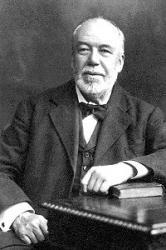
1850 - 1929 Person Name: Arthur H. Mann Topics: Brotherhoods and Men's Guilds; Christ Presence of; Church Work; Communion at the Lord's Table; Temptation of Christians Composer of "ANGEL'S STORY" in The Hymnal Arthur Henry ‘Daddy’ Mann MusB MusD United Kingdom 1850-1929. Born at Norwich, Norfolk, England, he graduated from New College, Oxford. He married Sarah Ransford, and they had five children: Sarah, Francis, Arthur, John, and Mary. Arthur died in infancy. Mann was a chorister and assistant organist at Norwich Cathedral, then, after short stints playing the organ at St Peter’s, Wolverhampton (1870-71); St. Michael’s Tettenhall Parish Church (1871-75); and Beverley Minster (1875-76); he became organist at King’s College Chapel, Cambridge (1876-1929), Cambridge University organist (1897-1929), and music master and organist at the Leys School, Cambridge (1894-1922). In addition to composing an oratorio and some hymn tunes, he was music editor of the Church of England Hymnal (1894). In 1918 he directed the music and first service of “Nine lessons & carols” at King’s College Chapel. He was an arranger, author, composer, and editor. His wife, Sarah, died in 1918. He died at Cambridge, England. John Perry

George J. Elvey

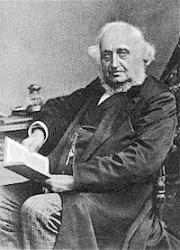
1816 - 1893 Topics: Waiting upon God ; The Christian Life Trust in God; Cast Out Fear; God Sovereignty of ; Works of Providence Composer of "DIADEMATA" in Trinity Hymnal (Rev. ed.) George Job Elvey (b. Canterbury, England, 1816; d. Windlesham, Surrey, England, 1893) As a young boy, Elvey was a chorister in Canterbury Cathedral. Living and studying with his brother Stephen, he was educated at Oxford and at the Royal Academy of Music. At age nineteen Elvey became organist and master of the boys' choir at St. George Chapel, Windsor, where he remained until his retirement in 1882. He was frequently called upon to provide music for royal ceremonies such as Princess Louise's wedding in 1871 (after which he was knighted). Elvey also composed hymn tunes, anthems, oratorios, and service music. Bert Polman

W. Howard Doane

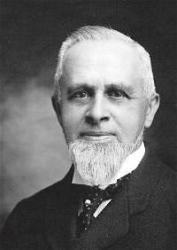
1832 - 1915 Person Name: William H. Doane Topics: Christians Work & Service Composer of "[To the work! To the work!]" in Praise for the Lord (Expanded Edition) An industrialist and philanthropist, William H. Doane (b. Preston, CT, 1832; d. South Orange, NJ, 1915), was also a staunch supporter of evangelistic campaigns and a prolific writer of hymn tunes. He was head of a large woodworking machinery plant in Cincinnati and a civic leader in that city. He showed his devotion to the church by supporting the work of the evangelistic team of Dwight L. Moody and Ira D. Sankey and by endowing Moody Bible Institute in Chicago and Denison University in Granville, Ohio. An amateur composer, Doane wrote over twenty-two hundred hymn and gospel song tunes, and he edited over forty songbooks. Bert Polman ============ Doane, William Howard, p. 304, he was born Feb. 3, 1832. His first Sunday School hymn-book was Sabbath Gems published in 1861. He has composed about 1000 tunes, songs, anthems, &c. He has written but few hymns. Of these "No one knows but Jesus," "Precious Saviour, dearest Friend," and "Saviour, like a bird to Thee," are noted in Burrage's Baptist Hymn Writers. 1888, p. 557. --John Julian, Dictionary of Hymnology, Appendix, Part II (1907) =================== Doane, W. H. (William Howard), born in Preston, Connecticut, 1831, and educated for the musical profession by eminent American and German masters. He has had for years the superintendence of a large Baptist Sunday School in Cincinnati, Ohio, where he resides. Although not a hymnwriter, the wonderful success which has attended his musical setting of numerous American hymns, and the number of his musical editions of hymnbooks for Sunday Schools and evangelistic purposes, bring him within the sphere of hymnological literature. Amongst his collections we have:— (1) Silver Spray, 1868; (2) Pure Gold, 1877; (3) Royal Diadem, 1873; (4) Welcome Tidings, 1877; (5) Brightest and Best, 1875; (6) Fountain of Song; (7) Songs of Devotion, 1870; (8) Temple Anthems, &c. His most popular melodies include "Near the Cross," "Safe in the Arms of Jesus," "Pass me Not," "More Love to Thee," "Rescue the Perishing," "Tell me the Old, Old Story," &c. - John Julian, Dictionary of Hymnology (1907)

Fanny Crosby

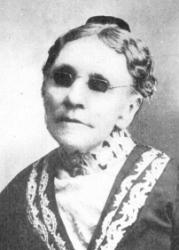
1820 - 1915 Person Name: Fanny J. Crosby Topics: Christians Work & Service Author of "To the Work!" in Praise for the Lord (Expanded Edition) Pseudonymns: A.V., Mrs. A. E. Andrews, Mrs. E. A. Andrews, Mrs. E. L. Andrews, James L. Black, Henrietta E. Blair, Charles Bruce, Robert Bruce, Leah Carlton, Eleanor Craddock, Lyman G. Cuyler, D.H.W., Ella Dare, Ellen Dare, Mrs. Ellen Douglass, Lizzie Edwards. Miss Grace Elliot, Grace J. Frances, Victoria Frances, Jennie Garnett, Frank Gould, H. D. K., Frances Hope, Annie L. James, Martha J. Lankton [Langton], Grace Lindsey, Maud Marion, Sallie Martin, Wilson Meade, Alice Monteith, Martha C. Oliver, Mrs. N. D. Plume, Kate Smiley, Sallie Smith, J. L. Sterling, John Sterling, Julia Sterling, Anna C. Storey, Victoria Stuart, Ida Scott Taylor, Mary R. Tilden, Mrs. J. B. Thresher, Hope Tryaway, Grace Tureman, Carrie M. Wilson, W.H.D. Frances Jane Crosby, the daughter of John and Mercy Crosby, was born in Southeast, Putnam County, N. Y., March 24, 1820. She became blind at the age of six weeks from maltreatment of her eyes during a spell of sickness. When she was eight years old she moved with her parents to Ridgefield, Conn., the family remaining there four years. At the age of fifteen she entered the New York Institution for the Blind, where she received a good education. She became a teacher in the institution in 1847, and continued her work until March 1, 1858. She taught English grammar, rhetoric and American history. This was the great developing period in her life. During the vacations of 1852 and 1853, spent at North Reading, Mass., she wrote the words to many songs for Dr. Geo. F. Root, then the teacher of music at the blind institution. Among them were, "Hazel Dell,", "The Honeysuckle Glen," "Rosalie, the Prairie Flower," "Music in the Air," "Proud World, Good-bye, I'm Going Home," "All Together", "Never Forget the Dear Ones," and others. Subsequently she wrote the words for the cantatas of The Flower Queen and The Pilgrim Fathers, all of which were very popular in their day, though it was not generally known at the time that she was the author. While teaching at the institution she met Presidents Van Buren and Tyler, Hon. Henry Clay, Governor Wm. H. Seward, General Winfield Scott, and other distinguished characters of American history. Concerning Mr. Clay, she gives the following: "When Mr. Clay came to the institution during his last visit to New York, I was selected to welcome him with a poem. Six months before he had lost a son at the battle of Monterey, and I had sent him some verses. In my address I carefully avoided any allusion to them, in order not to wound him. When I had finished he drew my arm in his, and, addressing the audience, said through his tears: 'This is not the first poem for which I am indebted to this lady. Six months ago she sent me some lines on the death of my dear son.' Both of us were overcome for a few moments. Soon, by a splendid effort, Mr. Clay recovered himself, but I could not control my tears." In connection with her meeting these notable men, we might add that Miss Fanny Crosby had the honor of being the first woman whose voice was heard publicly in the Senate Chamber at Washington. She read a poem there on one occasion. In addition to the thousands of hymns that she has written (about eight thousand poems in all), many of which have not been set to music, she has published four volumes of verses. The first was issued in 1844 and was entitled The Blind Girl, and Other Poems, a second volume, Monterey, and Other Poems, followed in 1849, and the third, A Wreath of Columbia's Flowers, in 1858. The fourth, Bells at Evening and Other Verses, with a biographical sketch by Rev. Robert Lowry, and a fine half-tone portrait, in 1897, the sales of which have reached a fourth edition. The book is published by The Biglow & Main Co., New York. Though these show the poetical bent of her mind, they have little to do with her world-wide fame. It is as a writer of Sunday-school songs and gospel hymns that she is known wherever the English language is spoken, and, in fact, wherever any other language is heard. Fanny was married March 5, 1858, to Alex. Van Alstyne, who was also a scholar in the same institution in which she was educated. She began to write Sunday-school hymns for Wm. B. Bradbury in 1864. Her first hymn, "We are going, we are going To a home beyond the skies", was written at the Ponton Hotel on Franklin Street, New York City, on February 5th of that year. This hymn was sung at Mr. Bradbury's funeral in January, 1868. Since 1864 she supported herself by writing hymns. She resided in New York City nearly all her life, where, she says, she is "a member of the Old John Street M. E. Church in good standing." She spent regular hours on certain days at the office of The Biglow & Main Co., the firm for which she did most of her writing, and for whom she has composed over four thousand hymns. Her hymns have been in great demand and have been used by many of our most popular composers, among whom may be mentioned Wm. B. Bradbury, Geo. F. Root, W. H. Doane, Rev. Robert Lowry, Ira D. Sankey, J. R. Sweney, W. J. Kirkpatrick, H. P. Main, H. P. Danks, Philip Phillips, B. G. Unseld, and others. She could compose at any time and did not need to wait for any special inspiration, and her best hymns have come on the spur of the moment. She always composed with an open book in her hand, generally a copy of Golden Hymns, held closely over her eyes, bottom side up. She learned to play on the guitar and piano while at the institution, and has a clear soprano voice. She also received a technical training in music, and for this reason she could, and did, compose airs for some of her hymns. One of these is, "Jesus, dear, I come to Thee, Thou hast said I may," both words and music of which are wonderfully sweet. "Safe in the arms of Jesus", probably one of her best known hymns, was her own favorite. Fanny loved her work, and was happy in it. She was always ready either to sympathize or join in a mirthful conversation, as the case may be. The secret of this contentment dates from her first composition at the age of eight years. "It has been the motto of my life," she says. It is: "O what a happy soul am I! Although I cannot see, I am resolved that in this world Contented I will be;" This has continued to be her philosophy. She says that had it not been for her affliction she might not have so good an education, nor so great an influence, and certainly not so fine a memory. She knows a great many portions of the Bible by heart, and had committed to memory the first four books of the Old Testament, and also the four Gospels before she was ten years of age. Her scope of subjects is wide, embracing everything from a contemplation of heaven, as in "The Bright Forever" and "The Blessed Homeland", to an appeal to the work of this world, as in "To the Work" and "Rescue the Perishing." The most of Fanny's published hymns have appeared under the name of Fanny J. Crosby or Mrs. Yan Alstyne, but quite a large number have appeared under the nom de plumes of Grace J. Frances, Mrs. C. M. Wilson, Lizzie Edwards, Ella Dale, Henrietta E. Blair, Rose Atherton, Maud Marion, Leah Carlton, nearly two hundred different names. -Biographies of Gospel Song and Hymn Writers (excerpts) ======================= Van Alstyne, Frances Jane, née Crosby, a member of the Methodist Episcopal Church, was born at South East, Putnam County, New York, March 24, 1823. When six weeks old she lost her sight. About 1835 she entered the New York City Institution for the Blind. On completing her training she became a teacher therein from 1847 to 1858. In 1858 she was married to Alexander Van Alstyne, a musician, who was also blind. Her first poem was published in 1831; and her first volumes of verse as A Blind Girl, and Other Poems, 1844; Monteresy, and Other Poems, 1849; and A Wreath of Columbia's Flowers, 1858. Her first hymn was "We are going, we are going" (Death and Burial), which was written for Mr. Bradbury and published in the Golden Censer, 1864. From 1853 to 1858 she wrote 20 songs, which were set to music by G. F. Root. Her songs and hymns number some 2,000 or more, and have been published mainly in several of the popular American Sunday school collections, and often under a nom de plume. About 60 have come into common use in Great Britain. The majority of these are taken from the following American collections:— i. From The Shining Star, 1864. 1. Softly on the breath of evening. Evening. ii. From Fresh Laurels, 1867. 2. Beautiful Mansions, home of the blest. Heaven. 3. Jesus the Water of Life has given. The Water of Life. 4. Light and Comfort of my soul. In Affliction. 5. There's a cry from Macedonia. Missions. 6. We are marching on with shield and banner bright. Sunday School Anniversary. iii. From Musical Leaves, 1868. 7. 0 what are you going to do, brother? Youth for God. iv. From Sabbath Carols, 1868. 8. Dark is the night, and cold the wind is blowing. Affliction anticipated. 9. Lord, at Thy mercy seat, Humbly I fall. Lent. v. From Silver Spray, 1868. 10. If I come to Jesus, He will make me glad. Peace in Jesus. 11. 'Twill not be long—our journey here. Heaven anticipated. vi. From Notes of Joy, 1869. 12. Little beams of rosy light. The Divine Father. 13. Press on! press on! a glorious throng. Pressing towards the Prize. vii. From Bright Jewels, 1869. 14. Christ the Lord is risen today, He is risen indeed. Easter. 15. Holy, holy, holy is the Lord! Sing 0 ye people, &c. Holiness of God. 16. Jesus, keep me near the Cross. Near the Cross of Christ. 17. Saviour, bless a little child. A Child's Prayer. Written Feb. 6, 1869. viii. From Songs of Devotion, 1870. 18. Pass me not, 0 gentle Saviour. Lent. Written in 1868. 19. Rescue the perishing, care for the dying. Home Missions. ix. From Pure Gold, 1871. 20. Great is Jehovah. King of kings. Greatness of God. 21. I would be Thy little lamb. The Good Shepherd. 22. Lead me to Jesus, lead me to Jesus. Desiring Jesus. 23. To the work, to the work, we are servants of God. Home Missions. 24. Why labour for treasures that rust and decay? The Fadeless Crown. x. From the Royal Diadem, 1873. 25. I am Jesus' little friend. For Infant Schools. 26. Jesus I love Thee. Loving Jesus. 27. Mourner, wheresoe'er thou art. To the Sorrowing and Penitent. Written Oct. 3, 1871. 28. Never be faint or weary. Joy in Jesus. 29. Only a step to Jesus. Invitation. xi. From Winnowed Hymns, 1873-4. 30. Loving Saviour, hear my cry. Lent. xii. From Echoes of Zion, 1874. 31. Say, where is thy refuge, my brother? Home Missions. xiii. From Songs of Grace and Glory, 1874. 32. Thou my everlasting Portion. Christ the Portion of His People. xiv. From Brightest and Best, 1875. 33. All the way my Saviour leads me. Jesus the Guide. 34. I am Thine, O Lord: I have heard Thy voice. Holiness desired. 35. O come to the Saviour, believe in His name. Invitation. Written, Sep. 7, 1874. 36. O how sweet when we mingle. Communion of Saints. Written in 1866. 37. O my Saviour, hear me. Prayer to Jesus for blessing and love. 38. Only Jesus feels and knows. Jesus the Divine Friend. 39. Revive Thy work, O Lord. Home Missions. 40. Saviour, more than life to me. Jesus All and in All. 41. To God be the glory, great things He hath done. Praise for Redemption. xv. From Calvary Songs, 1875. 42. Come, O come with thy broken heart. Invitation. xvi. From Gospel Music, 1876. 43. Here from the world we turn. Divine Worship. 44. When Jesus comes to reward His servants. Watching, xvii. From Welcome Tidings, 1877. 45. O hear my cry, be gracious now to me. For Pardon and Peace. xviii. From The Fountain of Song, 1877. 46. Lord, my trust I repose on Thee. Trusting in Jesus. xix. From Good as Gold, 1880. 47. In Thy cleft, O Rock of Ages. Safety in Jesus. 48. Sound the alarm ! let the watchman cry. Home Missions. 49. Tenderly He leads us. Christ the Leader. 50. 'Tis the blessed hour of prayer. The Hour of Prayer. In addition to these hymns, all of which are in common use in Great Britain (mainly through I. D. Sankey's Sacred Songs and Solos, the Methodist Sunday School Hymn Book, the Silver Street Sunday Scholars Companion, and other collections for Sunday schools), there are also "A blessing for you, will you take it?" (Pardon through Jesus); "My song shall be of Jesus" (Praise of Jesus); “Now, just a word for Jesus"(Home Missions); "Onward, upward, Christian soldier" (Pressing Heavenward); 44 Sinner, how thy heart is troubled" (Invitation); "'Tis a goodly, pleasant land" (Heaven anticipated); and "When the dewy light was fading" (Death anticipated). All of these are in I. D. Sankey's Sacred Songs & Solos. Mrs. Van Alstyne's most popular composition is "Safe in the arms of Jesus" (Safety in Jesus). This was written in 1868, at the request of Mr. W. H. Doane, to his well-known melody with which it is inseparably associated, and published in Bright Jewels, 1869. Mrs. Van Alstyne's hymns have sometimes been published anonymously; but the greater part are signed by a bewildering number of initials. The combined sales of the volumes of songs and hymns named above have amounted in English-speaking countries to millions of copies. Notwithstanding the immense circulation thus given to Mrs. Van Alstyne's hymns, they are, with few exceptions, very weak and poor, their simplicity and earnestness being their redeeming features. Their popularity is largely due to the melodies to which they are wedded. Since the above was in type we have found that the following are also in common use in Great Britain:— 51. Suppose the little cowslip. Value of Little Things. 52. Sweet hour of prayer. The Hour of Prayer. These are in Bradbury's Golden Chain, 1861. 53. Never lose the golden rule. Love to our Neighbours. In Bradbury's Golden Censer, 1864. 54. I will not be afraid at night. Trust in God. In Bradbury's Fresh Laurels, 1867. 55. Praise Him, praise Him, Jesus our, &c. Praise of Jesus. In Biglow & Main's Bright Jewels, 1869. 56. More like Jesus would I be. More like Jesus. In Perkins & Taylor's Songs of Salvation, 1870. 57. Behold me standing at the door. Christ at the Door. In Biglow & Main's Christian Songs, 1872. 58. If I come to Jesus. Jesus the Children's Guide. 59. Jesus, Lord, I come to Thee. Trust in Jesus. 60. Let me learn of Jesus. Jesus the Children's Friend. 61. Singing for Jesus, O singing for Jesus. Singing for Jesus. 62. There is a Name divinely sweet Holy Name of Jesus. Of these hymns Nos. 58-62 we have not been able to trace. --Excerpts from John Julian, Dictionary of Hymnology (1907 ================ Van Alstyne, Frances J., p. 1203, ii. From the American collections of recent date we find that Mrs. Van Alstyne is still actively engaged in hymn-writing. In the Funk and Wagnalls Company Gloria Deo, 1903, there are about 30 of her hymns, most of which are new. They are all signed, and some are dated, but we have not space to quote the first lines and subjects, as this hymnal is not an official collection of any denomination. Another name, "Mrs. S. K. Bourne" is credited in the same hymnal with about 40 new hymns. If this signature is not another pen-name of Mrs. Van Alstyne's (and these pen-names and initials of hers are very numerous), we can only say that she has a very successful understudy in "Mrs. S. K. Bourne." --John Julian, Dictionary of Hymnology, New Supplement (1907)

Mary D. James

1810 - 1883 Topics: Christian Work Author of "All for Jesus!" in Gospel Praise Book. Mary Dagworthy Yard James USA 1810-1883. Born at Trenton, NJ, she began teaching Sunday school at age 13 in the Methodist Episcopal Church. She married Henry B James, and they had four children: Joseph, Mary, Ann, and Charles.. She became a prominent figure in the Wesleyan Holiness movement of the early 1800s, assisting Phoebe Palmer (also a hymnist) and often leading meetings at Ocean Grove, NJ, and elsewhere. She wrote articles that appeared in the “Guide to holiness”, “The New York Christian advocate”, “The contributor”, “The Christian witness:, “The Christian woman”, “The Christian standard”, and the “Ocean Grove record”. She wrote a biography of Edmund J Yard entitled, “The soul winner” (1883). She strived to live a life as close to Christ as possible. She died in New York City. John Perry

S. J. Vail

1818 - 1884 Topics: Christian Work Composer of "[Let us gather up the sunbeams]" in Gospel Praise Book. In his youth Silas Jones Vail learned the hatter's trade at Danbury, Ct. While still a young man, he went to New York and took employment in the fashionable hat store of William H. Beebe. Later he established himself in business as a hatter at 118 Fulton Street, where he was for many years successful. But the conditions of trade changed, and he could not change with them. After his failure in 1869 or 1870 he devoted his entire time and attention to music. He was the writer of much popular music for use in churches and Sunday schools. Pieces of music entitled "Scatter Seeds of Kindness," "Gates Ajar," "Close to Thee," "We Shall Sleep, but not Forever," and "Nothing but Leaves" were known to all church attendants twenty years ago. Fanny Crosby, the blind authoress, wrote expressly for him many of the verses he set to music. --Vail, Henry H. (Henry Hobart). Genealogy of some of the Vail family descended from Jeremiah Vail at Salem, Mass., 1639, p. 234.

Bianco da Siena

1350 - 1434 Person Name: Bianco da Siena, b. 1434 Topics: The Holy Spirit His Person, Mission and Work; The Christian Life Love and Communion Author of "Come down, O Love Divine" in The Methodist Hymn-Book with Tunes Bianco da Siena (b. Anciolina, circa 1350; d. Venice, Italy, circa 1434), an Italian poet and wool worker who was born at Anciolina, in the Val d'Arno. In 1367 he entered the Order of Jesuates, consisting of unordained men who followed the rule of St. Augustine. This order was instituted in that year by one John Colombinus of Siena, and suppressed by Pope Clement IX, possibly because of fear of not being able to control their mystical fervor. Little is known of Bianco beyond the fact that he is said to have lived in Venice for some years, and died there in 1434. His hymns were published at Lucca, in 1851, and edited by T. Bini, under the title, Laudi spirituali del Bianco da Siena. Emily Brink ============== Bianco da Siena, born at Anciolina, in the Val d'Arno, date unknown. In 1367 he entered the Order of Jesuates, consisting of unordained men who followed the rule of St. Augustine. This order was instituted in that year by one John Colombinus of Siena, and suppressed by Pope Clement IX. in 1668. Little is known of Bianco beyond the fact that he is said to have lived in Venice for some years, and died there in 1434. His hymns were published at Lucca, in 1851, and edited by T. Bini, under the title, Laudi spirituali del Bianco da Siena. This work contains 92 pieces. Of these the following have been translated into English, and have come into common use:— 1. Discendi, Amor santo. The Holy Spirit desired. This is No. 35 in the above work and is in 8 stanzas. Of these, Dr. Littledale gave 4 in the People's Hymnal, 1867, No. 473, as, "Come down, 0 Love Divine." 2. Gesil Christo amoroso. Missions. This is No. 79 of the above wdrk. It has been rendered into English by Dr. Littledale, and was published in the People's Hymnal, 1867, No. 400, as, "0 Jesu Christ, the loving.” 3. Vergine santa, sposa dell’ Agnello. St. Lucy. V. M . This is also from the foregoing work, No. 74, in 15 stanzas of 3 lines. Dr. Littledale's translation in the People's Hymnal, 1867, No. 226, is in 7 stanzas of 4 lines, and begins, "0 Virgin Spouse of Christ the Lamb." 4. Ama Jesu el tuo sposo diletto. Love for Jesus . This is No. 45 in the above work, in 33 stanzas. In 1866 Dr. Littledale contributed a cento therefrom to R. Brett's Office of the Moat Holy Name. This was transferred to Brooke's Churchman's Manual of Private & Family Devotion, 1882. It begins, "Love Jesus, Who hath sought thee so." Although the translations Nos. 1-3 have not gone any further than the People's Hymnal, Nos. 1 and 2 are worthy of more extended use. [Rev. John Julian, D.D.] -- John Julian, Dictionary of Hymnology (1907)

Charles William Everest

1814 - 1877 Person Name: Charles William Everest, 1814-1877 Topics: The Christian Life Discipleship and Consecration; God: His Attributes, Works and Word The Lord Jesus Christ - His Life and Example; The Church The Gospel Call; Hymns for the Young Discipleship and Consecration; The Church The Sacraments - Baptism Author of "'Take up thy cross,' the Saviour said" in The Book of Praise Everest, Charles William, M.A., born at East Windsor, Connecticut, May 27, 1814, graduated at Trinity College, Hartford, 1838, and took Holy Orders in 1842. He was rector at Hamden, Connecticut, from 1842 to 1873, and also agent for the Society for the Increase of the Ministry. He died at Waterbury, Connecticut, Jan. 11, 1877 (See Poets of Connecticut, 1843). In 1833 he published Visions of Death, and Other Poems; from this work his popular hymn is taken:— Take up thy cross, the Saviour said. Following Jesus. The original text of this hymn differs very materially from that which is usually found in the hymn-books. The most widely known form of the text is that in Hymns Ancient & Modern, where it appeared in 1861. It was copied by the Compilers from another collection, but by whom the alterations were made is unknown. The nearest approach to the original is in Horder's Congregational Hymn Book, 1884. Original text in Biggs's English Hymnology, 1873, p. 24. [Rev. F. M. Bird, M.A.] -- John Julian, Dictionary of Hymnology (1907)

Christian Fürchtegott Gellert

1715 - 1769 Person Name: Christian Furchegott Gellert, 1715-1769 Topics: God: His Attributes, Works and Word The Lord Jesus Christ - His Ascension; God: His Attributes, Works and Word The Lord Jesus Christ - His Resurrection; The Christian Life Death, Resurrection, and the Heavenly Glory Author of "Jesus lives! thy terrors now" in The Book of Praise Gellert, Christian Fürchtegott, son of Christian Gellert, pastor at Hainichen in the Saxon Harz, near Freiberg, was born at Hainichen, July 4, 1715. In 1734 he entered the University of Leipzig as a student of theology, and after completing his course acted for some time as assistant to his father. But then, as now, sermons preached from manuscript were not tolerated in the Lutheran Church, and as his memory was treacherous, he found himself compelled to try some other profession. In 1739 he became domestic tutor to the sons of Herr von Lüttichau, near Dresden, and in 1741 returned to Leipzig to superintend the studies of a nephew at the University. He also resumed his own studies. He graduated M.A. 1744; became in 1745 private tutor or lecturer in the philosophical faculty; and was in 1751 appointed extraordinary professor of philosophy, lecturing on poetry and rhetoric, and then on moral philosophy. An ordinary professorship offered to him in 1761 he refused, as he did not feel strong enough to fulfil its duties, having been delicate from a child, and after 1752 suffering very greatly from hypochondria. He died at Leipzig, Dec. 13, 1769 (Koch, vi. 263-277; Allgemeine Deutsche Biographie, viii. 544-549, &c). As a professor, Gellert was most popular, numbering Goethe and Lessing among his pupils, and won from his students extraordinary reverence and affection, due partly to the warm interest he took in their personal conduct and welfare. In his early life he was one of the contributors to the Bremer Beiträge; and was one of the leaders in the revolt against the domination of Gottsched and the writers of the French school. His Fables (1st Ser. 1746; 2nd 1748), by their charm of style, spirit, humour and point, may justly be characterised as epoch-making, won for him universal esteem and influence among his contemporaries of all classes, and still rank among the classics of German literature. As a hymnwriter he also marks an epoch; and while in the revival of churchly feeling the hymns of the Rationalistic period of 1760 to 1820 have been ignored by many recent compilers, yet the greatest admirers of the old standard hymns have been fain to stretch their area of selection from Luther to Gellert. He prepared himself by prayer for their composition, and selected the moments when his mental horizon was most unclouded. He was distinguished by deep and sincere piety, blameless life, and regularity in attendance on the services of the Church. His hymns are the utterances of a sincere Christian morality, not very elevated or enthusiastic, but genuine expressions of his own feelings and experiences; and what in them he preached he also put in practice in his daily life. Many are too didactic in tone, reading like versifications of portions of his lectures on morals, and are only suited for private use. But in regard to his best hymns, it may safely be said that their rational piety and good taste, combined with a certain earnestness and pathos, entitle them to a place among the classics of German hymnody. They exactly met the requirements of the time, won universal admiration, and speedily passed into the hymnbooks in use over all Germany, Roman Catholic as well as Lutheran. Two of Gellert's hymns are noted under their own first lines, viz., "Jesus lebt, mit ihm auch ich," and "Wie gross ist des All-mächtgen Güte." The following have also passed into English, almost all being taken from his Geistliche Oden und Lieder, a collection of 54 hymns first published at Leipzig, 1757, and which has passed through very numerous editions:— I. Hymns in English common use: i. An dir allein, an dir hab ich gesündigt. Lent. 1757, p. 102, in 6 stanzas of 4 lines, entitled "Hymn of Penitence." In Zollikofer's Gesange-Buch, 1766, and the Berlin Geistliche Lieder S., ed. 1863, No. 499. Translated as:— Against Thee only have I sinn'd, I own it. A good and full version, by Miss Wink worth, as No. 42 in her Chorale Book for England, 1863. Another translation is:— "Against Thee, Lord, Thee only my transgression," by N. L. Frothingham, 1870, p. 241. ii. Dies ist der Tag, den Gott gemacht. Christmas. One of his best and most popular hymns. 1757, p. 72, in 11 stanzas of 4 lines, repeated in the Berlin Gesang-Buch, 1765, No. 55, and the Berlin Geistliche Lieder S. ed. 1863, No. 154. Translated as:— This is the day the Lord hath made, O'er all the earth. A translation of stanzas i.-iii., x., by Miss Borthwick, as No. 22 in Dr. Pagenstecher's Collection, 1864, and included in Hymns from the Land of Luther, 1884, p. 256. Other trs. are:—(1) "This is the day which God ordains," by Dr. G. Walker, 1860, p. 27. (2) "This day shall yet by God's command," in the Family Treasury, 1811, p. 278. iii. Für alle Güte sei gepreist. Evening. 1757, p. 85, in 4 stanzas of 6 lines, included in Zollikofer's Gesang-Buch 1766, No. 78, and the Berlin Geistliche Lieder S., ed. 1863, No. 1160. Translated as:— To Father, Son, and Spirit praise. A good and full translation by A. T. Russell, as No. 7 in his Psalms & Hymns, 1851. Another translation is: — "For all Thy kindness laud I Thee," by H. J. Buckoll, 1842, p. 96. iv. Gott ist mein Lied. Praise. On God's Might and Providence. 1757, p. 78, in 15 st. of 5 1. In the Berlin Geistliche Lieder S.., ed. 1863, No. 24. Translated as:— God is my song, His praises I'll repeat, A free translation of stanzas i.-v., as No. 94 in Sir John Bowring's Hymns, 1825. Repeated, omitting stanza ii., as No. 114 in Dale's English Hymn Book, 1875. Other translations are:— (1) “Of God I sing," by Dr. H. Mills, 1856, p. 11. (2) "God is my song, With sovereign," by N. L. Frothingham, 1870, p. 243. v. Wenn ich, o Schöpfer, deine Macht. Praise. This fine hymn of Praise for Creation and Providence was first published 1757, p. 62, in 6 stanzas of 7 lines. In the Berlin Gesang-Buch, 1765, No. 25, and Berlin Geistliche Lieder S.ed. 1863, No. 72. Translated as:—- Thou Great First Cause! when of Thy skill. In full in Dr. H. Mills's Horae Germanicae, 1845 (1856, p. 5). Stanzas ii., iii., v., vi., altered and beginning, "The earth, where'er I turn mine eye," are in the American Lutheran General Synod's Collection, 1852. Other trs. are:— (1) "When, O my dearest Lord, I prove," by Miss Dunn, 1857, p. 80. (2) "Creator! when I see Thy might," in Madame de Pontes's Poets and Poetry of Germany, 1858, v. i. p. 472. (3) "When I, Creator, view Thy might," by Miss Manington, 1863. vi. Wer Gottes Wort nicht halt, und spricht. Faith in Works. This didactic hymn on Faith proved by Works, was first published 1757, p. 49, in 5 stanzas of 6 lines. In Zollikofer's Gesang-Buch, 1766, and the Berlin Geistliche Lieder S. ed. 1863, No. 72. Translated as:— Who keepeth not God's Word, yet saith. A good and full translation by Miss Winkworth, in her Lyra Germanica, 2nd Ser., 1858, p. 161. A greatly altered version of stanzas ii.—v., beginning, "True faith in holy life will shine," was included as No. 418 in Kennedy, 1863, and repeated in the Ibrox Hymnal 1871, J. L. Porter's Collection 1876, and others. II. Hymns not in English common use: vii. Auf Gott, und nicht auf meinen Rath. Trust in God's Providence. 1757, p. 134, in 6 stanzas. Translated as: (1) "Rule Thou my portion, Lord, my skill," by Dr. H. Mills, 1845 (1856, p. 164). (2) "On God and on no earthly trust," by J. D. Burns, in his Remains, 1869. viii. Auf, schicke dich. Christmas. 1757, p. 109, in 1 stanza. Translated as, "Come, tune your heart," by Miss Cox, 1841, p. 17 (1864, p. 39). ix. Dein Heil, o Christ! nicht zu verscherzen. Prayer. 1757, p. 6, in 14 stanzas of 8 lines. In J. A. Schlegel's Geistliche Gesänge, 3rd Ser., 1772, p. 193, recast as "Zu deinem Gotte beten," in 5 stanzas of 12 lines; and this in the Kaiserwerth Lieder-Buch für Kleinkinderschulen, 1842, No. 208, appears "Zu Gott im Himmel beten," in 8 stanzas of 4 lines. The 1842 was translated as, "O how sweet it is to pray," by Mrs. Bevan, 1859, p. 148. x. Der Tag ist wieder hin, und diesen Theil des Lebens. Evening. 1757, p. 13, in 10 stanzas, as "Self-Examination at Eventide." Translated as,"Another day is ended," by Miss Warner, 1869 (1871, p. 9). xi. Du klagst, und fühlest die Beschwerden. Contentment. 1757, p. 91, in 8 stanzas. Translated as "Thy wounded spirit feels its pain," by Dr. B. Maguire, 1883, p. 153. xii. Erinnre dich, mein Geist, erfreut. Easter. 1757, p. 27, in 13 stanzas. Translated as, "Awake, my soul, and hail the day," in Dr. J. D. Lang's Aurora Australis, Sydney, 1826, p. 43. xiii. Er ruft der Sonn, und schafft den Mond. New Year. 1757, p. 154, in 6 stanzas. In the Berlin Gesang-Buch, 1765, No. 233, as "Gott ruft." Translated as, “Lord, Thou that ever wast and art," in the British Magazine, Jan., 1838, p. 36. xiv. Gott, deine Güte reicht so weit. Supplication. 1757, p. 1, in 4 stanzas, founded on 1 Kings iii. 5-14. The translations are: (1) "O God, Thy goodness doth extend, Far as," by Dr. J. D. Lang, 1826, p. 10. (2) "Behold! Thy goodness, oh my God," by Miss Fry, 1845, p. 78. xv. Gott ist mein Hort. Holy Scripture. 1757, p. 70, in 8 stanzas. Translated as, "I trust the Lord, Upon His word," by Dr. H. Mills, 1845 (1856, p. 23). xvi. Herr, der du mir das Leben. Evening. 1757, p. 121, in 5 stanzas. Translated as, "By Thee, Thou Lord of Heaven," by H. J. Buckoll, 1842, p. 97. xvii. Herr, starke mich, dein Leiden su bedenken. Passiontide. 1757, p. 123, in 22 stanzas. Translated as, "Clothe me, oh Lord, with strength! that I may dwell” by Miss Fry, 1859, p. 153. xviii. Ich hab in guten Stunden. For the Sick. 1757, p. 128, in 6 stanzas. [See the Story of a Hymn, in the Sunday at Home for Sept., 1865.] Translated as: (1) “I have had my days of blessing," by Mrs. Findlater, in Hymns from the Land of Luther, 1855, p. 60. (2) "Once, happy hours with blessings crowned," by A. B. H., in the Day of Rest, 1877, p. 405. xix. Ich komme, Herr, und suche dich. Holy Communion. 1757, p. 89, in 5 stanzas. The translations are: (1) "I come, 0 Lord, and seek for Thee," by Miss Manington, 1863, p. 14. (2) “Weary and laden with my load, I come," by Dr. B. Maguire, 1872, p. 178. xx. Ich komme vor dein Angesicht. Supplication. 1757, p. 140. in 13 stanzas. The translations are: (1) "Great God, I bow before Thy face," by Dr. J. D. Lang, 1826, p. 23. (2) “Now in Thy presence I appear," by Dr. H. Mills, 1845 (1856, p. 137). xxi. Mein erst Gefühl sei Preis und Dank. Morning. 1757, p. 55, in 12 stanzas. Translated as, "I bless Thee, Lord, Thou God of might," beginning with st. vi., by H. J. Buckoll, 1842, p. 56. xxii. Nach einer Prüfung kurzer Tage. Eternal Life. 1757, p. 158, in 12 stanzas, as "The Consolation of Eternal Life." Though hardly a hymn for congregational use and too individualised, it has been a very great favourite in Germany. In the Berlin Gesang-Buch, 1765, 132, and the Berlin Geistliche Liedersegen, ed. 1863, No. 1483. The translations are: (1) "A few short days of trial past," in Miss Knight's Prayers and Hymns from the German, 1812 (1832, p. 107). (2) "A few short hours of transient joy," by Dr. J. D. Lang, 1826, p. 123. (3) “When these brief trial-days are past," by J. Sheppard, 1857, p. 98. (4) “A few short days of trial here,” by Miss Burlingham, in the British Herald, July 1865, p. 98. (5) "Our few short years of trial o'er," by Dr. J. Guthrie, 1869, d. 124. (6) “When these brief trial-days are spent," by Miss Winkworth, 1869, p. 318. (7) "A few more days, a few more years," by Dr. R. Maguire, 1883, p. 165. xxiii 0 Herr, mein Gott! durch den ich bin und lebe. Resignation to the will of God. 1757, p. 152. in 7 st. Translated as, "In Thee, my God, I live and move," by Dr. R. Maguire, 1883, p. 113. xxiv. So hoff’ ich denn mit festem Muth . Assurance of the Grace of God. 1757, p. 115, in 4 stanzas. The translations are: (1) "Firm is my hope of future good," by Dr. H. Mills, 1845 (1856, p. 188). (2) “In Thee, O Lord, my hope hath stood," by Dr. R. Maguire, 1872. zzv. Was ists dast ich mich quäle. Patience. 1757, p. 17, in 7 stanzas. The translations are: (1) "O foolish heart, be still," by Miss Warner, 1858 (1861, p. 452), repeated in Bishop Ryle's Collection, 1860, No. 181 (2) “What billows these that o'er thee roll," by Dr. R. Maguire, 1872. xxvi. Wie sicher lebt der Mensch, der Staub. For the Dying. 1757, p. 149, in 14 stanzas. Translated as, "How heedless, how secure is man!" by Dr. H. Mills, 1845 (1856, p. 238). One or two recasts from Gellert's Lehrgedichte und Erzählungen, Leipzig, 1754, came into German common use, and one has passed into English, viz.:— xxvii. Mensch, der du Christus schmähst, was ist in ihrer Lehre. Love to Mankind. 1754, pp. 27-56, being a poem entitled “The Christian." A recast from portions of this made by J. S. Diterich, beginning "Gieb mir, O Gott, ein Herz," in 9 stanzas, appears as No. 219 in the Berlin Gesang-Buch, 1765; and has been translated as "Grant me, O God! a tender heart," by Miss Knight, 1812 (1832, p. 97). [Rev. James Mearns, M.A.] -- John Julian, Dictionary of Hymnology (1907)

Samuel Longfellow

1819 - 1892 Person Name: Samuel Longfellow, 1819-1892 Topics: God: His Attributes, Works and Word The Holy Spirit; The Christian Life Aspiration and Prayer Author of "Holy Spirit, Truth divine" in The Book of Praise Longfellow, Samuel, B. A., brother of the Poet, was born at Portland, Maine, June 18, 1819, and educated at Harvard, where he graduated in Arts in 1839, and in Theology in 1846. On receiving ordination as an Unitarian Minister, he became Pastor at Fall River, Massachusetts, 1848; at Brooklyn, 1853; and at Germantown, Pennsylvania, 1860. In 1846 he edited, with the Rev. S. Johnson (q. v.), A Book of Hymns for Public and Private Devotion. This collection was enlarged and revised in 1848. In 1859 his Vespers was published, and in 1864 the Unitarian Hymns of the Spirit , under the joint editorship of the Rev. S. Johnson and himself. His Life of his brother, the Poet Longfellow, was published in 1886. To the works named he contributed the following hymns:— i. To A Book of Hymns , revised ed., 1848. 1. Beneath the shadow of the Cross. Love. 2. 0 God, thy children gathered here. Ordination. ii. To the Vespers 1859. 3. Again as evening's shadow falls. Evening. 4. Now on land and sea descending. Evening. iii. To the Hymns of the Spirit, 1864. 5. A voice by Jordan's shore. Advent. 6. Father, give Thy benediction. Ordination. 7. Go forth to life, 0 child of earth. Life's Mission. 8. God of ages and of nations. Holy Scriptures. 9. Holy Spirit, Truth divine. The Holy Spirit desired. 10. I look to Thee in every need. Trust in God. 11. In the beginning was the Word. The Word. 12. Love for all, and can it be? Lent. The Prodigal Son. 13. 0 God, in Whom we live and move. God's Law and Love. 14. 0 God, Thou Giver of all good. Prayer for Food. 15. O still in accents sweet and strong. Missions. 16. 0 Thou, Whose liberal sun and rain. Anniversary of Church dedication. 17. One holy Church of God appears. The Church Universal. 18. Out of the dark, the circling sphere. The Outlook. 19. Peace, peace on earth! the heart of man for ever. Peace on Earth. 20. The loving Friend to all who bowed. Jesus of Nazareth. 21. ’Tis winter now, the fallen snow. Winter. Of these, hymn No. 2 was written for the Ordination of E. E. Hale (q. v.), at Worcester, 1846. Several are included in Martineau's Hymns, 1873. Died Oct. 3, 1892. [Rev. F. M. Bird, M.A.] --John Julian, Dictionary of Hymnology (1907), p. 685 =============== Longfellow, S., p. 685, i. Since Mr. Longfellow's death on Oct. 3, 1892, his hymns have been collected by his niece, Miss Alice Longfellow, as Hymns and Verses(Houghton, Mifflin & Co., 1904.) From this work we find many of the hymns signed Anon, in the Index to Longfellow and Johnson's Hymns of the Spirit, 1864, were his; several of these, including E. Osier's "O God unseen, yet ever near," were popular English hymns which he rewrote from his own theological standpoint. These re¬written hymns are very widely used by Unitarians and others. During the last ten years the following additional hymns by S. Long¬fellow have come into common use:— 1. Eternal One, Thou living God. Faith in God. 2. God of the earth, the sky, the sea. God in Nature. 3. God's trumpet wakes the slumbering world. Call to duty. 4. Light of ages and of nations. God in and through all time. 5. Lo, the earth is risen again. Spring. (1876.) 6. Now while we sing our closing psalm. Close of Worship. 7. O Life that maketh all things new. Unity. (1874.) 8. O Thou in Whom we live and move. The Divine Law. 9. The summer days are come again. Summer. From his hymn,"The sweet[bright] June days are come again." 10. Thou Lord of lite, our saving health. In Sickness. (1886.) Of these hymns Nos. 2, 3 appeared in the Hymns of the Spirit, 1864, and all with the dates appended in Hymns and Verses, 1904. --John Julian, Dictionary of Hymnology, New Supplement (1907) ================== http://en.wikipedia.org/wiki/Samuel_Longfellow

Pages


Export as CSV
It looks like you are using an ad-blocker. Ad revenue helps keep us running. Please consider white-listing Hymnary.org or getting Hymnary Pro to eliminate ads entirely and help support Hymnary.org.