You help make Hymnary.org possible. More than 10 million people from 200+ countries found hymns, liturgical resources and encouragement on Hymnary.org in 2025, including you. Every visit affirms the global impact of this ministry.

If Hymnary has been meaningful to you this year, would you take a moment today to help sustain it? A gift of any size—paired with a note of encouragement if you wish—directly supports the server costs, research work and curation that keep this resource freely available to the world.

Give securely online today, or mail a check to:
Hymnary.org
Calvin University
3201 Burton Street SE
Grand Rapids, MI 49546

Thank you for your partnership, and may the hope of Advent fill your heart.

Person Results

Topics:doubts
In:person

Planning worship? Check out our sister site, ZeteoSearch.org, for 20+ additional resources related to your search.
Showing 81 - 90 of 370Results Per Page: 102050

Mary Peters

1813 - 1856 Person Name: Mary Peters, 1813-1856 Topics: Conflict, Suffering and Doubt Author of "Through the love of God our Saviour" in Singing the Faith Also known as Mary P. Bowly ======= Peters, Mary, née Bowly, daughter of Richard Bowly, of Cirencester, was born in 1813, and subsequently married to the Rev. John McWilliam Peters, sometime Rector of Quennington, Gloucestershire, and died at Clifton, July 29, 1856. Her prose work, The World’s History from the Creation to the Accession of Queen Victoria, was published in seven volumes. Several of her hymns were contributed to the Plymouth Brethren's Psalms, Hymns, and Spiritual Songs, London, D. Walther, 1842. These with others, 58 in all, were published by Nisbet & Co., London, 1847, as Hymns intended to help the Communion of Saints. Dr. Walker introduced several from these collections into his Cheltenham Psalms & Hymns, 1855. Many of these have been repeated in Snepp's Songs of Grace & Glory, 1872. and other Church of England hymnbooks. These include, besides those annotated under their respective first lines :— i. From Psalms, Hymns, & Sacred Songs, 1842:— 1. Blessed Lord, our hearts are panting. Buria. Given in later collections as "Blessed Lord, our souls are longing." 2. How can there be one holy thought! Holiness through Christ. 3. Jesus, how much Thy Name unfolds. The Name of Jesus. 4. Lord, we see the day approaching. Second Advent. 5. 0 Lord, we know it matters not. Taught by the Spirit. 6. The murmurs of the wilderness. Praise to Jesus. 7. The saints awhile dispersed abroad. God within us. 8. Unworthy is thanksgiving. Jesus the Mediator. 9. Whom have we, Lord, but Thee. Christ All in All. 10. With thankful hearts we meet, 0 Lord. Public Worship. From her Hymns, &c, 1847:— 11. Earth's firmest ties will perish. Burial. 12. Enquire, my soul, enquire. Second Advent. 13. Hallelujah, we are hastening. Journeying Heavenward. 14. Holy Father, we address Thee. Holy Trinity. 15. Jesus, of Thee we ne'er would tire. Holy Communion. 16. Lord Jesus, in Thy Name alone. Holy Communion. 17. Lord, through the desert drear and wide. Prayer for Perseverance. 18. Many sons to glory bring. Security in Christ. 19. 0 Lord, whilst we confess the worth. Dead in Christ. Sometimes it begins with st. ii., "Dead to the world we here avow." 20. Our God is light, we do not go. Christ the Guide. 21. Praise ye the Lord, again, again. Public Worship. 22. Salvation to our God. Passiontide. 23. The holiest we enter. Public Worship. Sometimes given as "The holiest now we enter." 24. Through the love of God our Saviour. Security in Christ. 25. Thy grace, 0 Lord, to us hath shown. Offertory. 26. We're pilgrims in the wilderness. Life a Pilgrimage. -- John Julian, Dictionary of Hymnology (1907)

E. H. Plumptre

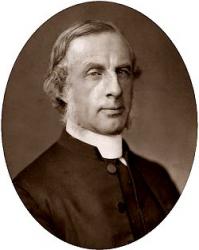
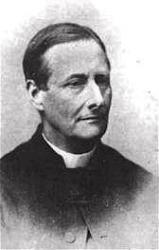
1821 - 1891 Topics: Doubt Author of "O Light, Whose beams illumine all" in The Church Hymnal Edward H. Plumptre (b. London, England, August 6, 1821; d. Wells, England, February 1, 1891) was an eminent classical and biblical scholar who gained prominence in both church and university. Educated at King's College, London, and University College, Oxford, he was ordained in the Church of England in 1846. Plumptre served as a preacher at Oxford and a professor of pastoral theology at King's College, and held a number of other prestigious positions. His writings include A Life of Bishop Ken (1888), translations from Greek and Latin classics, and poetry and hymns. Plumptre was also a member of the committee that produced the Revised Version of the Bible. Bert Polman ==================== Plumptre, Edward Hayes, D.D., son of Mr. E. H. Plumptre, was born in London, Aug. 6, 1821, and educated at King's College, London, and University College, Oxford, graduating as a double first in 1844. He was for some time Fellow of Brasenose. On taking Holy Orders in 1846 he rapidly attained to a foremost position as a Theologian and Preacher. His appointments have been important and influential, and include that of Assistant Preacher at Lincoln's Inn; Select Preacher at Oxford; Professor of Pastoral Theology at King's College, London; Dean of Queen's, Oxford; Prebendary in St. Paul's Cathedral, London; Professor of Exegesis of the New Testament in King's College, London; Boyle Lecturer; Grinfield Lecturer on the Septuagint, Oxford; Examiner in the Theological schools at Oxford; Member of the Old Testament Company for the Revision of the A.V. of the Holy Scriptures; Rector of Pluckley, 1869; Vicar of Bickley, Kent, 1873; and Dean of Wells, 1881. Dean Plumptre's literary productions have been very numerous and important, and embrace the classics, history, divinity, biblical criticism, biography, and poetry. The list as set forth in Crockford's Clerical Directory is very extensive. His poetical works include Lazarus, and Other Poems, 1864; Master and Scholar, 1866; Things New and Old, 1884; and translations of Sophocles, Æschylus, and Dante. As a writer of sacred poetry he ranks very high. His hymns are elegant in style, fervent in spirit, and broad in treatment. The subjects chosen are mainly those associated with the revived Church life of the present day, from the Processional at a Choral Festival to hospital work and the spiritual life in schools and colleges. The rhythm of his verse has a special attraction for musicians, its poetry for the cultured, and its stately simplicity for the devout and earnest-minded. The two which have attained to the most extensive use in Great Britain and America are: Rejoice, ye pure in heart," and "Thine arm, O Lord, in days of old." His translations from the Latin, many of which were made for the Hymnary, 1871 and 1872, are very good and musical, but they have not been used in any way in proportion to their merits. His original hymns in common use include:— 1. Behold they gain the lonely height. The Transfiguration. Written for and first published in the Society for Promoting Christian Knowledge Church Hymns, 1871. 2. For all Thy countless bounties. National Hymns. Written for the Jubilee of Queen Victoria, 1887, and set to music by C. W. Lavington. It was printed, together with the National Anthem adapted for the Jubilee, in Good Words, 1887. 3. Lo, summer comes again! Harvest. Written in 1871 for use at the Harvest Festival in Pluckley Church, Kent, of which the author was then rector, and published in the same year in the Hymnary, No. 466. 4. March, march, onward soldiers true. Processional at Choral Festivals. Written in 1867 for the tune of Costa's March of the Israelites in the Oratorio of Eli, at the request of the Rev. Henry White, Chaplain of the Savoy, and first used in that Chapel. It was subsequently published in the Savoy Hymnary, N.D. [1870], in 4 stanzas of 4 lines; in a Choral Festival book at Peterborough, and in the S. P. C. K. Church Hymns, 1871. 5. 0 Light, Whose beams illumine all. The Way, the Truth, and the Life. Written in May 1864, and published in his Lazarus, and Other Poems, 1864, as one of five Hymns for School and College. It passed into the 1868 Appendix to Hymns Ancient & Modern, and again into other collections. 6. 0 Lord of hosts, all heaven possessing. For School or College. Written in May, 1864, and published in his Lazarus and other Poems, 1864, in 5 stanzas of 6 lines. 7. 0 praise the Lord our God. Processional Thanksgiving Hymn. Written May 1864, and published in his Lazarus, and other Poems, 1864, in 4 stanzas of 8 lines. It is a most suitable hymn for Sunday school gatherings. 8. Rejoice, ye pure in heart. Processional at Choral Festival. Written in May 1865, for the Peterborough Choral Festival of that year, and first used in Peterborough Cathedral. In the same year it was published with special music by Novello & Co; and again (without music) in the 2nd edition of Lazarus, and Other Poems, 1865. It was included in the 1868 Appendix to Hymns Ancient & Modern with the change in stanza i., line 3, of "Your orient banner wave on high," to "Your festal banner wave on high." It is more widely used than any other of the author's hymns. Authorized text in Hymns Ancient & Modern. 9. Thine arm, 0 Lord, in days of old. Hospitals. Written in 1864 for use in King's College Hospital, London, and first printed on a fly-sheet as "A Hymn used in the Chapel of King's College Hospital." It was included in the 2nd edition of Lazarus, and Other Poems, 1865; in the 1868 Appendix to Hymns Ancient & Modern; the S. P. C. K. Church Hymns, 1871; Thring's Collection, 1882; and many others. 10. Thy hand, 0 God, has guided. Church Defence. Included in the 1889 Supplemental Hymns to Hymns Ancient & Modern The closing line of each stanza, "One Church, one Faith, one Lord," comes in with fine effect. Dean Plumptre's Life of Bishop Ken, 1888, is an exhaustive and excellent work. -- John Julian, Dictionary of Hymnology (1907) =============== Plumptre, E. H., p. 897, i. Died at the Deanery, Wells, Feb. 1, 1891. --John Julian, Dictionary of Hymnology, Appendix, Part II (1907)

George Croly

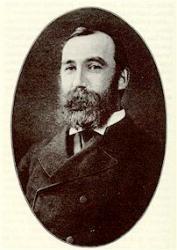
1780 - 1860 Topics: Doubts Author of "Spirit of God, Descend upon My Heart" in The Worshiping Church Croly, George, LL.D., born in Dublin, Aug. 17, 1780, and educated at the Dublin University (M.A. 1804, LL.D. 1831). After taking Holy Orders, he laboured in Ireland till about 1810, when he took up his residence in London, and devoted himself to literature. In 1835 he succeeded to the united benefices of St. Stephen's, Walbrook, and St. Benet Sherehog, retaining the same till his death, which occurred suddenly in the public street, Holborn, Nov. 24, 1860. His prose publications, in addition to contributions to Blackwood's Magazine, were numerous, and dealt with biographical, historical, and scriptural subjects. His hymns were given in his— Psalms and Hymns for Public Worship. Written and compiled by the Rev. George Croly, LL.D. London Kendrick, 1854. This collection contained 25 psalms, 50 hymns, and 6 poems. Of these 10 psalms, 12 hymns, and the 6 poems bear Dr. Croly's initial. The following have come into common use mainly through Windle's Collection:— 1. Be still, be still, impatient soul. Patience. 2. Behold me, Lord, and if thou find. Lent. 3. Lift up your heads, ye gates of light. Ascension. 4. Lord, who hast sought us out, unsought. Public Worship. 5. Teach us, O Lord, this day. Sunday. 6. Thou, Lord of mercy and of might. Lent. All these date from 1854, with the exception of No. 6, which appeared in his Scenes from Scripture and other Poems, 1851. -- John Julian, Dictionary of Hymnology (1907)

Martin Shaw

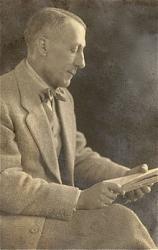
1875 - 1958 Topics: Doubt Composer of "MARCHING" in Rejoice in the Lord Martin F. Shaw was educated at the Royal College of Music in London and was organist and choirmaster at St. Mary's, Primrose Hill (1908-1920), St. Martin's in the Fields (1920-1924), and the Eccleston Guild House (1924-1935). From 1935 to 1945 he served as music director for the diocese of Chelmsford. He established the Purcell Operatic Society and was a founder of the Plainsong and Medieval Society and what later became the Royal Society of Church Music. Author of The Principles of English Church Music Composition (1921), Shaw was a notable reformer of English church music. He worked with Percy Dearmer (his rector at St. Mary's in Primrose Hill); Ralph Vaughan Williams, and his brother Geoffrey Shaw in publishing hymnals such as Songs of Praise (1925, 1931) and the Oxford Book of Carols (1928). A leader in the revival of English opera and folk music scholarship, Shaw composed some one hundred songs as well as anthems and service music; some of his best hymn tunes were published in his Additional Tunes in Use at St. Mary's (1915). Bert Polman

D. W. Whittle

1840 - 1901 Person Name: Daniel W. Whittle, 1840-1901 Topics: Assurance in Doubt; Assurance in Doubt Author of "I Know Not Why God's Wondrous Grace" in The Covenant Hymnal [Also published under the pseudonym El Nathan.] =============== Whittle, D. W.. Six of his hymns (Nos. 295, 308,363, 385, 386, 417) are given in I. D. Sankey's Sacred Songs and Solos, under the signature of "El Nathan." --John Julian, Dictionary of Hymnology, Appendix, Part II (1907)

Synesius of Cyrene, Bishop of Ptolemais

370 - 430 Person Name: Synesius of Cyrene, c. 375-430 Topics: Assurance in Doubt Author of "Lord Jesus, Think on Me" in The Covenant Hymnal Synesius, a native of Cyrene, born circa 375. His descent was illustrious. His pedigree extended through seventeen centuries, and in the words of Gibbon, "could not be equalled in the history of mankind." He became distinguished for his eloquence and philosophy, and as a statesman and patriot he took a noble stand. When the Goths were threatening his country he went to the court of Arcadius, and for three years tried to rouse it to the dangers that were coming on the empire. But Gibbon says, ”The court of Arcadius indulged the zeal, applauded the eloquence, and neglected the advice of Synesius." In 410 he was made Bishop of Ptolemaïs, but much against his will. He died in 430. Synesius's opinions have been variously estimated. That he was imbued with the Neo-Platonic philosophy there is no doubt but that he was a semi-Christian, as alleged by Mosheim or that he denied the doctrine of the Resurrection as stated directly by Gibbon [see Decline and Fall, vol. ii.]; and indirectly by Bingham [see Christian Antiq., Lond., 1843, i., pp. 464-5] is very doubtful. Mr. Chatfield, who has translated his Odes in his Songs and Hymns of the Greek Christian Poets, 1876, contends that his tenth Ode "Lord Jesus, think on me," proves that he was not a semi-Christian, and that he held the doctrine of the Resurrection. The first is clear: but the second is open to doubt. He certainly prays to the Redeemer: but there is nothing in the hymn to shew that he looked upon the Redeemer as being clothed in His risen body. This tenth ode is the only Ode of Synesius, which has come into common use. The original Odes are found in the Anth. Graeca Carm. Christ, 1871, p. 2 seq., and Mr. Chatfield's trs. in his Songs, &c, 1876. Synesius's Odes have also been translation by Alan Stevenson, and included in his The Ten Hymns of Synesius, Bishop of Tyreore, A.D. 410 in English Verse. And some Occasional Pieces by Alan Stevenson, LL.B. Printed for Private Circulation, 1865. -- Excerpts from John Julian, Dictionary of Hymnology (1907)

Joseph Barnby

1838 - 1896 Person Name: Sir Joseph Barnby Topics: Doubt Composer of "LONGWOOD" in Rejoice in the Lord Joseph Barnby (b. York, England, 1838; d. London, England, 1896) An accomplished and popular choral director in England, Barnby showed his musical genius early: he was an organist and choirmaster at the age of twelve. He became organist at St. Andrews, Wells Street, London, where he developed an outstanding choral program (at times nicknamed "the Sunday Opera"). Barnby introduced annual performances of J. S. Bach's St. John Passion in St. Anne's, Soho, and directed the first performance in an English church of the St. Matthew Passion. He was also active in regional music festivals, conducted the Royal Choral Society, and composed and edited music (mainly for Novello and Company). In 1892 he was knighted by Queen Victoria. His compositions include many anthems and service music for the Anglican liturgy, as well as 246 hymn tunes (published posthumously in 1897). He edited four hymnals, including The Hymnary (1872) and The Congregational Sunday School Hymnal (1891), and coedited The Cathedral Psalter (1873). Bert Polman

Fanny Crosby

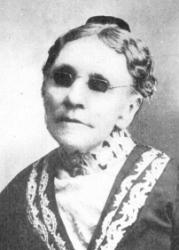
1820 - 1915 Person Name: Fanny J. Crosby Topics: Doubt Author of "All the Way My Saviour Leads Me" in Voices United Pseudonymns: A.V., Mrs. A. E. Andrews, Mrs. E. A. Andrews, Mrs. E. L. Andrews, James L. Black, Henrietta E. Blair, Charles Bruce, Robert Bruce, Leah Carlton, Eleanor Craddock, Lyman G. Cuyler, D.H.W., Ella Dare, Ellen Dare, Mrs. Ellen Douglass, Lizzie Edwards. Miss Grace Elliot, Grace J. Frances, Victoria Frances, Jennie Garnett, Frank Gould, H. D. K., Frances Hope, Annie L. James, Martha J. Lankton [Langton], Grace Lindsey, Maud Marion, Sallie Martin, Wilson Meade, Alice Monteith, Martha C. Oliver, Mrs. N. D. Plume, Kate Smiley, Sallie Smith, J. L. Sterling, John Sterling, Julia Sterling, Anna C. Storey, Victoria Stuart, Ida Scott Taylor, Mary R. Tilden, Mrs. J. B. Thresher, Hope Tryaway, Grace Tureman, Carrie M. Wilson, W.H.D. Frances Jane Crosby, the daughter of John and Mercy Crosby, was born in Southeast, Putnam County, N. Y., March 24, 1820. She became blind at the age of six weeks from maltreatment of her eyes during a spell of sickness. When she was eight years old she moved with her parents to Ridgefield, Conn., the family remaining there four years. At the age of fifteen she entered the New York Institution for the Blind, where she received a good education. She became a teacher in the institution in 1847, and continued her work until March 1, 1858. She taught English grammar, rhetoric and American history. This was the great developing period in her life. During the vacations of 1852 and 1853, spent at North Reading, Mass., she wrote the words to many songs for Dr. Geo. F. Root, then the teacher of music at the blind institution. Among them were, "Hazel Dell,", "The Honeysuckle Glen," "Rosalie, the Prairie Flower," "Music in the Air," "Proud World, Good-bye, I'm Going Home," "All Together", "Never Forget the Dear Ones," and others. Subsequently she wrote the words for the cantatas of The Flower Queen and The Pilgrim Fathers, all of which were very popular in their day, though it was not generally known at the time that she was the author. While teaching at the institution she met Presidents Van Buren and Tyler, Hon. Henry Clay, Governor Wm. H. Seward, General Winfield Scott, and other distinguished characters of American history. Concerning Mr. Clay, she gives the following: "When Mr. Clay came to the institution during his last visit to New York, I was selected to welcome him with a poem. Six months before he had lost a son at the battle of Monterey, and I had sent him some verses. In my address I carefully avoided any allusion to them, in order not to wound him. When I had finished he drew my arm in his, and, addressing the audience, said through his tears: 'This is not the first poem for which I am indebted to this lady. Six months ago she sent me some lines on the death of my dear son.' Both of us were overcome for a few moments. Soon, by a splendid effort, Mr. Clay recovered himself, but I could not control my tears." In connection with her meeting these notable men, we might add that Miss Fanny Crosby had the honor of being the first woman whose voice was heard publicly in the Senate Chamber at Washington. She read a poem there on one occasion. In addition to the thousands of hymns that she has written (about eight thousand poems in all), many of which have not been set to music, she has published four volumes of verses. The first was issued in 1844 and was entitled The Blind Girl, and Other Poems, a second volume, Monterey, and Other Poems, followed in 1849, and the third, A Wreath of Columbia's Flowers, in 1858. The fourth, Bells at Evening and Other Verses, with a biographical sketch by Rev. Robert Lowry, and a fine half-tone portrait, in 1897, the sales of which have reached a fourth edition. The book is published by The Biglow & Main Co., New York. Though these show the poetical bent of her mind, they have little to do with her world-wide fame. It is as a writer of Sunday-school songs and gospel hymns that she is known wherever the English language is spoken, and, in fact, wherever any other language is heard. Fanny was married March 5, 1858, to Alex. Van Alstyne, who was also a scholar in the same institution in which she was educated. She began to write Sunday-school hymns for Wm. B. Bradbury in 1864. Her first hymn, "We are going, we are going To a home beyond the skies", was written at the Ponton Hotel on Franklin Street, New York City, on February 5th of that year. This hymn was sung at Mr. Bradbury's funeral in January, 1868. Since 1864 she supported herself by writing hymns. She resided in New York City nearly all her life, where, she says, she is "a member of the Old John Street M. E. Church in good standing." She spent regular hours on certain days at the office of The Biglow & Main Co., the firm for which she did most of her writing, and for whom she has composed over four thousand hymns. Her hymns have been in great demand and have been used by many of our most popular composers, among whom may be mentioned Wm. B. Bradbury, Geo. F. Root, W. H. Doane, Rev. Robert Lowry, Ira D. Sankey, J. R. Sweney, W. J. Kirkpatrick, H. P. Main, H. P. Danks, Philip Phillips, B. G. Unseld, and others. She could compose at any time and did not need to wait for any special inspiration, and her best hymns have come on the spur of the moment. She always composed with an open book in her hand, generally a copy of Golden Hymns, held closely over her eyes, bottom side up. She learned to play on the guitar and piano while at the institution, and has a clear soprano voice. She also received a technical training in music, and for this reason she could, and did, compose airs for some of her hymns. One of these is, "Jesus, dear, I come to Thee, Thou hast said I may," both words and music of which are wonderfully sweet. "Safe in the arms of Jesus", probably one of her best known hymns, was her own favorite. Fanny loved her work, and was happy in it. She was always ready either to sympathize or join in a mirthful conversation, as the case may be. The secret of this contentment dates from her first composition at the age of eight years. "It has been the motto of my life," she says. It is: "O what a happy soul am I! Although I cannot see, I am resolved that in this world Contented I will be;" This has continued to be her philosophy. She says that had it not been for her affliction she might not have so good an education, nor so great an influence, and certainly not so fine a memory. She knows a great many portions of the Bible by heart, and had committed to memory the first four books of the Old Testament, and also the four Gospels before she was ten years of age. Her scope of subjects is wide, embracing everything from a contemplation of heaven, as in "The Bright Forever" and "The Blessed Homeland", to an appeal to the work of this world, as in "To the Work" and "Rescue the Perishing." The most of Fanny's published hymns have appeared under the name of Fanny J. Crosby or Mrs. Yan Alstyne, but quite a large number have appeared under the nom de plumes of Grace J. Frances, Mrs. C. M. Wilson, Lizzie Edwards, Ella Dale, Henrietta E. Blair, Rose Atherton, Maud Marion, Leah Carlton, nearly two hundred different names. -Biographies of Gospel Song and Hymn Writers (excerpts) ======================= Van Alstyne, Frances Jane, née Crosby, a member of the Methodist Episcopal Church, was born at South East, Putnam County, New York, March 24, 1823. When six weeks old she lost her sight. About 1835 she entered the New York City Institution for the Blind. On completing her training she became a teacher therein from 1847 to 1858. In 1858 she was married to Alexander Van Alstyne, a musician, who was also blind. Her first poem was published in 1831; and her first volumes of verse as A Blind Girl, and Other Poems, 1844; Monteresy, and Other Poems, 1849; and A Wreath of Columbia's Flowers, 1858. Her first hymn was "We are going, we are going" (Death and Burial), which was written for Mr. Bradbury and published in the Golden Censer, 1864. From 1853 to 1858 she wrote 20 songs, which were set to music by G. F. Root. Her songs and hymns number some 2,000 or more, and have been published mainly in several of the popular American Sunday school collections, and often under a nom de plume. About 60 have come into common use in Great Britain. The majority of these are taken from the following American collections:— i. From The Shining Star, 1864. 1. Softly on the breath of evening. Evening. ii. From Fresh Laurels, 1867. 2. Beautiful Mansions, home of the blest. Heaven. 3. Jesus the Water of Life has given. The Water of Life. 4. Light and Comfort of my soul. In Affliction. 5. There's a cry from Macedonia. Missions. 6. We are marching on with shield and banner bright. Sunday School Anniversary. iii. From Musical Leaves, 1868. 7. 0 what are you going to do, brother? Youth for God. iv. From Sabbath Carols, 1868. 8. Dark is the night, and cold the wind is blowing. Affliction anticipated. 9. Lord, at Thy mercy seat, Humbly I fall. Lent. v. From Silver Spray, 1868. 10. If I come to Jesus, He will make me glad. Peace in Jesus. 11. 'Twill not be long—our journey here. Heaven anticipated. vi. From Notes of Joy, 1869. 12. Little beams of rosy light. The Divine Father. 13. Press on! press on! a glorious throng. Pressing towards the Prize. vii. From Bright Jewels, 1869. 14. Christ the Lord is risen today, He is risen indeed. Easter. 15. Holy, holy, holy is the Lord! Sing 0 ye people, &c. Holiness of God. 16. Jesus, keep me near the Cross. Near the Cross of Christ. 17. Saviour, bless a little child. A Child's Prayer. Written Feb. 6, 1869. viii. From Songs of Devotion, 1870. 18. Pass me not, 0 gentle Saviour. Lent. Written in 1868. 19. Rescue the perishing, care for the dying. Home Missions. ix. From Pure Gold, 1871. 20. Great is Jehovah. King of kings. Greatness of God. 21. I would be Thy little lamb. The Good Shepherd. 22. Lead me to Jesus, lead me to Jesus. Desiring Jesus. 23. To the work, to the work, we are servants of God. Home Missions. 24. Why labour for treasures that rust and decay? The Fadeless Crown. x. From the Royal Diadem, 1873. 25. I am Jesus' little friend. For Infant Schools. 26. Jesus I love Thee. Loving Jesus. 27. Mourner, wheresoe'er thou art. To the Sorrowing and Penitent. Written Oct. 3, 1871. 28. Never be faint or weary. Joy in Jesus. 29. Only a step to Jesus. Invitation. xi. From Winnowed Hymns, 1873-4. 30. Loving Saviour, hear my cry. Lent. xii. From Echoes of Zion, 1874. 31. Say, where is thy refuge, my brother? Home Missions. xiii. From Songs of Grace and Glory, 1874. 32. Thou my everlasting Portion. Christ the Portion of His People. xiv. From Brightest and Best, 1875. 33. All the way my Saviour leads me. Jesus the Guide. 34. I am Thine, O Lord: I have heard Thy voice. Holiness desired. 35. O come to the Saviour, believe in His name. Invitation. Written, Sep. 7, 1874. 36. O how sweet when we mingle. Communion of Saints. Written in 1866. 37. O my Saviour, hear me. Prayer to Jesus for blessing and love. 38. Only Jesus feels and knows. Jesus the Divine Friend. 39. Revive Thy work, O Lord. Home Missions. 40. Saviour, more than life to me. Jesus All and in All. 41. To God be the glory, great things He hath done. Praise for Redemption. xv. From Calvary Songs, 1875. 42. Come, O come with thy broken heart. Invitation. xvi. From Gospel Music, 1876. 43. Here from the world we turn. Divine Worship. 44. When Jesus comes to reward His servants. Watching, xvii. From Welcome Tidings, 1877. 45. O hear my cry, be gracious now to me. For Pardon and Peace. xviii. From The Fountain of Song, 1877. 46. Lord, my trust I repose on Thee. Trusting in Jesus. xix. From Good as Gold, 1880. 47. In Thy cleft, O Rock of Ages. Safety in Jesus. 48. Sound the alarm ! let the watchman cry. Home Missions. 49. Tenderly He leads us. Christ the Leader. 50. 'Tis the blessed hour of prayer. The Hour of Prayer. In addition to these hymns, all of which are in common use in Great Britain (mainly through I. D. Sankey's Sacred Songs and Solos, the Methodist Sunday School Hymn Book, the Silver Street Sunday Scholars Companion, and other collections for Sunday schools), there are also "A blessing for you, will you take it?" (Pardon through Jesus); "My song shall be of Jesus" (Praise of Jesus); “Now, just a word for Jesus"(Home Missions); "Onward, upward, Christian soldier" (Pressing Heavenward); 44 Sinner, how thy heart is troubled" (Invitation); "'Tis a goodly, pleasant land" (Heaven anticipated); and "When the dewy light was fading" (Death anticipated). All of these are in I. D. Sankey's Sacred Songs & Solos. Mrs. Van Alstyne's most popular composition is "Safe in the arms of Jesus" (Safety in Jesus). This was written in 1868, at the request of Mr. W. H. Doane, to his well-known melody with which it is inseparably associated, and published in Bright Jewels, 1869. Mrs. Van Alstyne's hymns have sometimes been published anonymously; but the greater part are signed by a bewildering number of initials. The combined sales of the volumes of songs and hymns named above have amounted in English-speaking countries to millions of copies. Notwithstanding the immense circulation thus given to Mrs. Van Alstyne's hymns, they are, with few exceptions, very weak and poor, their simplicity and earnestness being their redeeming features. Their popularity is largely due to the melodies to which they are wedded. Since the above was in type we have found that the following are also in common use in Great Britain:— 51. Suppose the little cowslip. Value of Little Things. 52. Sweet hour of prayer. The Hour of Prayer. These are in Bradbury's Golden Chain, 1861. 53. Never lose the golden rule. Love to our Neighbours. In Bradbury's Golden Censer, 1864. 54. I will not be afraid at night. Trust in God. In Bradbury's Fresh Laurels, 1867. 55. Praise Him, praise Him, Jesus our, &c. Praise of Jesus. In Biglow & Main's Bright Jewels, 1869. 56. More like Jesus would I be. More like Jesus. In Perkins & Taylor's Songs of Salvation, 1870. 57. Behold me standing at the door. Christ at the Door. In Biglow & Main's Christian Songs, 1872. 58. If I come to Jesus. Jesus the Children's Guide. 59. Jesus, Lord, I come to Thee. Trust in Jesus. 60. Let me learn of Jesus. Jesus the Children's Friend. 61. Singing for Jesus, O singing for Jesus. Singing for Jesus. 62. There is a Name divinely sweet Holy Name of Jesus. Of these hymns Nos. 58-62 we have not been able to trace. --Excerpts from John Julian, Dictionary of Hymnology (1907 ================ Van Alstyne, Frances J., p. 1203, ii. From the American collections of recent date we find that Mrs. Van Alstyne is still actively engaged in hymn-writing. In the Funk and Wagnalls Company Gloria Deo, 1903, there are about 30 of her hymns, most of which are new. They are all signed, and some are dated, but we have not space to quote the first lines and subjects, as this hymnal is not an official collection of any denomination. Another name, "Mrs. S. K. Bourne" is credited in the same hymnal with about 40 new hymns. If this signature is not another pen-name of Mrs. Van Alstyne's (and these pen-names and initials of hers are very numerous), we can only say that she has a very successful understudy in "Mrs. S. K. Bourne." --John Julian, Dictionary of Hymnology, New Supplement (1907)

Henry Alford

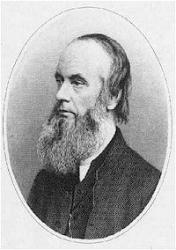
1810 - 1871 Person Name: H. Alford Topics: Doubt Author of "We walk by faith, and not by sight" in The Church Hymnal Alford, Henry, D.D., son of  the Rev. Henry Alford, Rector of Aston Sandford, b. at 25 Alfred Place, Bedford Row, London, Oct. 7, 1810, and educated at Trinity College, Cambridge, graduating in honours, in 1832. In 1833 he was ordained to the Curacy of Ampton. Subsequently he held the Vicarage of Wymeswold, 1835-1853,--the Incumbency of Quebec Chapel, London, 1853-1857; and the Deanery of Canterbury, 1857 to his death, which took. place  at  Canterbury, Jan. 12, 1871.  In addition he held several important appointments, including that of a Fellow of Trinity, and the Hulsean Lectureship, 1841-2. His literary labours extended to every department of literature, but his noblest undertaking was his edition of the Greek Testament, the result of 20 years' labour.    His hymnological and poetical works, given below, were numerous, and included the compiling of collections, the composition of original hymns, and translations from other languages.    As a hymn-writer he added little to his literary reputation. The rhythm of his hymns is musical, but the poetry is neither striking, nor the thought original.   They are evangelical in their teaching,   but somewhat cold  and  conventional. They vary greatly in merit, the most popular being "Come, ye thankful  people, come," "In token that thou  shalt  not fear," and "Forward be our watchword." His collections, the Psalms and Hymns of 1844, and the Year of Praise, 1867, have not achieved a marked success.  His poetical and hymnological works include— (1) Hymns in the Christian Observer and the Christian Guardian, 1830. (2) Poems and Poetical Fragments (no name), Cambridge, J.   J.  Deighton, 1833.  (3) The School of the Heart, and other Poems, Cambridge, Pitt Press, 1835. (4) Hymns for the Sundays and Festivals throughout the Year, &c.,Lond., Longman ft Co., 1836. (5) Psalms and Hymns, adapted for the Sundays and Holidays throughout the year, &c, Lond., Rivington, 1844. (6) Poetical Works, 2 vols., Lond., Rivington, 1845. (7) Select Poetical Works, London, Rivington, 1851. (8) An American ed. of his Poems, Boston, Ticknor, Reed & Field, 1853(9) Passing away, and Life's Answer, poems in Macmillan's Magazine, 1863. (10) Evening Hexameters, in Good Words, 1864. (11) On Church Hymn Books, in the Contemporary Review, 1866. (12) Year of Praise, London, A. Strahan, 1867. (13) Poetical Works, 1868. (14) The Lord's Prayer, 1869. (15) Prose Hymns, 1844. (16) Abbot of Muchelnaye, 1841. (17) Hymns in British Magazine, 1832.   (18) A translation of Cantemus cuncti, q.v. -- John Julian, Dictionary of Hymnology (1907) ================== Alford, Henry, p. 39, ii. The following additional hymns by Dean Alford are in common use:— 1. Herald in the wilderness. St. John Baptist. (1867.) 2. Let the Church of God rejoice. SS. Simon and Jude. (1844, but not in his Psalms & Hymns of that year.) 3. Not in anything we do. Sexagesima. (1867.) 4. O Thou at Whose divine command. Sexagesima. (1844.) 5. 0 why on death so bent? Lent. (1867.) 6. Of all the honours man may wear. St. Andrew's Day. (1867.) 7. Our year of grace is wearing to a close. Close of the Year. (1867.) 8. Saviour, Thy Father's promise send. Whit-sunday. (1844.) 9. Since we kept the Saviour's birth. 1st Sunday after Trinity. (1867.) 10. Thou that art the Father's Word. Epiphany. (1844.) 11. Thou who on that wondrous journey. Quinquagesima. (1867.) 12. Through Israel's coasts in times of old. 2nd Sunday after Epiphany. (1867.) 13. Thy blood, O Christ, hath made our peace. Circumcision . (1814.) 14. When in the Lord Jehovah's name. For Sunday Schools. (1844.) All these hymns are in Dean Alford's Year of Praise, 1867, and the dates are those of their earliest publication, so far as we have been able to trace the same. --Excerpts from John Julian, Dictionary of Hymnology, Appendix, Part II (1907)

S. Baring-Gould

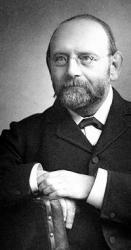
1834 - 1924 Person Name: Sabine Baring-Gould Topics: Doubt Translator of "Through the Night of Doubt and Sorrow" in Rejoice in the Lord Baring-Gould, Sabine, M.A., eldest son of Mr. Edward Baring-Gould, of Lew Trenchard, Devon, b. at Exeter, Jan. 28, 1834, and educated at Clare College, Cambridge, B.A. 1857, M.A. 1860. Taking Holy Orders in 1864, he held the curacy of Horbury, near Wakefield, until 1867, when he was preferred to the incumbency of Dalton, Yorks. In 1871 he became rector of East Mersea, Essex, and in 1881 rector of Lew Trenchard, Devon. His works are numerous, the most important of which are, Lives of the Saints, 15 vols., 1872-77; Curious Myths of the Middle Ages, 2 series, 1866-68; The Origin and Development of Religious Belief, 2 vols., 1869-1870; and various volumes of sermons. His hymns, original and translated, appeared in the Church Times; Hymns Ancient & Modern, 1868 and 1875; The People's Hymnal, 1867, and other collections, the most popular being "Onward, Christian soldiers," "Daily, daily sing the praises," the translation "Through the night of doubt and sorrow," and the exquisite Easter hymn, "On the Resurrection Morning." His latest effort in hymnology is the publication of original Church Songs, 1884, of which two series have been already issued. In the Sacristy for Nov. 1871, he also contributed nine carols to an article on "The Noels and Carols of French Flanders.” These have been partially transferred to Chope's and Staniforth's Carol Books, and also to his Church Songs. --John Julian, Dictionary of Hymnology (1907) ================== Baring-Gould, S., p. 114, i. Other hymns in common use are:— 1. Forward! said the Prophet. Processional. Appeared in the New Mitre Hymnal, 1874. 2. My Lord, in glory reigning. Christ in Glory. In Mrs. Brock's Children's Hymn Book, 1881. 3. Now severed is Jordan. Processional. Appeared in the S. Mary, Aberdeen, Hymnal, 1866, the People's Hymnal, 1867, &c. --John Julian, Dictionary of Hymnology, Appendix, Part II (1907)

Pages


Export as CSV
It looks like you are using an ad-blocker. Ad revenue helps keep us running. Please consider white-listing Hymnary.org or getting Hymnary Pro to eliminate ads entirely and help support Hymnary.org.