You help make Hymnary.org possible. More than 10 million people from 200+ countries found hymns, liturgical resources and encouragement on Hymnary.org in 2025, including you. Every visit affirms the global impact of this ministry.

If Hymnary has been meaningful to you this year, would you take a moment today to help sustain it? A gift of any size—paired with a note of encouragement if you wish—directly supports the server costs, research work and curation that keep this resource freely available to the world.

Give securely online today, or mail a check to:
Hymnary.org
Calvin University
3201 Burton Street SE
Grand Rapids, MI 49546

Thank you for your partnership, and may the hope of Advent fill your heart.

Person Results

Topics:judgment
In:people

Planning worship? Check out our sister site, ZeteoSearch.org, for 20+ additional resources related to your search.
Showing 81 - 90 of 761Results Per Page: 102050

Elizabeth Rundle Charles

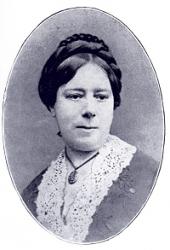
1828 - 1896 Person Name: Mrs. E. Charles Topics: Judgment and retribution Author of "Day of life" in Hymnal of the Methodist Episcopal Church Charles, Elizabeth, née Rundle, is the author of numerous and very popular works intended to popularize the history of early Christian life in Great Britain; of Luther and his times; of Wesley and his work; the struggles of English civil wars; and kindred subjects as embodied in the Chronicles of the Schönherg-Cotta Family, the Diary of Kitty Trevelyan, &c, was born at Tavistock, Devonshire, Her father was John Rundle, M.P., and her husband, Andrew Paton Charles, Barrister-at-Law. Mrs. Charles has made some valuable contributions to hymnology, including original hymns and translations from the Latin and German. These were given in her:— (1) The Voice of Christian Life in Song; or, Hymns and Hymn-writers of Many Lands and Ages, 1858; (2) The Three Wakings, and other Poems, 1859; and (3) The Chronicles of the Schönberg-Cotta Family; (4) Poems, New York, 1867. This has some additional pieces. Her hymn on the Annunciation, "Age after age shall call thee [her] blessed," appeared in her Three Wakings, &c., 1859. --John Julian, Dictionary of Hymnology (1907) ========================= Charles, Elizabeth, née Rundle. Mrs. Charles has assumed the name of "Rundle-Charles," as given in the 1890 edition of the Hymnal Companion. Other hymns in common use are:— 1. Around a Table, not a tomb. Holy Communion. Dated Oct. 1862. In her Poems, 1868, in 6 stanzas of 4 lines. 2. Come, and rejoice with me. Joy in Christ. Some-times dated 1846. From her Three Wakings, 1859, p. 146, in 7 stanzas of 4 lines, and headed "Eureka." 3. Jesus, what once Thou wast. Jesus the Unchangeable One. In Mrs. Brock's Children's Hymn Book, 1881. 4. Never further than Thy Cross. Passiontide. In The Family Treasury, Feb. 1860. 5. What marks the dawning of the Year? New Year. From her Three Wakings, 1859, p. 155. --John Julian, Dictionary of Hymnology, Appendix, Part II (1907) ====================== Charles, Elizabeth, née Rundle, pp. 218, ii.; 1556, i. Mrs. Rundle-Charles was born Jan. 2, 1828, married in 1851, and died March 28, 1896. Her hymn, "The little birds fill all the air with their glee" (Thankfulness), was published in her Three Waitings, 1859, p. 165, as a "Song for an Infant School." It is found in The Sunday School Hymnary, 1905, and others. [Rev. James Mearns, M.A.] --John Julian, Dictionary of Hymnology, New Supplement (1907)

Will L. Thompson

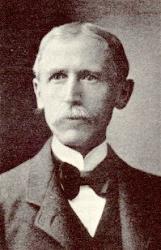
1847 - 1909 Person Name: W. L. T. Topics: Judgment; Judgment Author of "There's a Great Day Coming" in The Majestic Hymnal, number two Will Lamartine Thompson (1847-1909) Born: November 7, 1847, East Li­ver­pool, Ohio. Died: Sep­tem­ber 20, 1909, New York, New York. Buried: Ri­ver­view Cem­e­te­ry, East Li­ver­pool, Ohio. Rebuffed in an ear­ly at­tempt to sell his songs to a com­mer­cial pub­lish­er, Thomp­son start­ed his own pub­lish­ing com­pa­ny. He lat­er ex­pand­ed, open­ing a store to sell pi­an­os, or­gans and sheet mu­sic. Both a lyr­i­cist and com­pos­er, he en­sured he would al­ways re­mem­ber words or mel­o­dies that came to him at odd times: "No mat­ter where I am, at home or ho­tel, at the store or tra­vel­ing, if an idea or theme comes to me that I deem wor­thy of a song, I jot it down in verse. In this way I ne­ver lose it." Thompson took ill dur­ing a tour of Eur­ope, and his fam­i­ly cut short their tra­vels to re­turn home. He died a few weeks lat­er. Music-- 1.Jesus Is All the World to Me 2.Lead Me Gently Home, Father 3.Softly and Tenderly Jesus Is Calling 4.There’s a Great Day Coming --hymntime.com/tch ================================== Various biographical sketches and newspaper articles about Thompson are available in the DNAH Archives.

Horatius Bonar

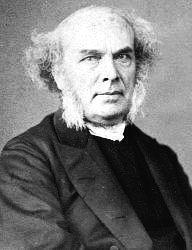
1808 - 1889 Topics: The Christian Life Death, Resurrection and Judgment Author of "A few more years shall roll" in The Presbyterian Book of Praise Horatius Bonar was born at Edinburgh, in 1808. His education was obtained at the High School, and the University of his native city. He was ordained to the ministry, in 1837, and since then has been pastor at Kelso. In 1843, he joined the Free Church of Scotland. His reputation as a religious writer was first gained on the publication of the "Kelso Tracts," of which he was the author. He has also written many other prose works, some of which have had a very large circulation. Nor is he less favorably known as a religious poet and hymn-writer. The three series of "Hymns of Faith and Hope," have passed through several editions. --Annotations of the Hymnal, Charles Hutchins, M.A. 1872 ================================ Bonar, Horatius, D.D. Dr. Bonar's family has had representatives among the clergy of the Church of Scotland during two centuries and more. His father, James Bonar, second Solicitor of Excise in Edinburgh, was a man of intellectual power, varied learning, and deop piety. Horatius Bonar was born in Edinburgh, Dec. 19th, 1808; and educated at the High School and the University of Edinburgh. After completing his studies, he was "licensed" to preach, and became assistant to the Rev. John Lewis, minister of St. James's, Leith. He was ordained minister of the North Parish, Kelso, on the 30th November, 1837, but left the Established Church at the "Disruption," in May, 1848, remaining in Kelso as a minister of the Free Church of Scotland. The University of Aberdeen conferred on him the doctorate of divinity in 1853. In 1866 he was translated to the Chalmers Memorial Church, the Grange, Edinburgh; and in 1883 he was chosen Moderator of the General Assembly of of the Free Church of Scotland. Dr. Bonar's hymns and poems were, he tells us, composed amid a great variety of circumstances; in many cases he cannot himself recall these circumstances; they also appeared in several publications, but nearly all have boen published or republished in the following:— (i) Songs for the Wilderness, 1843-4. (2) The Bible Hymn Book, 1845. (3) Hymns, Original and Selected, 1846. (4) Hymns of Faith and Hope, First Series, 1857; Second Series, 1861; Third Series, 1866. (5) The Song of the New Creation, 1872. (6) My Old Letters, a long poem, 1877. (7) Hymns of the Nativity, 1879. (8) Communion Hymns, 1881. In addition to numerous prose works, he has also edited The New Jerusalem; a Hymn of the Olden Time, 1852, &c. Dr. Bonar's poems—-including many beautiful lyrics, several psalm versions, and translations from the Greek and Latin, a large number of hymns, and a long meditative poem—-are very numerous, too numerous, perhaps, for their permanent fame as a whole. Dr. Bonar's scholarship is thorough and extensive; and his poems display the grace of style and wealth of allusion which are the fruit of ripe culture. Affected very slightly by current literary moods, still less by the influence of other religious poetry, they reveal extreme susceptibility to the emotional power which the phases of natural and of spiritual life exercise; the phases of natural life being recognised chiefly as conveying and fashioning spiritual life, used chiefly for depicting spiritual life, and handled for this purpose with greater delicacy of touch than in the Olney Hymns, and with less conscious purpose than in the Christian Year. As a result of this susceptibility, and from habitual contemplation of the Second Advent as the era of this world's true bliss, his hymns and poems are distinguished by a tone of pensive reflection, which some might call pessimism. But they are more than the record of emotion; another element is supplied by his intellectual and personal grasp of Divine truth, these truths particularly:—The gift of a Substitute, our Blessed Saviour; Divine grace, righteous, yet free and universal in offer; the duty of immediate reliance upon the privilege of immediate assurance through that grace; communion with God, especially in the Lord's Supper, respecting which he insists on the privilege of cherishing the highest conceptions which Scripture warrants; and finally, the Second Advent of our Lord: by his vigorous celebration of these and other truths as the source and strength of spiritual life, his hymns are protected from the blight of unhealthy, sentimental introspection. To sum up: Dr. Bonar's hymns satisfy the fastidious by their instinctive good taste; they mirror the life of Christ in the soul, partially, perhaps, but with vivid accuracy; they win the heart by their tone of tender sympathy; they sing the truth of God in ringing notes; and although, when taken as a whole, they are not perfect ; although, in reading them, we meet with feeble stanzas, halting rhythm, defective rhyme, meaningless Iteration; yet a singularly large number have been stamped with approval, both in literary circles and by the Church. In Great Britain and America nearly 100 of Dr. Bonar's hymns are in common use. They are found in almost all modern hymnals from four in Hymns Ancient & Modern to more than twenty in the American Songs for the Sanctuary, N. Y., 1865-72. The most widely known are, "A few more years shall roll;" "Come, Lord, and tarry not;" "Here, O my Lord, I see Thee face to face;" "I heard the Voice of Jesus say;" "The Church has waited long;" and "Thy way, not mine, O Lord." In addition to these and others which are annotated under their respective first lines, the following are also in common use:— From Songs for the Wilderness, No. 1, 1843. 1. For Thee we long and pray. Sunday Morning. 2. Holy Father, hear my cry. A Child's Prayer. 3. I thought upon my sins and I was sad. Christ our Peace. 4. Peace to the world, our Lord is come. A Millennial Song. 5. Spirit of everlasting grace. The Vision of Dry Bones. ii. From Songs for the Wilderness, No. 2,1844. 6. Ho, ye thirsty, parched and fainting. Invitation. 7. 0 'tis not what we fancied it. The world renounced. 8. Sing them, my children, sing them still. Children exhorted to Praise. 9. Time's sun is fast setting. Advent. 10. Weep, pilgrim, weep, yet 'tis not for the sorrow. Faith. 11. Yes, for me, for me He careth. Christ the Elder Brother . iii. From The Bible Hymn Book, 1845. 12. Jesus, my sorrow lies too deep. Jesus, the Great High Priest. 13. There is a Morning Star, my soul. The Morning Star. 14. This is not my place of resting. Pressing towards heaven. iv. From Hymns, Original and Selected, 1845. 15. Let there be light, Jehovah said. Creation. v. From Hymns of Faith and Hope, 1st series, 1857. 16. Be brave, my brother. The Fight of Faith. 17. Blessed be God, our God. Good Friday. 18. Everlasting praises. Doxology. 19. Go up, go up, my heart. Heavenly aspirations desired. 20. I close my heavy eye. Evening. Sometimes given as "We close our heavy eyes." 21. I see the crowd in Pilate's hall. Good Friday. 22. Jesus, while this rongh desert soil. Strength by the Way. 23. Jesus, Whom angel-hosts adore. The Word made Flesh. From "The Son of God, in mighty love." 24. Make haste, 0 man, to live. Exhortation to lay hold of Life. 25. No seas again shall sever. Heaven. 26. Oppressed with noonday's scorching heat. Shadow of the Cross. 27. Rest for the toiling hand. Burial. From "Lie down, frail body, here." 28. Shall this life of mine be wasted? Exhortation to Duty. 29. These are the crowns that we shall wear. Heaven. 30. Thy works, not mine, O Christ [Lord]. The Sin-bearer. 31. Where the faded flower shall freshen. Heaven. vi. From Hymns of Faith and Hope. 2nd series, 1861. 32. Be still, my soul, Jehovah loveth Thee. Rest in the Love of God. 33. Christ has done the mighty work. Good Friday. 34. Come, mighty Spirit, penetrate. Whitsuntide. 35. Deep down beneath the unresting surge. Burial at Sea. 36. Fear not the foe, thou flock of God [thou little flock]. Battle-Song of the Church. 37. For lack of love I languish. Lent. 38. From this bleak hill of storms. Eternal Rest desired. 39. He liveth long who liveth well. The True Life. 40. Here shall death's triumph end: the rock-barred door. Easter. From "The tomb is empty: wouldst thou have it full." 41. Jesus, Sun and Shield art Thou. Jesus the First and Last. 42. Jesus, the Christ of God. Praise to Christ. 43. Light of the world, for ever, ever shining. Christ the Light of the World. From "Why walk in darkness? Has the dear light vanished?" 44. Make use of me, my God. Duty desired. 45. Not what I am, 0 Lord, but what Thou art. The Love of God. 46. 0 Light of Light, shine in. Cry of the Weary. 47. 0 love of God, how strong and true. Love of God. 48. 0 love that casts out fear. Love of God. 49. 0 strong to save and bless. Lent. 50. 0 this soul, how dark and blind. Lent. 51. Safe across the waters. Thanksgiving at end of a journey. 52. Silent, like men in solemn haste. Pressing onwards. 53. Speak, lips of mine. Exhortation to Praise. 54. The Bridegroom comes. Advent. vii. From Hymns of Faith and Hope. 3rd series, 1866. 55. Bear Thou my burden, Thou Who bar'st my sin. Lent or Passiontide. 56. Done is the work that saves. Easter. 57. Father, our children keep. Prayer on behalf of Children. 58. Fill Thou my life, 0 Lord my God. Life's Praise. 59. Finish Thy work, the time is short. Earnest labour to the end. 60. From the Cross the blood is falling. Good Friday. 61. He called them, and they left. Obedience. 62. Help me, my [0] God to speak. Truth desired. 63. Holy Father, Mighty God. Holy Trinity. 64. How are my troubles multiplied. Ps. iii. 65. How sweetly doth He show His face Flower Service. 66. Light hath arisen, we walk in its brightness. Sustaining power of Faith. 67. Lo, God, our God has come. Christmas. 68. Lord, give me light to do Thy work. Divine guidance desired. 69. No, not despairingly. Lent. 70. Not to ourselves again. Life in Christ, or, Living unto God. 71. Now in parting, Father, bless us. Post Communion. 72. Sounds the trumpet from afar. Battle-Song of the Church. 73. Thee in the loving bloom of morn. God in all. 74. Through good report and evil, Lord. Faithfulness. 75. To Jehovah, God of might. Praise to the Father. 76. To the name of God on high. Doxology. 77. Upward, where the stars are burning. Heavenward Aspirations. 78. We take the peace which He hath won. The Gift of Peace. 79. When the weary, seeking rest. Intercession for all Conditions of Men. viii. From The Song of the New Creation,1872. 80. For the Bread and for the Wine. Holy Communion. 81. Light of life so softly shining. Light of Life. 82. Yet there is room. The Lamb's bright hall of song. Home Missions. ix. From Hymns of the Nativity, 1879. 83. Great Ruler of the land and sea. Sailors' Liturgy. From Communion Hymns, 1881. 84. Beloved, let us love. Brotherly Love. In several instances these hymns are given in an abbreviated form, and sometimes alterations are also introduced. In this latter respect however Dr. Bonar has suffered less than most modern hymn-writers. [Rev. James Mearns, M.A.] -- John Julian, Dictionary of Hymnology (1907) ==================== Bonar, Horatius, p. 161, i. He died at Edinburgh, July 31, 1889. In 1890 his son published a posthumous volume of his poetical pieces as Until the Day Break and other Hymns and Poems left behind. The following additional hymns are in common use:— 1. Almighty Comforter and Friend. (1866.) Whitsuntide. 2. Father, make use of me. An altered form of No. 44, p. 162, ii. 3. I ask a perfect creed. (1861.) Creed not Opinions. From this is also taken "O True One, give me truth." 4. Long, long deferred, now come at last. Marriage of the Lamb. Part of "Ascend, Beloved, to the joy." (1861.) 5. Nay 'tis not what we fancied it. (1857.) Vanity of the World. 6. No blood, no altar now. (1861.) The Finished Sacrifice. 7. No shadows yonder. (1857.) Heaven Anticipated. 8. Not with the light and vain. (1857.) Godly Companionship. 9. O Love invisible, yet infinite. (1866.) Divine Love. 10. On the great love of God I lean. (1866.) Love of God our Resting-place. 11. On Thee, O Jesus, strongly leaning. (1866.) Fellowship with Christ. 12. Peace upon peace, like wave on wave. (1866.) Divine Peace. 13. Sower divine, sow the good seed in me. (1857.) Heavenly Sowing. 14. Speaketh the sinner's sin within my heart. (1866.) Ps. xxxvi. 15. Still one in life and one in death. (1857.) Communion of Saints. Part of "'Tis thus they press the hand and part." 16. Surely, yon heaven, where angels see God's face. (1857.) Heaven Anticipated. 17. That city with the jewelled crest. (1857.) Heaven. Part of "These are the crowns that we shall wear." Another cento from the same is "Yon city, with the jewelled crest." 18. That clime is not like this dull clime of ours. (1843.) Heaven. 19. The Free One makes you free: He breaks the rod. (1857.) Freedom in Christ. From "Of old they sang the song of liberty." 20. There is a Morning-star, my soul. (1357.) Christ the Morning Star. 21. This is the day of toil. (1866.) Pressing Onwards. 22. Thy thoughts are here, my God. (1866.) Holy Scripture. 23. Till the day dawn. (1857.) Life's Journey. 24. To Him Who spread the skies. (1866.) Creation's Song. 25. Trustingly, trustingly. (1866.) Trust. 26. Unto th' eternal hills. (1866.) Ps. cxxi. The above dates are: 1843, Songs in the Wilderness; 1857, Hymns of Faith and Hope, 1st Series; 1861, same, 2nd Ser. (not 1864); 1866, same, 3rd Ser. (not 1867), The dates 1857, 1864,1867, were given by Dr. Bonar, but the British Museum copies are 1857, 1861, 1866 respectively. --John Julian, Dictionary of Hymnology, Appendix, Part II (1907) ============== Bonar, H., pp. 161, i.; 1554, i. The Rev. H. N. Bonar, Dr. Bonar's son, published in 1904, Hymns by Horatius Bonar, Selected and Arranged by his Son H. N. Bonar, With a brief History of some of the Hymns, &c. (London: H. Frowde). From this work we must correct the date of his Song of the New Creation to 1872. We have also enriched our pages by additional and expanded notes on several of Dr. Bonar's most widely used hymns. In his biographical notes, Mr. Bonar refers to Dr. Bonar's work as editor of the Quarterly Journal of Prophecy, begun in 1848, to which he contributed a hymn for each number. We find that the number of hymns contributed thereto is 101. With Dr. Bonar's poetical productions great difficulty has been encountered by the historian and annotator because of his absolute indifference to dates and details. It was enough for him that he had written, and that the Church of Christ approved and gladly used what, out of the fulness of his heart, he had given her. --Excerpt from John Julian, Dictionary of Hymnology, New Supplement (1907)

W. Chatterton Dix

1837 - 1898 Person Name: Wm. C. Dix Topics: Day of Judgment Author of "Alleluia, sing to Jesus!" in The Hymnal, Revised and Enlarged, as adopted by the General Convention of the Protestant Episcopal Church in the United States of America in the year of our Lord 1892 Most British hymn writers in the nineteenth century were clergymen, but William C. Dix (b. Bristol, England, 1837; d. Cheddar, Somerset, England, 1898) was a notable exception. Trained in the business world, he became the manager of a marine insurance company in Glasgow, Scotland. Dix published various volumes of his hymns, such as Hymns of Love and Joy (1861) and Altar Songs: Verses on the Holy Eucharist (1867). A number of his texts were first published in Hymns Ancient and Modern (1861). Bert Polman ======================== Dix, William Chatterton, son of John Dix, surgeon, of Bristol, author of the Life of Chatterton; Local Legends, &c, born at Bristol, June 14, 1837, and educated at the Grammar School of that city. Mr. Chatterton Dix's contributions to modern hymnody are numerous and of value. His fine Epiphany hymn, "As with gladness men of old,” and his plaintive ”Come unto Me, ye weary," are examples of his compositions, many of which rank high amongst modern hymns. In his Hymns of Love and Joy, 1861, Altar Songs, Verses on the Holy Eucharist, 1867; Vision of All Saints, &c, 1871; and Seekers of a City, 1878, some of his compositions were first published. The greater part, however, were contributed to Hymns Ancient & Modern; St. Raphaels Hymnbook, 1861; Lyra Eucharidica, 1863; Lyra Messianica, 1864; Lyra Mystica, 1865; The People's Hymns, 1867; The Hymnary, 1872; Church Hymns, 1871, and others. Many of his contributions are renderings in metrical form of Dr. Littledale's translation from the Greek in his Offices . . . of the Holy Eastern Church, 1863; and of the Rev. J. M. Rodwell's translation of hymns of the Abyssinian Church. These renderings of the "songs of other Churches" have not received the attention they deserve, and the sources from whence they come are practically unknown to most hymnal compilers. Mr. Dix has also written many Christmas and Easter carols, the most widely known of which is "The Manger Throne."   In addition to detached pieces in prose and verse for various magazines, he has published two devotional works, Light; and The Risen Life, 1883; and a book of instructions for children entitled The Pattern Life, 1885. The last-named contains original hymns by Mr. Dix not given elsewhere. In addition to the more important of Mr. Dix's hymns which are annotated under their respective first lines, the following are also in common use:- 1. God cometh, let the heart prepare.  Advent. In his Vision of All Saints, &c, 1871.      2. Holy, holy, holy, to Thee our vows we pay.  Holy Communion.   Published in his Altar Songs, 1867, in 6 stanzas of 6 lines, and headed "Eucharistic Processional for Dedication Feast."    In the Society for Promoting Christian Knowledge Church Hymns, 1871, and others in an abridged form.      3. How long, O Lord, how long, we ask.   Second Advent.   Appeared in the Appendix to the Society for Promoting Christian Knowledge Psalms & Hymns, 1869, and repeated in several collections.        4. In our work and in our play.    Children's Hymn. Published in his Hymns and Carols for Children, 1869, and is largely adopted  in  children's  hymnbooks, as  Mrs. Brock's Children's Hymnbook, 1881, and others.   Also in the Society for Promoting Christian Knowledge Church Hymns, 1871.      5.  In the hollow of Thine hand.   For Fair Weather. Appeared in the People's Hymns, 1867, and repeated in several others.      6.  Joy fills our inmost heart today.    Christmas. Printed in the Church Times, and  then on a Flysheet by Gr. J. Palmer, as the third of Four Joyful Hymns for Christmas, circa 1865. It is in the Society for Promoting Christian Knowledge Church Hymns, 1871, and other hymnals. It is also one of Mr. Dix's Christmas Customs & Christmas Carols, not dated.      7. Lift up your songs, ye thankful.   St. Ambrose. Contributed to the People's Hymns, 1867.  8. Now in numbers softly flowing.    St. Cecilia. Contributed to the People's Hymns, 1867.    9.  Now, our Father, we adore Thee.   Praise to the Father.   Appeared in the Appendix to the S. P. C. K. Psalms & Hymns, 1869.   10.  O Christ, Thou Son of Mary.   St. Crispin.   First printed in the Union Review, Sept., 1866, and thence into the People's Hymns, 1887.   11. O Cross which only canst allay.   Glorying and Trusting in the Cross.   Published in the People's Hymns, 1867.   12. O Thou the Eternal Son of God.   Good Friday. Appeared in Lyra Messianica, 1864; the author's Hymns and Carols for Children, 1869; the S. P. C. K. Church Hymns, 1871, &c.   13. On the waters dark and drear.   For use at Sea. Published in Hymns for Public Worship, &c. (St. Raphael's, Bristol), 1861; the S. P. C. K. Church Hymns, 1871, &c.   14. Only one prayer to-day.   Ash Wednesday.   Contributed to the People's Hymns, 1867.   15. Sitting at receipt of custom.  St. Matthew.  Appeared in the People's Hymns, 1867.   16. The Cross is on thy brow.   Confirmation.   In the 1869 Appendix to the S. P. C. K. Psalms & Hymns.   17.  The stars above our head.   Work and Humility. In the 1869 Appendix to the S. P. C. K. Psalms & Hymns.  18. When the shades of night are falling.   Evening Hymn to the Good Shepherd.   In the author's Seekers of a City, &c. [1878]. Most of Mr. Dix's best-known hymns, and also some of those named above, are in common use in America and other English-speaking countries. In Great Britain and America from 30 to 40 are in common use.  He died Sept. 9, 1898. -- John Julian, Dictionary of Hymnology (1907) ====================== Dix, William Chatterton, p. 302, ii. Additional hymns by Mr. Dix now in common use are:— 1. Lift up your songs, ye angel choirs. Ascension. 2. Now, my soul rehearse the story. Christ Feeding the Multitude. 3. Within the temple's hallowed courts. Blessed Virgin Mary. These hymns are from his Altar Songs, 1867. --John Julian, Dictionary of Hymnology, Appendix, Part II (1907)

A. Royce Eckhardt

b. 1937 Person Name: A. Royce Eckhardt, 1937- Topics: Judgment Composer of "FRANKLIN SQUARE" in The Covenant Hymnal Royce Eckhardt has served as a director of music, organist, conductor, composer, arranger, hymnal editor, teacher, and hymnologist for over fifty years. He has served Evangelical Covenant churches as minister of music and organist in Seattle, New Britain (CT), Winnetka, and Hinsdale, Illinois, and also the Winnetka Presbyterian Church. Mr. Eckhardt earned a Bachelor of Music degree in organ performance in 1960 from North Park College, Chicago, and a Master of Music degree in liturgical music at Hartt College of Music, University of Hartford in 1972. Royce joined the music faculty at Seattle Pacific College in 1961, teaching organ, music theory and literature courses and directing small choral ensembles. He served as adjunct professor of church music at North Park Theological Seminary in Chicago, specializing in hymnology and also serving as chapel organist. Mr. Eckhardt was a member of the Covenant Hymnal Commission that produced The Covenant Hymnal (1973). In 1990 he was appointed to the Special Hymnal Commission that compiled and published The Covenant Hymnal: A Worshipbook (1996), serving as music editor. He is represented in the hymnal with 47 arrangements, original tunes, and descants. His many hymn arrangements, harmonizations and tunes appear in eight American hymnals. Royce also served as music director of the Covenant Ministers Chorus from 1985 to 2005, leading the Chorus on a concert tour to Sweden and Germany in 1990 and on a second concert tour in 2001 to Norway, Sweden, Estonia, Latvia, Lithuania, and Germany. He has led many workshops and seminars throughout the country on worship and church music related topics, is a published composer of organ and choral works, a board member of North Shore American Guild of Organists, board member of The Bach Week Festival, and a member of The Hymn Society. Royce Eckhardt

Thomas Tallis

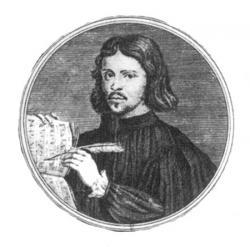
1505 - 1585 Person Name: T. Tallis Topics: Judgment Composer of "EVENING HYMN" in The Tribute of Praise Thomas Tallis (b. Leicestershire [?], England, c. 1505; d. Greenwich, Kent, England 1585) was one of the few Tudor musicians who served during the reigns of Henry VIII: Edward VI, Mary, and Elizabeth I and managed to remain in the good favor of both Catholic and Protestant monarchs. He was court organist and composer from 1543 until his death, composing music for Roman Catholic masses and Anglican liturgies (depending on the monarch). With William Byrd, Tallis also enjoyed a long-term monopoly on music printing. Prior to his court connections Tallis had served at Waltham Abbey and Canterbury Cathedral. He composed mostly church music, including Latin motets, English anthems, settings of the liturgy, magnificats, and two sets of lamentations. His most extensive contrapuntal work was the choral composition, "Spem in alium," a work in forty parts for eight five-voice choirs. He also provided nine modal psalm tunes for Matthew Parker's Psalter (c. 1561). Bert Polman

John Roberts

1807 - 1876 Person Name: John Roberts (Henllan) Topics: God Justice (Judgment) Arranger of "ST DENIO" in Voices United John Roberts was a Welsh musician, born 30 March 1807 at Henllan, near Denbigh. He collected a large number of hymn tunes. Some of these were included in John Parry's Peroriaeth Hyfryd, 1837. In 1839 he published Caniadau y Cysegr which contained 55 tunes that he harmonized. He died 4 April 1876 near Denbigh. Dianne Shapiro, from Dictionary of Welsh Biography (http://yba.llgc.org.uk/en/index.html) accessed 11/27/2017

Ralph Harrison

1748 - 1810 Person Name: Rev. Ralph Harrison Topics: General Judgment Composer of "PETERBORO" in Sacred Hymns and Tunes

Laurentius Laurenti

1660 - 1722 Person Name: Laurentius Lurenti Topics: Jesus Christ His Second Coming and Judgment Author of "Rejoice, All Ye Believers" in Trinity Hymnal (Rev. ed.) Laurenti, Laurentius, son of Herr Lorenz, or Laurenti, a burgess of Husum, in Schleswig, was born at Husum, June 8, 1660. He entered the University of Rostock in 1681, and after a year and a half spent there, went to Kiel to study music. In 1684 he was appointed cantor and director of the music at the cathedral church at Bremen. He died at Bremen, May 29, 1722 (Koch, iv. 281; Rotermund's continuation of Jöcher's Gelehrten-Lexicon, iii. 1405, &c). Laurenti was one of the best hymn-writers of the Pietistic school. His hymns are founded on the Gospels for Sundays and Festivals, and they draw out the bearing on the Christian life of the leading thoughts therein contained. They are of noble simplicity; are Scriptural, fervent, and often of genuine poetical worth. In Freylinghausen's Gesang-Buch, 1704 and 1714, no less than 34 are included, and many of these, with others by him, are still in extensive German use. They appeared in his:— Evangelia Melodica, das ist: Geistliche Lieder,und Lobgesange, nach den Sinn der ordentlichen Sonn-und Festages Evangelien, &c. Bremen, 1700 [Royal Library, Berlin], with 148 hymns on the Gospels, and two others. Of his hymns those which have passed into English are:—— i. Du wesentliches Wort. Christmas. Founded on St. John i. 1-12. In his Evangelia Melodica, 1700, p. 30, in 8 stanzas of 8 lines, entitled, "For the Third Day of Christmas." Included in Freylinghausen's Gesang-Buch, 1704, No. 20; and, recently, as No. 83, in the Berlin Geistliche Lieder, 1863. The translations in common use are:— 1. 0 Thou essential Word, Who from. A good translation, omitting st. iii., v., by Miss Winkworth, in her Lyra Germanica, first Ser., 1855, p. 15 (2nd edition, 1856, considerably altered); and repeated, abridged, in Flett's Collection, Paisley, 1871. Varying centos, beginning with st. i., 1. 5, altered to "O Saviour of our race," are found in America, as in Boardman's Selections, Philadelphia, 1861; the Pennsylvania Lutheran Church Book, 1868; and the Dutch Ref. Hymns of the Church, 1869. 2. 0 Thou essential Word, Who wast. By Miss Winkworth, in her Chorale Book for England, 1863, No. 54. This is her 1856 version (as above) rewritten to the original metre. Repeated, in full, in Dr. Thomas's Augustine Hymn Book, 1866, and the Ohio Lutheran Hymnal, 1880; and, abridged, in the English Presbyterian Psalms & Hymns, 1867, and Laudes Domini, N. Y., 1884. ii. Ermuntert euch, ihr Frommen. Second Advent. This is his finest hymn. In his Evangelia Melodica, 1700, p. 353, in 10 stanzas of 8 lines, entitled, "For the 27th Sunday after Trinity." It is founded on St. Matt. xxv. 1-13; and unites the imagery of the parable of the Ten Virgins with that of Rev. xx., xxi. Included, as No. 578, in Freylinghausen's Gesang-Buch, 1704; and, recently, as No. 1519, in the Berlin Geistliche Lieder, ed. 1863. The translation in common use is:— Rejoice, all ye believers. By Mrs. Findlater, in Hymns from the Land of Luther, 1st Ser., 1854, p. 61 (1884, p. 62), a good translation of st. i.-iii., vii., viii., x. In full, but altered to the original metre, in Schaff’s Christ in Song, 1869 and 1870. This version is found in a large number of English and American hymnals, under the following forms:— (1) Rejoice, all ye believers (st. i.). Varying centos are found in Mercer, 1864, Hymnal Companion, 1876, &c.; and in America in Hatfield's Church Hymn Book, 1872, Evangelical Hymnal, N. Y., 1880, and others. (2)

Catherine Winkworth

1827 - 1878 Topics: Jesus Christ His Second Coming and Judgment Translator of "Wake, Awake, for Night is Flying" in Trinity Hymnal (Rev. ed.) Catherine Winkworth (b. Holborn, London, England, 1827; d. Monnetier, Savoy, France, 1878) is well known for her English translations of German hymns; her translations were polished and yet remained close to the original. Educated initially by her mother, she lived with relatives in Dresden, Germany, in 1845, where she acquired her knowledge of German and interest in German hymnody. After residing near Manchester until 1862, she moved to Clifton, near Bristol. A pioneer in promoting women's rights, Winkworth put much of her energy into the encouragement of higher education for women. She translated a large number of German hymn texts from hymnals owned by a friend, Baron Bunsen. Though often altered, these translations continue to be used in many modern hymnals. Her work was published in two series of Lyra Germanica (1855, 1858) and in The Chorale Book for England (1863), which included the appropriate German tune with each text as provided by Sterndale Bennett and Otto Goldschmidt. Winkworth also translated biographies of German Christians who promoted ministries to the poor and sick and compiled a handbook of biographies of German hymn authors, Christian Singers of Germany (1869). Bert Polman ======================== Winkworth, Catherine, daughter of Henry Winkworth, of Alderley Edge, Cheshire, was born in London, Sep. 13, 1829. Most of her early life was spent in the neighbourhood of Manchester. Subsequently she removed with the family to Clifton, near Bristol. She died suddenly of heart disease, at Monnetier, in Savoy, in July, 1878. Miss Winkworth published:— Translations from the German of the Life of Pastor Fliedner, the Founder of the Sisterhood of Protestant Deaconesses at Kaiserworth, 1861; and of the Life of Amelia Sieveking, 1863. Her sympathy with practical efforts for the benefit of women, and with a pure devotional life, as seen in these translations, received from her the most practical illustration possible in the deep and active interest which she took in educational work in connection with the Clifton Association for the Higher Education of Women, and kindred societies there and elsewhere. Our interest, however, is mainly centred in her hymnological work as embodied in her:— (1) Lyra Germanica, 1st Ser., 1855. (2) Lyra Germanica, 2nd Ser., 1858. (3) The Chorale Book for England (containing translations from the German, together with music), 1863; and (4) her charming biographical work, the Christian Singers of Germany, 1869. In a sympathetic article on Miss Winkworth in the Inquirer of July 20, 1878, Dr. Martineau says:— "The translations contained in these volumes are invariably faithful, and for the most part both terse and delicate; and an admirable art is applied to the management of complex and difficult versification. They have not quite the fire of John Wesley's versions of Moravian hymns, or the wonderful fusion and reproduction of thought which may be found in Coleridge. But if less flowing they are more conscientious than either, and attain a result as poetical as severe exactitude admits, being only a little short of ‘native music'" Dr. Percival, then Principal of Clifton College, also wrote concerning her (in the Bristol Times and Mirror), in July, 1878:— "She was a person of remarkable intellectual and social gifts, and very unusual attainments; but what specially distinguished her was her combination of rare ability and great knowledge with a certain tender and sympathetic refinement which constitutes the special charm of the true womanly character." Dr. Martineau (as above) says her religious life afforded "a happy example of the piety which the Church of England discipline may implant.....The fast hold she retained of her discipleship of Christ was no example of ‘feminine simplicity,' carrying on the childish mind into maturer years, but the clear allegiance of a firm mind, familiar with the pretensions of non-Christian schools, well able to test them, and undiverted by them from her first love." Miss Winkworth, although not the earliest of modern translators from the German into English, is certainly the foremost in rank and popularity. Her translations are the most widely used of any from that language, and have had more to do with the modern revival of the English use of German hymns than the versions of any other writer. -- John Julian, Dictionary of Hymnology (1907) ============================ See also in: Hymn Writers of the Church

Pages


Export as CSV
It looks like you are using an ad-blocker. Ad revenue helps keep us running. Please consider white-listing Hymnary.org or getting Hymnary Pro to eliminate ads entirely and help support Hymnary.org.