You help make Hymnary.org possible. More than 10 million people from 200+ countries found hymns, liturgical resources and encouragement on Hymnary.org in 2025, including you. Every visit affirms the global impact of this ministry.

If Hymnary has been meaningful to you this year, would you take a moment today to help sustain it? A gift of any size—paired with a note of encouragement if you wish—directly supports the server costs, research work and curation that keep this resource freely available to the world.

Give securely online today, or mail a check to:
Hymnary.org
Calvin University
3201 Burton Street SE
Grand Rapids, MI 49546

Thank you for your partnership, and may the hope of Advent fill your heart.

Person Results

Topics:proper+21
In:people

Planning worship? Check out our sister site, ZeteoSearch.org, for 20+ additional resources related to your search.
Showing 81 - 90 of 234Results Per Page: 102050

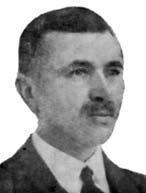
John Hughes

1873 - 1932 Topics: Proper 21 Year A Composer of "CWM RHONDDA" in Voices United John Hughes (b. Dowlais, Glamorganshire, Wales, 1873; d. Llantwit Fardre, Wales, 1932) received little formal education; at age twelve he was already working as a doorboy at a local mining company in Llantwit Fardre. He eventually became an official in the traffic department of the Great Western Railway. Much of his energy was devoted to the Salem Baptist Church in Pontypridd, where he served as both deacon and precentor. Hughes composed two anthems, a number of Sunday school marches, and a few hymn tunes, of which CWM RHONDDA is universally known, the tune was composed in 1905 Baptist Cymanfa Ganu (song festival) in Capel Rhondda, Pontypridd, Wales. Bert Polman

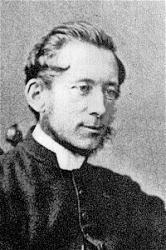
John Bacchus Dykes

1823 - 1876 Person Name: John Bacchus Dykes, 1823-1876 Topics: Year A Proper 21; Year C Proper 21 Composer of "HOLLINGSIDE" in Complete Anglican Hymns Old and New As a young child John Bacchus Dykes (b. Kingston-upon-Hull' England, 1823; d. Ticehurst, Sussex, England, 1876) took violin and piano lessons. At the age of ten he became the organist of St. John's in Hull, where his grandfather was vicar. After receiving a classics degree from St. Catherine College, Cambridge, England, he was ordained in the Church of England in 1847. In 1849 he became the precentor and choir director at Durham Cathedral, where he introduced reforms in the choir by insisting on consistent attendance, increasing rehearsals, and initiating music festivals. He served the parish of St. Oswald in Durham from 1862 until the year of his death. To the chagrin of his bishop, Dykes favored the high church practices associated with the Oxford Movement (choir robes, incense, and the like). A number of his three hundred hymn tunes are still respected as durable examples of Victorian hymnody. Most of his tunes were first published in Chope's Congregational Hymn and Tune Book (1857) and in early editions of the famous British hymnal, Hymns Ancient and Modern. Bert Polman

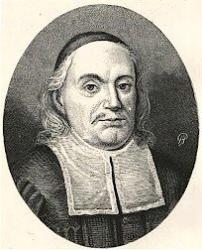
Paul Gerhardt

1607 - 1676 Topics: God the Father His Providence Author of "Give to the Winds Thy Fears" Paul Gerhardt (b. Gräfenheinichen, Saxony, Germany, 1607; d. Lubben, Germany, 1676), famous author of Lutheran evangelical hymns, studied theology and hymnody at the University of Wittenberg and then was a tutor in Berlin, where he became friends with Johann Crüger. He served the Lutheran parish of Mittenwalde near Berlin (1651-1657) and the great St. Nicholas' Church in Berlin (1657-1666). Friederich William, the Calvinist elector, had issued an edict that forbade the various Protestant groups to fight each other. Although Gerhardt did not want strife between the churches, he refused to comply with the edict because he thought it opposed the Lutheran "Formula of Concord," which con­demned some Calvinist doctrines. Consequently, he was released from his position in Berlin in 1666. With the support of friends he became archdeacon at Lubben in 1669 and remained there until his death. Gerhardt experienced much suffering in his life;­ he and his parishioners lived in the era of the Thirty Years' War, and his family experi­enced incredible tragedy: four of his five children died young, and his wife died after a prolonged illness. In the history of hymnody Gerhardt is considered a transitional figure-he wrote at a time when hymns were changing from a more objective, confes­sional, and corporate focus to a pietistic, devotional, and personal one. Like other German hymns, Gerhardt's were lengthy and intended for use throughout a service, a group of stanzas at a time. More than 130 of his hymns were published in various editions of Cruger's Praxis Pietatis Melica, the Crüger-Runge Gesangbuch (1653), and Ebeling's Das andere Dutzeud geistliche Andachtslieder Herrn Paul Gerhardts (1666-1667). John Wesley and Catherine Winkworth both made famous English translations of Gerhardt's texts. Bert Polman ====================== Gerhardt, Paulus, son of Christian Gerhardt, burgomaster of Gräfenhaynichen, near Wittenberg, was born at Grafenhaynichen, Mar. 12, 1607. On January 2, 1628, he matriculated at the University of Wittenberg. In the registers of St. Mary's church, Wittenberg, his name appears as a godfather, on July 13, 1641, described still as "studiosus," and he seems to have remained in Wittenberg till at least the end of April, 1642. He appears to have gone to Berlin in 1642 or 1643, and was there for some time (certainly after 1648) a tutor in the house of the advocate Andreas Barthold, whose daughter (Anna Maria, b. May 19, 1622, d. March 5, 1668) became his wife in 1655. During this period he seems to have frequently preached in Berlin. He was appointed in 1651, at the recommendation of the Berlin clergy, Lutheran Probst (chief pastor) at Mittenwalde, near Berlin, and ordained to this post Nov. 18, 1651. In July, 1657, he returned to Berlin as third diaconus of St. Nicholas's church; but becoming involved in the contest between the Elector Friedrich Wilhelm (who was of the Reformed Church) and the Lutheran clergy of Berlin, he was deposed from his office in February, 1666, though he still remained in Berlin. In Nov. 1668, he accepted the post of archidiaconus at Lübben, on the Spree, was installed in June, 1669, and remained there till his death on June 7, 1676 (Koch, iii. 297-326; Allgemeine Deutsche Biographie, viii. 774-783, &c). The outward circumstances of Gerhardt's life were for the most part gloomy. His earlier years were spent amid the horrors of the Thirty Years' War. He did not obtain a settled position in life till he was 44 years of age. He was unable to marry till four years later; and his wife, after a long illness, died during the time that he was without office in Berlin; while of the five children of the marriage only one passed the period of childhood. The sunniest period of his life was during the early years of his Berlin ministry (i.e. 1657-1663), when he enjoyed universal love and esteem; while his latter years at Lübben as a widower with one surviving child were passed among a rough and unsympathising people. The motto on his portrait at Lübben not unjustly styles him "Theologus in cribro Satanae versatus." Gerhardt ranks, next to Luther, as the most gifted and popular hymnwriter of the Lutheran Church. Gervinus (ed. 1842, pt. iii. p. 366), the well-known historian of German literature, thus characterises him:— "He went back to Luther's most genuine type of hymn in such manner as no one else had done, only so far modified as the requirements of his time demanded. In Luther's time the belief in Free Grace and the work of the Atonement, in Redemption and the bursting of the gates of Hell was the inspiration of his joyful confidence; with Gerhardt it is the belief in the Love of God. With Luther the old wrathful God of the Romanists assumed the heavenly aspect of grace and mercy; with Gerhardt the merciful Righteous One is a gentle loving Man. Like the old poets of the people he is sincerely and unconstrainedly pious, naive, and hearty; the bliss fulness of his faith makes him benign and amiable; in his way of writing he is as attractive, simple, and pleasing as in his way of thinking." With a firm grasp of the objective realities of the Christian Faith, and a loyal adherence to the doctrinal standpoint of the Lutheran Church, Gerhardt is yet genuinely human; he takes a fresh, healthful view both of nature and of mankind. In his hymns we see the transition to the modern subjective tone of religious poetry. Sixteen of his hymns begin with, “I." Yet with Gerhardt it is not so much the individual soul that lays bare its sometimes morbid moods, as it is the representative member of the Church speaking out the thoughts and feelings he shares with his fellow members; while in style Gerhardt is simple and graceful, with a considerable variety of verse form at his command, and often of bell-like purity in tone. From the first publication of Gerhardt's hymns they at once came into favour among all ranks and creeds; and a large proportion are among the hymns most cherished and most widely used by German-speaking Christians at the present day. They appeared principally in the various editions of Crüger's Praxis, and the Crüger-Runge Gesang-Buch, 1653. The first collected edition was prepared by J. G. Ebeling, and published in separate "Dozens" 1-4 in 1666, 5-10 in 1667, i.e. 120 in all. In the edition of J. H. Feustking, Zerbst, 1707, a few stanzas were intercalated (from manuscripts in the possession of Gerhardt's surviving son), but no new hymns were added. Among modern editions of Gerhardt's hymns (mostly following the text of Ebeling) may be mentioned those by Langbecker, 1842; Schultz, 1842; Wackernagel, 1843; Becker, 1851; Goedeke, 1877, and Gerok, 1878. The Historico-Critical edition of Dr. J. F. Bachmann, 1866, is the most complete (with 11 additional pieces hardly Church hymns), and reverts to the pre-Ebeling text. The length of many of Gerhardt's hymns ("Ein Lämmlein" is 10 stanzas of 10 lines; "Fröhlich soil," 15 stanzas of 8 lines, &c), and the somewhat intricate metres of others, have caused his hymns to be less used in English than otherwise might have been the case; but a considerable proportion have come in some form or other into English hymnbooks. A large selection, translated with scrupulous faithfulness but not retaining much of the lyric grace of the originals, was published by the Rev. John Kelly, in 1867, as Paul Gerhardt’s Spiritual Songs; while many individual hymns have been translated by John Wesley, Miss Winkworth, Miss Cox, Miss Borthwick, and many others. His translations from St. Bernard are noted under "O Haupt voll Blut." There are separate notes on 19 of his greater hymns. Besides these the following have passed into English:— I. Hymns in English common use: i. Auf den Nebel folgt die Sonn. Thanksgiving after great sorrow and affliction. In Crüger's Praxis, 1656, No. 249, in 15 stanzas of 7 1.; thence in Wackernagel’s ed. of his Geistliche Lieder, No. 87, and Bachmann's ed., No. 64. In the Unverfälschter Liedersegen, 1851, No. 402. Translated as:— Cometh sunshine after rain. A good translation, omitting stanzas iv.-vii., x., xi., by Miss Winkworth, in her Lyra Germanica, 1st Ser., 1855, p. 100 (translations of x., xi. added to 2nd ed., 1856). Repeated, omitting the translations of stanzas ii., x.-xii., as No. 4 in her Chorale Book for England, 1863. In the Christian Hymn Book, Cincinnati, 1865, No. 799, begins with st. xiii., "Now as long as here I roam." Another translation is:—"After clouds we see the sun," by J. Kelly, 1867, p. 261. ii. Die Zeit ist nunmehr nah. Day of Judgment—Second Advent. Founded on Acts iii. 20. In the Crüger-Runge Gesang-Buch 1653, No. 367, iii 18 stanzas of 6 lines, and thence in Wackernagel's edition of his Geistliche Lieder, 1843, No. 119 (1874, No. 124), and Bachmann's edition, No. 40. In the Berlin Geistliche Lieder S., ed. 1863, No. 1517. Translated as:— O Christ! how good and fair. Being a translation of stanzas iii., iv., vi., vii., x.-xiii., xvii., by Mrs. Charles, in her Voice of Christian Life in Song, 1858, p. 242. Her translations of stanzas iii., x., xii., are No. 150 in G. S. Jellicoe's Collection, 1867. Other trs. are:—(1) "May I when time is o'er," of stanzas vii., viii. as part of No. 831 in the Moravian Hymn Book, 1789; in the 1801 and later eds. (1886, No. 1229), beginning, "I shall, when time is o'er." (2) “The time is very near," by J. Kelly, 1867, p. 341. iii. Gottlob, nun ist erschollen. Peace. Thanksgiving for the Proclamation of the Peace of Westphalia, in 1648, after the Thirty Years’ War. In Crüger's Praxis 1656, No. 409, in 6 stanzas of 12 lines, and thence in Wackernagel's edition of his Geistliche Lieder, No. 64, and Bachmann's ed., No. 84; and in the Unverfälschter Liedersegen, 1851, No. 589. Translated as: — Thank God it hath resounded. A full and good tr. by Miss Winkworth, in her Lyra Germanica, 2nd Ser., 1858, p. 156, repeated, omitting stanza ii., in her Chorale Book for England, 1863. St. i., v., vi., form No. 49 in M. W. Stryker's Christian Chorals, 1885. Another tr. is: ”Praise God! for forth hath sounded," by J. Kelly, 1867, p. 251. iv. Ich, der ich oft in tiefes Leid. Ps. cxlv. First published in J. G. Ebeling's edition of his Geistliche Andachten Dritte Dutzet, 1666, No. 27, in 18 stanzas of 7 lines. Thence in Wackernagel's ed., No. 95, and Bachmann's ed., No. 103; also in the Berlin Geistliche LiederSchatz, ed. 1863, No. 1004. Translated as:— I who so oft in deep distress . A good translation, omitting stanzas ii.-iv., by Miss Winkworth, in her Lyra Germanica, 2nd Ser., 1858, p. 149. Her translations of stanzas i., xiii.-xvi., xviii., were included as No. 224, and of stanzas vi., viii., ix., xi. altered, and beginning, "O God! how many thankful songs," as No. 168, in Holy Song, 1869. Another tr. is:—-"Who is so full of tenderness," of stanza viii. as stanza iv. of No. 1075 in the Supplement of 1808 to the Moravian Hymn Book, 1801 (1886, No. 537). v. Ich steh an deiner Krippen bier. Christmas. Included in Crüger's Praxis, 1656, No. 105, in 15 stanzas of 7 lines. Thence in Wackernagel's ed., No. 9, and Bachmann's ed., No. 45; and in the Berlin Geistliche LiederSchatz, ed. 1863, No. 167. A beautiful hymn, in which the poet puts himself in the place of the shepherds and the wise men visiting Bethlehem; and in praise and adoration tenders his devotion, his love and his all, to the Infant Saviour in the manger. Translated as:— My faith Thy lowly bed beholds. A translation of stanzas i., iv., vii., xv., by A. T. Russell, as No. 57 in his Psalms & Hymns, 1851. Other trs. are:— (1) "I stand beside Thy manger-bed," by Miss Manington, 1864, p. 38. (2) "Now at the manger here I stand," by J. Kelly, 1867, p. 32. vi. Ich weiss dass mein Erlöser lebt. Easter. Founded on Job xix. 25-27. First published in J. G. Ebeling's ed. of his Geistliche Andachten Zehende Dutzet, 1667, No. 119, in 9 stanzas of 7 lines; repeated in Wackernagel's ed., 1843, No. 118 (1874, No. 123); in Bachmann's ed., No. 119; and in the Berlin Geistliche Lieder S. ed. 1863, No. 301. Translated as:— I know that my Redeemer lives, In this my faith is fast. A full and spirited translation by J. Oxenford, in Lays of the Sanctuary, 1859, p. 122. His translations of stanzas i., iii., vii.-ix., were included, altered, as No. 779 in Kennedy, 1863. Another tr. is:— "I know that my Redeemer lives, This hope," &c, by Miss Manington, 1863, p. 78. vii. Ich weiss, mein Gott, dass all mein Thun. Supplication. A prayer for success in all Christian works and purpose; founded on Jeremiah x. 23, and Acts v. 38, 39. Included in Crüger's Praxis, 1656, No. 332, in 18 stanzas of 5 lines. In Wackernagel's ed., No. 40; Bachmann's ed., No. 71, and the Berlin Geistliche Lieder S., ed. 1863. Translated as:— I know, my God, and I rejoice. A good translation of stanzas i.-iii., viii., xi., ix., by Miss Winkworth, as No. 121 in her Chorale Book for England, 1863. Another translation is:— "My God! my works and all I do” by J. Kelly, 1867, p. 102. viii. Kommt, und lasst uns Christum ehren. Christmas. Founded on St. Luke ii. 15. First published in J. G. Ebeling's ed. of his Geistliche Andachten Fünffte Dutzet, 1667, No. 56, in 8 stanzas of 4 lines. Thence in Wackemagel's ed., No. 6; Bachmann's ed., No. 110; and the Unverfälschter Liedersegen, 1851, No. 43. Translated as:— 1. Come, unite in praise and singing. Omitting stanzas vi., vii., contributed by A. T. Russell to Maurice's Choral Hymnbook, 1861, No. 707. 2. Bring to Christ your best oblation. A full and good translation by P. Massie in his Lyra Domestica, 1864, p. 96; repeated in Snepp's Songs of Grace & Glory and Reid's Praise Book, 1872. Other translations are:— (1) "Come, and let us Christ revere now," by Miss Manington, 1864, p. 25. (2) "Come, and Christ the Lord be praising," by J. Kelly, 1867, p. 24. ix. Lobet den Herren, alle die ihn fürchten. Morning. Included in the Crüger-Runge Gesang-Buch 1653, No. 7, in 10 stanzas of 5 lines. In Wackernagel's ed., No. 100, and Bachmann's ed., No. 21, and in the Berlin Geistliche Lieder S. edition 1863, No. 1063. Translated as:— Praise God! revere Him! all ye men that fear Him! This is from the version in Bunsen's Allgemeine Gesangbücher, 1846, No. 167, stanza i. being from Gerhardt, and st. ii., iii., from "Lobet den Herren, denn er ist sehr freundlich" (q. v.); and appeared in the Dalston Hospital Hymnbook, 1848, No. 55, signed "A. G." Other translations are:— (1) "Our Lord be praising, All His glory raising," by H. J. Buckoll, 1842, p. 27. (2) "Praise ye Jehovah, all ye men who fear Him," by J. Kelly, 1867, p. 279. x. Micht so traurig, nicht so sehr. Christian Contentment. In the 3rd edition, 1648, of Crüger's Praxis, No. 251, in 15 stanzas of 6 1., repeated in Wackernagel's ed., No. 53; Bachmann's ed., No. 16, and the Berlin Geistliche Lieder S., ed. 1863, No. 851. It is founded on Ps. cxvi. 7; Ps. xlii. 6-12; 1 Tim. vi. 6. Translated as:— Ah! grieve not so, nor so lament. A free translation by Mrs. Findlater, of stanzas i., ii., vii.-x., xiii., xv., in the 1st Ser., 1854, of the Hymns from the Land of Luther, p. 48 (1884, p. 50). Repeated, abridged, in Holy Song, 1869, and Dale's English Hymnbook, 1875. Other translations are:- (l) "Why this sad and mournful guise," by Miss Dunn, 1857, p. 85. (2) "Not so darkly, not so deep," by Miss Warner, 1858 (1861, p. 58). (3) “0 my soul, why dost thou grieve," by J. Kelly, 1867. xi. Nun lasst uns gehn und treten. New Year. Included in the Crüger-Runge Gesang-Buch, 1653, No. 106, in 15 st. of 4 1. Thence in Wackernagel's ed., No. 12; Bachmann's ed., No. 24, and the Berlin Geistliche Lieder S., ed. 1863, No. 200. Evidently written during the Thirty Years' War. Translated as:— In pray'r your voices raise ye. In full, by J. Kelly, 1867, p. 45. From this, 8 st. are included as No. 48 in the Ohio Lutheran Hymnal, 1880. Other translations are:— (1) "Now let each humble Creature," in the Supplement to German Psalter, ed. 1765, p. 4, and Select Hymns from German Psalter, Tranquebar, 1754. p. 7. In the Moravian Hymnbook, 1789, No. 507 (1849, No. 1106), greatly altered, and beginning, “Year after year commenceth." (2) "0 come with prayer and singing," by R. Massie in the British Herald , Jan., 1865, p. 8. (3) “Christians all, with one accord," by E. Massie, 1867, p. 168. (4) "With notes of joy and songs of praise," by Dr. R. Maguire, 1883, p. 24. xii. Schaut! Schaut! was ist für Wunder dar? Christmas. First published in J. G. Ebeling's ed. of his Geistliche Andachten Fünffte Dutzet, 1667, No. 55, in 18 stanzas of 4 1. Thence in Wackernagel’s ed., No. 4; Bachmann's ed., No. 109. Translated as:— Behold! Behold! what wonders here. In full, by J. Kelly, 1867, p. 14. From this, 12 st. were included in the Ohio Lutheran Hymnal, 1880, as Nos. 25, 26: No. 26 beginning with the translation of st. xiii., "It is a time of joy today." xiii. Warum willt du draussen stehen. Advent. Suggested by Gen. xxiv. 31. Appeared in the Crüger-Runge Gesang-Buch, 1653, No. 78, in 9 stanzas of 8 lines; viz., stanzas i.—vii., xi., xii., of the full form; st. viii.-x. being added in Ebeling's Geistliche Andachten Fünffte Dutzet, 1667, No. 50. The full text, in 12 stanzas, is also in Wackernagel's ed., No. 2; Bachmann's ed., No. 23, and Geistliche Lieder S., 1851, No. 20. Translated as:— Wherefore dost Thou longer tarry. A good translation, omitting st. viii.-x., by Miss Winkworth, in her Lyrica Germanica, 2nd Ser., 1858, p. 6. In her Chorale Book for England, 1863, No. 153, the translations of st. iii., v., xi., are omitted. Other trs. are:- (l) “Wherefore dost Thou, blest of God," by R. Massie, in Lyra Domestica, 1864, p. 90. (2) “Why, without, then, art Thou staying," by J. Kelly, 1867, p. 5. xiv. Was alle Weisheit in der Welt. Trinity Sunday. In Crüger's Praxis, 1656, No. 212, in 8 stanzas of 9 lines. Thence in Wackernagel's ed., No. 1, and Bachmann's ed., No, 59, and the Berlin Geistliche Lieder S., ed. 1863, No. 50. Translated as:— Scarce tongue can speak, ne'er human ken. In full, by J. Kelly, 1867, p. 1, repeated as No. 111 in the Ohio Lutheran Hymnal, 1880. Another translation is:—"The mystery hidden from the eyes," by R. Massie, in Lyra Domestica, 1864, p. 87. xv. Was Gott gefällt, mein frommes Kind. Resignation. This beautiful hymn, on resignation to “what pleases God," first appeared in the Crüger-Runge Gesang-Buch, 1653, No. 290, in 20 stanzas of 5 lines. Thence in Wackernagel's ed., No. 60; Bachmann's ed., No. 37, and the Unverfälschter Liedersegen, 1851, No. 723. Translated as:—- What God decrees, child of His love. A good translation of stanzas i., ii., v., vi., viii., xii., xv., xviii., xx., by Mrs. Findlater, in the 3rd Ser., 1858, of the Hymns from the Land of Luther, p. 49 (1884, p. 170). Included, in full, in Bishop Ryle's Collection, 1860, No. 171; and abridged in Christian Hymns, Adelaide, 1872, and beginning, "What God decrees, take patiently," in Kennedy, 1863, No. 1344. Other translations are:— (1) "What pleaseth God with joy receive," by Miss Dunn, 1857, p. 94. (2) “What pleases God, 0 pious soul," by Miss Winkworth, 1858, p. 193, (3) ”What pleaseth God, my faithful child," by J. Kelly, 1867, p. 189. xvi. Wie schőn ists doch, Herr Jesu Christ. For Married Persons. Founded on Ps. cxxviii. First published in Ebeling's ed. of his Geistliche Andachten Vierte Dutzet, 1666, No. 38, in 8 st. of 12 1. Thence in Wackernagel's ed., 1843, No. 108 (1874, No. 109); Bachmann's ed., No. 105, and the Unverfälschter Liedersegen S., 1851, No. 680. Translated as:— Oh, Jesus Christ! how bright and fair. In full, by J. Kelly, 1867, p. 307, repeated, altered, and omitting st. iii.—v., in the Ohio Lutheran Hymnal, 1880, No. 339. II. Hymns not in English common use: xvii. Also hat Gott die Welt geliebt. Good Friday. On St. John iii. 16. In Crüger's Praxis, 1661, No. 372, in 17 stanzas. Translated as, "Be of good cheer in all your wants,” by P. H. Molther, of stanza 16, as No. 181 in the Moravian Hymnbook, 1789 (1886, No. 217). xviii. Auf, auf, mein Herz mit Freuden. Easter. In Crüger's Praxis, 1648, No. 141, in 9 stanzas. The translations are:-- (1) "Up! Up! my heart with gladness, See," by J. Kelly, 1867, p. 71. (2) "Up, up, my heart, with gladness; Receive," by N. L. Frothingham, 1870, p. 228. xix. Du bist zwar mein und bleibest mein. For the Bereaved. A beautiful hymn of consolation for parents on the loss of a son. Written on the death of Constantin Andreas, younger son of Johannes Berkov, pastor of St. Mary's Church, Berlin, and first printed as one of the "Dulcia amicorum solatia" at the end of the funeral sermon by Georg Lilius, Berlin, 1650. Included in Ebeline's ed. of Gerhardt's Geistliche Andachten Sechste Dutzet, Berlin, 1667, No. 72, in 12 stanzas. The translations are: (1) "Thou'rt mine, yes, still thou art mine own”, by Miss Winkworth, 1858, p. 123. (2) "Yes, thou art mine, still mine, my son," by J. D. Burns, in the Family Treasury, 1861, p. 8, and his Remains, 1869, p. 249. (3) "Mine art thou still, and mine shalt be," by J. Kelly, 1867, p. 333. (4) "Thou art mine own, art still mine own," by Dr. J. Guthrie, 1869, p. 100. xx. Du, meine Seele, singe. Ps. cxlvi. In the Crüger-Runge Gesang-Buch, Berlin, 1653, No. 183, in 10 stanzas. Translated as, “O come, my soul, with singing," by Miss Burlingham, in the British Herald, Jannary, 1866, p. 207, and as No. 423 in Reid's Praise Book, 1872. xxi. Gieb dich zufrieden, und sei stille. Cross and Consolation—-Ps. xxxvii. 7. In Ebeling Erstes Dutzet, 1666, No. 11, in 15 stanzas. Translated as: (1) “Be thou content: be still before," by Miss Winkworth, 1855, p. 156, and in Bishop Ryle's Collection, 1860, No. 269. (2) “Be thou contented! aye relying," by J. Kelly, 1867, p. 202. (3) “Tranquilly lead thee, peace possessing," by N. L. Frothingham, 1870, p. 246. xxii. Hőr an! mein Herz, die sieben Wort. Passiontide. On the Seven Words from the Cross. Founded on the hymn noted under Bőschenstein, J. (q.v.). In Crüger's Praxis, 1656, No. 137, in 15 stanzas. Translated as: (1) “Come now, my soul, thy thoughts engage," by Dr. H. Mills, 1845 (1856, p. 309). (2) "Seven times the Saviour spake my heart," by R. Massie, in the British Herald, Sept., 1865, p. 133. (3) "My heart! the seven words hear now," by J. Kelly, 1867, p. 63. xxiii. Ich hab in Gottes Herz und Sinn. Resignation. In Crüger's Praxis, 1648, No. 249, in 12 st. Translated as: (1) "I into God's own heart and mind," by J. Kelly, 1867, p. 219. (2) "To God's all-gracious heart and mind”, by Miss Winkworth, 1869, p. 213, repeated in Statham's Collection, Edinburgh, 1869 and 1870. xxiv. 0 Jesu Christ! dein Kripplein ist. Christmas. At the Manger of Bethlehem. In Crüger's Praxis, 1656, No. 101, in 15 stanzas. Translated as: (1) Be not dismay'd—-in time of need" (st. xi.) in the Moravian Hymnbook, 1789, No. 236. (2) "O blessed Jesus! This," by Miss Winkworth, 1858, p, 18. (3) "O Jesus Christ! Thy cradle is," by Miss Manington, 1864, p. 41. (4) "Thy manger is my paradise," by J. Kelly, 1867, p. 26. xxv. Voller Wunder, voller Kunst. Holy Matrimony. In Ebeling Vierte Dutzet, 1666, No. 40, in 17 st. Often used in Germany at marriages on the way to church. Translated as: (1) "Full of wonder, full of skill," by Dr. H. Mills, 1845 (1856, p. 215). (2) "Full of wonder, full of skill," in Mrs. Stanley Carr's translation of Wildenhahn's Paul Gerhardt, ed. 1856, p. 52. (3) "Full of wonder, full of art," by J. Kelly, 1867, p. 302. (4) "Full of wonder, full of art," by Miss Winkworth, 1869, p. 215. xxvi. Warum machet solche Schmerzen. New Year. On St. Luke ii. 21. In Crüger's Praxis, 1648, No. 97, in 4 stanzas. Bunsen, in his Versuch, 1833, No. 120, gives st. iii., iv. altered to "Freut euch, Sünder, allerwegen." Tr. as: (1) "Mortals, who have God offended," by Miss Cox, 1841, p. 21, from Bunsen. (2) "Why should they such pain e'er give Thee," by J. Kelly, 1867, p. 43. xxvii. Weg, mein Herz, mit den Gedanken. Lent. On St. Luke xv. In Crüger's Praxis, 1648, No. 36, in 12 stanzas. Translated as: (1) "Let not such a thought e'er pain thee," by J. Kelly, 1867, p. 83. (2) "Hence, my heart, with such a thought," by Miss Winkworth, 1869, p. 210. Besides the above, a considerable number of other hymns by Gerhardt have been translated by Mr. Kelly, and a few by Dr. Mills, Miss Manington, and others. The limits of our space forbid detailed notes on these versions. [Rev. James Mearns, M.A.] -- John Julian, Dictionary of Hymnology (1907) ============================= Gerhardt, Paulus, pp. 409, ii., 1565, i. The most recent edition of Gerhardt's hymns is in vol. iii. of the Fischer-Tümpel Deutsche evangelische Kirchenlied des Siebzehnten Jahr-hunderts, 1906, Nos. 389-495. In fixing the text the compilers have been enabled to use the recently discovered 1647, 1653 and 1657 Berlin editions of Cruger's Praxis Pietatis Melica. [Rev. James Mearns, M.A.] --John Julian, Dictionary of Hymnology, New Supplement (1907)

Joseph Medlicott Scriven

1819 - 1886 Topics: Proper 21 Year B Author of "What a Friend We Have in Jesus" in Voices United Joseph M. Scriven (b. Seapatrick, County Down, Ireland, 1819; d. Bewdley, Rice Lake, ON, Canada, 1886), an Irish immigrant to Canada, wrote this text near Port Hope, Ontario, in 1855. Because his life was filled with grief and trials, Scriven often needed the solace of the Lord as described in his famous hymn. Educated at Trinity College, Dublin, Ireland, he enrolled in a military college to prepare for an army career. However, poor health forced him to give up that ambition. Soon after came a second blow—his fiancée died in a drowning accident on the eve of their wedding in 1844. Later that year he moved to Ontario, where he taught school in Woodstock and Brantford. His plans for marriage were dashed again when his new bride-to-be died after a short illness in 1855. Following this calamity Scriven seldom had a regular income, and he was forced to live in the homes of others. He also experienced mistrust from neighbors who did not appreciate his eccentricities or his work with the underprivileged. A member of the Plymouth Brethren, he tried to live according to the Sermon on the Mount as literally as possible, giving and sharing all he had and often doing menial tasks for the poor and physically disabled. Because Scriven suffered from depression, no one knew if his death by drowning in Rice Lake was suicide or an accident. Bert Polman ================ Scriven, Joseph. Mr. Sankey, in his My Life and Sacred Songs, 1906, p. 279, says that Scriven was b. in Dublin in 1820, was a graduate of Trinity College, Dublin, and went to Canada when he was 25, and died there at Port Hope, on Lake Ontario, in 1886. His hymn:— What a Friend we have in Jesus. [Jesus our Friend] was, according to Mr. Sankey, discovered to be his in the following manner: "A neighbour, sitting up with him in his illness, happened upon a manuscript of 'What a Friend we have in Jesus.' Reading it with great delight, and questioning Mr. Scriven about it, he said he had composed it for his mother, to comfort her in a time of special sorrow, not intending any one else should see it." We find the hymn in H. 1... Hastings's Social Hymns, Original and Selected, 1865, No. 242; and his Song of Pilgrimage, 1886, No. 1291, where it is attributed to "Joseph Scriven, cir. 1855." It is found in many modern collections. --John Julian, Dictionary of Hymnology, New Supplement (1907)

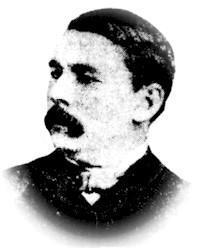
Charles C. Converse

1832 - 1918 Person Name: Charles Crozat Converse Topics: Proper 21 Year B Composer of "FRIENDSHIP" in Voices United Pseudonyms: Clare, Lester Vesé, Nevers, Karl Re­den, Revons ================================= Charles Crozat Converse LLD USA 1832-1918. Born in Warren, MA, he went to Leipzig, Germany to study law and philosophy, as well as music theory and composition under Moritz Hauptmann, Friedrich Richter, and Louis Plaidy at the Leipzig Conservatory. He also met Franz Liszt and Louis Spohr. He became an author, composer, arranger and editor. He returned to the states in 1859 and graduated from the Albany, NY, Law School two years later. He married Lida Lewis. From 1875 he practiced law in Erie, PA, and also was put in charge of the Burdetta Organ Company. He composed hymn tunes and other works. He was offered a DM degree for his Psalm 126 cantata, but he declined the offer. In 1895 Rutherford College honored him with a LLD degree. He spent his last years in Highwood, NJ, where he died. He published “New method for the guitar”, “Musical bouquet”, “The 126th Psalm”, “Sweet singer”, “Church singer”, “Sayings of Sages” between 1855 and 1863. he also wrote the “Turkish battle polka” and “Rock beside the sea” ballad, and “The anthem book of the Episcopal Methodist Church”. John Perry

Edward Perronet

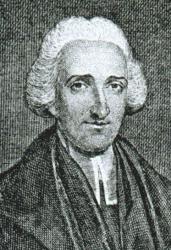
1721 - 1792 Topics: Proper 21 Year B Author of "All Hail the Power of Jesus' Name" in Voices United Edward Perronet was the son of the Rev. Vincent Perronet, Vicar of Shoreham, Kent. For some time he was an intimate associate of the Wesleys, at Canterbury and Norwich. He afterwards became pastor of a dissenting congregation. He died in 1792. In 1784, he published a small volume, entitled "Occasional Verses, Moral and Social;" a book now extremely rare. At his death he is said to have left a large sum of money to Shrubsole, who was organist at Spafield's Chapel, London, and who had composed the tune "Miles Lane" for "All hail the power of Jesus' Name!" --Annotations of the Hymnal, Charles Hutchins, M.A. 1872. ------ Perronet, Edward. The Perronets of England, grandfather, father, and son, were French emigres. David Perronet came to England about 1680. He was son of the refugee Pasteur Perronet, who had chosen Switzerland as his adopted country, where he ministered to a Protestant congregation at Chateau D'Oex. His son, Vincent Perronet, M.A., was a graduate of Queen's College, Oxford, though his name is not found in either Anthony Woods's Athenae Oxonienses nor his Fasti, nor in Bliss's apparatus of additional notes. He became, in 1728, Vicar of Shoreham, Kent. He is imperishably associated with the Evangelical Revival under the Wesleys and Whitefield. He cordially cooperated with the movement, and many are the notices of him scattered up and down the biographies and Journals of John Wesley and of Selina, Countess of Huntingdon. He lived to the venerable age of ninety-one; and pathetic and beautiful is the account of John Wesley's later visits to the white-haired saint (b. 1693, d. May 9, 1785).* His son Edward was born in 1726. He was first educated at home under a tutor, but whether he proceeded to the University (Oxford) is uncertain. Born, baptized, and brought up in the Church of England, he had originally no other thought than to be one of her clergy. But, though strongly evangelical, he had a keen and searching eye for defects. A characteristic note to The Mitre, in referring to a book called The Dissenting Gentleman's answer to the Rev. Mr. White, thus runs:—"I was born, and am like to die, in the tottering communion of the Church of England; but I despise her nonsense; and thank God that I have once read a book that no fool can answer, and that no honest man will". The publication of The Mitre is really the first prominent event in his life. A copy is preserved in the British Museum, with title in the author's holograph, and manuscript notes; and on the fly-leaf this:— "Capt. Boisragon, from his oblig'd and most respectful humble servt. The Author. London, March 29th, 1757." The title is as follows:— The Mitre; a Sacred Poem (1 Samuel ii. 30). London: printed in the year 1757. This strangely overlooked satire is priceless as a reflex of contemporary ecclesiastical opinion and sentiment. It is pungent, salted with wit, gleams with humour, hits off vividly the well-known celebrities in Church and State, and is well wrought in picked and packed words. But it is a curious production to have come from a "true son" of the Church of England. It roused John Wesley's hottest anger. He demanded its instant suppression; and it was suppressed (Atmore's Methodist Memorial, p. 300, and Tyerman, ii. 240-44, 264, 265); and yet it was at this period the author threw himself into the Wesleys' great work. But evidences abound in the letters and journals of John Wesley that he was intermittently rebellious and vehement to even his revered leader's authority. Earlier, Edward Perronet dared all obloquy as a Methodist. In 1749 Wesley enters in his diary: "From Rochdale went to Bolton, and soon found that the Rochdale lions were lambs in comparison with those of Bolton. Edward Perronet was thrown down and rolled in mud and mire. Stones were hurled and windows broken" (Tyerman's Life and Times of the Rev. John Wesley, M.A., 3 vols., 1870 ; vol. ii. 57). In 1750 John Wesley writes: ”Charles and you [Edward Perronet] behave as I want you to do; but you cannot, or will not, preach where I desire. Others can and will preach where I desire, but they do not behave as I want them to do. I have a fine time between the one and the other. I think Charles and you have in the general a right sense of what it is to serve as sons in the gospel; and if all our helpers had had the same, the work of God would have prospered better both in England and Ireland. I have not one preacher with me, and not six in England, whose wills are broken to serve me" (ibid. ii. 85, and Whitehead's Life of Wesley, ii. 259). In 1755 arrangements to meet the emergency created by its own success had to be made for Methodism. As one result, both Edward and Charles Perronet broke loose from John Wesley's law that none of his preachers or "helpers" were to dispense the Sacraments, but were still with their flocks to attend the parish churches. Edward Perronet asserted his right to administer the Sacraments as a divinely-called preacher ibid. ii. 200). At that time he was resident at Canterbury, "in a part of the archbishop's old palace" (ibid. ii. 230. In season and out of season he "evangelized." Onward, he became one of the Countess of Huntingdon's "ministers" in a chapel in Watling Street, Canterbury. Throughout he was passionate, impulsive, strong-willed; but always lived near his divine Master. The student-reader of Lives of the Wesleys will be "taken captive" by those passages that ever and anon introduce him. He bursts in full of fire and enthusiasm, yet ebullient and volatile. In the close of his life he is found as an Independent or Congregational pastor of a small church in Canterbury. He must have been in easy worldly circumstances, as his will shows. He died Jan. 2, 1792, and was buried in the cloisters of the great cathedral, Jan. 8. His Hymns were published anonymously in successive small volumes. First of all came Select Passages of the Old and New Testament versified; London: Printed by H. Cock, mdcclvi. … A second similar volume is entitled A Small Collection of Hymns, &c, Canterbury: printed in the year dcclxxxii. His most important volume was the following:— Occasional Verses, moral and sacred. Published for the instruction and amusement of the Candidly Serious and Religious. London, printed for the Editor: And Sold by J. Buckland in Paternoster Row; and T. Scollick, in the City Road, Moorfields, mdcclxxxv. pp. 216 (12°). [The British Museum copy has the two earlier volumes bound up with this.] The third hymn in this scarce book is headed, “On the Resurrection," and is, ”All hail the power of Jesus' name". But there are others of almost equal power and of more thorough workmanship. In my judgment, "The Lord is King" (Psalm xcvi. 16) is a great and noble hymn. It commences:— “Hail, holy, holy, holy Loud! Let Pow'rs immortal sing; Adore the co-eternal Word, And shout, the Lord is King." Very fine also is "The Master's Yoke—the Scholar's Lesson," Matthew xi. 29, which thus opens:— O Grant me, Lord, that sweet content That sweetens every state; Which no internal fears can rent, Nor outward foes abate." A sacred poem is named "The Wayfaring Man: a Parody"; and another, "The Goldfish: a Parody." The latter has one splendid line on the Cross, "I long to share the glorious shame." "The Tempest" is striking, and ought to be introduced into our hymnals; and also "The Conflict or Conquest over the Conqueror, Genesis xxxii. 24". Still finer is "Thoughts on Hebrews xii.," opening:— "Awake my soul—arise! And run the heavenly race; Look up to Him who holds the prize, And offers thee His grace." "A Prayer for Mercy on Psalm cxix. 94," is very striking. On Isaiah lxv. 19, is strong and unmistakable. "The Sinner's Resolution," and "Thoughts on Matthew viii. 2," and on Mark x. 51, more than worthy of being reclaimed for use. Perronet is a poet as well as a pre-eminently successful hymnwriter. He always sings as well as prays. It may be added that the brief paraphrase after Ovid given below, seems to echo the well-known lines in Gray's immortal elegy:— "How many a gem unseen of human eyes, Entomb'd in earth, a sparkling embryo lies; How many a rose, neglected as the gem, Scatters its sweets and rots upon its stem: So many a mind, that might a meteor shone, Had or its genius or its friend been known; Whose want of aid from some maternal hand, Still haunts the shade, or quits its native land." [Rev. A. B. Grosart, D.D., LL.D.] * Agnew's Protestant Exiles from France in the Reign of Louis XIV. confounds Vincent the father with Edward his son. -- John Julian, Dictionary of Hymnology (1907)

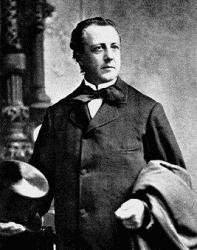
John S. B. Monsell

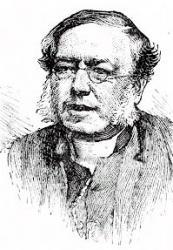
1811 - 1875 Person Name: John Samuel Bewley Monsell, 1811-1875 Topics: Year C Proper 21 Author of "Fight the good fight" in Complete Anglican Hymns Old and New John Samuel Bewley Monsell (b. St. Colomb's, Londonderry, Ireland, 1811; d. Guilford, Surrey, England, 1875) was educated at Trinity College in Dublin and served as a chaplain and rector of several churches in Ireland after his ordination in 1835. Transferred to England in 1853, he became rector of Egham in Surrey and was rector of St. Nicholas Church in Guilford from 1870 until his death (caused by a construction accident at his church). A prolific poet, Monsell published his verse in eleven volumes. His three hundred hymns, many celebrating the seasons of the church year, were issued in collections such as Hymns and Miscellaneous Poems (1837), Spiritual Songs (1857), Hymns of Love and Praise (1863), and The Parish Hymnal (1873). Bert Polman =============================== Monsell, John Samuel Bewley, L.L.D., son of Thomas Bewley Monsell, Archdeacon of Londonderry, was born at St. Columb's, Londonderry, March 2,1811, and educated at Trinity College, Dublin (B.A. 1832, LL.D. 1856). Taking Holy Orders in 1834, "he was successively Chaplain to Bishop Mant, Chancellor of the diocese of Connor, Rector of Ramoan, Vicar of Egham, diocese Worcester, and Rector of St. Nicholas's, Guildford. He died in consequence of a fall from the roof of his church, which was in the course of rebuilding, April 9, 1875. His prose works include Our New Vicar, 1867; The Winton Church Catechist, &c. His poetical works are:— (1) Hymns and Miscellaneous Poems, Dublin, W. Curry, Jun., & Co., 1837; (2) Parish Musings, or Devotional Poems, 1850; (3) Spiritual Songs for the Sundays and Holy Days throughout the Year. 1857 (People's Ed., 1875); (4) His Presence, not His Memory, 1855, 1858; (5) Hymns of Love and Praise for the Church's Year, 1863 (2nd ed. 1866); (6) The Passing Bell; Ode to The Nightingales, and Other Poems, 1867; (7) Litany Hymns, 1869; (8) The Parish Hymnal after the Order of The Book of Common Prayer, 1873; (9)Watches by the Cross, 1874; (10) Simon the Cyrenian; and Other Poems; (11) Nursery Carols. In these works several hymns which appeared in the earlier books are repeated in the later, and thus at first sight his compositions seem to be more in number than they really are. The total amounts to nearly 300, and of these about one-fourth are in common use. The most popular of these are, "God is love; that anthem olden"; "God of that glorious gift of grace"; "Holy offerings, rich and rare"; “Lord of the living harvest"; "Mighty Father, Blessed Son"; and "Sing to the Lord a joyful song." In addition to those which are annotated under their respective first lines, the following are in common use:— i. Appeared in his Hymns and Miscellaneous Poems, Dublin, 1837. 1. Birds have their quiet nests. Humility of Christ. 2. Dark and dim the day-light rose. Good Friday. 3. Friend of the friendless and the lone. Jesus, the Friend. 4. My God, what wondrous love was Thine. Whitsuntide. 5. O for a heart more fervent. Holiness desired. 6. O for the time when on the world. Missions. 7. The springtide hour brings leaf and flower. Spring. 8. This day the Lord is risen. Easter. 9. When cold our hearts and far from Thee. Teach us to Pray. 10. Why restless, why so weary? Providence. 11. Yes, I do feel, my God, that I am Thine. Assurance. ii. Appeared in his Parish Musings, 1850. 12. In Thee, my [O] God, will we rejoice. Trust in God. 13. Lord, dependent on Thy promise. Holy Baptism. 14. Members of Christ, Children of God. Confirmation. 15. So teach me, Lord, to number. The Old and New Year. 16. Soon [soon] and for ever. Death anticipated. 17. The broken, contrite heart oppress'd. Promises of God. 18. Thou art near, yes, Lord, I feel it. Divine Support. 19. Would'st thou learn the depths of sin? Passiontide. iii. Appeared in his Spiritual Songs, 1857. 20. A few bright leaders of her host. All Saints. 21. A happy, happy [merry, merry] Christmas. New Year's Day. 22. Blessed hope, that we the fallen [sinful]. Hope. 23. Heart in heart, and hand in hand. SS. Simon and Jude. 24. Jesus, my loving Lord! I know. Resignation. 25. Last Sunday of the work-day year. Sunday after Christmas Day. 26. Loved by God the Father. Holy Baptism. 27. Mercy, mercy, God the Father. Lent. 28. My head is low, my heart is sad. Confirmation. (Penitential.) 29. Oft doth the Christian's heart inquire. Christian Duty. 30. 0 God, most mighty, listen now. Charities. From "When languid frame or throbbing pulse." 31. 0 holy Sabbath day. Sunday. 32. 0 Lord, what records of Thy love. St. Barnabas. Sometimes, “Lord God, what records of Thy love." 33. 0 love, divine and golden. Holy Matrimony. From this, "Love divine and tender" is taken. 34. One lesson more the Church must learn. Waiting on God. From this, “One lesson Christ His own would teach" is taken. 35. Proudly in his [the] hall of judgment. Tuesday before Easter. 36. Sinful, sighing to be blest. Lent. 37. The Church of God, with equal care. St. James. 38. The journey done; The rest begun. Burial. 39. The simple trust that can confide. Trust. 40. Weary and sad, a wanderer from Thee. Lent. iv. Appeared, in his Hymns of Love and Praise, 1863, and 2nd ed., 1866. 41. Bounteous blesser of the seedtime. Sexagesima. Seed Time. 42. Brightly hopeful for the future. God's mercy through life. 43. Christ is risen! Alleluia! Easter. 44. Come and deck the grave with flowers. Easter Eve. 45. Fight the good fight with all thy might. Fight of Faith. 46. Holy Spirit, long expected. Whitsuntide. 47. Hours and days and months and years. The Circumcision. 48. I have no comfort but Thy love. The Comfort of Love. 49. I knew Thee in the land of drought. A Song of Love. 60. I think of Thee, my God by night. Evening. 61. Jesu, gentle Sufferer, say. Good Friday. 52. Labouring and heavy-laden. Lent. 53. Light of the world, we hail Thee. Missions. 54. Lord, to whom except to Thee? Holy Communion. 55. My sins, my sins, my Saviour. Ash Wednesday. 56. O'er the distant mountains breaking. Second Advent. 57. Other Name than our dear Lord's. Jesus All and in All. 58. Pity on us, heavenly Father. Litany Hymn for Lent. 59. Praise the Lord, rejoice, ye Gentiles. Advent, or Missions. 60. Rest of the weary, joy of the sad. Jesus, the Saviour and Friend. 61. Shadow of a mighty Rock. Jesus, the Rock of Ages. 62. Sing, 0 heaven; 0 earth rejoice. Ascension. 63. Sweet is the gentle voice of spring. Seed Time. 64. Sweet is Thy mercy, Lord. Divine Mercy. 65. Teach me to do the thing that pleaseth Thee. Divine Teaching. 66. The good old times, how glorious. Advent. 67. The world may in its wealth delight. Rejoicing in the Lord. An altered form of "Let others in their wealth delight." 68. Though Thou slay me, I will trust. Faith. 69. To Christ the Lord! The Incarnate Word. Christmas. 70. When I had wandered from His fold. The Love of God. v. Appeared in his Litany Hymns, 1869. 71. Lay the precious body, In the quiet grave. Burial. 72. My sins have taken such a hold on me. Litany of Repentance. vi. Appeared in his Parish Hymnal, 1873. 73. I hunger and I thirst. Septuagesima. Dr. Monsell’s hymns are as a whole bright, joyous, and musical; but they lack massiveness, concentration of thought, and strong emotion. A few only are of enduring excellence. --John Julian, Dictionary of Hymnology 1907 ===================== Monsell, J, S. B., p. 762, ii. Additional hymns in common use include:— 1. Blessed Lord, Who, till the morning. Holy Scriptures. From his Spiritual Songs, 1857. 2. Christ incarnate in His poor. Christ in His Poor. From his Hymns of Love and Praise, 1863. 3. We ask for life, and mean thereby. Life and Work. From his Hymns of Love and Praise, 1863. --John Julian, Dictionary of Hymnology, Appendix, Part II (1907) ==================== Monsell, J. S. B. Since the article on pp. 762-3 was written, copies of the original editions of Dr. Monsell's works have come into our hands, and from them we have to make the following corrections, the numbers following being those given to the first lines of the hymns on pp. 762-3:— 15. So teach me, &c. Hymns and Misc. Poems, 1837, p. 30. 17. The broken, &c. Hymns and Misc. Poems, 1837, p. 49. 18. Thou art near, &c. Hymns and Misc. Poems, 1837, p. 21. 19. Would'st thou, &c. Hymns and Misc. Poems, 1837, p. 14. 26. Loved by God, &c. Parish Hymnal, 1873, No. 181. 27. Mercy, mercy, &c. Prayers and Litanies, 1861, p. 119. 28. My head is low, &c. Hymns of Love and Praise, 1866, p. 125. 33. O Love divine, &c. Hymns of Love and Praise, p. 131. 38. The journey done, &c. Hymns of Love and Praise, p. 134. 40. Weary and sad, &c. Parish Hymnal, 1873, No. 209. 41-50. Hymns of Love and Praise, 1863. 51. See "Day of loss," &c, p. 282, i. 52. Labouring, &c. Prayers and Litanies, 1861, p. 116. 53-57. Hymns of Love and Praise, 1863. 58. Pity on us, &c. Prayers and Litanies, 1861, p. 125. 59. Praise the Lord, &c. Hymns of Love and Praise, 1863, p. 13. 60. 61, 62, 64, 65. Prayers and Litanies, 1861. 63, 66-70. Hymns of Love and Praise, 1863. 72. My sins, &c. Hymns of Love and Praise, 1866, p. 34. 73. I hunger, &c. Hymns of Love and Praise, 1866, p. 128. It will be seen from this list of additions and corrections that Dr. Monsell multiplied his works by giving much the same material under new titles, and that his Prayers and Litanies of 1861 were unknown to us when the original article was written. "We can sincerely add that few hymn writers are so perplexing to the annotator as Dr. Monsell. [Rev. James Mearns, M.A.] --John Julian, Dictionary of Hymnology, New Supplement (1907)

John Warrington Hatton

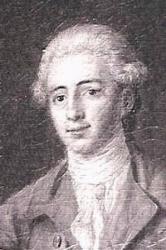
1710 - 1793 Person Name: John Hatton, d. 1793 Topics: Year C Proper 21 Composer (attributed to) of "DUKE STREET" in Complete Anglican Hymns Old and New John Warrington Hatton (b. Warrington, England, c. 1710; d, St. Helen's, Lancaster, England, 1793) was christened in Warrington, Lancashire, England. He supposedly lived on Duke Street in Lancashire, from where his famous tune name comes. Very little is known about Hatton, but he was most likely a Presbyterian, and the story goes that he was killed in a stagecoach accident. Bert Polman

Civilla D. Martin

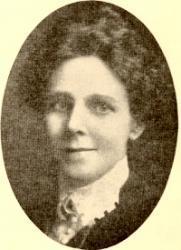
1866 - 1948 Topics: Year C Proper 21 Author of "Be Not Dismayed (God Will Take Care of You)" in The New Century Hymnal Martin, Civilla Durfee (Jordan Falls, Nova Scotia, August 21, 1866--March 9, 1948, Atlanta, Georgia). Daughter of James N. and Irene (Harding) Holden. She married Rev. John F. Geddes, Congregational minister of Coventryvilee, N.Y. at Jordan Falls Methodist Church, Shelbourne Co., Nova Scotia, on May 19, 1891. There is thus far no information about their marriage and its end. After several years of teaching school, she married Walter Stillman Martin, a Baptist minister, and traveled with him in evangelistic work. However, because of frail health, she was compelled to remain home much of the time. In 1916, they became members of the Christian Church (Disciples of Christ). They had one son, A.G. Martin. In her writing, she used only her initials, "C.D." rather than her full name of that of her composer-husband. She is reputed to have written several hundred hymns and religious songs. Her first one, "God Will Take Care of You," written in 1904 became world-famous. Her husband wrote the music for this and many of her other hymns. "His Eye is on the Sparrow" written in 1906 and set to music by Charles H. Gabriel, has also received wide acclaim. In addition to the above, "Like As A Father," "A Welcome for Me," and "The Blood Will Never Lose Its Power" are among her better-known hymns. Her husband and collaborator, W.S. Martin (1862-1935) preceded her in death. For the last 29 years of her life, she made her home in Atlanta, Georgia, where she was a member of the First Christian Church. Her funeral was held on March 10, 1948 at Spring Hill and the interment was in the West View Cemetery in Atlanta. --Carlton C. Buck, DNAH Archives and email from Rev. Lester M. Settle (Glenholme, Nova Scotia) to Mary Louise VanDyke 18 September 2008, DNAH Archives.

Augustus Toplady

1740 - 1778 Person Name: Augustus Montague Toplady (1740-1778) Topics: Proper 21 Year A Author of "Rock of ages, cleft for me" in Ancient and Modern Toplady, Augustus Montague, the author of "Rock of Ages," was born at Farnham, Surrey, November 4, 1740. His father was an officer in the British army. His mother was a woman of remarkable piety. He prepared for the university at Westminster School, and subsequently was graduated at Trinity College, Dublin. While on a visit in Ireland in his sixteenth year he was awakened and converted at a service held in a barn in Codymain. The text was Ephesians ii. 13: "But now, in Christ Jesus, ye who sometimes were far off are made nigh by the blood of Christ." The preacher was an illiterate but warm-hearted layman named Morris. Concerning this experience Toplady wrote: "Strange that I, who had so long sat under the means of grace in England, should be brought nigh unto God in an obscure part of Ireland, amidst a handful of God's people met together in a barn, and under the ministry of one who could hardly spell his name. Surely this is the Lord's doing, and it is marvelous." In 1758, through the influence of sermons preached by Dr. Manton on the seventeenth chapter of John, he became an extreme Calvinist in his theology, which brought him later into conflict with Mr. Wesley and the Methodists. He was ordained to the ministry in the Church of England in 1762, and in 1768 he became vicar of Broadhembury, a small living in Devonshire, which he held until his death. The last two or three years of his life he passed in London, where he preached in a chapel on Orange Street. His last sickness was of such a character that he was able to make a repeated and emphatic dying testimony. A short time before his death he asked his physician what he thought. The reply was that his pulse showed that his heart was beating weaker every day. Toplady replied with a smile: "Why, that is a good sign that my death is fast approaching; and, blessed be God, I can add that my heart beats stronger and stronger every day for glory." To another friend he said: "O, my dear sir, I cannot tell you the comforts I feel in my soul; they are past expression. . . . My prayers are all converted into praise." He died of consumption August 11, 1778. His volume of Psalms and Hymns for Public and Private Worship was published in 1776. Of the four hundred and nineteen hymns which it contained, several were his own productions. If on a quiet sea 446 Rock of ages, cleft for me 279 Hymn Writers of the Church, 1915 by Charles S. Nutter =============================================== Toplady, Augustus Montague, M.A. The life of Toplady has been repeatedly and fully written, the last, a somewhat discursive and slackly put together book, yet matterful, by W. Winters (1872). Summarily, these data may be here given: he was born at Farnham, in Surrey, on November 4, 1740. His father, Richard Toplady, was a Major in the British array, and was killed at the siege of Carthagena (1741) soon after the birth of his son. His widowed mother placed him at the renowned Westminster school, London. By-and-by circumstances led her to Ireland, and young Augustus was entered at Trinity College, Dublin, where he completed his academical training, ultimately graduating M.A. He also received his "new birth" in Ireland under remarkable conditions, as he himself tells us with oddly mixed humility and lofty self-estimate, as "a favourite of heaven," common to his school:— "Strange that I who had so long sat under the means of grace in England should be brought right unto God in an obscure part of Ireland, midst a handful of people met together in a barn, and by the ministry of one who could hardly spell his own name. Surely it was the Lord's doing and is marvellous. The excellency of such power must be of God and cannot be of man. The regenerating spirit breathes not only on whom but likewise, when and where and as He listeth." Toplady received orders in the Church of England on June 6, 1762, and after some time was appointed to Broadhembury. His Psalms and Hymns of 1776 bears that he was then “B.A." and Vicar of Broadhembury. Shortly thereafter be is found in London as minister of the Chapel of the French Calvinists in Leicester Fields. He was a strong and partizan Calvinist, and not well-informed theologically outside of Calvinism. We willingly and with sense of relief leave unstirred the small thick dust of oblivion that has gathered on his controversial writings, especially his scurrilous language to John Wesley because of his Arminianism, as we do John Wesley's deplorable misunderstanding and misrepresentation of Calvinism. Throughout Toplady lacked the breadth of the divine Master's watchword "Forbid him not, for he that is not against us is for us" (St. Luke ix. 50). He was impulsive, rash-spoken, reckless in misjudgment; but a flame of genuine devoutness burned in the fragile lamp of his overtasked and wasted body. He died on August 11, 1778. The last edition of his works is in 6 vols., 8 vo., 1825. An accurate reproduction of most of his genuine hymns was one of the reprints of Daniel Sedgwick, 1860. His name occurs and recurs in contemporary memoirs and ecclesiastical histories, e.g., in Tyerman's Life of John Wesley. The reader will find in their places annotations on the several hymns of Toplady, and specially on his "Rock of Ages,” a song of grace that has given him a deeper and more inward place in millions of human hearts from generation to generation than almost any other hymnologist of our country, not excepting Charles Wesley. Besides the "Rock of Ages" must be named, for power, intensity, and higher afflatus and nicer workmanship, "Object of my first desire,” and "Deathless principle arise." It is to be regretted that the latter has not been more widely accepted. It is strong, firm, stirring, and masterful. Regarded critically, it must be stated that the affectionateness with which Toplady is named, and the glow and passion of his faith and life, and yearning after holiness, have led to an over-exaltation of him as a hymnwriter. Many of his hymns have been widely used, and especially in America, and in the Evangelical hymnbooks of the Church of England. Year by year, however, the number in use is becoming less. The reason is soon found. He is no poet or inspired singer. He climbs no heights. He sounds no depths. He has mere vanishing gleams of imaginative light. His greatness is the greatness of goodness. He is a fervent preacher, not a bard. [Rev. A. B. Grosart, D.D., LL.D.] Toplady's hymns and poetical pieces were published in his:— (1) Poems on Sacred Subjects wherein The Fundamental Doctrines of Christianity, with many other interesting Points, are occasionally introduced. . . Dublin: Printed by S. Powell, in Crane-lane, MDCCLIX.; (2) his Psalms & Hymns for Public and Private Worship, 1776; (3) in The Gospel Magazine, 1771-1776; and (4) in Hymns and Sacred Poems on a variety of Divine Subjects, &c. D. Sedgwick's reprint, 1860. His Works, with a Memoir by W. Row, were published in 6 volumes, in 1794. Walter How was also the editor of the 2nd and some later editions of the Psalms & Hymns. He was a most careless editor, and attributed several hymns by C. Wesley and others to Toplady. The following additional hymns in common use together with centos indicated in the sub-lines, are from:— i. His Poems on Sacred Subjects, 1759. 1. Can my heaven-born soul submit? All for Christ. 2. Come from on high, my King and God. Holiness desired. (1.) 0 might this worthless heart of mine. 3. Earnest of future bliss. The Witness of the Spirit. 4. From Thy supreme tribunal, Lord. Christ's Righteousness a Refuge. (1.) The spotless Saviour lived for me. 5. Great God, Whom heaven, and earth, and sea. For Peace. 6. I saw, and lo! a countless throng. Saints' Days. Revised form in the Gospel Magazine, 1774, p. 449. 7. Immovable our hope remains. Divine Faithfulness. 8. Jesus, God of love, attend. Divine Worship. Pt. ii. is "Prayer can mercy's door unlock." 9. Jesus, Thy power I fain would feel. Lent. 10. Lord, I feel a carnal mind. Mind of Christ desired. 11. My yielding heart dissolves as wax. On behalf of Arians, &c. (1.) 0 Jesus, manifest Thy grace. 12. Not to myself I owe. Praise for Conversion, (1.) Not to ourselves we owe. (2.) The Father's grace and love. 13. 0 that my heart was right with Thee. Dedication to God desired. 14. 0 Thou that hearest the prayer of faith. Christ the Propitiation. 15. 0 Thou Who didst Thy glory leave. Thanksgiving for Redemption. 16. 0 when wilt Thou my Saviour be. Trust in Jesus. (1.) Jesus, the sinner's Rest Thou art. 17. Redeemer, whither should I flee? Safety in the Cross. 18. Remember, Lord, that Jesus bled. Pardon. 19. Surely Christ thy griefs hath borne. Redemption. Revised text in Gospel Magazine, 1774, p. 548. (1.) Weary sinner, keep thine eyes. (2.) Weeping soul, no longer mourn. ii. From the Gospel Magazine. 20. Compared with Christ, in all besides. Christ All in All. Feb. 1772. 21. Eternal Hallelujahs Be to the Father given. Holy Trinity, Dec. 1774. 22. From whence this fear and unbelief. Reviving Faith, Feb. 1772. 23. How vast the benefits divine. Redemption. Dec. 1774. From this "Not for the works which we have done" is taken. 24. Whom have I in heaven but Thee? Christ All and in All, Feb. 1772. From this "If my Lord Himself reveal" is taken. 25. Jesus, immutably the same. Jesus, the True Vine. June, 1771. All these hymns, together with "O precious blood, 0 glorious death" (Death of Christ), are in D. Sedgwick's reprint of Toplady's Hymns, &c, 1860. We have met with several other hymns to which Toplady's name is appended, but for this we can find no authority whatever. -- Excerpts from John Julian, Dictionary of Hymnology (1907)

Pages


Export as CSV
It looks like you are using an ad-blocker. Ad revenue helps keep us running. Please consider white-listing Hymnary.org or getting Hymnary Pro to eliminate ads entirely and help support Hymnary.org.