You help make Hymnary.org possible. More than 10 million people from 200+ countries found hymns, liturgical resources and encouragement on Hymnary.org in 2025, including you. Every visit affirms the global impact of this ministry.

If Hymnary has been meaningful to you this year, would you take a moment today to help sustain it? A gift of any size—paired with a note of encouragement if you wish—directly supports the server costs, research work and curation that keep this resource freely available to the world.

Give securely online today, or mail a check to:
Hymnary.org
Calvin University
3201 Burton Street SE
Grand Rapids, MI 49546

Thank you for your partnership, and may the hope of Advent fill your heart.

Person Results

Topics:proper+8
In:person

Planning worship? Check out our sister site, ZeteoSearch.org, for 20+ additional resources related to your search.
Showing 81 - 90 of 246Results Per Page: 102050

Philip Doddridge

1702 - 1751 Topics: The Church in the World Commitment: Pilgrimage; Biblical Places Bethel; Church Anniversaries; Commitment; God Guidance; God Providence; Ministry; Pilgrimage and Conflict; Rogation; Supplication; Wandering from God; Epiphany 8 Year A; Proper 4 Year A; Proper 11 Year A; Proper 15 Year A; Lent 1 Year B; Proper 13 Year B; Thanksgiving Year B; Lent 1 Year C; Holy Thursday Year C; Proper 12 Year C; Proper 13 Year C; Proper 21 Year C; Ash Wednesday Year ABC; Holy thursday Year ABC; Easter Evening Year ABC Author of "O God of Bethel" in Voices United Philip Doddridge (b. London, England, 1702; d. Lisbon, Portugal, 1751) belonged to the Non-conformist Church (not associated with the Church of England). Its members were frequently the focus of discrimination. Offered an education by a rich patron to prepare him for ordination in the Church of England, Doddridge chose instead to remain in the Non-conformist Church. For twenty years he pastored a poor parish in Northampton, where he opened an academy for training Non-conformist ministers and taught most of the subjects himself. Doddridge suffered from tuberculosis, and when Lady Huntington, one of his patrons, offered to finance a trip to Lisbon for his health, he is reputed to have said, "I can as well go to heaven from Lisbon as from Northampton." He died in Lisbon soon after his arrival. Doddridge wrote some four hundred hymn texts, generally to accompany his sermons. These hymns were published posthumously in Hymns, Founded on Various Texts in the Holy Scriptures (1755); relatively few are still sung today. Bert Polman ======================== Doddridge, Philip, D.D., was born in London, June 26, 1702. His grandfather was one of the ministers under the Commonwealth, who were ejected in 1662. His father was a London oilman. He was offered by the Duchess of Bedford an University training for ordination in the Church of England, but declined it. He entered Mr. Jennings's non-conformist seminary at Kibworth instead; preached his first sermon at Hinckley, to which Mr. Jennings had removed his academy. In 1723 he was chosen pastor at Kibworth. In 1725 he changed his residence to Market Harborough, still ministering at Kibworth. The settled work of his life as a preceptor and divine began in 1729, with his appointment to the Castle Hill Meeting at Northampton, and continued till in the last stage of consumption. He sailed to Lisbon, in 1751, where he died October 26, the same year. Two hundred pupils in all, gathered from England, Scotland and Holland, were prepared in his seminary, chiefly for the dissenting ministry, but partly for professions. The wide range of subjects, including daily readings in Hebrew and Greek, Algebra, Trigonometry, Watts' Logic, outline of Philosophy, and copious Divinity, is itself a proof of Doddridge's learning. He was presented with his D.D. degree by the University of Aberdeen. His fame as a divine, combined with his wide sympathies and gentle, unaffected goodness, won for him the friendship of Watts, Col. Gardiner and Hervey, and the esteem of Seeker and Warburton. He welcomed the work of Wesley and Whitefield, and entertained the latter on his visit to Northampton. His Rise and Progress of Religion in the Soul and The Family Expositor both did good work in their day. For criticism of his hymns see English Hymnody, Early, § XIV. [Rev. H. Leigh Bennett, M.A.] After Dr. Doddridge's death his hymns were published by his friend Job Orton, in 1755, as:— "Hymns founded on Various Texts in the Holy Scriptures. By the late Reverend Philip Doddridge, D.D. Published from the Author's Manuscript by Job Orton . . . Salop. Printed by J. Eddowes and J. Cotton, &c. MDCCLV." Concerning the text of the hymns, Orton says in his Preface:— "There may perhaps be some improprieties, owing to my not being able to read the author's manuscript in particular places, and being obliged, without a poetical genius, to supply those deficiencies, whereby the beauty of the stanza may be greatly defaced, though the sense is preserved." The 1st edition contained 370 hymns; the 2nd, 1759, 374; and the 3rd, 1766, and later editions, 375. In 1839 Doddridge's great-grandson re-edited the hymns from the original manuscript and published the same as:— Scriptural Hymns by the Rev. Philip Doddridge, D.D. New and corrected edition containing many hymns never before printed. Edited from the Original Documents by the Author's great-grandson, John Doddridge Humphreys, Esq. Lond. Darton & Clark, 1839. This work contains 22 additional hymns. The text differs in many instances from Orton's, but these changes have not come into common use. In addition to the manuscript used by Orton and J. D. Humphreys, another containing 100 hymns (five of which are not in any edition of the Hymns), all in the author's handwriting, and most of them dated, is referred to in this Dictionary as the "D. Manuscripts." It is the property of Mr. W. S. Booker and family. A manuscript, not in Doddridge's handwriting, of 77 "Hymns by P. Doddridge, Mar. 16, 1739/1740," is in the possession of Mr. W. T. Brooke. The existence of these manuscripts is accounted for from the fact that Doddridge's hymns were freely circulated in manuscript during his lifetime. It is from his correspondence with R. Blair (q.v.) that the few compositions traceable to him in the Scottish Trans. & Paraphrases were derived. The hymns by Doddridge which have attained to the greatest popularity are:— “Awake, my soul, stretch every nerve"; " Do not I love Thee, O my Lord? " "Grace 'tis a charming sound”; " Hark, the glad sound, the Saviour comes"; "My God, and is Thy table spread?" "O happy day, that fixed my choice"; "O God of Jacob [Bethel], by Whose hand”; " See Israel's gentle Shepherd stand"; "Ye servants of the Lord." These hymns, with many besides, are annotated under their respective first lines. Of the rest, taken from the Hymns, &c, 1755, the following are also in common use:— 1. Behold the gloomy vale. Death anticipated. 2. Behold the Great Physician stands. Christ the Physician. 3. Captives of Israel, hear. Spiritual Deliverance. 4. Eternal God, our wondering souls. Enoch's Piety and Translation. 5. Eternal Source of life and thought. Subjection to the Father. G. Exalted Prince of Life, we own. Christ the Prince and Saviour. 7. Father Divine, the Saviour cried. Christ's Submission to the Father. 8. Father Divine, Thy piercing eye. Secret Prayer. 9. Father of mercies, send Thy grace. Sympathy. The Good Samaritan. 10. Go, saith the Lord, proclaim my grace. Forgiveness. 11. God of Eternity, from Thee. Redeeming the Time. 12. God of my life, through all its [my] days. Praising God continually. 13. God. of salvation, we adore. Praise to God for Redemption. 14. Great Father of mankind. Gentiles brought into the Church. 15. Great God, we sing that mighty hand. The New Tear. 16. Great Leader of Thine Israel's host. During Persecution. 17. Great Lord of angels, we adore. Ordination. 18. Great Spirit of immortal love. Purity of Heart desired. 19. Great Teacher of Thy Church, we own. The Divine Precepts. 20. Hail, everlasting Prince of Peace. Sympathy. 21. Hail to the Prince of life and peace. Praise to Christ. 22. Hear, gracious [Saviour] Sovereign, from Thy throne. The Blessings of the Holy Spirit desired. 23. How gentle God's commands. God's Care of His Own. 24. How rich Thy favours, God of grace. God and His Living Temple. 25. How swift the torrent flows [rolls]. Our Fathers, where are they? 26. Jesus the Lord, our souls adore. Christ the Forerunner. 27. Jesus, we own Thy Sovereign hand. Christ to be fully known hereafter. 28. Loud let the tuneful trumpet sound. Gospel Jubilee. 29. My gracious Lord, I own Thy right. Life in Jesus. 30. My [Dear] Saviour, I am [we are] Thine. Joined to Christ through the Spirit. 31. My soul, with all thy waking powers. The Choice of Moses. 32. Now let our voices join. Singing in the ways of God. 33. 0 injured Majesty of heaven. Lent. 34. 0 Zion, tune thy voice. Glory of the Church of Christ. 35. Peace, 'tis the Lord Jehovah's hand. Resignation. 36. Praise the Lord of boundless might. The Father of Lights. 37. Praise to Thy Name, Eternal God. Growth in Grace desired. 38. Remark, my soul, the narrow bounds. The New Year. 39. Repent, the Voice celestial cries. Lent. 40. Return, my roving heart, return. Heart communing. 41. Salvation, O melodious sound. God our Salvation. 42. Saviour of men, and Lord of love. Ministry and Death of Christ. 43. Searcher of hearts, before Thy face. Peter to Simon Magus. 44. Shepherd of Israel, Thou dost keep. Induction or Settlement of a Minister. 45. Shine forth, eternal Source of light. Knowledge of God desired. 46. Shine on our souls, eternal God. Sunday. 47. Sing, ye redeemed of the Lord. Joy on the Homeward Way. 48. Sovereign of life, before Thine eye. Life and Death in God's hands. 49. The darkened sky, how thick it lours. Sorrow followed by Joy. 50. The day approacheth, O my soul. Judgment anticipated. 51. The King of heaven His table spreads. The Gospel Feast. 52. The promises I sing. The unchanging promises of God. 53. The swift-declining day. Walk in the Light. 54. These mortal joys, how soon they fade. Treasures, Perishable and Eternal. 55. Thy judgments cry aloud. Retributive Providence. 56. Thy presence, Everlasting God. Omnipresence of the Father. 57. 'Tis mine, the covenant of His grace. Death anticipated. 58. To Thee, my God; my days are known. Life under the eye of God. 59. Tomorrow, Lord, is Thine. Uncertainty of Life. 60. Triumphant Lord, Thy goodness reigns. The Divine Goodness. 61. Triumphant Zion, lift thy head. The Church Purified and Guarded. 62. Unite my roving thoughts, unite. Peace. 63. What mysteries, Lord, in Thee combine. Christ, the First and Last. 64. While on the verge of life I stand. Death anticipated with Joy. 65. With ecstacy of Joy. Christ the Living Stone. 66. Ye golden lamps of heaven, farewell. Heaven opening. 67. Ye hearts with youthful vigour warm. The Young encouraged. 68. Ye humble souls, that seek the Lord. Easter. 69. Ye sons of men, with joy record. Praise of the Works of God. 70. Yes, the Redeemer rose. Easter In Dr. Hatfield's Church HymnBook, N. Y., 1872, Nos. 9, 12, 14, 15, 21, 23, 25, 29, 30, 32, 34, 35, 39, 40, 44, 47, 51, 61, 64, 65, 67, 69, 70, as above, are dated 1740. What authority there may be for this date we cannot say, these hymns not being in any “D. MSS." with which we are acquainted, and no dates are given in the Hymns, &c, 1755. Some later American editors have copied this date from Dr. Hatfield. Doddridge's hymns are largely used by Unitarians both in Great Britain and America. As might be expected, the Congregationalists also draw freely from his stores. The Baptists come next. In the hymnals of the Church of England the choicest, only are in use. Taken together, over one-third of his hymns are in common usage at the present time. -- John Julian, Dictionary of Hymnology (1907) ================ Doddridge, Philip, D.D. At p. 305 an account is given of a manuscript volume of Doddridge's Hymns, which is the property of the Rooker family. Since that article was written another manuscript vol. has been found. It was the property of Lady Frances Gardiner, née Erskine, an intimate friend of Doddridge, and wife of Col. Gardiner. It is a copy of the Rooker manuscipt, with the revised text, as in the margin of that ms., and is in Doddridge's hand¬writing. It was from this manuscript that the Doddridge hymns were taken for the Scottish Translationsand Paraphrases, 1745. Additional hymns by Dr. Doddridge still in common use include:— 1. My God, how cheerful is the sound. All in Christ. 2. My Saviour, let me hear Thy voice. Pardon desired. 3. My soul, triumphant in the Lord. Divine Guidance assured. 4. No «iore, ye wise, your wisdom boast. Glorying in God alone. From Hymns, No. 128. 5. Now be that Sacrifice survey'd. Christ our Sacrifice. 6. 0 Israel, blest beyond compare. Happiness of God's Israel. 7. Our fathers, where are they? Considering the Past. From Hymns, No. 164. 8. Praise to the Lord on high. Missions. 9. Praise to the radiant Source of bliss. Praise for Divine Guidance. 10. Return, my soul, and seek thy rest. Rest in Jesus. 11. Salvation doth to God belong. National Thanksgiving. 12. Sovereign of Life, I own Thy hand. On Recovery from Sickness. 13. The sepulchres, how thick they stand. Burial. 14. There is a Shepherd kind and strong. The Good Shepherd. From Hymns, No. 216. 15. Wait on the Lord, ye heirs of hope. Waiting on God. 16. We bless the eternal Source of light. Christ's care of the Church. 17. With transport, Lord, our souls proclaim. Immutability of Christ. 18. Ye mourning saints, whose streaming tears. Death and Burial. These all appeared in Dr. Doddridge's Hymns, 1755. --John Julian, Dictionary of Hymnology, Appendix, Part II (1907)

Henry Baker

1835 - 1910 Topics: Proper 8 Year A Composer of "HESPERUS (QUEBEC)" in Voices United Henry Baker, Mus. Bac., son of the Rev. James Baker, Chancellor of the diocese of Durham; born at Nuneham, Oxfordshire; educated at Winchester School; graduated Bachelor in Music at the University of Oxford in 1867. He also worked as a civil engineer. Scottish Church Music, its composers and sources by James Love; William Blackwwod and Sons, Edinburgh and London, 1891

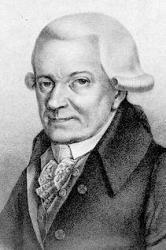
Michael Haydn

1737 - 1806 Person Name: Johann Michael Haydn Topics: The Church in the World Commitment: Pilgrimage; Biblical Places Bethel; Church Anniversaries; Commitment; God Guidance; God Providence; Ministry; Pilgrimage and Conflict; Rogation; Supplication; Wandering from God; Epiphany 8 Year A; Proper 4 Year A; Proper 11 Year A; Proper 15 Year A; Lent 1 Year B; Proper 13 Year B; Thanksgiving Year B; Lent 1 Year C; Holy Thursday Year C; Proper 12 Year C; Proper 13 Year C; Proper 21 Year C; Ash Wednesday Year ABC; Holy thursday Year ABC; Easter Evening Year ABC Composer of "SALZBURG (HAYDN)" in Voices United Johann Michael Haydn Austria 1737-1806. Born at Rohrau, Austria, the son of a wheelwright and town mayor (a very religious man who also played the harp and was a great influence on his sons' religious thinking), and the younger brother of Franz Joseph Haydn, he became a choirboy in his youth at the Cathedral of St. Stephen in Vienna, as did his brother, Joseph, an exceptional singer. For that reason boys both were taken into the church choir. Michael was a brighter student than Joseph, but was expelled from music school when his voice broke at age 17. The brothers remained close all their lives, and Joseph regarded Michael's religious works superior to his own. Michael played harpsichord, violin, and organ, earning a precarious living as a freelance musician in his early years. In 1757 he became kapellmeister to Archbishop, Sigismund of Grosswardein, in Hungary, and in 1762 concertmaster to Archbishop, Hieronymous of Salzburg, where he remained the rest of his life (over 40 years), also assuming the duties of organist at the Church of St. Peter in Salzburg, presided over by the Benedictines. He also taught violin at the court. He married the court singer, Maria Magdalena Lipp in 1768, daughter of the cathedral choir-master, who was a very pious women, and had such an affect on her husband, trending his inertia and slothfulness into wonderful activity. They had one daughter, Aloysia Josepha, in 1770, but she died within a year. He succeeded Wolfgang Amadeus Mozart, an intimate friend, as cathedral organist in 1781. He also taught music to Carl Maria von Weber. His musical reputation was not recognized fully until after World War II. He was a prolific composer of music, considered better than his well-known brother at composing religious works. He produced some 43 symphonies,12 concertos, 21 serenades, 6 quintets, 19 quartets, 10 trio sonatas, 4 due sonatas, 2 solo sonatas, 19 keyboard compositions, 3 ballets, 15 collections of minuets (English and German dances), 15 marches and miscellaneous secular music. He is best known for his religious works (well over 400 pieces), which include 47 antiphons, 5 cantatas, 65 canticles, 130 graduals, 16 hymns, 47 masses, 7 motets, 65 offertories, 7 oratorios, 19 Psalms settings, 2 requiems, and 42 other compositions. He also composed 253 secular vocals of various types. He did not like seeing his works in print, and kept most in manuscript form. He never compiled or cataloged his works, but others did it later, after his death. Lothar Perger catalogued his orchestral works in 1807 and Nikolaus Lang did a biographical sketch in 1808. In 1815 Anton Maria Klafsky cataloged his sacred music. More complete cataloging has been done in the 1980s and 1990s by Charles H Sherman and T Donley Thomas. Several of Michael Haydn's works influenced Mozart. Haydn died at Salzburg, Austria. John Perry

Joachim Neander

1650 - 1680 Topics: God Praise and Thanksgiving; Adoration and Praise; Creation; Faithfulness; God Faithfulness; God Grace; God Mercy; God Power/Might; God Protection; God Providence; God Strength and Refuge; Installation Services; Jesus Christ Friend; Life; Love; Mercy; Music and Singing; Processionals (Opening of Worship); Providence; Service Music Gathering, Call to Worship, Greeting; Service Music Sending Forth/Commissioning; Sin; Wholeness; Work and Recreation; Worship; Epiphany Last/Transfig. Year A; Proper 14 Year A; Proper 24 Year A; Epiphany 5 Year B; Epiphany 8 Year B; Proper 16 Year B; Proper 18 Year B; Proper 28 Year B; Baptism of Jesus Year C; Easter 2 Year C; Proper 15 Year C; Proper 21 Year C; Proper 27 Year C Author of "Praise to the Lord, the Almighty (Peuples, criez de joie et bondissez d'allégresse)" in Voices United Neander, Joachim, was born at Bremen, in 1650, as the eldest child of the marriage of Johann Joachim Neander and Catharina Knipping, which took place on Sept. 18, 1649, the father being then master of the Third Form in the Paedagogium at Bremen. The family name was originally Neumann (Newman) or Niemann, but the grandfather of the poet had assumed the Greek form of the name, i.e. Neander. After passing through the Paedagogium he entered himself as a student at the Gymnasium illustre (Academic Gymnasium) of Bremen in Oct. 1666. German student life in the 17th century was anything but refined, and Neander seems to have been as riotous and as fond of questionable pleasures as most of his fellows. In July 1670, Theodore Under-Eyck came to Bremen as pastor of St. Martin's Church, with the reputation of a Pietist and holder of conventicles. Not long after Neander, with two like-minded comrades, went to service there one Sunday, in order to criticise and find matter of amusement. But the earnest words of Under-Eyck touched his heart; and this, with his subsequent conversations with Under-Eyck, proved the turning-point of his spiritual life. In the spring of 1671 he became tutor to five young men, mostly, if not all, sons of wealthy merchants at Frankfurt-am-Main, and accompanied them to the University of Heidelberg, where they seem to have remained till the autumn of 1673, and where Neander learned to know and love the beauties of Nature. The winter of 1673-74 he spent at Frankfurt with the friends of his pupils, and here he became acquainted with P. J. Spener (q.v.) and J. J. Schütz (q.v.) In the spring of 1674 he was appointed Rector of the Latin school at Düsseldorf (see further below). Finally, in 1679, he was invited to Bremen as unordained assistant to Under-Eyck at St. Martin's Church, and began his duties about the middle of July. The post was not inviting, and was regarded merely as a stepping stone to further preferment, the remuneration being a free house and 40 thalers a year, and the Sunday duty being a service with sermon at the extraordinary hour of 5 a.m. Had he lived, Under-Eyck would doubtless have done his best to get him appointed to St. Stephen's Church, the pastorate of which became vacant in Sept., 1680. But meantime Neander himself fell into a decline, and died at Bremen May 31, 1680 (Joachim Neander, sein Leben und seine Lieder. With a Portrait. By J. F. Iken, Bremen, 1880; Allgemeine Deutsche Biographie, xxiii. 327, &c.) Neander was the first important hymn-writer of the German Reformed Church since the times of Blaurer and Zwick. His hymns appear to have been written mostly at Düsseldorf, after his lips had been sealed to any but official work. The true history of his unfortunate conflict has now been established from the original documents, and may be summarized thus. The school at Düsseldorf was entirely under the control of the minister and elders of the Reformed Church there. The minister from about July, 1673, to about May, 1677, was Sylvester Lürsen (a native of Bremen, and only a few years older than Neander), a man of ability and earnestness, but jealous, and, in later times at least, quarrelsome. With him Neander at first worked harmoniously, frequently preaching in the church, assisting in the visitation of the sick, &c. But he soon introduced practices which inevitably brought on a conflict. He began to hold prayer meetings of his own, without informing or consulting minister or elders; he began to absent himself from Holy Communion, on the ground that he could not conscientiously communicate along with the unconverted, and also persuaded others to follow this example; and became less regular in his attendance at the ordinary services of the Church. Besides these causes of offence he drew out a new timetable for the school, made alterations on the school buildings, held examinations and appointed holidays without consulting any one. The result of all this was a Visitation of the school on Nov. 29, 1676, and then his suspension from school and pulpit on Feb. 3, 1677. On Feb. 17 he signed a full and definite declaration by which "without mental reservations" he bound himself not to repeat any of the acts complained of; and thereupon was permitted to resume his duties as rector but not as assistant minister. The suspension thus lasted only 14 days, and his salary was never actually stopped. The statements that he was banished from Düsseldorf, and that he lived for months in a cave in the Neanderthal near Mettmann are therefore without foundation. Still his having had to sign such a document was a humiliation which he must have felt keenly, and when, after Lürsen's departure, the second master of the Latin school was appointed permanent assistant pastor, this feeling would be renewed. Neander thus thrown back on himself, found consolation in communion with God and Nature, and in the composition of his hymns. Many were without doubt inspired by the scenery of the Neanderthal (a lovely valley with high rocky sides, between which flows the little river Düssel); and the tradition is probable enough that some of them were composed in a cave there. A number were circulated among his friends at Düsseldorf in MS., but they were first collected and published after his removal to Bremen, and appeared as:— A und Ώ, Joachimi Neandri Glaub-und Liebesübung: — auffgemuntert durch ein fällige Bundes Lieder und Danck-Psalmen, Bremen, Hermann Brauer, 1680; 2nd ed. Bremen, 1683 ; 3rd ed. Bremen, 1687; 4th ed. Frankfurt, 1689. These editions contain 57 hymns. In the 5th ed., Frankfurt and Leipzig, 1691, edited by G. C. Strattner, eight hymns were added as being also by Neander. [The whole of these eds. are in the Royal Library, Berlin. The so-called 3rd. ed. at Wesel, 1686, also found in Berlin, was evidently pirated.] Other editions rapidly followed till we find the complete set (i.e. 57 or 58) formally incorporated as part of a hymnbook, e.g. in the Marburg Reformed Gesang-Buch, 1722, where the first part consists of Lobwasser's Psalter, the second of Neander's Bundeslieder, and the third of other hymns. Neander's Bundeslieder also form a division of the Lemgo Reformed Gesang-Buch, 1722; and of a favourite book used in the meetings conducted by G. Tersteegen, which in the 5th ed., Solingen, 1760, has the title Gott-geheiligtes Harfen-Spiel der Kinder Zion; bestehend in Joachimi Neandri sämtlichen Bundes-Liedern, &c. In this way, especially in the district near Düsseldorf and on the Ruhr, Neander's name was honoured and beloved long after it had passed out of memory at Bremen. Many of Neander's hymns were speedily received into the Lutheran hymnbooks, and are still in universal use. The finest are the jubilant hymns of Praise and Thanksgiving, such as his "Lobe den Herren”, and those setting forth the Majesty of God in His works of beauty and wonder in Nature, such as his "Himmel, Erde", and "Unbegreiflich Gut"; while some of his hymns of Penitence, such as his "Sieh hier bin ich, Ehrenkönig" (q.v.), are also very beautiful. Many are of a decidedly subjective cast, but for this the circumstances of their origin, and the fact that the author did not expect them to be used in public worship, will sufficiently account. Here and there there are doubtless harshnesses, and occasionally imagery which is rather jarring; and naturally enough the characteristic expressions and points of view of German 17th cent. Pietism and of the "Covenant Theology" are easily enough detected. But the glow and sweetness of his better hymns, their firm faith, originality, Scripturalness, variety and mastery of rhythmical forms, and genuine lyric character fully entitled them to the high place they hold. Of the melodies in the original edition of 1680 there are 19 by Neander himself, the best known being those to Nos. viii. and xi. below. The hymns by Neander which have passed into English, and have not already been referred to, are:— Hymns in English common use: i. Meine Hoffnung stehet feste. Thanksgiving. Founded on 1 Tim. vi. 17. 1680 as above, p. 115, in 5 stanzas of 7 lines, entitled "Grace after meat." In the Unverfälschter Liedersegen, 1851, No. 712. Translated as:— All my hope is grounded surely. A full and good translation by Miss Winkworth, as No. 8 in her Chorale Book for England, 1863. Another translation is: "All my Hope is fix'd and grounded." By J. C. Jacobi, 1720, p. 17, repeated in his ed., 1732, p. 64, altered and beginning, "All my Hope is firmly grounded." ii. Unbegreiflich Gut, wahrer Gott alleine. Summer. According to tradition this was written in the summer of 1677, in a cave in the Neanderthal near Düsseldorf, while Neander was in enforced absence from his school duties (Koch, vi. 20). It is founded on Ps. civ. 24. 1680, p. 165, in 12 stanzas of 6 lines, and entitled, "The Joys of Summer and Autumn in Field and Forest." The following note shows that the "Feeling for Nature" is not entirely modern. “It is also a travelling hymn in summer or autumn for those who, on their way to Frankfurt on the Main, go up and down the river Rhine, where between Cologne and Mainz, mountains, cliffs, brooks and rocks are to be beheld with particular wonder; also in the district of Berg in the rocky region [the ‘Gestein' now called the Neanderthal], not far from Düsseldorf." The hymn is in Knapp's Evangelischer Lieder-Schatz 1850, No. 2163 (1865, No. 2231), omitting st. x. Translated as:-— 0 Thou true God alone. A very good translation, omitting st. x., by Miss Winkworth, in her Christian Singers, 1869, p. 286. Her translation of st. i., iii.-v. altered in metre, and beginning "Thou true God alone," are No. 53 in M. W. Stryker's Christian Chorals, 1885. Hymns not in English common use:—— iii. Auf, auf, mein Geist, erhebe dich zum Himmel. Holy Communion. Founded on Ps. xxiii. 6. 1860, as above, p. 27, in 5 stanzas, entitled, "The soul strengthened and refreshed. After the reception of the Holy Communion." In Porst's Gesang-Buch, ed. 1855, No. 218. In the Moravian London Gesang-Buch, 1753, No. 697, it begins, "Den Himmels-Vorschmack hab' ich auf der Erde," and in the Brüder Gesang-Buch, 1778, No. 1178, it was further recast (by C. Gregor?) and altered to "hab'ich schon hinieden." Translated as "Heav'n's foretaste I may here already have." By F W. Foster & J. Miller, as No. 596, in the Moravian Hymn Book, 1789. In the 1801 ed. (1849, No. 1003) it begins, “Since Jesus dy'd, my guilty soul to save." iv. Der Tag ist hin, mein Jesu, bei mir bleibe. Evening. Founded on St. Luke xxiv. 29. 1680, p. 15, in 6 stanzas entitled, "The Christian returning thanks at eventide." In the Unverfälschter Liedersegen, 1851, No. 512. The translations are: (1) "The Day is gone, come Jesu my Protector." In the Supplement to German Psalmody, ed. 1765, p. 72. (2) "The day is past, Thou Saviour dear, still dwell my breast within." By H. J. Buckoll, 1842, p. 82. (3) "The day is gone, abide with me tonight." By E. Massie, 1867, p. 192. (4) "The day is gone, abide with me, 0 Jesus." By R. Massie, in the Day of Rest, 1877. v. Grosser Prophete, mein Herze begehret. Love to Christ. Founded on 1 Cor. xvi. 22. 1680, p. 191, in 4 stanzas. Translated as “Heavenly Prophet, my Heart is desiring." By J. C. Jacobi, 1720, p. 40. vi. Jehovah ist mein Licht und Gnadensonne. God's Perfections. Founded on 1 John i. 7. 1680, p. 19 in 4 stanzas, entitled, "Walking in the Light." Translated as, "Jehovah is my light, salvation showing." By Dr. H. Mills, 1845 (1856, p. 6). vii. 0 allerhöchster Menschenhüter. Morning. A hymn of praise to our Almighty Preserver. 1680, p. 11, in 6 stanzas, founded on Ps. lix. 16; and entitled, "The Christian singing at Morning." Translated as, "O Thou Most Highest! Guardian of mankind." By Miss Winkworth, 1858, p. 72. viii. Unser Herrscher, unser König. Thanksgiving. Founded on Acts viii. 2. 1680, p. 147, in 6 stanzas, entitled, "The glorious Jehovah." In the Unverfälschter Liedersegen 1851, No. 344. The well-known melody (in the Society for Promoting Christian Knowledge Church Hymns called Munich) is also by Neander, and appeared along with the hymn. Translated as, "Sovereign Ruler, King victorious," in the British Herald, Dec, 1865, p. 185, and Reid's Praise Book, 1872. ix. Wie fleucht dahin der Menschenzeit. For the Dying. A powerful hymn on the vanity of the earthly, founded on Ps. xc. 12. 1680, p. 174, in 7 stanzas, entitled, "He that counts his days." In the Unverfälschter Liedersegen, 1851, No. 845. The translations are: (1) "This life is like a flying dream" (beginning with st. ii. "Das Leben ist gleich wie ein Traum"). By Mrs. Findlater, in Hymns from the Land of Luther, 1858, p. 24 (1884, p. 146). (2) "Though hastening onward to the grave." By E. Massie, 1867, p. 36. x. Wo soil ich hin? wer helfet mir? Lent. Founded on Romans vii. 24. 1680, p. 51, in 5 st. entitled “The distressed one longing for Redemption." In the Unverfälschter Liedersegen, 1851, No. 393. The translations are: (1) "For help, O whither shall I flee." By Dr. H. Mills, 1845 (1856, p. 146). (2) "How shall I get there? who will aid?" By Miss Warner, 1858, p. 52. xi. Wunderbarer König. Thanksgiving. Founded on Ps. cl. 6. 1680, p. 159, in 4 stanzas, entitled, "Inciting oneself to the Praise of God." In the Unverfälschter Liedersegen, 1851, No. 787. The melody, a very fine one (called by Mr. Mercer Groningen), is also by Neander, and appeared along with the hymn. The translations are: (1) "Wonderful Creator." By J. C. Jacobi, 1722, p. 88. (2) "Wonderful and blessed." By J. D. Burns in his Memoir and Remains, 1869, p. 230. (3) "Wondrous King Almighty." By N. L. Frothingham, 1870, p. 266. [Rev. James Mearns, M.A.] --John Julian, Dictionary of Hymnology (1907)

S. J. Stone

1839 - 1900 Person Name: Samuel John Stone Topics: Jesus Christ Praise and Thanksgiving; Adoration and Praise; Body of Christ; Christian Year Reformation Day; Church Anniversaries; Church Dedication of a Building; Church Permanence; Church Triumphant; Church Universal; Communion of Saints; Consummation; Eternal Life; Funerals and Memorial Services; Jesus Christ Blood; Jesus Christ Images of; Jesus Christ Praise; Jesus Christ Rock; Jesus Christ Second Coming; Last Supper; Processionals (Opening of Worship); Recessionals; Salvation; Second Coming; Trinity; Union With God/Christ; Unity; Vision/Dream; Epiphany 7 Year A; Easter 3 Year A; Easter 5 Year A; Epiphany 8 Year B; Easter 4 Year B; Proper 11 Year B; Proper 12 Year B; Proper 13 Year B; Proper 16 Year B; Epiphany 2 Year C; Lent 4 Year C; Ash Wednesday Year ABC Author of "The Church's One Foundation" in Voices United Stone, Samuel John, a clergyman of the Church of England, the son of Rev. William Stone, was born at Whitmore, Staffordshire, April 25, 1839. He was educated at Pembroke College, Oxford, where he was graduated B.A. in 1862. Later he took orders and served various Churches. He succeeded his father at St. Paul's, Haggerstown, in 1874. He was the author of many original hymns and translations, which were collected and published in 1886. His hymns are hopeful in spirit and skillfully constructed. He published several poetic volumes. He died November 19, 1900 --Hymn Writers of the Church, 1915 (Charles Nutter) ============================ Stone, Samuel John, M.A., son of the Rev. William Stone, M.A., was born at Whitmore, Staffordshire, April 25, 1839, and educated at the Charterhouse; and at Pembroke College, Oxford, B.A. 1862; and M.A. 1872. On taking Holy Orders he became Curate of Windsor in 1862, and of St. Paul's, Haggerston, 1870. In 1874 he succeeded his father, at St. Paul's, Haggerston. Mr. Stone's poetical works are (1) Lyra Fidelium, 1866; (2) The Knight of Intercession and Other Poems, 1872, 6th edition, 1887; (3) Sonnets of the Christian Year, first printed in the Leisure Hour, and then published by the R. T. Society, 1875; (4) Hymns, a collection of his original pieces and translations, 1886. He has also published Order of The Consecutive Church Service for Children, with Original Hymns, 1883. Mr. Stone's hymns, most of which are in common use, and several of which have a wide popularity, include:— 1. A sower went to sow his seed. The Sower. In his Hymns, 1886, the author says this hymn was ”Written specially in allusion to the sixteen years' work of the first Vicar [his Father] of St. Paul's, Haggerston, to whom the Parish was given in 1858, without Church, or School, or "Vicarage, or Endowment." 2. Bear the troubles of thy life. Patience. A translation of Thomas a Kempis's “Ad versa mundi tolera" (p. 23, ii.) made for the Rev. S. Kettlewell's Thomas á Kempis, 1882. 3. By Paul at war in Gentile lands. St. Mark. Written at Windsor in 1870, and published in his Knight of Intercession, 1872. 4. By Shepherds first was heard. Carol. Written in 1885, and published in the Parochial Magazine, 1885. 5. By Thy love which shone for aye. Litany of the Love of God. Written at Haggerston in 1883, and printed in the Monthly Packet, 1884. 6. Christ the Wisdom and the Power. For Church Workers. Written for the Church Society of St. Paul's, Haggerston in 1812, and published in The Knight of Intercession, 1872. 7. Dark is the sky that overhangs my soul. Sorrow succeeded by Joy. Written at Windsor in 1869 for the Monthly Packet, and printed therein 1869. Published in The Knight of Intercession, 1872, under the title of "Light at Eventide." 8. Deeply dark and deeply still. The Transfiguration. Written in 1871 and published in The Knight of Intercession, 1872. 9. Eastward, ever eastward. Processional for Sunday Morning. Written at Haggerston in 1876, and published in the Monthly Packet, 1884. 10. Faith, who sees beyond the portal. Faith, Hope, and Charity. Written at Windsor in 1869, and published in the Monthly Packet, 1869, and The Knight of Intercession, 1872. 11. Far off our brethren's voices. Missions. Written for the First Day of Intercession for Foreign Missions, 1871, and published in The Knight of Intercession, 1872. "For Colonial Missions." 12. Give the word, Eternal King. Missions. Written for the First Day of Intercession for Foreign Missions, 1871. 13. Glory in heaven to God. Christmas Carol. Written in 1882 for G. H. Leslie's Cantata The First Christmas Morn, 1882. 14. God the Father, All, and One. For Unity. Written in 1883 for Canon G. Venables's Service for Unity, and appeared in the Monthly Packet, 1884. 15. God the Father's Only Son. Offices of Christ. Published in his Lyra Fidelium, 1866, on Article ii.of the Apostles' Creed, "And in Jesus Christ His Only Son our Lord." 16. God the Spirit, we adore Thee. The Holy Ghost. Published in his Lyra Fidelium, 1866, or) Article viii. of the Apostles' Creed, "I believe in the Holy Ghost." 17. Great Captain of God's armies. For Purity. Written in 1884 for the Church of England Purity Society, and printed in Church Bells, April 10, 1885. 18. Homeward we pass in peace. Close of Divine Service. Written in 1884 at Haggerston; and included in the author's Hymns, 1886, as a "Hymn after Benediction." 19. How can we praise Thee, Father? For the Fatherless. Written by request for "The Church of England Central Home for Waifs and Strays," 1882, and printed in the Monthly Packet, 1884. 20. Is there no hope for those who lie? Missions. Written in 1870 for the Monthly Packet; and also included in The Knight of Intercession, 1872. 21. Jesu, to my heart most precious. Jesus, All in All. A translation of Thomas á Kempis's "De dulcedine Jesu," made for the Rev. S. Kettlewell's Thomas á Kempis, 1882. 22. Lo! They were, and they are, and shall be. St. Michael and All Angels. Written in 1875 for The Scottish Guardian, in which it was given in 1875. 23. Lord Christ, my Master dear. For Church Workers. Written for the Sunday School Teachers of St. Paul's, Haggerston, 1885, and given in his Hymns, 1886. 24. Lord of the harvest, it is right and meet. Missions, Thanksgiving. Written for the Second Day of Intercession for Foreign Missions, 1871, and published in The Knight of Intercession, 1872. In the 1889 Appendix to Hymns Ancient & Modern it is somewhat altered. 25. Most true, most High; O Trinity. Holy Trinity. A translation of Thomas á Kempis's "O vera summa Trinitas" made for the Rev. S. Kettlewell's Thomas á Kempis, 1882. 26. My Saviour! I behold Thy life. Passiontide. Published in his Lyra Fidelium, 1866, on Article iv. of the Apostles' Creed, "Suffered under Pontius Pilate, was Crucified, Dead, and Buried." 27. Need hath the golden city none. Evening. Written at Windsor in 1869, and was published in the Monthly Packet in 1870. Also in The Knight of Intercession, 1872. 28. None else but Thee for evermore. God the Father. The opening hymn of his Lyra Fidelium, 1866, on Article i. of the Apostles' Creed, "I believe in God the Father Almighty, Maker of Heaven and Earth." 29. 0 joy, the purest, noblest. Evening. A translation in two parts of Thomas á Kempis's "O qualis quantaque laetitia" made for the Rev. S. Kettlewell's Thomas á Kempis, 1882. Pt. ii. begins "State of divinest splendour!" 30. 0 Thou by Whom the saints abide. Litany of the Holy Spirit. Written for a Confirmation at Haggerston, 1875, and included in the 3rd edition of The Knight of Intercession, 1875. 31. 0 Thou Whose love paternal. Holy Matrimony. Written at Windsor in 1863. 32. On Olivet a little band. Ascension. Published in his Lyra Fidelium, 1866, on Article vi. of the Apostles’ Creed, “He ascended into Heaven," &c. 33. Peace: legacy of mystic power. Peace . Written in 1882 for The Society of St. Katharine for Invalids, and published in the Monthly Packet, 1884. 34. Remember Me, show forth My death. Holy Communion. Written at Windsor for the Monthly Packet, in 1870; and included in The Knight of Intercession, 1872. 35. The Son forsook the Father's home. Christmas. Published in his Lyra Fidelium, 1866, on Art. iii. of the Apostles' Creed, “Who was conceived by the Holy Ghost, Born of the Virgin Mary." 36. The old year's long campaign is o'er. The New Year. Written at Windsor in 1868, and published in The Knight of Intercession, 1872. 37. The whole creation groans and cries. Travail of the Creation. Written at Windsor for the Monthly Packet, 1869, and included in The Knight of Intercession, 1872. 38. The world is sad with hopes that die. Everlasting Life. Published in his Lyra Fidelium, 1866, on Art. xii. of the Apostles' Creed, "The Life Everlasting." 39. Their names are names of Kings. Saints Days. Written at Windsor for the Monthly Packet in 1869, and included in The Knight of Intercession, 1872. 40. There is an ancient river. The Spiritual River. Written at Windsor for the Monthly Packet, in 1870; and given in The Knight of Intercession, 1872. 41. Thou Who hast charged Thine elder sons. For School Teachers. Written in 1881 for St. Katharine's Training College for Mistresses; and subsequently adapted for use by teachers of both sexes. 42. Thou Who didst love us when our woes began. Temperance. Written for the Church of England Temperance Society Magazine, 1866. 43. Through midnight gloom from Macedon. Missions. Written for the First Day of Intercession for Foreign Missions, 1871. 44. Unchanging God, hear from eternal heaven. On behalf of the Jews. Written for the East London Mission to the Jews, 1885. It is included in an abridged form in the 1889 Appendix to Hymns Ancient & Modern. 45. While the Shepherds kept their vigil. Christmas Carol. Written at Windsor in 1868. 46. Winter in his heart of gloom. The Resurrection of the Body. Published in his Lyra Fidelium, 1866, on Article xi. of the Apostles' Creed, "The Resurrection of the Body." 47. Wistful are our waiting eyes. The Judgment. Published in his Lyra Fidelium, 1866, on Art. vii. of the Apostles' Creed, "From thence He shall come to judge the quick and the dead." 48. Ye faithful few of Israel's captive days. Holy Scriptures. Written at Windsor for the Monthly Packet, in 1869. Some of Mr. Stone's finer hymns, including "Round the Sacred City gather;" "The Church's One Foundation;" "Weary of earth and laden with my sin," and others, are annotated under their respective first lines. These, together with the 48 above, are given in his Hymns, 1886, some of the translations being recast. Additional translations from Thomas á Kempis are also noted under his name. Another hymn, inseparably associated with Mr. Stone's name is:— 49. Lord of our Soul's salvation. National Thanksgiving. This was ordered by command of Her Majesty the Queen to be sung at the Thanksgiving for the recovery of H. R. H. The Prince of Wales, on Feb. 27, 1872. In its original form it was in 7 stanzas of 8 lines, and was thus sung throughout the country. Owing however to the necessary restrictions as to time in the Cathedral service, a selection of four verses only--the First, a combination of the 2nd and 4th, the 6th, and the 7th--was adapted by the author for use in St. Paul's." The full text was included in The Knight of Intercession, 1872. Mr. Stone's hymns vary considerably in metre and subject, and thus present a pleasing variety not always found in the compositions of popular hymnwriters. His best hymns are well designed and clearly expressed. The tone is essentially dogmatic and hopeful. The absence of rich poetic thought and graceful fancy is more than atoned for by a masterly condensation of Scripture facts and of Church teaching given tersely and with great vigour. His changes and antitheses are frequently abrupt, in many instances too much so for congregational purposes, and his vocabulary is somewhat limited. His rhythm, except where broken either by long or by compound words, is rarely at fault, and his rhyme is usually perfect. A few of his hymns are plaintive and pathetic, as the tender "Weary of earth and laden with my sin;" others are richly musical, as "Lord of the harvest! it is right and meet:" but the greater part are strongly outspoken utterances of a manly faith, where dogma, prayer, and praise are interwoven with much skill. Usually the keynote of his song is Hope. He died Nov. 19, 1900. -- John Julian, Dictionary of Hymnology (1907) ===================== Stone, S. J. , p. 1095, i. Of his hymns noted there the following appeared in Mission Life, 1872, vol. iii., pt. ii., pp. 685-88. No. 11, "Far off our brethren's voices," for Church Missionary Hymn Book, Colonial Missions, and No. 12, "Give the word, Eternal King," and No. 43, "Through midnight gloom from Macedon," for "Foreign Missions." In addition the following are also in common use:— 1. Awake, 0 Lord, the zeal of those who stand. Intercession for the Clergy. In the Church Missionary Hymn Book, 1899. 2. England, by thine own Saint Alban. St. Alban. In C. W. A. Brooke's Additional Hymns, 1903. 3. Our God of love Who reigns above. For Children. Appeared in the Church Monthly, July 1899, and Hymns Ancient & Modern, 1904. --John Julian, Dictionary of Hymnology, New Supplement (1907)

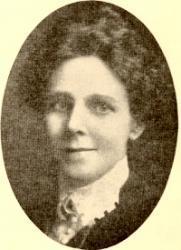
Civilla D. Martin

1866 - 1948 Topics: Comfort and Assurance; God Providence and Goodness of; Year A Epiphany 8; Year B Proper 24; Year C Lent 1; Year C Proper 21; Year C Proper 28 Author of "Be Not Dismayed (God Will Take Care of You)" in The New Century Hymnal Martin, Civilla Durfee (Jordan Falls, Nova Scotia, August 21, 1866--March 9, 1948, Atlanta, Georgia). Daughter of James N. and Irene (Harding) Holden. She married Rev. John F. Geddes, Congregational minister of Coventryvilee, N.Y. at Jordan Falls Methodist Church, Shelbourne Co., Nova Scotia, on May 19, 1891. There is thus far no information about their marriage and its end. After several years of teaching school, she married Walter Stillman Martin, a Baptist minister, and traveled with him in evangelistic work. However, because of frail health, she was compelled to remain home much of the time. In 1916, they became members of the Christian Church (Disciples of Christ). They had one son, A.G. Martin. In her writing, she used only her initials, "C.D." rather than her full name of that of her composer-husband. She is reputed to have written several hundred hymns and religious songs. Her first one, "God Will Take Care of You," written in 1904 became world-famous. Her husband wrote the music for this and many of her other hymns. "His Eye is on the Sparrow" written in 1906 and set to music by Charles H. Gabriel, has also received wide acclaim. In addition to the above, "Like As A Father," "A Welcome for Me," and "The Blood Will Never Lose Its Power" are among her better-known hymns. Her husband and collaborator, W.S. Martin (1862-1935) preceded her in death. For the last 29 years of her life, she made her home in Atlanta, Georgia, where she was a member of the First Christian Church. Her funeral was held on March 10, 1948 at Spring Hill and the interment was in the West View Cemetery in Atlanta. --Carlton C. Buck, DNAH Archives and email from Rev. Lester M. Settle (Glenholme, Nova Scotia) to Mary Louise VanDyke 18 September 2008, DNAH Archives.

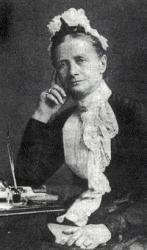
Cecil Frances Alexander

1818 - 1895 Topics: God Creation and Providence; Beauty; Choruses and Refrains; Creation; God Adoration and Praise; God Creator; God Works; Life; Nature; Nurture; Praise; Proclamation; Providence; Responses Antiphonal; Seasons Changing; Testimony; Thankfulness; Trust; Worship; Christmas 1 Year A; Epiphany 8 Year A; Trinity Sunday Year A; Proper 22 Year A; Advent 4 Year B; Proper 5 Year B; Proper 23 Year B; Thanksgiving Year B; Advent 3 Year C Author of "All Things Bright and Beautiful" in Voices United As a small girl, Cecil Frances Humphries (b. Redcross, County Wicklow, Ireland, 1818; Londonderry, Ireland, 1895) wrote poetry in her school's journal. In 1850 she married Rev. William Alexander, who later became the Anglican primate (chief bishop) of Ireland. She showed her concern for disadvantaged people by traveling many miles each day to visit the sick and the poor, providing food, warm clothes, and medical supplies. She and her sister also founded a school for the deaf. Alexander was strongly influenced by the Oxford Movement and by John Keble's Christian Year. Her first book of poetry, Verses for Seasons, was a "Christian Year" for children. She wrote hymns based on the Apostles' Creed, baptism, the Lord's Supper, the Ten Commandments, and prayer, writing in simple language for children. Her more than four hundred hymn texts were published in Verses from the Holy Scripture (1846), Hymns for Little Children (1848), and Hymns Descriptive and Devotional ( 1858). Bert Polman ================== Alexander, Cecil Frances, née Humphreys, second daughter of the late Major John Humphreys, Miltown House, co. Tyrone, Ireland, b. 1823, and married in 1850 to the Rt. Rev. W. Alexander, D.D., Bishop of Derry and Raphoe. Mrs. Alexander's hymns and poems number nearly 400. They are mostly for children, and were published in her Verses for Holy Seasons, with Preface by Dr. Hook, 1846; Poems on Subjects in the Old Testament, pt. i. 1854, pt. ii. 1857; Narrative Hymns for Village Schools, 1853; Hymns for Little Children, 1848; Hymns Descriptive and Devotional, 1858; The Legend of the Golden Prayers 1859; Moral Songs, N.B.; The Lord of the Forest and his Vassals, an Allegory, &c.; or contributed to the Lyra Anglicana, the S.P.C.K. Psalms and Hymns, Hymns Ancient & Modern, and other collections. Some of the narrative hymns are rather heavy, and not a few of the descriptive are dull, but a large number remain which have won their way to the hearts of the young, and found a home there. Such hymns as "In Nazareth in olden time," "All things bright and beautiful," "Once in Royal David's city," "There is a green hill far away," "Jesus calls us o'er the tumult," "The roseate hues of early dawn," and others that might be named, are deservedly popular and are in most extensive use. Mrs. Alexander has also written hymns of a more elaborate character; but it is as a writer for children that she has excelled. - John Julian, Dictionary of Hymnology (1907) =============== Alexander, Cecil F., née Humphreys, p. 38, ii. Additional hymns to those already noted in this Dictionary are in common use:— 1. Christ has ascended up again. (1853.) Ascension. 2. His are the thousand sparkling rills. (1875.) Seven Words on the Cross (Fifth Word). 3. How good is the Almighty God. (1S48.) God, the Father. 4. In [a] the rich man's garden. (1853.) Easter Eve. 5. It was early in the morning. (1853.) Easter Day. 6. So be it, Lord; the prayers are prayed. (1848.) Trust in God. 7. Saw you never in the twilight? (1853.) Epiphany. 8. Still bright and blue doth Jordan flow. (1853.) Baptism of Our Lord. 9. The angels stand around Thy throne. (1848.) Submission to the Will of God. 10. The saints of God are holy men. (1848.) Communion of Saints. 11. There is one Way and only one. (1875.) SS. Philip and James. 12. Up in heaven, up in heaven. (1848.) Ascension. 13. We are little Christian children. (1848.) Holy Trinity. 14. We were washed in holy water. (1848.) Holy Baptism. 15. When of old the Jewish mothers. (1853.) Christ's Invitation to Children. 16. Within the Churchyard side by side. (1848.) Burial. Of the above hymns those dated 1848 are from Mrs. Alexander's Hymns for Little Children; those dated 1853, from Narrative Hymns, and those dated 1875 from the 1875 edition of Hymns Ancient & Modern. Several new hymns by Mrs. Alexander are included in the 1891 Draft Appendix to the Irish Church Hymnal. --John Julian, Dictionary of Hymnology, Appendix, Part II (1907) ============= Alexander, Cecil F. , p. 38, ii. Mrs. Alexander died at Londonderry, Oct. 12, 1895. A number of her later hymns are in her Poems, 1896, which were edited by Archbishop Alexander. --John Julian, Dictionary of Hymnology, New Supplement (1907) See also in:Hymn Writers of the Church

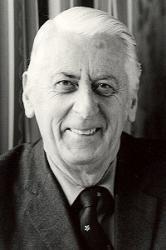
Fred Pratt Green

1903 - 2000 Topics: The Church at Worship Special Days, Seasons, Occasions: Praise of God through Music; Adoration and Praise; Arts and Literature; Arts and Literature; Christian Experience; Church Anniversaries; Creation; Creativity; God Adoration and Praise; Hallelujah; Music and Singing; Opening Hymns; Service Music Sending Forth/Commissioning; Proper 5 Year A; Easter 5 Year B; Proper 5 Year B; Proper 15 Year B; Christmas 1 Year C; Epiphany 8 Year C Author of "When in Our Music God Is Glorified" in Voices United The name of the Rev. F. Pratt Green is one of the best-known of the contemporary school of hymnwriters in the British Isles. His name and writings appear in practically every new hymnal and "hymn supplement" wherever English is spoken and sung. And now they are appearing in American hymnals, poetry magazines, and anthologies. Mr. Green was born in Liverpool, England, in 1903. Ordained in the British Methodist ministry, he has been pastor and district superintendent in Brighton and York, and now served in Norwich. There he continued to write new hymns "that fill the gap between the hymns of the first part of this century and the 'far-out' compositions that have crowded into some churches in the last decade or more." --Seven New Hymns of Hope , 1971. Used by permission.

Edward Mote

1797 - 1874 Topics: Comfort and Assurance; Faith and Aspiration; Hope; Year A Epiphany 7; Year A Epiphany 9; Year A Proper 4; Year C Epiphany 8 Author of "My Hope Is Built on Nothing Less" in The New Century Hymnal Mote, Edward, was born in Upper Thames Street, London, Jan. 21, 1797. Through the preaching of the Rev. J. Hyatt, of Tottenham Court Road Chapel, he underwent a great spiritual change; and ultimately he became a Baptist minister. For the last 26 years of his life he was pastor at Horsham, Sussex, where he died Nov. 13, 1874. Mr. Mote published several small pamphlets; and also:- Hymns of Praise. A New Selection of Gospel Hymns, combining all the Excellencies of our spiritual Poets, with many Originals. By E. Mote. London. J. Nichols, 1836. The Originals number nearly 100. Concerning the authorship of one of these original hymns much uncertainty has existed. The hymn is:— 1. Nor earth, nor hell my soul can move. [Jesus All in All.] In 6 stanzas of 4 lines, with a refrain. Mr. Mote's explanation, communicated to the Gospel Herald, is:— "One morning it came into my mind as I went to labour, to write an hymn on the ‘Gracious Experience of a Christian.' As I went up Holborn I had the chorus, ‘On Christ the solid Rock I stand, All other ground is sinking sand.’ In the day I had four first verses complete, and wrote them off. On the Sabbath following I met brother King as I came out of Lisle Street Meeting . . . who informed me that his wife was very ill, and asked me to call and see her. I had an early tea, and called afterwards. He said that it was his usual custom to sing a hymn, read a portion, and engage in prayer, before he went to meeting. He looked for his hymnbook but could find it nowhere. I said, ‘I have some verses in my pocket; if he liked, we would sing them.' We did; and his wife enjoyed them so much, that after service he asked me, as a favour, to leave a copy of them for his wife. 1 went home, and by the fireside composed the last two verses, wrote the whole off, and took them to sister King. . . As these verses so met the dying woman's case, my attention to them was the more arrested, and I had a thousand printed for distribution. I sent one to the Spiritual Magazine, without my initials, which appeared some time after this. Brother Rees, of Crown Street, Soho, brought out an edition of hymns [1836], and this hymn was in it. David Denham introduced it [1837] with Rees's name, and others after... . Your inserting this brief outline may in future shield me from the charge of stealth, and be a vindication of truthfulness in my connection with the Church of God." The form in which the hymn is usually found is:— 2. My hope is built on nothing less (st. ii.), sometimes in 4 stanzas, and at others in 5 st., and usually without the refrain. The original in the author's Hymns of Praise, 1836, is No. 465, and entitled, "The immutable Basis of a Sinner's hope." Bishop Bickersteth calls it a "grand hymn of faith." It dates circa 1834, and is in extensive use. [Rev. W. R. Stevenson, M.A.] --John Julian, Dictionary of Hymnology (1907)

Chas. H. Gabriel

1856 - 1932 Person Name: Charles H. Gabriel Topics: Eternal Life; Faith and Aspiration; Struggle and Conflict; Year A Epiphany 8; Year B Epiphany 6; Year C Proper 27 Composer of "HIGHER GROUND" in The New Century Hymnal Pseudonyms: C. D. Emerson, Charlotte G. Homer, S. B. Jackson, A. W. Lawrence, Jennie Ree ============= For the first seventeen years of his life Charles Hutchinson Gabriel (b. Wilton, IA, 1856; d. Los Angeles, CA, 1932) lived on an Iowa farm, where friends and neighbors often gathered to sing. Gabriel accompanied them on the family reed organ he had taught himself to play. At the age of sixteen he began teaching singing in schools (following in his father's footsteps) and soon was acclaimed as a fine teacher and composer. He moved to California in 1887 and served as Sunday school music director at the Grace Methodist Church in San Francisco. After moving to Chicago in 1892, Gabriel edited numerous collections of anthems, cantatas, and a large number of songbooks for the Homer Rodeheaver, Hope, and E. O. Excell publishing companies. He composed hundreds of tunes and texts, at times using pseudonyms such as Charlotte G. Homer. The total number of his compositions is estimated at about seven thousand. Gabriel's gospel songs became widely circulated through the Billy Sunday­-Homer Rodeheaver urban crusades. Bert Polman

Pages


Export as CSV
It looks like you are using an ad-blocker. Ad revenue helps keep us running. Please consider white-listing Hymnary.org or getting Hymnary Pro to eliminate ads entirely and help support Hymnary.org.