You help make Hymnary.org possible. More than 10 million people from 200+ countries found hymns, liturgical resources and encouragement on Hymnary.org in 2025, including you. Every visit affirms the global impact of this ministry.

If Hymnary has been meaningful to you this year, would you take a moment today to help sustain it? A gift of any size—paired with a note of encouragement if you wish—directly supports the server costs, research work and curation that keep this resource freely available to the world.

Give securely online today, or mail a check to:
Hymnary.org
Calvin University
3201 Burton Street SE
Grand Rapids, MI 49546

Thank you for your partnership, and may the hope of Advent fill your heart.

Person Results

Topics:transfiguration
In:people

Planning worship? Check out our sister site, ZeteoSearch.org, for 20+ additional resources related to your search.
Showing 81 - 90 of 400Results Per Page: 102050

Theodulf, Bishop of Orléans

750 - 821 Person Name: Theodulph of Orleans, c. 760-821 Topics: Transfiguration of the Lord Author of "All Glory, Laud, and Honor (A Ti Honor y Gloria)" in Oramos Cantando = We Pray In Song Theodulph of Orleans appears to have been a native of Italy. He was brought to France by Charles the Great, perhaps when Charles returned from Italy in 781. He became Bishop of Orleans about 785, and soon afterwards also Abbot of Fleury. After the death of Charles he continued for some time on friendly terms with the Emperor Louis, but, falling under suspicion of being concerned in the plot in favour of Bernard of Italy, was imprisoned in 818, at Angers, where he seems to have died in 821, apparently on Sep. 18. There is a full and interesting sketch of his life and works in the Dictionary of Chr. Biog., iii., pp. 983-989. See also Potthast's Biblical History, Medii Aevi, 1896, vol. ii., p. 1058. The best and most recent edition of his Carmina is in vol. i., Berlin, 1881, of the Poetae Latini Aevi Carolini, which includes his famous "Gloria, laus et honor," p. 426, i. [Rev. James Mearns, M.A.] --John Julian, Dictionary of Hymnology, New Supplement (1907)

Pablo D. Sosa

1933 - 2020 Person Name: Pablo Sosa Topics: Christian Year Transfiguration Translator (English) of "If You Only Had Faith (Si tuvieras fe)" in Glory to God Pablo Sosa (b. 1933 - d. 2020) grew up and was educated in Argentina, the U.S. (Westminster Choir College), and Germany. For years he pastored a large Methodist congregation in Buenos Aires, Argentina while composing songs, leading choirs, editing hymnals, producing religious broadcasts, and teaching liturgy and hymnology at a seminary. Meanwhile, life in Argentina pushed him to question his assumptions about what’s best for congregational singing. During Argentina’s “dirty war,” two young women from his church were disappeared, possibly for working among the poor. As Catholic and Protestant churches hesitated whether to speak out, remain silent, or support the government, many people lost faith. Economic meltdown after the war plunged many middle-class Argentinians into poverty. Sosa’s growing social awareness widened his vision for “lifting up hope with a song.” He often describes worship as “the fiesta of the faithful,” where all are welcome and all music is seen as “part of the ‘song of the earth,’ which answers the psalmist’s call ‘Sing joyfully to God, all the earth!’ (Psalm 98:4).” Whether in his home church, Iglesia Evangélica Metodista La Tercera (Third Methodist Church) in Buenos Aires, or at churches or conferences around the world, he urges people, “Put your body into worship!” And he reminds them of the biblical connection between justice and worship. CICW Website Bio (http://www.calvin.edu/worship)

William Walsham How

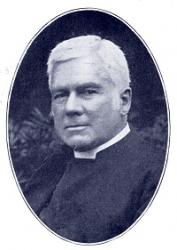
1823 - 1897 Person Name: Bishop W. Walsham How Topics: Saints' Days and Other Holy Days The Transfiguration of Our Lord, August 6 Author of "Upon the holy mount they stood" in The Book of Common Praise William W. How (b. Shrewsbury, Shropshire, England, 1823; d. Leenane, County Mayo, Ireland, 1897) studied at Wadham College, Oxford, and Durham University and was ordained in the Church of England in 1847. He served various congregations and became Suffragan Bishop in east London in 1879 and Bishop of Wakefield in 1888. Called both the "poor man's bishop" and "the children's bishop," How was known for his work among the destitute in the London slums and among the factory workers in west Yorkshire. He wrote a number of theological works about controversies surrounding the Oxford Movement and attempted to reconcile biblical creation with the theory of evolution. He was joint editor of Psalms and Hymns (1854) and Church Hymns (1871). While rector in Whittington, How wrote some sixty hymns, including many for chil­dren. His collected Poems and Hymns were published in 1886. Bert Polman =============== How, William Walsham, D.D., son of William Wybergh How, Solicitor, Shrewsbury, was born Dec. 13, 1823, at Shrewsbury, and educated at Shrewsbury School and Wadham College, Oxford (B.A. 1845). Taking Holy Orders in 1846, he became successively Curate of St. George's, Kidderminster, 1846; and of Holy Cross, Shrewsbury, 1848. In 1851 he was preferred to the Rectory of Whittington, Diocese of St. Asaph, becoming Rural Dean in 1853, and Hon. Canon of the Cathedral in 1860. In 1879 he was appointed Rector of St. Andrew's Undershaft, London, and was consecrated Suffragan Bishop for East London, under the title of the Bishop of Bedford, and in 1888 Bishop of Wakefield. Bishop How is the author of the Society for Promoting Christian Knowledge Commentary on the Four Gospels; Plain Words , Four Series; Plain Words for Children; Pastor in Parochia; Lectures on Pastoral Work; Three All Saints Summers, and Other Poems , and numerous Sermons , &c. In 1854 was published Psalms and Hymns, Compiled by the Rev. Thomas Baker Morrell, M.A., . . . and the Rev. William Walsham How, M.A. This was republished in an enlarged form in 1864, and to it was added a Supplement in 1867. To this collection Bishop How contributed several hymns, and also to the S. P. C. K. Church Hymns , of which he was joint editor, in 1871. The Bishop's hymns in common use amount in all to nearly sixty. Combining pure rhythm with great directness and simplicity, Bishop How's compositions arrest attention more through a comprehensive grasp of the subject and the unexpected light thrown upon and warmth infused into facia and details usually shunned by the poet, than through glowing imagery and impassioned rhetoric. He has painted lovely images woven with tender thoughts, but these are few, and found in his least appreciated work. Those compositions which have laid the firmest hold upon the Church, are simple, unadorned, but enthusiastically practical hymns, the most popular of which, "O Jesu, Thou art standing"; "For all the Saints who from their labours rest," and "We give Thee but Thine own," have attained to a foremost rank. His adaptations from other writers as in the case from Bishop Ken, "Behold, the Master passeth by," are good, and his Children's hymns are useful and popular. Without any claims to rank as a poet, in the sense in which Cowper and Montgomery were poets, he has sung us songs which will probably outlive all his other literary works. The more important of Bishop How's hymns, including those already named, and "Lord, Thy children guide and keep"; "O Word of God Incarnate"; "This day at Thy creating word"; "Who is this so weak and helpless"; and others which have some special history or feature of interest, are annotated under their respective first lines. The following are also in common use:— i. From Psalms & Hymns, 1854. 1. Before Thine awful presence, Lord. Confirmation. 2. Jesus, Name of wondrous love [priceless worth]. Circumcision. The Name Jesus . 3. Lord Jesus, when we stand afar. Passiontide. 4. O blessing rich, for sons of men. Members of Christ. 5. 0 Lord of Hosts, the earth is Thine. In time of War. 6. O Lord, Who in Thy wondrous love. Advent. ii. From Psalms & Hymns, enlarged, 1864. 7. Lord, this day Thy children meet. Sunday School Anniversary. iii. From Supplement to the Psalms & Hymns, 1867. 8. Hope of hopes and joy of joys. Resurrection. 9. 0 daughters blest of Galilee. For Associations of Women. 10. O happy feet that tread. Public Worship. 11. With trembling awe the chosen three. Transfiguration. iv. From Parish Magazine, 1871, and Church Hymns, 1871. 12. O Jesu, crucified for man. Friday. 13. Yesterday, with worship blest. Monday. v. From the S. P. C. K. Church Hymns. 1871. 14. Bowed low in supplication. For the Parish. 15. Great Gabriel sped on wings of light. Annunciation, of the Blessed Virgin Mary. 16. O blest was he, whose earlier skill. St. Luke. 17. O God, enshrined in dazzling light. Omnipresence. Divine Worship . 18. O heavenly Fount of Light and Love. Witsuntide. 19. O Lord, it is a blessed thing. Weekdays. 20. 0 One with God the Father. Epiphany. 21. O Thou through suffering perfect made. Hospitals. 22. Rejoice, ye sons of men. Purification of the B. V. M. 23. Summer suns are glowing. Summer. 24. The year is swiftly waning. Autumn. 25. Thou art the Christ, O Lord. St. Peter. 26. To Thee our God we fly. National Hymn. 27. Upon the holy Mount they stood. Transfiguration and Church Guilds. 28. We praise Thy grace, 0 Saviour. St. Mark. vi. From the S. P. C. K. Children's Hymns, 1872. 29. Behold a little child. Jesus the Child's Example. 30. Come, praise your Lord and Saviour. Children's Praises. 31. It is a thing most wonderful. Sunday School Anniversary. 32. On wings of living light. Easter. Bishop How's hymns and sacred and secular pieces were collected and published as Poems and Hymns, 1886. The Hymns, 54 in all, are also published separately. He d. Aug. 10, 1897. --John Julian, Dictionary of Hymnology (1907) =================== How, W. W., p. 540, i. He died Aug. 10, 1897. His Memoir, by F. D. How, was published in 1898. --John Julian, Dictionary of Hymnology, New Supplement (1907)

Ken Medema

b. 1943 Author of "We Pray for Peace" Ken Medema (b. Grand Rapids, Michigan, 1943) is a song writer, composer, recording artist, and story-teller through music. Blind from birth, Ken began playing the piano at age five and studied classical music by reading Braille. He graduated from Grand Rapids Christian High School and studied music therapy at Michigan State University in Lansing, Michigan. As a music therapist in both Indiana and New Jersey, he began writing songs for hurting teenagers, an experience that helped to launch a career of writing songs on Christian life that has taken him to venues large and small all over North America and beyond. He responds to what he hears and sees in his heart at particular events, often improvising songs on the spot, offering compassion, honesty and desire for integrity in both worship and life. In 1985 he began Brier Patch Music, which continues to publish his music and recordings, including 26 CDs. Bert Polman

John Newton

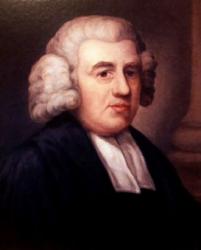
1725 - 1807 Topics: Church Fellowship and Unity; Church Her Fellowship and Unity; Fellowship with Men Author of "Glorious Things of Thee Are Spoken" John Newton (b. London, England, 1725; d. London, 1807) was born into a Christian home, but his godly mother died when he was seven, and he joined his father at sea when he was eleven. His licentious and tumul­tuous sailing life included a flogging for attempted desertion from the Royal Navy and captivity by a slave trader in West Africa. After his escape he himself became the captain of a slave ship. Several factors contributed to Newton's conversion: a near-drowning in 1748, the piety of his friend Mary Catlett, (whom he married in 1750), and his reading of Thomas à Kempis' Imitation of Christ. In 1754 he gave up the slave trade and, in association with William Wilberforce, eventually became an ardent abolitionist. After becoming a tide-surveyor in Liverpool, England, Newton came under the influence of George Whitefield and John and Charles Wesley and began to study for the ministry. He was ordained in the Church of England and served in Olney (1764-1780) and St. Mary Woolnoth, London (1780-1807). His legacy to the Christian church includes his hymns as well as his collaboration with William Cowper (PHH 434) in publishing Olney Hymns (1779), to which Newton contributed 280 hymns, including “Amazing Grace.” Bert Polman ================== Newton, John, who was born in London, July 24, 1725, and died there Dec. 21, 1807, occupied an unique position among the founders of the Evangelical School, due as much to the romance of his young life and the striking history of his conversion, as to his force of character. His mother, a pious Dissenter, stored his childish mind with Scripture, but died when he was seven years old. At the age of eleven, after two years' schooling, during which he learned the rudiments of Latin, he went to sea with his father. His life at sea teems with wonderful escapes, vivid dreams, and sailor recklessness. He grew into an abandoned and godless sailor. The religious fits of his boyhood changed into settled infidelity, through the study of Shaftesbury and the instruction of one of his comrades. Disappointing repeatedly the plans of his father, he was flogged as a deserter from the navy, and for fifteen months lived, half-starved and ill-treated, in abject degradation under a slave-dealer in Africa. The one restraining influence of his life was his faithful love for his future wife, Mary Catlett, formed when he was seventeen, and she only in her fourteenth year. A chance reading of Thomas à Kempis sowed the seed of his conversion; which quickened under the awful contemplations of a night spent in steering a water-logged vessel in the face of apparent death (1748). He was then twenty-three. The six following years, during which he commanded a slave ship, matured his Christian belief. Nine years more, spent chiefly at Liverpool, in intercourse with Whitefield, Wesley, and Nonconformists, in the study of Hebrew and Greek, in exercises of devotion and occasional preaching among the Dissenters, elapsed before his ordination to the curacy of Olney, Bucks (1764). The Olney period was the most fruitful of his life. His zeal in pastoral visiting, preaching and prayer-meetings was unwearied. He formed his lifelong friendship with Cowper, and became the spiritual father of Scott the commentator. At Olney his best works—-Omicron's Letters (1774); Olney Hymns (1779); Cardiphonia, written from Olney, though published 1781—were composed. As rector of St. Mary Woolnoth, London, in the centre of the Evangelical movement (1780-1807) his zeal was as ardent as before. In 1805, when no longer able to read his text, his reply when pressed to discontinue preaching, was, "What, shall the old African blasphemer stop while he can speak!" The story of his sins and his conversion, published by himself, and the subject of lifelong allusion, was the base of his influence; but it would have been little but for the vigour of his mind (shown even in Africa by his reading Euclid drawing its figures on the sand), his warm heart, candour, tolerance, and piety. These qualities gained him the friendship of Hannah More, Cecil, Wilberforce, and others; and his renown as a guide in experimental religion made him the centre of a host of inquirers, with whom he maintained patient, loving, and generally judicious correspondence, of which a monument remains in the often beautiful letters of Cardiphonia. As a hymnwriter, Montgomery says that he was distanced by Cowper. But Lord Selborne's contrast of the "manliness" of Newton and the "tenderness" of Cowper is far juster. A comparison of the hymns of both in The Book of Praise will show no great inequality between them. Amid much that is bald, tame, and matter-of-fact, his rich acquaintance with Scripture, knowledge of the heart, directness and force, and a certain sailor imagination, tell strongly. The one splendid hymn of praise, "Glorious things of thee are spoken," in the Olney collection, is his. "One there is above all others" has a depth of realizing love, sustained excellence of expression, and ease of development. "How sweet the name of Jesus sounds" is in Scriptural richness superior, and in structure, cadence, and almost tenderness, equal to Cowper's "Oh! for a closer walk with God." The most characteristic hymns are those which depict in the language of intense humiliation his mourning for the abiding sins of his regenerate life, and the sense of the withdrawal of God's face, coincident with the never-failing conviction of acceptance in The Beloved. The feeling may be seen in the speeches, writings, and diaries of his whole life. [Rev. H. Leigh Bennett, M.A.] A large number of Newton's hymns have some personal history connected with them, or were associated with circumstances of importance. These are annotated under their respective first lines. Of the rest, the known history of which is confined to the fact that they appeared in the Olney Hymns, 1779, the following are in common use:— 1. Be still, my heart, these anxious cares. Conflict. 2. Begone, unbelief, my Saviour is near. Trust. 3. By the poor widow's oil and meal. Providence. 4. Chief Shepherd of Thy chosen sheep. On behalf of Ministers. 5. Darkness overspreads us here. Hope. 6. Does the Gospel-word proclaim. Rest in Christ. 7. Fix my heart and eyes on Thine. True Happiness. 8. From Egypt lately freed. The Pilgrim's Song. 9. He Who on earth as man was Known. Christ the Rock. 10. How blest are they to whom the Lord. Gospel Privileges. 11. How blest the righteous are. Death of the Righteous. 12. How lost was my [our] condition. Christ the Physician. 13. How tedious and tasteless the hours. Fellowship with Christ. 14. How welcome to the saints [soul] when pressed. Sunday. 15. Hungry, and faint, and poor. Before Sermon. 16. In mercy, not in wrath, rebuke. Pleading for Mercy. 17. In themselves, as weak as worms. Power of Prayer. 18. Incarnate God, the soul that knows. The Believer's Safety. 19. Jesus, Who bought us with His blood. The God of Israel. "Teach us, 0 Lord, aright to plead," is from this hymn. 20. Joy is a [the] fruit that will not grow. Joy. 21. Let hearts and tongues unite. Close of the Year. From this "Now, through another year," is taken. 22. Let us adore the grace that seeks. New Year. 23. Mary to her [the] Saviour's tomb. Easter. 24. Mercy, 0 Thou Son of David. Blind Bartimeus. 25. My harp untun'd and laid aside. Hoping for a Revival. From this "While I to grief my soul gave way" is taken. 26. Nay, I cannot let thee go. Prayer. Sometimes, "Lord, I cannot let Thee go." 27. Now may He Who from the dead. After Sermon. 28. 0 happy they who know the Lord, With whom He deigns to dwell. Gospel Privilege. 29. O Lord, how vile am I. Lent. 30. On man in His own Image made. Adam. 31. 0 speak that gracious word again. Peace through Pardon. 32. Our Lord, Who knows full well. The Importunate Widow. Sometimes altered to "Jesus, Who knows full well," and again, "The Lord, Who truly knows." 33. Physician of my sin-sick soul. Lent. 34. Pleasing spring again is here. Spring. 35. Poor, weak, and worthless, though I am. Jesus the Friend. 36. Prepare a thankful song. Praise to Jesus. 37. Refreshed by the bread and wine. Holy Communion. Sometimes given as "Refreshed by sacred bread and wine." 38. Rejoice, believer, in the Lord. Sometimes “Let us rejoice in Christ the Lord." Perseverance. 39. Salvation, what a glorious plan. Salvation. 40. Saviour, shine and cheer my soul. Trust in Jesus. The cento "Once I thought my mountain strong," is from this hymn. 41. Saviour, visit Thy plantation. Prayer for the Church. 42. See another year [week] is gone. Uncertainty of Life. 43. See the corn again in ear. Harvest. 44. Sinner, art thou still secure? Preparation for the Future. 45. Sinners, hear the [thy] Saviour's call. Invitation. 46. Sovereign grace has power alone. The two Malefactors. 47. Stop, poor sinner, stop and think. Caution and Alarm. 48. Sweeter sounds than music knows. Christmas. 49. Sweet was the time when first I felt. Joy in Believing. 50. Ten thousand talents once I owed. Forgiveness and Peace. 51. The grass and flowers, which clothe the field. Hay-time. 52. The peace which God alone reveals. Close of Service. 53. Thy promise, Lord, and Thy command. Before Sermon. 54. Time, by moments, steals away. The New Year. 55. To Thee our wants are known. Close of Divine Service. 56. We seek a rest beyond the skies. Heaven anticipated. 57. When any turn from Zion's way. Jesus only. 58. When Israel, by divine command. God, the Guide and Sustainer of Life. 59. With Israel's God who can compare? After Sermon. 60. Yes, since God Himself has said it. Confidence. 61. Zion, the city of our God. Journeying Zionward. -- John Julian, Dictionary of Hymnology (1907) ================= Newton, J., p. 803, i. Another hymn in common use from the Olney Hymns, 1779, is "Let me dwell on Golgotha" (Holy Communion). --John Julian, Dictionary of Hymnology, Appendix, Part II (1907) ----- John Newton was born in London, July 24, 1725. His mother died when he was seven years old. In his eleventh year he accompanied his father, a sea captain, on a voyage. For several years his life was one of dissipation and crime. He was disgraced while in the navy. Afterwards he engaged in the slave trade. Returning to England in 1748, the vessel was nearly wrecked in a storm. This peril forced solemn reflection upon him, and from that time he was a changed man. It was six years, however, before he relinquished the slave trade, which was not then regarded as an unlawful occupation. But in 1754, he gave up sea-faring life, and holding some favourable civil position, began also religious work. In 1764, in his thirty-ninth year, he entered upon a regular ministry as the Curate of Olney. In this position he had intimate intercourse with Cowper, and with him produced the "Olney Hymns." In 1779, Newton became Rector of S. Mary Woolnoth, in London, in which position he became more widely known. It was here he died, Dec. 21, 1807, His published works are quite numerous, consisting of sermons, letters, devotional aids, and hymns. He calls his hymns "The fruit and expression of his own experience." --Annotations of the Hymnal, Charles Hutchins, M.A. 1872 See also in: Hymn Writers of the Church =======================

George Herbert

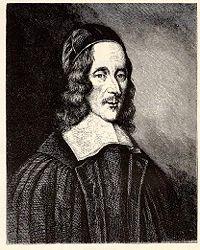
1593 - 1633 Person Name: Geroge Herbert Topics: The Transfiguration Evening Prayer Closing Author of "Let all the world in ev'ry corner sing" in The Hymnal of the Protestant Episcopal Church in the United States of America 1940 Herbert, George, M.A., the fifth son of Richard Herbert and Magdalen, the daughter of Sir Richard Newport, was born at his father's seat, Montgomery Castle, April 3, 1593. He was educated at Westminster School, and at Trinity College, Cambridge, graduating B.A. in 1611. On March 15, 1615, he became Major Fellow of the College, M.A. the same year, and in 1619 Orator for the University. Favoured by James I., intimate with Lord Bacon, Bishop Andrewes, and other men of influence, and encouraged in other ways, his hopes of Court preferment were somewhat bright until they were dispelled by the deaths of the Duke of Richmond, the Marquis of Hamilton, and then of King James himself. Retiring into Kent, he formed the resolution of taking Holy Orders. He was appointed by the Bishop of Lincoln to the Prebend of Lcighton Ecclesia and to the living of Leighton Bromswold, Hunts, July 15, 1626. He remained until 1629, when an attack of ague obliged him to remove to his brother's, house at Woodford, Essex. Not improving in health at Woodford, he removed to Dantsey, in Wiltshire, and then as Rector to Bemerton, to which he was inducted, April 26, 1630, where he died Feb. 1632. The entry in the register of Bemerton is "Mr. George Herbert, Esq., Parson of Foughleston and Bemerton, was buried 3 day of March 1632." His life, by Izaak Walton, is well known; another Memoir, by Barnabas Oley, is forgotten. Herbert's prose work, Priest to the Temple, appeared several years after his death: but The Temple, by which he is best known, he delivered to Nicholas Ferrar (q.v.), about three weeks before his death, and authorized him to publish it if he thought fit. This was done iu 1633. The work became popular, and the 13th edition was issued in 1709. It is meditative rather than hymnic in character, and was never intended for use in public worship. In 1697 a selection from The Temple appeared under the title Select Hymns Taken out of Mr. Herbert's Temple & turned into the Common Metre To Be Sung In The Tunes Ordinarily us'd in Churches. London, Parkhurst, 1697. In 1739, J. & C. Wesley made a much more successful attempt to introduce his hymns into public worship by inserting over 40 in a much-altered form in their Hymns & Sacred Poems. As some few of these came into their collection of Psalms & Hymns, 1741, revised 1743, they were long sung by the Methodists, but do not now form part of the Wesleyan Hymn Book. No further attempt seems to have been made to use the Temple poems as hymns until 1853, when some altered and revised by G. Rawson were given in the Leeds Hymn Book of that year. From that time onward more attention was paid to Herbert alike by Churchmen and Nonconformists, and some of his hymns are now widely accepted. Many editions of his works have been published, the most popular being that of the Rev. Robert Aris Wilmott, Lond., Geo. Routledge & Son, 1857; but Dr. Grosart's privately printed edition issued in his Fuller Worthies Library in 1874, in three volumes, is not only the most complete and correct, but included also his psalms not before reprinted, and several poems from a ms. in the Williams Library, and not before published. The Temple has also been pub¬lished in facsimile by Elliott Stock, 1876, with preface by Dr. Grosart; and in ordinary type, 1882, by Wells Gardner, with preface by J. A. Shorthouse. The quaintness of Herbert's lyrics and the peculiarity of several of their metres have been against their adoption for congregational purposes. The best known are: "Let all the world in every corner sing"; "My stock lies dead, and no increase"; "Throw away Thy rod"; "Sweet day, so cool, so calm"; and "Teach me, my God, and King." [William T. Brooke] --John Julian, Dictionary of Hymnology (1907)

Michel Guimont

b. 1950 Person Name: Michael Guimont Topics: Church Year Transfiguration Composer (stanza) of "[Misericordia, Señor]" in Psalms for All Seasons

W. Baird Ross

1871 - 1950 Person Name: W. Baird Ross, 1871-1950 Topics: Church Year Transfiguration Composer (descant) of "CRIMOND" in Psalms for All Seasons

James Minchin

Topics: Christian Year Transfiguration Translator of "When Twilight Comes" in Glory to God

Kathleen Thomerson

1934 - 2025 Person Name: Kathleen Thomerson, b. 1934 Topics: Transfiguration of Our Lord, The Author of "I Want to Walk as a Child of the Light" in With One Voice Kathleen Thomerson is Organist and Music Director at Mt. Olive Lutheran Church in Austin, Texas. She was born in Tennessee and grew up in Mississippi, California, and Texas. College music study was at the Universities of Colorado and Texas, the Flemish Royal Conservatory in Antwerp, and privately in Paris. Before retirement in Austin, she lived in Collinsville, Illinois, when her husband was a biology professor at Southern Illinois University at Edwardsville. Her best-known hymn text is "I Want to Walk as a Child of the Light," set to her hymn tune HOUSTON. --www.morningstarmusic.com

Pages


Export as CSV
It looks like you are using an ad-blocker. Ad revenue helps keep us running. Please consider white-listing Hymnary.org or getting Hymnary Pro to eliminate ads entirely and help support Hymnary.org.