You help make Hymnary.org possible. More than 10 million people from 200+ countries found hymns, liturgical resources and encouragement on Hymnary.org in 2025, including you. Every visit affirms the global impact of this ministry.

If Hymnary has been meaningful to you this year, would you take a moment today to help sustain it? A gift of any size—paired with a note of encouragement if you wish—directly supports the server costs, research work and curation that keep this resource freely available to the world.

Give securely online today, or mail a check to:
Hymnary.org
Calvin University
3201 Burton Street SE
Grand Rapids, MI 49546

Thank you for your partnership, and may the hope of Advent fill your heart.

Person Results

Topics:works+of+god+
In:people

Planning worship? Check out our sister site, ZeteoSearch.org, for 20+ additional resources related to your search.
Showing 81 - 90 of 692Results Per Page: 102050

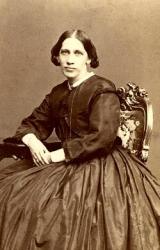
Carolina Sandell

1823 - 1903 Person Name: Carolina V. Sandell Berg Topics: God's Work Providence; Church Security of; God Guardian Author of "Children of the Heavenly Father" in Trinity Hymnal (Rev. ed.) Caroline W. Sandell Berg (b. Froderyd, Sweden, 1832; d. Stockholm, Sweden, 1903), is better known as Lina Sandell, the "Fanny Crosby of Sweden." "Lina" Wilhelmina Sandell Berg was the daughter of a Lutheran pastor to whom she was very close; she wrote hymns partly to cope with the fact that she witnessed his tragic death by drowning. Many of her 650 hymns were used in the revival services of Carl O. Rosenius, and a number of them gained popularity particularly because of the musical settings written by gospel singer Oskar Ahnfelt. Jenny Lind, the famous Swedish soprano, underwrote the cost of publishing a collection of Ahnfelt's music, Andeliga Sänger (1850), which consisted mainly of Berg's hymn texts. Bert Polman

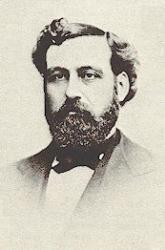
P. P. Bliss

1838 - 1876 Person Name: Philip P. Bliss Topics: Jesus Christ His Atoning Work; Blessed Hope; Christ Lamb of God; Christ Man of Sorrows Author of "Man of Sorrows! What a Name" in Trinity Hymnal (Rev. ed.) Philip P. Bliss (b. Clearfield County, PA, 1838; d. Ashtabula, OH, 1876) left home as a young boy to make a living by working on farms and in lumber camps, all while trying to continue his schooling. He was converted at a revival meeting at age twelve. Bliss became an itinerant music teacher, making house calls on horseback during the winter, and during the summer attending the Normal Academy of Music in Genesco, New York. His first song was published in 1864, and in 1868 Dwight L. Moody advised him to become a singing evangelist. For the last two years of his life Bliss traveled with Major D. W. Whittle and led the music at revival meetings in the Midwest and Southern United States. Bliss and Ira D. Sankey published a popular series of hymn collections entitled Gospel Hymns. The first book of the series, Gospel Songs, was published in 1874. Bliss's tragic death at the age of thirty-eight happened near the end of 1876. Philip P. Bliss and his wife were traveling to Chicago to sing for the evangelistic services led by Daniel W. Whittle at Dwight L. Moody's Tabernacle. But a train wreck and fire en route claimed their lives. Bert Polman ================= Bliss, Philip, b. at Clearfield County, Pennsylvania, July 9, 1838. In 1864 he went to Chicago in the employ of Dr. George F. Root, the musician, where he was engaged in conducting musical Institutes, and in composing Sunday School melodies. Originally a Methodist, he became, about 1871, a choirman of the First Congregational Church, Chicago, and the Superintendent of its Sunday Schools. In 1874 he joined D. W. Whittle in evangelical work. To this cause he gave (although a poor man) the royalty of his Gospel Songs, which was worth some thirty thousand dollars. His death was sudden. It occurred in the railway disaster at Ashtabula, Ohio, Dec. 30, 1876. ... Some of his verses have obtained wide popularity in most English-speaking countries. The more widely known, and specially those which are found in collections in use in G. Britain, are in the following American works:— i. The Prize, 1870. 1. I should like to die. Death anticipated. This is one of his earliest compositions, and is unworthy of the position it holds. 2. Through the valley of the shadow I must go. Death anticipated. 3. Whosoever heareth, shout, shout the sound. Jesus the Way. Written during the winter of 1869-70 after hearing Mr. H. Moorhouse (from England) preach on St. John iii. 16. ii. The Charm, 1871. 4. Almost persuaded now to believe. Procrastination. This was suggested by the following passage in a sermon by the Rev. Mr. Brundnge, Bliss being present at its delivery:—" He who is almost persuaded is almost saved, but to be almost saved is to be entirely lost." 5. Ho! my comrades! see the signal. Faithfulness. 6. O! Jerusalem, the golden city, bright, &c. Heaven. 7. On what Foundation do [did] you build? Christ the Foundation. iii. The Song Tree, 1872. 8. Light in the darkness, sailor, day is at hand. Safety. This hymn, “The Life-Boat," has attained to great popularity. The incident upon which it is based, that of the rescue of a ship's crew by a life-boat, is given in detail by Mr. Sankey in his Sacred Songs, &c, No. 99 (large ed.). It is sometimes known by its refrain, "Pull for the shore," &c. iv. The Joy, 1873. 9. In me ye may have peace. Peace. 10. To die is gain. Death anticipated. v. Sunshine, 1873. 11. Down life's dark vale we wander. Death anticipated. 12. More holiness give me. For Holiness. 13. Only an armour-bearer. Soldiers of the Cross. 14. Standing by a purpose true. Faithfulness. 15. This loving Saviour stands patiently. Invitation. vi. Gospel Songs, 1874. 16. A long time I wandered. Peace and Joy. 17. Brightly beams our Father's mercy. Mercy. 18. Come, brethren, as we march along. Praise. 19. Free from the law, O happy condition. Redemption. 20. Have you on the Lord believed? Fullness of Grace. This hymn arose out of the following circumstances :—" A vast fortune was left in the hands of a minister for one of his poor parishioners. Fearing that it might be sqmandered if suddenly bestowed upon him, the wise minister sent him a little at a time, with a note saying, “This is thine; use it wisely; there is more to follow.” Hence also the refrain ‘More to follow,’ by which the hymn is known." 21. How much owest thou? Divine Claims. 22. I know not the hour when my Lord will come. Death anticipated. Suggested by reading the book, The Gates Ajar. 23. See the gentle Shepherd standing. The Good Shepherd. 24. Though the way be sometimes dreary. Divine Leading. 25. Will you meet me at the fountain? Fountain of Living Water. The incident out of which this hymn arose is thus stated in The Christian, No. 365, "At the Industrial Exposition at Chicago it was an everyday appointment to meet at the Central Fountain. Mr. P. P. Bliss, whose mind seemed always set on things above, caught up the words, and wrote this hymn, 'Meet me at the Fountain.'" vii. Gospel Hymns, No. 1, 1875. 26. One offer of salvation. The Name of Jesus. 27. Wandering afar from the dwellings of men. The Lepers. viii. The International Lesson Monthly, 1875. 28. Weary gleaner, whence comest thou? Duty. 29. The whole world was lost in the darkness of Sin. Light of the world. 30. Man of sorrows! what a name. Redemption. 31. The Spirit, O sinner, in mercy doth move. Holy Spirit. ix. Gospel Hymns, No. 2, 1876. 32. At the feet of Jesus. The good choice. 33. Come, sing the Gospel's joyful sound. Salvation. 34. Cut it down, cut it down. Justice and Mercy. 35. Do you see the Hebrew captive? Prayer. 36. Hallelujah, He is risen. Easier. Written in the spring of 1876 and first sung by Bliss on Easter afternoon, 1876, in the Court House Square, Augusta, Georgia, to 5900 people. 37. In Zion's rock abiding. Safety. 38. Repeat the story o'er and o'er. Grace and Peace. 39. Tenderly the Shepherd. The Good Shepherd. x. Gospel Hymns, No. 3, 1878. 40. Hear ye the glad good news from heaven. Faith and Salvation. 41. I will sing of my Redeemer. Praise. xi. Gospel Hymns, No. 4, 1881. 42. 'Tis known on earth and heaven too. More about Jesus. xii. Various. 43. Sing over again to me. Words of Life. This appeared in a paper entitled Words of Life, 1874, The following are undated:— 44. March to the battle-field. Duty and Victory. 45. There is sin in the camp. Hinderances. 46. 'Tis the promise of God. Praise. 47. While the silvery moon-beams, fall, New Birth. 48. God is always near me. Omnipresence. Two hymns," I am so glad that our Father in heaven," and " Sowing the seed by the daylight [dawnlight] fair," (sometimes given as " Sowing our seed in the morning fair ") are usually attributed to Mr. Bliss. In his Gospel Songs, Cincinnati, 1874, however, he lays claim to the music only. Mr. Sankey attributes this last to "E. A. Oakey." With the exception of No. 48, these hymns are given in Mr. Sankey's Sacred Songs & Solos, Pts. i. and ii. Their popularity is far beyond their literary merits, and is mainly due to the simple melodies to which they are wedded. As a writer of hymns of this class Mr. Bliss is second only to Mrs. Van Alstyne. Many anecdotes concerning hymns of this class are given in American Evangelists; an Account of their work in England and America, by the Rev. Elias Nason, Boston, U.S., Lathrop & Co., 1877. Mr. Bliss is usually known as "P. P. Bliss." This is found on the title-pages of his collections. On his own authority, however, we are enabled to say that his name originally stood thus : “Philipp Bliss.” Early in life he separated the final p from his Christian name, constituted it a capital P, and thus produced "P. P. Bliss." (For this article we are mainly indebted to Professor F. M. Bird, and Mr. H. P. Main.) -John Julian, Dictionary of Hymnology (1907) ======================== Bliss, Philip , p. 151, i. "Sowing the seed by the daylight fair" is in the Family Treasury , Edinburgh, 1861, pt. i., p. 84. It is said to be by Miss Emily Sullivan Oakey; born at Albany, N. York, Oct. 8, 1829, died May 11, 1883. Note also that Bliss's hymn, No. 43. on p. 150, ii., should read, "Sing them over again to me." --John Julian, Dictionary of Hymnology, Appendix, Part II (1907) ===================== Bliss, P., p. 150, i. Two works have been brought to our notice, since the issue of our first edition of this Dictionary, which concern this author, viz.:— 1. Memoirs of Philip P. Bliss. Edited by D. W. Whittle. Contributions by Rev. E. P. Goodwin, Ira D. Sankey, and Geo. F. Root. Introduction by D. L. Moody. New York, &c.: A. S. Barnes & Co., 1877. 2. My Life and Sacred Songs. By Ira D. Sankey. With an Introduction by Theodore L. Cuyler, D.D). London: Hodder & Stoughton, and Morgan & Scott, 1906. These works have a special interest for those who use I. D. Sankey's Sacred Songs & Solos, and all of P. Bliss's publications. To Mr. Sankey's My Life, &c, we direct special attention for P. Bliss's hymns:— “Do you see the Hebrew captive kneeling?" p. 294. "Down life's dark vale we wander." p. 285. "Ho! my comrades, see the signal." p. 105. "'Tis the promise of God full salvation to give." p. 99. --John Julian, Dictionary of Hymnology, New Supplement (1907)

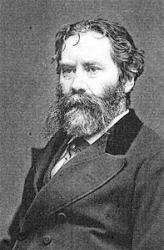
James Russell Lowell

1819 - 1891 Topics: Work; The Kingdom of God on Earth Discipleship and Service; Discipleship and Service; Loyalty and Courage; Social Progress; Young People's Day Author of "Once to every man and nation" in The Hymnal Lowell, James Russell, LL.D., was born at Cambridge, Massachusetts, February 22, 1819; graduated at Harvard College, 1838, and was called to the Bar in 1840. Professor of Modern Languages and Literature (succeeding the Poet Longfellow) in Harvard, 1855; American Minister to Spain, also to England in 1881. He was editor of the Atlantic Monthly, from 1857 to 1862; and of the North American Review from 1863 to 1872. Professor Lowell is the most intellectual of American poets, and first of her art critics and humorists. He has written much admirable moral and sacred poetry, but no hymns. One piece, “Men, whose boast it is that ye" (Against Slavery), is part of an Anti-Slavery poem, and in its present form is found in Hymns of the Spirit, 1864. Part of this is given in Songs for the Sanctuary, N.Y., 1865, as "They are slaves who will not choose.” [Rev. F. M. Bird, M.A.] --John Julian, Dictionary of Hymnology (1907)

Anonymous

Person Name: Unknown Topics: Christ, the Lord Jesus Divinity of; God: His Being, Word and Works God the Son: His Nativity: Christmas Composer of "ADESTE FIDELES" in The Book of Praise In some hymnals, the editors noted that a hymn's author is unknown to them, and so this artificial "person" entry is used to reflect that fact. Obviously, the hymns attributed to "Author Unknown" "Unknown" or "Anonymous" could have been written by many people over a span of many centuries.

César Malan

1787 - 1864 Person Name: Rev. H. A. Cesar Malan, 1787-1864 Topics: Consecration; Good Works; Christ as King; Christ as Lord; Love for Christ; Love for God; Post-Communion; Profession of Faith; Service; Stewardship; Will of God; Witnessing; Christian Work Arranger of "HENDON" in Psalter Hymnal (Red) Rv Henri Abraham Cesar Malan, 1787-1864. Born in Geneva, Switzerland, into a bourgeois family that moved to Switzerland to escape religious persecution during the French Revolution, he attended the university in Marseilles, France, intending to become a businessman. Although having some grounding in religious faith by his mother, he decided to attend the Academy at Geneva (founded by Calvin) in preparation for ministry. He was ordained in 1810, after being appointed a college master (teaching Latin) in 1809. Malan was in accord with the National Church of Geneva as a Unitarian, but the Reveil Movement caused him to become a dissident (evangelical) instead of a proponent of the Reformed Church (believing works, not faith, was what mattered). In 1811 he married (wife’s name not found). They had at least two children (one son was Solomon, referenced below). From 1813 on Malan slowly became an evangelical, after being given an understanding of true salvation through grace (not works) in 1816 by two German Lutherans from Geneva. He became saved upon this realization and was so changed that he burned his prized collection of classical authors and manuscripts. In 1817 he preached around Geneva, and one sermon in particular, “Man only justified by faith alone” created a firestorm and brought him into conflict with religious authorities of the region. From then on he wished to help reform the national church from within, but the forces of the Venerable Company were too strong for him and excluded him from the pulpits and caused his dismissal from his regentsship at the college in 1818. Others in agreement with Malan were Charles Spurgeon, Robert Wilcox, Robert Haldane, and Henry Drummond. In 1820 he built a chapel in his garden and obtained the license of the State for it as a separatist place of worship. He preached in that chapel 43 years. In 1823 he was formally deprived of his status as a minister of the national Church. Various events caused his congregation to diminish over the next few years, and he began long tours of evangelization subsidized by religious friends in his land, Belgium, France, England and Scotland. He often preached to large congregations. Malan also authorized a hymn book, “Chants de Sion” (1841). A strong Calvinist, Malan lost no opportunity to evangelize. On one occasion an old man he visited pulled Malan’s hymnal out and told him he had prayed to see the author of it before he died. On a visit to England Malan also inspired author, Charlotte Elliott, to write the hymn lyrics for “Just as I am”, when seeking an answer to her conversion she asked and he advised her to come to Christ ‘just as she was’. Malan published a score of books and also produced many religious tracts and pamphlets largely on questions in dispute between the National and evangelical churches of Rome. He also wrote articles in the “Record” and in American reviews. His hymns were set to his own melodies. He was an artist, a mechanic, a carpenter, a metal forger, and a printer. He had his own workshop, forge and printing press. One of his greatest joys was the meeting of the evangelical alliance at Geneva in 1861 which helped change church views. He retired to his home, Vandoeuvres, in the countryside near Geneva in 1857, dying there seven years later.. He was honored by a visit from the Queen of Holland two years before his death. He is mainly remembered as a hymn writer, having written 1000+ hymn lyrics and tunes. One son, Solomon, a gifted linguist and theologian, became Vicar of Broadwindsor. About a dozen of his hymns appeared translated in the publication “Friendly visitor” (1826). He was an author, creator, composer, editor, correspondent, contributor, translator, owner, and performer. John Perry ================= Malan, Henri Abraham César. The family of Malan traces its origin to the valleys of Piedmont. A branch of it settled at Mérindol, in Dauphiné, but was driven from France by the persecutions that followed the Revocation of the Edict of Nantes. Pierre Malan [Cesar's father], after seeing his sister fall a victim to persecution, left Mérindol (1714), and arrived at Geneva (1722). Henri Abraham César Malan was born at Geneva in 1787. After an education at the College, he went to Marseilles, with the intention of learning business: but, soon after, entered the Academy at Geneva, as a preparation for the ministry, to which he was ordained in 1810. He had been appointed one of the masters at the College in the previous year. The National Church of Geneva was at that time almost Unitarian, and Malan's convictions were in accord with it. But the great movement known as the Réveil, of which the first products were the dissident church of Bourg de Four and at a later date that founded by Malan himself, and which finally imbued the whole Swiss Church with its spirit, was silently preparing itself. The germ of the movement may be traced in the Société des Amis (1810), of which Empeytaz and A. Bost were leaders; and in Malan's independent attainment to the doctrines of the Divinity of the Saviour and the free gifts of salvation through Him (1816). But the human agency, which gave it force, and determined its Calvinistic direction, was the visit of Robert Haldane (in the autumn of 1816), to whom not only these pioneers of the movement, but F. Monod, E. Rieu, Guers, Gonthier, Merle d'Aubigné, and others, always pointed as their spiritual father. Empeytaz and others sought to attain enfranchisement by the establishment of the "petite Eglise of Bourg de Four." Malan wished to reform the national Church from within: and a sermon at Geneva, which brought on him the obloquy of the professors and theologians that composed his audience, and which Haldane characterized as a republication of the Gospel, was his first overt act (Jan. 19, 1817). But the opposing forces were far too strong for him. The Venerable Company excluded him from the pulpits, and achieved his dismissal from his regentship at the College (1818). In 1820 he built a chapel (Chapelle du Temoignage) in his garden, and obtained the licence of the State for it, as a separatist place of worship. In 1823 he was formally deprived of his status as a minister of the national Church. The seven years that succeeded were the palmy days of the little chapel. Strangers, especially from England, mingled with the overflowing Swiss congregation. But (in 1830) a secession to Bourg de Four, and then the foundation of the Oratoire and the Société Evangelique, which in 1849 absorbed the congregation of Bourg de Four under the title of the Église Evangélique, thinned more and more the number of his adherents. His burning zeal for the conversion of souls found a larger outlet in long tours of evangelization, subsidized by religious friends, in his own land and Belgium and France, and also in Scotland and England, where he had friends among many religious bodies, and where he preached to large congregations. The distinguishing characteristic of these tours was his dealing with individuals. On the steamboat or the diligence, in the mountain walk, at the hotel, no opportunity was lost. On one occasion an old,man whom he visited drew from under his pillow a copy of his great hymnbook, Chants de Sion, 1841, and told him how he had prayed to see the author of it before he died. It is as the originator of the modern hymn movement in the French Reformed Church that Malan's fame cannot perish. The spirit of his hymns is perpetuated in the analysis of Christian experience, the never-wearied delineation of the hopes and fears, the joys and sorrows of the believer's soul, which are still the staple of French Protestant hymns. To this was added, in Malan himself, a marked didactic tone, necessitated by the great struggle of the Réveil for Evangelical doctrine; and an emphatic Calvinism, expressing itself with all the despondency of Newton and Cowper, but, in contrast with them, in bright assurance, peace and gladness. French criticism has pronounced his hymns unequal, and full of literary defects; but their unaffected freshness and fervent sincerity are universally allowed. In the Chants de Sion, hymns 20, ”Hosanna! Béni soit"; 165, “Mon coeur joyeux, plein d'espérance"; 199, "Du Rocher de Jacob"; 200, "Agneau de Dieu"; 239, "Trois fois Jehovah," are in every Protestant French hymnbook; and several others are very widely used. Besides his hymns Malan produced numberless tracts and pamphlets on the questions in dispute between the National and Evangelical Churches and the Church of Rome, as well as articles in the Record and in American reviews. He was a man of varied acquirements. His hymns were set to his own melodies. He was an artist, a mechanic: his little workshop had its forge, its carpenter's bench, its printing press. To the end of his life his strong Calvinism, and his dread of mere external union in church government, kept him distinct from all movements of church comprehension, though freely joining in communion with all the sections of Evangelical thought in Geneva and Scotland. At one time there seemed a prospect of his even rejoining the national Church, which had driven him from her. One of his greatest joys was the meeting of the Evangelical Alliance at Geneva (1861). He left no sect; one of his latest orders was the demolition of his decayed chapel, in which he had preached for 43 years. He died at Vandoeuvres, near Geneva, in 1864, leaving a numerous family, one of whom, the Rev. S. C. Malan, D.D., sometime Vicar of Broadwindsor, is well known as a linguist and a theologian of the English Church. To English readers Malan is chiefly known as a hymn-writer through translations of his "Non, ce n'est pas mourir" (q.v.): "It is not death to die", &c. About a dozen of his hymns appear in a translated form in the Friendly Visitor for 1826. [Rev. H. Leigh Bennett, M.A.] -- John Julian, Dictionary of Hymnology (1907) ================= http://en.wikipedia.org/wiki/César_Malan

Henry Alford

1810 - 1871 Person Name: Rev. Henry Alford Topics: Work; The Kingdom of God on Earth Discipleship and Service; Conflict With Sin; Discipleship and Service; Processionals; Young People's Day Author of ""Forward!" be our watchword" in The Hymnal Alford, Henry, D.D., son of  the Rev. Henry Alford, Rector of Aston Sandford, b. at 25 Alfred Place, Bedford Row, London, Oct. 7, 1810, and educated at Trinity College, Cambridge, graduating in honours, in 1832. In 1833 he was ordained to the Curacy of Ampton. Subsequently he held the Vicarage of Wymeswold, 1835-1853,--the Incumbency of Quebec Chapel, London, 1853-1857; and the Deanery of Canterbury, 1857 to his death, which took. place  at  Canterbury, Jan. 12, 1871.  In addition he held several important appointments, including that of a Fellow of Trinity, and the Hulsean Lectureship, 1841-2. His literary labours extended to every department of literature, but his noblest undertaking was his edition of the Greek Testament, the result of 20 years' labour.    His hymnological and poetical works, given below, were numerous, and included the compiling of collections, the composition of original hymns, and translations from other languages.    As a hymn-writer he added little to his literary reputation. The rhythm of his hymns is musical, but the poetry is neither striking, nor the thought original.   They are evangelical in their teaching,   but somewhat cold  and  conventional. They vary greatly in merit, the most popular being "Come, ye thankful  people, come," "In token that thou  shalt  not fear," and "Forward be our watchword." His collections, the Psalms and Hymns of 1844, and the Year of Praise, 1867, have not achieved a marked success.  His poetical and hymnological works include— (1) Hymns in the Christian Observer and the Christian Guardian, 1830. (2) Poems and Poetical Fragments (no name), Cambridge, J.   J.  Deighton, 1833.  (3) The School of the Heart, and other Poems, Cambridge, Pitt Press, 1835. (4) Hymns for the Sundays and Festivals throughout the Year, &c.,Lond., Longman ft Co., 1836. (5) Psalms and Hymns, adapted for the Sundays and Holidays throughout the year, &c, Lond., Rivington, 1844. (6) Poetical Works, 2 vols., Lond., Rivington, 1845. (7) Select Poetical Works, London, Rivington, 1851. (8) An American ed. of his Poems, Boston, Ticknor, Reed & Field, 1853(9) Passing away, and Life's Answer, poems in Macmillan's Magazine, 1863. (10) Evening Hexameters, in Good Words, 1864. (11) On Church Hymn Books, in the Contemporary Review, 1866. (12) Year of Praise, London, A. Strahan, 1867. (13) Poetical Works, 1868. (14) The Lord's Prayer, 1869. (15) Prose Hymns, 1844. (16) Abbot of Muchelnaye, 1841. (17) Hymns in British Magazine, 1832.   (18) A translation of Cantemus cuncti, q.v. -- John Julian, Dictionary of Hymnology (1907) ================== Alford, Henry, p. 39, ii. The following additional hymns by Dean Alford are in common use:— 1. Herald in the wilderness. St. John Baptist. (1867.) 2. Let the Church of God rejoice. SS. Simon and Jude. (1844, but not in his Psalms & Hymns of that year.) 3. Not in anything we do. Sexagesima. (1867.) 4. O Thou at Whose divine command. Sexagesima. (1844.) 5. 0 why on death so bent? Lent. (1867.) 6. Of all the honours man may wear. St. Andrew's Day. (1867.) 7. Our year of grace is wearing to a close. Close of the Year. (1867.) 8. Saviour, Thy Father's promise send. Whit-sunday. (1844.) 9. Since we kept the Saviour's birth. 1st Sunday after Trinity. (1867.) 10. Thou that art the Father's Word. Epiphany. (1844.) 11. Thou who on that wondrous journey. Quinquagesima. (1867.) 12. Through Israel's coasts in times of old. 2nd Sunday after Epiphany. (1867.) 13. Thy blood, O Christ, hath made our peace. Circumcision . (1814.) 14. When in the Lord Jehovah's name. For Sunday Schools. (1844.) All these hymns are in Dean Alford's Year of Praise, 1867, and the dates are those of their earliest publication, so far as we have been able to trace the same. --Excerpts from John Julian, Dictionary of Hymnology, Appendix, Part II (1907)

Edward Henry Bickersteth

1825 - 1906 Person Name: Bishop Edward H. Bickersteth Topics: Work; The Kingdom of God on Earth Discipleship and Service; Discipleship and Service Author of "O brothers, lift your voices" in The Hymnal Bickersteth, Edward Henry, D.D., son of Edward Bickersteth, Sr. born at Islington, Jan. 1825, and educated at Trinity College, Cambridge (B.A. with honours, 1847; M.A., 1850). On taking Holy Orders in 1848, he became curate of Banningham, Norfolk, and then of Christ Church, Tunbridge Wells. His preferment to the Rectory of Hinton-Martell, in 1852, was followed by that of the Vicarage of Christ Church, Hampstead, 1855. In 1885 he became Dean of Gloucester, and the same year Bishop of Exeter. Bishop Bickersteth's works, chiefly poetical, are:— (l) Poems, 1849; (2) Water from the Well-spring, 1852; (3) The Rock of Ages, 1858 ; (4) Commentary on the New Testament, 1864; (5) Yesterday, To-day, and For Ever, 1867; (6) The Spirit of Life, 1868; (7) The Two Brothers and other Poems, 1871; (8) The Master's Home Call, 1872 ; (9) The Shadowed Home and the Light Beyond, 1874; (10) The Beef and other Parables, 1873; (11) Songs in the House of Pilgrimage, N.D.; (12) From Year to Year, 1883. As an editor of hymnals, Bp. Bickersteth has also been most successful. His collections are:— (1) Psalms & Hymns, 1858, based on his father's Christian Psalmody, which passed through several editions; (2) The Hymnal Companion, 1870; (3) The Hymnal Companion revised and enlarged, 1876. Nos. 2 and 3, which are two editions of the same collection, have attained to an extensive circulation.   [Ch. of England Hymnody.] About 30 of Bp. Bickersteths hymns are in common use. Of these the best and most widely known are:—" Almighty Father, hear our cry"; "Come ye yourselves apart and rest awhile"; "Father of heaven above"; "My God, my Father, dost Thou call"; "O Jesu, Saviour of the lost"; "Peace, perfect peace"; "Rest in the Lord"; "Stand, Soldier of the Cross"; " Thine, Thine, for ever"; and "Till He come.” As a poet Bp. Bickersteth is well known. His reputation as a hymn-writer has also extended far and wide. Joined with a strong grasp of his subject, true poetic feeling, a pure rhythm, there is a soothing plaintiveness and individuality in his hymns which give them a distinct character of their own. His thoughts are usually with the individual, and not with the mass: with the single soul and his God, and not with a vast multitude bowed in adoration before the Almighty. Hence, although many of his hymns are eminently suited to congregational purposes, and have attained to a wide popularity, yet his finest productions are those which are best suited for private use. -John Julian, Dictionary of Hymnology (1907) ================= Bickersteth, Edward Henry, p. 141, ii. Bishop Bickersteth's 1890 edition of his Hymnal Companion is noted on p. 1312, i., and several of his own hymns and translations, which appear therein for the first time, are annotated in this Appendix. One of these, "All-merciful, Almighty Lord," for the Conv. of St. Paul, was written for the 1890 edition of Hymnal Companion. --John Julian, Dictionary of Hymnology, Appendix, Part II (1907) ================== Bickersteth, B. H., p. 141, ii. Bp. Bickersteth died in London, May 16, 1906. --John Julian, Dictionary of Hymnology, New Supplement (1907)

Washington Gladden

1836 - 1918 Person Name: Rev. Washington Gladden Topics: Work; The Kingdom of God on Earth Discipleship and Service; Aspiration; Christ Example of; Christ Master; Christ Teacher, Our; Discipleship and Service; Hope; Humility; Walking with God; Young People's Day Author of "O Master, let me walk with Thee" in The Hymnal Washington Gladden (1836-1918) was called to the First Congregational Church in Columbus, OH in 1882 and remained there for 32 years. In 1883-84 he was known for his success in fighting the corrupt Tweed Ring, for arbitrating the Telegraphers' Strike and the Hocking Valley Coal Strike. He attacked John D. Rockefeller, Sr. for giving $100,000 of "tainted money" to the Congregational Church's Foreign Missions program. Throughout his ministry he emphasized applying the gospel to life in America. He wrote "O Master, let me walk with thee" in 1879. Mary Louise VanDyke =================== Gladden, Washington, was born at Pottsgrove, Pennsylvania, Feb. 11, 1836; was educated at Williams College: and entered the Congregational Ministry. He was for some time editor of the New York Independent, and of the Sunday Afternoon. In the Sunday Afternoon, his hymn, "O Master, let me walk with Thee" (Walking with God), appeared in 3 stanzas of 8 lines, in March 1879. Of these stanzas i. and iii. are in Laudes Domini, 1884, and others. --John Julian, Dictionary of Hymnology, Appendix, Part II (1907) ================== Gladden, W., p. 1565, ii. Dr. Gladden has been Pastor of the First Congregational Church, Columbus, Ohio, since 1882. His hymn-writing has not been extensive. The most popular of his hymns is "0 Master, let me walk with Thee," noted on p. 1565, ii. It has come into somewhat extensive use during the last ten years. Additional hymns in common use include:— 1. Behold a Sower from afar. [The Kingdom of God.] In the Boston Pilgrim Hymnal, 1904, this is dated 1897. 2. Forgive, 0 Lord, the doubts that break Thy promises to me. [Doubting repented of.] Dated 1879, in The Pilgrim Hymnal, 1904. --John Julian, Dictionary of Hymnology, New Supplement (1907)

S. Baring-Gould

1834 - 1924 Person Name: Rev. Sabine Baring-Gould Topics: Work; The Kingdom of God on Earth Discipleship and Service; Christ Captain, Our; Discipleship and Service; Processionals; Soldiers of Christ Author of "Onward, Christian soldiers" in The Hymnal Baring-Gould, Sabine, M.A., eldest son of Mr. Edward Baring-Gould, of Lew Trenchard, Devon, b. at Exeter, Jan. 28, 1834, and educated at Clare College, Cambridge, B.A. 1857, M.A. 1860. Taking Holy Orders in 1864, he held the curacy of Horbury, near Wakefield, until 1867, when he was preferred to the incumbency of Dalton, Yorks. In 1871 he became rector of East Mersea, Essex, and in 1881 rector of Lew Trenchard, Devon. His works are numerous, the most important of which are, Lives of the Saints, 15 vols., 1872-77; Curious Myths of the Middle Ages, 2 series, 1866-68; The Origin and Development of Religious Belief, 2 vols., 1869-1870; and various volumes of sermons. His hymns, original and translated, appeared in the Church Times; Hymns Ancient & Modern, 1868 and 1875; The People's Hymnal, 1867, and other collections, the most popular being "Onward, Christian soldiers," "Daily, daily sing the praises," the translation "Through the night of doubt and sorrow," and the exquisite Easter hymn, "On the Resurrection Morning." His latest effort in hymnology is the publication of original Church Songs, 1884, of which two series have been already issued. In the Sacristy for Nov. 1871, he also contributed nine carols to an article on "The Noels and Carols of French Flanders.” These have been partially transferred to Chope's and Staniforth's Carol Books, and also to his Church Songs. --John Julian, Dictionary of Hymnology (1907) ================== Baring-Gould, S., p. 114, i. Other hymns in common use are:— 1. Forward! said the Prophet. Processional. Appeared in the New Mitre Hymnal, 1874. 2. My Lord, in glory reigning. Christ in Glory. In Mrs. Brock's Children's Hymn Book, 1881. 3. Now severed is Jordan. Processional. Appeared in the S. Mary, Aberdeen, Hymnal, 1866, the People's Hymnal, 1867, &c. --John Julian, Dictionary of Hymnology, Appendix, Part II (1907)

Thomas Kelly

1769 - 1855 Person Name: Thomas Kelly, 1769-1854 Topics: Christ, the Lord Jesus Cross of; God: His Being, Word and Works God the Son: His Suffering and Death Author of "We sing the praise of Him Who died" in The Book of Praise Kelly, Thomas, B.A., son of Thomas Kelly, a Judge of the Irish Court of Common Pleas, was born in Dublin, July 13, 1769, and educated at Trinity College, Dublin. He was designed for the Bar, and entered the Temple, London, with that intention; but having undergone a very marked spiritual change he took Holy Orders in 1792. His earnest evangelical preaching in Dublin led Archbishop Fowler to inhibit him and his companion preacher, Rowland Hill, from preaching in the city. For some time he preached in two unconsecrated buildings in Dublin, Plunket Street, and the Bethesda, and then, having seceded from the Established Church, he erected places of worship at Athy, Portarlington, Wexford, &c, in which he conducted divine worship and preached. He died May 14, 1854. Miller, in his Singers & Songs of the Church, 1869, p. 338 (from which some of the foregoing details are taken), says:— "Mr. Kelly was a man of great and varied learning, skilled in the Oriental tongues, and an excellent Bible critic. He was possessed also of musical talent, and composed and published a work that was received witli favour, consisting of music adapted to every form of metre in his hymn-book. Naturally of an amiable disposition and thorough in his Christian piety, Mr. Kelly became the friend of good men, and the advocate of every worthy, benevolent, and religious cause. He was admired alike for his zeal and his humility; and his liberality found ample scope in Ireland, especially during the year of famine." Kelly's hymns, 765 in all, were composed and published over a period of 51 years, as follows:— (1) A Collection of Psalms and Hymns extracted from Various Authors, by Thomas Kelly, A.B., Dublin, 1802. This work contains 247 hymns by various authors, and an Appendix of 33 original hymns by Kelly. (2) Hymns on Various Passages of Scripture, Dublin, 1804. Of this work several editions were published: 1st, 1804; 2nd, 1806; 3rd, 1809; 4th, 1812. This last edition was published in two divisions, one as Hymns on Various Passages of Scripture, and the second as Hymns adapted for Social Worship. In 1815 Kelly issued Hymns by Thomas Kelly, not before Published. The 5th edition, 1820, included the two divisions of 1812, and the new hymns of 1815, as one work. To the later editions of 1820, 1826, 1836, 1840, 1846, and 1853, new hymns were added, until the last published by M. Moses, of Dublin, 1853, contained the total of 765. As a hymn-writer Kelly was most successful. As a rule his strength appears in hymns of Praise and in metres not generally adopted by the older hymn writers. His "Come, see the place where Jesus lay" (from "He's gone, see where His body lay"),"From Egypt lately come"; “Look, ye saints, the sight is glorious"; "On the mountain's top appearing"; "The Head that once was crowned with thorns"; "Through the day Thy love has spared us"; and “We sing the praise of Him Who died," rank with the first hymns in the English language. Several of his hymns of great merit still remain unknown through so many modern editors being apparently adverse to original investigation. In addition to the hymns named and others, which are annotated under their respective first lines, the following are also in common use:— i. From the Psalms and Hymns, 1802:— 1. Grant us, Lord, Thy gracious presence. Commencement of Divine Worship. 2. Jesus, Immortal King, go on [display]. Missions. 3. Saviour, through the desert lead us. Divine Guidance Desired. 4. The day of rest once more [again] comes round. Sunday. 5. We've no abiding city here. Seeking Heaven. ii. From the Hymns on Varous Passages of Scripture, first edition, 1804 :— 6. Boundless glory, Lord, be thine. Praise for the Gospel. 7. By whom shall Jacob now arise? Epiphany. 8. Glory, glory to our King. Praise to Christ as King. 9. How pleasant is the sound of praise. Praise for Redemption. 10. How sweet to leave the world awhile. In Retirement, or For a Retreat. 11. Inform I long had bowed the knee. Jesus, the Saviour, or Praise for Salvation. 12. It is finished! sinners, hear it. Good Friday. 13. Jesus, the Shepherd of the sheep. The Good Shepherd. 14. Let reason vainly boast her power. Death. 15. Poor and afflicted, Lord, are Thine. Affliction. 16. Praise we Him to Whose kind favour. Close of Service. 11. Spared a little longer. Safety in God. 18. Stricken, smitten, and afflicted. Passiontide. ii. From the Hymns, &c, second edition, 1806:— 19. Far from us be grief and sadness. Joy of Believers. 20. Give us room that we may dwell. Missions. 21. Glory, glory everlasting. Praise of Jesus. 22. God has.turned my grief to gladness. Joy after Sorrow. 23. Happy they who trust in Jesus. Peace in Jesus. 24. Hark, the notes of angels singing. Angels praising Jesus. 25. Hark! 'tis a martial sound. Christian Life a Warfare. 26. I hear a sound [voice] that comes from far. The Gospel Message. 27. Jesus is gone up on high. Divine Worship. 28. Now [O] may the Gospel's conquering power. Home Missions. In the 1853 edition of the Hymns it begins “O may the Gospel's conqu'ring force." 29. O Zion, when I think on thee. Desiring Heaven. 30. Praise the Saviour, ye who know Him. Praise of Jesus. 31. See from Zion's sacred mountain. The Fountain of Life. 32. The atoning work is done. Jesus the High Priest. 33. Zion is Jehovah's dwelling. The Church of God. 34. Zion stands by hills surrounded. The Safety of the Church. 35. Zion's King shall reign victorious. Missions. iv. From the Hymns, &c, 3rd edition, 1809:— 36. Behold the Temple of the Lord. The Church a Spiritual Temple. 37. Blessed Fountain, full of grace. Fountain for Sin. 38. Brethren, come, our Saviour bids us. Holy Communion. 39. Fly, ye seasons, fly still faster. Second Advent Desired. 40. God of Israel, we adore Thee. Evening. 41. Gracious Lord, my heart is fixed. Trust and Peace. 42. Hark, a voice! it comes from heaven. Death. 43. Hark, that shout of rapt'rous joy. Second Advent. 44. If our warfare be laborious. Labour and Rest . 45. Lo, He comes, let all adore Him. Missions. 46. Nothing know we of the season. Time of Second Advent uncertain. 47. O had I the wings of a dove. Holiness and Heaven desired. 48. O where is now that glowing love. Despondency. 49. Our Father sits on yonder throne. God the Father. 50. Ours is a rich and royal Feast. Holy Communion. 51. Shepherd of the chosen number. Safety in the Good Shepherd. 52. We're bound for yonder land. Life, a Voyage. 53. Welcome sight! the Lord descending. The Advent. 54. What is life? 'tis but a vapour. Death anticipated. 55. Who is this that comes from Edom? Ascension. 56. Why those fears ? Behold 'tis Jesus. Stilling the Sea. 57. Without blood is no remission. Passiontide. 58. Yes, we trust the day is breaking. Missions. v. FromHymns: Not before Published, 1815:— 59. Behold the Lamb with glory crowned. Exaltation of Christ. 60. God is love, His word has said it. God is Love. 61. God of our salvation, hear us. Opening or Close of Divine Worship. 62. In Thy Name, O Lord, assembling. Commencement of Divine Worship. 63. Keep us, Lord, O [and] keep us ever. Divine Worship. 64. Let sinners saved give thanks, and sing. Praise for Salvation. 65. Praise the Lord Who died to save us. Passiontide. 66. Salvation is of God alone. God the Author of Salvation. 67. Saviour, come, Thy [saints] friends await Thee [are waiting] . Second Advent desired. 68. Sweet were the sounds that reached our ears. Divine Mercy. 69. We'll sing of the Shepherd that died. The Lost Sheep. 70. When we cannot see our way. Trust and Peace. 71. Who is this that calms the ocean? Stilling the Sea. vi. From the Hymns on F. Passages of Scripture, &c, eds. 1820 and 1826 :-— 72. Grace is the sweetest sound. Divine Grace. 73. Now let a great effectual door. Missions. 74. Now may the mighty arm awake. Missions. 75. Now may the Spirit from above. Home Missions. 76. Sing, sing His lofty praise. Praise of Jesus. 77. Sound, 6ound the truth abroad. Missions. 78. Speed Thy servants, Saviour, speed them. Departure of Missionaries. vii. From the Hymns on Various Passages, &c, 1836:— 79. Come, O Lord, the heavens rending. Prayer for Blessings. 80. The night is far spent, the day is at hand. The Second Advent. viii. From the Hymns on Various Passages, &c, circa 1845:— 81. Joyful be the hours today. Sunday. 82. Lord, behold us few and weak. Opening of Divine Service. 83. Meet Thy people, Saviour, meet us. Meetings for Prayer. 84. Saviour, send a blessing to us. Prayer for Blessings. 85. Sing of Jesus, sing for ever. Praise of Jesus. ix. From the Hymns on Various Passages, &c, 1853:— 86. Precious volume, what thou doest. Holy Scripture. 87. Unfold to us, O Lord, unfold. Divine aid to reading Holy Scripture. All these hymns, together with those annotated under their respective first lines are in the 1853 edition of Kelly's Hymns published in Dublin by M. Moses, and in London by Simpkin, Marshall & Co. Kelly's musical editions are issued by the same publishers. -- John Julian, Dictionary of Hymnology (1907) ================== Kelly, Thomas, p. 615, i. Other hymns in common use are: 1. Behold the Man! How glorious He. (1809.) Good Friday. 2. Jesus the [Thou] Shepherd of the Sheep. (1804.) Good Shepherd. 3. Saved ourselves by Jesu's blood. (1802.) For a Revival. 4. Saviour, 'tis to [unto] Thee. (1853*.) Lent. 5. See the vineyard lately planted. (1806.) Missions. Sometimes given as "See, O Lord, the vineyard planted." 6. Sing aloud to God our strength. (1809.) Praise to the Father. 7. Sing, sing His lofty praise. (1820.) Praise to Jesus. Sometimes as "Hail our eternal King" (p. 615, No. 76). 8. Sing of Him Who bore our guilt. (1853*.) Praise to Jesus. 9. Sing we praise to God above, God our Saviour, &c. (1815.) Praise for Divine Mercy. 10. Sing we praise to God above, Sing we praise, &c. (1853*.) Praise. 11. Sons of Zion, raise your songs. (1820-26) The Exalted Saviour. 12. The Lord Himself will keep. (1809.) From “We're bound for yonder land" (sec p. 615, No. 52.) 13. The God [Lord] of glory dwells on high. (1809.) Humility and Love of Christ. 14. The people of the Lord Are on their way, &c. (1820.) Life a Pilgrimage. 15. Thus saith God of His Anointed. (1809.) Missions. 16. 'Tis to us no cause of sorrow. (1815.) Resignation. 17. To the Ark away, or perish. (1815.) Safety in Jesus only. 18. To our Lord a throne is given. (1838.) Christ the King. 19. Trust ye in the Lord for ever. (1853*.) Trust in God. 20. We'll sing in spite of scorn. (1806.) Christmas. From this "The long-expected morn" is taken. 21. What tongue can tell, what fancy paint. (1806.) Saints in Glory 22. What were Sinai's awful wonders. (1809.) Advent. 23. Whence those sounds symphonious? (1815.) Christmas. 24. While in the [this] world we still [yet] remain. (1806.) Communion of Saints. 25. Yes, 'tis a rough and thorny road. (1809.) Resignation. Sometimes given as "Though rough and thorny be the way." The dates given above are those of the various editions of Kelly's Hymns. The date 1853* indicates that the hymn is in the 1853 ed. of the Hymns, but had also appeared in a previous edition which we have not seen. --John Julian, Dictionary of Hymnology, Appendix, Part II (1907)

Pages


Export as CSV
It looks like you are using an ad-blocker. Ad revenue helps keep us running. Please consider white-listing Hymnary.org or getting Hymnary Pro to eliminate ads entirely and help support Hymnary.org.