

 My Starred Hymns
 My FlexScores
 My Hymnals
 My Purchased Files
Planning worship?
Check out our sister site, ZeteoSearch.org,
for 20+ additional resources related to your search.
- |
User Links
Person Results
Johann Walter
1496 - 1570 Person Name: Johann Walther Topics: Worship in General Beginning of Service Arranger of "[O Holy Ghost, to Thee we pray]" in The Lutheran Hymnary Johann Walther (b. Kahla, Thuringia, Germany, 1496: d. Torgau, Germany, 1570) was one of the great early influences in Lutheran church music. At first he seemed destined to be primarily a court musician. A singer in the choir of the Elector of Saxony in the Torgau court in 1521, he became the court's music director in 1525. After the court orchestra was disbanded in 1530 and reconstituted by the town, Walther became cantor at the local school in 1534 and directed the music in several churches. He served the Elector of Saxony at the Dresden court from 1548 to 1554 and then retired in Torgau.
Walther met Martin Luther in 1525 and lived with him for three weeks to help in the preparation of Luther's German Mass. In 1524 Walther published the first edition of a collection of German hymns, Geystliche gesangk Buchleyn. This collection and several later hymnals compiled by Walther went through many later editions and made a permanent impact on Lutheran hymnody.
Bert Polman
================
Walther, Johann, was born in 1496 at a village near Cola (perhaps Kahla, or else Colleda, near Sachsenburg) in Thuringia. In 1524 we find him at Torgau, as bassist at the court of Friedrich the Wise, Elector of Saxony. The Elector Johann of Saxony made him "Sengermeister" (choirmaster) in 1526. When the Electoral orchestra (Kapelle) at Torgau was disbanded in 1530, it was reconstituted by the town, and in 1534 Walther was also appointed cantor (singing-master) to the school at Torgau. On the accession of the Elector Moritz of Saxony, in 1548, Walther went with him to Dresden as his Kapellmeister. He was pensioned by decree of Aug. 7, 1554, and soon after returned to Torgau, still retaining the title of "Sengermeister." He died at Torgau, perhaps on March 25, or at least before April 24, 1570. (Monatshefte für Musikgeschichte, 1871, p. 8, and 1878, p. 85; Archiv für Litteraturgeschichte, vol. xii., 1884, p. 185; Dr. Otto Taubert's Pflege der Musilz in Torgau, 1868, and his Gymnasial Singe-Chor zu Torgau, n.d., 1870, &c.)
Walther was more distinguished as a musician than as a hymnwriter. In 1524 he spent three weeks in Luther's house at Wittenberg, helping to adapt the old church music to the Lutheran services, and harmonising the tunes in five parts for the Geystliche gesangk Bucklyn, published at Wittenberg in 1524. He was also present in the Stadtkirche at Wittenberg, when, on Oct. 29, 1525, the service for the Holy Communion, as rearranged by Luther and himself, was first used in German. His hymns appeared mostly in his Das christlich Kinderlied D. Martini Lutheri, Erhalt uns Herr, &c. Auffs new in sechs Stimmen gesetzt, und rait etlichen schönen Christlichen Texten, Lateinischen und Teutschen Gesengen gemehrt, &c, Wittenberg.
Those of Walther's hymns which have passed into English are:—
i. Herzlich Lieb hab ich dich, mein Gott. Trinity Sunday. First published in 1566 as above, and thence in Wackernage, iii. p. 204, in 4 stanzas of 8 lines. Translated as:—
0 God, my Rock! my heart on Thee. This is a good translation of stanza i., iii., iv., by A. T. Russell, as No. 133 in his Psalms & Hymns, 1851.
ii. Herzlich thut mich erfreuen. Eternal Life. First published separately, in 33 stanzas, at Wittenberg, in 1552, entitled "A beautiful spiritual and Christian new miner's song, of the Last Day and Eternal Life" [Konigsberg Library]. Thence in Wackernagel, iii. p. 187, in 34 stanzas, stanza 33 being added from the Dresden reprint of 1557. It is set to the melody of a popular song on the Joys of Summer. It is a fresh and beautiful hymn, but is only partially available on account of its length. Translated as:—
1. Now fain my joyous heart would sing. This is a translation of stanza 1, 4, 5, 17, 33, 34, by Miss Winkworth, in her Lyra Germanica 2nd Ser., 1858, p. 223. Her translations of stanzas 1, 4, 5, were included in the English Presbyterian Psalms & Hymns, 1867, No. 325.
2. Soon will the heavenly Bridegroom come. This is by Dr. Kennedy, in his Hymn. Christanza, 1863, No. 1009, and follows the text of the Geistliche Lieder omitting stanza 16, 18, 13. It is repeated in the Laudes Domini, N. Y., 1884, &c.
3. The Bridegroom soon will call us. By Dr. M. Loy, from the Geistliche Lieder, but omitting stanzas 18, 13, as No. 24 in the Ohio Lutheran Hymnal, 1880. [Rev. James Mearns, M.A. ]
--Excerpts from John Julian, Dictionary of Hymnology (1907)
Johann Walter
Arthur T. Pierson
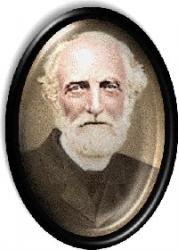
1837 - 1911 Topics: Worship in General Beginning of Service Author of "To Thee, O God, we raise " in The Lutheran Hymnary Rv Arthur Tappan Pierson DD USA 1837-1911. Born at New York City, NY, he professed faith in Christ at age 13 upon attending a Methodist revival meeting. He was educated at Hamilton College, Clinton, NY, (1857), and Union Theological Seminary (1869). He married Sarah Frances Benedict in 1860, and they had seven children: Helen, Laura, Louise, Delavan, Farrand, Edith, and Anna. He entered Presbyterian ministry in 1860. He pastored successfully at the Congregational Church, Winsted, CT, (summers of 1859 & 1869), Binghampton, NY (1860-1863), Waterford, NY (1863-1869) Fort Street Presbyterian Church, Detroit, M (1869-1882)I, and at Bethany Presbyterian Church, Philadelphia, PA (1883-1889), where he ran a missionary training school and developed a national reputation as a promoter of missions. While at Detroit, the largest Presbyterian Church in town, the church burned down in 1876, and services were held in a local opera house. Pierson realized he had become prideful and greedy, seeking approval of the rich. As a result, he led his wealthy congregation to reach out to the poor of Detroit. He banished the practice of pew rents, and committed to accepting his salary on a faith basis. A revival broke out as a result. In 1885, at a Bible conference sponsored by D L Moody, Pierson called on Protestant churches to launch a worldwide missionary campaign. In 1886 he authored “The crisis of missions”, the major missions promotional book of the era. He spoke on missions to a group of YMCA collegians at a summer conference convened by Moody in MA. As a result, 100 young men volunteered to be foreign missionaries, and the Student Volunteer Movement for Foreign Missions (SVM) was born. In 1889-90 he nade a missionary tour of the UK. He was editor of the ‘Missionary Review of the world’ (1888-1911), and he lectured on missions at Rutgers College in 1891 and was Duff lecturer in Scotland in 1892. He was a consulting editor for the original “Scofield Reference Bible” (1909), for his friend, C I Scofield. He was also a friend of Dwight L Moody, George Muller, Adoniram Judson Gordon, and Charles H Spurgeon, whom he succeeded in the pulpit of the Metropolitan Tabernacle, London, England, 1891-1893, when Spurgeon suffered from Bright’s disease and asked him to fill his pulpit while he recovered. When Spurgeon died, Pierson was asked to stay on in the pulpit, which he did for two more years. It is notable that Spurgeon asked Pierson to fill his pulpit, when Pierson, a Presbyterian, had not been baptized as a believer. In 1896 Pierson became convinced that believer baptism was correct, and he was then baptized by Spurgeon’s brother, James, at the age of 58. This caused Pierson’s excommunication from the Presbyterian Church, but he continued to worship as a Presbyterian. Pierson spoke with Moody at the Northfield, England, Conferences, and was also a speaker at the Keswick convention, where holiness piety was promoted. Pierson was influential in convincing several Nobel Peace Prize winners to give their lives to missions. Filling several pulpit positions around the world as an urban pastor, he cared passionately for the poor. He was also a pioneer advocate of faith missions, determined to see the world evangelized in his generation. Prior to 1870 there had been only about 2000 missionaries from the U.S. in full-time service, roughly 10% engaged in work among native Americans. In the 1880s a great movement of foreign missions began, in part due to the work of Pierson. He acted as elder statesman of the student missionary movement and was the leading evangelical advocate of foreign missions in the late 19th century. When liberalism began seeping through mainline denominations, Pierson joined other concerned Christian leaders in publishing “The fundamentals”, a series of booklets designed to answer the critics of Christianity. Because of his apologetic abilities, Pierson was invited to write five of the major articles. Each booklet was distributed freely to pastors throughout America, marking the beginning of the Fundamental-Modernist Controversy in American churches. Eventually the booklets were combined into a twelve volume set, available today as a five-volume set. Pierson was called “the Father of Fundamentalism”. In 1898 he wrote a book, “In Christ Jesus”, concluding that a preposition followed by a proper name was the key to understanding the entire New Testament. He was an advocate of ‘day-age creationism’. He pastored at Christ Church, London, England (1902-1903). After retiring, he continued to preach at churches at home and abroad. He visited Korea in 1910 where he taught the Bible in a few churches and was instrumental in founding the Pierson Memorial Bible Institute (presently Pyeongtaek University). Many pastors and scholars came from it. That year he set out to tour missions in East Asia, but grew ill and returned to Brooklyn, NY where he died. It is said that he preached 13,000+ sermons, wrote over 50 books, and he gave Bible lectures as part of a transatlantic preaching ministry that made him famous in Scotland, England, and Korea. All of Pierson’s children professed conversion to Christianity as teens and served as missionaries, pastors, or lay leaders.
John Perry
===========
Pierson, Arthur Tappan, D.D., was born in New York city, March 6, 1837, and educated at Hamilton College. He entered the Presbyterian ministry in 1830, and was pastor successively in Binghampton and in Waterford, New York, and Fort Street, Detroit; his last charge being the Bethany Presbyterian Church, Philadelphia. (Duffield's English Hymns, 1886, p. 576.) Dr. Pierson's hymns include:—
1. Once I was dead in sin. Praise for Salvation.
2. The Gospel of Thy grace. The Love of God in Christ.
3. To Thee, O God [Lord], we raise. Divine Beneficence.
4. With harps and with viols there stand a great throng. The New Song.
Of these hymns, No. 3 is in Hymns and Songs of Praise, N. Y., 1874, and the Laudes Domini, N. Y., 1884; and Nos. 1, 2, 4, are in I. D. Sankey's Sacred Songs and Solos.
-- John Julian, Dictionary of Hymnology (1907)
Arthur T. Pierson
John Richardson
1816 - 1879 Person Name: J. Richardson Topics: Worship in General Prayer and Praise Composer of "[Pleasant are Thy courts above]" in The Lutheran Hymnary
John Richardson
Bartholomaüs Ringwaldt
1532 - 1599 Person Name: B. Ringwaldt Topics: Worship in General Prayer and Praise Author of "O Holy Spirit, grant us grace" in The Lutheran Hymnary Bartholomew Ringwaldt was born at Frankfort-on-the-Oder, in 1530, and was a Lutheran pastor at Langfield, in Prussia, where he died, 1598. His hymns resemble Luther's in their simplicity and power. Several of them were written to comfort himself and others in the sufferings they endured from famine, pestilence, fire and floods. In 1581, he published "Hymns for the Sundays and Festivals of the whole Year."
--Annotations of the Hymnal, Charles Hutchins, M.A. 1872.
============================
Ringwaldt, Bartholomäus (Ringwalt, Ringwald), was born Nov. 28, 1532, at Frankfurt a. Oder. He was ordained in 1557, and was pastor of two parishes before he settled in 1566 as pastor of Langfeld (or Langenfeld), near Sonnenburg, Brandenburg. He was still there in 1597, but seems to have died there in 1599, or at least not later than 1600. (Koch, ii. 182; Goedeke's Grundriss, vol. ii. 1886, p. 512; Blätter fur Hymnologie, 1885.
Ringwaldt exercised a considerable influence on his contemporaries as a poet of the people, as well as by his hymns properly so called. He was a true German patriot, a staunch Lutheran, and a man who was quite ready to face the consequences of his plain speaking. His style is as a rule clear and good, though his rhymes are often enough halting; and he possessed considerable powers of observation and description. After 1577 he published various didactic poems, the most important being, (1) Newezeittung: So Hanns Fromman mit sich auss der Hellen unnd dem Himel bracht, Amberg, 1582, and the later editions enlarged and rewritten as Christliche Warnung des Trewen Eckarts, &c, Frankfurt a. Oder, 1588. In various forms and abridgments it passed through at least 34 editions up to 1700. This work is a mirror of the times and of the morals of the people. (2) Die Lauter Warheit, darinnen angezeiget, wie sich ein Weltlicher und Geistlicher Kriegsman in seinen Beruff vorhalten soil, &c, Erfurt, 1586. Of this again at least 18 eds. appeared up to 1700. In it he gives lively pictures of the life of the various ranks and orders of his time, and shows the temptations and failings of each, not by any means sparing his own class, i.e. the Lutheran clergy.
As a hymnwriter Ringwaldt was also of considerable importance. He was one of the most prolific hymn-writers of the 16th century. Wackernagel, iv. pp. 906-1065, gives 208 pieces under his name, about 165 of which may be called hymns. A selection of 59 as his Geistliche Lieder, with a memoir by H. Wendebourg, was published at Halle in 1858. A number appeared in the various eds. of his Trewer Echart and Lauter Warheit as above. The rest appeared principally in his
(1) Der 91. Psalm neben Siben andern schönen Liedern, &c, Frankfurt,a. Oder, 1577. (2) Evangelia, Auffalle Sontag unnd Fest, Durchs gantze Jahr, &c, Frankfurt a. Oder, N.D. The earliest edition now known is undated, but Wackernagel, i., p. 523, gives it as of 1582. It is marked as a 2nd edition, and has a preface dated Nov. 28, 1581. It contains hymns founded on the Gospels for Sundays and Festivals, &c. (3) Handbüchlin: geistliche Lieder und Gebetlein, Auff der Reiss, &c, Frankfurt a. Oder, 1586 (preface, Feb. 21, 1582). A good many of his hymns passed into German collections of the 16th and 17th centuries, and a number are still in German common use.
Those of Ringwaldt's hymns which have passed into English are:—
i. Es ist gewisslich an derZeit. Second Advent. The anonymous original of this hymn is one of Zwey schöne Lieder, printed separately circa 1565, and thence in Wackernagel, iv. p. 344. W. von Maltzahn, in his Bücherschatz, 1875, No. 616, p. 93, cites it as in an undated Nürnberg broadsheet, circa 1556. Wackernagel also gives along with the original the revised form in Ringwaldt's Handbüchlin, 1586. Both forms are also in the Unverfälschter Liedersegen, 1851, No. 746, in 7 stanzas of 7 lines. It is based on the "Dies Irae," but can hardly be called a version of it. The original has a picturesqueness and force which are greatly lost in Ringwaldt's revision. It was much used in Germany during the Thirty Years' War, when in these distressful times men often thought the Last Day was at hand. The translations are all, except No. 2, from Ringwaldt's text. They are:—
1. 'Tis sure that awful time will come. In full, by J. C. Jacobi, in his Psalter Germanica, 1722, p. 95 (1732, p. 202). Repeated, altered and abridged, in the Moravian Hymn Book, 1754 to 1886. It is also found in two centos.
(1) The waking trumpets all shall hear (st. ii.), in Montgomery's Christian Psalmist, 1825.
(2) When all with awe shall stand around (st. v.), from the Moravian Hymn Book, 1801, in the Pennsylvania Lutheran Church Book, 1868.
2. Most surely at th' appointed time. By A. T. Russell, as No. 38 in his Psalms & Hymns, 1851, repeated in the College Hymnal, N. Y., 1876. It is marked a translation from the "Dies Irae," but is really a good translation of st. i., ii., v. of the German of 1565,
3. Behold that awful day draws nigh. A translation of st. i., ii.. v., by W. Sugden, as No. 129 in the Methodist Scholars' Hymn Book, 1870.
4. The day is surely drawing near. In full by P. A. Peter as No. 457 in the Ohio Lutheran Hymnal, 1880.
5. Surely at the appointed time. By H. L. Hastings, made in 1878, and included as No. 722 in his Songs of Pilgrimage, 1886. It condenses iii., iv. as iii.
6. Tho time draws near with quickening pace. By Miss Fry, in her Hymns of the Reformation, 1845, p. 56.
A hymn which has been frequently but erroneously called a translation from Ringwaldt's text, is noted as “Great God, what do I see and hear" (p. 454, i.).
Hymns not in English common use:--
ii. Allein auf Gott setzt dein Vertraun. The Christian Life. In many of the older Gorman hymnbooks this is ascribed to Ringwaldt, but it is not found in any of his works now extant. Wackernagel, v. p. 327, gives it as anonymous from the Greifswald Gesang-Buch, 1597, where it is entitled "The golden A. B. C. wherein is very in¬geniously comprised what a man needs to know in order to lead an honourable and godly life." It is in 24 stanzas of 4 lines, each stanza beginning with successive letters of the alphabet. Also in Porst's Gesang-Buch, ed. 1855, No. 784. Bäumker, ii. p. 276, cites it as in the manuscript collection of a nun called Catherine Tirs, written in 1588, in the nunnery of Niesing, Münster. There it is in Low German, and begins "Allene up godt hope und truwe." Bäumker thinks Ringwaldt may possibly be the person who made the High German version. Translated as (1) "Alone in God put thou thy trust." By J. C. Jacobi, 1725, p. 29 (1732, p. 110).
iii. Der Herr ist mein getreuer Hirt, Hält mich in seiner Hute. Ps. xxiii. Wackernagel, iv. p. 944, prints it from Ringwaldt's Evangelia, N.D., 1582 as above, in 7 st. of 7 1. The first four-lines of st. i. are taken from the older version, "Der Herre ist mein treuer Hirt." In the Minden Kavensberg Gesang-Buch, 1854, No. 512. Translated as (i.) "The Lord He is my Shepherd kind." By Miss Manington, 1863, p. 20.
iv. Herr Jesu Christ, du höchstes Gut, Du Brunnquell der Genaden. Lent. One of the finest of German penitential hymns. Wackernagel, iv. p. 1028, gives it, in 8 st. of 7 1., from Ringwaldt's Christliche Warnung, 1588, where it is entitled "A fine hymn [of supplication] for the forgiveness of sins." In Burg's Gesang-Buch, Breslau, 1746, No. 1574. The translations are (1) “Lord Saviour Christ, my sovereign good." In the Supplement to German Psalmody, ed. 1765, p. 39. Rewritten as (2) "Lord Jesus Christ, my sov'reign good," as No. 226 in the Moravian Hymn Book , 1789. In the edition of 1886, No. 278, it begins "Jesus, thou source of every good." (3) "O Christ, thou chiefest good, thou spring." By Dr. G. Walker, 1860, p. 76. (4) "Lord Jesus Christ, thou highest good." By F. W. Young, in the Family Treasury, 1877, p. 653. [Rev. James Mearns, M.A.]
--John Julian, Dictionary of Hymnology (1907)
Bartholomaüs Ringwaldt
Wilhelm II
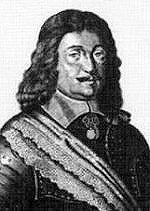
1598 - 1662 Person Name: Wilhelm II. Duke of Sachse-Weimar Topics: Worship in General Beginning of Service Author of "Lord Jesus Christ, be present now" in The Lutheran Hymnary Wilhelm (II. or IV.), Duke of Sachse-Weimar, son of Duke Johann of Sachse-Weimar, was born in the castle of Altenburg, April 11, 1598. He studied for some time at the University of Jena, devoting himself especially to music and mathematics. On the outbreak of the Thirty Years War he espoused the cause of Friedrich V. of the Palatinate. At the battle of the Weisse Berg, near Prague, he was severely wounded, and at the battle fought near Stadtlohn, in Westphalia (Aug., 1623), he was at first left for dead, and then taken prisoner by Tilly. In 1625 the Emperor allowed him to go free, and he assumed the government of Weimar. When Gustavus Adolphus came to Germany (1630), Wilhelm did not join him till after the battle of Breitenfeld (Sept., 1631), and in July, 1635, he was one of the consenting parties to the Peace of Prague between Saxony and the Emperor, in consequence of which the Swedish troops made various inroads on his territory. When the final partition took place, in 1644, between himself and his surviving brother (Sachse-Weimar fell to Wilhelm, and Gotha to Ernst) he set himself earnestly to restore prosperity and godliness in the regions under his rule. He also found more time (especially after the peace of Westphalia, 1648), to devote to his studies in poetry and music, and to the adornment of Weimar. He died at Weimar, May 17, 1662 (Koch, iii. 110; Wetzel, iii. 426; Bode, p. 172, &c).
Wilhelm joined, in 1617, in founding the Fruitbearing Society, the great German Literary and Patriotic Union of the 17th century; and, after the death (1650) of Ludwig, Prince of Anhalt-Cöthen, became its head. Weimar thus became the centre of its operations, in the direction of which the Duke was assisted by Georg Neumark. Neumark, in his Palmbaum, 1680, p. 449, speaks of the Duke as having "composed several hymns, as well-known in this place, especially the short Hymn of Peace ‘Gott der Friede hat gegeben.'"
Besides this hymn on Peace only one other is known as Wilhelm's, viz.:—
Herr Jesu Christ, dich zu uns wend . Public Worship. This was included as No. 124 in the 2nd edition, 1651, of pt. i. of the Cantionale Sacrum, Gotha (1st ed. 1646), in 4 stanzas of 4 lines, entitled "To be sung before the Sermon." As no author's name is there given, and as it did not appear in any of the three parts of the original edition of 1646-48, the Duke's authorship is decidedly doubtful. So far as yet traced the Duke's name was not attached to it until in the Altdorf Liederfreud of 1676 (Fischer's Supplement, p. 71). In J. Niedling's Handbüchlein, 4th ed., 1655, p. 746, it appears without author's name (Niedling, be it observed, was living at Altenburg), and entitled "A heartfelt petition of pious Christians for grace and the help of the Holy Spirit, during Divine Service, before the Sermon." Koch says it was in the first edition, 1638, of Niedling, but this appears to be merely a guess, for the earliest edition of Niedling which he describes at iii., 109, is that of 1655; and if it were in Niedling's 1638 ed., this circumstance would make the Duke's authorship still more unlikely. Whoever the author was the hymn soon became justly popular, and in 1678 was formally directed to be sung in all the churches in Saxony on all Sundays and festivals. It is a simple and forcible hymn, which survived the Rationalistic period, and is found in all recent German hymn-books, e.g. in the Berlin Geistliche Lieder, ed. 1863, No. 356. Translated as:—
1. Lord Christ, reveal Thy holy Face. In full by J. C. Jacobi, in his Psalter Germanica, 1722, p. 42 (1732, p. 69). Repeated as No. 322 in pt. i. of the Moravian Hymn Book, 1754 (1886, No. 724), and as No. 54 in J. F. Thrupp's Psalms & Hymns, 1853.
2. Lord Jesu, to our prayer attend. This is a good and full translation by A. T. Russell, as No. 12 in his Psalms & Hymns, 1851.
3. Lord Jesus Christ, be present now! This is a good and full translation by Miss Winkworth, as No. 13 in her Chorale Book for England, 1863; repeated in the Pennsylvania Lutheran Church Book, 1868, No. 49.
4. Christ Jesus Lord, to us attend. In full by L. Heyl, as No. 3 in the Ohio Lutheran Hymnal, 1880.
Other translations are:—
(1) "Lord Jesus, turn to us, and down," by Dr. G. Walker, 1860, p. 48. (2) "Lord Jesus Christ, in mercy bend," by Miss Manington, 1863, p. 19. (3) "Lord Jesus Christ, now towards us bend," by N. L. Frothingham, 1870, p. 221. [Rev. James Mearns, M.A.]
-- John Julian, Dictionary of Hymnology (1907)
Wilhelm II
T. R. Birks
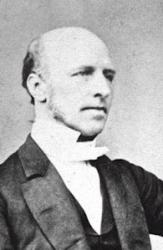
1810 - 1883 Person Name: T. R. Birks, 1874 Topics: Worship in General; Worship in General Prayer and Praise; Worship in General Prayer and Praise Author of "The heavens declare Thy glory" in The Lutheran Hymnary Birks, Thomas Rawson, M.A., b. Sept. 1810, and educated at Trinity College, Cambridge (B.A. 1834, M.A. 1837), of which he subsequently became a Fellow. Having taken Holy Orders in 1837, he became Rector of Kelshall, Herts, 1844; Vicar of Holy Trinity, Cambridge, 1866; Hon. Canon of Ely Cathedral, 1871; and Professor of Moral Philosophy, Cambridge, 1872. He d. at Cambridge, July 21, 1883. His works, to the number of 25, include Biblical, Astronomical, Scientific, Prophetic, and other subjects. He also wrote the Memoirs of the Rev. E Bickersteth (his father-in-law), 2 vols., 1851. His hymns appeared in Bickersteth's Christian Psalmody; 1833; and, together with Versions of the Psalms, in his Companion Psalter, 1874. They number upwards of 100. [Eng. Psalters, § xx.] Very few are in common use in Great Britain, but in America their use is extending. They include:—
1. Except the Lord do build the house. Ps. cxxvii.
2. O come, let us sing to the Lord. Ps. xcv.
3. O King of Mercy, from Thy throne on high. Ps. lxxx.
4. O taste and see that He is good. Ps. xxxiv.
5. O when from all the ends of earth. Psj xiv.
6. The heavens declare Thy glory. Ps. xix.
7. The Lord Himself my Portion is. Ps. liii.
8. The mighty God, the Lord hath spoken. Ps. l.
9. Thou art gone up on high, O Christ, &c. Ps. xlvii.
10. Whom have I [we] Lord in heaven, but Thee. Ps. lxxiii.
Of these versions of the Psalms, all of which date from 1874, the most popular is No. 3. Mr. Birks' compositions are worthy of greater attention than they have hitherto received.
--John Julian, Dictionary of Hymnology (1907)
T. R. Birks
William Bullock
1797 - 1874 Person Name: W. Bullock Topics: Worship in General Beginning of Service Author of "We love the place, O God" in The Lutheran Hymnary Bullock, William, D.D., a Missionary of the S. P. G. for 32 years, and sometime Dean of Halifax, Nova Scotia, and died. March 16, 1874. He is known to hymnody principally through his popular hymn (in its revised form by Sir H. W. Baker), "We love the place, O God" (q. v.). This appeared with other hymns of merit in his:—
Songs of the Church, Halifax, printed for the Author, 1854, Other hymns from the same work are in common use. All his hymns were “written amidst the various scenes of missionary life, and are intended for the private and domestic use of Christians in new countries deprived of all public worship," and are worthy of renewed attention. Dean Bullock also published Practical Lectures upon the History of Joseph and his Brethren, 1826.
-- John Julian, Dictionary of Hymnology (1907)
William Bullock
Johann Mentzer
1658 - 1734 Person Name: J. Mentzer Topics: Worship in General; Worship in General Prayer and Praise; Worship in General Prayer and Praise Author of "I praise Thee, O my God and Father" in The Lutheran Hymnary Mentzer, Johann, was born July 27, 1658, at Jahmen, near Rothenburg, in Silesia, and became a student of theology at Wittenberg, In 1691 he was appointed pastor at Merzdorf; in 1693 at Hauswalde, near Bischofswerda; and in 1696 at Kemnitz, near Bernstadt, Saxony. He died at Kemnitz, Feb. 24, 1734 (G. F. Otto's Lexicon . . . Oberlausizischer Schriftsteller, ii., 581; ms. from Pastor Richter of Kemnitz, &c).
He was a great friend of J. C. Schwedler, of Henrietta Catherine von Gersdorf, and of N. L. von Zinzendorf, all hymnwriters, and all his near neighbours. He was himself greatly tried in the furnace of affliction. He wrote a large number of hymns, over 30 of which appeared in the various hymnbooks of his time. Many of them, especially those of Praise and Thanksgiving, and those of Cross and Consolation, are of high merit, though sometimes exaggerated and not very refined in their imagery, and are full of ardent love to Christ, Scriptural, poetical, and also popular in style.
The only one in English common use is:—
0 dass ich tausend Zungen hatte. Praise and Thanksgiving. His best hymn. First published as No. 496, in Freylinghausen's Gesang-Buch, 1704, in 15 st. of 6 1., and repeated in many later collections as the Unverfälschter Liedersegen, 1851, No. 719.
Lauxmann, in Koch viii. 350, says this hymn was written in 1704 after his house was burned down. In reply to enquiries addressed to Kemnitz, pastor Richter informs me that the parsonage house there was built in the years 1696 and 1697, and has never been burned down. In 1697 a farmhouse near was destroyed by lightning, and possibly Mentzer may have been living there at the time; or at any rate this may have suggested the hymn and the story. Lauxmann speaks of the hymn as having been a great favourite of Caroline Perthes of Hamburg, and of J. C. Schlipalius of Dresden, and relates various incidents regarding its blessed and comforting effects.
The translations in common use are:—
1. Oh that I had a thousand voices! A mouth. A full translation by Dr. H. Mills, in his Horae Germanica, 1845 (1856, p. 189); repeated, abridged, in the American Lutheran General Synod's Collection, 1850-52, the Ohio Lutheran Hymnal, 1880, &c.
2. Oh be unceasing praise ascending. A good translation of st. i., vii., viii., by A. T. Russell, as No. 203, in his Psalms & Hymns, 1851.
3. Oh would I had a thousand tongues. A good translation, omitting stanzas ix., x., xiii., by Miss Winkworth, in her Lyra Germanica, 1st Ser., 1855, p. 170; and repeated, abridged, in the Methodist New Congregational Hymn Book, 1863.
4. 0 would, my God, that I could praise Thee. A good translation, in the original metre, by Miss Winkworth, in her Chorale Book for England, 1863, No. 5, being of stanzas i., iii.—v, xiv., xv. This was repeated in the Evangelical Hymnal, N. Y., 1830. A filtered form, beginning with st. iii., "0 all ye powers that God implanted” is in Dr. Knight's Collection, Dundee, 1871 and 1874.
5. I praise Thee, 0 my God and Father. By Miss Winkworth, in her Chorale Book for England, 1863, No. 6. This is of st. vi.-viii., xi., xii., and fol¬lows the text of Bunsen's Versuch, 1833, No. 846, this stanza beginning there, "Lob sei dir, treuer Gott und Vater." Her translation is repeated in Dr. Thomas's Augustine Hymn Book, 1866.
Other translations are:—
(1) "0 that a thousand tongues were granted," by N. L. Frothingham, 1810, p. 155. (2) "0 that a thousand tongues were mine, And each," by Dr. Alexander Mair in the Family Treasury, 1872, p. 462.
Other hymns by Mentzer, translated into English but not in common use are:—
ii. Du gehest in den Garten beten. Passiontide. First published in the Löbau Gesang-Buch, 1725, as No. 370, in 12 stanzas of 6 lines, marked as by Mentzer and entitled "The true school of prayer of Jesus, praying on the Mount of Olives, Matt. xxvi. 36-46." In the Berlin Geistliche Lieder, ed. 1863, No. 223, beginning "Du gehst zum Garten urn zu beten," and wrongly ascribed to B. Schmolck. Translated as "Into the garden shade to pray," by J. Kelly, in the Family Treasury, 1868, p. 691.
iii. Wer das Kleinod will erlangen. Christian Warfare. A call to spiritual energy, founded on 1 Cor. ix. 24, 25. Included as No. 783 in the Neuvermehrtes Geistreiches Gesang-Buch Berlin, 1711, in 6 stanzas of 8 lines; and previously in Schlechtiger's Gesang-Buch, Berlin, 1704. In the Berlin Geistliche Lieder, ed. 1863, No. 679. Translated as "Who would make the prize his own." By Miss Winkworth, 1858, p. 167. [Rev. James Mearns, M.A.]
-- John Julian, Dictionary of Hymnology (1907)
Johann Mentzer
Joseph Klug
1500 - 1552 Topics: Worship in General Prayer and Praise Composer of "[O Holy Spirit, grant us grace]" in The Lutheran Hymnary Born: Circa 1500, possibly at Nuremberg, Germany.
Died: 1552, Wittenberg, Germany.
Little is known of Klug, other than he was a publisher in Wittenberg. He was active from at least 1529 to 1552. His works include:
Geistliche Lieder, edited by Martin Luther (Wittenberg, Germany: 1529)
--www.hymntime.com/tch
Joseph Klug
Richard Mant
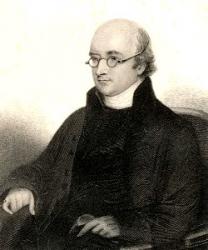
1776 - 1848 Topics: Worship General Petitions; Sundays in Lent; Lent, Sixth Sunday; Easter Season, Sixth Sunday; Seventh Sunday after Trinity Author of "Holy Jesus, in whose Name" in Church Book Mant, Richard D.D., son of the Rev. Richard Mant, Master of the Grammar School, Southampton, was born at Southampton, Feb. 12, 1776. He was educated at Winchester and Trinity, Oxford (B.A. 1797, M.A., 1799). At Oxford he won the Chancellor's prize for an English essay: was a Fellow of Oriel, and for some time College Tutor. On taking Holy Orders he was successively curate to his father, then of one or two other places, Vicar of Coggeshall, Essex, 1810; Domestic Chaplain to the Archbishop of Canterbury, 1813, Rector of St. Botolph, Bishopsgate, London. 1816, and East Horsley, 1818, Bishop of Killaloe, 1820, of Down and Connor, 1823, and of Dromore, 1842. He was also Bampton Lecturer in 1811. He died Nov. 2, 1848. His prose works were numerous, and although now somewhat obsolete, they were useful and popular in their day. His poetical works, and other works which contain poetical pieces, are:—
(1) The Country Curate, 1804; (2) Poems in three Parts, 1806; (3) The Slave, 1807; (4) The Book of Psalms in an English Metrical Version, &c, 1824; (5) The Holydays of the Church; or Scripture Narratives of Our Blessed Lord's Life and Ministry, and Biographical Notices of the Apostles, Evangelists, and Other Saints, with Reflections, Collects, and Metrical Sketches, vol. i., 1828; vol. ii., 1831; (6) The Gospel Miracles in a series of Poetical Sketches, &c., 1832; (7) The British Months, 2 vols., 1836; (8) Ancient Hymns from the Roman Breviary, for Domestick Use. . . .To which are added Original Hymns, principally of Commemoration and Thanksgiving for Christ's Holy Ordinances, 1837: new ed., 1871. (9) The Happiness of the Blessed Dead, 1847.
Bishop Mant is known chiefly through his translations from the Latin. He was one of the earliest of the later translators, I. Williams and J. Chandler being his contemporaries. Concerning his translations, Mr. Ellerton, in his Notes on Church Hymns, 1881, p. xlviii. (folio ed.), says justly that:—
"Mant had little knowledge of hymns, and merely took those of the existing Roman Breviary as he found them: consequently he had to omit many, and so to alter others that they have in fact become different hymns: nor was he always happy in his manipulation of them. But his book has much good taste and devout feeling, and has fallen into undeserved neglect."
His metrical version of the Psalms has yielded very few pieces to the hymnals, the larger portion of his original compositions being from his work of 1837. The most popular of these is "Come Holy Ghost, my soul inspire, Spirit of," &c, and its altered forms; "Bright the vision that delighted," and its altered form of "Round the Lord in glory seated;" and "For all Thy saints, O Lord." His hymns in common use which are not annotated under their respective first lines are:—
i. From his Metrical Version of the Psalms, 1824.
1. God, my King, Thy might confessing. Ps. cxlv.
2. Lord, to Thee I make my vows. Ps. xxvii.
3. Blessed be the Lord most High. Ps. xxviii. Pt. ii.
4. My trust is in the highest Name. Ps. xi.
5. Reign, Jehovah, King supreme. Ps. xcix.
6. Thy listening ear, O Lord, incline. Ps. Ixxxvi.
7. To God my earnest voice I raise. Ps. cxlii.
8. To Jehovah hymn the lay. Ps. cxviii. Two centos in Spurgeon's Our Own Hymn Book, 1866. (1) st. i., ii., v.; and (2) "Thee, Jehovah, will I bless" from st. vii.-x.
ii. From his Holydays of the Church, &c, 1828-31.
9. Lo, the day the Lord hath made. Easter.
10. There is a dwelling place above. All Saints.
iii. From his Ancient Hymns, &c, 1837.
11. Before Thy mercy's throne. Lent.
12. Father of all, from Whom we trace. Unity.
13. For these who first proclaimed Thy word. Apostles.
14. No! when He bids me seek His face. Holy Communion.
15. Oft as in God's own house we sit. Divine Worship.
16. Put off thy shoes, 'tis holy ground. The House of God .
17. Saviour of men, our Hope [Life] and Rest. The Greater Festivals.
18. Thy House each day of hallowed rest. Holy Communion.
19. We bless Thee for Thy Church, 0 Lord. Thanksgiving for the Church.
26. We deem and own it, Lord, a proof. Divine Grace.
When all Bishop Mant's translations of original hymns, and versions of the Psalms in common use are taken into account, it is found that he is somewhat strongly represented in modern hymnody.
-- John Julian, Dictionary of Hymnology (1907)
====================
http://en.wikipedia.org/wiki/Richard_Mant
Richard Mant
Pages




