

 My Starred Hymns
 My FlexScores
 My Hymnals
 My Purchased Files
Planning worship?
Check out our sister site, ZeteoSearch.org,
for 20+ additional resources related to your search.
- |
User Links
Person Results
Martin Luther
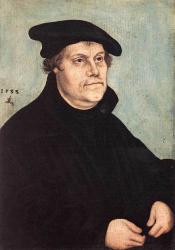
1483 - 1546 Topics: The Christian Year Christmas; Angels; Biblical Characters Mary, Mother of Jesus; Hymns Suitable for Use with Children; Christian Year Christmas; Forgiveness from God; Good News, Gospel; Heaven(s)/Paradise; Jesus Christ Atonement; Jesus Christ Birth and Infancy; Jesus Christ Incarnation; Joy; Music and Singing; New Year; Salvation; Advent 2 Year A; Advent 4 Year A; Christmas Day 1 Year A; Christmas Day 2 Year A; Advent 4 Year B; Advent 3 Year C Author of "From Heaven Above to Earth I Come" in Voices United Luther, Martin, born at Eisleben, Nov. 10, 1483; entered the University of Erfurt, 1501 (B.A. 1502, M.A.. 1503); became an Augustinian monk, 1505; ordained priest, 1507; appointed Professor at the University of Wittenberg, 1508, and in 1512 D.D.; published his 95 Theses, 1517; and burnt the Papal Bull which had condemned them, 1520; attended the Diet of Worms, 1521; translated the Bible into German, 1521-34; and died at Eisleben, Feb. 18, 1546. The details of his life and of his work as a reformer are accessible to English readers in a great variety of forms. Luther had a huge influence on German hymnody.
i. Hymn Books.
1. Ellich cristlich lider Lobgesang un Psalm. Wittenberg, 1524. [Hamburg Library.] This contains 8 German hymns, of which 4 are by Luther.
2. Eyn Enchiridion oder Handbuchlein. Erfurt, 1524 [Goslar Library], with 25 German hymns, of which 18 are by Luther.
3. Geystliche Gesangk Buchleyn. Wittenberg, 1524 [Munich Library], with 32 German hymns, of which 24 are by Luther.
4. Geistliche Lieder auffs new gebessert. Wittenberg. J. Klug, 1529. No copy of this book is now known, but there was one in 1788 in the possession of G. E. Waldau, pastor at Nürnberg, and from his description it is evident that the first part of the Rostock Gesang-Buch, 1531, is a reprint of it. The Rostock Gesang-Buch, 1531, was reprinted by C. M. Wiechmann-Kadow at Schwerin in 1858. The 1529 evidently contained 50 German hymns, of which 29 (including the Litany) were by Luther.
5. Geistliche Lieder auffs new gebessert. Erfurt. A. Rauscher, 1531 [Helmstädt, now Wolfenbüttel Library], a reprint of No. 4.
6. Geistliche Lieder. Wittenberg. J. Klug, 1535 [Munich Library. Titlepage lost], with 52 German hymns, of which 29 are by Luther.
7. Geistliche Lieder auffs new gebessert. Leipzig. V. Schumann, 1539 [Wernigerode Library], with 68 German hymns, of which 29 are by Luther.
8. Geistliche Lieder. Wittenberg. J. Klug, 1543 [Hamburg Library], with 61 German hymns, of which 35 are by Luther.
9. Geystliche Lieder. Leipzig. V. Babst, 1545 [Gottingen Library]. This contains Luther's finally revised text, but adds no new hymns by himself. In pt. i. are 61 German hymns, in pt. ii. 40, of which 35 in all are by Luther.
For these books Luther wrote three prefaces, first published respectively in Nos. 3, 4, 9. A fourth is found in his Christliche Geseng, Lateinisch und Deudsch, zum Begrebnis, Wittenberg, J. Klug, 1542. These four prefaces are reprinted in Wackernagel’s Bibliographie, 1855, pp. 543-583, and in the various editions of Luther's Hymns. Among modern editions of Luther's Geistliche Lieder may be mentioned the following:—
Carl von Winterfeld, 1840; Dr. C. E. P. Wackernagel, 1848; Q. C. H. Stip, 1854; Wilhelm Schircks, 1854; Dr. Danneil, 1883; Dr. Karl Gerok, 1883; Dr. A. F. W. Fischer, 1883; A. Frommel, 1883; Karl Goedeke, 1883, &c. In The Hymns of Martin Luther. Set to their original melodies. With an English version. New York, 1883, ed. by Dr. Leonard Woolsey Bacon and Nathan H. Allen, there are the four prefaces, and English versions of all Luther's hymns, principally taken more or less altered, from the versions by A. T. Russell, R. Massie and Miss Winkworth [repub. in London, 1884]. Complete translations of Luther's hymns have been published by Dr. John Anderson, 1846 (2nd ed. 1847), Dr. John Hunt, 1853, Richard Massie, 1854, and Dr. G. Macdonald in the Sunday Magazine, 1867, and his Exotics, 1876. The other versions are given in detail in the notes on the individual hymns.
ii. Classified List of Luther's Hymns. Of Luther's hymns no classification can be quite perfect, e.g. No. 3 (see below) takes hardly anything from the Latin, and No. 18 hardly anything from the Psalm. No. 29 is partly based on earlier hymns (see p. 225, i.). No. 30 is partly based on St. Mark i. 9-11, and xvi., 15, 16 (see p. 226, ii.). No. 35 is partly based on St. Luke ii. 10-16. The following arrangement, however, will answer all practical purposes.
A. Translations from the Latin.
i. From Latin Hymns:
1. Christum wir sollen loben schon. A solis ortus cardine
2. Der du bist drei in Einigkeit. O Lux beata Trinitas.
3. Jesus Christus unser Heiland, Der von. Jesus Christus nostra salus
4. Komm Gott Schopfer, heiliger Geist. Veni Creator Spiritus, Mentes.
5. Nun komm der Beidenheiland. Veni Redemptor gentium
6. Was flirchst du Feind Herodes sehr. A solis ortus cardine
ii. From Latin Antiphons, &c.:
7. Herr Gott dich loben wir. Te Deum laudamus.
8. Verleih uns Frieden gnädiglich. Dapacem, Domine
9. Wir glauben all an einen Gott.
iii. Partly from the Latin, the translated stanzas being adopted from Pre-Reformation Versions:
10. Komm, heiliger Geist, Herre Gott.
11. Mitten wir im Leben sind. Media vita in morte sumus.
B. Hymns revised and enlarged from Pre-Reformation popular hymns.
12. Gelobet seist du Jesus Christ.
13. Gott der Vater wohn uns bei.
14. Gott sei gelobet und gebenedeiet.
15. Nun bitten wir den heiligen Geist.
C. Psalm versions.
16. Ach Gott vom Himmel, sieh darein.
17. Aus tiefer Noth schrei ich zu dir.
18. Ein' feste Burg ist unser Gott.
19. Es spricht der Unweisen Mund wohl.
20. Es wollt uns Gott genädig sein.
21. War Gott nicht mit uns diese Zeit.
22. Wohl dem, der in Gotten Furcht steht.
D. Paraphrases of other portions of Holy Scripture.
23. Diess sind die heilgen zehn Gebot.
24. Jesaia dem Propheten das geschah.
25. Mensch willt du leben seliglich.
26. Mit Fried und Freud ich fahr dahin.
27. Sie ist mir lieb die werthe Magd.
28. Vater unser im Himmelreich.
E. Hymns mainly Original.
29. Christ lag in Todesbanden.
30. Christ unser Herr zum Jordan kam.
31. Ein neues Lied wir heben an.
32. Erhalt uns Herr bei deinem Wort.
33. Jesus Christus unser Heiland, Der den,
34. Nun freut euch lieben Christengemein.
35. Vom Himmel hoch da komm ich her.
36. Vom Himmel kam der Engel Schaar.
In addition to these —
37. Fur alien Freuden auf Erden.
38. Kyrie eleison.
In the Blätter fur Hymnologie, 1883, Dr. Daniel arranges Luther's hymns according to what he thinks their adaptation to modern German common use as follows:—
i. Hymns which ought to be included in every good Evangelical hymn-book: Nos. 7-18, 20, 22, 28, 29, 30, 32, 34, 35, 36, 38.
ii. Hymns the reception of which into a hymn-book might be contested: Nos. 2, 3, 4, 19, 21, 22, 23, 24, 25, 33.
iii. Hymns not suited for a hymn-book: Nos. 1, 5, 6, 27, 31, 37.
[Rev. James Mearns, M.A.]
--John Julian, Dictionary of Hymnology (1907)
Martin Luther
Catherine Winkworth
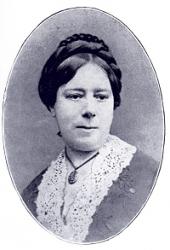
1827 - 1878 Topics: The Christian Year Christmas; Angels; Biblical Characters Mary, Mother of Jesus; Hymns Suitable for Use with Children; Christian Year Christmas; Forgiveness from God; Good News, Gospel; Heaven(s)/Paradise; Jesus Christ Atonement; Jesus Christ Birth and Infancy; Jesus Christ Incarnation; Joy; Music and Singing; New Year; Salvation; Advent 2 Year A; Advent 4 Year A; Christmas Day 1 Year A; Christmas Day 2 Year A; Advent 4 Year B; Advent 3 Year C Translator of "From Heaven Above to Earth I Come" in Voices United Catherine Winkworth (b. Holborn, London, England, 1827; d. Monnetier, Savoy, France, 1878) is well known for her English translations of German hymns; her translations were polished and yet remained close to the original. Educated initially by her mother, she lived with relatives in Dresden, Germany, in 1845, where she acquired her knowledge of German and interest in German hymnody. After residing near Manchester until 1862, she moved to Clifton, near Bristol. A pioneer in promoting women's rights, Winkworth put much of her energy into the encouragement of higher education for women. She translated a large number of German hymn texts from hymnals owned by a friend, Baron Bunsen. Though often altered, these translations continue to be used in many modern hymnals. Her work was published in two series of Lyra Germanica (1855, 1858) and in The Chorale Book for England (1863), which included the appropriate German tune with each text as provided by Sterndale Bennett and Otto Goldschmidt. Winkworth also translated biographies of German Christians who promoted ministries to the poor and sick and compiled a handbook of biographies of German hymn authors, Christian Singers of Germany (1869).
Bert Polman
========================
Winkworth, Catherine, daughter of Henry Winkworth, of Alderley Edge, Cheshire, was born in London, Sep. 13, 1829. Most of her early life was spent in the neighbourhood of Manchester. Subsequently she removed with the family to Clifton, near Bristol. She died suddenly of heart disease, at Monnetier, in Savoy, in July, 1878. Miss Winkworth published:—
Translations from the German of the Life of Pastor Fliedner, the Founder of the Sisterhood of Protestant Deaconesses at Kaiserworth, 1861; and of the Life of Amelia Sieveking, 1863.
Her sympathy with practical efforts for the benefit of women, and with a pure devotional life, as seen in these translations, received from her the most practical illustration possible in the deep and active interest which she took in educational work in connection with the Clifton Association for the Higher Education of Women, and kindred societies there and elsewhere. Our interest, however, is mainly centred in her hymnological work as embodied in her:—
(1) Lyra Germanica, 1st Ser., 1855. (2) Lyra Germanica, 2nd Ser., 1858. (3) The Chorale Book for England (containing translations from the German, together with music), 1863; and (4) her charming biographical work, the Christian Singers of Germany, 1869.
In a sympathetic article on Miss Winkworth in the Inquirer of July 20, 1878, Dr. Martineau says:—
"The translations contained in these volumes are invariably faithful, and for the most part both terse and delicate; and an admirable art is applied to the management of complex and difficult versification. They have not quite the fire of John Wesley's versions of Moravian hymns, or the wonderful fusion and reproduction of thought which may be found in Coleridge. But if less flowing they are more conscientious than either, and attain a result as poetical as severe exactitude admits, being only a little short of ‘native music'"
Dr. Percival, then Principal of Clifton College, also wrote concerning her (in the Bristol Times and Mirror), in July, 1878:—
"She was a person of remarkable intellectual and social gifts, and very unusual attainments; but what specially distinguished her was her combination of rare ability and great knowledge with a certain tender and sympathetic refinement which constitutes the special charm of the true womanly character."
Dr. Martineau (as above) says her religious life afforded "a happy example of the piety which the Church of England discipline may implant.....The fast hold she retained of her discipleship of Christ was no example of ‘feminine simplicity,' carrying on the childish mind into maturer years, but the clear allegiance of a firm mind, familiar with the pretensions of non-Christian schools, well able to test them, and undiverted by them from her first love."
Miss Winkworth, although not the earliest of modern translators from the German into English, is certainly the foremost in rank and popularity. Her translations are the most widely used of any from that language, and have had more to do with the modern revival of the English use of German hymns than the versions of any other writer.
-- John Julian, Dictionary of Hymnology (1907)
============================
See also in:
Hymn Writers of the Church
Catherine Winkworth
W. Chatterton Dix

1837 - 1898 Person Name: William Chatterton Dix Topics: The Christian Year Christmas; Annunciation; Biblical Characters Mary, Mother of Jesus; Biblical Characters Shepherds; Choruses and Refrains; Christian Year Christmas; Gift(s); Jesus Christ Birth and Infancy; Jesus Christ Incarnation; Jesus Christ Kingship, Conqueror; Jesus Christ Lord of Life; Salvation; Word of God; Advent 4 Year A; Christmas Eve Year A; Christmas 1 Year A; Epiphany Year A; Christmas Eve Year B; Christmas Day 1 Year B; Christmas Day 1 Year C; Epiphany Year C Author of "What Child is This" in Voices United Most British hymn writers in the nineteenth century were clergymen, but William C. Dix (b. Bristol, England, 1837; d. Cheddar, Somerset, England, 1898) was a notable exception. Trained in the business world, he became the manager of a marine insurance company in Glasgow, Scotland. Dix published various volumes of his hymns, such as Hymns of Love and Joy (1861) and Altar Songs: Verses on the Holy Eucharist (1867). A number of his texts were first published in Hymns Ancient and Modern (1861).
Bert Polman
========================
Dix, William Chatterton, son of John Dix, surgeon, of Bristol, author of the Life of Chatterton; Local Legends, &c, born at Bristol, June 14, 1837, and educated at the Grammar School of that city. Mr. Chatterton Dix's contributions to modern hymnody are numerous and of value. His fine Epiphany hymn, "As with gladness men of old,” and his plaintive ”Come unto Me, ye weary," are examples of his compositions, many of which rank high amongst modern hymns. In his Hymns of Love and Joy, 1861, Altar Songs, Verses on the Holy Eucharist, 1867; Vision of All Saints, &c, 1871; and Seekers of a City, 1878, some of his compositions were first published. The greater part, however, were contributed to Hymns Ancient & Modern; St. Raphaels Hymnbook, 1861; Lyra Eucharidica, 1863; Lyra Messianica, 1864; Lyra Mystica, 1865; The People's Hymns, 1867; The Hymnary, 1872; Church Hymns, 1871, and others. Many of his contributions are renderings in metrical form of Dr. Littledale's translation from the Greek in his Offices . . . of the Holy Eastern Church, 1863; and of the Rev. J. M. Rodwell's translation of hymns of the Abyssinian Church. These renderings of the "songs of other Churches" have not received the attention they deserve, and the sources from whence they come are practically unknown to most hymnal compilers. Mr. Dix has also written many Christmas and Easter carols, the most widely known of which is "The Manger Throne." In addition to detached pieces in prose and verse for various magazines, he has published two devotional works, Light; and The Risen Life, 1883; and a book of instructions for children entitled The Pattern Life, 1885. The last-named contains original hymns by Mr. Dix not given elsewhere. In addition to the more important of Mr. Dix's hymns which are annotated under their respective first lines, the following are also in common use:-
1. God cometh, let the heart prepare. Advent. In his Vision of All Saints, &c, 1871.
2. Holy, holy, holy, to Thee our vows we pay. Holy Communion. Published in his Altar Songs, 1867, in 6 stanzas of 6 lines, and headed "Eucharistic Processional for Dedication Feast." In the Society for Promoting Christian Knowledge Church Hymns, 1871, and others in an abridged form.
3. How long, O Lord, how long, we ask. Second Advent. Appeared in the Appendix to the Society for Promoting Christian Knowledge Psalms & Hymns, 1869, and repeated in several collections.
4. In our work and in our play. Children's Hymn. Published in his Hymns and Carols for Children, 1869, and is largely adopted in children's hymnbooks, as Mrs. Brock's Children's Hymnbook, 1881, and others. Also in the Society for Promoting Christian Knowledge Church Hymns, 1871.
5. In the hollow of Thine hand. For Fair Weather. Appeared in the People's Hymns, 1867, and repeated in several others.
6. Joy fills our inmost heart today. Christmas. Printed in the Church Times, and then on a Flysheet by Gr. J. Palmer, as the third of Four Joyful Hymns for Christmas, circa 1865. It is in the Society for Promoting Christian Knowledge Church Hymns, 1871, and other hymnals. It is also one of Mr. Dix's Christmas Customs & Christmas Carols, not dated.
7. Lift up your songs, ye thankful. St. Ambrose. Contributed to the People's Hymns, 1867.
8. Now in numbers softly flowing. St. Cecilia. Contributed to the People's Hymns, 1867.
9. Now, our Father, we adore Thee. Praise to the Father. Appeared in the Appendix to the S. P. C. K. Psalms & Hymns, 1869.
10. O Christ, Thou Son of Mary. St. Crispin. First printed in the Union Review, Sept., 1866, and thence into the People's Hymns, 1887.
11. O Cross which only canst allay. Glorying and Trusting in the Cross. Published in the People's Hymns, 1867.
12. O Thou the Eternal Son of God. Good Friday. Appeared in Lyra Messianica, 1864; the author's Hymns and Carols for Children, 1869; the S. P. C. K. Church Hymns, 1871, &c.
13. On the waters dark and drear. For use at Sea. Published in Hymns for Public Worship, &c. (St. Raphael's, Bristol), 1861; the S. P. C. K. Church Hymns, 1871, &c.
14. Only one prayer to-day. Ash Wednesday. Contributed to the People's Hymns, 1867.
15. Sitting at receipt of custom. St. Matthew. Appeared in the People's Hymns, 1867.
16. The Cross is on thy brow. Confirmation. In the 1869 Appendix to the S. P. C. K. Psalms & Hymns.
17. The stars above our head. Work and Humility. In the 1869 Appendix to the S. P. C. K. Psalms & Hymns.
18. When the shades of night are falling. Evening Hymn to the Good Shepherd. In the author's Seekers of a City, &c. [1878].
Most of Mr. Dix's best-known hymns, and also some of those named above, are in common use in America and other English-speaking countries. In Great Britain and America from 30 to 40 are in common use. He died Sept. 9, 1898.
-- John Julian, Dictionary of Hymnology (1907)
======================
Dix, William Chatterton, p. 302, ii. Additional hymns by Mr. Dix now in common use are:—
1. Lift up your songs, ye angel choirs. Ascension.
2. Now, my soul rehearse the story. Christ Feeding the Multitude.
3. Within the temple's hallowed courts. Blessed Virgin Mary. These hymns are from his Altar Songs, 1867.
--John Julian, Dictionary of Hymnology, Appendix, Part II (1907)
W. Chatterton Dix
Nahum Tate
1652 - 1715 Topics: The Christian Year Christmas; Annunciation; Biblical Characters David; Biblical Characters Shepherds; Biblical Narrative; Christian Year Christmas; Jesus Christ Birth and Infancy; Jesus Christ Incarnation; Jesus Christ Kingship, Conqueror; Jesus Christ Lord of Life; Revelation; Service Music Doxologies; Christmas Eve Year A; Christmas Eve Year C Author of "While Shepherds Watched Their Flocks" in Voices United Nahum Tate was born in Dublin and graduated from Trinity College, Dublin, B.A. 1672. He lacked great talent but wrote much for the stage, adapting other men's work, really successful only in a version of King Lear. Although he collaborated with Dryden on several occasions, he was never fully in step with the intellectual life of his times, and spent most of his life in a futile pursuit of popular favor. Nonetheless, he was appointed poet laureate in 1692 and royal historiographer in 1702. He is now known only for the New Version of the Psalms of David, 1696, which he produced in collaboration with Nicholas Brady. Poverty stricken throughout much of his life, he died in the Mint at Southwark, where he had taken refuge from his creditors, on August 12, 1715.
--The Hymnal 1940 Companion
See also in:
Hymn Writers of the Church
Nahum Tate
Christopher Wordsworth
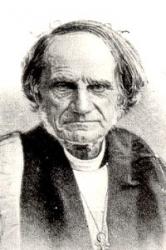
1807 - 1885 Topics: The Christian Year Baptism of Jesus; Biblical Characters David; Biblical Places Bethlehem; Biblical Places Jordan; Christian Year Epiphany; Christian Year Baptism of the Lord; God Presence; Healing; Jesus Christ Baptism; Jesus Christ High Priest; Jesus Christ Incarnation; Jesus Christ Kingship, Conqueror; Jesus Christ Miracles; Jesus Christ Prophet; Jesus Christ Signs and Wonders; Jesus Christ Youth; Music and Singing; Praise; Salvation; Satan/Demonic Forces/Devil; Thankfulness; Baptism of Jesus Year A; Epiphany 2 Year A; Epiphany 3 Year A; Epiphany Last/Transfig. Year A; Advent 2 Year B; Advent 3 Year B; Epiphany 7 Year B; Epiphany 9 Year B; Epiphany Last/Transfig. Year B; Lent 2 Year B; Proper 4 Year B; Epiphany 2 Year C; Epiphany 8 Year C; Epiphany 9 Year C; Lent 2 Year C Author of "Songs of Thankfulness and Praise" in Voices United Christopher Wordsworth--nephew of the great lake-poet, William Wordsworth--was born in 1807. He was educated at Winchester, and at Trinity College, Cambridge, where he graduated B.A., with high honours, in 1830; M.A. in 1833; D.D. in 1839. He was elected Fellow of his College in 1830, and public orator of the University in 1836; received Priest's Orders in 1835; head master of Harrow School in 1836; Canon of Westminster Abbey in 1844; Hulsean Lecturer at Cambridge in 1847-48; Vicar of Stanford-in-the-Vale, Berks, in 1850; Archdeacon of Westminster, in 1865; Bishop of Lincoln, in 1868. His writings are numerous, and some of them very valuable. Most of his works are in prose. His "Holy Year; or, Hymns for Sundays, Holidays, and other occasions throughout the Year," was published in [1862], and contains 127 hymns.
--Annotations of the Hymnal, Charles Hutchins, M.A., 1872.
===================
Wordsworth, Christopher, D.D., was born at Lambeth (of which parish his father was then the rector), Oct. 30, 1807, and was the youngest son of Christopher Wordsworth, afterwards Master of Trinity College, Cambridge, and Priscilla (née Lloyd) his wife. He was educated at Winchester, where he distinguished himself both as a scholar and as an athlete. In 1826 he matriculated at Trinity College, Cambridge, where his career was an extraordinarily brilliant one. He swept off an unprecedented number of College and University prizes, and in 1830 graduated as Senior Classic in the Classical Tripos, and 14th Senior Optime in the Mathematical, won the First Chancellor's Medal for classical studies, and was elected Fellow of Trinity. He was engaged as classical lecturer in college for some time, and in 1836 was chosen Public Orator for the University. In the same year he was elected Head Master of Harrow School, and in 1838 he married Susan Hatley Freere. During his head-mastership the numbers at Harrow fell off, but he began a great moral reform in the school, and many of his pupils regarded him with enthusiastic admiration. In 1844 he was appointed by Sir Robert Peel to a Canonry at Westminster; and in 1848-49 he was Hulsean lecturer at Cambridge. In 1850 he took the small chapter living of Stanford-in-the-Vale cum Goosey, in Berkshire, and for the next nineteen years he passed his time as an exemplary parish priest in this retired spot, with the exception of his four months' statutable residence each year at Westminster. In 1869 he was elevated to the bishopric of Lincoln, which he held for more than fifteen years, resigning it a few months before his death, which took place on March 20th, 1885. As bearing upon his poetical character, it may be noted that he was the nephew of the poet-laureate, William Wordsworth, whom he constantly visited at Rydal up to the time of the poet's death in 1850, and with whom he kept up a regular and lengthy correspondence. Christopher Wordsworth was a very voluminous writer, his principal works being:—
(1) Athens and Attica, 1836; (2) Pompeian Inscriptions, 1837; (3) Greece Pictorial and Descriptive, 1839; (4) King Edward VIth's Latin Grammar, 1841; (5) Bentley's Correspondence, 1842; (6) Theophilus Anglicanus, 1843; (7) Memoirs of William Wordsworth, 1851; (8) Hippolytus, 1853; (9) Notes at Paris, 1854; (10) A Commentary on the whole Bible, 1856-1870;
(11) The Holy Year, 1862; (12) Church History, 1881-1883; many volumes of Sermons, and an enormous amount of Pamphlets, Addresses, Letters, Speeches, on almost every subject in which the interests of the church were concerned, and also on subjects connected with classical literature.
Of his many works, however, the only one which claims notice from the hynmologist's point of view is The Holy Year, which contains hymns, not only for every season of the Church's year, but also for every phase of that season, as indicated in the Book of Common Prayer. Dr. Wordsworth, like the Wesleys, looked upon hymns as a valuable means of stamping permanently upon the memory the great doctrines of the Christian Church. He held it to be "the first duty of a hymn-writer to teach sound doctrine, and thus to save souls." He thought that the materials for English Church hymns should be sought (1) in the Holy Scriptures, (2) in the writings of Christian Antiquity, and (3) in the Poetry of the Ancient Church. Hence he imposed upon himself the strictest limitations in his own compositions. He did not select a subject which seemed to him most adapted for poetical treatment, but felt himself bound to treat impartially every subject, and branch of a subject, that is brought before us in the Church's services, whether of a poetical nature or not. The natural result is that his hymns are of very unequal merit; whether his subject inspired him with poetical thoughts or not, he was bound to deal with it; hence while some of his hymns (such as "Hark! the sound of holy voices," &c, “See the Conqueror mounts in triumph," &c, "O, day of rest and gladness") are of a high order of excellence, others are prosaic. He was particularly anxious to avoid obscurity, and thus many of his hymns are simple to the verge of baldness. But this extreme simplicity was always intentional, and to those who can read between the lines there are many traces of the "ars celans artem." It is somewhat remarkable that though in citing examples of early hymnwriters he almost always refers to those of the Western Church, his own hymns more nearly resemble those of the Eastern, as may be seen by comparing The Holy Year with Dr. Mason Neale's Hymns of the Eastern Church translated, with Notes, &c. The reason of this perhaps half-unconscious resemblance is not far to seek. Christopher Wordsworth, like the Greek hymnwriters, drew his inspiration from Holy Scripture, and he loved, as they did, to interpret Holy Scripture mystically. He thought that ”the dangers to which the Faith of England (especially in regard to the Old Testament) was exposed, arose from the abandonment of the ancient Christian, Apostolic and Patristic system of interpretation of the Old Testament for the frigid and servile modern exegesis of the literalists, who see nothing in the Old Testament but a common history, and who read it (as St. Paul says the Jews do) ‘with a veil on their heart, which veil' (he adds) 'is done away in Christ.'" In the same spirit, he sought and found Christ everywhere in the New Testament. The Gospel History was only the history of what "Jesus began to do and to teach" on earth; the Acts of the Apostles and all the Epistles were the history of what he continued to do and to teach from Heaven; and the Apocalypse (perhaps his favourite book) was "the seal and colophon of all." Naturally he presents this theory, a theory most susceptible of poetical treatment, in his hymns even more prominently than in his other writings. The Greek writers took, more or less, the same view; hence the resemblance between his hymns and those of the Eastern Church. [Rev. J. H. Overton, D.D.]
During the time that Bishop Wordsworth was Canon of Westminster, and Vicar of Stanford-in-the-Vale cum Goosey, he published his collection of hymns as:—
The Holy Year; or Hymns for Sundays and Holy-days, And other Occasions. London, Rivingtons, 1862.
This work contained an extended Preface; a Calendar of Hymns; 117 Original Compositions; and a Supplement of 82 hymns from other sources. In the 3rd edition, 1863, the Supplement was omitted, and the Original hymns were increased to 127. Several of these hymns are annotated under their respective first lines, the rest in common use are:—
From The Holy Year, first edition, 1862:—
1. Five pebbles from the brook. Temptation. Stanza ix. added in 1863.
2. Giver of law is God's [Thy] dear Son. Circumcision. Doxology added in 1863.
3. Gracious Spirit, Holy Ghost. Quinquagesima.
4. Holy, holy, holy, Lord, God of Hosts, Eternal King. Holy Trinity.
5. Holy of Holies! awful name. Epistle 5th Sunday in Lent.
6. How blest are hearts which Christ the Lord. Holy Matrimony. In 1863 in two parts, Pt. ii. being "Bless these Thy servants, gracious Lord."
7. How blessed is the force of prayer. St. Peter. In 1863, in two parts, Pt. i. being "Behold! at hand is Herod's doom."
8. How wondrous and mysterious are. Holy Baptism. In the 1863 ed. it is divided into four parts:— Pt. ii. "In Jordan Thou didst sanctify"; Pt. iii. "Thee, risen in triumph from the grave"; Pt. iv." Baptized in Christ we put on Christ." The cento, "By Water and the Holy Ghost," is also from this hymn.
9. In sorrow and distress. Ash Wednesday.
10. In Thy glorious Resurrection . Easter. In the 1863 ed. it begins, "Lord, Thy glorious Resurrection," and the doxology was added.
11. Lord, may we never, save to One. Against False Worship. Stanza viii. was added in 1863.
12. Lord not with [by] poor and paltry gifts. Offertory.
13. Lord, Who didst the Prophets teach. 2nd Sunday in Advent, or, Holy Scripture. The doxology was added in 1863.
14. Man fell from grace by carnal appetite. Gospel 1st S. in Lent.
15. Mankind in Adam fell. Good Friday. In the 1863 ed. it is divided into three parts: Pt. ii. being "We fell by Adam's sin;" and Pt. iii. "Thy Cross a Trophy is."
16. Not bound by chains, nor pent in cells. The Gifts of the Holy Ghost. This hymn is preceded by a special note on the Holy Spirit and His gifts.
17. Not gifts of prophecy can save. Self Discipline, or, 8th Sunday after Trinity.
18. 0 Jerusalem beloved, joyful morn has dawned on Thee. Purification of Blessed Virgin Mary, or, The Presentation. In the 1863 edition it is divided into two parts, Pt. ii. Being “Light the Gentile world to lighten, and thy glory Israel."
19. 0 Saviour, Who at Nain's gate. The Raising of the Widow's Son.
20. 0 Son of God, the Eternal Word. The Queen's Accession.
21. Once all the nations were as one. Babel and Sion a Contrast.
22. Sing, 0 sing this blessed morn. Christmas. In the 1863 edition a doxology was added, and the hymn was divided into two parts, Pt. ii. being, "God comes down that man may rise."
23. The banner of the Cross. Missions. In the 1863 ed. it is in three parts, Pt. ii., "Now for the Lord our God"; Pt. iii. "The earth from East to West."
24. The Galilean Fishers toil. Collect 4th Sunday in Advent. From this "0 Lord, when storms around us howl" is taken.
25. Thou bidd'st us visit in distress. The Promise of the Comforter, or, Sunday before Ascension. In the 1863 edition it is in two parts, Pt. ii. being “At Thy first birth, Thou, Lord, didst wait."
26. Thou hast a Temple founded. The Christian Temple; or, Epistle 11th Sunday after Trinity.
27. To-day, 0 Lord, the Holy James. St. James. In the 1863 ed. in two parts, Pt. ii. being "God in His word does not display."
28. Today with bright effulgence shine. Conversion of St. Paul. In the 1863 ed. it begins "Today in Thine Apostle shine," and is in two parts, Pt. ii being "From East to West, from North to South."
29. Upon the sixth day of the week. Easter Eve. Stanzas x., xi. of the 1863 text were added then, and the hymn was given in two parts, Pt. ii. being "By tasting the forbidden fruit."
30. We hear the tolling bell. Burial. The doxology was added in 1863, and the hymn was divided, Pt. ii. being "0 gracious Lord, to Thee." The cento "We see the open grave" is from this hymn.
31. When from the City of our God. The Good Samaritan. From this is taken “What beams of grace and mercy, Lord."
32. When Thou, 0 Lord, didst send the Twelve. SS. Simon and Jude. In the 1863 ed. stanza x. is new, and Pt. ii. begins, "Zeal, swollen with passion's cloudy smoke."
ii. From the Holy Year, 3rd ed., 1863.
33. Heavenly Father, send Thy blessing. For Schools. In extensive use.
34. Holy, holy, holy Lord, Maker of this worldly frame. Septuagesima. Based on the Epistle and Gospel of the week.
35. Lo He comes! Whom every nation. Advent. This is headed "The First Advent of Christ, coming to save."
36. 0 fear not though before thee lies. Communion of the Sick. Pt. ii. begins, "The Resurrection and the Life."
37. On every new-born babe of earth. Churching of Women. Pt. ii. begins, "Bright angels of the King of kings."
38. Peace to this house! O Thou Whose way. Visitation of the Sick. Pt. ii. "0 Conqueror by suffering; Pt. iii. "Restore us to Thine house of prayer."
39. The day is gently sinking to a close. Evening. A beautiful hymn.
40. We all, 0 God, unrighteous are. The Lord our Righteousness. Sometimes "We all, O Lord, unrighteous are." Based upon the Epistle of the Sunday next before Advent. Pt. ii. begins "Behold the day, the glorious day."
In addition to many of the hymns in the 1863 edition of The Holy Year being divided into parts, the texts of most of them were revised by the author, and are authorized.
-- John Julian, Dictionary of Hymnology (1907)
================
Wordsworth, Bp. C. (Lincoln) , p. 1294, i. Of his hymns, noted on p. 1294, i., ii., we find that No. 39 appeared in his Holy Year in 1864; and Nos. 34, 35, and 40 in 1862. The first edition in which the longer hymns were divided into parts was that of 1868. With regard to the date of Bp. Wordsworth's death, we find this reference thereto in his Biography: "He expired soon after midnight on Friday, March 20, or perhaps, it might be said, early on the Saturday morning." This gives the date of his death as March 21, 1885.
--John Julian, Dictionary of Hymnology, New Supplement (1907)
===========================
See also in:
Hymn Writers of the Church
Christopher Wordsworth
Theodulf, Bishop of Orléans
750 - 821 Person Name: Theodulph of Orleans Topics: The Christian Year Palm Sunday; Adoration and Praise; Angels; Biblical Characters David; Choruses and Refrains; Christian Year Passion/Palm Sunday; Exultation; Jesus Christ Adoration and Praise; Jesus Christ Kingship, Conqueror; Jesus Christ Lord of Life; Jesus Christ Son of God/Man (David); Joy; Music and Singing; Pilgrimage and Conflict; Prayer; Processionals (Opening of Worship); Recessionals; Redemption; Worship; Palm/Passion Sunday Year A; Palm/Passion Sunday Year B; Palm/Passion Sunday Year C Author of "All Glory, Laud and Honour" in Voices United Theodulph of Orleans appears to have been a native of Italy. He was brought to France by Charles the Great, perhaps when Charles returned from Italy in 781. He became Bishop of Orleans about 785, and soon afterwards also Abbot of Fleury. After the death of Charles he continued for some time on friendly terms with the Emperor Louis, but, falling under suspicion of being concerned in the plot in favour of Bernard of Italy, was imprisoned in 818, at Angers, where he seems to have died in 821, apparently on Sep. 18. There is a full and interesting sketch of his life and works in the Dictionary of Chr. Biog., iii., pp. 983-989. See also Potthast's Biblical History, Medii Aevi, 1896, vol. ii., p. 1058. The best and most recent edition of his Carmina is in vol. i., Berlin, 1881, of the Poetae Latini Aevi Carolini, which includes his famous "Gloria, laus et honor," p. 426, i.
[Rev. James Mearns, M.A.]
--John Julian, Dictionary of Hymnology, New Supplement (1907)
Theodulf, Bishop of Orléans
St. John of Damascus
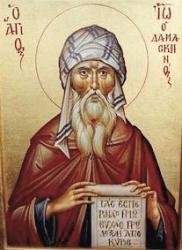
675 - 787 Person Name: John of Damascus Topics: The Christian Year Easter; Biblical Characters Jacob's Sons; Biblical Characters Pharoah, Jacob's Sons; Celebration; Christian Year Easter; Eternal Life; Feast; Jesus Christ Light; Jesus Christ Resurrection; Joy; Music and Singing; Passover; Processionals (Opening of Worship); Seasons Changing; Service Music Gathering, Call to Worship, Greeting; Service Music Doxologies; Victory; Easter 1 Year A; Easter 2 Year A; Ascension Year A; Proper 13 Year A; Proper 19 Year A; Easter 1 Year B; Epiphany 6 Year C; Easter 1 Year C; Easter Evening Year ABC Author of "Come, You Faithful, Raise the Strain" in Voices United Eighth-century Greek poet John of Damascus (b. Damascus, c. 675; d. St. Sabas, near Jerusalem, c. 754) is especially known for his writing of six canons for the major festivals of the church year. John's father, a Christian, was an important official at the court of the Muslim caliph in Damascus. After his father's death, John assumed that position and lived in wealth and honor. At about the age of forty, however, he became dissatisfied with his life, gave away his possessions, freed his slaves, and entered the monastery of St. Sabas in the desert near Jerusalem. One of the last of the Greek fathers, John became a great theologian in the Eastern church. He defended the church's use of icons, codified the practices of Byzantine chant, and wrote about science, philosophy, and theology.
Bert Polman
========================
John of Damascus, St. The last but one of the Fathers of the Greek Church, and the greatest of her poets (Neale). He was of a good family in Damascus, and educated by the elder Cosmas in company with his foster-brother Cosmas the Melodist (q. v.). He held some office under the Caliph. He afterwards retired to the laura of St. Sabas, near Jerusalem, along with his foster-brother. There he composed his theological works and his hymns. He was ordained priest of the church of Jerusalem late in life. He lived to extreme old age, dying on the 4th December, the day on which he is commemorated in the Greek calendar, either in his 84th or 100th year (circa 780). He was called, for some unknown reason, Mansur, by his enemies. His fame as a theologian rests on his work, the first part of which consists of philosophical summaries, the second dealing with heresies, and the third giving an account of the orthodox faith. His three orations in favour of the Icons, from which he obtained the name of Chrysorrhous and The Doctor of Christian Art, are very celebrated. The arrangement of the Octoechusin accordance with the Eight Tones was his work, and it originally contained no other Canons than his. His Canons on the great Festivals are his highest achievements. In addition to his influence on the form and music, Cardinal Pitra attributes to him the doctrinal character of the later Greek hymnody. He calls him the Thomas Aquinas of the East. The great subject round which his hymns are grouped is The Incarnation, developed in the whole earthly career of the Saviour. In the legendary life of the saint the Blessed Virgin Mary is introduced as predicting this work: the hymns of John of Damascus should eclipse the Song of Moses, rival the cherubim, and range all the churches, as maidens beating their tambours, round their mother Jerusalem (Pitra, Hymn. Grecque, p. 33). The legend illustrates not only the dogmatic cast of the hymns, but the introduction of the Theotokion and Staurotheotokion, which becomes the prevalent close of the Odes from the days of St. John of Damascus: the Virgin Mother presides over all. The Canons found under the name of John Arklas (one of which is the Iambic Canon at Pentecost) are usually attributed to St. John of Damascus, and also those under the name of John the Monk. Some doubt, however, attaches to the latter, because they are founded on older rhythmical models which is not the case with those bearing the name of the Damascene, and they are not mentioned in the ancient Greek commentaries on his hymns. One of these is the Iambic Canon for Christmas.
His numerous works, both in prose and verse, were published by Le Quien, 1712; and a reprint of the same with additions by Migne, Paris, 1864. Most of his poetical writings are contained in the latter, vol. iii. pp. 817-856, containing those under the title Carmina; and vol. iii. pp. 1364-1408, the Hymni. His Canon of SS. Peter & Paul is in Hymnographie Grecque, by Cardinal Pitra, 1867. They are also found scattered throughout the Service Books of the Greek Church, and include Iambic Canons on the Birth of Christ, the Epiphany, and on Pentecost; Canons on Easter, Ascension, the Transfiguration, the Annunciation, and SS. Peter & Paul: and numerous Idiomela. In addition, Cardinal Mai found a manuscript in the Vatican and published the same in his Spicilegium Romanum, which contained six additional Canons, viz.: In St. Basilium; In St. Chrysostomum; In St. Nicolaum; In St. Petrum; In St. Georgium, and In St. Blasium. But M. Christ has urged grave objections to the ascription of these to St. John of Damascus (Anthologia Graeca Carminum Christorium, p. xlvii.). Daniel's extracts in his Thesaurus Hymnologicus, vol. iii. pp. 80, 97, extend to six pieces. Dr. Neale's translations of portions of these works are well known. [Rev. H. Leigh Bennett, M.A.]
-- John Julian, Dictionary of Hymnology (1907)
St. John of Damascus
Anne Steele
1717 - 1778 Topics: Christian Experience; Christ Character of; Christians Love for Christ; Love For the Saviour; Christ Character of; Christians Love for Christ; Love For the Saviour Author of "Strength, Fortress, Refuge" in Laudes Domini Anne Steele was the daughter of Particular Baptist preacher and timber merchant William Steele. She spent her entire life in Broughton, Hampshire, near the southern coast of England, and devoted much of her time to writing. Some accounts of her life portray her as a lonely, melancholy invalid, but a revival of research in the last decade indicates that she had been more active and social than what was previously thought. She was theologically conversant with Dissenting ministers and "found herself at the centre of a literary circle that included family members from various generations, as well as local literati." She chose a life of singleness to focus on her craft. Before Christmas in 1742, she declined a marriage proposal from contemporary minister-hymnist Benjamin Beddome. All the same, some of Steele's sufferings were very real. She lost her mother at age 3, a potential suitor at age 20, her step mom at 43, and her sister-in-law at 45. She spent many years caring for her father until his death in 1769. For most of her life, she exhibited symptoms of malaria, including persistent pain, fever, headaches, and stomach aches. Caleb Evans, in his preface to Steele's posthumous Miscellaneous Pieces in Verse and Prose (1780), noted that she had been bed ridden for "some years" before her death: When the interesting hour came, she welcomed its arrival, and though her feeble body was excruciated with pain, her mind was perfectly serene. . . . She took the most affectionate leave of her weeping friends around her, and at length, the happy moment of her dismission arising, she closed her eyes, and with these animating words on her dying lips, "I know that my Redeemer liveth," gently fell asleep in Jesus. Historically, her most popular hymn has been "When I survey life's varied scene" (and its shortened form, "Father, whate'er of earthly bliss"), a hymn that turns earthly loss or denial into a spirit of thankfulness, published in over 800 North American hymnals since 1792. Not all of her work deals with personal agony. Her hymns span a wide doctrinal and ecclesiastical range, some crafted and used for her father's congregation. Her metrical psalms are among the finest of the genre. Steele's hymns and psalms were published in two volumes in 1760, Poems on Subjects Chiefly Devotional, under the pseudonym Theodosia, with an additional volume of material published after her death, in Miscellaneous Pieces in Verse and Prose, 1780. Another small collection, Verses for Children, was issued in 1788, with two other editions given in 1803 and 1806. Sixty-two of her hymns, including new material and some revisions by Steele, were published in a hymnal for Baptists in 1769, A Collection of Hymns Adapted to Public Worship, edited by Caleb Evans and John Ash. Forty seven were included in John Rippon's A Selection of Hymns from the Best Authors in 1787; the only author with larger representation was Philip Doddridge, with 101. These collections represent the earliest attempts to anthologize Baptist hymns and were vital for bringing Steele's hymns into wider public worship, where they have been a mainstay for over two hundred years.
Chris Fenner adapted from The Towers (Southern Baptist Theological Seminary, August 2015)
Recommended Bibliography:
Cynthia Y. Aalders, To Express the Ineffable: The Hymns and Spirituality of Anne Steele (Milton Keynes, U.K.: Paternoster, 2008).
Cynthia Y. Aalders, "In melting grief and ardent love: Anne Steele's contribution to eighteenth-century hymnody," The Hymn (summer 2009), 16-25.
J.R. Broome, A Bruised Reed: The Life and Times of Anne Steele (Harpenden, U.K.: Gospel Standard Trust Publications, 2007).
Joseph Carmichael, The Hymns of Anne Steele in John Rippon's Selection of Hymns: A Theological Analysis in the Context of the English Particular Baptist Revival (2012), dissertation, http://digital.library.sbts.edu/handle/10392/4112
Priscilla Wong, Anne Steele and Her Spiritual Vision (Grand Rapids: Reformation Heritage Books, 2012).
Timothy Whelan & Julia B. Griffin, eds., Nonconformist Women Writers, 1720–1840, vols. 1 & 2 (London: Pickering & Chatto, 2011).
========================
Steele, Anne, born in 1716, was the daughter of Mr. Wm. Steele, a timber merchant, and pastor, without salary, of the Baptist Church at Broughton, in Hampshire. At an early age she showed a taste for literature, and would often entertain her friends by her poetical compositions. But it was not until 1760 that she could be prevailed upon to publish. In that year two volumes appeared under the title of Poems on Subjects chiefly Devotional, by Theodosia. After her death, which occurred in November, 1778, a new edition was published with an additional volume and a Preface by the Rev. Dr. Caleb Evans, of Bristol (Bristol, 1780). In the three volumes are 144 hymns, 34 Psalms in verse, and about 30 short poems. They have been reprinted in one vol. by D. Sedgwick, 1863….
Among Baptist hymnwriters Miss Steele stands at the head, if we regard either the number of her hymns which have found a place in the hymnals of the last 120 years, or the frequency with which they have been sung. Although few of them can be placed in the first rank of lyrical compositions, they are almost uniformly simple in language, natural and pleasing in imagery, and full of genuine Christian feeling. Miss Steele may not inappropriately be compared with Miss F. R. Havergal, our "Theodosia" of the 19th century. In both there is the same evangelic fervour, in both the same intense personal devotion to the Lord Jesus. But whilst Miss Steele seems to think of Him more frequently as her "bleeding, dying Lord "—dwelling on His sufferings in their physical aspect—Miss Havergal oftener refers to His living help and sympathy, recognizes with gladness His present claims as "Master" and "King," and anticipates almost with ecstasy His second coming. Looking at the whole of Miss Steele's hymns, we find in them a wider range of thought than in Miss Havergal's compositions. She treats of a greater variety of subjects. On the other hand, Miss Havergal, living in this age of missions and general philanthropy, has much more to say concerning Christian work and personal service for Christ and for humanity. Miss Steele suffered from delicacy of health and from a great sorrow, which befell her in the death of her betrothed under peculiarly painful circumstances. In other respects her life was uneventful, and occupied chiefly in the discharge of such domestic and social duties as usually fall to the lot of the eldest daughter of a village pastor. She was buried in Broughton churchyard. [Rev W. R. Stevenson, M.A.]
A large number of Miss Steele's hymns are in common use, the larger proportion being in American hymnbooks. In addition to "Almighty Maker of my frame," “Far from these narrow scenes of night," "Father of mercies in Thy word," and others annotated under their respective first lines, there are also:—
i. From her Poems on Subjects Chiefly Devotional, 1760, vols. i., ii.
1. Come, let our souls adore the Lord. Pleading for Mercy. One of two hymns "On the Fast, Feb. 11, 1757," the first being "While justice waves her vengeful hand."
2. Come, tune ye saints, your noblest strains. Christ Dying and Rising.
3. Deep are the wounds which sin has made. Christ, the Physician.
4. Enslaved by sin, and bound in chains. Redemption.
5. Eternal power, almighty God. Divine Condescension.
6. Eternal Source of joys divine. Divine Assurance desired.
7. Great God, to Thee my evening song. Evening.
8. Great Source of boundless power and grace. Desiring to Trust in God.
9. Hear, gracious [God] Lord, my humble moan [prayer] . The presence of God desired.
10. Hear, O my God, with pity hear. Ps. cxliii.
11. How long shall earth's alluring toys ? On Longing after unseen pleasures.
12. How lovely, how divinely sweet. Ps. lxxziv.
13. How oft, alas, this wretched heart. Pardoning Love.
14. In vain my roving thoughts would find. Lasting Happiness.
15. Jesus, the spring of joys divine. Christ the Way.
16. Lord, how mysterious are Thy ways. Providence.
17. Lord, Thou hast been Thy Children's God. Ps. xc.
18. Lord, we adore Thy boundless grace. Divine Bounty.
19. Lord, when my [our] raptured thought surveys. Creation and Providence.
20. Lord, when my thoughts delighted rove. Passiontide.
21. My God, 'tis to Thy mercy seat. Divine Mercy.
22. My God, to Thee I call. Lent.
23. O for a sweet, inspiring ray. The Ascended Saviour.
24. O Thou Whose tender mercy hears. Lent.
25. Permit me, Lord, to seek Thy face. Strength and Safety in God alone.
26. Should famine o'er the mourning field. During Scarcity.
27. So fades the lovely, blooming flower. Death of a Child.
28. Stretched on the Cross the Saviour dies. Good Friday.
29. The Lord, my Shepherd and my Guide. Ps.xxiii.
30. The Lord, the God of glory reigns. Ps. xciii.
31. The Saviour calls; let every ear. The Invitation.
32. There is a glorious world on high. True Honour.
33. Thou lovely [only] Source of true delight. Desiring to know Jesus.
34. Thou only Sovereign of my heart. Life in Christ alone.
35. To Jesus, our exalted Lord. Holy Communion.
36. To our Redeemer's glorious Name. Praise to the Redeemer.
37. To your Creator, God. A Rural Hymn.
38. When I survey life's varied scene. Resignation.
39. When sins and fears prevailing rise. Christ the Life of the Soul.
40. Where is my God? does He retire. Rreathing after God.
41. While my Redeemer's near. The Good Shepherd.
42. Why sinks my weak desponding mind? Hope in God.
43. Ye earthly vanities, depart. Love for Christ desired.
44. Ye glittering toys of earih adieu. The Pearl of great Price.
45. Ye humble souls, approach your God. Divine Goodness.
ii. From the Bristol Baptist Collection of Ash & Evans, 1769.
46. Come ye that love the Saviour's Name. Jesus, the King of Saints.
47. How helpless guilty nature lies. Need of Receiving Grace.
48. Praise ye the Lord let praise employ. Praise.
iii. Centos and Altered Texts,
49. How blest are those, how truly wise. True honour. From "There is a glorious world on high."
50. How far beyond our mortal view. Christ the Supreme Beauty. From "Should nature's charms to please the eye," 1760, st. iii.
51. In vain I trace creation o'er. True happiness. From "When fancy spreads her boldest wings," 1760, st. ii.
52. Jesus, and didst thou leave the sky? Praise to Jesus. From “Jesus, in Thy transporting name," 1760, st. iv.
53. Look up, my soul, with cheerful eye. Breathing after God. From No. 40, st. v.
54. Lord, in the temple of Thy grace. Christ His people's Joy. From "The wondering nations have beheld," 1760, st. iii.
55. My God, O could I make the claim. Part of No. 9 above.
56. My soul, to God, its source, aspires. God, the Soul's only Portion. From "In vain the world's alluring smile," st. iii.
57. O could our thoughts and wishes fly. Part of No. 11 above, st. iv.
58. O for the eye of faith divine. Death anticipated. From "When death appears before my sight," 1760, st. iii., vii., viii. altered, with opening stanzas from another source.
59. O Jesus, our exalted Head. Holy Communion. From "To Jesus, our exalted Lord." See No. 35.
60. O world of bliss, could mortal eyes. Heaven. From "Far from these narrow scenes of night."
61. See, Lord, Thy willing subjects bow. Praise to Christ. From "O dearer to my thankful heart," 1780, st. 5.
62. Stern winter throws his icy chains. Winter. From "Now faintly smile day's hasty hours," 1760, st. ii.
63. Sure, the blest Comforter is nigh. Whitsuntide. From "Dear Lord, and shall Thy Spirit rest," 1760, st. iii.
64. The God of my salvation lives. In Affliction. From, "Should famine, &c," No. 26, st. iv.
65. The Gospel, O what endless charms. The Gospel of Redeeming Love. From "Come, Heavenly Love, inspire my song."
66. The mind was formed lo mount sublime. The Fettered Mind. From "Ah! why should this immortal mind?" 1760, st. ii.
67. The once loved form now cold and dead. Death of a Child. From "Life is a span, a fleeting hour," 1760, st. iii.
68. Thy gracious presence, O my God. Consolation in Affliction. From "In vain, while dark affliction spreads," 1780, st. iv.
69. Thy kingdom, Lord, for ever stands. Ps. cxlv. From "My God, my King, to Thee I'll raise," 1760, st. xii.
70. Triumphant, Christ ascends on high. Ascension. From "Come, Heavenly Love, inspire my song," 1760, st. xxxii.
71. When blest with that transporting view. Christ the Redeemer. From "Almighty Father, gracious Lord," 1760, st. xi.
72. When death before my sight. Death Anticipated. From "When death appears before my sight," 1760.
73. When gloomy thoughts and boding fears. Com¬forts of Religion. From "O blest religion, heavenly fair," 1760, st. ii.
74. When weary souls with sin distrest. Invitation to Rest. From "Come, weary souls, with sin distressed," 1760.
75. Whene'er the angry passions rise. Example of Christ. From “And is the gospel peace and love?" 1760, st. ii.
All the foregoing hymns are in D. Sedgwick's reprint of Miss Steele's Hymns, 1863.
--Excerpts from John Julian, Dictionary of Hymnology (1907)
====================
Steele, Anne, p. 1089, i., Additional hymns in common use:
1. Amazing love that stoop'd so low. Thankfulness. From "O dearer to my thankful heart," 1780, iii.
2. Bright scenes of bliss, unclouded skies. Saved by Hope. Poems, 1760, i. p. 228.
3. Jesus demands this heart of mine. Pardon De¬sired. Poems, 1760, i. p. 120.
4. Jesus, Thou Source divine. Christ the Way. Poems, 1760, i. p. 53, altered.
5. Lord, how mysterious are Thy ways. Mysteries of Providence. Poems, 1760, i. p. 131.
6. Lord^in Thy great, Thy glorious Name. Ps. xxxi. Poems, 1760, ii. p. 158.
--John Julian, Dictionary of Hymnology, Appendix, Part II (1907)
Anne Steele
Ray Palmer
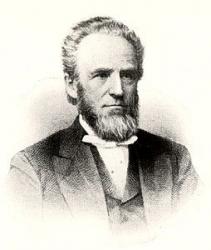
1808 - 1887 Topics: Christian Experience; Christ Character of; Christians Love for Christ; Love For the Saviour; Christ Character of; Christians Love for Christ; Love For the Saviour Author of ""Look unto Me"" in Laudes Domini Ray Palmer (b. Little Compton, RI, 1808; d. Newark, NJ, 1887) is often considered to be one of America's best nineteenth-century hymn writers. After completing grammar school he worked in a Boston dry goods store, but a religious awakening prodded him to study for the ministry. He attended Yale College (supporting himself by teaching) and was ordained in 1835. A pastor in Congregational churches in Bath, Maine (1835-1850), and Albany, New York (1850-1865), he also served as secretary of the American Congregational Union (1865-1878). Palmer was a popular preacher and author, writing original poetry as well as translating hymns. He published several volumes of poetry and hymns, including Sabbath Hymn Book (1858), Hymns and Sacred Pieces (1865), and Hymns of My Holy Hours (1868). His complete poetical works were published in 1876.
Bert Polman
===================
Palmer, Ray, D.D., son of the Hon. Thomas Palmer, a Judge in Rhode Island, was born at Little Compton, Rhode Island, Nov. 12, 1808. His early life was spent at Boston, where he was for some time clerk in a dry-goods store. At Boston he joined the Park Street Congregational Church, then under the pastoral care of Dr. S. E. Dwight. After spending three years at Phillips Academy, Andover, he entered Yale College, New Haven, where he graduated in 1830. In 1835 he became pastor of the Central Congregational Church, Bath, Maine. During his pastorate there he visited Europe in 1847. In 1850 he was appointed to the First Congregational Church, at Albany, New York, and in 1865 Corresponding Secretary to the American Congregational Union, New York. He resigned in 1878, and retired to Newark, New Jersey. He died at Newark, Mar. 29, 1887. Dr. Palmer's published works in prose and verse include:--
(1) Memoirs and Select Remains of Charles Pond, 1829; (2) The Spirit's Life, a Poem, 1837; (3) How to Live, or Memoirs of Mrs. C. L. Watson, 1839; (4) Doctrinal Text Book, 1839; (5) Spiritual Improvement, 1839, republished as Closet Hours in 185; (6) What is Truth? or Hints on the Formation of Religious Opinions, 1860; (7) Remember Me, or The Holy Communion, 1865; (8) Hymns and Sacred Pieces, with Miscellaneous Poems, 1865; (9) Hymns of my Holy Hours, and Other Pieces, 1868; (10) Home, or the Unlost Paradise, 1873; and (11) Voices of Hope and Gladness, 1881.
Most of Dr. Palmer's hymns have passed into congregational use, and have won great acceptance. The best of them by their combination of thought, poetry, and devotion, are superior to almost all others of American origin. The first which he wrote has become the most widely known of all. It is:—
1. My faith looks up to Thee. Faith in Christ. This hymn was written by the author when fresh from College, and during an engagement in teaching in New York. This was in 1830. The author says concerning its composition, "I gave form to what I felt, by writing, with little effort, the stanzas. I recollect I wrote them with very tender emotion, and ended the last line with tears." A short time afterwards the hymn was given to Dr. Lowell Mason for use, if thought good, in a work then being compiled by him and Dr. T. Hastings. In 1831 that work was published as Spiritual Songs for Social Worship: adapted to the use of Families, &c. Words and Music arranged by Thomas Hastings, of New York, and Lowell Mason of Boston. It is No. 141 in 4 stanzas of 8 lines, entitled "Self Consecration," and accompanied with the tune by Dr. L. Mason, there given as "My faith looks up to Thee, "but subsequently known as Olivet. (Orig. text of hymn in Thring's Collection, 1882.) It has passed into most modern collections in all English-speaking countries, and has been rendered into numerous languages. That in Latin, by H. M. Macgill (p. 708, ii.), begins "Fides Te mea spectat."
2. Fount of everlasting love. Praise for renewed Spiritual Life. This also appeared in the Spiritual Songs, &c, 1831, No. 191, in 4 stanzas of 4 lines, and headed "Praise for a Revival."
The hymns which are given below are all in Dr. Palmer's Poetical Works, N. Y., 1876, and the dates appended in brackets are those given by him in that work.
3. Thou who roll'st the year around. (1832.) Close of the Year. In several American collections.
4. Away from earth my spirit turns. (1833.) Holy Communion. Appeared in Lowell Mason's Union Hymns, in 4 stanzas of 4 lines. In the Church Praise Book, N. Y.. 1882, it begins with st. ii., "Thou, Saviour, art the Living Bread."
5. Before Thy throne with tearful eyes. (1834.) Liberty of Faith.
6. Stealing from the world away. (1834.) Evening. Written at New Haven in 1834, and is very popular in America.
7. Thine [Thy] holy day's returning. (1834.) Sunday Morning.
8. Wake thee, 0 Zion. (1862.) Zion Exultant.
9. We stand in deep repentance. (1834.) Lent.
This last, No. 9, in common with Nos. 10, 11, 12, is marked "original," in the Presbyterian Parish Hymns, 1843. Probably they were given to the editors of that book in manuscript, and had not previously appeared.
10. And is there, Lord, a rest? (1843.) Rest in Heaven. Written at Bath, Maine, in 1843.
11. 0 sweetly breathe the lyres above. Consecration to Christ. This was accidentally omitted from Dr. Palmer's Poetical Works, 18?6. S. W. Duffield says:—
"It was written in the winter of 1842-43, at a time of revival. At the previous Communion several had been received under circumstances that made Doddridge's hymn, ‘0 happy day that fixed my choice 'a most appropriate selection. Not caring to repeat it, and needing something similar, Dr. Palmer composed the present hymn." English Hymns, N. Y., 1886, p. 432.
12. When downward to the darksome tomb. (1842.) Death Contemplated. Written at Bath, Maine, 1842.
From 1843 there comes a long break, and Dr. Palmer seems to have done no more hymn-writing until called upon by Professors Park and Phelps, of Andover, for contributions to their Sabbath Hymn-Book, 1858. His hymns written for that important collection rank amongst the best that America has produced. This is specially true of the first four (Nos. 13-16) from the Latin.
13. Jesus, Thou joy of loving hearts. (l858.) Translation of a cento from "Jesu dulcis memoria" (p. 588, ii.).
14. 0 Bread to Pilgrims given. (1858.) Translation of “O esca viatorum" (q.v.).
15. 0 Christ our King, Creator Lord. (1858.) Translation of “Rex Christe, factor omnium "
16. Come Holy Ghost, in love. (1858.) Translation of “Veni Sancte Spiritus" (q.v.)
17. Jesus, these eyes have never seen. (1858.) Christ loved, though unseen. This hymn is accounted by many as next in merit and beauty to "My faith looks up to Thee."
18. Lord, my weak thought in vain would climb. (1858.) God Unsearchable. This hymn deals with the mysteries of Predestination in a reverent and devout manner.
19. Thy Father's house! thine own bright home. (1858.) Heaven.
The next group, Nos. 20-27, appeared in Dr. Robinson's Songs for the Sanctuary, 1865.
20. Lord, Thou wilt bring the joyful day. (1864.) Contemplation of Heaven. Written in New York City.
21. Eternal Father, Thou hast said. (i860.) Missions.
22. Jesus, Lamb of God, for me. (1863.) Jesus, the Way of Salvation. Written in Albany, New York.
23. Take me, 0 my Father, take me. (1864.) Lent.
24. Wouldst thou eternal life obtain. (1864.) Good Friday.
25. Come Jesus, Redeemer, abide Thou with me. (1864.) Holy Communion.
26. Lord, Thou on earth didst love Thine own. (1864.) Fellowship with Christ.
27. Thou, Saviour, from Thy throne on high. (1864.) Prayer.
The next four (Nos. 28-31) present another group. They appeared in D. E. Jones's Songs for the New Life, 1869, and the Reformed Dutch Hymns of the Church, N. Y., 1869. The dates of composition are from Dr. Palmer's Poems, 1876.
28. Lord, Thou hast taught our hearts to glow. (1865.) Ordination, or Meeting of Ministers.
29. When inward turns my searching gaze. (1868.) Evening.
30. 0 Jesus, sweet the tears I shed. (1867.) Good Friday.
31. Jesus, this [my] heart within me burns. (1868.) Love.
The hymns which follow are from various sources.
32. 0 Christ, the Lord of heaven, to Thee. (1867.) Universal Praise to Christ. Appeared in the author's Hymns of my Holy Hours, 1867. It is a hymn of great merit, and is widely used.
33. Behold the shade of night is now receding. (1869.) A translation of "Ecce jam noctis." (p. 320, i., and Various).
34. Hid evening shadows let us all be waking. (1869.) A translation of "Nocte surgentes" (p. 809, i.).
35. I give my heart to Thee. (Aug. 20, 1868.) A translation of "Cor meum Tibi dedo," p. 262, ii.
36. Holy Ghost, that promised came. (1873.) Whitsuntide. From the author's Poems, 1876.
37. 0 Holy Comforter, I hear. The Comforter. Appeared in the Boston Congregationalist, September 7th, 1867.
38. Lord, when my soul her secrets doth reveal. (1865.) Holy Communion.
Most of the foregoing hymns are in common in Great Britain, and all are found in one or more American hymnbooks of importance. [Rev. F. M. Bird, M.A.]
-- John Julian, Dictionary of Hymnology (1907)
===================
Palmer, Ray, D.D., p. 877, i. The following original hymns by Dr. Palmer are also in common use:—
1. O Rock of Ages, since on Thee. Faith. From his Poetical Works, 1876, p. 27, where it is dated 1869. Bp. Bickersteth says "This hymn"... is "worthy of Luther." (Note Hymnal Companion, ed. 1876.)
2. Thy holy will, my God, be mine. Resignation. From his Hymns of my Holy Hours, &c, 1868, p. 47. Also in his P. Works, 1876, dated 1867.
3. We praise Thee, Saviour, for Thy grace. Holy Communion. From his Hymns and Sacred Pieces, &c, 1865. Also in P. Works, 1876, dated 1864.
--John Julian, Dictionary of Hymnology, Appendix, Part II (1907)
==========
Ray Palmer was born at Little Compton, Rhode Island, in 1808. He studied at Phillip's Academy, Andover, Mass., and graduated at Yale College in 1830. In 1835, he was ordained pastor of a Congregational Society in Bath, Maine, from which he removed, in 1850, to the pastorate of a Congregational Society in Albany, N.Y. He has published many hymns, some of his own authorship, and some translations. He has published some sermons and reviews.
--Annotations of the Hymnal, Charles Hutchins, M.A. 1872.
Ray Palmer
Anna Bartlett Warner

1824 - 1915 Person Name: Anna B. Warner Topics: Christians Aspiration & Longing; Jesus Deity & Character; Jesus Rock Author of "We Would See Jesus" in Praise for the Lord (Expanded Edition) Warner, Anna, daughter of Henry W. Warner, and sister of Sarah Warner, author of Queechy, and other novels, was born near New York City about 1822. She is the author of the novel, Say and Seal, 1859, and others of a like kind. She also edited Hymns of the Church Militant, 1858; and published Wayfaring Hymns, Original and Translated, 1869. Her original hymns in common use include:—
l. Jesus loves me, this I know. The love of Jesus. In Say and Seal. 1859.
2. 0 little child, lie still and sleep. A Mother's Evening Hymn. In Temple Choir. 1867.
3. One more day's work for Jesus. Evening. From Wayfaring Hymns. 1869.
4. The world looks very beautiful. A Child Pilgrim, circa 1860. [Rev. F. M. Bird, M.A.]
-- John Julian, Dictionary of Hymnology (1907)
Pseudonym: Amy Lothrop
================
See also in:
Hymn Writers of the Church
Anna Bartlett Warner
Pages




