

 My Starred Hymns
 My FlexScores
 My Hymnals
 My Purchased Files
Planning worship?
Check out our sister site, ZeteoSearch.org,
for 20+ additional resources related to your search.
- |
User Links
Person Results
Daniel C. Roberts
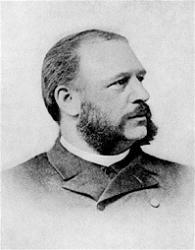
1841 - 1907 Person Name: Daniel C. Roberts, 1841-1907 Topics: Commitment; God's Love; God's Majesty and Power; God the Sustainer; Guidance; Kingdom of God; Nations; Praise; Protection Author of "God of Our Fathers" in Hymns of the Saints Daniel C. Roberts (b. Bridgehampton, Long Island, NY, 1841; d. Concord, NH, 1907) Educated at Kenyon College, Gambier, Ohio, served in the union army during the Civil War. He was ordained in the Episcopal Church as a priest in 1866 and ministered to several congregations in Vermont and Massachusetts. In 1878 he began a ministry at St. Paul Church in Concord, New Hampshire, that lasted for twenty-three years. Serving for many years president of the New Hampshire State Historical Society, Roberts once wrote, "I remain a country parson, known only within my small world," but his hymn "God of Our Fathers" brought him widespread recognition.
Bert Polman
=================
Roberts, Daniel C., D.D., of the Prot. Episcopal Church in America, b. at Bridge Hampton, L.I., Nov. 5, 1841, and graduated at Gambler College, 1857. After serving for a time as a private in the Civil War, he was ordained in 1866. He is at present (1905) Rector of Concord, N.H. His hymn, "God of our fathers, Whose almighty hand " (National Hymn), was written in 1876 for the "Centennial" Fourth of July celebration at Brandon, Vermont. In 1892 it was included in the Protestant Episcopal Hymnal, and again in Sursum Corda, 1898. [Rev. L. F. Benson, D.D.]
--John Julian, Dictionary of Hymnology, New Supplement (1907)
Daniel C. Roberts
Kathrina von Schlegel
1697 - 1777 Person Name: Catharina A. von Schlegel Topics: Admonition; Admonition; Admonition; Admonition; Adoration; Adoration; Adoration; Adoration; Adoration; Adoration; Adoration; Adoration; Adoration; Adoration; Adoration; Adoration; Adoration; Adoration; Adoration; Adoration; Adoration; Church Faith of; Church Fellowship and Unity; Church Fellowship and Unity; Church Fellowship and Unity; Church Fellowship and Unity; Church Fellowship and Unity; Church Fellowship and Unity; Church Fellowship and Unity; Church Militant & Trumphant; Church Militant & Trumphant; Church Militant & Trumphant; Church Militant & Trumphant; Church Militant & Trumphant; Church Militant & Trumphant; Church Militant & Trumphant; Church Militant & Trumphant; Choir; Choir; Cross of Believer; Cross of Believer; Cross of Believer; Cross of Believer; Cross of Believer; Cross of Believer; Cross of Believer; Cross of Believer; Cross of Believer; Cross of Believer; Cross of Believer; Cross of Believer; Cross of Christ; Cross of Christ; Cross of Christ; Cross of Christ; Cross of Christ; Devotional; Devotional; Devotional; Doxologies; Evening hymns; Faithfulness of the believer; Faithfulness of the believer; Faithfulness Of God; Fellowship of Believers; Fellowship with God; Fellowship with God; Fellowship with God; Funeral; God Holiness; God Holiness; God Love and Mercy; God Love and Mercy; God Majesty and Power; God Majesty and Power; God Trinity; God Trinity; Invitation for Consecration; Invitation for Consecration; Jesus Christ Deity; Jesus Christ Guide; Jesus Christ Guide; Jesus Christ Guide; Jesus Christ Guide; Jesus Christ Life and Ministry; Jesus Christ Life and Ministry; Jesus Christ Life and Ministry; Jesus Christ Light of the World; Jesus Christ Light of the World; Jesus Christ Teacher; Jesus Christ Teacher; Jesus Christ Triumphal Entry; Meditation; Meditation; Meditation; National Hymns; National Hymns; National Hymns; National Hymns; National Hymns; National Hymns; National Hymns; Hymns about Prayer; Hymns of Prayer; Hymns of Prayer; Hymns of Prayer; Hymns of Prayer; Hymns of Prayer; Hymns of Prayer; Praise of Christ; Praise of Christ; Praise of Christ; Praise of Christ; Praise of Christ; Praise of Christ; Praise of Christ; Repentance; Repentance; Scripture Songs; Scripture Songs; Scripture Songs; Scripture Songs; Scripture Songs; Scripture Songs; Scripture Songs; Scripture Songs; Scripture Songs; Scripture Songs; Scripture Songs; Scripture Songs; Scripture Songs; Scripture Songs; Thankfulness, Thanksgiving; Thankfulness, Thanksgiving; Thankfulness, Thanksgiving; Thankfulness, Thanksgiving; Thankfulness, Thanksgiving; Thankfulness, Thanksgiving; Warfare, Spiritual; Warfare, Spiritual; Warfare, Spiritual; Warfare, Spiritual; Warfare, Spiritual; Warfare, Spiritual; Warfare, Spiritual; Wedding; Worship; Worship; Worship; Worship; Worship; Worship; Worship; Worship; Worship; Worship; Worship; Worship; Worship; Worship Author of "The Final Sentence" Schlegel, Catharina Amalia Dorothea von. Little is known of this lady. According to Koch, iv., p. 442, she was born Oct. 22, 1697, and was "Stiftsfräulein" in the Evangelical Lutheran Stift (i.e. Protestant nunnery) at Cöthen. On applying to Cöthen, however, her name did not occur in the books of the Stift; and from the correspondence which she carried on, in 1750-52, with Heinrich Ernst, Count Stolberg, it would rather seem that she was a lady attached to the little ducal court at Cöthen. (manuscript from Dr. Eduard Jacobs, Wernigerode, &c.) Further details of her life it has been impossible to obtain.
The only one of her hymns which has passed into English is:—
Stille, mein Wille, dein Jesus hilft siegen. Cross and Consolation. A fine hymn on waiting for God. It appeared in 1752, as above, No. 689, in 6 stanzas of 6 lines; and is included in Knapp's Evangelischer Lieder-Schatz, 1837, No. 2249 (1865, No. 2017). The translation in common "Be still my soul!—-the Lord is on thy side." This is a good translation, omitting stanzas iii., by Miss Borthwick, in Hymns from the Land of Luther, 2nd Ser., 1855, p. 37 (1884, p. 100). [Rev. James Mearns, M.A.]
--Excerpts from John Julian, Dictionary of Hymnology (1907)
==========
For a detailed biography of Schlegel, see James R. Eggert, “Catharina von Schlegel and Be Still, My Soul,” Logia, vol. 34, no. 2 (Eastertide 2025), pp. 37–44.
Kathrina von Schlegel
Jane Borthwick
1813 - 1897 Person Name: Jane L. Borthwick Topics: Admonition; Admonition; Admonition; Admonition; Adoration; Adoration; Adoration; Adoration; Adoration; Adoration; Adoration; Adoration; Adoration; Adoration; Adoration; Adoration; Adoration; Adoration; Adoration; Adoration; Adoration; Church Faith of; Church Fellowship and Unity; Church Fellowship and Unity; Church Fellowship and Unity; Church Fellowship and Unity; Church Fellowship and Unity; Church Fellowship and Unity; Church Fellowship and Unity; Church Militant & Trumphant; Church Militant & Trumphant; Church Militant & Trumphant; Church Militant & Trumphant; Church Militant & Trumphant; Church Militant & Trumphant; Church Militant & Trumphant; Church Militant & Trumphant; Choir; Choir; Cross of Believer; Cross of Believer; Cross of Believer; Cross of Believer; Cross of Believer; Cross of Believer; Cross of Believer; Cross of Believer; Cross of Believer; Cross of Believer; Cross of Believer; Cross of Believer; Cross of Christ; Cross of Christ; Cross of Christ; Cross of Christ; Cross of Christ; Devotional; Devotional; Devotional; Doxologies; Evening hymns; Faithfulness of the believer; Faithfulness of the believer; Faithfulness Of God; Fellowship of Believers; Fellowship with God; Fellowship with God; Fellowship with God; Funeral; God Holiness; God Holiness; God Love and Mercy; God Love and Mercy; God Majesty and Power; God Majesty and Power; God Trinity; God Trinity; Invitation for Consecration; Invitation for Consecration; Jesus Christ Deity; Jesus Christ Guide; Jesus Christ Guide; Jesus Christ Guide; Jesus Christ Guide; Jesus Christ Life and Ministry; Jesus Christ Life and Ministry; Jesus Christ Life and Ministry; Jesus Christ Light of the World; Jesus Christ Light of the World; Jesus Christ Teacher; Jesus Christ Teacher; Jesus Christ Triumphal Entry; Meditation; Meditation; Meditation; National Hymns; National Hymns; National Hymns; National Hymns; National Hymns; National Hymns; National Hymns; Hymns about Prayer; Hymns of Prayer; Hymns of Prayer; Hymns of Prayer; Hymns of Prayer; Hymns of Prayer; Hymns of Prayer; Praise of Christ; Praise of Christ; Praise of Christ; Praise of Christ; Praise of Christ; Praise of Christ; Praise of Christ; Repentance; Repentance; Scripture Songs; Scripture Songs; Scripture Songs; Scripture Songs; Scripture Songs; Scripture Songs; Scripture Songs; Scripture Songs; Scripture Songs; Scripture Songs; Scripture Songs; Scripture Songs; Scripture Songs; Scripture Songs; Thankfulness, Thanksgiving; Thankfulness, Thanksgiving; Thankfulness, Thanksgiving; Thankfulness, Thanksgiving; Thankfulness, Thanksgiving; Thankfulness, Thanksgiving; Warfare, Spiritual; Warfare, Spiritual; Warfare, Spiritual; Warfare, Spiritual; Warfare, Spiritual; Warfare, Spiritual; Warfare, Spiritual; Wedding; Worship; Worship; Worship; Worship; Worship; Worship; Worship; Worship; Worship; Worship; Worship; Worship; Worship; Worship Translator of "The Final Sentence" Miss Jane Borthwick, the translator of this hymn and many others, is of Scottish family. Her sister (Mrs. Eric Findlater) and herself edited "Hymns from the Land of Luther" (1854). She also wrote "Thoughts for Thoughtful Hours (1859), and has contributed numerous poetical pieces to the "Family Treasury," under the signature "H.L.L."
--Annotations of the Hymnal, Charles Hutchins, M.A. 1872.
=================================
Borthwick, Jane, daughter of James Borthwick, manager of the North British Insurance Office, Edinburgh, was born April 9, 1813, at Edinburgh, where she still resides. Along with her sister Sarah (b. Nov. 26, 1823; wife of the Rev. Eric John Findlater, of Lochearnhead, Perthshire, who died May 2, 1886) she translated from the German Hymns from the Land of Luther, 1st Series, 1854; 2nd, 1855; 3rd, 1858; 4th, 1862. A complete edition was published in 1862, by W. P. Kennedy, Edinburgh, of which a reprint was issued by Nelson & Sons, 1884.
These translations, which represent relatively a larger proportion of hymns for the Christian Life, and a smaller for the Christian Year than one finds in Miss Winkworth, have attained a success as translations, and an acceptance in hymnals only second to Miss Winkworth's. Since Kennedy's Hymnologia Christiana, 1863, in England, and the Andover Sabbath Hymn Book, 1858, in America, made several selections therefrom, hardly a hymnal in England or America has appeared without containing some of these translations. Miss Borthwick has kindly enabled us throughout this Dictionary to distinguish between the 61 translations by herself and the 53 by her sister. Among the most popular of Miss Borthwick's may be named "Jesus still lead on," and "How blessed from the bonds of sin;" and of Mrs. Findlater's "God calling yet!" and "Rejoice, all ye believers."
Under the signature of H. L. L. Miss Borthwick has also written various prose works, and has contributed many translations and original poems to the Family Treasury, a number of which were collected and published in 1857, as Thoughts for Thoughtful Hours (3rd edition, enlarged, 1867). She also contributed several translations to Dr. Pagenstecher's Collection, 1864, five of which are included in the new edition of the Hymns from the Land of Luther, 1884, pp. 256-264. Of her original hymns the best known are “Come, labour on” and "Rest, weary soul.” In 1875 she published a selection of poems translated from Meta Heusser-Schweizer, under the title of Alpine Lyrics, which were incorporated in the 1884 edition of the Hymns from the Land of Luther. She died in 1897. [Rev. James Mearns, M.A.]
-- John Julian, Dictionary of Hymnology (1907)
========================
Borthwick, Jane, p. 163, ii. Other hymns from Miss Borthwick's Thoughtful Hours, 1859, are in common use:—
1. And is the time approaching. Missions.
2. I do not doubt Thy wise and holy will. Faith.
3. Lord, Thou knowest all the weakness. Confidence.
4. Rejoice, my fellow pilgrim. The New Year.
5. Times are changing, days are flying. New Year.
Nos. 2-5 as given in Kennedy, 1863, are mostly altered from the originals.
--John Julian, Dictionary of Hymnology, Appendix, Part II (1907)
=============
Works:
Hymns from the Land of Luther
Jane Borthwick
John R. Sweney

1837 - 1899 Person Name: John R. Sweney, 1837-1899 Topics: Advent Second; Bible--Word of God; God Love and Mercy; Jesus Christ His Glory and Power; Jesus Christ His Love and Mercy Composer of "SWENEY" in African American Heritage Hymnal John R. Sweney (1837-1899) was born in West Chester, Pennsylvania, and exhibited musical abilities at an early age. At nineteen he was studying with a German music teacher, leading a choir and glee club, and performing at children’s entertainments. By twenty-two he was teaching at a school in Dover, Delaware. Soon thereafter, he was put in charge of the band of the Third Delaware Regiment of the Union Army for the duration of the Civil War. After the war, he became Professor of Music at the Pennsylvania Military Academy, and director of Sweney’s Cornet Band. He eventually earned Bachelor and Doctor of Music degrees at the Academy.
Sweney began composing church music in 1871 and became well-known as a leader of large congregations. His appreciators stated “Sweney knows how to make a congregation sing” and “He had great power in arousing multitudes.” He also became director of music for a large Sunday school at the Bethany Presbyterian Church in Philadelphia of which John Wanamaker was superintendent (Wanamaker was the founder of the first major department store in Philadelphia). In addition to his prolific output of hymn melodies and other compositions, Sweney edited or co-edited about sixty song collections, many in collaboration with William J. Kirkpatrick. Sweney died on April 10, 1899, and his memorial was widely attended and included a eulogy by Wanamaker.
Joe Hickerson from "Joe's Jottings #9" used by permission
John R. Sweney
Johann Jakob Schütz
1640 - 1690 Person Name: Johann J. Schütz, 1640-1690 Topics: Power of God; Power of God; Power of God Author of "Sing Praise to God Who Reigns Above" in Journeysongs (2nd ed.) Schütz, Johann Jakob, was born Sept. 7, 1640, at Frankfurt am Main. After studying at Tübingen (where he became a licentiate in civil and canon law), he began to practise as an advocate in Frankfurt, and in later years with the title of Rath. He seems to have been a man of considerable legal learning as well as of deep piety. He was an intimate friend of P. J. Spener; and it was, in great measure, at his suggestion, that Spener began his famous Collegia Pietatis. After Spener left Frankfurt, in 1686, Schütz came under the influence of J. W. Petersen; and carrying out Petersen's prin¬ciples to their logical conclusion, he became a Separatist, and ceased to attend the Lutheran services or to communicate. He died at Frankfurt, May 22, 1690 (Koch, iv. 220; Blätter fur Hymnologie, Feb. 1883).
Schütz is known as an author by two tractates; one being his Christliche Lebensregeln, Frankfurt, 1677; the other, that which contains his hymns, Christliches Gedenckbüchlein, zu Beforderung eines anfangenden neuen Lebens, &c, Frankfurt am Main, 1675 [Library of the Predigerministerium at Frankfurt]. This work includes 5 hymns, in a separate section, which is headed, “Hierauf folgen etliche Gesänge." These hymns are:—
i. Die Wollust dieser Welt.
ii. Was inich auf dieser Welt betrübt.
iii. So komm, geliebte Todes-Stund.
iv. Scheuet ihr, ihr matten Glieder.
v. Sei Lob und Ehr dem höchsten Gut.
Of these No. v. is undoubtedly by Schütz, and the other four exhibit much the same style of thought as, and frequent parallels to, the prose portions of the work. None of these have been traced earlier than 1675; and until this has been done, it is pretty safe to ascribe them all to Schütz.
Three of these hymns have passed into English, viz.:—
i. Sei Lob und Ehr dem höchsten Gut. Praise and Thanksgiving. First published in 1675, as above, No. v. It is founded on Deut. xxxii. 3; entitled, "Hymn of Thanksgiving ;" and is in 9 stanzas of 6 lines, and the refrain, "Gebt unserm Gott die Ehre”.
Koch, iv. 220, speaks of this hymn as "outweighing many hundred others; and a classical hymn, which, from its first appearance, attracted unusual attention." And Lauxmann, in Koch, viii. 334-339, relates how delighted J. J. Moser was, when, on entering church the first Sunday after his captivity at Hohentwiel, he heard this hymn, and how heartily he joined in it; how it comforted the dying G. C. Rieger, of Stuttgart, on Tuesday, in Easter Week, 1743, and many other incidents.
Translations in common use:—
1. All Glory to the Sov'reign Good. This is a full and good translation by J. OJacobi, in his Psalter Germanica, 2nd ed., 1732, p. 151, where it is entitled, "The Malabarian Hymn."
2. All glory be to God most high. A good translation by A. T. Russell, of st. i., iv., viii., for the Dalston Hospital Hymn Book, 1848, No. 59.
3. All praise and thanks to God most high. This is a good tr., omitting st. ix., by Miss Winkworth, in her Lyra Germanica, 2nd Ser., 1858, p. 146.
4. Sing praise to God Who reigns above. A good tr., omitting st. ix., contributed by Miss Cox to Lyra Eucharistica, 1864, p. 33, and included in her Hymns from the German, 1864, p. 235.
5. To God a joyful anthem raise. A good tr. of st. i., ii., iv., v., viii., by J. M. Sloan, as No. 314, in J. H. Wilson's Service of Praise, 1865.
The following are also translated into English:—
ii. So komm, geliebte Todes-Stund. For the Dying. First published in 1675, as above, No. iii., in 11 st. of 8 1., entitled, "The thoughts on Death of a Royal Princess, after the usual interpretation of Job xix. 25." This Princess was Sophie Elisabethe. daughter of Duke Philipp Ludwig, of Holstein-Sonderburg (b. at Homburg vor der Hohe, May 4, 1653; married, in 1676. to Duke Moritz, of Sachse-Zeitz; d. at Schleusingen, Aug. 19, 1684), who had been a regular attender at Spener's conferences at Frankfurt, and thus associated with Schütz. This hymn has often been ascribed to her; and she had already chosen Job xix. 25, as the text of her funeral sermon. But it is more probable that both hymns were written by Schütz for her use, or in her honour. The trs. are :—(1) "Come, happy hour of death, and close." By Dr. G. Walker, 1860, p. 56. (2) "O come, delightful hour of death." By Dr. G. Walker, 1860, p. 106.
iii. Was mich auf dieser Welt betriibt. Earthly Vanities. This hymn, on Renunciation of the World, first appeared in 1675, as above, No. ii., in 4 st. of 10 1., and entitled "From the World to God." It has sometimes been erroneously ascribed to Michael Franck. It is tr. as "The woes that weigh my body down." By Miss Manington, 1863, p. 32. [Rev. James Mearns, M.A.]
--Excerpts from John Julian, Dictionary of Hymnology (1907)
Johann Jakob Schütz
Andrew Reed
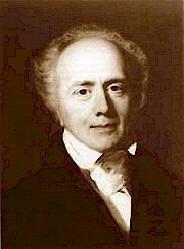
1787 - 1862 Person Name: Andrew Reed, 1787-1862 Topics: Church; Dove; Fire / Flame; God the Holy Spirit; Holy Spirit Power of; Light Author of "Spirit divine, attend our prayers" in The Book of Praise Reed, Andrew, D.D., son of Andrew Reed, was born in London on Nov. 27, 1787, and educated for the Congregational Ministry at Hackney College, London. He was first the pastor of the New Road Chapel, St. George's-in-the-East, and then of the Wycliffe Chapel, which was built through his exertions in 1830. His degree was conferred by Yule College, America. He died Feb. 25, 1862. As the founder of "The London Orphan Asylum," "The Asylum for Fatherless Children," “The Asylum for Idiots” "The Infant Orphan Asylum," and "The Hospital for Incurables," Dr. Reed is more fully known, and will be longer remembered than by his literary publications. His Hymn Book was the growth of years. The preparation began in 1817, when he published a Supplement to Watts, in which were a few originals. This was enlarged in 1825; and entirely superseded by his collection The Hymn Book, prepared from Dr. Watts's Psalms & Hymns and Other Authors, with some Originals, in 1842 (Preface). His hymns, mostly of a plain and practical character, numbering 21, were contributed to these various editions, and were republished with those of his wife in the Wycliffe Supplement, 1872. The best known are "Ah Jesus, let me hear Thy voice” and ”Spirit Divine, attend our prayer." All Dr. and Mrs. Reed's hymns are anonymous in The Hymn Book, 1842, but are given with their names in the Wyclife Supplement, 1872. His hymns now in common use include, in addition to those annotated under their respective first lines :—
1. Come, let us strike our harps afresh. Praise.
2. Come, my Redeemer, come. Desiring Christ's Presence.
3. Gentle Saviour, look on me. Christ's protection Desired.
4. Gracious Lord, as Thou hast taught us. Public Worship.
5. Hark, hark, the notes of joy. Missions.
6. Holy Ghost, with light divine (1817). Prayer to the Holy Spirit. Sometimes given as "Holy Ghost, Thou light divine;" and again as "Holy Spirit, Light divine."
7. Listen, sinner, mercy hails you. Invitation. Generally given as "Hear, O Sinner, mercy hails you."
8. Rich are the joys of solitude. Retirement. Some-times given as "How deep and tranquil is the joy."
9. There [comes] is an hour when I must part. Death anticipated.
10. Ye saints your music bring. Praise of the Cross.
--John Julian, Dictionary of Hymnology (1907)
Andrew Reed
Reginald Heber

1783 - 1826 Person Name: Reginald Heber (1783-1826) Topics: God the Father Majesty and Power of God Author of "Santo, Santo, Santo, Dios Omnipotente" in Himnario Adventista del Séptimo Día Reginald Heber was born in 1783 into a wealthy, educated family. He was a bright youth, translating a Latin classic into English verse by the time he was seven, entering Oxford at 17, and winning two awards for his poetry during his time there. After his graduation he became rector of his father's church in the village of Hodnet near Shrewsbury in the west of England where he remained for 16 years. He was appointed Bishop of Calcutta in 1823 and worked tirelessly for three years until the weather and travel took its toll on his health and he died of a stroke. Most of his 57 hymns, which include "Holy, Holy, Holy," are still in use today.
-- Greg Scheer, 1995
====================
Heber, Reginald, D.D. Born at Malpas, April 21, 1783, educated at Brasenose College, Oxford; Vicar of Hodnet, 1807; Bishop of Calcutta, 1823; died at Trichinopoly, India, April 3, 1826. The gift of versification shewed itself in Heber's childhood; and his Newdigate prize poem Palestine, which was read to Scott at breakfast in his rooms at Brazenose, Oxford, and owed one of its most striking passages to Scott's suggestion, is almost the only prize poem that has won a permanent place in poetical literature. His sixteen years at Hodnet, where he held a halfway position between a parson and a squire, were marked not only by his devoted care of his people, as a parish priest, but by literary work. He was the friend of Milman, Gifford, Southey, and others, in the world of letters, endeared to them by his candour, gentleness, "salient playfulness," as well as learning and culture. He was on the original staff of The Quarterly Review; Bampton Lecturer (1815); and Preacher at Lincoln's Inn (1822). His edition of Jeremy Taylor is still the classic edition. During this portion of his life he had often had a lurking fondness for India, had traced on the map Indian journeys, and had been tempted to wish himself Bishop of Calcutta. When he was forty years old the literary life was closed by his call to the Episcopate. No memory of Indian annals is holier than that of the three years of ceaseless travel, splendid administration, and saintly enthusiasm, of his tenure of the see of Calcutta. He ordained the first Christian native—Christian David. His first visitation ranged through Bengal, Bombay, and Ceylon; and at Delhi and Lucknow he was prostrated with fever. His second visitation took him through the scenes of Schwartz's labours in Madras Presidency to Trichinopoly, where on April 3,1826, he confirmed forty-two persons, and he was deeply moved by the impression of the struggling mission, so much so that “he showed no appearance of bodily exhaus¬tion." On his return from the service
”He retired into his own room, and according to his invariable custom, wrote on the back of the address on Confirmation 'Trichinopoly, April 3, 1826.' This was his last act, for immediately on taking off his clothes, he went into a large cold bath, where he had bathed the two preceding mornings, but which was now the destined agent of his removal to Paradise. Half an hour after, his servant, alarmed at his long absence, entered the room and found him a lifeless corpse." Life, &c, 1830, vol. ii. p. 437.
Heber's hymns were all written during the Hodnet period. Even the great missionary hymn, "From Greenland's icy mountains," notwithstanding the Indian allusions ("India's coral strand," "Ceylon's isle"), was written before he received the offer of Calcutta. The touching funeral hymn, "Thou art gone to the grave," was written on the loss of his first babe, which was a deep grief to him. Some of the hymns were published (1811-16) in the Christian Observer, the rest were not published till after his death. They formed part of a ms. collection made for Hodnet (but not published), which contained, besides a few hymns from older and special sources, contributions by Milman. The first idea of the collection appears in a letter in 1809 asking for a copy of the Olney Hymns, which he "admired very much." The plan was to compose hymns connected with the Epistles and Gospels, to be sung after the Nicene Creed. He was the first to publish sermons on the Sunday services (1822), and a writer in The Guardian has pointed out that these efforts of Heber were the germs of the now familiar practice, developed through the Christian Year (perhaps following Ken's Hymns on the Festivals), and by Augustus Hare, of welding together sermon, hymnal, and liturgy. Heber tried to obtain from Archbishop Manners Sutton and the Bishop of London (1820) authorization of his ms. collection of hymns by the Church, enlarging on the "powerful engine" which hymns were among Dissenters, and the irregular use of them in the church, which it was impossible to suppress, and better to regulate. The authorization was not granted. The lyric spirit of Scott and Byron passed into our hymns in Heber's verse; imparting a fuller rhythm to the older measures, as illustrated by "Oh, Saviour, is Thy promise fled," or the martial hymn, "The Son of God goes forth to war;" pressing into sacred service the freer rhythms of contemporary poetry (e.g. "Brightest and best of the sons of the morning"; "God that madest earth and heaven"); and aiming at consistent grace of literary expression.. Their beauties and faults spring from this modern spirit. They have not the scriptural strength of our best early hymns, nor the dogmatic force of the best Latin ones. They are too flowing and florid, and the conditions of hymn composition are not sufficiently understood. But as pure and graceful devotional poetry, always true and reverent, they are an unfailing pleasure. The finest of them is that majestic anthem, founded on the rhythm of the English Bible, "Holy, Holy, Holy, Lord God Almighty." The greatest evidence of Heber's popularity as a hymnwriter, and his refined taste as a compiler, is found in the fact that the total contents of his ms. collection which were given in his posthumous Hymns written and adapted to the Weekly Church Service of the Year. London, J. Murray, 1827; which included 57 hymns by Heber, 12 by Milman, and 29 by other writers, are in common in Great Britain and America at the present time. [Rev. H. Leigh Bennett, M.A.]
Of Bishop Heber's hymns, about one half are annotated under their respective first lines. Those given below were published in Heber's posthumous Hymns, &c, 1827. Some of them are in extensive use in Great Britain and America; but as they possess no special histories they are grouped together as from the Hymns, &c, 1827:—
1. Beneath our feet, and o'er our head. Burial.
2. Creator of the rolling flood. St. Peter's Day, or, Gospel for 6th Sunday after Trinity.
3. Lo, the lilies of the field. Teachings of Nature: or, Gospel for 15th Sunday after Trinity.
4. 0 God, by Whom the seed is given. Sexagesima.
6. 0 God, my sins are manifold. Forgiveness, or,
Gospel for 22nd S. after Trinity.
6. 0 hand of bounty, largely spread. Water into Wine, or, Gospel for 2nd S. after Epiphany.
7. 0 King of earth, and air, and sea. Feeding the Multitude; or, Gospel for 4th S. in Lent.
8. 0 more than merciful, Whose bounty gave. Good Friday.
9. 0 most merciful! 0 most bountiful. Introit Holy Communion.
10. 0 Thou, Whom neither time nor space. God unsearchable, or, Gospel for 5th Sunday in Lent.
11. 0 weep not o'er thy children's tomb. Innocents Day.
12. Room for the proud! Ye sons of clay. Dives and Lazarus, or, Gospel for 1st Sunday after Trinity.
13. Sit thou on my right hand, my Son, saith the Lord. Ascension.
14. Spirit of truth, on this thy day. Whit-Sunday.
15. The feeble pulse, the gasping breath. Burial, or, Gospel for 1st S. after Trinity.
16. The God of glory walks His round. Septuagesima, or, the Labourers in the Marketplace.
17. The sound of war in earth and air. Wrestling against Principalities and Powers, or, Epistle for 2lst Sunday after Trinity.
18. The world is grown old, her pleasures are past. Advent; or, Epistle for 4th Sunday in Advent.
19. There was joy in heaven. The Lost Sheep; or, Gospel for 3rd S. after Trinity.
20. Though sorrows rise and dangers roll. St. James's Day.
21. To conquer and to save, the Son of God. Christ the Conqueror.
22. Virgin-born, we bow before Thee. The Virgin Mary. Blessed amongst women, or, Gospel for 3rd S. in Lent.
23. Wake not, 0 mother, sounds of lamentation. Raising the Widow's Son, or, Gospel for 16th S. after Trinity.
24. When on her Maker's bosom. Holy Matrimony, or, Gospel for 2nd S. after Epiphany.
25. When through the torn sail the wild tempest is streaming. Stilling the Sea, or, Gospel for 4th Sunday after Epiphany.
26. Who yonder on the desert heath. The Good Samaritan, or, Gospel for 13th Sunday after Trinity.
This list is a good index of the subjects treated of in those of Heber's hymns which are given under their first lines, and shows that he used the Gospels far more than the Epistles in his work.
--John Julian, Dictionary of Hymnology (1907)
Reginald Heber
William Knapp
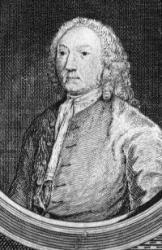
1698 - 1768 Topics: God Creation and Providence; Choice, Decision; Friendship; God Creator; God Eternity and Power; God Image (Father); Hope; Jesus Christ Lord of Life; Kingdom of God; Prayer; Purpose; Risk; Sin; Thankfulness; Vision/Dream; Work and Recreation; Proper 9 Year A Composer of "WAREHAM" in Voices United Born: 1698, Wareham, Dorsetshire, England.
Died: September 26, 1768, Poole, Dorsetshire, England.
Buried: Poole, Dorsetshire, England.
William Knapp
William Kethe
? - 1594 Person Name: William Kethe, de. 1594 Topics: God Power of Author of "O worship the King" in The Book of Praise William Kethe (b. Scotland [?], d. Dorset England, c. 1594). Although both the time and place of Kethe's birth and death are unknown, scholars think he was a Scotsman. A Protestant, he fled to the continent during Queen Mary's persecution in the late 1550s. He lived in Geneva for some time but traveled to Basel and Strasbourg to maintain contact with other English refugees. Kethe is thought to be one of the scholars who translated and published the English-language Geneva Bible (1560), a version favored over the King James Bible by the Pilgrim fathers. The twenty-five psalm versifications Kethe prepared for the Anglo-Genevan Psalter of 1561 were also adopted into the Scottish Psalter of 1565. His versification of Psalm 100 (All People that on Earth do Dwell) is the only one that found its way into modern psalmody.
Bert Polman
========================
Kethe, William, is said by Thomas Warton in his History of English Poetry, and by John Strype in his Annals of the Reformation, to have been a Scotsman. Where he was born, or whether he held any preferment in England in the time of Edward VI., we have been unable to discover. In the Brieff discours off the troubles begonne at Franckford, 1575, he is mentioned as in exile at Frankfurt in 1555, at Geneva in 1557; as being sent on a mission to the exiles in Basel, Strassburg, &c, in 1558; and as returning with their answers to Geneva in 1559. Whether he was one of those left behind in 1559 to "finishe the bible, and the psalmes bothe in meeter and prose," does not appear. The Discours further mentions him as being with the Earl of Warwick and the Queen's forces at Newhaven [Havre] in 1563, and in the north in 1569. John Hutchins in his County history of Dorset, 1774, vol. ii. p. 316, says that he was instituted in 1561 as Rector of Childe Okeford, near Blandford. But as there were two Rectors and only one church, leave of absence might easily be extended. His connection with Okeford seems to have ceased by death or otherwise about 1593.
The Rev. Sir Talbot H. B. Baker, Bart., of Ranston, Blandford, who very kindly made researches on the spot, has informed me that the Registers at Childe Okeford begin with 1652-53, that the copies kept in Blandford date only from 1732 (the earlier having probably perished in the great fire there in 1731), that no will can be found in the district Probate Court, and that no monument or tablet is now to be found at Childe Okeford.
By a communication to me from the Diocesan Registrar of Bristol, it appears that in a book professing to contain a list of Presentations deposited in the Consistory Court, Kethe is said to have been presented in 1565 by Henry Capel, the Patron of Childe Okeford Inferior. In the 1813 edition of Hutchins, vol. iii. pp. 355-6, William Watkinson is said to have been presented to this moiety by Arthur Capel in 1593.
Twenty-five Psalm versions by Kethe are included in the Anglo-Genevan Psalter of 1561, viz. Ps. 27, 36, 47, 54, 58, 62, 70, 85, 88, 90, 91, 94, 100, 101, 104, 107, 111, 112, 113, 122, 125, 126, 134, 138, 142,—the whole of which were adopted in the Scottish Psalter of 1564-65. Only nine, viz. Ps. 104, 107, 111, 112, 113, 122, 125, 126, 134, were included in the English Psalter of 1562; Ps. 100 being however added in 1565. Being mostly in peculiar metres, only one, Ps. 100, was transferred to the Scottish Psalter of 1650. The version of Ps. 104, "My soul, praise the Lord," is found, in a greatly altered form, in some modern hymnals.
Warton calls him ”a Scotch divine, no unready rhymer," says he had seen a moralisation of some of Ovid by him, and also mentions verses by him prefixed to a pamphlet by Christopher Goodman, printed at Geneva in 1558; a version of Ps. 93 added to Knox's Appellation to the Scottish Bishops, also printed at Geneva in 1558; and an anti-papal ballad, "Tye the mare Tom-boy." A sermon he preached before the Sessions at Blandford on Jan. 17, 1571, was printed by John Daye in 1571 (preface dated Childe Okeford, Jan. 29,157?), and dedicated to Ambrose Earl of Warwick. [Rev James Mearns, M.A].
-- John Julian, Dictionary of Hymnology (1907)
====================
Kethe, William, p. 624, i., line 30. The version which Warton describes as of Psalm 93 is really of Psalm 94, and is that noted under Scottish Hymnody, p. 1022, ii., as the version of Psalms 94 by W. Kethe.
--John Julian, Dictionary of Hymnology, Appendix, Part II (1907)
William Kethe
Pages




