You help make Hymnary.org possible. More than 10 million people from 200+ countries found hymns, liturgical resources and encouragement on Hymnary.org in 2025, including you. Every visit affirms the global impact of this ministry.

If Hymnary has been meaningful to you this year, would you take a moment today to help sustain it? A gift of any size—paired with a note of encouragement if you wish—directly supports the server costs, research work and curation that keep this resource freely available to the world.

Give securely online today, or mail a check to:
Hymnary.org
Calvin University
3201 Burton Street SE
Grand Rapids, MI 49546

Thank you for your partnership, and may the hope of Advent fill your heart.

Person Results

Topics:proper+5
In:people

Planning worship? Check out our sister site, ZeteoSearch.org, for 20+ additional resources related to your search.
Showing 91 - 100 of 357Results Per Page: 102050

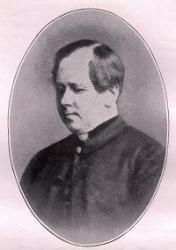
H. W. Baker

1821 - 1877 Person Name: H. W. Baker, 1821-1877 Topics: Proper 5 Year C Translator of "Captains of the saintly band" in Common Praise Baker, Sir Henry Williams, Bart., eldest son of Admiral Sir Henry Loraine Baker, born in London, May 27, 1821, and educated at Trinity College, Cambridge, where he graduated, B.A. 1844, M.A. 1847. Taking Holy Orders in 1844, he became, in 1851, Vicar of Monkland, Herefordshire. This benefice he held to his death, on Monday, Feb. 12, 1877. He succeeded to the Baronetcy in 1851. Sir Henry's name is intimately associated with hymnody. One of his earliest compositions was the very beautiful hymn, "Oh! what if we are Christ's," which he contributed to Murray's Hymnal for the Use of the English Church, 1852. His hymns, including metrical litanies and translations, number in the revised edition of Hymns Ancient & Modern, 33 in all. These were contributed at various times to Murray's Hymnal, Hymns Ancient & Modern and the London Mission Hymn Book, 1876-7. The last contains his three latest hymns. These are not included in Hymns Ancient & Modern. Of his hymns four only are in the highest strains of jubilation, another four are bright and cheerful, and the remainder are very tender, but exceedingly plaintive, sometimes even to sadness. Even those which at first seem bright and cheerful have an undertone of plaintiveness, and leave a dreamy sadness upon the spirit of the singer. Poetical figures, far-fetched illustrations, and difficult compound words, he entirely eschewed. In his simplicity of language, smoothness of rhythm, and earnestness of utterance, he reminds one forcibly of the saintly Lyte. In common with Lyte also, if a subject presented itself to his mind with striking contrasts of lights and shadows, he almost invariably sought shelter in the shadows. The last audible words which lingered on his dying lips were the third stanza of his exquisite rendering of the 23rd Psalm, "The King of Love, my Shepherd is:"— Perverse and foolish, oft I strayed, But yet in love He sought me, And on His Shoulder gently laid, And home, rejoicing, brought me." This tender sadness, brightened by a soft calm peace, was an epitome of his poetical life. Sir Henry's labours as the Editor of Hymns Ancient & Modern were very arduous. The trial copy was distributed amongst a few friends in 1859; first ed. published 1861, and the Appendix, in 1868; the trial copy of the revised ed. was issued in 1874, and the publication followed in 1875. In addition he edited Hymns for the London Mission, 1874, and Hymns for Mission Services, n.d., c. 1876-7. He also published Daily Prayers for those who work hard; a Daily Text Book, &c. In Hymns Ancient & Modern there are also four tunes (33, 211, 254, 472) the melodies of which are by Sir Henry, and the harmonies by Dr. Monk. He died Feb. 12, 1877. --John Julian, Dictionary of Hymnology (1907)

John Ernest Bode

1816 - 1874 Topics: The Christian Year Lent; Calling and Response; Christian Year Lent; Commitment; Confirmation; Conflict and Struggle; Décision; Discipleship and Service; Guidance; Installation Services; Jesus Christ Friend; Jesus Christ Guide and Leader; Jesus Christ Master; Jesus Christ Presence; Jesus Christ Strength and Refuge; Love for God/Christ; Obedience; Promise(s); Surrender; Temptation; Trust; Epiphany 3 Year A; Epiphany 5 Year A; Epiphany 6 Year A; Lent 1 Year A; Easter 4 Year A; Proper 8 Year A; Proper 10 Year A; Lent 2 Year B; Lent 5 Year B; Easter 7 Year B; Proper 7 Year B; Epiphany Last/Transfig. Year C; Lent 3 Year C; Easter 3 Year C; Proper 7 Year C; Proper 9 Year C; Proper 17 Year C; Proper 20 Year C; Monday in Holy Week Year ABC; Tuesday in Holy Week Year ABC Author of "O Jesus, I Have Promised" in Voices United John E. Bode (b. St. Pancras, England, 1816; d. Castle Camps, Cambridgeshire, England, 1874) A fine student at Christ Church, Oxford, England, and a prominent scholar who gave the famous Bampton Lectures ("for the exposition and defense of the Christian faith") at Oxford in 1855, was a rector in Westwell, Oxfordshire, and in Castle Camps. This gifted poet and hymn writer published Hymns for the Gospel of the Day, for Each Sunday and Festivals of Our Lord in 1860. Bert Polman ============== Bode, John Ernest, M.A., son of Mr. William Bode, late of the General Post Office, b. 1816, and educated at Eton, the Charter House, and at Christ Church, Oxford, graduating B.A. 1837, and M.A. in due course. Taking Holy Orders in 1841, he became Rector of Westwell, Oxfordshire, 1847; and then of Castle Camps, Cambridgeshire, 1860. He was also for a time Tutor of his College, and Classical Examiner. His Bampton Lectures were delivered in 1855. He d. at Castle Camps, Oct. 6, 1874. In addition to his Bampton Lectures, and Ballads from Herodotus, he published Hymns from the Gospel of the Day for each Sunday and Festivals of our Lord, 1860; and Short Occasional Poems, Lond., Longmans, 1858. In addition to his well-known hymn, “O Jesu, I have promised " (q. v.), the following from his Hys. from the Gospel are also in common use:— 1. God of heaven, enthroned in might. H. Trinity. 2. Spirit of Truth, indwelling Light. Whitsuntide. -John Julian, Dictionary of Hymnology (1907) ================= Bode, John E. , p. 151, ii. Additional pieces from his Hys.from the Gospel of the Day, &c, 1800, are in common use :— (1) "Sweetly the Sabbath bell" (Sunday); (2) "Thou Who hast called us by Thy word" (20th S. after Trinity). --John Julian, Dictionary of Hymnology, Appendix, Part II (1907)

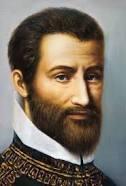
Giovanni Pierluigi da Palestrina

1525 - 1594 Person Name: Giovanni Palestrina Topics: The Christian Year Easter; Christian Year Easter; Eternal Life; Funeral Vigil; Funerals and Memorial Services; Hallelujah; Hell; Hope; Jesus Christ Kingship, Conqueror; Jesus Christ Reign; Jesus Christ Resurrection; Praise; Victory; Worship; Easter 1 Year A; Easter 2 Year A; Easter 3 Year A; Proper 27 Year A; Easter 1 Year B; Easter 3 Year B; Proper 27 Year B; Epiphany 5 Year C; Epiphany 7 Year C; Easter 1 Year C; Easter Evening Year ABC Composer of "VICTORY" in Voices United Giovanni Pierluigi (da Palestrina) Italy 1525-1594. Born at Palestrina, Italy, near Rome, then part of the Papal States to Neopolitan parents. As a youth he became a chorister at the Santa Maria Maggiore basilica in the Rome Diocese. This allowed him to learn literature and music. In 1540 he moved to Rome, where he studied in the school ofr the Hugenot, Claude Goudimel. He also studied with Robin Mallapert and Firmin Lebel. Orlando Di Lasso was also a musical advisor to him. From 1544-1551 he was organist at the Cathedral of St Agapito, the principle church of his native city. In 1547 he married Lucrezia Gori, and they had four children: Rodolfo, Angelo, Iginio, and a daughter. In 1551 Pope Julius III (previously Bishop of Palestrina) appointed him ‘maestro di cappella’, or musical director of the Cappella Giulia (choir). Pierluigi dedicated his first published compositions to Pope Julius III (1554), known as ‘the book of Masses’. It was the first book of masses by a native composer, since most sacred works in those days were from low countries (France or Spain). In 1555 Pope Paul IV ordered that all papal choristers should be clerical. As Pierluigi married early in life and had four children, he was unable to continue in the chapel as a layman. During the next decade he held positions similar to his Julian Chapel appointment at other chapels and churches in Rome, including St John Lateran (1555-1560), and Santa Maria Maggiore (1561-1566). In 1571 he returned to the Julian Chapel and remained at St Peter’s for the rest of his life. The 1570s was a decade of difficulty for him, as he lost his brother, two sons, and his wife in three separate outbreaks of plague (1572-1575-1580). In 1578 he was given the title of ‘Master of Music’ at the Vatican Basilica. He thought of becoming a priest at this time, but instead married a wealthy widow, Virginia Formoli, in 1581, widow of a wealthy merchant, which gave him financial independence (he was not well-paid as choirmaster). He spent considerable time administering to her fortune, but also was able to compose prolifically until his death. He also helped to found an association of professional musicians called the Vertuosa Compagnia dei Musici. He died in Rome of pleurisy. He left hundreds of compositions, including 1045 masses, 68 offertories, 140 madrigals, 300+ motets, 72 hymns, 35 magnificats, 11 litanies and several sets of lamentations. There are two comprehensive editions of his works: a 33-volume edition published by Breitkopf and Hartel, in Leigzig, Germany, between 1862-1894, edited by Franz Xaver Habert, and a 34-volume edition published in the mid 20th century by Fratelli Scalera, in Rome, Italy, edited by R Casimiri and others. As a Renaissance musician and composer of sacred music he was the best known 16th century representative of the Roman School of musical composition. He had a long-lasting influence on the development of church and secular music in Europe, especially on the development of counterpoint, his work considered the culmination of Renaissance polyphony. Very famous in his day, he was considered by some the legendary ‘savior of church music’. A 2009 film was produced by German television about him, titled: ‘Palestrina – Prince of Music’. John Perry

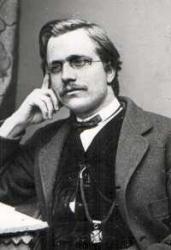
Frederick C. Maker

1844 - 1927 Person Name: Frederick Charles Maker Topics: Church in the World Renewal: Healing; Calling and Response; Calmness and Serenity; Consecration; Discipleship and Service; Forgiveness; Forgiveness from God; Healing; Jesus Christ Call of; Peace (Inner, Calmness, Serenity; Prayer; Renewal; Repentance; Rest; Reverence/Wonder Before God; Service; Service Music Invitation to Prayer; Surrender; Trust; Epiphany 3 Year A; Proper 13 Year A; Proper 14 Year A; Epiphany 3 Year B; Proper 12 Year B; Epiphany 5 Year C; Proper 7 Year C; Proper 11 Year C; Proper 19 Year C; Proper 20 Year C Composer of "REST" in Voices United Frederick C. Maker (b. Bristol, England, August 6, 1844; d. January 1, 1927) received his early musical training as a chorister at Bristol Cathedral, England. He pursued a career as organist and choirmaster—most of it spent in Methodist and Congregational churches in Bristol. His longest tenure was at Redland Park Congregational Church, where he was organist from 1882-1910. Maker also conducted the Bristol Free Church Choir Association and was a long-time visiting professor of music at Clifton College. He wrote hymn tunes, anthems, and a cantata, Moses in the Bulrushes. Bert Polman

Joseph Parry

1841 - 1903 Topics: The Church in the World Commitment: Trust; Adversity, Affliction & Tribulation; Assurance; Comfort/Consolation; Commitment; Communion with Christ and God; Confession; God Deliverance; Grace; Healing; Jesus Christ Friend; Jesus Christ Life In; Jesus Christ Love of; Jesus Christ Presence; Jesus Christ Refuge; Life; Need for God/Christ; Protection; Purity; Service Music Confession and Pardon; Sin; Supplication; Trust; Epiphany 3 Year A; Lent 2 Year A; Lent 3 Year A; Proper 7 Year A; Proper 9 Year A; Proper 14 Year A; Lent 4 Year B; Lent 5 Year B; Proper 7 Year B; Proper 13 Year B; Proper 22 Year B; Proper 23 Year B; Epiphany 4 Year C; Lent 2 Year C; Proper 6 Year C; Proper 20 Year C Composer of "ABERYSTWYTH" in Voices United Joseph Parry (b. Merthyr Tydfil, Glamorganshire, Wales, 1841; d. Penarth, Glamorganshire, 1903) was born into a poor but musical family. Although he showed musical gifts at an early age, he was sent to work in the puddling furnaces of a steel mill at the age of nine. His family immigrated to a Welsh settlement in Danville, Pennsylvania in 1854, where Parry later started a music school. He traveled in the United States and in Wales, performing, studying, and composing music, and he won several Eisteddfodau (singing competition) prizes. Parry studied at the Royal Academy of Music and at Cambridge, where part of his tuition was paid by interested community people who were eager to encourage his talent. From 1873 to 1879 he was professor of music at the Welsh University College in Aberystwyth. After establishing private schools of music in Aberystwyth and in Swan sea, he was lecturer and professor of music at the University College of South Wales in Cardiff (1888-1903). Parry composed oratorios, cantatas, an opera, orchestral and chamber music, as well as some four hundred hymn tunes. Bert Polman

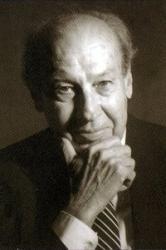
Jaroslav J. Vajda

1919 - 2008 Topics: God Nature of God; Evil; God Faithfulness; God Guidance; God Nature; God Providence; God Strength and Refuge; Grace; Jesus Christ Rock; Trust; Truth; Word of God; Lent 2 Year A; Lent 3 Year A; Easter 5 Year A; Proper 8 Year A; Proper 9 Year A; Proper 13 Year A; Proper 18 Year B; Proper 25 Year B; Proper 26 Year B; Epiphany 6 Year C; Lent 1 Year C; Palm/Passion Sunday Year C; Proper 7 Year C; Proper 11 Year C Translator, v. 2 of "If You Will Trust in God to Guide You" in Voices United Jaroslav J. Vajda (b. Lorain, Ohio, 1919; d. 2008) Born of Czechoslovakian parents, Vajda was educated at Concordia College in Fort Wayne, Indiana, and Concordia Theological Seminary in St. Louis, Missouri. Ordained as a Lutheran pastor in 1944, he served congregations in Pennsylvania and Indiana until 1963. He was editor of the periodicals The Lutheran Beacon (1959-1963) and This Day (1963-1971) and book editor and developer for Concordia Publishing House in St. Louis from 1971 until his retirement in 1986. Working mainly with hymn texts, Vajda served on several Lutheran commissions of worship. A writer of original poetry since his teens, he was the author of They Followed the King (1965) and Follow the King (1977). His translations from Slovak include Bloody Sonnets (1950), Slovak Christmas (1960), An Anthology of Slovak Literature (1977), and contributions to the Lutheran Worship Supplement (1969) and the Lutheran Book of Worship (1978). A collection of his hymn texts, carols, and hymn translations was issued as Now the Joyful Celebration (1987); its sequel is So Much to Sing About (1991). Vajda's hymns are included in many modern hymnals, and he was honored as a Fellow of the Hymn Society in the United States and Canada in 1988. Bert Polman

Brian A. Wren

b. 1936 Person Name: Brian Wren Topics: Proper 5 Year A Author of "I Come with Joy" in Voices United Brian Wren (b. Romford, Essex, England, 1936) is a major British figure in the revival of contemporary hymn writing. He studied French literature at New College and theology at Mansfield College in Oxford, England. Ordained in 1965, he was pastor of the Congregational Church (now United Reformed) in Hockley and Hawkwell, Essex, from 1965 to 1970. He worked for the British Council of Churches and several other organizations involved in fighting poverty and promoting peace and justice. This work resulted in his writing of Education for Justice (1977) and Patriotism and Peace (1983). With a ministry throughout the English-speaking world, Wren now resides in the United States where he is active as a freelance lecturer, preacher, and full-time hymn writer. His hymn texts are published in Faith Looking Forward (1983), Praising a Mystery (1986), Bring Many Names (1989), New Beginnings (1993), and Faith Renewed: 33 Hymns Reissued and Revised (1995), as well as in many modern hymnals. He has also produced What Language Shall I Borrow? (1989), a discussion guide to inclusive language in Christian worship. Bert Polman

Thomas Andrew Dorsey

1899 - 1993 Person Name: Thomas A. Dorsey Topics: The Church in the World Commitment: Trust; Adversity, Affliction & Tribulation; Choruses and Refrains; Commitment; Confidence; Eternal Life; Funerals and Memorial Services; Grief; Guidance; Jesus Christ Person; Jesus Christ Presence; Prayer; Suffering; Trials; Trust; Water; Lent 4 Year A; Easter 4 Year A; Proper 23 Year A; Epiphany 5 Year B; Proper 23 Year B; Easter 4 Year C Author of "Precious Lord, Take My Hand" in Voices United Thomas Andrew Dorsey was born in Villa Rica, a small rural town near Atlanta, Georgia. In 1919 he moved to Chicago. Most of his musical training was in the church, but he also studied and played jazz and blues. He later combined jazz and blues with religious texts, giving birth to gospel music. In 1931, along with Magnolia Lewis-Butts and Theodore Roosevelt Frye, he established the first gospel choir at Ebenezer Baptist Church in Chicago. He went on to lead the gospel choir at Pilgrim Baptist Church, which he led for 60 years. Dorsey was also instrumental in founding the National Convention of Gospel Choirs and Choruses (NCGCC) in 1933. The convention taught choirs all over the country how to sing gospel music. Dianne Shapiro, from "Gospel" in Encyclopedia of Chicago (accessed 8/12/2020)

Orlando Gibbons

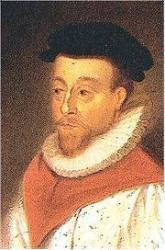
1583 - 1625 Person Name: Orlando Gibbons, 1583-1625 Topics: Year A Proper 22; Year B Easter 2; Year B Proper 25; Year C Lent 5; Communion; Holy Communion; The Communion of Saints Composer of "SONG 1" in Complete Anglican Hymns Old and New Orlando Gibbons (baptised 25 December 1583 – 5 June 1625) was an English composer, virginalist and organist of the late Tudor and early Jacobean periods. He was a leading composer in the England of his day. Gibbons was born in Cambridge and christened at Oxford the same year – thus appearing in Oxford church records. Between 1596 and 1598 he sang in the Choir of King's College, Cambridge, where his brother Edward Gibbons (1568–1650), eldest of the four sons of William Gibbons, was master of the choristers. The second brother Ellis Gibbons (1573–1603) was also a promising composer, but died young. Orlando entered the university in 1598 and achieved the degree of Bachelor of Music in 1606. James I appointed him a Gentleman of the Chapel Royal, where he served as an organist from at least 1615 until his death. In 1623 he became senior organist at the Chapel Royal, with Thomas Tomkins as junior organist. He also held positions as keyboard player in the privy chamber of the court of Prince Charles (later King Charles I), and organist at Westminster Abbey. He died at age 41 in Canterbury of apoplexy, and a monument to him was built in Canterbury Cathedral. A suspicion immediately arose that Gibbons had died of the plague, which was rife in England that year. Two physicians who had been present at his death were ordered to make a report, and performed an autopsy, the account of which survives in The National Archives: We whose names are here underwritten: having been called to give our counsels to Mr. Orlando Gibbons; in the time of his late and sudden sickness, which we found in the beginning lethargical, or a profound sleep; out of which, we could never recover him, neither by inward nor outward medicines, & then instantly he fell in most strong, & sharp convulsions; which did wring his mouth up to his ears, & his eyes were distorted, as though they would have been thrust out of his head & then suddenly he lost both speech, sight and hearing, & so grew apoplectical & lost the whole motion of every part of his body, & so died. Then here upon (his death being so sudden) rumours were cast out that he did die of the plague, whereupon we . . . caused his body to be searched by certain women that were sworn to deliver the truth, who did affirm that they never saw a fairer corpse. Yet notwithstanding we to give full satisfaction to all did cause the skull to be opened in our presence & we carefully viewed the body, which we found also to be very clean without any show or spot of any contagious matter. In the brain we found the whole & sole cause of his sickness namely a great admirable blackness & syderation in the outside of the brain. Within the brain (being opened) there did issue out abundance of water intermixed with blood & this we affirm to be the only cause of his sudden death. His death was a shock to peers and the suddenness of his passing drew comment more for the haste of his burial – and of its location at Canterbury rather than the body being returned to London. His wife, Elizabeth, died a little over a year later, aged in her mid-30s, leaving Orlando's eldest brother, Edward, to care for the children left orphans by this event. Of these children only the eldest son, Christopher Gibbons, went on to become a musician. One of the most versatile English composers of his time, Gibbons wrote a quantity of keyboard works, around thirty fantasias for viols, a number of madrigals (the best-known being "The Silver Swan"), and many popular verse anthems. His choral music is distinguished by his complete mastery of counterpoint, combined with his wonderful gift for melody. Perhaps his most well known verse anthem is This is the record of John, which sets an Advent text for solo countertenor or tenor, alternating with full chorus. The soloist is required to demonstrate considerable technical facility at points, and the work at once expresses the rhetorical force of the text, whilst never being demonstrative or bombastic. He also produced two major settings of Evensong, the Short Service and the Second Service. The former includes a beautifully expressive Nunc dimittis, while the latter is an extended composition, combining verse and full sections. Gibbons's full anthems include the expressive O Lord, in thy wrath, and the Ascension Day anthem O clap your hands together for eight voices. He contributed six pieces to the first printed collection of keyboard music in England, Parthenia (to which he was by far the youngest of the three contributors), published in about 1611. Gibbons's surviving keyboard output comprises some 45 pieces. The polyphonic fantasia and dance forms are the best represented genres. Gibbons's writing exhibits full mastery of three- and four-part counterpoint. Most of the fantasias are complex, multisectional pieces, treating multiple subjects imitatively. Gibbons's approach to melody in both fantasias and dances features a capability for almost limitless development of simple musical ideas, on display in works such as Pavane in D minor and Lord Salisbury's Pavan and Galliard. In the 20th century, the Canadian pianist Glenn Gould championed Gibbons's music, and named him as his favorite composer. Gould wrote of Gibbons's hymns and anthems: "ever since my teen-age years this music ... has moved me more deeply than any other sound experience I can think of." In one interview, Gould compared Gibbons to Beethoven and Webern: ...despite the requisite quota of scales and shakes in such half-hearted virtuoso vehicles as the Salisbury Galliard, one is never quite able to counter the impression of music of supreme beauty that lacks its ideal means of reproduction. Like Beethoven in his last quartets, or Webern at almost any time, Gibbons is an artist of such intractable commitment that, in the keyboard field, at least, his works work better in one's memory, or on paper, than they ever can through the intercession of a sounding-board. To this day, Gibbons's obit service is commemorated every year in King's College Chapel, Cambridge. --wikipedia.org

Jean Sibelius

1865 - 1957 Person Name: Jean Sibelius, 1865-1957 Topics: Faith, Trust and Commitment; Hope and Consolation; Redemption and Salvation; Suffering and Sorrow; Year B All Saints; Year B Proper 17; Year B Proper 7; Year C Easter 5; Year C Second Sunday Before Lent Composer of "FINLANDIA" in Complete Anglican Hymns Old and New Johann Julius Christian [Jean] Sibelius DM Finland 1865-1957. Born at Hameenlinna, Finland, the son of a Swedish-speaking medical doctor, he lost his father to typhoid in 1868, leaving the family in substantial debt. His mother, again pregnant, had to sell their property and move in with her widowed mother. His aunt Julia gave him piano lessons when he was seven on the family upright piano, wrapping him on the knuckles when he played a wrong note. He learned to improvise as he played. His uncle, Pehr Ferdinand Sibelius, was interested in music, especially the violin, and gave Jean a violin when he was 10. As his musical advisor his uncle encouraged him to play and compose music. He played music with sister on piano, brother on cello, and himself on violin. He attended a Finnish-speaking prep school in 1874 and continued his education at the Hameenlinna Normal Lyceum thereafter. Jean also showed a strong interest in nature, frequently walking around the countryside when the family moved to the Loviisa coast for the summer months. In 1881 he took violin lessons from the local bandmaster, and developed a strong interest in violin. He became an accomplished player, and thought of becoming a virtuoso, but realizing he began study too late in life for that, instead opted to compose. He often played music in quartets with neighboring families, adding to his chamber music experience. He took the French form of his name, Jean. He studied law at the Imperial Alexander University in Finland, but showed far more interest in music. He then studied music at the Helsinki Music Institute (now Sibelius Academy) from 1885-1889. The school’s founder, Martin Wegelius, did much to support education development in Finland and gave Sibelius his first lessons in composition. Another teacher,,Ferruccio Busoni, a pianist-composer, helped him as well and became a life-long friend. Other friends, pianist Adolf Paul, and conductor-to-be, Armas Jarnefelt, also helped him. In 1892 he married Armas ‘s sister, Aino Jarnefelt, daughter of General Alexander Jarnefelt, governor of Vaasa. They had six daughters, Eva, Ruth, Kirsti, Katarina, Margareta, and Heidi. He continued his musical studies in Berlin (1889-1890) with Albert Becker, and in Vienna (1890-1891) with Robert Fuchs and Karl Goldmark. In Berlin he had opportunity to attend concerts and operas. In Vienna he turned to orchestral composition and had much success, although he had gallstone surgery during that period. He also traveled to the UK, France, Germany, and the USA during this time in his life, composing, conducting, and socializing. In 1892 he took on teaching assignments at the Music Institute and at Kajanus’s conducting school, but this left him with little time for composing. Sibelius’ works were more and more appreciated in Helsinki concert halls as he composed and conducted symphonies in the mid-1890s. In 1898 he was awarded a substantial grant, initially for 10 years, and later extended for life, allowing him to concentrate on composition. Much of his music became popular in Finland and in Germany. In 1899 he began work on his first symphony. It went well, but other patriotic music hehad composed did even better, since Russia was trying to restrict the powers of the Grand Duchy of Finland. In 1900 Sibelius went on an international tour with Kajanus and his orchestra, presenting his recent works. In 1901 he wrote his second symphony, which received rave reviews. He continued to compose as he became popular and well-known. In 1903 he had a new home built near Lake Tuusula north of Helsinki, calleed Ainola (after his wife). He gave concerts in and around Finland, spending more and more time away from home, to the chagrin of his wife. After a time he returned home and composed from there. He spent much time wining and dining in Helsinki, and it had a disastrous effect on his wife, who finally entered a sanitorium. He resolved again to give up drinking and concentrate on composing his 3rd symphony. He met Gustav Mahler in Helsinki and they became friends. He performed his 3rd symphony in St Petersburg, Russia. In 1907 he underwent a serious operation for suspected throat cancer, and spent time in the hospital in 1908. His smoking and drinking had now become life-threatening. He cancelled concerts for Rome, Warsaw, and Berlin, but kept one in London. His health deteriorated further, And his brush with death inspired him to compose his 4th symphony. In 1909 his successful throat operation resulted in renewed happiness for him and his wife, Aino. He continued conducting concerts, and met Claude Debussy, who further encouraged his musical efforts. He began working on his 4th symphony in 1910, but had to write other music to compensate for dwindling funds. He finished his 4th symphony in Berlin and conducted concerts in Sweden in 1911. In 1912 he completed short orchestral works. Over the next several years he continued producing a variety of pieces of music, well-received, especially in America. He was given an honorary DM degree from Yale University and also another from the University of Helsinki about the same time. WW1 interrupted his music royalties in 1915, and he was forced to compose smaller works for publication to make ends meet. He completed his 5th symphony at age 50, but he was dissatisfied with it and reworked it three times In 1917 he starting drinking again, triggering arguments with his wife. The Russian Revolution in 1917 caused an improvement in their personal relationship, and he wrote his ‘Jager March’ to celebrate Finnish independence from Russia. The next year the Finnish Civil War began, putting a damper on his march. In 1919, after the war, he completed his 6th symphony. In 1920 George Eastman , of Eastman Kodak, asked him to teach for a year in New York, but he declined. He did enjoy a trip conducting several concerts in England in 1921. He premiered his 6th symphony in 1923. In 1924 he completed his 7th symphony. The next year he composed a number of small pieces. He began drinking again. He did write a few more major works, but for the last thirty years of his life he avoided publicly talking about his music. He tried to write an 8th symphony, but was unsatisfied with it and burned the scores. In fact, he burned a laundry basket full of music he had written, to the chagrin of his wife. But, afterward, he became calmer and gradually had a lighter mood. In 1935 he was awarded the Goethe-Metal, with a certificate signed by Adolf Hitler. A Soviet invasion of Finland in 1939 was repelled, but Finland gave up territory to Russia as a result. In 1941 Sibelius and his wife returned to their Finland home, Ainola, after a long absence. He did not compose much the last few years, and died at Ainola. His wife outlived him by 12 years. John Perry

Pages


Export as CSV
It looks like you are using an ad-blocker. Ad revenue helps keep us running. Please consider white-listing Hymnary.org or getting Hymnary Pro to eliminate ads entirely and help support Hymnary.org.