You help make Hymnary.org possible. More than 10 million people from 200+ countries found hymns, liturgical resources and encouragement on Hymnary.org in 2025, including you. Every visit affirms the global impact of this ministry.

If Hymnary has been meaningful to you this year, would you take a moment today to help sustain it? A gift of any size—paired with a note of encouragement if you wish—directly supports the server costs, research work and curation that keep this resource freely available to the world.

Give securely online today, or mail a check to:
Hymnary.org
Calvin University
3201 Burton Street SE
Grand Rapids, MI 49546

Thank you for your partnership, and may the hope of Advent fill your heart.

Person Results

Topics:scripture+songs
In:people

Planning worship? Check out our sister site, ZeteoSearch.org, for 20+ additional resources related to your search.
Showing 91 - 100 of 293Results Per Page: 102050

Ken Medema

b. 1943 Topics: Choruses Scripture and Praise; Prayer and Intercession; Youth Songs and Hymns Author of "Lord, Listen to Your Children Praying" in The Hymnal for Worship and Celebration Ken Medema (b. Grand Rapids, Michigan, 1943) is a song writer, composer, recording artist, and story-teller through music. Blind from birth, Ken began playing the piano at age five and studied classical music by reading Braille. He graduated from Grand Rapids Christian High School and studied music therapy at Michigan State University in Lansing, Michigan. As a music therapist in both Indiana and New Jersey, he began writing songs for hurting teenagers, an experience that helped to launch a career of writing songs on Christian life that has taken him to venues large and small all over North America and beyond. He responds to what he hears and sees in his heart at particular events, often improvising songs on the spot, offering compassion, honesty and desire for integrity in both worship and life. In 1985 he began Brier Patch Music, which continues to publish his music and recordings, including 26 CDs. Bert Polman

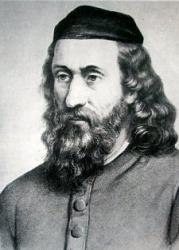
Jan Roh

1487 - 1547 Person Name: Johann Horn Topics: liturgical Scripture Songs Composer of "AVE VIRGO VIRGINUM" in Voices United Pseudonyms-- Johann Cornu Johann Horn John Horn Roh, Johann, was a native of Domascbitz near Leitmeritz, in Bohemia. Roh was his name in Bohemian, but when he wrote in Latin he styled himself Cornu, and in German Horn. In 1518 he was ordained priest and appointed preacher to the Bohemian Brethren's community at Jungbunzlau, in Bohemia. At the Synod of Brandeis, in Sep. 1529, he was chosen as one of the three Seniors of the Unity. Finally, at the Synod of Brandeis, in April 1532, he was appointed Bishop, and held this post till his death, at Jungbunzlau, Feb. 11, 1547. (Koch, ii. 114; Wackernagel, i. p. 727, &c.) Roh was the editor of the Bohemian Hymn Book of 1541, and is said to have written a number of hymns in the Bohemian language, but the edition of 1561 only gives one with his name. He also edited the second German hymn-book of the Brethren, viz., Ein Gesangbuch der Brüder inn Behemen und Merherrn, Nürnberg, 1544; and seems to have been author or translator of all, or nearly all, of the 32 hymns there added. Another hymn ("O heiliger Vater, glitiger Herr") is also given with his name in the Kirchengeseng, 1566. A considerable number of Ron's hymns passed into the Lutheran hymn-books of the 16th and 17th centuries, and into the Moravian Hymn Books of the 18th cent. Rather curiously in the last Moravian Hymn Books, (the Kleines Gesangbuch, Gnadau, 1870), his name is not found in the list of authors. Those of Roh's hymns which have been translated into English are:— i. Gottes Sohn ist kommen. Christmas. In 1544, as above, and thence in Wackernagel iii. p, 350, in 9 stanzas of 6 lines, The heading "Ave Hierarchia" refers to the melody, for it is not a translation from the Latin. Included in V. Babst's Gesang-Buch, Leipzig, 1553, and recently in the Unverfälschter Liedersegen, 1851, No. 6, Strangely enough this fine hymn was omitted from the Kirchengeseng of 1566 and later editions; and though it was included in the Herrnhut Gesang-Buch, 1735, and the Brüder Gesang-Buch, 1778, it has again been omitted from the Kleines Gesang-Buch, 1870. The translations are:— 1. Lo! from highest heaven. A free translation of stanzas i.-iii., vi., by A. T. Russell, as No. 27 in his Psalms & Hymns, 1851. Included, altered, in Kennedy, 1863. 2. Once He came in blessing. A good translation of stanzas i.-iii., v., ix., by Miss Winkworth, in her Chorale Book for England, 1863, No. 26. Included in J. Robinson's Collection, 1869, and the Pennsylvania Lutheran Church Book, 1868. 3. God's Son once descending. This is No. 249 in pt. i. of the Moravian Hymn Book, 1754. Hymns not in English common use:— ii. Betrachtn wir heut zu dieser Frist. Easter. 1544 as above, and in Wackernagel, iii. p. 359, in 14 stanzas of 3 lines. Translated as:—(1) "The Saviour Jesus, Friend of Man." As No. 332 in pt. i. of the Moravian Hymn Book, 1754. This is from the recast "Der selge Heiland, Jesus Christ" (based on ii.-v.), as No. 1875 in Appendix xii. c. 1745, to the Herrnhut Gesang-Buch 1735. iii. Ein starker Held ist uns kommen. Christmas. 1544 as above, and in Wackernagel, iii. p. 352, in 12 stanzas of 4 lines. Translated as (1) "God took our nature upon Him (stanza iii.), as No. 251 in pt. i. of the Moravian Hymn Book, 1754. iv. Lob Gott getrost mit singen. Christian Church. 1544 as above, and in Wackernagel, iii. p. 360, in 9 stanzas of 8 lines. In the Kirchengeseng, 1566, two st. were inserted between iii. and iv. This form, in 11 stanzas, is No. 563 in the Unverfälschter Liedersegen 1851. In the Brüder Gesang-Buch 1778, No. 1014, is a cento in 3 st. (from st. vi., viii., ix. of the 1544, and iv. of the 1566), beginning "Lass dich durch nichts erschrecken," and this form has been translated as "O be not thou dismayed, Believing little band," as No. 596 in the Moravian Hymn Book, 1886. v. O Mensch, thu heut hören. Passiontide. 1544 as above, and in Wackernagel, iii., p. 355, in 20 stanzas of 4 lines. The English version is "I am thy Lord and God" (st. ii.), as No. 258, in pt. i. of the Moravian Hymn Book, 1754. [Rev. James Mearns, M.A.] --John Julian, Dictionary of Hymnology (1907)

Johann Rudolf Ahle

1625 - 1673 Person Name: Johann Rudolph Ahle Topics: The Church at Worship Scripture; liturgical Songs of Illumination; Baptism; Bible; Church Education; God House, Home; Holy Spirit Illumination; Jesus Christ Lord of Life; Jesus Christ Prophet; Jesus Christ Teacher/Teachings; Light; Opening Hymns; Praise; Service Music Gathering, Call to Worship, Greeting; Service Music Prayer for Illumination; Service Music Litany Prayer; Word of God; Epiphany 3 Year A; Proper 9 Year A; Epiphany 2 Year B; Lent 4 Year B; Proper 21 Year B; Epiphany 2 Year C; Easter 3 Year C Composer (melody) of "LIEBSTER JESU" in Voices United Johann Rudolph Ahle, b. Mühlhausen, 1625; Ahle studied theology at Erfurt University. Little is known about his musical education, but be became well known as an organist while he was in Erfurt. He returned to Mühlhausen and became an organist at St. Blasius Church, he composed organ music but is know for his sacred choral music. He was the father of Johann Georg, who was also a composer and succeeded his father as organist at St. Blasius Church. Johann Rudolf became mayor of Mühlhausen late in his life and died there in 1673. Dianne Shapiro (from Bach Cantatas Website www.bach-cantatas.com/Lib/Ahle-Johann-Rudolf.htm)

Lawrence M. Probes

Topics: liturgical Scripture Songs Composer of "[Arise , be clothed in the light]" in Voices United Lawrence M. Probes, MD (born 1952, Ft. Worth, Texas) is an American Singer-Songwriter trained in classical music since early childhood with a background in Gospel, folk and popular music. As a young boy he took piano lessons, eventually playing the clarinet, then in Junior High School starting the bassoon. He went on to attend National Music Camp and Interlochen Arts Academy majoring in bassoon and voice, then after a semester at Eastman School of Music he decided to become a medical doctor and began premedical studies at Texas Christian University. While at TCU he played bassoon in the Ft. Worth Symphony, Opera and Ballet Orchestras, as well as in the Faculty Woodwind Quintet. After graduating from the University of Texas Medical Branch in Galveston, Texas Dr. Probes completed residency training in psychiatry at Michigan State University in its Grand Rapids, Michigan division. During residency and all through his 28 years in Grand Rapids Dr. Probes continued to play the bassoon professionally, performing occasionally with the Grand Rapids Symphony, free lancing and giving private bassoon lessons. After moving to Traverse City in 2006, Dr. Probes played bassoon with the Traverse Symphony Orchestra. At Interlochen Arts Academy Dr. Probes studied voice with Kenneth Jewell. He performed folk music with singer-songwriter, Anne Hills, and classical singer and professor, Jerold Pope. Already an accomplished pianist, he taught himself guitar, upright and electric bass, mandolin, anglo concertina, bouzouki, penny whistle and violin. In Grand Rapids he performed with a family folk music band, "Kinsfolk." In Traverse City he formed the family folk music band, "Cherry Blossom Ramblers," as well as the tribute band, "Peter, Paul & Mary Remembered." He performs a wide range of musical genres: classical folk, country, singer-songwriter, old time, Irish traditional, Russian music, Spanish and Latin music, jazz, pop, Gospel and easy listening. Dr. Probes and his bands are in demand by festivals, churches, special events, and community concerts and fundraisers. Dr. Probes has been interested in foreign languages since school years and has learned Russian, Spanish, German, Arabic and Frisian. He has traveled extensively in Russia and countries of the former Soviet Union, and he sings in Russian, Spanish, German, Italian, French and Latin. During his years in Grand Rapids Dr. Probes was on the music team at Church of the Servant (CRC). He composed music for the Epiphany and Easter liturgies that were used by the congregation for more than 20 years. "Arise, Be Clothed In The Light" from the Epiphany liturgy has been published in two hymnals. Dr. Probes has written a number of newer songs for Christian worship, and he and his family band serve on the worship team at Central United Methodist Church in Traverse City, Michigan. Lawrence M. Probes

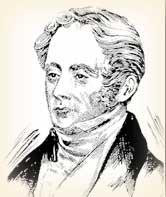
Robert Grant

1779 - 1838 Person Name: Robert Grant (1779-1838) Topics: Scriptural Songs Author of "O worship the King, all glorious above" in The Summit Choirbook Robert Grant (b. Bengal, India, 1779; d. Dalpoorie, India, 1838) was influenced in writing this text by William Kethe’s paraphrase of Psalm 104 in the Anglo-Genevan Psalter (1561). Grant’s text was first published in Edward Bickersteth’s Christian Psalmody (1833) with several unauthorized alterations. In 1835 his original six-stanza text was published in Henry Elliott’s Psalm and Hymns (The original stanza 3 was omitted in Lift Up Your Hearts). Of Scottish ancestry, Grant was born in India, where his father was a director of the East India Company. He attended Magdalen College, Cambridge, and was called to the bar in 1807. He had a distinguished public career a Governor of Bombay and as a member of the British Parliament, where he sponsored a bill to remove civil restrictions on Jews. Grant was knighted in 1834. His hymn texts were published in the Christian Observer (1806-1815), in Elliot’s Psalms and Hymns (1835), and posthumously by his brother as Sacred Poems (1839). Bert Polman ======================== Grant, Sir Robert, second son of Mr. Charles Grant, sometime Member of Parliament for Inverness, and a Director of the East India Company, was born in 1785, and educated at Cambridge, where he graduated in 1806. Called to the English Bar in 1807, he became Member of Parliament for Inverness in 1826; a Privy Councillor in 1831; and Governor of Bombay, 1834. He died at Dapoorie, in Western India, July 9, 1838. As a hymnwriter of great merit he is well and favourably known. His hymns, "O worship the King"; "Saviour, when in dust to Thee"; and "When gathering clouds around I view," are widely used in all English-speaking countries. Some of those which are less known are marked by the same graceful versification and deep and tender feeling. The best of his hymns were contributed to the Christian Observer, 1806-1815, under the signature of "E—y, D. R."; and to Elliott's Psalms & Hymns, Brighton, 1835. In the Psalms & Hymns those which were taken from the Christian Observer were rewritten by the author. The year following his death his brother, Lord Glenelg, gathered 12 of his hymns and poems together, and published them as:— Sacred Poems. By the late Eight Hon. Sir Robert Grant. London, Saunders & Otley, Conduit Street, 1839. It was reprinted in 1844 and in 1868. This volume is accompanied by a short "Notice," dated "London, Juno 18, 1839." ===================== Grant, Sir R., p. 450, i. Other hymns are:— 1. From Olivet's sequester'd scats. Palm Sunday. 2. How deep the joy, Almighty Lord. Ps. lxxxiv. 3. Wherefore do the nations wage. Ps. ii. These are all from his posthumous sacred Poems, 1839. --John Julian, Dictionary of Hymnology, Appendix, Part II (1907)

C. Michael Hawn

b. 1948 Person Name: C Michael Hawn Topics: Scriptural Songs Translator of "Yo soy la luz del mundo (I am the world's true light)" in In Every Corner Sing C. Michael Hawn University Distinguished Professor of Church Music Director, Master of Sacred Music Program Education D.M.A., Southern Baptist Theological Seminary, 1975; M.C.M., Southern Baptist Theological Seminary, 1972; B.M.E., Wheaton College, 1970 Teaching Specialties Worship and music, worship and culture, Seminary Singers, hymnology Research Interests Global music and worship, cross-cultural worship, enlivening congregational song Selected Publications :: C. Michael Hawn, ed., New Songs of Celebration Render: Congregational Singing in the Twenty-First Century (Chicago: GIA Publications, Inc., 2013) :: C. Michael Hawn, contributor, Canterbury Dictionary of Hymnology (Norwich, UK: Canterbury Press, 2013), http://hymnology.imprezadev.co.uk/; 25 articles on global hymnody with a focus on sub-Saharan African hymns :: Gather into One: Praying and Singing Globally (Grand Rapids: Wm. B. Eerdmans, 2003). :: One Bread, One Body: Exploring Cultural Diversity in Worship (Bethesda, MD: The Alban Institute, 2003). :: C. Michael Hawn, author and compiler, Halle, Halle: We Sing the World Round (Garland, TX: Choristers Guild, 1999). Professional Distinctions Regional winner and national finalist, National Association of Teachers of Singing Artist Awards contest, 1974; Citation for Excellence in Teaching, Southeastern Baptist Theological Seminary, 1988; grant from Association of Theological Schools for sabbatical study in Nigeria and Kenya, 1989; Chair, Board of Directors, Children's Chorus of Greater Dallas, 1996-1998; Louisville Institute Sabbatical Research Grant, Lilly Foundation, 1998-1999; Worship Renewal Grant from the Calvin Institute of Christian Worship, Grand Rapids, MI, with funds provided by Lilly Endowment, Inc., 2000; Choristers Guild, President of the Board of Directors, 1990-92, 2001-03; Elected Fellow of the Hymn Society (2008); ordained Baptist minister (1980) --www.smu.edu/

Johann Franck

1618 - 1677 Topics: liturgical Scripture Songs Author of "Jesus, Priceless Treasure" Johann Franck (b. Guben, Brandenburg, Germany, 1618; d. Guben, 1677) was a law student at the University of Köningsberg and practiced law during the Thirty Years' War. He held several positions in civil service, including councillor and mayor of Guben. A significant poet, second only to Paul Gerhardt in his day, Franck wrote some 110 hymns, many of which were published by his friend Johann Crüger in various editions of the Praxis Pietatis melica. All were included in the first part of Franck’s Teutsche Gedichte bestehend im geistliche Sion (1672). Bert Polman ============= Franck, Johann, son of Johann Franck, advocate and councillor at Guben, Brandenburg, was born at Guben, June 1, 1618. After his father's death, in 1620, his uncle by marriage, the Town Judge, Adam Tielckau, adopted him and sent him for his education to the schools at Guben, Cottbus, Stettin and Thorn. On June 28, 1638, he matriculated as a student of law at the University of Königsberg, the only German university left undisturbed by the Thirty Years' War. Here his religious spirit, his love of nature, and his friendship with such men as Simon Dach and Heinrich Held, preserved him from sharing in the excesses of his fellow students. He returned to Guben at Easter, 1640, at the urgent request of his mother, who wished to have him near her in those times of war during which Guben frequently suffered from the presence of both Swedish and Saxon troops. After his return from Prague, May, 1645, he commenced practice as a lawyer. In 1648 he became a burgess and councillor, in 1661 burgomaster, and in 1671 was appointed the deputy from Guben to the Landtag (Diet) of Lower Lusatia. He died at Guben, June 18, 1677; and on the bicentenary of his death, June 18, 1877, a monumental tablet to his memory was affixed to the outer wall of the Stadtkirche at Guben (Koch, iii. 378-385; Allgemeine Deutsche Biographie, vii. 211-212; the two works by Dr. Hugo Jentsch of Guben, Johann Franck, 1877, and Die Abfassungszeit der geistlichen Lieder Johann Franck's, 1876). Of Franck's secular poems those before 1649 are much the best; his later productions becoming more and more affected and artificial, long-winded and full of classical allusions, and much inferior to those of Dach or Opitz. As a hymn writer he holds a high rank and is distinguished for unfeigned and firm faith, deep earnestness, finished form, and noble, pithy, simplicity of expression. In his hymns we miss the objectivity and congregational character of the older German hymns, and notice a more personal, individual tone; especially the longing for the inward and mystical union of Christ with the soul as in his "Jesus, meine Freude." He stands in close relationship with Gerhardt, sometimes more soaring and occasionally more profound, but neither on the whole so natural nor so suited for popular comprehension or Church use. His hymns appeared mostly in the works of his friends Weichmann, Crüger and Peter. They were collected in his Geistliches Sion, Guben, 1674, to the number of 110; and of these the 57 hymns (the other 53 being psalm versions of no great merit) were reprinted with a biographical preface by Dr. J. L. Pasig as Johann Franck's Geistliche Lieder, Grimma, 1846. Two of those translated into English are from the Latin of J. Campanus (q. v.). Four other hymns are annotated under their own first lines:—"Brunquell aller Güter"; "Dreieinigkeit der Gottheit wahrer Spiegel"; "Jesu, meine Freude"; "Schmücke dich, o liebe Secle." The rest are:— i. Hymns in English common use: -- i. Erweitert eure Pforten . [Advent]. Founded on Psalm xxiv. 7-10. First published in C. Peter's Andachts-Zymbeln, Freiberg, 1655, p. 25, in 7 stanzas of 8 lines; repeated 1674, p. 3, and 1846, p. 3, as above. Included in the 1688 and later editions of Crüger's Praxis pietatis, in Bollhagen's Gesang-Buch, 1736, &c. The only translation in common use is:—- Unfold your gates and open, a translation of st. 1, 3, 6, by A. T. Russell, as No. 30 in his Hymns & Psalms, 1851; repeated altered as No. 30 in Kennedy, 1863, and thus as No. 102 in Holy Song, 1869. ii. Herr Gott dich loben wir, Regier. Thanksgiving for Peace. Evidently written as a thanksgiving for the conclusion of the Thirty Years' War, by the Peace of Westphalia, Oct. 24, 1648. First published in the Crüger-Runge Gesang-Buch, Berlin, 1653, No. 306, in 9 st. of 8 l., as the first of the "Hymns of Thanksgiving for Peace attained"; and repeated 1674, p. 182, and 1846, p. 77, as above. Included in Crüger's Praxis, 1653, and many later collections, and, as No. 591, in the Unverfälschter Liedersegen, 1851. The only translation in common use is:— Lord God, we worship Thee, a very good version of st. 2, 3, 6, 8, by Miss Winkworth in her Chorale Book for England, 1863, No. 183. Repeated in full in the Society for Promoting Christian Knowledge Church Hymns, 1871; the Hymnary, 1872; the Psalmist, 1878; and in America in the Pennsylvania Lutheran Church Book, 1868. In the American Protestant Episcopal Collection, 1871; the Hymns & Songs of Praise, N. Y. 1874; and the Ohio Lutheran Hymnal, 1880, the translation of stanza 8 is omitted. iii. Herr ich habe missgehandelt. Lent. Of this fine hymn of penitence stanza i. appeared as No. 19 in Cruger's Geistliche Kirchenmelodien , Leipzig, 1649. The full form in 8 stanzas of 6 lines is No. 41 in the Crüger-Runge Gesang-Buch, Berlin, 1653, entitled "For the forgiveness of sins," repeated 1674, p. 39, and 1846, p. 37, as above. Included in Crüger's Praxis, 1653, and others, and in the Unverfälschter Liedersegen, 1851. The only translation in common use is:— Lord, to Thee I make confession, a very good translation, omitting st. 4, 5, 6, by Miss Winkworth in her Chorale Book for England, 1863, No. 44, repeated in the Appendix to the Hymnal for St. John's, Aberdeen, 1865-1870; and in the Pennsylvania Lutheran Ch. Book, 1868; Evangelical Hymnal, N. Y., 1880; Ohio Lutheran Hymnal, 1880. Another translation is: "Lord, how oft I have offended," by N. L. Frothingham, 1870, p. 177. iv. Herr Jesu, Licht der Heiden. Presentation in the Temple. Founded on the account in St. Luke ii., and probably the finest hymn on the subject. Dr. Jentsch, 1876, p. 9, thinks it was written before Dec. 8, 1669, as C. Peter, who died then, left a melody for it. We have not found the full text earlier than 1674, as above, p. 10, in 6 stanzas of 8 lines, entitled "On the Festival of the Purification of Mary" (1846, p. 10). Included in the 1688 and later editions of Crüger's Praxis, and in the Unverfälschter Liedersegen, 1851, No. 197. The translations in common use are:— 1. Light of the Gentile world , a translation, omitting st. 6, by Miss Winkworth in the first service of her Lyra Germanica, 1855, p. 193 (ed. 1876, p. 195), and thence as No. 147 in the Pennsylvania Lutheran Hymn Book, 1865. This version is in S.M. Double. 2. Light of the Gentile Nations, a good translation, omitting st. 6, by Miss Winkworth in her Chorale Book for England, 1863, No. 80. Repeated in Dr. Thomas's Augustine Hymn Book, 1866, and in America in the Pennsylvania Lutheran Church Book, 1868, and the Ohio Lutheran Hymnal, 1880. ii. Hymns not in English common use: v. Du geballtes Weltgebäude. Christ above all earthly things. Stanza i. in Cruger's Kirchenmelodien, 1649, No. 116. The full text (beginning "Du o schönes) is No. 239 in the Crüger-Runge Gesang-Buch, 1653, in 8 stanzas, entitled "Longing after Eternal Life." Repeated, 1674, p. 194, and 1846, p. 60, as above. The translations are: (1) "Let who will in thee rejoice," by Miss Winkworth, 1855, p. 180 (1876, p. 182). (2) "O beautiful abode of earth," by Miss Warner, 1858 (1861, p. 233). (3) "Thou, O fair Creation-building," by N. L. Frothingham, 1870, p. 232. vi. Unsre müden Augenlieder. Evening. Probably written while a student at Königsberg. First published in J. Weichmann's Sorgen-lägerin, Königsberg, 1648, Pt. iii., No. 4, in 7 st.; repeated 1674, p. 213, and 1846, p. 91, as above. The only translation is by H. J. Buckoll, 1842, p. 79, beginning with st. vi., "Ever, Lord, on Thee relying." [Rev. James Mearns, M.A.] --John Julian, Dictionary of Hymnology (1907)

Catherine Ambrose

Topics: liturgical Scripture Songs Arranger of "[Proclaim God's marvelous deeds]" in Voices United

Dale Grotenhuis

1931 - 2012 Topics: Scripture Hymns and Songs Harmonizer of "CLAP YOUR HANDS" in The Worshiping Church Dale Grotenhuis (b. Cedar Grove, WI, 1931; d. Jenison, Mi, August 17, 2012) was a member of the 1987 Psalter Hymnal 1987 Revision Committee, and was professor of music and director of choral music at Dordt College, Sioux Center, Iowa, from 1960 until he retired in 1994 to concentrate on composition. Educated at Calvin College; Michigan State University, Lansing; and Ohio State University, Columbus; he combined teaching with composition throughout his career and was a widely published composer of choral music. He also directed the Dordt choir in a large number of recordings, including many psalm arrangements found in the 1959 edition of the Psalter Hymnal. Before coming to Dordt, Grotenhuis taught music at Christian high schools in Washington and Michigan. Under his direction, the Dordt College concert choir participated in annual tours that took members throughout the United States, Canada and Europe. He loved the church and the music of the church. His favorite song was "All Glory Be to God on High". Bert Polman (last two sentences from Joy Grotenhuis, daughter-in-law)

James Quinn

1919 - 2010 Person Name: James Quinn, S.J. (1919- ) Topics: Scriptural Songs Author (sts. 1 and 2) of "To God with gladness sing" in The Summit Choirbook James Quinn (b. Glasgow, Scotland, April 21, 1919; d. Edinburgh, Scotland, April 8, 2010) was a Roman Catholic Jesuit priest who was ordained in 1950. As a consultant for the International Commission on English in the Liturgy, sparked by Vatican II, he has exerted influence far beyond his native Scotland. A collection of his hymn texts is available from Selah Publishing company. Sing a New Creation

Pages


Export as CSV
It looks like you are using an ad-blocker. Ad revenue helps keep us running. Please consider white-listing Hymnary.org or getting Hymnary Pro to eliminate ads entirely and help support Hymnary.org.