You help make Hymnary.org possible. More than 10 million people from 200+ countries found hymns, liturgical resources and encouragement on Hymnary.org in 2025, including you. Every visit affirms the global impact of this ministry.

If Hymnary has been meaningful to you this year, would you take a moment today to help sustain it? A gift of any size—paired with a note of encouragement if you wish—directly supports the server costs, research work and curation that keep this resource freely available to the world.

Give securely online today, or mail a check to:
Hymnary.org
Calvin University
3201 Burton Street SE
Grand Rapids, MI 49546

Thank you for your partnership, and may the hope of Advent fill your heart.

Person Results

Topics:the+judgment
In:people

Planning worship? Check out our sister site, ZeteoSearch.org, for 20+ additional resources related to your search.
Showing 91 - 100 of 413Results Per Page: 102050

Laurentius Laurenti

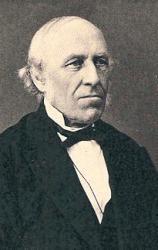
1660 - 1722 Topics: Christ Second Coming and Judgment of Author of "Rejoice, all ye believers" in Trinity Hymnal Laurenti, Laurentius, son of Herr Lorenz, or Laurenti, a burgess of Husum, in Schleswig, was born at Husum, June 8, 1660. He entered the University of Rostock in 1681, and after a year and a half spent there, went to Kiel to study music. In 1684 he was appointed cantor and director of the music at the cathedral church at Bremen. He died at Bremen, May 29, 1722 (Koch, iv. 281; Rotermund's continuation of Jöcher's Gelehrten-Lexicon, iii. 1405, &c). Laurenti was one of the best hymn-writers of the Pietistic school. His hymns are founded on the Gospels for Sundays and Festivals, and they draw out the bearing on the Christian life of the leading thoughts therein contained. They are of noble simplicity; are Scriptural, fervent, and often of genuine poetical worth. In Freylinghausen's Gesang-Buch, 1704 and 1714, no less than 34 are included, and many of these, with others by him, are still in extensive German use. They appeared in his:— Evangelia Melodica, das ist: Geistliche Lieder,und Lobgesange, nach den Sinn der ordentlichen Sonn-und Festages Evangelien, &c. Bremen, 1700 [Royal Library, Berlin], with 148 hymns on the Gospels, and two others. Of his hymns those which have passed into English are:—— i. Du wesentliches Wort. Christmas. Founded on St. John i. 1-12. In his Evangelia Melodica, 1700, p. 30, in 8 stanzas of 8 lines, entitled, "For the Third Day of Christmas." Included in Freylinghausen's Gesang-Buch, 1704, No. 20; and, recently, as No. 83, in the Berlin Geistliche Lieder, 1863. The translations in common use are:— 1. 0 Thou essential Word, Who from. A good translation, omitting st. iii., v., by Miss Winkworth, in her Lyra Germanica, first Ser., 1855, p. 15 (2nd edition, 1856, considerably altered); and repeated, abridged, in Flett's Collection, Paisley, 1871. Varying centos, beginning with st. i., 1. 5, altered to "O Saviour of our race," are found in America, as in Boardman's Selections, Philadelphia, 1861; the Pennsylvania Lutheran Church Book, 1868; and the Dutch Ref. Hymns of the Church, 1869. 2. 0 Thou essential Word, Who wast. By Miss Winkworth, in her Chorale Book for England, 1863, No. 54. This is her 1856 version (as above) rewritten to the original metre. Repeated, in full, in Dr. Thomas's Augustine Hymn Book, 1866, and the Ohio Lutheran Hymnal, 1880; and, abridged, in the English Presbyterian Psalms & Hymns, 1867, and Laudes Domini, N. Y., 1884. ii. Ermuntert euch, ihr Frommen. Second Advent. This is his finest hymn. In his Evangelia Melodica, 1700, p. 353, in 10 stanzas of 8 lines, entitled, "For the 27th Sunday after Trinity." It is founded on St. Matt. xxv. 1-13; and unites the imagery of the parable of the Ten Virgins with that of Rev. xx., xxi. Included, as No. 578, in Freylinghausen's Gesang-Buch, 1704; and, recently, as No. 1519, in the Berlin Geistliche Lieder, ed. 1863. The translation in common use is:— Rejoice, all ye believers. By Mrs. Findlater, in Hymns from the Land of Luther, 1st Ser., 1854, p. 61 (1884, p. 62), a good translation of st. i.-iii., vii., viii., x. In full, but altered to the original metre, in Schaff’s Christ in Song, 1869 and 1870. This version is found in a large number of English and American hymnals, under the following forms:— (1) Rejoice, all ye believers (st. i.). Varying centos are found in Mercer, 1864, Hymnal Companion, 1876, &c.; and in America in Hatfield's Church Hymn Book, 1872, Evangelical Hymnal, N. Y., 1880, and others. (2)

Ludvig Mathias Lindeman

1812 - 1887 Person Name: L. M. Lindeman (1812-87.) Topics: The Judgment Composer of "LINDEMAN" in Christian Hymns Ludvig M. Lindeman (b. 1812; d. 1887) was a Norwegian composer and organist. Born in Trondheim, he studied theology in Oslo where he remained the rest of his life. In 1839 he succeeded his brother as the organist and cantor of Oslo Cathedral, a position he held for 48 years up until his death. Lindeman was appointed Knight of the Royal Norwegian Order of St. Olav, and was invited to both help christen the new organ in Royal Albert Hall in London, as well as compose for the coronation of King Oscar II and Queen Sophie of Sweden. In 1883, he and his son started the Organist School in Oslo. Lindeman is perhaps best known for his arrangements of Norwegiam folk tales; over the course of his life he collected over 3000 folk melodies and tunes. Laura de Jong

Daniel Read

1757 - 1836 Topics: The Kingdom and Judgment Composer of "WINDHAM" in Church Hymnal, Mennonite Daniel Read; b. 1757, Rehoboth, Mass.; d. 1837, New Haven, Conn.An American composer and a primary figure in early American classical music. He was one of the “Yankee Tunesmiths” (1st New England School of Music) when classical music was popular in Europe. Read was a private in Massachusetts militia and later a comb maker and owner of a general store in New Haven, CN. He was only the 3rd composer in the U. S. to put out a collection of his own music. His work, “The American Singing Book” went through 5 editions, making him the most popular composer in the nation. Others often plagarized his tunes in those days. Tunebook sales supplemented his general store income, including “The Columbian Harmonist” (3 volumnes) with 3 revisions, and “The New Haven Collection of Sacred Music” 1818. Read also published “The American Musical magazine” in 12 annual issues in 1786 and 1787. In later years he came to appreciate European music more and imitated that styling in devotional music. Some of Read's music is still being performed, and selections have been published in “The Sacred Harp”, 1991 Edition, and the “Stoughton Music Society” (Centennial Collection 1980). John Perry

John Baptiste Calkin

1827 - 1905 Person Name: J. Baptiste Calkin Topics: Royalty of Christ Judgment the Prerogative of Composer of "WALTHAM" in The Psalter John Baptiste Calkin United Kingdom 1827-1905. Born in London, he was reared in a musical atmosphere. Studying music under his father, and with three brothers, he became a composer, organist, and music teacher. At 19, he was appointed organist, precenter, and choirmaster at St. Columbia's College, Dublin, Ireland, 1846 to 1853. From 1853 to 1863 we was organist and choirmaster at Woburn Chapel, London. From 1863 to 1868, he was organist of Camden Road Chapel. From 1870 to 1884 he was organist at St. Thomas's Church, Camden Town. In 1883 he became professor at Guildhall School of Music and concentrated on teaching and composing. He was also a professor of music and on the council of Trinity College, London, and a member of the Philharmonic Society (1862). In 1893 he was a fellow of the College of Organists. John and wife, Victoire, had four sons, each following a musical carer. He wrote much music for organ and scored string arrangements, sonatas, duos, etc. He died at Hornsey Rise Gardens. John Perry

Dmitriĭ Stepanovich Bortnianskiĭ

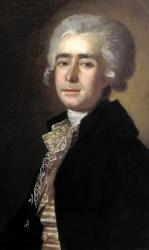
1751 - 1825 Person Name: Bortniansky Topics: Judgment Day; Royalty of Christ Judgment the Prerogative of Composer of "ST. PETERSBURG" in The Psalter Dimitri Stepanovitch Bortniansky (1751-1825) Ukraine 1751-1825 Born in Glukhov, Ukraine, he joined the imperial choir at age 8 and studied with Galuppi, who later took the lad with him to Italy, where he studied for 10 years, becoming a composer, harpsichordist, and conductor. While in Italy he composed several operas and other instrumental music, composing more operas and music later in Russia. In 1779 he returned to Russia, where he was appointed Director to the Imperial Chapel Choir, the first as a native citizen. In 1796 he was appointed music director. With such a great instrument at his disposal, he produced many compositions, 100+ religious works, sacred concertos, cantatas, and hymns. He influenced Rachmaninoff and Tchaikovshy, the latter editing Bortniansky's sacred work, amassing 10 volumnes. He died in St. Petersburg. He was so popular in Russia that a bronze statue was erected in his honor in the Novgorod Kremlin. He composed in different musical styles, including choral works in French, Italian, Latin, German, and Church Slavonic. John Perry

J. H. Tenney

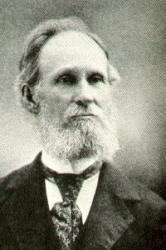
1840 - 1918 Topics: Judgment Composer of "[Where will you spend eternity?]" in Victory Songs John Harrison Tenney, 1840-1918 Born: No­vem­ber 22, 1840, Row­ley, Mass­a­chu­setts. Born just af­ter the pre­si­den­tial cam­paign of "Tip­pe­ca­noe and Ty­ler, too," Ten­ney was named af­ter Amer­i­can pre­si­dent Will­iam Hen­ry Har­ri­son. A dea­con in the Con­gre­ga­tion­al Church in Line­brook, Mass­a­chu­setts, he ed­it­ed or was as­so­ci­ate ed­it­or of over 30 books, and con­trib­ut­ed to hun­dreds more. His works in­clude: Amer­i­can Male Choir Temperance Jew­els, with Eli­sha Hoff­man (Bos­ton, Mass­a­chu­setts: Ol­iv­er Dit­son & Com­pa­ny, 1879) Bells of Vic­to­ry, with Eli­sha Hoff­man (Bos­ton, Mass­a­chu­setts: Oliv­er Dit­son & Com­pa­ny, 1888) Gems of Gos­pel Song Golden Sun­beams Sharon’s Dewy Rose Songs of Faith Shining Light Songs of Joy Sparkling and Bright Spiritual Songs, Nos. 1 and 2 Sweet Fields of Eden The Bea­con Light The Sing­ing School Ban­ner The An­them Of­fer­ing The Amer­i­can An­them Book The Crown of Praise Sources-- Hall, pp. 219-22 Music-- Asilomar Bogotá Beyond the Swell­ing Flood Cancún Come to Je­sus Ever Will I Pray Hallowed Hour of Pray­er Jesus Is Pass­ing This Way Jubilate! My An­chor Is Hold­ing Nothing Be­tween Onward Christ­ian Sol­diers Sabbath Bell San Fran­cis­co We’ll Ne­ver Say Good­bye Where Will You Spend Eter­ni­ty? --www.hymntime.com/tch

James Quinn

1919 - 2010 Person Name: James Quinn, 1919- Topics: Judgment of God Author of "Lord, bid your servant go in peace" in Together in Song James Quinn (b. Glasgow, Scotland, April 21, 1919; d. Edinburgh, Scotland, April 8, 2010) was a Roman Catholic Jesuit priest who was ordained in 1950. As a consultant for the International Commission on English in the Liturgy, sparked by Vatican II, he has exerted influence far beyond his native Scotland. A collection of his hymn texts is available from Selah Publishing company. Sing a New Creation

A. Williams

1731 - 1776 Person Name: Aaron Williams Topics: Royalty of Christ Judgment the Prerogative of Composer of "ST. THOMAS" in The Psalter Aaron Williams (b. London, England, 1731; d. London, 1776) was a singing teacher, music engraver, and clerk at the Scottish Church, London Wall. He published various church music collections, some intended for rural church choirs. Representative of his compilations are The Universal Psalmodist (1763)— published in the United States as The American Harmony (1769)—The Royal Harmony (1766), The New Universal Psalmodist (1770), and Psalmody in Miniature (1778). His Harmonia Coelestis (1775) included anthems by noted composers. Bert Polman

E. A. Hoffman

1839 - 1929 Person Name: Rev. E. A. Hoffman Topics: Judgment Author of "Where Will You Spend Eternity?" in Victory Songs Elisha Hoffman (1839-1929) after graduating from Union Seminary in Pennsylvania was ordained in 1868. As a minister he was appointed to the circuit in Napoleon, Ohio in 1872. He worked with the Evangelical Association's publishing arm in Cleveland for eleven years. He served in many chapels and churches in Cleveland and in Grafton in the 1880s, among them Bethel Home for Sailors and Seamen, Chestnut Ridge Union Chapel, Grace Congregational Church and Rockport Congregational Church. In his lifetime he wrote more than 2,000 gospel songs including"Leaning on the everlasting arms" (1894). The fifty song books he edited include Pentecostal Hymns No. 1 and The Evergreen, 1873. Mary Louise VanDyke ============ Hoffman, Elisha Albright, author of "Have you been to Jesus for the cleansing power?" (Holiness desired), in I. D. Sankey's Sacred Songs and Solos, 1881, was born in Pennsylvania, May 7, 1839. --John Julian, Dictionary of Hymnology, Appendix, Part II (1907) ==============

Joseph P. Holbrook

1822 - 1888 Topics: Judgments On Nations Composer of "LYTE" in The Psalter Joseph P. Holbrook was a tune writer in the parlor music style, and used the popular melodies of Mason and Hastings, Bradbury and Root, Greatorex and Kingsley in his collections. He furnished settings for the choir hymns in Songs for the Sanctuary in his Quartet and chorus Choir (New York, 1871, and sought more recogniation than had been given him in a hymnal of his own, Worship in Song (New York, 1880); a book that found no welcome. from The English hymn: its development and use in worship By Louis FitzGerald Benson

Pages


Export as CSV
It looks like you are using an ad-blocker. Ad revenue helps keep us running. Please consider white-listing Hymnary.org or getting Hymnary Pro to eliminate ads entirely and help support Hymnary.org.