You help make Hymnary.org possible. More than 10 million people from 200+ countries found hymns, liturgical resources and encouragement on Hymnary.org in 2025, including you. Every visit affirms the global impact of this ministry.

If Hymnary has been meaningful to you this year, would you take a moment today to help sustain it? A gift of any size—paired with a note of encouragement if you wish—directly supports the server costs, research work and curation that keep this resource freely available to the world.

Give securely online today, or mail a check to:
Hymnary.org
Calvin University
3201 Burton Street SE
Grand Rapids, MI 49546

Thank you for your partnership, and may the hope of Advent fill your heart.

Person Results

Topics:god+as+creator
In:people

Planning worship? Check out our sister site, ZeteoSearch.org, for 20+ additional resources related to your search.
Showing 91 - 100 of 254Results Per Page: 102050

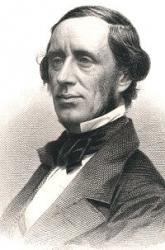
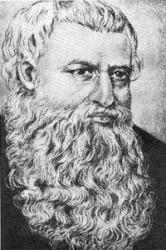
Nikolaus Herman

1500 - 1561 Person Name: Nikolaus Herman, 1480-1561 Topics: God as Creator Adapter of "LOBT GOTT, IHR CHRISTEN" in Psalms for All Seasons Herman, Nicolaus, is always associated with Joachimsthal in Bohemia, just over the mountains from Saxony. The town was not of importance till the mines began to be extensively worked about 1516. Whether Herman was a native of this place is not known, but he was apparently there in 1518, and was certainly in office there in 1524. For many years he held the post of Master in the Latin School, and Cantor or Organist and Choirmaster in the church. Towards the end of his life he suffered greatly from gout, and had to resign even his post as Cantor a number of years before his death. He died at Joachimsthal, May 3, 1561. (Koch, i. 390-398; Allgemeine Deutsche Biographie, xii. 186-188, &c.) He was a great friend and helper of J. Mathesius (q.v.) (who in 1532 became rector of the school, but in 1541 diaconus and in 1545 pastor of the church), and it was said that whenever Mathesius preached a specially good sermon Herman straightway embodied its leading ideas in a hymn. His hymns, however, were not primarily written for use in church, but were intended for the boys and girls in the schools, to supplant profane songs in the mouths of the young men and women, or for the daily life of the “housefathers and housemothers" in Joachimsthal, at home, and in their work in the mines. He is a poet of the people, homely, earnest, and picturesque in style; by his naiveté reminding us of Hans Sachs. He was an ardent lover of music and a very good organist. The chorales which he published with his hymns are apparently all of his own composition, and are among the best of the Reformation period. Many of Herman's hymns soon passed into Church use in Germany, and a number are found in almost all books in present use. About 190 in all, they appeared principally in:— (1) Die Sontags Evangelia uber des gantze Jar, in Gesenge verfasset, für die Kinder und christlichen Haussvetter, &c, Wittenberg, 1560 (dedication by Herman dated Trinity Sunday, 1559), with 101 hymns and 17 melodies. The best are those interspersed specially meant for children and not directly founded on the Gospel for the day. (2) Die Historien von der Sindfludt, Joseph, Mose, Helia, Elisa und der Susanna, sampt etlichen Historien aus den Evangelisten, &c., Wittenberg, 1562 (preface by Herman dated St. Bartholomew's Day, 1560), with 73 hymns and 20 melodies. In this case also the general hymns are the best. A selection of 60 (really 61) of his hymns, with a memoir by K. F. Ledderhose, was published at Halle, 1855. One of Herman's hymns is noted under “Wenn mein Stündlein vorhanden ist." The others which have passed into English are:— i. Bescher uns, Herr, das täglioh Brod. Grace before Meat. 1562, as above, and thence in Wackernagel, iii. p. 1228, in 6 stanzas of 4 lines; in Ledderhose, p. 70; and in the Berlin Geistliche Lieder, ed. 1863, No. 1133. Translated as:— 1. Thou art our Father and our God. This, by P. H. Molther, a translation of stanza vi., as No. 180 in the Moravian Hymn Book, 1789 (1849, No. 220, st. v.). 2. As children we are owned by Thee, a translation of stanza vi., as st. iii. of No. 191 in the Moravian Hymn Book, 1801 (1849, No. 220, stanza iii.). ii. Die helle Sonn leucht jetzt herfür. Morning. 1560, as above, and thence in Wackernagel, iii. p. 1184, in 4 stanzas of 4 lines, in Ledderhose, p. 87; and in the Unverfälschter Liedersegen, 1851, No. 450. Translated as:— The morning beam revives our eyes, a good and full translation by. A. T. Russell, as No. 71 in the Dalston Hospital Hymn Book 1848. iii. Erschienen ist der herrliche Tag. Easter. 1560, as above, in 14 stanzas of 4 lines, entitled, "A new Spiritual Song of the Joyful Resurrection of our Saviour Jesus Christ; for the maidens of the girls' school in Joachimsthal”; and thence in Wackernagel, iii. p. 1175; in Ledderhose p. 23, and Unverfälschter Liedersegen, 1851, No. 134. It has reminiscences of the "Erstanden ist der heil'ge Christ". Translated as:— The day hath dawn'd—-the day of days, a good translation by A. T. Russell of stanzas i., ii., xiii., xiv., as No. 113 in his Psalms & Hymns, 1851. Another tr. is, "At length appears the glorious day," by Dr. G. Walker, 1860, p. 28. iv. Hinunter ist der Sonnen Schein. Evening. 1560, as above, and thence in Wackernagel, iii. p. 1184, in 4 stanzas of 4 lines; in Ledderhose, p. 88; and in the Unverfälschter Liedersegen1851, No. 523. Some of the phrases may have been suggested by the "Christe qui lux es et dies" (q. v.). Translated as:— 1. Sunk is the sun's last beam of light, a full and good translation by Miss Cox in her Sacred Hymns from the German, 1841, p. 57. Included in Alford's Psalms & Hymns, 1844, and Tear of Praise, 1867; in Dale's English Hymn Book, 1875; in the Pennsylvania Lutheran Church Book, 1868, and others. It is also given considerably altered and beginning, "Sunk is the Sun! the daylight gone," in W. J. Blew's Church Hymn and Tune Book, 1851-55. 2. The happy sunshine all is gone, in full, by Miss Winkworth in her Lyra Germanica, 1st Ser., 1855, p. 225; repeated in her Chorale Book for England, 1863, and the Ohio Lutheran Hymnal, 1880. Other translations are: (1) "Did I perhaps Thee somewhat grieve," a translation of stanza iii. in the Moravian Hymn Book, 1789, No. 756. In the 1801 and later eds. (1886, No. 1181, st. iii.), it begins, "Where'er I Thee this day did grieve." (2) "The sun’s fair sheen is past and gone," by H. J. Buckoll, 1842, p. 68. (3) "The sun hath run his daily race," by Lady E. Fortescue, 1843, p. 14. v. Lobt Gott, ihr Christen alle gleich. Christmas. Written c. 1554, but first published 1560 as above, as the first of "Three Spiritual Christmas Songs of the new-born child Jesus, for the children in Joachimsthal." Thence in Wackernagel iii. p. 1169, in 8 stanzas of 4 lines; in Ledderhose, p. 1; and in the Unverfälschter Liedersegen, 1851, No. 47. It is one of the most popular German Christmas hymns. The melody set to it in 1560 is also by Herman; in 1554 to his "Kommt her ihr liebsten Schwesterlein" [in the Hymnal Companioncalled "St. George's (old)"]. Translated as :— 1. Let all together praise our God, a good translation of stanzas i., iii., vi., viii., by A. T. Russell, as No. 52 in his Psalms & Hymns, 1851. Repeated in Kennedy, 1863, adding a translation of st. ii., and beginning, "Let all creation praise our God." 2. Praise ye the Lord, ye Christians I yea, in full, by E. Cronenwett, as No. 31 in the Ohio Lutheran Hymnal 1880. Other translations are: (1) "A wondrous change He with us makes," a tr. of stanza viii., ix. as No. 438 in pt. i. of the Moravian Hymn Book, 1754, repeated 1789-1826. (2) "Come, brethren, lets the song arise," by Dr. G. Walker, 1860, p. 26. (3) "Praise God, now Christians, all alike," by Miss Manington, 1864, p. 9. (4) "Praise God, upon His throne on high," in the Sunday Magazine, 1874, p. 384, signed "P. J." The hymn “Shepherds rejoice, lift up your eyes," given by J. C. Jacobi in his Psalmodia Germanica, 1722, p. 8, to Herman's melody (which was first published 1554) is, as stated in his Preface, taken from Bk. i. of Isaac Watts's Horse Lyricae vi. So wahr ich leb, spricht Gott der Herr. Absolution. 1560, as above, in 11 stanzas of 4 lines, entitled "A hymn on the power of the keys and the virtue of holy absolution; for the children in Joachimsthal." Thence in Wackernagel, iii. p. 1183; in Ledderhose, p. 47; and the Unverfälschter Liedersegen, 1851, No. 429. It probably suggested the better known hymn, "So wahr ich lebe," q. v., by Johann Heermann. Translated as:— Yea, as I live, Jehovah saith, I do not wish the sinner's death, in full, by Dr. M. Loy, as No. 245, in the Ohio Lutheran Hymnal, 1880. [Rev. James Mearns, M.A.] --John Julian, Dictionary of Hymnology (1907)

Michael Morgan

b. 1948 Topics: God as Creator Author of "O Praise God's Name Together" in Lift Up Your Hearts Michael Morgan (b. 1948) is a church musician, Psalm scholar, and collector of English Bibles and Psalters from Atlanta, Georgia. After almost 40 years, he now serves as Organist Emeritus for Atlanta’s historic Central Presbyterian Church, and as Seminary Musician at Columbia Theological Seminary. He holds degrees from Florida State University and Atlanta University, and did post-graduate study with composer Richard Purvis in San Francisco. He has played recitals, worship services, and master classes across the U. S., and in England, France, Spain, Switzerland, and Germany. He is author of the Psalter for Christian Worship (1999; rev. 2010), and a regular contributor in the field of psalmody (most recently to the Reformed collections Psalms for All Seasons and Lift Up Your Hearts, and the new Presbyterian hymnal, Glory to God). Michael Morgan

William Sterndale Bennett

1816 - 1875 Person Name: W. Sterndale Bennett Topics: God as Creator Harmonizer of "LOBE DEN HERREN" in The Sing! Hymnal William Sterndale Bennett, born in Sheffield, England, April 13, 1816, died in London, Feb. 1, 1875. His father, an organist, died when he was three years old, and his education was cared for by his grandfather. At the age of eight (1824) he entered the choir of King's College Chapel at Cambridge, where his grandfather lived, and in 1826 was sent to London to study at the Royal Academy of Music. Here he studied composition under Lucas and Dr. Crotch, and pianoforte, first under W. H. Holmes, and then under Cipriani Potter. His first composition of note was his D minor pianoforte concerto, op. 1, written in 1832 and played by himself at the prize concert at the Academy in 1833. Mendelssohn was present and greatly encouraged the young composer. In 1836 the firm of Broadwood offered to pay his expenses for a year's study in Leipsic; here he came under the influence of Mendelssohn and Schumann, both of whom held his talent in high esteem. He came back to London after the specified year, but returned to Leipsic for another year's study in 1840. In 1843 he began to give successful chamber concerts in London, and in 1844 married Mary Anne Wood, daughter of a captain in the Navy. In 1849 he founded the London Bach Society, one of the results of which was the first performance in England of the Matthew Passion, April 6, 1854. In 1853 he was offered the conductorship of the Leipsic Gewandhaus concerts, and in 1856 he was elected to the chair of musical professor at the University of Cambridge, and shortly afterwards received the degree of Mus. Doc. In 1856 he was also made permanent conductor of the Philharmonic Society, a post which he resigned ten years later to become principal of the Royal academy of Music. In 11867 he received the Cambridge degree of M.A. and a salary of 100 pounds was joined to his professorship. In 1870 the University of Oxford conferred upon him the honorary dgree of D.C.L. He was knighted in 1871, and a scholarship was founded at the Royal academy of Music out of subscriptions to a public testimonial to him in St. James's Hall in 1872. He died after a short illness, and was buried in Westminster Abbey. Bennett has been called the first English composer of individual genius since Purcell; he certainly was the first English composer who go any real recognition in Germany. He has generally been considered as a follower and imitator of Mendelssohn, although the best English critics deny this. Yet he may truly be said to have held more by Mendelssohn than by Schumann. His compositions are noteworthy for an easy grace, refinement, and elaborate perfection of style. Cyclopedia of Music and Musicians by John Denison Camplin, Jr. and William Foster Apthorp (Charles Scribner’s Sons, 1888) https://archive.org/details/cyclopediaofmusi01cham/mode/2up

Stephen F. Key

Person Name: Stephen Key Topics: God as Creator Arranger of "[O Lord, our Lord, how excellent is your name]" in Psalms for All Seasons A native of Washington D. C., Stephen Key is a composer, arranger, and performer. He writes and arranges for the group Steve Key & Company. He is also the Founder and President of StepKey Music. He serves on the musical staff of Third Street Church of God, Asbury United Methodist Church (Washington, DC), and Alfred Street Baptist Church (Alexandria, VA). He graduated from the University of Maryland Baltimore and works as a Computer Specialist.

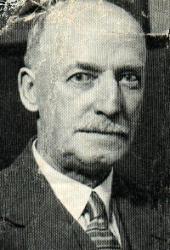
Francis Duckworth

1862 - 1941 Topics: God as Creator Composer of "RIMINGTON" in The Sing! Hymnal Born: De­cem­ber 25, 1862, Rim­ing­ton, York­shire, Eng­land. Died: Au­gust 16, 1941, at his home Swan­side in Colne, Eng­land. Buried: St. Ma­ry the Vir­gin Ang­li­can Church, Gis­burn, Lan­ca­shire. His grave­stone bears the mu­sic of Rim­ing­ton, and a plaque to his mem­o­ry was placed above the door­way to the for­mer Meth­od­ist Cha­pel in Stop­per Lane, Lan­ca­shire. When Duck­worth was five years old, his fam­i­ly moved to the vil­lage of Stop­per Lane, near Rim­ing­ton. He had to leave school at age 12 to help in the fam­i­ly bus­i­ness. At age 20, he moved to Burn­ley, Lan­ca­shire, to work for a to­bac­co­nist cou­sin. Six years lat­er, he re­turned to live at Colne, and in 1899 took a gro­cery bus­i­ness in Mar­ket Street, Colne. Duckworth had an ear­ly in­ter­est in mu­sic, but re­ceived on­ly three months of for­mal les­sons. Short­ly af­ter ar­riv­ing in Colne, he be­came de­pu­ty or­gan­ist (lat­er or­gan­ist) at the Al­bert Road Meth­od­ist Church, serv­ing un­til 1929. He com­posed nu­mer­ous hymn tunes, 18 of them ap­pear­ing in the Rim­ing­ton Hym­nal. His tune Rim­ing­ton was sung by a mas­sive con­gre­ga­tion of Bri­tish troops on the Mount of Ol­ives af­ter the sur­ren­der of Je­ru­sa­lem dur­ing World War I. --www.hymntime.com/tch

Marie J. Post

1919 - 1990 Topics: God as Creator Alterer of "Lord, You Have Searched Me" in Psalms for All Seasons Marie (Tuinstra) Post (b. Jenison, MI, 1919; d. Grand Rapids, MI, 1990) While attending Dutch church services as a child, Post was first introduced to the Genevan psalms, which influenced her later writings. She attended Calvin College, Grand Rapids, Michigan, where she studied with Henry Zylstra. From 1940 to 1942 she taught at the Muskegon Christian Junior High School. For over thirty years Post wrote poetry for the Grand Rapids Press and various church periodicals. She gave many readings of her poetry in churches and schools and has been published in a number of journals and poetry anthologies. Two important collections of her poems are I Never Visited an Artist Before (1977) and the posthumous Sandals, Sails, and Saints (1993). A member of the 1987 Psalter Hymnal Revision Committee, Post was a significant contribu­tor to its array of original texts and paraphrases. Bert Polman

Martin E. Leckebusch

b. 1962 Person Name: Martin Leckebusch Topics: God as Creator Author of "Let All Creation's Wonders" in Lift Up Your Hearts

Carlos Rosas

1939 - 2020 Person Name: Carlos Rosas, b. 1939 Topics: God as Creator Author of "Cantemos al Señor (O Sing unto the Lord)" in Lift Up Your Hearts

Catherine Cameron

1927 - 2019 Topics: Creation God as Creator Author of "God, Who Stretched the Spangled Heavens" in Voices Together

Michael Perry

1942 - 1996 Topics: God as Creator Author of "Come, Worship God" in Psalms for All Seasons Initially studying mathematics and physics at Dulwich College, Michael A. Perry (b. Beckenham, Kent, England, 1942; d. England, 1996) was headed for a career in the sciences. However, after one year of study in physics at the University of London, he transferred to Oak Hill College to study theology. He also studied at Ridley Hall, Cambridge, and received a M.Phil. from the University of Southhampton in 1973. Ordained a priest in the Church of England in 1966, Perry served the parish of St. Helen's in Liverpool as a youth worker and evangelist. From 1972 to 1981 he was the vicar of Bitterne in Southhampton and from 1981 to 1989, rector of Eversley in Hampshire and chaplain at the Police Staff College. He then became vicar of Tonbridge in Kent, where he remained until his death from a brain tumor in 1996. Perry published widely in the areas of Bible study and worship. He edited Jubilate publications such as Hymns far Today's Church (1982), Carols for Today (1986), Come Rejoice! (1989), and Psalms for Today (1990). Composer of the musical drama Coming Home (1987), he also wrote more than two hundred hymns and Bible versifications. Bert Polman

Pages


Export as CSV
It looks like you are using an ad-blocker. Ad revenue helps keep us running. Please consider white-listing Hymnary.org or getting Hymnary Pro to eliminate ads entirely and help support Hymnary.org.