You help make Hymnary.org possible. More than 10 million people from 200+ countries found hymns, liturgical resources and encouragement on Hymnary.org in 2025, including you. Every visit affirms the global impact of this ministry.

If Hymnary has been meaningful to you this year, would you take a moment today to help sustain it? A gift of any size—paired with a note of encouragement if you wish—directly supports the server costs, research work and curation that keep this resource freely available to the world.

Give securely online today, or mail a check to:
Hymnary.org
Calvin University
3201 Burton Street SE
Grand Rapids, MI 49546

Thank you for your partnership, and may the hope of Advent fill your heart.

Person Results

Topics:longing+for+heaven
In:person

Planning worship? Check out our sister site, ZeteoSearch.org, for 20+ additional resources related to your search.
Showing 91 - 100 of 130Results Per Page: 102050

Bartholomäus Crasselius

1667 - 1724 Person Name: B. Crasselius Topics: Hope and Longing for the Heavenly Author of "Min Jesus han er min" in M. B. Landstads Kirkesalmebog og "Nokre Salmar" ved Professor Dr. E. Blix, samt følgende tillæg Crasselius, Bartholomäus, son of Johannes Crasselt, sheepmaster at Wemsdorf near Glauchau, Saxony; was born at Wernsdorf, Feb. 21, 1667. After studying at Halle, under A. H. Francke, he became, in 1701, pastor at Nidda, in Wetteravia, Hesse. In 1708 he was appointed Lutheran pastor at Düsseldorf, where he died Nov. 30, 1724, after a somewhat troubled pastorate, during which he felt called upon to testify strongly and somewhat bitterly against the shortcomings of the place and of the times (Koch, iv. 418-421; Allg. Deutsche Biographie, iv. 566-67; Bode, p. 55; manuscript from Pastor Baltzer, Wernsdorf; the second dating his call to Dusseldorf 1706). Of the 9 hymns by him which Freylinghausen included in his Geistreiches Gesang-Buch, 1704, two have been translated:— i. Dir, dir, Jehovah, will ich singen. Prayer. A hymn of supplication for the spirit of grace rightly to praise and worship God, founded on St. John, xvi. 23-28, the Gospel for Rogation Sunday. First published in the Geistreiches Gesang-Buch &., Halle, 1697, p. 587, in 8 stanzas of 6 lines. Repeated as No. 291 in Freylinghausen's Gesang-Buch, 1704, and since in almost all collections, as in the Berlin Geistliche Liedersegen. ed. 1863, No. 936. The well-known tune (known in England as Winchester New as reduced to L. M. in Hymns Ancient & Modern, No. 50) which appeared with this hymn in Freylinghausen, 1704, is altered from a melody to “Wer nur den lieben Gott lasst walten," in the Musicalisch Handbuch der Geistlichen Melodien, Hamburg, 1690. See L. Erk's Choralbuch, 1863, No. 63, and p. 247; also No. 261. The common, but erroneous ascription of this tune to Crasselius arose from confusion between the authorship of the tune and the words. There is no evidence that Crasselius wrote any tunes. Translations in common use:— 1. Jehovah, let me now adore Thee, a good and full translation by Miss Winkworth, as No. 117, in her Chorale Buch for England, 1863, set to the 1704 melody. 2. To Thee, 0 Lord, will I sing praises, in full, by Dr. M. Loy, in the Evangelical Review, Gettysburg, July 1861, and as No. 216 in the Ohio Lutheran Hymnal, 1880. Other translations are:— (i) "To Thee, Jehovah, I'll be singing," in the Supplement to German Psalmody, ed. 1765, p. 41, and in Select Hymns from German Psaltery, Tranquebar, 1754, p. 72. (2) "Draw me, O Father, to the Son," a translation of stanza ii., by P. H. Molther, as No. 185 in the Moravian Hymn Book, 1789. In the ed. of 1886 it is enlarged to 3 stanzas by the addition of the translation of stanzas i. and viii., and in this form it begins:—“To Thee, Jehovah, will I sing." (3) "To Thee, O Lord, I come with singing," by Miss Burlingham, in the British Herald, April, 1866, p. 248, repeated as No. 402 in Reid's Praise Book, 1872. ii. Erwach, 0 Mensch, erwache. Lent. Appeared in Freylinghausen's Gesang-Buch, 1704, No. 266, in 4 stanzas of 9 lines. Included in Bunsen's Versuch, 1833, No. 298, and Allgemeine Gesang-Buch 1846, No. 13. Translated as "Awake, O man, and from thee shake," by Miss Winkworth, 1855, p. 61. The hymn, "Heiligster Jesu, Heiligungsquelle," ascribed to Crasselius, is noted under J. v. Lodenstein. See also "Hallelujah! Lob, Preis und Ehr." [Rev. James Mearns, M.A.] --John Julian, Dictionary of Hymnology (1907)

David Denham

1791 - 1848 Topics: Heaven Longings for Author of "Home! home! sweet, sweet home" in Hymnal of the Methodist Episcopal Church Denham, David, born 1791, was the son of Thos. Denham, a Baptist minister in the East of London. He began to preach when very young, and in 1810 became pastor of the Baptist Church at Horsell Common. In 1816 removed to Plymouth, in 1826 to Margate, and in 1834 to the Baptist Church in Unicorn Yard, Tooley Street, Southward. Ill-health compelled him to resign his charge in London, and he sojourned for a time at Cheltenham and Oxford. He died in 1848 at Yeovil, in Somerset, and was buried in Bunhill Fields Burial Ground, London. In 1837 he published a collection of hymns, as:— The Saints' Melody. A New Selection of upwards of One Thousand Hymns, Founded upon the Doctrines of Distinguishing Grace, and adapted to every part of the Christian's experience and devotion in the Ordinances of Christ, &c, 1837. This edition contained 1026 hymns. This number was subsequently increased to 1145 hymns. This Selection is still in common use in more than one hundred congregations in Great Britain and the colonies. Denham's hymns, all of which are signed "D. Denham," are numerous. There is also one, apparently by his wife, "Mrs. M. A. Denham." Outside of his own Selection his hymns are rarely found. The best known is "'Mid scenes of confusion and creature complaints." [Rev. W. R. Stevenson, M.A.] -- John Julian, Dictionary of Hymnology (1907)

Richard Dirksen

1921 - 2003 Topics: Church Year Lent; Church Year Passion/Palm Sunday; Church Year Transfiguration; Cry to God; Enemies; Exile; God as Refuge; God as Shelter; God as King; God's Safety; God's Will; God's Wings; God's Face; God's Love; God's Presence; God's Protection; God's Strength; Grace; Lament General; Longing for God; Mercy; Mocking; New Creation; People of God / Church Citizens of Heaven; People of God / Church Suffering; Prayer Answer to; Prayer; Remnant of Isarel; Rest; Sorrow; Temptation And Trial; Truth; Vows Composer of "VINEYARD HAVEN" in Psalms for All Seasons Richard Dirksen

Matt Redman

b. 1974 Topics: Biblical Names and Places Jacob; Biblical Names and Places Jacob; Blessing; Church Year Lent; Church Year Transfiguration; Desiring God; Discipleship; Doubt; Elements of Worship Baptism; Elements of Worship Gathering; Elements of Worship Lord's Supper; Elements of Worship Praise and Adoration; Fear; God Desire for; God Trust in; God as Refuge; God as Shield; God's Armor; God's Deeds; God's Face; God's House; God's Love; God's Name; God's People (flock, sheep); God's Promise of Redemption; God's Strength; God's Way; Grace; Hymns of Praise; Jesus Christ Incarnation; Joy; Longing for God; Occasional Services Christian Marriage; Occasional Services Dedication / Consecration / Anniversary; Occasional Services Funerals; Occasional Services Ordination and/or Installation; Pain; Peace; People of God / Church Citizens of Heaven; Prayer; Rest; Songs of Zion; Sorrow; Suffering; Temple; Temptation And Trial; The Fall; The Incarnation; Trust; Unity and Fellowship; Year A, B, C, Presentation of the Lord, February 2; Year B, Ordinary Time after Pentecost, August 21-27; Year C, Ordinary Time after Pentecost, October 23-29 Author of "Better Is One Day" in Psalms for All Seasons Matt Redman (b. February 14, 1974) began leading worship full-time at age 20, serving churches in Chorleywood, Brighton, West Sussex, and Atlanta, Georgia, where he worked with Chris Tomlin and Louie Giglio for the Passion Conferences. He is known for songs such as “The Heart of Worship,” “Better is One Day,” and “Blessed Be Your Name.” His 2012 song “10,000 Reasons (Bless the Lord),” co-written with Jonas Myrin, won two Grammy awards in 2013. Redman has written a number of books, including Mirror Ball and The Unquenchable Worshipper. He and his wife Beth have five children, and are currently based at St. Peters Church in Brighton, England. Laura de Jong

Geoff Weaver

b. 1943 Topics: Church Year Lent; Church Year Passion/Palm Sunday; Church Year Transfiguration; Cry to God; Enemies; Exile; God as Refuge; God as Shelter; God as King; God's Safety; God's Will; God's Wings; God's Face; God's Love; God's Presence; God's Protection; God's Strength; Grace; Lament General; Longing for God; Mercy; Mocking; New Creation; People of God / Church Citizens of Heaven; People of God / Church Suffering; Prayer Answer to; Prayer; Remnant of Isarel; Rest; Sorrow; Temptation And Trial; Truth; Vows; Texts in Languages Other than English Tamil Arranger of "PUNJABI" in Psalms for All Seasons

Johann Baptist von Albertini

1769 - 1831 Person Name: Joh. Albertini Topics: Longing for Heaven Author (v. 1-3) of "Hjem jeg længes! Ak, i Verden" in Salmebog for Lutherske Kristne i Amerika Albertini, Johann Baptist. s. of Jakob Ulrich v. Albertini, a native of the Grisons, Switzerland, who had joined the Moravians, and settled among them at Neuwied, near Coblenz, b. at Neuwied Feb. 17, 1769. After passing through the Moravian school at Niesky, and their Theological Seminary at Barby, in both of, which he had Friedrich Schlciermacher as a fellow-student, he was, in 1788, appointed one of the masters in the Moravian school at Niesky, and in 1789 at Barby. In 1796, he was appointed tutor at the Theological Seminary at Niesky, and ordained as diaconus of the Moravian Church. Up to this time he had devoted himself chiefly to the study of the Oriental languages, and of botany, but now his studies of Holy Scripture for his theological lectures and for the pulpit, brought him to the feet of Christ, whose earnest and devoted disciple and witness he henceforth became. In 1804 he relinquished his tutorial work to devote himself entirely to ministerial labour in Niesky, where he was, in 1810, ordained presbyter. In Feb. 1814 he went to Gnadenberg, near Bunzlau, Silesia, as head of the Girls' School, and preacher; and while on a visit to Herrnhut, was, Aug. 24, 1814, constituted a bishop of the Moravian Church. By the synod of 1818, he was appointed to Gnadenfrei, near Reichenbach, Silesia, and after three years of faithful and successful labour, was chosen one of the heads of the Moravian Church (one of the UnitatS'Aeltesten-Conferenz), his special department being the oversight of their charitable and educational establishments ; and in 1824 President of the Conference. In love and meekness he ruled and visited the churches till, in Nov. 1831, an illness seized him, which terminated fatally at Berthelsdorf, near Herrnhut, Dec. 6, 1831. (Koch, vii. 330-334; Allg. Deutsche Biog., i. 216-217.) Distinguished as a preacher beyond the bounds of his church, he was, in the estimation of Koch, apart from Novalis, the most important hymn-writer of his time— spiritual, simple, and childlike. Yet it must be said that his brother Moravian, G. B. Garve, and E. M. Arndt, are more fully represented in hymnals since 1820. Albertini's hymns appeared to the number of 400, (many, however, being single verses,) in his Geistliche Lieder fur Mitglieder und Freunde der Bruder-yemeine, Bunzlau, 1821 (2nd ed. 1827). None of them have passed into English common use, and the only three we have to note are:— i. Brenne hell, du Lampe meiner Seele. [Second Advent.] On the Lamp of the Wise Virgin. 1st pub. 1821, as above, p. 139, in 3 stanzas of 8 lines. The only translation is, "Lamp within me! brightly burn and glow," by Miss Winkworth, 1869, p. 311. ii. Freund, komm in der Fruhe. [Morning.] 1st pub. 1821, as above, p. 273, in 5 st. of 10 1. Tr. as, " Come at the morning hour," by Miss Borthwick in Hymns from the Land of Luther 1862 (cd. 1862, p. 256; 1884, p. 190). iii. Langst suchtest du, mein Geist! ein nahes Wesen. [Christmas.] 1st pub. 1821, as above, p. 9, in 5 stanzas of 6 lines. Translated as, "Long in the spirit world my soul had sought," by Miss Winkworth, 1855, p. 191 (later eds. p. 193), assigned to St. Thomas's Day. -John Julian, Dictionary of Hymnology (1907)

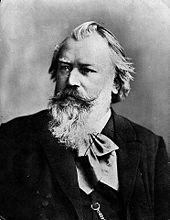
Johannes Brahms

1833 - 1897 Topics: Biblical Names and Places Jacob; Biblical Names and Places Jacob; Blessing; Church Year Lent; Church Year Transfiguration; Desiring God; Discipleship; Doubt; Elements of Worship Baptism; Elements of Worship Gathering; Elements of Worship Lord's Supper; Elements of Worship Praise and Adoration; Fear; God Desire for; God Trust in; God as Refuge; God as Shield; God's Armor; God's Deeds; God's Face; God's House; God's Love; God's Name; God's People (flock, sheep); God's Promise of Redemption; God's Strength; God's Way; Grace; Hymns of Praise; Jesus Christ Incarnation; Joy; Longing for God; Occasional Services Christian Marriage; Occasional Services Dedication / Consecration / Anniversary; Occasional Services Funerals; Occasional Services Ordination and/or Installation; Pain; Peace; People of God / Church Citizens of Heaven; Prayer; Rest; Songs of Zion; Sorrow; Suffering; Temple; Temptation And Trial; The Fall; The Incarnation; Trust; Unity and Fellowship; Year A, B, C, Presentation of the Lord, February 2; Year B, Ordinary Time after Pentecost, August 21-27; Year C, Ordinary Time after Pentecost, October 23-29 Composer of "[How dear to me is your dwelling place, O Lord]" in Psalms for All Seasons Johannes Brahms (German: [joˈhanəs ˈbʁaːms]; 7 May 1833 – 3 April 1897) was a German composer and pianist. Born in Hamburg into a Lutheran family, Brahms spent much of his professional life in Vienna, Austria. In his lifetime, Brahms's popularity and influence were considerable. He is considered one of the greatest composers in history. See also in: Wikipedia

Aemilie Juliane, Gräfin von Schwarzburg Rudolstadt

1637 - 1706 Person Name: Aemilie Juliane Topics: Hope and Longing for the Heavenly Author of "Send mig Vinger, vær nu snar!" in M. B. Landstads Kirkesalmebog og "Nokre Salmar" ved Professor Dr. E. Blix, samt følgende tillæg Emilie Juliane was daughter of Count Albert Friedrich of Barby and Mühlingen (on the Elbe, near its junction with the Saale). During the Thirty Years' war her father and family had to seek refuge in the Heidecksburg, the castle of his uncle, Count Ludwig Günther of Schwarzburg Rudolstadt, and Emilie was born at the Heidecksburg, Aug. 16, 1637. After the death of her father (1641) and mother (1642), she was adopted by her mother's sister (who was her godmother, and had become the wife of Count Ludwig Günther), and was educated at Rudolstadt with her cousins, under the care of Dr. Ahasuerus Fritsch, and other tutors. She became the wife of her cousin, Albert Anton, July 7, 1665, and died at Rudolstadt, Dec. 3, 1706 (Koch, iv. 56-63; Allg. Deutsche Biog, i. 127; Pasig's Introduction; Bode, pp. 63-64, &c). She was the most productive of German female hymn-writers, some 600 being attributed to her. Her early education in music and in poetry, and the influence of the kindred spirits of her cousin Ludamilia Elizabeth and of Dr. Ahasuerus Fritsch, no doubt fostered and developed her gifts. Her hymns, which are full of deep and child-like love to the Lamb of God, the Bridegroom of the Soul, partake too largely of the character of revelations of her inner life, and of reflections in verse, “improving" the events of her daily life, to be suited for Church use. A considerable number did, however, pass into the hymn-books, and the first here noted is a hymn of the first rank. Of those published in her lifetime the most appeared in her devotional works. (1) Geistliche Lieder und Gebete vor und nach Erlangung gottl Ehesegens, Rudolstadt, 1683. (2) Kühlwasser in grosser Hitze des Creutzes, Rudolstadt, 1685. (3) Tägliches Morgen- Mittags- und Abend-Opffer, Rudolstadt, 1685 (2nd ed., enlarged, 1699). Others appeared in the editions of the Rudolstadt Gesang-Buch, 1682-1704. After her death they appeared, collected, under the title of Der Freundin des Lammes Geistlicher Brautschmuck, pt. i., 1714, and enlarged 1742; pt. ii. 1742; pt. iii. 1770; a number of hymns by other authors, which the editors had found transcribed in the Countess's handwriting, being included by mistake. A selection of 108 of her Geistliche Lieder, ed. with an introduction, biographical and critical, by Dr. Pasig, appeared at Halle, 1855. Three have passed into English, viz.:— i. Wer weiss wie nahe mir mein Ende. For the Dying. This beautiful hymn was in last century the subject of an unpleasant controversy. It 1st appeared in the Appendix of 1688 to the Rudolstadt Gesang-Buch, 1682; and, like all the other hymns in that collection, it was given without an author's name. It at once passed into other collections, generally as anonymous, but sometimes under the name of the Countess. In the Schwartzburgische Denhmahl einer Christ-Gräflichen Lammes-Freundin, 1707, she was expressly named as author. On this G. M. Pfefferkorn (q.v.) claimed it as his own. The resulting controversy is given in detail in Wetzel, i. 4-26, ii. 294-307; iii. 156-191, and his A. Hymns i. 9-10, ii. 115-117; in Fischer, ii. 365-369; in Pasig's Introduction, xxiii.-xxxi.; and in Koch, viii. 637-639. The translations in common use are:— 1. Who knows how near my life's expended, omitting stanzas ix., x., in Dr. H. Mill's Horae Germanica, 1845 (1856, p. 245). His translations of stanzas i., vi.-viii. are included as No. 982 in the American Lutheran General Synod's Hymn Book, 1850-52, and as No. 430 in the Ohio Lutheran Hymnal, 1880. 2. Who knows how near my end may be! Time speeds away, a good and full translation by Miss Winkworth, in the 2nd Series of her Lyra Germanica, 1858, p. 204, and then as No. 187 in her Chorale Book for England, 1863. In the Pennsylvania Lutheran Church Book, 1868, stanzas i., vi., xi., xii., were included as No. 546. Other translations are: (1) "Who knows how soon my end may be," by Dr. G. Walker, I860, p. 97; (2) "Who knows how near my end may be? Time," &c, by E. Massie, 1867, p. 155. In addition the following have been translation, but are not in English common use:— ii. "Herr! mein Gott! lehre mich!" Evening, in No. iii., 1685, p. 30. iii. "Jesu Güte hat kein Ende." Morning, in No. ii., 1685, p. 228. Both translations are by H. J. Buckoll, 1842, p. 104. [Rev. James Mearns, M.A.] -- Excerpts from John Julian, Dictionary of Hymnology (1907) ===================== Emilie Juliane , p. 330, i. The title of her 1683 book begins Geistliches Weiber-Aqua-Vit [ VVolfenbüttel Library]. --John Julian, Dictionary of Hymnology, Appendix, Part II (1907)

D. Engelbretsdotter

1634 - 1716 Person Name: Dorotea Engelbretsdatter Topics: Longing for Heaven Alterer of "Naar Verden med sin Glæde sviger" in Salmebog for Lutherske Kristne i Amerika

Ambrosius Stub

1705 - 1758 Person Name: Ambr. Stub Topics: Longing for Heaven Author of "O min Sjæl, du gaar og Vanker" in Salmebog for Lutherske Kristne i Amerika Ambrosius Christoffersen Stub (May 1705 – July 15, 1758) was a Danish poet. Wikipedia article

Pages


Export as CSV
It looks like you are using an ad-blocker. Ad revenue helps keep us running. Please consider white-listing Hymnary.org or getting Hymnary Pro to eliminate ads entirely and help support Hymnary.org.