You help make Hymnary.org possible. More than 10 million people from 200+ countries found hymns, liturgical resources and encouragement on Hymnary.org in 2025, including you. Every visit affirms the global impact of this ministry.

If Hymnary has been meaningful to you this year, would you take a moment today to help sustain it? A gift of any size—paired with a note of encouragement if you wish—directly supports the server costs, research work and curation that keep this resource freely available to the world.

Give securely online today, or mail a check to:
Hymnary.org
Calvin University
3201 Burton Street SE
Grand Rapids, MI 49546

Thank you for your partnership, and may the hope of Advent fill your heart.

Person Results

Topics:proper+15
In:people

Planning worship? Check out our sister site, ZeteoSearch.org, for 20+ additional resources related to your search.
Showing 91 - 100 of 218Results Per Page: 102050

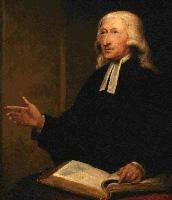
John Wesley

1703 - 1791 Topics: Proper 15 Year C Translator of "Give to the Winds Your Fears" in Voices United John Wesley, the son of Samuel, and brother of Charles Wesley, was born at Epworth, June 17, 1703. He was educated at the Charterhouse, London, and at Christ Church, Oxford. He became a Fellow of Lincoln College, Oxford, and graduated M.A. in 1726. At Oxford, he was one of the small band consisting of George Whitefield, Hames Hervey, Charles Wesley, and a few others, who were even then known for their piety; they were deridingly called "Methodists." After his ordination he went, in 1735, on a mission to Georgia. The mission was not successful, and he returned to England in 1738. From that time, his life was one of great labour, preaching the Gospel, and publishing his commentaries and other theological works. He died in London, in 1791, in his eighty-eighth year. His prose works are very numerous, but he did not write many useful hymns. It is to him, however, and not to his brother Charles, that we are indebted for the translations from the German. --Annotations of the Hymnal, Charles Hutchins, M.A., 1872 ====================== John Wesley, M.A., was born at Epworth Rectory in 1703, and, like the rest of the family, received his early education from his mother. He narrowly escaped perishing in the fire which destroyed the rectory house in 1709, and his deliverance made a life-long impression upon him. In 1714 he was nominated on the foundation of Charterhouse by his father's patron, the Duke of Buckingham, and remained at that school until 1720, when he went up, with a scholarship, from Charterhouse to Christ Church, Oxford. Having taken his degree, he received Holy Orders from the Bishop of Oxford (Dr. Potter) in 1725. In 1726 he was elected Fellow of Lincoln College, and remained at Oxford until 1727, when he returned into Lincolnshire to assist his father as curate at Epworth and Wroot. In 1729 he was summoned back to Oxford by his firm friend, Dr. Morley, Rector of Lincoln, to assist in the College tuition. There he found already established the little band of "Oxford Methodists" who immediately placed themselves under his direction. In 1735 he went, as a Missionary of the Society for the Propagation of the Gospel, to Georgia, where a new colony had been founded under the governorship of General Oglethorpe. On his voyage out he was deeply impressed with the piety and Christian courage of some German fellow travellers, Moravians. During his short ministry in Georgia he met with many discouragements, and returned home saddened and dissatisfied both with himself and his work; but in London he again fell in with the Moravians, especially with Peter Bohler; and one memorable night (May 24, 1738) he went to a meeting in Aldersgate Street, where some one was reading Luther's preface to the Epistle to the Romans. There, "About a quarter before nine, while he was describing the change which God works in the heart through faith in Christ, I felt my heart strangely warmed. I felt I did trust in Christ, Christ alone, for salvation; and an assurance was given me, that He had taken away my sins, even mine, and saved me from the law of sin and death." From that moment his future course was sealed; and for more than half a century he laboured, through evil report and good report, to spread what he believed to be the everlasting Gospel, travelling more miles, preaching more sermons, publishing more books of a practical sort, and making more converts than any man of his day, or perhaps of any day, and dying at last, March 2, 1791, in harness, at the patriarchal age of 88. The popular conception of the division of labour between the two brothers in the Revival, is that John was the preacher, and Charles the hymnwriter. But this is not strictly accurate. On the one hand Charles was also a great preacher, second only to his brother and George Whitefield in the effects which he produced. On the other hand, John by no means relegated to Charles the exclusive task of supplying the people with their hymns. John Wesley was not the sort of man to depute any part of his work entirely to another: and this part was, in his opinion, one of vital importance. With that wonderful instinct for gauging the popular mind, which was one element in his success, he saw at once that hymns might be utilized, not only for raising the devotion, but also for instructing, and establishing the faith of his disciples. He intended the hymns to be not merely a constituent part of public worship, but also a kind of creed in verse. They were to be "a body of experimental and practical divinity." "In what other publication," he asks in his Preface to the Wesleyan Hymn Book, 1780 (Preface, Oct. 20,1779), "have you so distinct and full an account of Scriptural Christianity; such a declaration of the heights and depths of religion, speculative and practical; so strong cautions against the most plausible errors, particularly those now most prevalent; and so clear directions for making your calling and election sure; for perfecting holiness in the fear of God?" The part which he actually took in writing the hymns, it is not easy to ascertain; but it is certain that more than thirty translations from the German, French and Spanish (chiefly from the German) were exclusively his; and there are some original hymns, admittedly his composition, which are not unworthy to stand by the side of his brother's. His translations from the German especially have had a wide circulation. Although somewhat free as translations they embody the fire and energy of the originals. It has been the common practice, however for a hundred years or more to ascribe all translations from the German to John Wesley, as he only of the two brothers knew that language; and to assign to Charles Wesley all the original hymns except such as are traceable to John Wesley through his Journals and other works. The list of 482 original hymns by John and Charles Wesley listed in this Dictionary of Hymnology have formed an important part of Methodist hymnody and show the enormous influence of the Wesleys on the English hymnody of the nineteenth century. -- Excerpts from John Julian, Dictionary of Hymnology (1907) =================== See also in: Hymn Writers of the Church

John Logan

1748 - 1788 Topics: Proper 15 Year A Author of "O God of Bethel" in Voices United Logan, John, son of a farmer, born at Fala, Midlothian, 1748, and educated at Edinburgh University, in due course entering the ministry of the Church of Scotland and becoming the minister of South Leith in 1770. During the time he held this charge he delivered a course of lectures on philosophy and history with much success. While he was thus engaged, the chair of Universal History in the University became vacant; but as a candidate he was unsuccessful. A tragedy, entitled Runnamede, followed. He offered it to the manager of Covent Garden Theatre, but it was interdicted by the Lord Chamberlain "upon suspicion of having a seditious tendency." It was subsequently acted in Edinburgh. In 1775 he formed one of the Committee by whom the Translations and Paraphrases of the Church of Scotland was prepared. In 1782 he was compelled to resign his charge at Leith in order to prevent deposition, and finally, having passed on to London, he supported himself partly by his pen, and died there, Dec. 28, 1788. [Also, see Bruce, Michael] The names of Michael Bruce and John Logan are brought together because of the painful controversy which has long prevailed concerning the authorship of certain Hymns and Paraphrases of Holy Scripture which are in extensive use in the Christian Church both at home and abroad. During the latter years of Bruce's short life he wrote various Poems, and also Hymns for a singing class at Kinnesswood, which were well known to his family and neighbours, and were eventually copied out by Bruce himself in a quarto MS. book, with the hope that some day he might see them in print. Immediately upon his death, in 1767, Logan called upon his father and requested the loan of this book that he might publish the contents for the benefit of the family. This was granted. Not till three years afterwards did a certain work, containing seventeen poems, and entitled Poems on Several Occasions, by Michael Bruce, 1770, appear, with a Preface in which it was stated that some of the Poems were by others than Bruce. Bruce's father immediately pointed out the absence from the volume of certain hymns which he called his son's "Gospel Sonnets," and members of the singing class at Kinnesswood also noted the absence of hymns with which they were familiar. Letters of remonstrance and demands for the return of the quarto manuscript book of Bruce by the father remaining unanswered, led him eventually to see Logan in person. No book was forthcoming, a few scraps of manuscript only were returned, and Logan accounted for the absence of the book by saying he feared "that the servants had singed fowls with it." For a time the matter rested here, only to be revived with renewed interest by the publication, in 1781 (14 years after the death of Bruce, and 11 after the Poems, &c, were issued), of Poems. By the Rev. Mr. Logan, One of the Ministers of Leith. In this volume, an "Ode to the Cuckoo," a poem of exquisite beauty, and other poetical pieces which appeared in the Poems on Several Occasions, by Michael Bruce, were repeated, and claimed as his own by Logan. In addition, certain Hymns and Paraphrases were included, most of which were of sterling merit, and poetical excellence. It has been shown, we think, most conclusively by Dr. Mackelvie in his Life of Bruce prefixed to the Poems, 1837 and by Dr. Grosart in his Works of M. Bruce, 1865, that the "Ode to the Cuckoo," "Lochleven," and other poetical pieces were taken from MS. book of M. Bruce. The Hymns and Paraphrases, most of which were included in the Translations and Paraphrases during the same year, were also claimed for Bruce. Until clearer evidence is brought forward on behalf of Bruce, the hymns, or paraphrases, following must be ascribed to John Logan: — "Who can resist th'Almighty arm"; "In streets and op'nings of the gates”; "Thus speaks the heathen: How shall man"; "Take comfort, Christians, when your friends"; "The hour of my departure's come." The following, which are found only in the Translations and Paraphrases of 1781, are claimed by W. Cameron for Logan, and have never been seriously disputed by the friends of Bruce, the second being original, the first a revise from the Translations and Paraphrases of 1745; and the third a revise of Doddridge and Dr. Hugh Blair:— "Let Christian faith and hope dispel"; “Thus speaks the high and lofty One"; "What though no flowers the fig-tree clothe." In addition, we see no cause to deny to Logan the few changes, and new stanza, which are found in Doddridge's "0 God of Bethel, by Whose hand." Of the above hymns 5 are recasts of hymns in the Scottish Translations and Paraphrases of 1745. Those are: "Behold the mountain of the Lord " (see "In latter days the mount of God "); "When Jesus by the Virgin brought" (see "Now let Thy servant die in peace"); "Behold the Ambassador divine" (see "Behold my Servant, see Him rise"); "Let Christian faith and hope dispel" (see “Now let our souls ascend above"); and "What though no flowers the fig-tree clothe" (see "So firm the saints' foundation stands"). …It is curious to note that every hymn which we have ascribed to M. Bruce has come into more or less extensive use outside of the Translations and Paraphrases, and that not one which we have ascribed to Logan, except "Let Christian faith and hope dispel," and “Take comfort, Christians," &c, is found beyond that work, unless we give to Logan the plaintive "The hour of my departure's come" (which Dr. Grosart claims for Bruce), and the recast "O God of Bethel, by Whose hand," whose success is due to Doddridge. This is the verdict of 100 years' use of those hymns, and shows conclusively the poetic strength of Bruce and the weakness of Logan. --John Julian, Dictionary of Hymnology (1907) ================ http://en.wikipedia.org/wiki/John_Logan_%28minister%29

Timothy Dudley-Smith

1926 - 2024 Person Name: Timothy Dudley-Smith, b. 1926 Topics: Year B Proper 15 Author of "Tell his praise in song and story" in Complete Anglican Hymns Old and New Timothy Dudley-Smith (b. 1926) Educated at Pembroke College and Ridley Hall, Cambridge, Dudley-Smith has served the Church of England since his ordination in 1950. He has occupied a number of church posi­tions, including parish priest in the diocese of Southwark (1953-1962), archdeacon of Norwich (1973-1981), and bishop of Thetford, Norfolk, from 1981 until his retirement in 1992. He also edited a Christian magazine, Crusade, which was founded after Billy Graham's 1955 London crusade. Dudley-Smith began writing comic verse while a student at Cambridge; he did not begin to write hymns until the 1960s. Many of his several hundred hymn texts have been collected in Lift Every Heart: Collected Hymns 1961-1983 (1984), Songs of Deliverance: Thirty-six New Hymns (1988), and A Voice of Singing (1993). The writer of Christian Literature and the Church (1963), Someone Who Beckons (1978), and Praying with the English Hymn Writers (1989), Dudley-Smith has also served on various editorial committees, including the committee that published Psalm Praise (1973). Bert Polman

Cyril Taylor

1907 - 1991 Person Name: Cyril Vincent Taylor, 1907-1991 Topics: Year B Proper 15 Composer of "ABBOT'S LEIGH" in Complete Anglican Hymns Old and New Cyril V. Taylor (b. Wigan, Lancashire, England, 1907; d. Petersfield, England, 1991) was a chorister at Magdalen College School, Oxford, and studied at Christ Church, Oxford, and Westcott House, Cambridge. Ordained a priest in the Church of England in 1932, he served the church as both pastor and musician. His positions included being a producer in the religious broadcasting department of the BBC (1939­-1953), chaplain of the Royal School of Church Music (1953-1958), vicar of Cerne Abbas in Dorsetshire (1958-1969), and precentor of Salisbury Cathedral (1969-1975). He contributed twenty hymn tunes to the BBC Hymn Book (1951), which he edited, and other tunes to the Methodist Hymns and Psalms (1983). He also edited 100 Hymns for Today (1969) and More Hymns for Today (1980). Writer of the booklet Hymns for Today Discussed (1984), Taylor was chairman of the Hymn Society of Great Britain and Ireland from 1975 to 1980. Bert Polman

Carlton R. Young

b. 1926 Topics: Year B Proper 15 Composer of "HOUGHTON" in The New Century Hymnal

W. H. Turton

1856 - 1938 Person Name: Wiliam Henry Turton, 1856-1938 Topics: Year A Proper 15 Author of "O thou, who at thy Eucharist didst pray" in Complete Anglican Hymns Old and New Turton, W. H., a Lieut. in the Royal Engineers, has published A Few Hymns written by A Layman between the Festivals of All Saints, 1880 and 1881. This contains 12 hymns. The Second Series, "written between the Festivals of All Saints, 1881 and 1882," also contains 12 hymns, and the Third Series, 1882-1883, another 12. These hymns are worthy of attention. Those which have passed into common use include;— 1. And now our Eucharist is o'er (1881-1882). Holy Communion. 2. 0 Thou who at Thy Eucharist didst pray. For Unity. "This hymn was used at S. Mary Magdalene's, Munster Square, N. W., in the Anniversary Service of the English Church Union, June 22,1881. It is intended to be sung after the ‘Agnus Dei,' at a choral celebration." In the 1889 Supplemental Hymns to Hymns Ancient & Modern it reads "Thou, Who at Thy first Eucharist didst pray." "This hymn was used at S. Mary Magdalene's, Munster Square, N. W., in the Anniversary Service of the English Church Union, June 22,1881. It is intended to be sung after the ‘Agnus Dei,' at a choral celebration." In the 1889 Supplemental Hymns to Hymns Ancient & Modern it reads "Thou, Who at Thy first Eucharist didst pray." These hymns are in the Altar Hymnal, 1884, together with a third, "Behold! the star is shining." (Epiphany.) Lieut. Turton's signature on A Few Hymns is "R. E." and his publishers, The Church Printing Co., London. --John Julian, Dictionary of Hymnology, Appendix, Part II (1907)

Clarence A. Walworth

1820 - 1900 Topics: Proper 15 Year C Translator (v. 1-3, into English) of "Song of Praise to the Holy Trinity (Grand Dieu, Nous Te Bénissons) (Holy God, We Praise Your Name)" in Voices United Walworth, Clarence Alphonsus, born in 1820, graduated at Union College, 1838, admitted to the Bar 1841, studied for the ministry of Protestant Episcopal Church, but subsequently was ordained as a priest of the Roman Catholic communion, and became Rector of St. Mary's, Albany, in 1864. He was one of the founders of the Order of the Paulists in the U.S.A. He published The Gentle Skeptic, N.Y., 1863, and Andiatoroctè, or the Eve of Lady Day, &c, N.Y., 1888. His paraphrase of the Te Deum, "Holy God, we. praise Thy name," p. 1133, ii. 7, is in the Catholic Psalmist, Dublin, 1858, p. 170. In the American Episcopal Hymnal, 1892, it begins with stanza ii., slightly altered, as "Hark, the loud celestial hymn." He died in 1900. [Rev. L. F. Benson, D.D.] --John Julian, Dictionary of Hymnology, New Supplement (1907)

William Dalrymple Maclagan

1826 - 1910 Person Name: William Dalrymple Maclagan, 1826-1910 Topics: Year B Proper 15 Composer of "BREAD OF HEAVEN" in Complete Anglican Hymns Old and New Maclagan, William Dalrymple , D.D., son of David Maclagan, M.D., was born in Edinburgh, June 18, 1826. In early life he entered the army, and served for some time in India. Retiring with the rank of lieutenant, he entered St. Peter's College, Cambridge, where he graduated B.A. 1856 and M.A. in 1860. Taking Holy Orders, he was curate of St. Saviour's, Paddington, 1856-58, and St. Stephen's, Marylebone, 1858-60. He then became Secretary to the London Diocesan Church Building Society, from 1860 to 1865; curate of Enfield, 1865-69; Rector of Newington, 1869-75; and Vicar of Kensington, 1875-78. He was also Hon. Chaplain to the Queen, and Prebendary of Reculverland in St. Paul's Cathedral, London. In 1878 he was consecrated Bishop of Lichfield. Bishop Maclagan's work has been mainly of a practical character, and his publications are few. The few hymns which he has written have been received with great favour, and create a desire for more of the same kind and quality. The following are in common use.:— 1. Again the trumpet sounds. Missions. Written about 1870. Appeared in the Hymns Ancient & Modern Hymns Ancient & Modern series of Hymns for Mission Services. 1871. 2. Be still, my soul, for God is near. Holy Communion. Part ii. is “O Body, broken for my sake." Written about 1873 for St. Mary's, Newington. In Thring's Collection, 1882. 3. Holy Spirit, Lord of love. Confirmation. Written about 1873, and published in Mrs. C. Brock's Children's Hymn Book, 1884. 4. It is finished, blessed Jesus [Saviour]. Good Friday. Written for Hymns Ancient & Modern, 1875. In several collections. 5. Lord, when Thy Kingdom comes, remember me. Good Friday. Written for the 1875 ed. of Hymns Ancient & Modern. Sometimes given in two parts: Pt. ii. Beginning, “Lord, when with dying lips my prayer is said." 6. The Saints of God their conflict past. All Saints. First published in Church Bells, 1870; and again in the Society for Promoting Christian Knowledge Church Hymns, 1871. 7. What thanks and praise to Thee we owe. St. Luke. Written for the 1875 edition of Hymns Ancient & Modern These hymns are of more than usual merit, being characterized by great simplicity, tenderness, and fervour. The special season or purpose is clearly indicated, and its lessons earnestly enforced. -- John Julian, Dictionary of Hymnology (1907) ============= Maclagan, Abp. W. D., pp. 709, i.; 1578, ii. At the present time all Abp. Maclagan's hymns are in common use, and most of his tunes likewise. With regard to the latter, it is exceptional to find so many tunes by the author of popular hymns sharing the same popularity in the principal hymnals. In Church Hymnal, 1903, and Hymns Ancient & Modern, 1904, combined, there are eight of his tunes, whilst the hymns are six in all. --John Julian, Dictionary of Hymnology, New Supplement (1907)

F.-H. Barthélémon

1741 - 1808 Person Name: François Hippolyte Barthélémon, 1741-1808 Topics: Year B Proper 15 Composer of "MORNING HYMN" in Complete Anglican Hymns Old and New French violinist, composer, teacher, he became active in England, playing in an Italian comedy orchestra and led a band. He wrote opera, ballet, theatre music and ballads, popular songs, masques, concertos and 6 symphonies. John Perry

Brian A. Wren

b. 1936 Person Name: Brian Wren Topics: Proper 15 Year B Author of "There's a Spirit in the Air" in Voices United Brian Wren (b. Romford, Essex, England, 1936) is a major British figure in the revival of contemporary hymn writing. He studied French literature at New College and theology at Mansfield College in Oxford, England. Ordained in 1965, he was pastor of the Congregational Church (now United Reformed) in Hockley and Hawkwell, Essex, from 1965 to 1970. He worked for the British Council of Churches and several other organizations involved in fighting poverty and promoting peace and justice. This work resulted in his writing of Education for Justice (1977) and Patriotism and Peace (1983). With a ministry throughout the English-speaking world, Wren now resides in the United States where he is active as a freelance lecturer, preacher, and full-time hymn writer. His hymn texts are published in Faith Looking Forward (1983), Praising a Mystery (1986), Bring Many Names (1989), New Beginnings (1993), and Faith Renewed: 33 Hymns Reissued and Revised (1995), as well as in many modern hymnals. He has also produced What Language Shall I Borrow? (1989), a discussion guide to inclusive language in Christian worship. Bert Polman

Pages


Export as CSV
It looks like you are using an ad-blocker. Ad revenue helps keep us running. Please consider white-listing Hymnary.org or getting Hymnary Pro to eliminate ads entirely and help support Hymnary.org.