You help make Hymnary.org possible. More than 10 million people from 200+ countries found hymns, liturgical resources and encouragement on Hymnary.org in 2025, including you. Every visit affirms the global impact of this ministry.

If Hymnary has been meaningful to you this year, would you take a moment today to help sustain it? A gift of any size—paired with a note of encouragement if you wish—directly supports the server costs, research work and curation that keep this resource freely available to the world.

Give securely online today, or mail a check to:
Hymnary.org
Calvin University
3201 Burton Street SE
Grand Rapids, MI 49546

Thank you for your partnership, and may the hope of Advent fill your heart.

Person Results

Topics:transfiguration
In:people

Planning worship? Check out our sister site, ZeteoSearch.org, for 20+ additional resources related to your search.
Showing 91 - 100 of 400Results Per Page: 102050

Laurence Housman

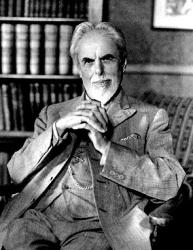
1865 - 1959 Person Name: Laurence Housman, 1865-1959 Topics: Transfiguration of the Lord Translator of "O Light of Light, Love Given Birth" in Catholic Book of Worship III Housman, Lawrence, author and artist, was born July 18, 1867, at Bromsgrove, Worcs. His devotional poetry is principally in his Spikenard, 1898, and Bethlehem, 1902. To the English Hymnal, 1906, he contributed eight translations (142, 188, 191, 228, 229, 230, 231, 234); also three original hymns, with a fourth previously published, viz.:— 1. Lord God of Hosts, within Whose hand. St. George. 2. The Maker of the sun and moon. Christmas. From Bethlehem, 1902, p. 75. 3. The Saint who first found grace to pen. St. Mark. 4. When Christ was born in Bethlehem. Holy Innocents. [Rev. James Mearns, M.A.] --John Julian, Dictionary of Hymnology, New Supplement (1907) ================== Born: July 18, 1865, Bromsgrove, Hereford, England. Died: February 20, 1959, Glastonbury, Somerset, England. Buried: St. Mary’s, Bathwick, Smallcombe, near Bath. Housman studied art at the Lambeth School of Art and the Royal College of Art. He had great success as an illustrator, but when his eyesight began to fail, he turned to writing books and plays. He wrote 80 books during his lifetime. He often seemed to fall afoul of the censors, though, for religious and political reasons. A committed socialist and pacifist, in 1907, he helped found the Men’s League for Women’s Suffrage. He was also an honorary associate of the Women Writers’ Suffrage League. His works include: Jump-to-Glory Jane, by Meredith Goblin Market, by Christiantina Rossetti, 1893 The End of Elfintown, by Jane Barlow, 1894 Spikenard, 1898 The Sensitive Plant, 1898 Bethlehem, 1902 The Blue Moon, 1904 Angels and Ministers, 1921 Little Plays of St. Francis, 1922 Victoria Regina, 1937 The Unexpected Years, 1937 (autobiography) --www.hymntime.com/tch

L. G. Hayne

1836 - 1883 Person Name: L. G. Hayne (1836-1883) Topics: Lent 4, The King and the Kingdom Transfiguration Composer of "ST. CECILIA" in Hymns for Today's Church (2nd ed.) Born: February 28, 1836, St. David’s Hall, Exeter, England. Died: March 3, 1883, Bradfield, Essex, England. Son of Richard Hayne, Rector of Mistley, Leighton graduated from Eton and Queen’s College, Oxford (BMus 1856, DMus 1860); at school, he was Eton College’s organist and conducted the Oxford University chorus. He also served as chaplain of Queen’s College; Vicar of Helston, Cornwall (1866-67); Succentor of Eton (1867-71); and Rector of Mistley, Essex (1871-83), and was well known as an organ builder. Music: BUCKLAND CHALVEY ST. CECILIA ST. LAWRENCE --www.hymntime.com/tch/

Columba

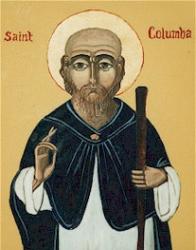
521 - 597 Person Name: St. Columba (521-597) Topics: Jesus transfiguration Author of "O God, thou art the Father" in Church Hymnary (4th ed.) Saint Columba (Irish: Colm Cille, 'church dove'; 7 December 521 – 9 June 597) was an Irish abbot and missionary credited with spreading Christianity in present-day Scotland. He founded the important abbey on Iona, which became a dominant religious and political institution in the region for centuries. He is the Patron Saint of Derry. He was highly regarded by both the Gaels of Dál Riata and the Picts, and is remembered today as a Christian saint and one of the Twelve Apostles of Ireland. Columba reportedly studied under some of Ireland's most prominent church figures and founded several monasteries in the country. Around 563 he and his twelve companions sailed to Iona in Scotland, then part of the Irish kingdom of Dál Riata, where they founded a new abbey as a base for spreading Christianity among the northern Pictish kingdoms who were pagan. He remained active in Irish politics, though he spent most of the remainder of his life in Scotland. Three surviving early medieval Latin hymns may be attributed to him. Columba was born to Fedlimid and Eithne of the Cenel Conaill in Gartan, near Lough Gartan, in modern County Donegal, Ulster in the north of Ireland. On his father's side, he was great-great-grandson of Niall of the Nine Hostages, an Irish high king of the 5th century. He was baptised in Temple-Douglas, in the County Donegal parish of Conwal (mid-way between Gartan and Letterkenny), by his teacher and foster-uncle Saint Crunathan. When sufficiently advanced in letters he entered the monastic school of Moville under St. Finnian who had studied at St. Ninian's "Magnum Monasterium" on the shores of Galloway. He was about twenty, and a deacon when, having completed his training at Moville, he travelled southwards into Leinster, where he became a pupil of an aged bard named Gemman. On leaving him, Columba entered the monastery of Clonard, governed at that time by Finnian, noted for sanctity and learning. Here he imbibed the traditions of the Welsh Church, for Finnian had been trained in the schools of St. David. In early Christian Ireland the druidic tradition collapsed due to the spread of the new Christian faith. The study of Latin learning and Christian theology in monasteries flourished. Columba became a pupil at the monastic school at Clonard Abbey, situated on the River Boyne in modern County Meath. During the sixth century, some of the most significant names in the history of Irish Christianity studied at the Clonard monastery. It is said that the average number of scholars under instruction at Clonard was 3,000. Twelve students who studied under St. Finnian became known as the Twelve Apostles of Ireland; Columba was one of them. He became a monk and eventually was ordained a priest. Another preceptor of Columba was St. Mobhi, whose monastery at Glasnevin was frequented by such famous men as St. Canice, St. Comgall, and St. Ciaran. A pestilence which devastated Ireland in 544 caused the dispersion of Mobhi's disciples, and Columba returned to Ulster, the land of his kindred. He was a striking figure of great stature and powerful build, with a loud, melodious voice which could be heard from one hilltop to another. The following years were marked by the foundation of several important monasteries, Derry, Durrow, Kells, and Swords. While at Derry it is said that he planned a pilgrimage to Rome and Jerusalem, but did not proceed farther than Tours. Thence he brought a copy of those gospels that had lain on the bosom of St. Martin for the space of 100 years. This relic was deposited in Derry. Tradition asserts that, sometime around 560, he became involved in a quarrel with Saint Finnian of Movilla Abbey over a psalter. Columba copied the manuscript at the scriptorium under Saint Finnian, intending to keep the copy. Saint Finnian disputed his right to keep the copy. The dispute eventually led to the pitched Battle of Cúl Dreimhne in 561, during which many men were killed. A second grievance that he led him to induce the clan Neill to rise and engage in battle against King Diarmait at Cooldrevny in 561 was the king's violation of the right of sanctuary belonging to Columba's person as a monk on the occasion of the murder of Prince Curnan, the saint's kinsman. Prince Curnan of Connaught, who had fatally injured a rival in a hurling match and had taken refuge with Columba, was dragged from his protector's arms and slain by Diarmaid's men, in defiance of the rights of sanctuary. A synod of clerics and scholars threatened to excommunicate him for these deaths, but St. Brendan of Birr spoke on his behalf with the result that he was allowed to go into exile instead. Columba's own conscience was uneasy, and on the advice of an aged hermit, Molaise, he resolved to expiate his offense by going into exile and win for Christ as many souls as had perished in the terrible battle of Cuil Dremne. He left Ireland, to return only once, many years later. Columba's copy of the psalter has been traditionally associated with the Cathach of St. Columba. In 563, he travelled to Scotland with twelve companions, in a wicker coracle covered with leather, and according to legend he first landed on the Kintyre Peninsula, near Southend. However, being still in sight of his native land, he moved further north up the west coast of Scotland. The island of Iona was made over to him by his kinsman Conall, king of the British Dalriada, who perhaps had invited him to come to Scotland in the first place. However, there is a sense in which he was not leaving his native people, as the Irish Gaels had been colonizing the west coast of Scotland for the previous couple of centuries. Aside from the services he provided guiding the only centre of literacy in the region, his reputation as a holy man led to his role as a diplomat among the tribes; there are also many stories of miracles which he performed during his work to convert the Picts, the most famous being his encounter with the Loch Ness Monster in 565 AD, where he banished a ferocious "water beast" to the depths of the River Ness after it had killed a Pict and then tried to attack Columba's disciple (see Vita Columbae Book 2 below). He visited the pagan King Bridei, King of Fortriu, at his base in Inverness, winning the Bridei's respect, although not his conversion. He subsequently played a major role in the politics of the country. He was also very energetic in his work as a missionary, and, in addition to founding several churches in the Hebrides, he worked to turn his monastery at Iona into a school for missionaries. He was a renowned man of letters, having written several hymns and being credited with having transcribed 300 books. One of the few, if not the only, times he left Scotland was towards the end of his life, when he returned to Ireland to found the monastery at Durrow. Columba died on Iona and was buried in AD 597 by his monks in the abbey he created. In AD 794, the Vikings descended on Iona. Columba's relics were finally removed in AD 849 and divided between Scotland and Ireland. The parts of the relics which went to Ireland are reputed to be buried in Downpatrick, County Down, with St. Patrick and St. Brigid or at Saul Church neighbouring Downpatrick. (Names of Iona), Inchcolm and Eilean Chaluim Chille. Columba is credited as being a leading figure in the revitalization of monasticism. It is known that Clan MacCallum and Clan Malcolm are descended from the original followers of Columba, It is also said that Clan Robertson are heirs of Columba. Clan MacKinnon may also have some claim to being spiritual descendants of St Columcille as after he founded his monastery on Isle Iona, the MacKinnons were the abbots of the Church for centuries. This would also account for the fact that Clan MacKinnon is amongst the ancient clans of Scotland. The cathedral of the Catholic Diocese of Argyll and the Isles is placed under the patronage of St. Columba, as are numerous Catholic schools and parishes throughout the nation. The Scottish Episcopal Church and Church of Scotland also have parishes dedicated to him. The village of Kilmacolm in Renfrewshire is also derived from Columba's name. Columba is the patron-saint of the city of Derry, where he founded a monastic settlement in c.AD 540. The name of the city in Irish is Doire Colmcille and is derived from the native oak trees in the area and the city's association with Columba. The Catholic Church of Saint Columba's Long Tower stands at the spot of this original settlement. The Church of Ireland Cathedral in Derry is dedicated to St Columba. St. Colmcilles Primary School and St. Colmcilles Community School are two schools in Knocklyon, Dublin, named after St. Colmcille, with the former having an annual day dedicated to the saint on 9 June. Aer Lingus, Ireland's national flag carrier has named one of its Airbus A330 aircraft in commemoration of the saint (reg: EI-DUO). As of 2011, Canadians who are of Scottish ancestry are the third largest ethnic group in the country and thus Columba's name is to be found attached to Catholic, Anglican and Presbyterian parishes. This is particularly the case in eastern Canada apart from Quebec which is French-speaking. Throughout the U.S.A. there are numerous parishes within the Catholic and Episcopalian denominations dedicated to Columba. Within the Protestant tradition the Presbyterian Church (which has its roots in Scottish Presbyterianism) also has parishes named in honour of Columba. There is even an Orthodox Church monastery dedicated to the saint in the Massachusetts town of Southbridge. St. Columba is the Patron Saint of the Roman Catholic Diocese of Youngstown, OH. The Cathedral there is named for him. --en.wikipedia.org/wiki (excerpts)

Philipp Nicolai

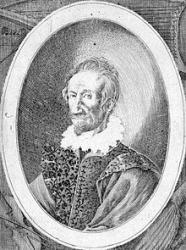
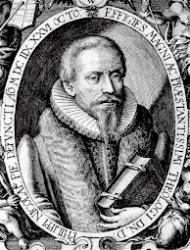
1556 - 1608 Person Name: Phillip Nicolai Topics: Transfiguration Composer of "[Why do the nations rage]" in Christian Worship Philipp Nicolai (b. Mengeringhausen, Waldeck, Germany, 1556; d. Hamburg, Germany, 1608) lived an eventful life–he fled from the Spanish army, sparred with Roman Catholic and Calvinist opponents, and ministered to plague-stricken congregations. Educated at Wittenberg University, he was ordained a Lutheran pastor in 1583 in the city of Herdecke. However, he was soon at odds with the Roman Catholic town council, and when Spanish troops arrived to reestablish Roman dominance, Nicolai fled. In 1588 he became chief pastor at Altwildungen and court preacher to Countess Argaretha of Waldeck. During that time Nicolai battled with Calvinists, who disagreed with him about the theology of the real presence of Christ in the Lord's Supper. These doctrinal controversies were renewed when he served the church in Unna, Westphalia. During his time as a pastor there, the plague struck twice, and Nicolai wrote both "How Bright Appears the Morning Star" and "Wake, Awake." Nicolai's last years were spent as Pastor of St. Katherine's Church in Hamburg. Bert Polman ===================== Nicolai, Philipp, D.D., son of Dieterich Nicolai, sometime Lutheran pastor at Herdecke, in Westphalia, and after 1552, at Mengeringhausen in Waldeck, was born at Mengeringhausen, August 10, 1556. (The father was son of Nicolaus Rafflenbol, of Rafflenbol, near Hagen, in Westphalia, and in later life had adopted the Latinised form Nicolai of his father's Christian name as his own surname.) In 1575 Nicolai entered the University of Erfurt, and in 1576 he went to Wittenberg. After completing his University course in 1579 (D.D. at Wittenberg July 4, 1594), he lived for some time at Volkliardinghausen, near Mengeringhausen, and frequently preached for his father. In August, 1583, he was appointed Lutheran preacher at Herdecke, but found many difficulties there, the members of the Town Council being Roman Catholics. After the invasion by the Spanish troops in April, 1586, his colleague re-introduced the Mass, and Nicolai resigned his post. In the end of 15S6 he was appointed diaconus at Niederwildungen, near Waldeck, and in 1587 he became pastor there. He then became, in Nov. 1588, chief pastor at Altwildungen, and also court preacher to the widowed Countess Margafetha of Waldeck, and tutor to her son, Count Wilhelm Ernst. Here he took an active part on the Lutheran side in the Sacramentarian controversy, and was, in Sept. 1592, inhibited from preaching by Count Franz of Waldeck, but the prohibition was soon removed, and in the Synod of 1593 held at Mengeringhausen, he found all the clergy of the principality of Waldeck willing to agree to the Formula of Concord. In October, 1596, he became pastor at Unna, in Westphalia, where he again became engaged in heated controversy with the Calvinists; passed through a frightful pestilence (see below); and then on Dec. 27, 1598, had to flee before the invasion of the Spaniards, and did not return till the end of April, 1599. Finally, in April 1601, he was elected chief pastor of St. Katherine's Church, at Hamburg, where he entered on his duties Aug. 6, 1601. On Oct. 22, 1608, he took part in the ordination of a colleague in the St. Katherine's Church, the diaconus Penshora, and returned home feeling unwell. A violent fever developed itself, under which he sank, and died Oct. 26, 1608 (D. Philipp Nicolai’s Leben und Lieder, by L. Curtze, 1859; Koch, ii. 324; Allgemeine Deutsche Biographie xxiii. 607, &c). In Hamburg Nicolai was universally esteemed, was a most popular and influential preacher, and was regarded as a "pillar" of the Lutheran church. In his private life he seems to have been most lovable and estimable. Besides his fame as a preacher, his reputation rests mainly on his hymns. His printed works are mostly polemical, often very violent and acrid in tone, and such as the undoubted sincerity of his zeal to preserve pure and unadulterated Lutheranism may explain, but cannot be said to justify. Of his hymns only four seem to have been printed. Three of Nicolai's hymns were first published in his devotional work entitled Frewden-Spiegel dess ewigen Lebens, published at Frankfurt-am-Main, 1599 (see further below). The two noted here ("Wachet auf” and “Wie schon") rank as classical and epoch-making. The former is the last of the long series of Watchmen's Songs. The latter marks the transition from the objective churchly period to the more subjective and experimental period of German hymn writing; and begins the long series of Hymns of Love to Christ as the Bridegroom of the Soul, to which Franck and Scheffler contributed such beautiful examples. Both are also worthy of note for their unusual and perfect rhythms, and for their splendid melodies. They are:— i. Wachet auf, ruft uns die Stimme. Eternal Life. This beautiful hymn, one of the first rank, is founded on St. Matt. xxv. 1-13; Rev. xix. 6-9, and xxi. 21; 1 Cor. ii. 9; Ezek. iii. 17; and Is. lii. 8. It first appeared in the Appendix to his Frewden-Spiegel, 1599, in 3 st. of 10 1., entitled "Of the Voice at Midnight, and the Wise Virgins who meet their Heavenly Bridegroom. Matt. 25." Thence in Wackernagel v. p. 259, the Unverfälschter Liedersegen, 1851, No. 690, and most German collections. It is a reversed acrostic, W. Z. G. for the Graf zu Waldeck, viz. his former pupil Count Wilhelm Ernst, who died at Tübingen Sept. 16, 1598, in his fifteenth year. It seems to have been written in 1597 at Unna, in Wesphalia, where Nicolai was then pastor; and during the terrible pestilence which raged there from July, 1597, to January, 1598, to which in July 300, in one week in August 170, and in all over 1300 fell victims. Nicolai's parsonage overlooked the churchyard, and there daily interments took place, often to the number of thirty. In these days of distress, when every household was in mourning, Nicolai's thoughts turned to Death, and thence to God in Heaven, and to the Eternal Fatherland. Jn the preface (dated Aug. 10, 1598) to his Frewden-Spiegel he says: "There seemed to me nothing more sweet, delightful and agreeable, than the contemplation of the noble, sublime doctrine of Eternal Life obtained through the Blood of Christ. This I allowed to dwell in my heart day and night, and searched the Scriptures as to what they revealed on this matter, read also the sweet treatise of the ancient doctor Saint Augustine [De Civitate Dei]. ..... Then day by day I wrote out my meditations, found myself, thank God! wonderfully well, comforted in heart, joyful in spirit, and truly content; gave to my manuscript the name and title of a Mirror of Joy, and took this so composed Frewden-Spiegel to leave behind me (if God should call me from this world) as the token of my peaceful, joyful, Christian departure, or (if God should spare me in health) to comfort other sufferers whom He should also visit with the pestilence .... Now has the gracious, holy God most mercifully preserved me amid the dying from the dreadful pestilence, and wonderfully spared me beyond all my thoughts and hopes, so that with the Prophet David I can say to Him "0 how great is Thy goodness, which Thou hast laid up for them that fear Thee," &c. The hymn composed under these circumstances (it may be stated that Curtze thinks both hymns were written in 1596, while Nicolai was still at Alt-Wildungen) soon became popular, and still retains its place, though often altered in the 3rd stanza. Probably the opening lines; "Wachet auf! ruft uns die Stimme Der Wachter sehr hoch auf der Zinne" are borrowed from one of the Wächter-Lieder, a form of lyric popular in the Middle Ages, introduced by Wolfram von Eschenbach. (See K. Goedeke's Deutsche Dichtung im Mittelalter, 1871, p. 918.) But while in the Songs the voice of the Watchman from his turret summons the workers of darkness to flee from discovery, with "Nicolai it is a summons to the children of light to awaken to their promised reward and full felicity. The melody appeared first along with the hymn, and is also apparently by Nicolai, though portions of it (e.g. 1. 1 by the Gregorian Fifth Tone) may have been suggested by earlier tunes. It has been called the King of Chorales, and by its majestic simplicity and dignity it well deserves the title. Since its use by Mendelssohn in his St. Paul it has become well known in England, and, in its original form, is given in Miss Winkworth's Chorale Book for England, 1863 (see below). Translations in common use:— 1. Sleepers wake, a voice is calling. This is an unrhymed translation of st. i. by W. Ball in his book of words to Mendelssohn's oratorio of St. Paul, 1836. This form is in Horder's Congregational Hymns, 1884, and others. In the South Place [London] Collection, 1873, it is a recast by A. J. Ellis, but opens with the same first line. In the Parish Hymn Book, 1875, a translation of st. ii., also unrhymed, is added. 2. "Wake ye holy maidens, wake ye. A good translation contributed by Philip Pusey to A. R. Reinagle's Collection of Psalm and Hymn Tunes, Oxford, 1840, p. 134. It was considerably altered, beginning "Wake, ye holy maidens, fearing" in the Salisbury Hymn Book, 1857, and this is repeated, with further alterations, in Kennedy, 1863, and the Sarum Hymnal, 1868. 3. Wake, arise! the call obeying. A good translation by A. T. Russell, as No. 110 in the Dalston Hospital Hymn Book 1848. 4. Wake, oh wake; around are flying. This is a recast, by A. T. Russell, not for the better, from his 1848 translation, as No. 268 in his Psalms & Hymns. 1851, st. iii. being omitted. Thence, unaltered, in the New Zealand Hymnal, 1872. 5. Wake, awake, for night is flying. A very good translation by Miss Winkworth, in her Lyra Germanica, 2nd Ser., 1858, p. 225, repeated in her Chorale Book for England, 1863, No. 200, with st. ii., 11. 7, 8, rewritten. Included in the English Presbyterian Psalms & Hymns, 1867; Scottish Presbyterian Hymnal, 1876, &c.; and in America, in Laudes Domini, 1884, and others. In the Cantate Domino, Boston, U. S., 1859, it begins "Awake, awake, for night is flying." 6. Wake! the startling watch-cry pealeth. By Miss Cox, in Lyra Messianica, 1864, p. 4, and her Hymns from the German, 1864, p. 27; repeated in W. F. Stevenson's Hymns for Church and Home, 1873. The version in J. L. Porter's Collection, 1876, takes st. i., 11. 1-4 from Miss Cox. The rest is mainly from R. C. Singleton's translation in the Anglican Hymn Book, but borrows lines also from Miss Winkworth, and from the Hymnary text. 7. Wake! the watchman's voice is sounding. By R. C.Singleton. This is No. 259 in the Anglican Hymn Book, 1868, where it is marked as a "versification by R. C. Singleton, 1867." 8. Wake, awake, for night is flying. This is by Canon W. Cooke, in the Hymnary, 1871, and signed A. C. C. In the edition of 1872, 11. 7, 8 of st. ii. are recast, and the whole is marked as " based on E. A. Dayman." It is really a cento, four lines of the 1872 text (i., 1. 5; ii., 11. 7, 8; iii., 1. 9) being by Canon Cooke; and the rest being adapted from the versions of P. Pusey as altered in the Sarum Hymnal, of Miss Winkworth, of Miss Cox, and of R. C. Singleton. It may be regarded as a success, and as passed into the Society for Promoting Christian Knowledge Church Hymns, 1871; the 1874 Appendix to the New Congregational Hymn Book; Horder's Congregational Hymns, 1884, and others. 9. Wake, arise! the voice is calling. This is an anonymous translation in the Ohio Lutheran Hymnal, 1880. 10. Slumberers, wake, the Bridegroom cometh. A spirited version, based on Miss Winkworth (and with an original st. as iv.), by J. H. Hopkins in his Carols, Hymns & Songs, 3rd ed., 1882. p. 88, and dated 1866. Repeated in the Hymnal Companion (Reformed Episcopal) Philadelphia, U.S., 1885. Other translations are:— (1) “Awake, the voice is crying." In Lyra Davidica, 1108, p. 73. (2) "Awake! awake! the watchman calls." By Miss Fry, 1845, p. 33. (3) "Hark! the trump of God is sounding." By Dr. H. Mills, 1845 (1856, p. 269. This is from the altered form by F. G. Klopstock, in his Geistliche Lieder, 1758, p. 246, as further altered in Zollikofer's Gesang-Buch, 1766, No. 303, where it begins "Wachet auf! so ruft." (4) "Awake, arise, the voice gives warning." In the United Presbyterian Juvenile Missionary Magazine, 1857, p. 193; repeated in 1859, p. 171, beginning, “Awake, arise, it is the warning." (5) “Waken! From the tower it soundeth." By Mrs. Bevan, 1858, p. 1. (6) Up! awake! his summons hurried." By J. D.Burns, in the Family Treasury, 1860, p. 84, and his Memoir & Remains, 1869, p. 234. 11. Wie schön leuchtet der Morgenstern, Voll Gnad und Wahrheit von dem Herrn. Love to Christ. First published in theAppendix to his Frewden-Spiegel, 1599, in 7 stanzas of 10 lines entitled "A spiritual bridal song of the believing soul concerning Jesus Christ, her heavenly Bridegroom, founded on the 45th Psalm of the prophet David." Lauxmann, in Koch, viii. 271, thus gives an account of it as written during the Pestilence of 1597. He says Nicola was "One morning in great distress and tribulation in his quiet study. He rose in spirit from the distress and death which surrounded him to his Redeemer and Saviour, and while he clasped Him in ardent love there welled forth from the inmost depths of his heart this precious hymn of the Saviour's love and of the joys of Heaven. He was so entirely absorbed in this holy exaltation that he forgot all around him, even his midday meal, and allowed nothing to disturb him in his poetical labours till the hymn was completed "—-three hours after midday. As Nicolai was closely connected with Waldeck he formed with the initial letters of his stanzas the acrostic W. E. G. U. H. Z. W., viz. Wilhelm Ernst Graf Und Herr Zn Waldeck— his former pupil. The hymn has reminiscences of Eph. v., of Canticles, and of the Mediaeval Hymns to the Blessed Virgin Mary. It became at once a favourite in Germany, was reckoned indispensable at weddings, was often sung around death beds, &c. The original form is in Wackernagel v. p. 258, and the Unverfälschter Liedersegen, 1851, No. 437; but this (as will be seen by comparing Miss Winkworth's version of 1869) is hardly suited for present day congregational use. In Bunsen's Versuch, 1833, No. 554, it is slightly altered. The form in Knapp's Evangelischer Lieder-Schatz, 1837, No. 2074 (1865, No. 1810) is a recast by Knapp made on Jan. 14, 1832, and published in his Christoterpe, 1833, p. 285, preceded by a recast of "Wachet auf!"; both being marked as “rewritten according to the requirements of our times." The popularity of the hymn was greatly aided by its beautiful chorale (named by Mr. Mercer, Frankfort), which has been called "The Queen of Chorales," and to which many city chimes in Germany were soon set. It was published with the hymn, and is probably an original tune by Nicolai, though portions may have been suggested by earlier melodies, especially by the "Resonet in laudibus," which is probably of the 14th cent. (Bäumker i., No. 48, cites it from the Obsequiale, Ingolstadt, 1570. In Alton's Congregational Psalmist named Arimathea). Translations in common use:— 1. How bright appears the Morning Star! This is a full and fairly close version by J. C. Jacobi, in his Psalter Germanica, 1722, p. 90 (1732, p. 162); repeated, with alterations, in the Moravian Hymn Book, 1754, pt. i., No. 317 (1886, No. 360). The versions of st. v., vii. beginning, "The Father from eternity," are included in Aids to the Service of Song, Edinburgh N.D., but since 1860. In 1855 Mercer gave in his The Church Psalter & Hymn Book., as No. 15, a hymn in 4 stanzas of 10 lines, of which five lines are exactly from Jacobi. St. i., l1. 1-3; ii., .11. 8, 9 ; iii., 11. 2, 3, 6 ; iv., 1. 10, are exactly; and i., 1. 9; ii., 11. 2, 3, 6, 10; iii., II. 1, 4, 5; iv., 11. 7, 9 are nearly from the Moravian Hymn Book, 1801. The interjected lines are by Mercer, but bear very slight resemblance either to Nicolai's original text, or to any version of the German that we have seen. In his 1859 edition he further recast it, leaving only the first line unaltered from Jacobi; and this form is in his Oxford edition, 1864, No. 121, in the Irish Church Hymnal, 1869 and 1873, and in the Hymnal Companion 1870 and 1876. In Kennedy, 1863, the text of 1859 is given with alterations, and begins "How brightly dawns the Morning Star;" and this form is in the People's Hymnal, 1867; Dale's English Hymn Book 1874, &c. 2. How graciously doth shine afar. By A. T. Russell, as No. 8 in the Dalston Hospital Hymn Book, 1848, and repeated in the Cheltenham College Hymn Book, No. 37. It is a free translation of st. i., vi., v. 3. How lovely shines the Morning Star! A good and full translation by Dr. H. Harbaugh (from the text in Dr. Schaff’s Deutsches Gesang-Buch, 1860), in the German Reformed Guardian, May, 1860, p. 157. Repeated in full in Schaff's Christ in Song, 1869, and abridged in Adams's Church Pastorals, Boston, U.S.A., 1864. 4. 0 Morning Star! how fair and bright. A somewhat free translation of st. i., iii., iv., vii., by Miss Winkworth, as No.149 in her Chorale Book for England, 1863. Repeated in the Pennsylvania Lutheran Church Book, 1868; Ohio Lutheran Hymnal,1880, &c. 5. How brightly shines the Morning Star, In truth and mercy from afar. A translation of st. i., iii., iv., vii., by Miss Borthwick, as No. 239 in Dr. Pagenstecher's Collection, 1864. 6. How brightly glows the Morning Star. In full, from Knapp's German recast, by M. W. Stryker, in his Hymns & Verses, 1883, p. 52; repeated, omitting st. ii., iv., in his Christian Chorals, 1885, No. 145. Other translations are:— (1) "How fairly shines the Morning Star." In Lyra Davidica, 1708, p. 40. (2) "As bright the star of morning gleams" (st. i.) By W. Bartholomew, in his book of words to Mendelssohn's oratorio of Christus, 1852, p. 11. (3) "How lovely now the Morning Star." By Miss Cox, 1864, p. 229. (4) "How beauteous shines the Morning Star." By Miss Burlingham, in the British Herald, Oct. 1865, p. 152, and Reid's Praise Book, 1872. (5) "0 Morning Star, how fair and bright." By MissWinkworth, 1869, p. 160. (6) "How bright appears our Morning Star." By J. H. Hopkins, in his Carols, Hymns and Songs, 3rd ed., 1882, p. 168, and dated 1866. There are also three hymns in common use, which have generally been regarded as translations from Nicolai. They are noted as follows:—i. "Behold how glorious is yon sky" (see p. 127, ii.). ii. "How beautiful the Morning Star". iii. "How brightly shines the Morning Star! What eye descries it from afar". [Rev. James Mearns, M.A.] --John Julian, Dictionary of Hymnology (1907)

Cyril Taylor

1907 - 1991 Person Name: Cyril Vincent Taylor Topics: The Christian Year The Transfiguration; Christian Year Transfiguration Composer of "ABBOT'S LEIGH" in Voices United Cyril V. Taylor (b. Wigan, Lancashire, England, 1907; d. Petersfield, England, 1991) was a chorister at Magdalen College School, Oxford, and studied at Christ Church, Oxford, and Westcott House, Cambridge. Ordained a priest in the Church of England in 1932, he served the church as both pastor and musician. His positions included being a producer in the religious broadcasting department of the BBC (1939­-1953), chaplain of the Royal School of Church Music (1953-1958), vicar of Cerne Abbas in Dorsetshire (1958-1969), and precentor of Salisbury Cathedral (1969-1975). He contributed twenty hymn tunes to the BBC Hymn Book (1951), which he edited, and other tunes to the Methodist Hymns and Psalms (1983). He also edited 100 Hymns for Today (1969) and More Hymns for Today (1980). Writer of the booklet Hymns for Today Discussed (1984), Taylor was chairman of the Hymn Society of Great Britain and Ireland from 1975 to 1980. Bert Polman

Joseph Robinson

1815 - 1898 Person Name: Joseph A. Robinson, 1858-1933 Topics: Transfiguration; Christian year--Transfiguration Author of "How Good, Lord, to Be Here" in Moravian Book of Worship

Claude Goudimel

1514 - 1572 Person Name: Claude Goudimel,ca. 1505-1572 Topics: Church Year Transfiguration Harmonizer of "GENEVAN 51" in Psalms for All Seasons The music of Claude Goudimel (b. Besançon, France, c. 1505; d. Lyons, France, 1572) was first published in Paris, and by 1551 he was composing harmonizations for some Genevan psalm tunes-initially for use by both Roman Catholics and Protestants. He became a Calvinist in 1557 while living in the Huguenot community in Metz. When the complete Genevan Psalter with its unison melodies was published in 1562, Goudimel began to compose various polyphonic settings of all the Genevan tunes. He actually composed three complete harmonizations of the Genevan Psalter, usually with the tune in the tenor part: simple hymn-style settings (1564), slightly more complicated harmonizations (1565), and quite elaborate, motet-like settings (1565-1566). The various Goudimel settings became popular throughout Calvinist Europe, both for domestic singing and later for use as organ harmonizations in church. Goudimel was one of the victims of the St. Bartholomew's Day massacre of Huguenots, which oc­curred throughout France. Bert Polman

John Allen Ferguson

b. 1941 Person Name: John Ferguson Topics: Church Year Transfiguration Arranger of "PROMISED ONE" in Psalms for All Seasons John Ferguson’s name is immediately associated with hymnody and the words “hymn festival.” Every year he is invited to design and lead such events, both in local congregations and at gatherings of organists, choral conductors, and church musicians. In 1995 he designed and led a hymn festival in the Washington National Cathedral for the American Choral Directors Association national convention and in 1998 did the same at the national convention of the American Guild of Organists in Denver. He has presented such events abroad as well as in Asia (July, 1996 in Seoul, Korea) and Europe (August, 1997) in the National Cathedral of Norway, Nidaros Dom, Trondheim, as a part of the celebration of the millennium of the birth of St. Olaf. Although he is a Lutheran, his festivals are ecumenical experiences drawing upon the greatest treasures of Christian song from many centuries, traditions, and styles. Ferguson is the Elliot and Klara Stockdal Johnson Professor of Organ and Church Music and Cantor to the Student Congregation at St. Olaf College in Northfield, Minnesota. St. Olaf’s great choral tradition began with F. Meluis Christiansen and has influenced many generations of fine church musicians. Christiansen’s lifelong interest in hymns is evidenced by the many hymns included in his choral compositions as well as his contributions to hymnals of his day. Ferguson’s creative hymn arrangements continue this tradition with a renewed emphasis upon congregational participation. A native of Cleveland, Ferguson’s degrees are from Oberlin College, Kent State University and the Eastman School of Music. He is respected as a fine teacher and performer and his unique skill as improviser and leader of congregational song has won national acclaim. When someone attends one of his festivals, the experience is never dull. With Ferguson at the organ and the creative use of instrumental and choral sound, the assembly is enveloped and whisked away into an experience of song that will never again happen in just that way. --www.morningstarmusic.com/

Rabanus Maurus

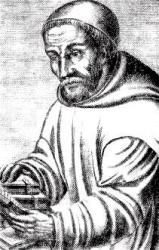
776 - 856 Person Name: Rhabanus Maurus, 776-856 Topics: Church Year Transfiguration Author of "Creator Spirit, come we pray" in Psalms for All Seasons Rabanus Maurus (c. 776-856) or Hrabanus Magnentius Maurus, was born of noble parents at Mainz, and educated at Fulda and Tours under Alcuin, who is reputed to have given him the surname, Maurus, after the saint of that name. In 803, he became director of the school at the Benedictine Abbey at Fulda. He was ordained priest in 814, spending the following years in a pilgrimage to Palestine. In 822, he became Abbott at Fulda, retiring in 842. In 847, he became archbishop of Mainz. He died at Winkel on the Rhine, February 4, 856. This distinguished Carolingian poet-theologian wrote extensive biblical commentaries, the Encyclopaedic De Universo, De Institutione Clericorum, and other works which circulated widely during the Middle Ages. Some of his poems, with English translations, are in Helen Waddell's Mediaeval Latin Lyrics. He is the author of: O Come, Creator Spirit, come Christ, the fair glory of the holy angels Come, Holy Ghost, our souls inspire Come, Holy Ghost, Creator blest Creator Spirit, by whose aid --The Hymnal 1940 Companion, New York: The Church Pension Fund (1949) =========================== Hrabanus (Rabanus) Maurus, son of one Ruthard, was born probably at Mainz, about 776. At an early age he was sent to the Monastery of Fulda to receive a religious education. In 801 he was ordained Deacon, and the following year he went to the monastic school of St. Martin at Tours to study under Alcuin, a celebrated teacher of that time, who gave to Hrabanus the name of Maurus to which Hrabanus added Magnentius. On his return to Fulda in 804 he became the head of the school connected with the Monastery. Towards him Ratgar the abbot showed great unkindness, which arose mainly from the fact that Ratgar demanded the students to build additions to the monastery, whilst Hrabanus required them at the same time for study. Hrabanus had to retire for a season, but Ratgar's deposition by Ludwig the Pious, in 817, opened up the way for his return, and the reopening of the school In the meantime, in 814, he had been raised to the Priesthood. Egil, who succeeded Ratgar as abbot, died in 822, and Hrabanus was appointed in his stead. This post he held for some time, until driven forth by some of the community. In 847, on the death of Archbishop Otgar, Ludwig the younger, with whom Hrabanus had sided in his demand for German independence as against the imperialism of his elder brother Lothar, rewarded him with the Archbishopric of Mainz, then the metropolitan see of Germany. He held this appointment to his death on Feb. 4, 856. He was buried first in St. Alban's, Mainz, and then, during the early days of the Reformation, in St. Maurice, Halle, possibly because of the opposition he is known to have made to the doctrine of Transubstantiation. With German historians Hrabanus is regarded as the father of the modern system of education in that country. His prose works were somewhat numerous, but the hymns with which his name is associated are few. We have the "Christe sanctorum decus Angelorum”; “Tibi Christe, splendor Patris”; and the "Veni Creator Spiritus”; but recent research convinces us that the ascription in each case is very doubtful; and none are received as by Hrabanus in Professor Dümmler's edition of the Carmina of Hrabanus in the Poetae Latini aevi Carolini, vol. ii. 1884. Dümmler omits them even from the "hymns of uncertain origin." --John Julian, Dictionary of Hymnology, Appendix I (1907) ======================= http://en.wikipedia.org/wiki/Rabanus_Maurus

Richard Wilbur

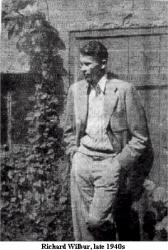
1921 - 2017 Topics: Christian Year Transfiguration Author of "A Stable Lamp Is Lighted" in Glory to God Richard Wilbur was born in New York City on March 1, 1921. He graduated with a B.A. from Amherst, where he was editor of the college newspaper, in 1942. Youthful engagements with leftist causes caught the attention of federal investigators when he was in training as a U.S. Army cryptographer, and he was demoted to a front-line infantry position where he saw action in the field in Italy, France and Germany. (When the cryptographer in Wilbur’s unit was killed, Wilbur also took over that function.) After demobilization, he continued his studies at Harvard where he obtained an M.A. in 1947, the year his first book was published. He was a member of the prestigious Harvard Fellows and taught there until 1954, when he moved to Wellesley and then to Wesleyan University. At Wesleyan he was instrumental in the founding of the acclaimed Wesleyan University Press poetry series that, from 1959 onward, featured new work by such important young poets as Robert Bly, James Wright, James Dickey, and Richard Howard, as well as such already-established writers as Louis Simpson and Barbara Howes. From Wesleyan he went to Smith as writer-in-residence. In 1987 he was named the second Poet Laureate of the U.S., following Robert Penn Warren. In the postwar years, when poets born between 1920 and 1935 often underwent dramatic changes in their writing styles, Wilbur remained someone who mastered a style early and continued to work within it. It is a style in a direct line of descent from Wallace Stevens: unabashedly rich in its diction, urbane in its metrical sophistication, and remarkably light-hearted and playful. His first and second books, The Beautiful Changes (1947) and Ceremony (1950), were influential volumes, and Wilbur was widely regarded in the 1950s as a poet no less important than Robert Lowell. His third collection, Things of This World (1956), was awarded the Pulitzer Prize. Advice to a Prophet (1961) was followed by Walking to Sleep (1969), which was charlee.jpg (42846 bytes)awarded the Bollingen Prize. The Mind-Reader was published in 1976, and a New and Collected Poems in 1987 (with twenty-four new poems). "The typical ghastly poem of the fifties was a Wilbur poem not written by Wilbur," wrote Donald Hall in 1961, "a poem with tired wit and obvious comparisons and nothing to keep the mind or the ear occupied." Hall added presciently: "It wasn’t Wilbur’s fault, though I expect he will be asked to suffer for it." Wilbur’s poetry has not, as Hall predicted, retained the high value it had accrued in the postwar years. Although his fame as a translator has continued to grow – his blank verse rhymed-couplet versions of several plays by Moliere have received wide praise – his poetry is often cited as an example of the formalism and the apolitical timidity that is associated with the 1950s. "Wilbur is still admired," Robert von Hallberg notes in his contribution to the Cambridge History of American Literature (1996), "but really as the best poet of the 1950s." Even though he is an outstanding example, he excels in a debased category. Among minor poets he is allowed to be most major, but among major poets he is not even considered the most minor. A Wilbur poem reads so easily that it can dispel close scrutiny, as if the poem just as it is says all that needs to be said and withholds nothing. (As a result, Wilbur’s work has rarely attracted the attention of the skillful critic.) In fact, the smooth surface of the Wilbur poem can successfully distract us from recognizing how unusual and unexpected are the twists and leaps that structure the poem’s narrative. Many poems by Wilbur, while striking a superficial "balance," implicitly celebrate, while demonstrating, the virtues of a wit that is elaborately playful. --www.english.illinois.edu/maps/poets/s_z/wilbur/bio.htm He died on October 14, 2017, at a nursing home in Belmont, Massachusetts. --Wikipedia

Pages


Export as CSV
It looks like you are using an ad-blocker. Ad revenue helps keep us running. Please consider white-listing Hymnary.org or getting Hymnary Pro to eliminate ads entirely and help support Hymnary.org.