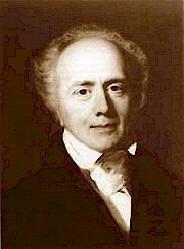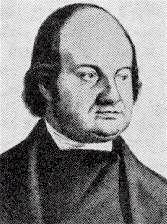
1801 - 1859 Person Name: Karl J. P. Spitta, 1801-1859 Topics: Healing; Home; Works; The Kingdom of God on Earth Home, Marriage, Parents Author of "O happy home, where thou art loved the dearest" in The Hymnal Spitta, Carl Johann Philipp, D.D., was born Aug. 1, 1801, at Hannover, where his father, Lebrecht Wilhelm Gottfried Spitta, was then living, as bookkeeper and teacher of the French language. In his eleventh year Spitta fell into a severe illness, which lasted for four years, and so threw him back that his mother (the father died in 1805) abandoned the idea of a professional career, and apprenticed him to a watchmaker. This occupation did not prove at all congenial to him, but he would not confess his dislike, and his family were ignorant of it till an old friend, who was trying to comfort him after the death of a younger brother, discovered his true feelings. The younger brother had been preparing for ordination, and so Carl was now invited by the family to adopt this career. He joyfully accepted the offer, left the workshop in the autumn of 1818, and succeeded, by dint of hard study during the winter, in gaining admission to the highest class in the Gymnasium (Lyceum) at Hannover, which he entered at Easter, 1819. He was thus able, at Easter, 1821, to proceed to the University of Göttingen, where he completed his theological course, under professors of pronounced Rationalistic opinions, at Easter, 1824 (D.D. from Gottingen, 1855).
He then became, in the beginning of May, a tutor in the family of Judge (Oberamlmann) Jochnius, at Lüine, near Lüneburg. Here he remained till his ordination on Dec. 10, 1828, as assistant pastor at Sudwalde, near Hoya. In Nov., 1830, he became assistant chaplain to the garrison and to the prison at Hameln on the Weser, and would have succeeded as permanent chaplain there, in the beginning of 1837, had not the military authorities, alarmed by reports which described him as a Pietist and a Mystic, refused to sanction the arrangement. As a compensation, he was appointed pastor at Wechold, near Hoya, in Oct., 1837, and married just before settling there. On his birthday, Aug. 1, 1847, he was instituted as Lutheran superintendent at Wittingen; in Oct., 1853, at Peine; and in July, 1859, at Burgdorf—all his appointments having been in the kingdom of Hannover.
A few weeks after removing to Burgdorf he was seized with gastric fever, but had apparently recovered, when, on Sept. 28, 1859, while sitting at his writing table, he was seized with cramp of the heart, and died in a quarter of an hour.
Spitta had begun to write in verse when he was eight years old, along with his brother Heinrich. During his university course he continued to write songs and secular poems, and published a collection of songs anonymously as a Sangbüchlein der Liebe für Handwerksleute. At Göttingen he formed a life-long friendship with Adolf Peters. He was also on intimate terms with Heinrich Heine, who was a fellow member with them of the Burschenschaft, or student's patriotic union (see K. Goedeke'sGrundriss, vol. iii., 1881, p. 259); and this friendship continued till Heine, while visiting him at Ltine, so jested at things sacred, even in the presence of Spitta's pupils, that their friendship came to an end. After the spiritual change, which began about the end of his university course, Spitta ceased to write secular pieces. His hymnwriting proper seems to have begun in 1821. In writing to a friend on May 5, 1826, he says, "In the manner in which I formerly sang I sing no more. To the Lord I consecrate my life and my love, and likewise my song. His love is the one great theme of all my songs; to praise and exalt it worthily is the desire of the Christian singer. He gave to me song and melody; I give it back to Him." The most fruitful period of his hymnwriting was at Lüne, where many of his most popular hymns were composed in the quiet evenings, in his own room, often after fasting, and when, sitting at the piano or at his harp, he had tuned his spirit to song. Many others were inspired by the beautiful scenery of the valley of the Weser, and by the intercourse with friends during his residence at Hameln. In his later years his ecclesiastical duties absorbed his attention, and hardly any of his hymns were written after 1847. A number of them were first printed in the Christliche Monatsschrift zur häuslichen Erbauung für alle Stände, which appeared from Jan. to June, 1826, and was edited by Spitta and by Pastor Deichmann, of Lüneburg.
Various causes doubtless contributed to the popularity of Spitta's Psalter und Harfe. The hymns therein are, as a rule, of moderate length, are clear and simple in style, refined in diction, sweet, flowing and melodious. Their quiet beauty, their tone of earnest, sincere, and childlike piety, of glowing devotion to the Saviour, and of calm resting on, what to Spitta were, the eternal verities, endeared them to all ranks and classes. They form a faithful mirror of his inner life and Chritian experience. They at once met and ministered to the revival of Evangelical religion in Germany, and thus enjoyed somewhat of the same good fortune and popularity which the renewed churchly life in England brought to Keble's Christian Year. As the title adopted shows Spitta meant them for family and private use, and for this they are best fitted, being, for the most part, subjective and individnal. They speedily, however, passed into the German hymnbooks for church use, both at home and abroad, and translations of them are found in almost all recent English and American collections.
Another element of Spitta's popularity in Germany has been contributed by the very numerous musical settings which have appeared to his hymns. Koch, vii., 246, gives a list of the more important of the collective editions, but, besides these, many of the separate pieces have been set to music by various composers, the "Angel of Patience" being one of the greatest favourites.
A number of Spitta's hymns are annotated under their original first lines. Of the rest we may note here the following:—
I. From his Psalter und Harfe. 1st Series, Pirna, 1833, and the 2nd ed. Leipzig, 1834; 2nd Series, Leipzig, 1843.
i. Allen ist ein Heil beschieden. Communion of Saints. First published at Pirna, 1833, as above, p. 27, in 5 stanzas of 7 lines, entitled "Unity in spirit." Another translation is:—“Salvation is a boon." By Miss Fry, 1859, p. 75.
ii. Es wird mein Herz mit Freuden wach. Sunday Morning. First published at Leipzig, 1843, p. 61, in 7 st. of 4 1., entitled "Sunday Morning." Translated as:—
My heart wakes with a joyful lay. This is a good and full tr. by Mrs. Findlater, in Hymns from the Land of Luther, 4th Ser. 1862, p. 82. Repeated, abridged and beginning "Awake! all hearts and joyful say," in G. S. Jellicoe's Collection, 1867, No. 26.
Other trs. are: (1) "My heart awakes with holy glee." By Miss Manington, 1863, p. 143. (2) "Awake, my heart, this day of rest." By R. Massie, 1864, p. 51. (3) "My heart is bright with joy." By Lady Durand, 1873, p. 25.
iii. Gottes Stadt steht festgegründet. Christian Church. First published at Leipzig, 1843, p. 97, in 6 stanzas of 12 lines, entitled "The City of God," and founded on Ps. lxxxvii. Tr. as:—
By the holy hills surrounded, In full, by R.. Massie, in his Lyra Domestica, 1864, p. 82, repeated in the Wesleyan Hymn Book1875, No. 595.
iv. Hochgesegnet seid ihr Boten. Foreign Missions. First pub. at Pirna, 1833, as above, p. 24, in 6 stanzas of 8 lines, entitled "The Missionaries to the Heathen." Tr. as:—
Blest are ye, ye chosen bearers. In full, by R. Massie, in his Lyra Domestica, 1860, p. 95.
Other trs. are: (1) "Ye messengers of Christ, By Him commissioned forth." By Miss Fry, 1859, p. 147. (2) "0 blessed are ye messengers, sent forth." By Lady Durand, 1873, p. 52.
v. Ich glaube, darum rede ich. Faith. First published at Pirna, 1833, as above, p. 56, in 5 st. of 8 1., entitled " I believe." Tr. as:—
I believe, and so have spoken. By R. Massie, in his Lyra Domestica, 1860, p. 55.
vi. Ich höre deine Stimme. Ps. xxiii. First pub. at Pirna, 1833, as above, p. 44, in 7 st. of 8 1., entitled "The Lord is my Shepherd." Tr. as:—
1. I hear my Shepherd calling. This is a good and full tr. by R. Massie, in his Lyra Domestic, 1860, p. 44
2. Jesu, my Lord, my Shepherd. This is a very good translation, omitting st. vi., in the Catholic Apostolic Hymns for the Use of the Churches, n.d. [1868], marked as tr. by "M. E. A. 1867."
Other trs. are: (1) "Shepherd of souls. Thy voice I hear, As stage." By Dr. R. Maguire, 1872, p. 166. (2) “I know Thy voice, my Shepherd.” By Lady Durand, 1873, p. 11.
vii. Ich und mein Haus, wir sind bereit. Family Use. A fine hymn, founded on Joshua xxiv., 15. First pub. at Pirna, 1833, as above, p. 110, in 6 st. of 10 1., entitled “I and my house will serve the Lord." Tr. as:—
I and my house are ready, Lord. In full, by R. Massie, in his Lyra Domestica, 1860, p. 103.
viii. Im Osten flammt empor der gol'dne Morgen. Morning. First published at Pirna, 1833, as above, p. 91, in 7 st. of 6 1., entitled "At Morning." Tr. as:—
The golden morn flames up the Eastern sky. This is a good and full tr. by Miss Winkworth, in the Lyra Germanica, 2nd Ser., 1858, p. 74. Other trs. are: (1) “The golden morn is in the East arisen." By the Hon. S. R. Maxwell in his Sacred Poems, 1857, p. 114. (2) "On the far East now flames the golden Morning." By S. A. Storrs, in her Thoughts and Sketches, 1857, p. 74. (3) "Lo! in the East the golden morn appearing." By Miss Fry, 1859, p. 1. (4) “The purple morning gilds the Eastern skies." By R. Massie, 1860, p. 6. (5) "Out from the East, the golden morn is riding." By Miss Manington. 1863, p. 113. (6) “See from the East the golden morn." By Dr. R. Maguire, 1883, p. 27.
ix. Kehre wieder, kehre wieder. Lent. Founded on Jer. iii. 12, 13. First pub. at Pirna, 1833, as above, p. 29, in 5 st. of 10 l., entitled " Turn again." Translated as:—
1. Return, return! Poor long-lost wanderer, home. This is a free tr. by Miss Borthwick in Hymns from the Land of Luther, 2nd Ser., 1855, p. 25.
2. Turn, poor wanderer, ere the sentence. In full, by R. Massie, in his Lyra Domestic, 1860, p. 69.
Other trs. are: (1) "Turn, O turn, no more delaying." By the Hon. S. R. Maxwell, in his Sacred Poems, 1857, p. 101. (2) "Return, return, thou lost one." By Lady Durand, 1873, p. 59. (3) "Return again! return again." By J. Kelly, in his Hymns of the Present Century, 1885, p. 60.
x. Meine Stund' ist noch nicht kommen. Cross and Consolation. First published at Pirna, 1833, as above, p. 37, in 7 st. of 6 1., entitled "The Lord's Hour.” Tr. as:—
Jesus' hour is not yet come. This is a free tr., omitting st. v., by Miss Borthwick, in Hymns from the Land of Luther, 2nd ser. 1855, p.43.
Other trs. are:—(1) "'Tis not yet the time appointed." By R. Massie, 1860, p. 47, and in Reid's Praise Book, 1872. (2) " My times, O Lord, are in Thy hand." By Dr. R. Maguire, 1883, p. 99.
xi. Kimm hin, was dein ist, Gott, nimms hin. Surrender to God. This beautiful hymn was first pub. at Leipzig, 1843, as above, p. 58, in 5 st. of 10 1., entitled "Resignation." Translated as:—
I give Thee back Thine own again. A good and full tr. by R. Massie, in hisLyra Domestica, 1864, p. 49.
xii. 0 du, der uns begegnet. Christian Service. First pub. at Leipzig, 1843, as above, p. 92, in 4 st. of 4 1., entitled "The Blessing of the Blest." Tr. as:—
0 Thou Whose grace first found us, Whose love. In full, by R. Massie, in his Lyra Domestica, 1864.
xiii. O komm, du Geist der Wahrheit. Whitsuntide. First pub. at Pirna, 1833, as above, p. 12, in 7 st. of 8 1., entitled "Whitsunday." Tr. as:—
1. Draw, Holy Spirit, nearer. In full, by R. Massie, in his Lyra Domestica, 1860, p. 27.
2. 0 come, Eternal Spirit, Of truth, diffuse Thou light.
xiv. 0 Vaterhand, die mich so treu geführet. Holy Trinity. A fine hymn, first pub. at Pirna, 1833, as above, p. 128, in 3 st. of 8 1., entitled "Father, Son, and Spirit.” Tr. as:—
1. O Father-Eye, that hath so truly watch'd. By Miss Winkworth, in her Lyra Germanica, 2nd Ser., 1858, p. 63.
2. Father whose hand hath led me so securely.
xv. 0 welche fromme schöne Sitte. Spiritual Conversation. First pub. at Pirna, 1833, as above, p. 101, in 6 st. of 8 1., entitled "The Blessing of Christian fellowship." Tr. as:—
It is a practice greatly blest. In full, by R. Massie, in his Lyra Domestica, 1860, p. 89.
xvi. 0 wie freun wir uns der Stunde. Fellowship with Christ. First pub. at Leipzig, 1843, as above, p. 3, in 6 st. of 8 1., entitled "Thou hast the words of Eternal Life". Tr. as:—
Oh J how blest the hour, Lord Jesus. In full, by R. Massie, in his Lyra Domestica, 1864, p. 5. Another tr. is: "How great the joy, how blest the hour." By Dr. R. Maguire, 1872, p. 182.
xvii. 0 wie manche schone Stunde. Cross and Consolation. First published at Pirna, 1833, as above, p. 130, in 10 st. of 4 1., entitled "Comfort." Tr. as:—
1. O how many hours of gladness, Hath the Lord. In full, by R. Massie, in his Lyra Domestica, 1860, p. 126, repeated, abridged, in the Book of Common Praise, 1863.
2. O how many hours of beauty. This is a good and full tr., by Mrs. Findlater, in Hymns from the Land of Luther, 4th Ser., 1862, p. 11.
Another tr. is: "O how many an hour of gladness." By Lady Durand, 1873, p. 16.
xviii. Sehet, sehet, welche Liebe. The Love of the Holy Trinity. First pub. at Pirna, 1833, as above, p. 19, in 3 st. of 8 1., entitled " See what Love." Tr. as:—
See, O see, what love the Father. In full, by R. Massie, in his Lyra Domestica, 1860, p. 50.
Other trs. are : (1) "Behold the Father's love." By Miss Fry, 1859, p. 9. (2) "See! what wondrous love, how matchless." By Miss Manington, 1863, p. 33. (3) “Behold what love the Father hath—how great." By Dr. R. Maguire, 1872, p. 68.
xix. Unser Wandel ist im Himmel! Wie ein Mensch in sich versenkt. The Christian Life. First pub. at Pirna, 1833, as above, p. 75, in 7 st. of 8 1., entitled "Our Conversation is in Heaven," and suggested by Philipp. iii. 20. Tr. as:—
As a traveller returning. In full, by R. Massie, in his Lyra Domestica, 1860, p. 73. This is found in two centos :—
1. Jesus, like the magnet, raises (st. iii., v., vi.) in the Methodist New Congregational Hymn Book 1863.
2. Can we have our hearts in heaven (st. v., vii.) in Adams's Church Pastorals, Boston, U.S., 1864.
Another tr. is: "We are citizens of heaven." In the British Herald, January, 1866, p. 205.
xx. Wandle leuchtender und schöner. Easter. First published at Pirna, 1833, as above, p. 8, in 9 st. of 8 1., entitled "Easter Festival." Tr. as:—
Sun, shine forth in all thy splendour. This is a full and good tr. by R. Massie, in his Lyra Domestica, 1860, p. 24. Another tr. is: "With brighter glory, Easter Sun." By Lady Durand, 1873, p. 4.
xxi. Wir sind des Herrn, wir leben, oder sterben. Life in Christ. A fine hymn founded on Rom. xiv. 8. Tr. as:—
1. We are the Lord's; His all-sufficient merit. This is a good and full tr. by C. T. Astley, in his Songs in the Night, 1860, p. 32.
2. We are the Lord's, whether we live or die. Also a good and full tr. by R. Massie, in his Lyra Domestica, 1864, p. 81.
Hymns not in English common use:—
xxii. Ach, welche Marter, welche Flagen. Christ's Mercy. Tr. as "O Lord, what sorrows past expression."
xxiii. Das Leben wird oft trübe. Spiritual Dryness. The trs. are: (1) "How weary and how worthless this life at times appears." (2) “Our life is often dark." (3) "This life is ofttimes gloomy." (4) "Life often seems so dreary.”
xxiv. Der du in der Nacht des Todes. Epiphany. The trs. are: (1) "Thou Who in the night of death." (2) "Christ whose first appearance lighted." (3) "Thou who in death's night of terror." (4) "Christ, who in Death's night of darkness."
xxv. Des Christen Schmuck und Ordensband. Rejoicing in Tribulation. The trs. are: (1) "The Christian's badge of honour here." (2) "The badge the Christian wears on earth." (3) "The Christian's star of honour here." (4) "The sign of faith, and love's true token
xxvi. Du schöne Lilie auf dem Feld. Trust in God. The trs. are: (1) "Thou beauteous lily of the field, Who robed." (2) "Thou beauteous lily of the field! Who hath." (3) "Thou beauteous lily of the field, Thou child to Nature dear." (4) "Sweet lily of the field, declare." (5) "Thou pretty lily of the field." (6) "Thou lovely lily of the field."
xxvii. Ein lieblich Loos ist uns gefallen. The Christian's Portion.
xxviii. Ein Pilger schickt sich an zur Fahrt. For the Dying. Tr. as (1) "A pilgrim stands on Jordan's brink." (2) "A pilgrim for his new abode."
xxix. Erhalt' in mir den Lebenstrieb, das Sehnen. The Plant of Grace. The trs. are (1) "Maintain in me the sap of life, the yearning." (2) "Excite in me, 0 Lord, an ardent thirst.” (3) "Uphold in me a living wish and longing."
xxx. Es giebt ein Lied der Lieder. The Lord's Song. The trs. are: (1) "A Song of songs there is." (2) "There is a song so thrilling." (3) "There is a song now singing." (4) "One song of songs —the sweetest." (5) "A blessed Song of songs there is."
xxxi. Freuet euch der schonen Erde. Joy in the Beauties of Nature. The trs. are: (1) "0 rejoice in Nature's beauties." (2) "In the beauteous earth rejoice ye." (3) "Rejoice in the beautiful earth! For well may." (4) "Rejoice in the beautiful earth For well she," &c. (5) "Joy ye o'er this earth so lovely." (6) "Rejoice in Earth's fair beauty."
xxxii. Gehe hin in Gottes Namen. Before Work. The trs. are: (1) "Cheerfully to work proceed.” (2) "In the name of God advancing." (3) "In the Name of God go forward."
xxxiii. Ich nehme, was du mir bestimmst. Submission to God's Will. The trs. are: (1) "What Thou appointest I receive." (2) "Give what Thou wilt oh Lord! my grateful heart." (3) "Thy will I cheerfully obey.”
xxxiv. Ich steh' in xneines Herren Hand. Trust in God. Tr. as "I place myself in Jesus' hands."
xxxv. In der Angst der Welt will ich nicht klagen. Christian Life. The trs. are: (1) "Amid the world's vexations." (2) "Uncomplaining, though with care grown hoary." (3) "In this earth—life's bitter anguish.”
xxxvi. 0 du, den meine Seele liebt. Holy Communion. The trs. are: (1) "0 Thou, Who holdest in my heart." (2) "Oh Thou, my loving thoughts employ.”
xxxvii. Still an deinem liebevollen Herzen. The Love of Christ. The trs. are: (1) "Safe on thy paternal breast." (2) "With calm repose, Oh let me lie." (3) "Still on Thy loving heart let me repose."
xxxviii. Stimm' an das Lied vom Sterben. For the Dying. Sung at hisown funeral on Sunday, Oct. 1, 1859. The trs. are: (1) "I sing of death and dying." (2) "Sing now the Song of Dying."
xxxix. Vom Oelberg' wogt es nieder. Christ weeping over Jerusalem. The trs. are: (1) "Hark! for loud notes of joy." (2) "Where yonder mount, with olives clad." (3) “From Olivet the surging crowd."
xl. Was macht ihr dass ihr weinet. Communion of Saints. Founded on Acts xxi. 13. The trs. are: (1) "What mean ye by this wailing." (2) "What mean ye, dearly loved ones." (3) " What mean ye thus those tears to weep." (4) "How mean ye thus by weeping." (5) "Why is it that ye're weeping."
xli. Weint nicht uber Jesu Schmerzen. Repentance. The trs. are: (1) "For Jesu's agony and death." (2) "Wherefore weep we over Jesus." (3) "Weep not over Jesu's sorrow."
xlii. Wie wird uns sein, wenn endlich nach dent
schweren. Eternal Life. The trs. are: (1) "How shall it be with us, when we, frail mortals." (2) "O what will be the day, when won at last." (3) "What shall we be, and whither shall we go?" (4) "How will it be? when past the conflict heavy.” (5) "O what shall we be, when the conflict o'er."
xliii. Winter ist es. In dem weiten Reich. Winter. The trs. are: (1) "Winter is here, and none may dare intrude." (2) "It is winter. All seems dead or dying." (3) "Winter it is! o'er the mighty kingdom." (4) "It is Winter. The wide realm of Nature.” (5) "Winter is here. In Nature's wide domain." (6) "It is winter; and the wide domain.”
xliv. Wohl uns, der Vater hat uns lieb. The Love of God. Founded on Rom. viii. 32. This was, according to Koch vii. 243, one of the hymns which Spitta wrote between Easter and July, 1824, while studying the Epistle to the Romans, and which on July 7, 1824, he sent to his brother Heinrich Spitta, professor of medicine at Rostock, but Ludwig Spitta dates it "Autumn, 1833." It is tr. as "How blest are we! that God of us."
xlv. Wo ist göttliches Erbarmen. The Grace of Christ. The trs. are:— (1) "Oh where doth mercy dwell." (2) "Where is mercy and compassion." (3) "Where is Divine compassion, that."
xlvi. Wort des Lebens, lautre Quelle. Holy Scripture. The trs. are: (1) "Word of Life! unsullied fountain." (2) "Thou word of Life, unsullied spring!"
(3) "Word of Life, eternal Fountain." (4) "Word of Life, thou fountain bright.”
II. From his Nachgelassene geistliche Lieder. Leipzig, 1861.
Hardly any of these have come into use in Germany; and they have either remained unknown to or have been almost entirely ignored by translators into English. We need only note two, viz.:—
xlvii. Die erste Ruhestatte die die Welt. Christmas. It is tr. as "The cradle which the world has drest."
xlviii. 0 Herbst, du Abendstunde. Autumn. It is tr. as “0 autumn, fair pensive evening." By Miss Borthwick, in the Family Treasury, 1864, p. 191, dated September 1864, and included Thoughtful Hour, 1867, p. 181. [Rev. James Mearns, M.A.]
--Excerpts from John Julian, Dictionary of Hymnology (1907)
===================
Spitta, C. J. P. , p. 1076, ii. A new edition of the Psalter und Harfe (both parts), with biographical Introduction, was published at Gotha in 1890.
--John Julian, Dictionary of Hymnology, Appendix, Part II (1907)
Karl Johann Philipp Spitta


 My Starred Hymns
 My FlexScores
 My Hymnals
 My Purchased Files