

 My Starred Hymns
 My FlexScores
 My Hymnals
 My Purchased Files
Planning worship?
Check out our sister site, ZeteoSearch.org,
for 20+ additional resources related to your search.
- |
User Links
Person Results
Joseph Barnby
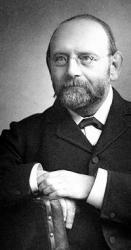
1838 - 1896 Composer of "TRISTITIA (ST. CHRYSOSTOM)" in Services for Congregational Worship. The New Hymn and Tune Book Joseph Barnby (b. York, England, 1838; d. London, England, 1896) An accomplished and popular choral director in England, Barnby showed his musical genius early: he was an organist and choirmaster at the age of twelve. He became organist at St. Andrews, Wells Street, London, where he developed an outstanding choral program (at times nicknamed "the Sunday Opera"). Barnby introduced annual performances of J. S. Bach's St. John Passion in St. Anne's, Soho, and directed the first performance in an English church of the St. Matthew Passion. He was also active in regional music festivals, conducted the Royal Choral Society, and composed and edited music (mainly for Novello and Company). In 1892 he was knighted by Queen Victoria. His compositions include many anthems and service music for the Anglican liturgy, as well as 246 hymn tunes (published posthumously in 1897). He edited four hymnals, including The Hymnary (1872) and The Congregational Sunday School Hymnal (1891), and coedited The Cathedral Psalter (1873).
Bert Polman
Joseph Barnby
Johann Sebastian Bach
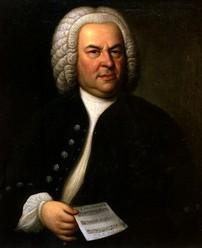
1685 - 1750 Composer of "GOTTLOB, ES GEHT NUNMEHR ZU ENDE" in The Harvard University Hymn Book Johann Sebastian Bach was born at Eisenach into a musical family and in a town steeped in Reformation history, he received early musical training from his father and older brother, and elementary education in the classical school Luther had earlier attended.
Throughout his life he made extraordinary efforts to learn from other musicians. At 15 he walked to Lüneburg to work as a chorister and study at the convent school of St. Michael. From there he walked 30 miles to Hamburg to hear Johann Reinken, and 60 miles to Celle to become familiar with French composition and performance traditions. Once he obtained a month's leave from his job to hear Buxtehude, but stayed nearly four months. He arranged compositions from Vivaldi and other Italian masters. His own compositions spanned almost every musical form then known (Opera was the notable exception).
In his own time, Bach was highly regarded as organist and teacher, his compositions being circulated as models of contrapuntal technique. Four of his children achieved careers as composers; Haydn, Mozart, Beethoven, Mendelssohn, Schumann, Brahms, and Chopin are only a few of the best known of the musicians that confessed a major debt to Bach's work in their own musical development. Mendelssohn began re-introducing Bach's music into the concert repertoire, where it has come to attract admiration and even veneration for its own sake.
After 20 years of successful work in several posts, Bach became cantor of the Thomas-schule in Leipzig, and remained there for the remaining 27 years of his life, concentrating on church music for the Lutheran service: over 200 cantatas, four passion settings, a Mass, and hundreds of chorale settings, harmonizations, preludes, and arrangements. He edited the tunes for Schemelli's Musicalisches Gesangbuch, contributing 16 original tunes. His choral harmonizations remain a staple for studies of composition and harmony. Additional melodies from his works have been adapted as hymn tunes.
--John Julian, Dictionary of Hymnology (1907)
Johann Sebastian Bach
Henry J. E. Holmes
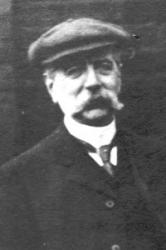
1852 - 1938 Person Name: H. J. E. Holmes Composer of "PATER OMNIUM" in Worship Song Born: March 5, 1852, Burnley, Lancashire, England.
Died: October 1938, Burnley, Lancashire, England.
Buried: Burnley, Lancashire, England.
Son of Richard and Jane Holmes, Henry’s father and great grandfather were both solicitors; his father had offices in Colne and Burnley. Henry was educated at Clitheroe Royal Grammar School. In 1875, he became an Attorney for Common Law and was admitted a Solicitor of the High Court of Chancery. He was articled to his father in November 1869, and practiced in Burnley for over 60 years, first in partnership with his brother Richard Marmaduke as Holmes and Holmes. He continued to practice on his own as Holmes and Holmes after his brother’s death in 1894, and later as Messrs. Holmes, Butterfield and Hartley. Holmes had moved from the family home on Westgate some time after the death of his sister Susannah in 1878. By 1881, he was living at 12 Palatine Square.
Holmes was intimately associated with church and Sunday school work all his life. At age 17, he became a teacher and later a lay superintendent of Sandygate Sunday school, connected with Holy Trinity Church, a position he held nearly 20 years. From the 1880’s he took a deep interest in "The Home for Little Boys" at Farningham, Kent. His desire to help in this work led to the formation of the Burnley branch of the National Society for the Prevention of Cruelty to Children. Another organization that Holmes took a great interest in was the Burnley Law Society, which he helped found in 1883; he lived to be the last survivor of the eight founders.
Holmes is said to have written over 250 hymn tunes in his life.
--www.hymntime.com/tch/
Henry J. E. Holmes
John Quarles
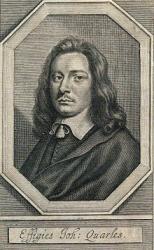
1624 - 1665 Author of "Fountain of light and living breath" in Services for Congregational Worship. The New Hymn and Tune Book Quarles, John, son of Francis Quarles, was born in Essex in 1624, and was educated at Exeter College, Oxford. He bore arms within the garrison at Oxford on behalf of Charles I. and subsequently (it is said) he was raised to the rank of captain in the King's service. On the downfall of the King, Quarles retired to London, and devoted himself to literature for a livelihood. He died there during the great Plague, 1665. He published several works including (1) Jeremiah's Lamentations Paraphrased, with Divine Meditations, 1648; and (2) Divine Meditations upon Several Subjects whereunto is annexed God's Love to Man’s Unworthiness, with several Divine Ejaculations. London, 1655 (Wood's Athenae Oxon.). From the Ejaculation, Mr. Darling adapted two hymns for his Hymns for the Church of England. In the 1889 ed. these are:— “O King of kings, before Whose Throne" (Holy Trinity); and "O Thou Who sitt'st in heaven and seest" (Visitation of Sick).
--John Julian, Dictionary of Hymnology (1907)
John Quarles




