You help make Hymnary.org possible. More than 10 million people from 200+ countries found hymns, liturgical resources and encouragement on Hymnary.org in 2025, including you. Every visit affirms the global impact of this ministry.

If Hymnary has been meaningful to you this year, would you take a moment today to help sustain it? A gift of any size—paired with a note of encouragement if you wish—directly supports the server costs, research work and curation that keep this resource freely available to the world.

Give securely online today, or mail a check to:
Hymnary.org
Calvin University
3201 Burton Street SE
Grand Rapids, MI 49546

Thank you for your partnership, and may the hope of Advent fill your heart.

Person Results

Text Identifier:"^i_cannot_find_thee_still_on_restless_pin$"
In:people

Planning worship? Check out our sister site, ZeteoSearch.org, for 20+ additional resources related to your search.
Showing 1 - 6 of 6Results Per Page: 102050

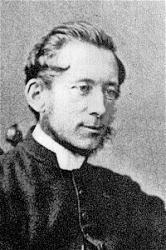
John Bacchus Dykes

1823 - 1876 Person Name: J. B. Dykes Composer of "STRENGTH AND STAY" in Jubilate Deo As a young child John Bacchus Dykes (b. Kingston-upon-Hull' England, 1823; d. Ticehurst, Sussex, England, 1876) took violin and piano lessons. At the age of ten he became the organist of St. John's in Hull, where his grandfather was vicar. After receiving a classics degree from St. Catherine College, Cambridge, England, he was ordained in the Church of England in 1847. In 1849 he became the precentor and choir director at Durham Cathedral, where he introduced reforms in the choir by insisting on consistent attendance, increasing rehearsals, and initiating music festivals. He served the parish of St. Oswald in Durham from 1862 until the year of his death. To the chagrin of his bishop, Dykes favored the high church practices associated with the Oxford Movement (choir robes, incense, and the like). A number of his three hundred hymn tunes are still respected as durable examples of Victorian hymnody. Most of his tunes were first published in Chope's Congregational Hymn and Tune Book (1857) and in early editions of the famous British hymnal, Hymns Ancient and Modern. Bert Polman

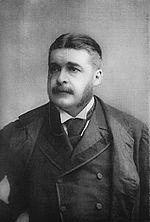
Arthur Sullivan

1842 - 1900 Person Name: Sir Arthur Sullivan (1842- ) Composer of "LIVORNO" in Hymnal Amore Dei Arthur Seymour Sullivan (b Lambeth, London. England. 1842; d. Westminster, London, 1900) was born of an Italian mother and an Irish father who was an army band­master and a professor of music. Sullivan entered the Chapel Royal as a chorister in 1854. He was elected as the first Mendelssohn scholar in 1856, when he began his studies at the Royal Academy of Music in London. He also studied at the Leipzig Conservatory (1858-1861) and in 1866 was appointed professor of composition at the Royal Academy of Music. Early in his career Sullivan composed oratorios and music for some Shakespeare plays. However, he is best known for writing the music for lyrics by William S. Gilbert, which produced popular operettas such as H.M.S. Pinafore (1878), The Pirates of Penzance (1879), The Mikado (1884), and Yeomen of the Guard (1888). These operettas satirized the court and everyday life in Victorian times. Although he com­posed some anthems, in the area of church music Sullivan is best remembered for his hymn tunes, written between 1867 and 1874 and published in The Hymnary (1872) and Church Hymns (1874), both of which he edited. He contributed hymns to A Hymnal Chiefly from The Book of Praise (1867) and to the Presbyterian collection Psalms and Hymns for Divine Worship (1867). A complete collection of his hymns and arrangements was published posthumously as Hymn Tunes by Arthur Sullivan (1902). Sullivan steadfastly refused to grant permission to those who wished to make hymn tunes from the popular melodies in his operettas. Bert Polman

Anonymous

Person Name: Unknown Composer of "[I cannot find thee!]" in Breaths of God In some hymnals, the editors noted that a hymn's author is unknown to them, and so this artificial "person" entry is used to reflect that fact. Obviously, the hymns attributed to "Author Unknown" "Unknown" or "Anonymous" could have been written by many people over a span of many centuries.

Eliza Scudder

1821 - 1896 Author of "I cannot find thee! Still on restless pinion" in Jubilate Deo Scudder, Eliza , niece of Dr. E. H. Sears, (q.v.), was born in Boston, U.S.A., Nov. 14,1821, and now (1888) lives in Salem, Massachusetts. Formerly an Unitarian, she some time ago joined the Protestant Episcopal Church. Her hymns in common use are:— 1. From past regret and present[faithlessness] feebleness . Repentance. In the Quiet Hours, Boston, 1875. 2. I cannot find Thee! Still on restless pinion . Seeking after God. Appeared in Longfellow and Johnson's Unitarian Hymns of the Spirit, 1864. 3. In Thee my powers and treasures live. Faith. 4. Life of our life, and light of all our seeing! Prayer. In the Boston Quiet Hours, 1875. 5. The day is done; the weary day of thought and toil is past. Evening. In Sermons and Songs of the Christian Life, by E. H. Sears, Boston, 2nd ed.,1878, p. 296, entitled "Vesper Hymn," and dated "October, 1874." This is possibly her finest hymn. 6. Thou grace divine, encircling all . Divine Grace. Appeared in Dr. E. H. Sears's Pictures of the Olden Time, as shown in the Fortunes of a Family of Pilgrims, 1857. It was written in 1852, and included in the Boston Hymns of the Spirit, 1864. It has sometimes been taken as "An Ancient Catholic Hymn" (Universalist's Psalms & Hymns 1865), but in error. 7. Thou long disowned, reviled, oppresst. The Spirit of Truth. In the Boston Hymns of the Spirit, 1864. Of these hymns, Nos. 2, 6, and 7 are in Dr. Martineau's Hymns, 1873. Some of Miss Scudder's poetical pieces appeared in Dr. Sears's Monthly Religious Magazine. Her Hymns and Sonnets, by E. S., were published by Lockwood, Brooks & Co., Boston, 1880. From this her hymn "Thou hast gone up again" (Ascension), is taken. [Rev. F. M. Bird, M.A.] -- John Julian, Dictionary of Hymnology (1907) ==================== Scudder, Eliza, pp. 1035, L, 1589, i. Miss Scudder died in 1896. Her Hymns & Sonnets, with biographical notes, &c, by Horace E. Scudder, was published by Houghton & Mifflin, 1897. In The Pilgrim Hymnal, 1904, the hymn," Thou Life within my life," begins with st. ii. of "From past regret and present [faithlessness] feebleness," p. 1035, i. 1), which was written in Feb. 1871. Another of Miss Scudder's hymns is “ Let whosoever will enquire" (New Heaven), from which "My God, I rather look to Thee," in Horder's Worship Song, 1905, is taken. --John Julian, Dictionary of Hymnology, New Supplement (1907)

Frederick G. Russell

1867 - 1929 Person Name: Frederick George Russell Composer of "LOMBARD STREET" in Hymns of the Spirit for Use in the Free Churches of America

R. G. Clements

Composer of "DAWNING" in Worship Song

Export as CSV
It looks like you are using an ad-blocker. Ad revenue helps keep us running. Please consider white-listing Hymnary.org or getting Hymnary Pro to eliminate ads entirely and help support Hymnary.org.