

 My Starred Hymns
 My FlexScores
 My Hymnals
 My Purchased Files
Planning worship?
Check out our sister site, ZeteoSearch.org,
for 20+ additional resources related to your search.
- |
User Links
Person Results
Philip Doddridge

1702 - 1751 Person Name: Rev. Philip Doddridge Author of "Jesus, I Love Thy Charming Name" in Windows of Heaven Philip Doddridge (b. London, England, 1702; d. Lisbon, Portugal, 1751) belonged to the Non-conformist Church (not associated with the Church of England). Its members were frequently the focus of discrimination. Offered an education by a rich patron to prepare him for ordination in the Church of England, Doddridge chose instead to remain in the Non-conformist Church. For twenty years he pastored a poor parish in Northampton, where he opened an academy for training Non-conformist ministers and taught most of the subjects himself. Doddridge suffered from tuberculosis, and when Lady Huntington, one of his patrons, offered to finance a trip to Lisbon for his health, he is reputed to have said, "I can as well go to heaven from Lisbon as from Northampton." He died in Lisbon soon after his arrival. Doddridge wrote some four hundred hymn texts, generally to accompany his sermons. These hymns were published posthumously in Hymns, Founded on Various Texts in the Holy Scriptures (1755); relatively few are still sung today.
Bert Polman
========================
Doddridge, Philip, D.D., was born in London, June 26, 1702. His grandfather was one of the ministers under the Commonwealth, who were ejected in 1662. His father was a London oilman. He was offered by the Duchess of Bedford an University training for ordination in the Church of England, but declined it. He entered Mr. Jennings's non-conformist seminary at Kibworth instead; preached his first sermon at Hinckley, to which Mr. Jennings had removed his academy. In 1723 he was chosen pastor at Kibworth. In 1725 he changed his residence to Market Harborough, still ministering at Kibworth. The settled work of his life as a preceptor and divine began in 1729, with his appointment to the Castle Hill Meeting at Northampton, and continued till in the last stage of consumption. He sailed to Lisbon, in 1751, where he died October 26, the same year. Two hundred pupils in all, gathered from England, Scotland and Holland, were prepared in his seminary, chiefly for the dissenting ministry, but partly for professions. The wide range of subjects, including daily readings in Hebrew and Greek, Algebra, Trigonometry, Watts' Logic, outline of Philosophy, and copious Divinity, is itself a proof of Doddridge's learning. He was presented with his D.D. degree by the University of Aberdeen. His fame as a divine, combined with his wide sympathies and gentle, unaffected goodness, won for him the friendship of Watts, Col. Gardiner and Hervey, and the esteem of Seeker and Warburton. He welcomed the work of Wesley and Whitefield, and entertained the latter on his visit to Northampton. His Rise and Progress of Religion in the Soul and The Family Expositor both did good work in their day. For criticism of his hymns see English Hymnody, Early, § XIV. [Rev. H. Leigh Bennett, M.A.]
After Dr. Doddridge's death his hymns were published by his friend Job Orton, in 1755, as:—
"Hymns founded on Various Texts in the Holy Scriptures. By the late Reverend Philip Doddridge, D.D. Published from the Author's Manuscript by Job Orton . . . Salop. Printed by J. Eddowes and J. Cotton, &c.
MDCCLV."
Concerning the text of the hymns, Orton says in his Preface:—
"There may perhaps be some improprieties, owing to my not being able to read the author's manuscript in particular places, and being obliged, without a poetical genius, to supply those deficiencies, whereby the beauty of the stanza may be greatly defaced, though the sense is preserved."
The 1st edition contained 370 hymns; the 2nd, 1759, 374; and the 3rd, 1766, and later editions, 375. In 1839 Doddridge's great-grandson re-edited the hymns from the original manuscript and published the same as:—
Scriptural Hymns by the Rev. Philip Doddridge, D.D. New and corrected edition containing many hymns never before printed. Edited from the Original Documents by the Author's great-grandson, John Doddridge Humphreys, Esq. Lond. Darton & Clark, 1839.
This work contains 22 additional hymns. The text differs in many instances from Orton's, but these changes have not come into common use. In addition to the manuscript used by Orton and J. D. Humphreys, another containing 100 hymns (five of which are not in any edition of the Hymns), all in the author's handwriting, and most of them dated, is referred to in this Dictionary as the "D. Manuscripts." It is the property of Mr. W. S. Booker and family. A manuscript, not in Doddridge's handwriting, of 77 "Hymns by P. Doddridge, Mar. 16, 1739/1740," is in the possession of Mr. W. T. Brooke. The existence of these manuscripts is accounted for from the fact that Doddridge's hymns were freely circulated in manuscript during his lifetime. It is from his correspondence with R. Blair (q.v.) that the few compositions traceable to him in the Scottish Trans. & Paraphrases were derived.
The hymns by Doddridge which have attained to the greatest popularity are:— “Awake, my soul, stretch every nerve"; " Do not I love Thee, O my Lord? " "Grace 'tis a charming sound”; " Hark, the glad sound, the Saviour comes"; "My God, and is Thy table spread?" "O happy day, that fixed my choice"; "O God of Jacob [Bethel], by Whose hand”; " See Israel's gentle Shepherd stand"; "Ye servants of the Lord." These hymns, with many besides, are annotated under their respective first lines. Of the rest, taken from the Hymns, &c, 1755, the following are also in common use:—
1. Behold the gloomy vale. Death anticipated.
2. Behold the Great Physician stands. Christ the Physician.
3. Captives of Israel, hear. Spiritual Deliverance.
4. Eternal God, our wondering souls. Enoch's Piety and Translation.
5. Eternal Source of life and thought. Subjection to the Father.
G. Exalted Prince of Life, we own. Christ the Prince and Saviour.
7. Father Divine, the Saviour cried. Christ's Submission to the Father.
8. Father Divine, Thy piercing eye. Secret Prayer.
9. Father of mercies, send Thy grace. Sympathy. The Good Samaritan.
10. Go, saith the Lord, proclaim my grace. Forgiveness.
11. God of Eternity, from Thee. Redeeming the Time.
12. God of my life, through all its [my] days. Praising God continually.
13. God. of salvation, we adore. Praise to God for Redemption.
14. Great Father of mankind. Gentiles brought into the Church.
15. Great God, we sing that mighty hand. The New Tear.
16. Great Leader of Thine Israel's host. During Persecution.
17. Great Lord of angels, we adore. Ordination.
18. Great Spirit of immortal love. Purity of Heart desired.
19. Great Teacher of Thy Church, we own. The Divine Precepts.
20. Hail, everlasting Prince of Peace. Sympathy.
21. Hail to the Prince of life and peace. Praise to Christ.
22. Hear, gracious [Saviour] Sovereign, from Thy throne. The Blessings of the Holy Spirit desired.
23. How gentle God's commands. God's Care of His Own.
24. How rich Thy favours, God of grace. God and His Living Temple.
25. How swift the torrent flows [rolls]. Our Fathers, where are they?
26. Jesus the Lord, our souls adore. Christ the Forerunner.
27. Jesus, we own Thy Sovereign hand. Christ to be fully known hereafter.
28. Loud let the tuneful trumpet sound. Gospel Jubilee.
29. My gracious Lord, I own Thy right. Life in Jesus.
30. My [Dear] Saviour, I am [we are] Thine. Joined to Christ through the Spirit.
31. My soul, with all thy waking powers. The Choice of Moses.
32. Now let our voices join. Singing in the ways of God.
33. 0 injured Majesty of heaven. Lent.
34. 0 Zion, tune thy voice. Glory of the Church of Christ.
35. Peace, 'tis the Lord Jehovah's hand. Resignation.
36. Praise the Lord of boundless might. The Father of Lights.
37. Praise to Thy Name, Eternal God. Growth in Grace desired.
38. Remark, my soul, the narrow bounds. The New Year.
39. Repent, the Voice celestial cries. Lent.
40. Return, my roving heart, return. Heart communing.
41. Salvation, O melodious sound. God our Salvation.
42. Saviour of men, and Lord of love. Ministry and Death of Christ.
43. Searcher of hearts, before Thy face. Peter to Simon Magus.
44. Shepherd of Israel, Thou dost keep. Induction or Settlement of a Minister.
45. Shine forth, eternal Source of light. Knowledge of God desired.
46. Shine on our souls, eternal God. Sunday.
47. Sing, ye redeemed of the Lord. Joy on the Homeward Way.
48. Sovereign of life, before Thine eye. Life and Death in God's hands.
49. The darkened sky, how thick it lours. Sorrow followed by Joy.
50. The day approacheth, O my soul. Judgment anticipated.
51. The King of heaven His table spreads. The Gospel Feast.
52. The promises I sing. The unchanging promises of God.
53. The swift-declining day. Walk in the Light.
54. These mortal joys, how soon they fade. Treasures, Perishable and Eternal.
55. Thy judgments cry aloud. Retributive Providence.
56. Thy presence, Everlasting God. Omnipresence of the Father.
57. 'Tis mine, the covenant of His grace. Death anticipated.
58. To Thee, my God; my days are known. Life under the eye of God.
59. Tomorrow, Lord, is Thine. Uncertainty of Life.
60. Triumphant Lord, Thy goodness reigns. The Divine Goodness.
61. Triumphant Zion, lift thy head. The Church Purified and Guarded.
62. Unite my roving thoughts, unite. Peace.
63. What mysteries, Lord, in Thee combine. Christ, the First and Last.
64. While on the verge of life I stand. Death anticipated with Joy.
65. With ecstacy of Joy. Christ the Living Stone.
66. Ye golden lamps of heaven, farewell. Heaven opening.
67. Ye hearts with youthful vigour warm. The Young encouraged.
68. Ye humble souls, that seek the Lord. Easter.
69. Ye sons of men, with joy record. Praise of the Works of God.
70. Yes, the Redeemer rose. Easter
In Dr. Hatfield's Church HymnBook, N. Y., 1872, Nos. 9, 12, 14, 15, 21, 23, 25, 29, 30, 32, 34, 35, 39, 40, 44, 47, 51, 61, 64, 65, 67, 69, 70, as above, are dated 1740. What authority there may be for this date we cannot say, these hymns not being in any “D. MSS." with which we are acquainted, and no dates are given in the Hymns, &c, 1755. Some later American editors have copied this date from Dr. Hatfield.
Doddridge's hymns are largely used by Unitarians both in Great Britain and America. As might be expected, the Congregationalists also draw freely from his stores. The Baptists come next. In the hymnals of the Church of England the choicest, only are in use. Taken together, over one-third of his hymns are in common usage at the present time.
-- John Julian, Dictionary of Hymnology (1907)
================
Doddridge, Philip, D.D. At p. 305 an account is given of a manuscript volume of Doddridge's Hymns, which is the property of the Rooker family. Since that article was written another manuscript vol. has been found. It was the property of Lady Frances Gardiner, née Erskine, an intimate friend of Doddridge, and wife of Col. Gardiner. It is a copy of the Rooker manuscipt, with the revised text, as in the margin of that ms., and is in Doddridge's hand¬writing. It was from this manuscript that the Doddridge hymns were taken for the Scottish Translationsand Paraphrases, 1745. Additional hymns by Dr. Doddridge still in common use include:—
1. My God, how cheerful is the sound. All in Christ.
2. My Saviour, let me hear Thy voice. Pardon desired.
3. My soul, triumphant in the Lord. Divine Guidance assured.
4. No «iore, ye wise, your wisdom boast. Glorying in God alone. From Hymns, No. 128.
5. Now be that Sacrifice survey'd. Christ our Sacrifice.
6. 0 Israel, blest beyond compare. Happiness of God's Israel.
7. Our fathers, where are they? Considering the Past. From Hymns, No. 164.
8. Praise to the Lord on high. Missions.
9. Praise to the radiant Source of bliss. Praise for Divine Guidance.
10. Return, my soul, and seek thy rest. Rest in Jesus.
11. Salvation doth to God belong. National Thanksgiving.
12. Sovereign of Life, I own Thy hand. On Recovery from Sickness.
13. The sepulchres, how thick they stand. Burial.
14. There is a Shepherd kind and strong. The Good Shepherd. From Hymns, No. 216.
15. Wait on the Lord, ye heirs of hope. Waiting on God.
16. We bless the eternal Source of light. Christ's care of the Church.
17. With transport, Lord, our souls proclaim. Immutability of Christ.
18. Ye mourning saints, whose streaming tears. Death and Burial.
These all appeared in Dr. Doddridge's Hymns, 1755.
--John Julian, Dictionary of Hymnology, Appendix, Part II (1907)
Philip Doddridge
Anonymous
Composer of "FAIR HAVEN" in The Cyber Hymnal In some hymnals, the editors noted that a hymn's author is unknown to them, and so this artificial "person" entry is used to reflect that fact. Obviously, the hymns attributed to "Author Unknown" "Unknown" or "Anonymous" could have been written by many people over a span of many centuries.
Anonymous
P. P. Bilhorn
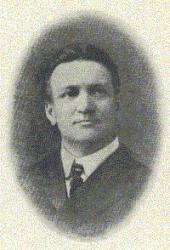
1865 - 1936 Person Name: P. Bilhorn Arranger of "AULD LANG SYNE" in The Canadian Hymnal Pseudonyms: W. Ferris Britcher, Irene Durfee; C. Ferris Holden, P. H. Roblin (a anagram of his name)
================
Peter Philip Bilhorn was born, in Mendota, IL. His father died in the Civil War 3 months before he was born. His early life was not easy. At age 8, he had to leave school to help support the family. At age 15, living in Chicago, he had a great singing voice and sang in German beer gardens there. At this time, he and his brother also formed the Eureka Wagon & Carriage Works in Chicago, IL. At 18 Peter became involved in gospel music, studying under George F. Root and George C. Stebbins. He traveled to the Dakotas and spent some time sharing the gospel with cowboys there. He traveled extensively with D. L. Moody, and was Billy Sunday's song leader on evangelistic endeavors. His evangelistic work took him into all the states of the Union, Great Britain, and other foreign countries. In London he conducted a 4000 voice choir in the Crystal Palace, and Queen Victoria invited him to sing in Buckinghm Palace. He wrote some 2000 gospel songs in his lifetime. He also invented a folding portable telescoping pump organ, weighing 16 lbs. It could be set up in about a minute. He used it at revivals in the late 19th century. He founded the Bilhorn Folding Organ Company in Chicago. IL, and his organ was so popular it was sold all over the world. He edited 10 hymnals and published 11 gospel songbooks. He died in Los Angeles, CA, in 1936.
John Perry
P. P. Bilhorn
Joseph Swain
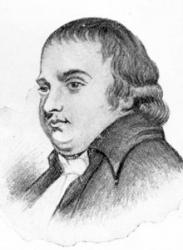
1761 - 1796 Author of "How sweet, how heavenly is the sight" in Jubilate Deo Swain, Joseph, was born at Birmingham in 1761, and after being apprenticed to an engraver, removed to London. After a time he became a decided Christian, and being of an emotional poetic temperament, began to give expression to his new thoughts and feelings in hymns. In 1783 he was baptized by the Rev. Dr. Rippon, and in 1791 became minister of a Baptist congregation in East Street, Walworth. After a short but popular and very useful ministry, he died April 16, 1796 Swain published the following:—
(1) A Collection of Poems on Several Occasions, London, 1781; (2) Redemption, a Poem in five Books, London, 1789; (3) Experimental Essays on Divine Subjects, London, 1791; (4) Walworth Hymns, by J. Swain, Pastor of the Baptist Church Meeting there, London, 1792, 129 hymns; with a Supplement, 1794, 192 hymns; (5) A Pocket Companion and Directory, London, 1794.
In addition to a limited number of Swain's hymns, annotated under their respective first lines, the following, from his Walworth Hymns1792, and the 2nd ed., 1796, are also in common use:—
1. Brethren, while we sojourn here. Mutual Encouragement.
2. Children of the King of grace. Holy Baptism.
3. Christ the Lord will come again. Second Advent.
4. Come, ye souls, by sin afflicted. The Yoke of Christ.
5. How sweet, how heavenly is the sight. Communion of Saints.
6. In expectation sweet. Second Advent.
7. Lift up your heads, ye gates. Ascension.
8. Love is the sweetest bud that blows. A Flower an Emblem of Christ.
9. 0 how the thought that I shall know. Heaven Anticipated. Sometimes it begins with st. ii., "For ever to behold Him shine".
10. On earth the song begins. Heaven Anticipated.
11. On the wings of faith upspringing. Passiontide.
12. Pilgrims we are to Canaan bound. Pilgrimage of Life.
13. Praise ye the Lord, the eternal King. Divinity of Christ.
14. Praise your Redeemer, praise His Name. Praise for Redemption.
15. 'Tis heaven begun below. Heaven Anticipated.
16. What is it for a saint to die? Death and Burial.
17. What must [will] it be to dwell above? Heaven Anticipated.
18. When firm I [we] stand on Zion's hill. Confidence. Sometimes as "I stand on Zion's mount," in American collections.
19. Who can forbear to sing? Praise of Jesus.
From his Redemption, a Poem in Five Books, 1791, the following hymns are also in common use:--
20. 0 Thou in whose presence my soul takes delight. In Affliction.
21. Ye daughters of Zion, declare, have you see? Comfort in Affliction.
Of these hymns the most widely known are Nos. 1, 5, 6, and 20. We may add that several of Swain's hymns appeared in The Theological Miscellany, 1784-1789. [Rev. W. R. Stevenson, M.A.]
-- John Julian, Dictionary of Hymnology (1907)
Joseph Swain
John White Chadwick
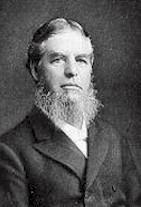
1840 - 1904 Person Name: John W. Chadwick Author of "It Singeth Low in Every Heart" in The Cyber Hymnal Chadwick, John White, was born at Marblehead, Mass., U.S., Oct. 19, 1840; graduated at the Cambridge Divinity School, July 19, 1864, and ordained minister of the Second Unitarian Church, Brooklyn, N.Y., Dec. 21, 1864. A frequent contributor to the Christian Examiner; The Radical; Old and New; Harper's Magazine; and has published many poems in American periodicals. His hymn on Unity, "Eternal Ruler of the ceaseless round," was written for the graduating class of the Divinity School, Cambridge, June 19, 1864. It is in Horder's Congregational Hymns, 1884. It is a hymn of superior merit. [Rev. W. Garrett Horder]
--John Julian, Dictionary of Hymnology (1907)
========================
Chadwick, J. W, p. 216, i. Mr. Chadwick's important prose works were the Life of Theodore Parker, 1890, and that of William Ellery Channing, 1903; and his poetical productions A Book of Poems, 1876, and In Nazareth Town and other Poems, 1883. He received his M.A. from Harvard in 1888; and d. Dec. 11, 1901. In addition to "Eternal Ruler of the ceaseless round," already noted on p. 216, ii., Mr. Chadwick's widow has supplied us with the following data concerning his hymns:—
1. A gentle tumult in the earth. [Easter.] Dated 1876.
2. Another year of setting suns. [New Year.] Written as a New Year's Hymn for 1873, and originally began "That this shall be a better year." In The Pilgrim Hymnal, Boston, 1904.
3. Come, let us sing a tender song, [Communion of Saints.] Dated 1901, and included in The Pilgrim Hymnal, 1904.
4. Everlasting Holy One. [Invocation.] 1875.
5. It singeth low in every heart. [In Memoriam.] Written in 1876, for the 25th Anniversary of the Dedication of his Church at Brooklyn. It has passed into a great many collections in America, and a few in Great Britain, including Horder's Worship Song, 1905.
6. Now sing we a song for the harvest. [Harvest.]
Written for a Harvest Thanksgiving Service in 1871. Given in The Pilgrim Hymnal, 1904, and others.
7. 0 God, we come not as of old. [Perfect Law of Liberty.] Written in 1874, and entitled "The Perfect Law."
8. 0 Love Divine of all that is. [Trust.] Written in 1865, and included in his Book of Poems, 1876, as "A Song of Trust." In several American collections.
9. 0 Thou, Whose perfect goodness crowns. [For an Anniversary.] "Written for the 23th Anniversary of his Installation, Dec. 21, 1889." In The Pilgrim Hymnal, and other collections.
10. Thou Whose Spirit dwells in all. [Easter.] Written in 1890.
11. What has drawn us thus apart? [For Unity.] Undated, in the Boston Unitarian Hymns for Church and Home, 1895.
During the past ten years Mr. Chadwick's hymns have become very popular in America, and especially with the compilers of Congrega¬tional and Unitarian collections.
--John Julian, Dictionary of Hymnology, New Supplement (1907)
John White Chadwick
Robert Burns

1759 - 1796 Author of "Auld Lang Syne" in Seth Parker's Hymnal Burns, Robert. This poet's life had little in common with hymnology, although some of his pieces, in common with a few of Byron's, have come into use in Great Britain and America. His life, from his birth in the parish of Alloway, near Ayr, Jan. 25, 1759, to his death, at Dumfries, July 21, 1796, was one of varying lights and shadows, and has been told elsewhere, frequently and eloquently. It remains for us only to name his sacred pieces, their origin, and their use. Those in common use are:—
1. O Thou great Being! What Thou art. Lent. Burns's account of this piece as entered in his Common¬place Book, under the date of "March, 1784," is:—
"There was a certain period of my life that my spirit was broken by repeated losses and disasters, which threatened, and indeed effected, the utter ruin of my fortune. My body, too, was attacked by that most dreadful distemper a hypochondria, or confirmed melancholy. In this wretched state, the recollection of which makes me shudder, I hung my harp on the willow-trees, except in some lucid intervals, in one of which I composed the following, 'Oh, Thou Great Being! what Thou art, &c.'" Chambers says in his Life and Works of Burns, 1850 (Library edition, 1856), vol. i.,p. 57, that financial and physical downfall was in 1781, when the poet was 23. At the same time he wrote, "Winter, a Dirge." From the latter the hymn:—
2. Thou Power Supreme, Whose mighty scheme, Trust in God, is taken. The second piece was published in his Poems, Kilmarnock, 1786, and the first in Poems, Edinburgh, 1787. Original text in Chambers's Life, vol. i. pp. 67-58. The title of the first is "A Prayer, written under the pressure of violent anguish."
3. O Thou unknown, Almighty Cause. Death anticipated. This was written at the age of 26, during an illness in the summer of 1784. In his Commonplace Book he calls it, "A Prayer when fainting fits and other alarming symptoms of a pleurisy, or some other danger¬ous disorder which still threatens me, first put nature on the alarm." Under the title “A Prayer in the prospect of death," it was included in his Poems, Kilmarnock, 1786.
4. The [that] man in life wherever placed. Ps. i.
5. O Thou, the first, the greatest Friend. Ps. xix. Chambers (Life, vol. i. pp. 86-87) has given these two Psalm versions to the samedate as No. 3, and attributes them to the same cause. They were published in the Edinburgh edition of his Poems, 1787. Orig. text in Life, &c, vol. i. pp. 86-87.
These hymns were all included in Dr. Maitineau's Hymns, &c, 1840, and are also found in other and later collections both in Great Britain and America.
-- John Julian, Dictionary of Hymnology (1907)
Robert Burns
S. J. Vail
1818 - 1884 Arranger of "SCOTLAND" in Chapel Melodies In his youth Silas Jones Vail learned the hatter's trade at Danbury, Ct. While still a young man, he went to New York and took employment in the fashionable hat store of William H. Beebe. Later he established himself in business as a hatter at 118 Fulton Street, where he was for many years successful. But the conditions of trade changed, and he could not change with them. After his failure in 1869 or 1870 he devoted his entire time and attention to music. He was the writer of much popular music for use in churches and Sunday schools. Pieces of music entitled "Scatter Seeds of Kindness," "Gates Ajar," "Close to Thee," "We Shall Sleep, but not Forever," and "Nothing but Leaves" were known to all church attendants twenty years ago. Fanny Crosby, the blind authoress, wrote expressly for him many of the verses he set to music.
--Vail, Henry H. (Henry Hobart). Genealogy of some of the Vail family descended from Jeremiah Vail at Salem, Mass., 1639, p. 234.
S. J. Vail
Joel Barlow
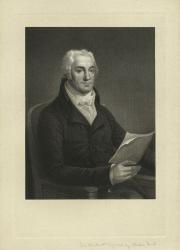
1754 - 1812 Person Name: Barlow Author of "Awake my soul to sound His praise" in Primitive Baptist Hymn and Tune Book Barlow, Joel, born at Reading, Connecticut, 1755 [sic], graduated at Yale 1778, and died near Cracow, Poland, 1812, He was well known as an author and politician during and after the American Revolution. His publications include Hasty Pudding; Columbia, &c. In 1785, at the request of the (Congregational) General Association of Connecticut, he corrected and enlarged Dr. Watts's Psalms, supplying those omitted by Watts, and adapting the whole to American thought and circumstances. This work, published in 1786, went through various editions, and, although officially superseded by Dwight in 1800, it continued to be issued for many years after. Its title is somewhat curious as setting forth its design. It reads:— Psalms carefully suited to the Christian Worship in the United States of America, being Dr. Watts’ Imitation of the Psalms of David, as improved by Mr. Barlow. Of his renderings of the Psalms, there are still in common use:—
1. Awake, my soul, to sound His praise. Ps. cviii. This is No. 233 in Hatfield's Church Hymn Book, 1872, and other collections.
2. Lord,Thou hast scourged our guilty land. Ps. lx. Altered from Watts. Also in Hatfield's Church Hymn Book, No. 1312.
3. Our land, O Lord, with songs of praise. Ps. xxxi . In the Philadelphia Presbyterian Hymnal, 1874.
4. In Thee, great God, with songs of praise. National Hymn. This is No. 3 in a slightly different form. It is No. 962 in N. Adams's Church Pastorals, Boston, 1804. [Rev. F. M. Bird, M.A.]
-- John Julian, Dictionary of Hymnology (1907)
Joel Barlow
R. M. McIntosh
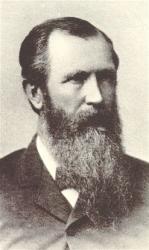
1836 - 1889 Arranger of "AULD LANG SYNE" in Carols of Victory Used Pseudonym: Robert M. McIntosh
==========
Rigdon (Robert) McCoy McIntosh USA 1836-1899 Born at Maury County, TN, into a farming family, he attended Jackson College in Columbia, TN, graduating in 1854. He studied music under Asa Everett in Richmond, VA, and became a traveling singing school teacher. He also served briefly in the Civil War. He wrote several hymns during this period of his life. In 1860 he married Sarah McGlasson, and they had a daughter, Loulie Everett. In 1875 he was appointed head of the Vanderbilt University Music Department in Nashville, TN. In 1877 he joined the faculty of Emory College, Oxford, GA. In 1895 he left Emory College to devote his time to the R M McIntosh Publishing Company. He also served as music editor of the Methodist Episcopal Church South Publishing House for over 30 years. His song book publications include: “Good news” (1876), “Light & life” (1881), “Prayer & praise” (1883), “New life” (1879), “New life #2” (1886), and “Songs of service” (1896). He died in Atlanta, GA.
John Perry
R. M. McIntosh
Pages




