

 My Starred Hymns
 My FlexScores
 My Hymnals
 My Purchased Files
Planning worship?
Check out our sister site, ZeteoSearch.org,
for 20+ additional resources related to your search.
- |
User Links
Person Results
Charles Wesley
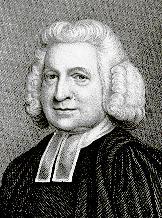
1707 - 1788 Author of "And Can it Be?" in Tabernacle Choir Charles Wesley, M.A. was the great hymn-writer of the Wesley family, perhaps, taking quantity and quality into consideration, the great hymn-writer of all ages. Charles Wesley was the youngest son and 18th child of Samuel and Susanna Wesley, and was born at Epworth Rectory, Dec. 18, 1707. In 1716 he went to Westminster School, being provided with a home and board by his elder brother Samuel, then usher at the school, until 1721, when he was elected King's Scholar, and as such received his board and education free. In 1726 Charles Wesley was elected to a Westminster studentship at Christ Church, Oxford, where he took his degree in 1729, and became a college tutor. In the early part of the same year his religious impressions were much deepened, and he became one of the first band of "Oxford Methodists."
In 1735 he went with his brother John to Georgia, as secretary to General Oglethorpe, having before he set out received Deacon's and Priest's Orders on two successive Sundays. His stay in Georgia was very short; he returned to England in 1736, and in 1737 came under the influence of Count Zinzendorf and the Moravians, especially of that remarkable man who had so large a share in moulding John Wesley's career, Peter Bonier, and also of a Mr. Bray, a brazier in Little Britain. On Whitsunday, 1737, [sic. 1738] he "found rest to his soul," and in 1738 he became curate to his friend, Mr. Stonehouse, Vicar of Islington, but the opposition of the churchwardens was so great that the Vicar consented that he "should preach in his church no more." Henceforth his work was identified with that of his brother John, and he became an indefatigable itinerant and field preacher. On April 8, 1749, he married Miss Sarah Gwynne. His marriage, unlike that of his brother John, was a most happy one; his wife was accustomed to accompany him on his evangelistic journeys, which were as frequent as ever until the year 1756," when he ceased to itinerate, and mainly devoted himself to the care of the Societies in London and Bristol. Bristol was his headquarters until 1771, when he removed with his family to London, and, besides attending to the Societies, devoted himself much, as he had done in his youth, to the spiritual care of prisoners in Newgate. He had long been troubled about the relations of Methodism to the Church of England, and strongly disapproved of his brother John's "ordinations." Wesley-like, he expressed his disapproval in the most outspoken fashion, but, as in the case of Samuel at an earlier period, the differences between the brothers never led to a breach of friendship. He died in London, March 29, 1788, and was buried in Marylebone churchyard. His brother John was deeply grieved because he would not consent to be interred in the burial-ground of the City Road Chapel, where he had prepared a grave for himself, but Charles said, "I have lived, and I die, in the Communion of the Church of England, and I will be buried in the yard of my parish church." Eight clergymen of the Church of England bore his pall. He had a large family, four of whom survived him; three sons, who all became distinguished in the musical world, and one daughter, who inherited some of her father's poetical genius. The widow and orphans were treated with the greatest kindness and generosity by John Wesley.
As a hymn-writer Charles Wesley was unique. He is said to have written no less than 6500 hymns, and though, of course, in so vast a number some are of unequal merit, it is perfectly marvellous how many there are which rise to the highest degree of excellence. His feelings on every occasion of importance, whether private or public, found their best expression in a hymn. His own conversion, his own marriage, the earthquake panic, the rumours of an invasion from France, the defeat of Prince Charles Edward at Culloden, the Gordon riots, every Festival of the Christian Church, every doctrine of the Christian Faith, striking scenes in Scripture history, striking scenes which came within his own view, the deaths of friends as they passed away, one by one, before him, all furnished occasions for the exercise of his divine gift. Nor must we forget his hymns for little children, a branch of sacred poetry in which the mantle of Dr. Watts seems to have fallen upon him. It would be simply impossible within our space to enumerate even those of the hymns which have become really classical. The saying that a really good hymn is as rare an appearance as that of a comet is falsified by the work of Charles Wesley; for hymns, which are really good in every respect, flowed from his pen in quick succession, and death alone stopped the course of the perennial stream.
It has been the common practice, however for a hundred years or more to ascribe all translations from the German to John Wesley, as he only of the two brothers knew that language; and to assign to Charles Wesley all the original hymns except such as are traceable to John Wesley through his Journals and other works.
The list of 482 original hymns by John and Charles Wesley listed in this Dictionary of Hymnology have formed an important part of Methodist hymnody and show the enormous influence of the Wesleys on the English hymnody of the nineteenth century.
-- Excerpts from John Julian, Dictionary of Hymnology (1907)
==================
Charles Wesley, the son of Samuel Wesley, was born at Epworth, Dec. 18, 1707. He was educated at Westminster School and afterwards at Christ Church, Oxford, where he graduated M.A. In 1735, he took Orders and immediately proceeded with his brother John to Georgia, both being employed as missionaries of the S.P.G. He returned to England in 1736. For many years he engaged with his brother in preaching the Gospel. He died March 29, 1788. To Charles Wesley has been justly assigned the appellation of the "Bard of Methodism." His prominence in hymn writing may be judged from the fact that in the "Wesleyan Hymn Book," 623 of the 770 hymns were written by him; and he published more than thirty poetical works, written either by himself alone, or in conjunction with his brother. The number of his separate hymns is at least five thousand.
--Annotations of the Hymnal, Charles Hutchins, M.A., 1872.
Charles Wesley
Walter Shirley
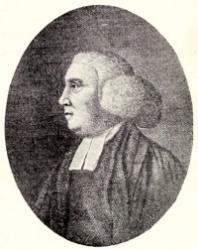
1725 - 1786 Author of "Peace, troubled soul, whose plaintive moan" in New Christian Hymn and Tune Book Walter Shirley was born in 1725. He was the friend of Whitefield and Wesley. After preaching with great success in England, he received the living of Loughrea, Ireland, where he continued to exercise his ministry for many years. His last sickness was of a lingering character, and it is related of him that when no longer able to leave his house he used to preach, seated in his chair in his drawing room, to many who gladly assembled to hear. He died in 1786. He published one volume of sermons and two poems.
--Annotations of the Hymnal by The Rev. Charles L. Hutchins, M.A. (1872).
===================================
Shirley, Hon. Walter, M.A., fourth son of the Hon. Laurence Shirley (son of the 1st Earl Ferrers, and cousin of the Countess of Huntingdon), was born in 1725. He was a friend of Whitefield and the Wesleys, and often preached in their chapels. He was for sometime Rector of Loughrea, county of Galway. He died April 7, 1786. A selection of his sermons was published; also two poems in 1761—-Liberty, an Ode, and The Judgment. In 1774 he assisted the Countess of Huntingdon in revising the collection of hymns used in her chapels, and therein a few of his productions are found. In the Life of Selina, Countess of Huntingdon, 1839, vol. ii., p. 291, the following note is given on Shirley's hymn-writing:—
"Mr. Shirley was the author of several well-known hymns in Lady Huntingdon's collection, particularly:—
‘From heaven the loud angelic song began.'
‘Hark! in the wilderness a try.'
‘Flow fast my tears, the cause is great.'
‘Sweet as the shepherd's tuneful reed.'
‘Source of light and power divine.'
“There are also some in other collections; and a few little poems scattered in various periodical publications. The lines on the departure of the Missionaries from Lady Huntingdon's College for America, in 1772, under the direction of Mr. Piercy, have been much admired; they were re-published in the Evangelical Magazine, in 1796, on the departure of the ship Duff, for the South Sea inlands.....He likewise assisted Lady Huntingdon in the Selection of hymns now in use in the congregations in her Connexion."
The Missionary hymn here referred to is:— "Go, destined vessel, heavenly-freighted, go!" His hymns now in common use include:—
1. Flow fast, my tears, the cause is great. Good Friday. Published in the Countess of Huntingdon's Collection, circa 1773, p. 294, in 3 stanzas of 8 lines. It is in several modern hymn-books; and especially in America, including Hatfield's Church Hymn Book, 1872.
2. From heaven the loud angelic song began. Ascension. Also in the C. of Huntingdon's Collection, circa 1773, p. 312, in 7 stanzas of 4 lines. The hymn, "Worthy the Lamb of boundless sway," in Hatfield's Church Hymn Book, 1872, and others, is composed of st. ii. and vii.
3. Hark, in the wilderness a cry. St. John Baptist. Also in the C. of Huntingdon's Collection, circa 1773, p. 245, in 7 st. of 4 1.
4. Source of light and power divine. Before Sermon. Also in the C. of Huntingdon's Collection, circa 1773, p. 231, in 4 st. of 6 1. In Snepp's Songs of Grace & Glory, 1872, No. 812, st. i. and iv. are given in an altered form; and the first two lines of the hymn are added as a refrain.
5. Sweet as the shepherd's tuneful reed. Peace. Also in the above Collection, circa 1773, p. 126, in 4 st. of 6 1. The hymn, “Peace, troubled soul, whose plaintive moan," in Laudes Domini, N. Y., 1884, and others, is composed of stanza ii. and iii.
For Shirley's popular recast, "Sweet the moments, rich in blessing," see “While my Jesus I'm possessing."
-- John Julian, Dictionary of Hymnology (1907)
Walter Shirley
Joseph Mazzinghi
1765 - 1844 Person Name: Mazzinghi Composer of "[And can it be that I should claim]" in Tabernacle Choir
Joseph Mazzinghi
Henry Collins
1827 - 1919 Author of "Jesus My Lord, My Life, My All" in Christian Hymnal Collins, Henry, M.A., educated at Oxford, where he graduated about 1854. He was ordained to the Ministry of the Church of England, but in Nov., 1857, he entered the Roman communion, becoming a member of the Cistercian Order in 1860. Author of Life of the Rev. Father Gentili, &c, 1861; The Spirit and Mission of the Cistercian Order , &c. His hymns were published by him before leaving the Church of England, in his Hymns for Missions , 1854, first published at Leeds, and then by Shrimpton of Oxford, and Masters of London. It contains 37 hymns, of which two only were by him:—"Jesu, meek and lowly" (Passiontide), and "Jesu, my Lord, my God, my all." (Love of Jesus desired) These hymns are in extensive use.
--John Julian, Dictionary of Hymnology (1907)
Henry Collins
Lampertus Gedicke
1683 - 1735 Person Name: Lampertius Author of "Give Me Faith" in Song-Hymnal of Praise and Joy Gedicke, Lampertus, son of Christian Gedicke, superintendent of Gardelegen in the Altmark, was born at Gardelegen Jan. 6, 1683. After the completion of his theological studies at Halle under Francke, he was for some time tutor in the orphanage at Halle, and then in a family at Berlin. Becoming an army chaplain he was successively appointed chaplain to the Guards (1709), accompanying them on several expeditions; chaplain to the Wartensleben regiment and garrison preacher at Berlin (1713); and Probst and inspector of all the garrison and regimental chaplains (1717). He died at Berlin, Feb. 21, 1735 (Koch, iv. 414, 415; Bode, p. 72, &c). He contributed two hymns to the Neu-vermehrtes geistreiches Gesang-Buch, Berlin, 1711. One of these is:- Wie Gott mich führt, so will ich gehn. [Trust in God.] 1711, as above, No. 798, in 6 stanzas of 7 lines, repeated in Freylinghausen, 1714, and as No. 918 in the Berlin Geistlicher Leider Schlatz, 9 ed. 1863. Often used at weddings. The only translation in common use is:—
Just as God leads me I would go , a good translation, omitting st. ii., as No. 258, in H. L. Hastings's Hymnal, 1880.
Other translations are : (l) “As God shall lead I'll take my way," by Dr. H. Mills, 1845 (1856, p. 176). (2) "As God leads me, will I go," by Miss Warner, 1858 (1861, p. 498). (3) “As God doth lead me will I go," by Miss Burlingham in the British Herald, June, 1866, p. 278, repeated as No. 407 in Reid's Praise Book, 1872. [Rev. James Mearns, M.A.]
--John Julian, Dictionary of Hymnology (1907)
Lampertus Gedicke




