You help make Hymnary.org possible. More than 10 million people from 200+ countries found hymns, liturgical resources and encouragement on Hymnary.org in 2025, including you. Every visit affirms the global impact of this ministry.

If Hymnary has been meaningful to you this year, would you take a moment today to help sustain it? A gift of any size—paired with a note of encouragement if you wish—directly supports the server costs, research work and curation that keep this resource freely available to the world.

Give securely online today, or mail a check to:
Hymnary.org
Calvin University
3201 Burton Street SE
Grand Rapids, MI 49546

Thank you for your partnership, and may the hope of Advent fill your heart.

Person Results

Tune Identifier:"^princethorpe_pitts$"
In:people

Planning worship? Check out our sister site, ZeteoSearch.org, for 20+ additional resources related to your search.
Showing 1 - 10 of 20Results Per Page: 102050

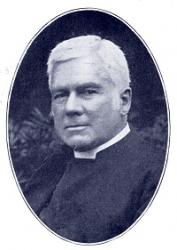
Godfrey Thring

1823 - 1903 Author of "From the Eastern Mountains" in Church Hymnal, Mennonite Godfrey Thring (b. Alford, Somersetshire, England, 1823; d. Shamley Green, Guilford, Surrey, England, 1903) was born in the parsonage of Alford, where his father was rector. Educated at Balliol College, Oxford, England, he was ordained a priest in the Church of England in 1847. After serving in several other parishes, Thring re­turned to Alford and Hornblotten in 1858 to succeed his father as rector, a position he retained until his own retirement in 1893. He was also associated with Wells Cathedral (1867-1893). After 1861 Thring wrote many hymns and published several hymnals, including Hymns Congregational (1866), Hymns and Sacred Lyrics (1874), and the respect­ed A Church of England Hymn Book Adapted to the Daily Services of the Church Throughout the Year (1880), which was enlarged as The Church of England Hymn Book (1882). Bert Polman ================ Thring, Godfrey, B.A., son of the Rev. J. G. D. Thring, of Alford, Somerset, was born at Alford, March 25, 1823, and educated at Shrewsbury School, and at Balliol College, Oxford, B.A. in 1845. On taking Holy Orders he was curate of Stratfield-Turgis, 1846-50; of Strathfieldsaye, 1850-53; and of other parishes to 1858, when he became rector of Alford-with-Hornblotton, Somerset. R.D. 1867-76. In 1876 he was preferred as prebend of East Harptree in Wells cathedral. Prebendary Thring's poetical works are:— Hymns Congregational and Others, 1866; Hymns and Verses, 1866; and Hymns and Sacred Lyrics, 1874. In 1880 he published A Church of England Hymnbook Adapted to the Daily Services of the Church throughout the Year; and in 1882, a revised and much improved edition of the same as The Church of England Hymn Book, &c. A great many of Prebendary Thring's hymns are annotated under their respective first lines; the rest in common use include:— 1. Beneath the Church's hallowed shade. Consecration of a Burial Ground. Written in 1870. This is one of four hymns set to music by Dr. Dykes, and first published by Novello & Co., 1873. It was also included (but without music) in the author's Hymns & Sacred Lyrics, 1874, p. 170, and in his Collection, 1882. 2. Blessed Saviour, Thou hast taught us. Quinquagesima. Written in 1866, and first published in the author's Hymns Congregational and Others, 1866. It was republished in his Hymns & Sacred Lyrics, 1874; and his Collection, 1882. It is based upon the Epistle for Quinquagesima. 3. Blot out our sins of old. Lent. Written in 1862, and first published in Hymns Congregational and Others

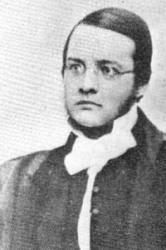
William Walsham How

1823 - 1897 Person Name: W. W. How Author of "Summer suns are glowing" in The Church Hymnal William W. How (b. Shrewsbury, Shropshire, England, 1823; d. Leenane, County Mayo, Ireland, 1897) studied at Wadham College, Oxford, and Durham University and was ordained in the Church of England in 1847. He served various congregations and became Suffragan Bishop in east London in 1879 and Bishop of Wakefield in 1888. Called both the "poor man's bishop" and "the children's bishop," How was known for his work among the destitute in the London slums and among the factory workers in west Yorkshire. He wrote a number of theological works about controversies surrounding the Oxford Movement and attempted to reconcile biblical creation with the theory of evolution. He was joint editor of Psalms and Hymns (1854) and Church Hymns (1871). While rector in Whittington, How wrote some sixty hymns, including many for chil­dren. His collected Poems and Hymns were published in 1886. Bert Polman =============== How, William Walsham, D.D., son of William Wybergh How, Solicitor, Shrewsbury, was born Dec. 13, 1823, at Shrewsbury, and educated at Shrewsbury School and Wadham College, Oxford (B.A. 1845). Taking Holy Orders in 1846, he became successively Curate of St. George's, Kidderminster, 1846; and of Holy Cross, Shrewsbury, 1848. In 1851 he was preferred to the Rectory of Whittington, Diocese of St. Asaph, becoming Rural Dean in 1853, and Hon. Canon of the Cathedral in 1860. In 1879 he was appointed Rector of St. Andrew's Undershaft, London, and was consecrated Suffragan Bishop for East London, under the title of the Bishop of Bedford, and in 1888 Bishop of Wakefield. Bishop How is the author of the Society for Promoting Christian Knowledge Commentary on the Four Gospels; Plain Words , Four Series; Plain Words for Children; Pastor in Parochia; Lectures on Pastoral Work; Three All Saints Summers, and Other Poems , and numerous Sermons , &c. In 1854 was published Psalms and Hymns, Compiled by the Rev. Thomas Baker Morrell, M.A., . . . and the Rev. William Walsham How, M.A. This was republished in an enlarged form in 1864, and to it was added a Supplement in 1867. To this collection Bishop How contributed several hymns, and also to the S. P. C. K. Church Hymns , of which he was joint editor, in 1871. The Bishop's hymns in common use amount in all to nearly sixty. Combining pure rhythm with great directness and simplicity, Bishop How's compositions arrest attention more through a comprehensive grasp of the subject and the unexpected light thrown upon and warmth infused into facia and details usually shunned by the poet, than through glowing imagery and impassioned rhetoric. He has painted lovely images woven with tender thoughts, but these are few, and found in his least appreciated work. Those compositions which have laid the firmest hold upon the Church, are simple, unadorned, but enthusiastically practical hymns, the most popular of which, "O Jesu, Thou art standing"; "For all the Saints who from their labours rest," and "We give Thee but Thine own," have attained to a foremost rank. His adaptations from other writers as in the case from Bishop Ken, "Behold, the Master passeth by," are good, and his Children's hymns are useful and popular. Without any claims to rank as a poet, in the sense in which Cowper and Montgomery were poets, he has sung us songs which will probably outlive all his other literary works. The more important of Bishop How's hymns, including those already named, and "Lord, Thy children guide and keep"; "O Word of God Incarnate"; "This day at Thy creating word"; "Who is this so weak and helpless"; and others which have some special history or feature of interest, are annotated under their respective first lines. The following are also in common use:— i. From Psalms & Hymns, 1854. 1. Before Thine awful presence, Lord. Confirmation. 2. Jesus, Name of wondrous love [priceless worth]. Circumcision. The Name Jesus . 3. Lord Jesus, when we stand afar. Passiontide. 4. O blessing rich, for sons of men. Members of Christ. 5. 0 Lord of Hosts, the earth is Thine. In time of War. 6. O Lord, Who in Thy wondrous love. Advent. ii. From Psalms & Hymns, enlarged, 1864. 7. Lord, this day Thy children meet. Sunday School Anniversary. iii. From Supplement to the Psalms & Hymns, 1867. 8. Hope of hopes and joy of joys. Resurrection. 9. 0 daughters blest of Galilee. For Associations of Women. 10. O happy feet that tread. Public Worship. 11. With trembling awe the chosen three. Transfiguration. iv. From Parish Magazine, 1871, and Church Hymns, 1871. 12. O Jesu, crucified for man. Friday. 13. Yesterday, with worship blest. Monday. v. From the S. P. C. K. Church Hymns. 1871. 14. Bowed low in supplication. For the Parish. 15. Great Gabriel sped on wings of light. Annunciation, of the Blessed Virgin Mary. 16. O blest was he, whose earlier skill. St. Luke. 17. O God, enshrined in dazzling light. Omnipresence. Divine Worship . 18. O heavenly Fount of Light and Love. Witsuntide. 19. O Lord, it is a blessed thing. Weekdays. 20. 0 One with God the Father. Epiphany. 21. O Thou through suffering perfect made. Hospitals. 22. Rejoice, ye sons of men. Purification of the B. V. M. 23. Summer suns are glowing. Summer. 24. The year is swiftly waning. Autumn. 25. Thou art the Christ, O Lord. St. Peter. 26. To Thee our God we fly. National Hymn. 27. Upon the holy Mount they stood. Transfiguration and Church Guilds. 28. We praise Thy grace, 0 Saviour. St. Mark. vi. From the S. P. C. K. Children's Hymns, 1872. 29. Behold a little child. Jesus the Child's Example. 30. Come, praise your Lord and Saviour. Children's Praises. 31. It is a thing most wonderful. Sunday School Anniversary. 32. On wings of living light. Easter. Bishop How's hymns and sacred and secular pieces were collected and published as Poems and Hymns, 1886. The Hymns, 54 in all, are also published separately. He d. Aug. 10, 1897. --John Julian, Dictionary of Hymnology (1907) =================== How, W. W., p. 540, i. He died Aug. 10, 1897. His Memoir, by F. D. How, was published in 1898. --John Julian, Dictionary of Hymnology, New Supplement (1907)

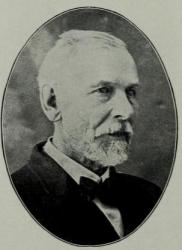
William Whiting

1825 - 1878 Person Name: William Whiting, (1825-1878) Author of "Jesus Christ our Saviour" in Sunday-School Book William Whiting was born in Kensington, November 1, 1825, and was educated at Clapham and Winchester Colleges. He was later master of Winchester College Choristers' School, where he wrote Rural Thoughts and Other Poems, 1851. He died at Winchester. --The Hymnal 1940 Companion =============== Whiting, William, was born in Kensington, London, Nov. 1, 1825, and educated at Clapham. He was for several years Master of the Winchester College Choristers' School. His Rural Thoughts and other poems were published in 1851; but contained no hymns. His reputation as a hymnwriter is almost exclusively confined to his “Eternal Father, strong to save". Other hymns by him were contributed to the following collections:— i. To the 1869 Appendix to the Society for Promoting Christian Knowledge Psalms & Hymns 1. O Lord the heaven Thy power displays. Evening. 2. Onward through life Thy children stray. Changing Scenes of Life. ii. To an Appendix to Hymns Ancient & Modern issued by the Clergy of St. Philip's, Clerkenwell, 1868. 3. Jesus, Lord, our childhood's Pattern. Jesus the Example to the Young. 4. Lord God Almighty, Everlasting Father. Holy Trinity. 5. Now the harvest toil is over. Harvest. 6. 0 Father of abounding grace. Consecration of a Church. 7. We thank Thee, Lord, for all. All Saints Day. iii. To The Hymnary, 1872. 8. Amen, the deed in faith is done. Holy Baptism. 9. Jesus Christ our Saviour. For the Young. 10. Now the billows, strong and dark. For Use at Sea. 11. 0 Father, Who the traveller's way. For Travellers by Land. 12. When Jesus Christ was crucified. Holy Baptism. Mr. Whiting's hymns, with the exception of his “Eternal Father," &c, have not a wide acceptance. He died in 1878. -- John Julian, Dictionary of Hymnology (1907)

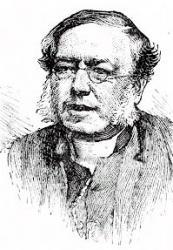
Caroline M. Noel

1817 - 1877 Person Name: Caroline Maria Noel, 1817-1877 Author of "At the Name of Jesus" in The Hymnary of the United Church of Canada Caroline Marie Noel (b. Teston, Kent, England, 1817; d. St. Marylebone, London, England, 1877) The daughter of an Anglican clergyman and hymn writer, she began to write poetry in her late teens but then abandoned it until she was in her forties. During those years she suffered frequent bouts of illness and eventually became an invalid. To encourage both herself and others who were ill or incapacitated, Noel began to write devotional verse again. Her poems were collected in The Name of Jesus and Other Verses for the Sick and Lonely (1861, enlarged in 1870). Bert Polman ================ Noel, Caroline Maria, daughter of the Hon. Gerard T. Noel (p. 809, ii.), and niece of the Hon. Baptist W. Noel, was born in London, April 10, 1817, and died at 39 Great Cumberland Place, Hyde Park, Dec. 7, 1877. Her first hymn, "Draw nigh unto my soul" (Indwelling), was written when she was 17. During the next three years she wrote about a dozen pieces: from 20 years of age to 40 she wrote nothing; and during the next 20 years the rest of her pieces were written. The first edition of her compositions was published as The Name of Jesus and Other Verses for the Sick and Lonely, in 1861. This was enlarged from time to time, and its title subsequently changed by the publishers to The Name of Jesus and Other Poems. The 1878 ed. contains 78 pieces. Miss Noel, in common with Miss Charlotte Elliott, was a great sufferer, and many of these verses were the outcome of her days of pain. They are specially adapted "for the Sick and Lonely" and were written rather for private meditation than for public use, although several are suited to the latter purpose. Her best known hymn is the Processional for Ascension Day, "At the Name of Jesus." It is in the enlarged edition of The Name of Jesus, &c, 1870, p. 59, and is dated 1870 by her family. --John Julian, Dictionary of Hymnology, Appendix, Part II (1907)

Anonymous

Person Name: Unknown Composer of "[Praise the Lord of heaven]" in The Junior Hymnal, Containing Sunday School and Luther League Liturgy and Hymns for the Sunday School In some hymnals, the editors noted that a hymn's author is unknown to them, and so this artificial "person" entry is used to reflect that fact. Obviously, the hymns attributed to "Author Unknown" "Unknown" or "Anonymous" could have been written by many people over a span of many centuries.

John J. Overholt

1918 - 2000 Person Name: Compiler Alterer of "On Our Way Rejoicing" in The Christian Hymnary John J. Overholt was born to an Amish family of limited means in the state of Ohio in 1918. As a child he was soon introduced to his father's personal collection of gospel songs and hymns, which was to have a marked influence on his later life. With his twin brother Joe, he early was exposed to the Amish-Mennonite tradition hymn-singing and praising worship. An early career in Christian service led to a two-year period of relief work in the country of Poland following World War II. During that interim he began to gather many European songs and hymns as a personal hobby, not realizing that these selections would become invaluable to The Christian Hymnary which was begun in 1960 and completed twelve years later in 1972, with a compilation of 1000 songs, hymns and chorales. (The largest Menn. hymnal). A second hymnal was begun simultaneously in the German language entitled Erweckungs Lieder Nr.1 which was brought to completion in 1986. This hymnal has a total of 200 selections with a small addendum of English hymns. Mr. Overholt married in 1965 to an accomplished soprano Vera Marie Sommers, who was not to be outdone by her husband's creativity and compiled a hymnal of 156 selections entitled Be Glad and Sing, directed to children and youth and first printed in 1986. During this later career of hymn publishing, Mr. Overholt also found time for Gospel team work throughout Europe. At this writing he is preparing for a 5th consecutive tour which he arranges and guides. The countries visited will be Belgium, Switzerland, France, Germany, Poland, USSR and Romania. Mr. Overholt was called to the Christian ministry in 1957 and resides at Sarasota, Florida where he is co-minister of a Beachy Amish-Mennonite Church. Five children were born to this family and all enjoy worship in song. --Letter from Hannah Joanna Overholt to Mary Louise VanDyke, 10 October 1990, DNAH Archives. Photo enclosed.

John S. B. Monsell

1811 - 1875 Person Name: John Samuel Bewley Monsell (1811-1875) Author of "On Our Way Rejoicing" in The Christian Hymnary John Samuel Bewley Monsell (b. St. Colomb's, Londonderry, Ireland, 1811; d. Guilford, Surrey, England, 1875) was educated at Trinity College in Dublin and served as a chaplain and rector of several churches in Ireland after his ordination in 1835. Transferred to England in 1853, he became rector of Egham in Surrey and was rector of St. Nicholas Church in Guilford from 1870 until his death (caused by a construction accident at his church). A prolific poet, Monsell published his verse in eleven volumes. His three hundred hymns, many celebrating the seasons of the church year, were issued in collections such as Hymns and Miscellaneous Poems (1837), Spiritual Songs (1857), Hymns of Love and Praise (1863), and The Parish Hymnal (1873). Bert Polman =============================== Monsell, John Samuel Bewley, L.L.D., son of Thomas Bewley Monsell, Archdeacon of Londonderry, was born at St. Columb's, Londonderry, March 2,1811, and educated at Trinity College, Dublin (B.A. 1832, LL.D. 1856). Taking Holy Orders in 1834, "he was successively Chaplain to Bishop Mant, Chancellor of the diocese of Connor, Rector of Ramoan, Vicar of Egham, diocese Worcester, and Rector of St. Nicholas's, Guildford. He died in consequence of a fall from the roof of his church, which was in the course of rebuilding, April 9, 1875. His prose works include Our New Vicar, 1867; The Winton Church Catechist, &c. His poetical works are:— (1) Hymns and Miscellaneous Poems, Dublin, W. Curry, Jun., & Co., 1837; (2) Parish Musings, or Devotional Poems, 1850; (3) Spiritual Songs for the Sundays and Holy Days throughout the Year. 1857 (People's Ed., 1875); (4) His Presence, not His Memory, 1855, 1858; (5) Hymns of Love and Praise for the Church's Year, 1863 (2nd ed. 1866); (6) The Passing Bell; Ode to The Nightingales, and Other Poems, 1867; (7) Litany Hymns, 1869; (8) The Parish Hymnal after the Order of The Book of Common Prayer, 1873; (9)Watches by the Cross, 1874; (10) Simon the Cyrenian; and Other Poems; (11) Nursery Carols. In these works several hymns which appeared in the earlier books are repeated in the later, and thus at first sight his compositions seem to be more in number than they really are. The total amounts to nearly 300, and of these about one-fourth are in common use. The most popular of these are, "God is love; that anthem olden"; "God of that glorious gift of grace"; "Holy offerings, rich and rare"; “Lord of the living harvest"; "Mighty Father, Blessed Son"; and "Sing to the Lord a joyful song." In addition to those which are annotated under their respective first lines, the following are in common use:— i. Appeared in his Hymns and Miscellaneous Poems, Dublin, 1837. 1. Birds have their quiet nests. Humility of Christ. 2. Dark and dim the day-light rose. Good Friday. 3. Friend of the friendless and the lone. Jesus, the Friend. 4. My God, what wondrous love was Thine. Whitsuntide. 5. O for a heart more fervent. Holiness desired. 6. O for the time when on the world. Missions. 7. The springtide hour brings leaf and flower. Spring. 8. This day the Lord is risen. Easter. 9. When cold our hearts and far from Thee. Teach us to Pray. 10. Why restless, why so weary? Providence. 11. Yes, I do feel, my God, that I am Thine. Assurance. ii. Appeared in his Parish Musings, 1850. 12. In Thee, my [O] God, will we rejoice. Trust in God. 13. Lord, dependent on Thy promise. Holy Baptism. 14. Members of Christ, Children of God. Confirmation. 15. So teach me, Lord, to number. The Old and New Year. 16. Soon [soon] and for ever. Death anticipated. 17. The broken, contrite heart oppress'd. Promises of God. 18. Thou art near, yes, Lord, I feel it. Divine Support. 19. Would'st thou learn the depths of sin? Passiontide. iii. Appeared in his Spiritual Songs, 1857. 20. A few bright leaders of her host. All Saints. 21. A happy, happy [merry, merry] Christmas. New Year's Day. 22. Blessed hope, that we the fallen [sinful]. Hope. 23. Heart in heart, and hand in hand. SS. Simon and Jude. 24. Jesus, my loving Lord! I know. Resignation. 25. Last Sunday of the work-day year. Sunday after Christmas Day. 26. Loved by God the Father. Holy Baptism. 27. Mercy, mercy, God the Father. Lent. 28. My head is low, my heart is sad. Confirmation. (Penitential.) 29. Oft doth the Christian's heart inquire. Christian Duty. 30. 0 God, most mighty, listen now. Charities. From "When languid frame or throbbing pulse." 31. 0 holy Sabbath day. Sunday. 32. 0 Lord, what records of Thy love. St. Barnabas. Sometimes, “Lord God, what records of Thy love." 33. 0 love, divine and golden. Holy Matrimony. From this, "Love divine and tender" is taken. 34. One lesson more the Church must learn. Waiting on God. From this, “One lesson Christ His own would teach" is taken. 35. Proudly in his [the] hall of judgment. Tuesday before Easter. 36. Sinful, sighing to be blest. Lent. 37. The Church of God, with equal care. St. James. 38. The journey done; The rest begun. Burial. 39. The simple trust that can confide. Trust. 40. Weary and sad, a wanderer from Thee. Lent. iv. Appeared, in his Hymns of Love and Praise, 1863, and 2nd ed., 1866. 41. Bounteous blesser of the seedtime. Sexagesima. Seed Time. 42. Brightly hopeful for the future. God's mercy through life. 43. Christ is risen! Alleluia! Easter. 44. Come and deck the grave with flowers. Easter Eve. 45. Fight the good fight with all thy might. Fight of Faith. 46. Holy Spirit, long expected. Whitsuntide. 47. Hours and days and months and years. The Circumcision. 48. I have no comfort but Thy love. The Comfort of Love. 49. I knew Thee in the land of drought. A Song of Love. 60. I think of Thee, my God by night. Evening. 61. Jesu, gentle Sufferer, say. Good Friday. 52. Labouring and heavy-laden. Lent. 53. Light of the world, we hail Thee. Missions. 54. Lord, to whom except to Thee? Holy Communion. 55. My sins, my sins, my Saviour. Ash Wednesday. 56. O'er the distant mountains breaking. Second Advent. 57. Other Name than our dear Lord's. Jesus All and in All. 58. Pity on us, heavenly Father. Litany Hymn for Lent. 59. Praise the Lord, rejoice, ye Gentiles. Advent, or Missions. 60. Rest of the weary, joy of the sad. Jesus, the Saviour and Friend. 61. Shadow of a mighty Rock. Jesus, the Rock of Ages. 62. Sing, 0 heaven; 0 earth rejoice. Ascension. 63. Sweet is the gentle voice of spring. Seed Time. 64. Sweet is Thy mercy, Lord. Divine Mercy. 65. Teach me to do the thing that pleaseth Thee. Divine Teaching. 66. The good old times, how glorious. Advent. 67. The world may in its wealth delight. Rejoicing in the Lord. An altered form of "Let others in their wealth delight." 68. Though Thou slay me, I will trust. Faith. 69. To Christ the Lord! The Incarnate Word. Christmas. 70. When I had wandered from His fold. The Love of God. v. Appeared in his Litany Hymns, 1869. 71. Lay the precious body, In the quiet grave. Burial. 72. My sins have taken such a hold on me. Litany of Repentance. vi. Appeared in his Parish Hymnal, 1873. 73. I hunger and I thirst. Septuagesima. Dr. Monsell’s hymns are as a whole bright, joyous, and musical; but they lack massiveness, concentration of thought, and strong emotion. A few only are of enduring excellence. --John Julian, Dictionary of Hymnology 1907 ===================== Monsell, J, S. B., p. 762, ii. Additional hymns in common use include:— 1. Blessed Lord, Who, till the morning. Holy Scriptures. From his Spiritual Songs, 1857. 2. Christ incarnate in His poor. Christ in His Poor. From his Hymns of Love and Praise, 1863. 3. We ask for life, and mean thereby. Life and Work. From his Hymns of Love and Praise, 1863. --John Julian, Dictionary of Hymnology, Appendix, Part II (1907) ==================== Monsell, J. S. B. Since the article on pp. 762-3 was written, copies of the original editions of Dr. Monsell's works have come into our hands, and from them we have to make the following corrections, the numbers following being those given to the first lines of the hymns on pp. 762-3:— 15. So teach me, &c. Hymns and Misc. Poems, 1837, p. 30. 17. The broken, &c. Hymns and Misc. Poems, 1837, p. 49. 18. Thou art near, &c. Hymns and Misc. Poems, 1837, p. 21. 19. Would'st thou, &c. Hymns and Misc. Poems, 1837, p. 14. 26. Loved by God, &c. Parish Hymnal, 1873, No. 181. 27. Mercy, mercy, &c. Prayers and Litanies, 1861, p. 119. 28. My head is low, &c. Hymns of Love and Praise, 1866, p. 125. 33. O Love divine, &c. Hymns of Love and Praise, p. 131. 38. The journey done, &c. Hymns of Love and Praise, p. 134. 40. Weary and sad, &c. Parish Hymnal, 1873, No. 209. 41-50. Hymns of Love and Praise, 1863. 51. See "Day of loss," &c, p. 282, i. 52. Labouring, &c. Prayers and Litanies, 1861, p. 116. 53-57. Hymns of Love and Praise, 1863. 58. Pity on us, &c. Prayers and Litanies, 1861, p. 125. 59. Praise the Lord, &c. Hymns of Love and Praise, 1863, p. 13. 60. 61, 62, 64, 65. Prayers and Litanies, 1861. 63, 66-70. Hymns of Love and Praise, 1863. 72. My sins, &c. Hymns of Love and Praise, 1866, p. 34. 73. I hunger, &c. Hymns of Love and Praise, 1866, p. 128. It will be seen from this list of additions and corrections that Dr. Monsell multiplied his works by giving much the same material under new titles, and that his Prayers and Litanies of 1861 were unknown to us when the original article was written. "We can sincerely add that few hymn writers are so perplexing to the annotator as Dr. Monsell. [Rev. James Mearns, M.A.] --John Julian, Dictionary of Hymnology, New Supplement (1907)

William Pitts

1829 - 1903 Person Name: William Pitts, 1829-1903 Composer of "PRINCETHORPE" in The Hymnary of the United Church of Canada William Pitts was organist of the Brompton Oratory. The tune PRINCETHORPE was first printed in Oratory Hymn Tunes, 1871. For fifty years organist of Brompton Oratory. Mr. Pitts was the composer of the fine hymn-tune named ‘Princethorpe' in 'Church Hymns' and other collections. From The Musical Times, Vol. 44, No. 725 (Jul. 1, 1903), pp. 474-475.

Palmer Hartsough

1844 - 1932 Author of "All the World for Jesus" in Quartets and Choruses for Men Rv Palmer Hartsough USA 1844-1932. Born in Redford, MI, he attended Kalamazoo College and Michigan State Normal school (later MSU). He became an author, editor, lyricist, and librettist. After working as a traveling singing teacher in MI, IL, IA, OH, KY and TN, he opened a music studio in Rock Island, IL, around 1877, also directing music at a Baptist church there. In 1893, due to his poetic abilities, he moved to Cincinnati, OH, and joined the Fillmore Music Company, providing texts (over 1000) for their music. He also served as music director at the Bethel Mission and the 9th Street Baptist Church. He became a traveling song evangelist in 1903, and was ordained a Baptist minister in 1906, serving in Ontario, Canada, and MI from 1914 to 1927. He then returned to Plymouth, MI, where he lived the rest of his life. He never married, but was close to his two sisters, and wrote them a weekly letter for many years. With Fillmore Company he helped publish 20 songbooks. He died in Plymouth, MI. John Perry

L. Tuttiett

1825 - 1897 Person Name: Rev. L. Tuttlett Author of "Father, let me dedicate" in The Book of Common Praise Laurence Tuttiett was born at Colyton, Devon, in 1825; was educated at Christ Hospital, and at King's College, London; ordained Deacon, 1848, Priest, 1849; entered upon the living of Lea Marston, Coleshill, 1854, and subsequently was appointed Curate of S. Paul's, Knightsbridge, London. He is the author of several volumes and tracts. --Annotations of the Hymnal, Charles Hutchins, M.A. 1872. ================== Tuttiett, Lawrence, son of John Tuttiett, surgeon in the R.N., was born at Cloyton, Devonshire, in 1825, and educated at Christ's Hospital, and King's College, London. It was originally purposed that he should follow the medical profession, but, abandoning it for the ministry, he took Holy Orders in 1848. In 1854 he became vicar of Lea Marston, Warwickshire; and in 1870 incumbent of the Episcopal Church of St. Andrews, Scotland. He was also preferred to a prebendaryship in St. Ninian's Cathedral, Perth, in 1880. He is the author of several manuals of prayers, published by the Society for Promoting Christian Knowledge and other prose works, and also of:— (1) Hymns for Churchmen, 1854; (2) Counsels of a Godfather, 1861; (3) Hymns for the Children of the Church, 1862; (4) Germs of Thought on the Sunday Services, 1864; (5) Through the Clouds; Thoughts in Plain Verse, 1866. From those works and other sources the following hymns have come into common use:— 1. As calmly in the glowing west. Evening. 2. Come, our Father's voice is calling. Confirmation. Appeared in his Hymns for the Children of the Church, 1862, in 6 stanzas of 4 lines. It passed into Mrs. C. Brock's Children's Hymn Book, 1881. 3. Grant us Thy light that we may know. Divine Guidance. Included in his Germs of Thought, &c, 1864, in 6 stanzas of 4 lines. In Horder's Congregational Hymn Book, 1884; the Universal Hymn Book, 1885, it begins, “O grant us light that we may know." 4. I come, 0 Father kind. Holy Communion. 5. Lo, like a bride, in pure array. Septuagesima. 6. No sign we ask from heaven above. After Holy Baptism. Published in his Hymns for Churchmen, 1854, in 4 stanzas of 6 lines. It has passed into several collections, includ¬ing the S. P. C. K. Church Hymns, 1871, Thring's Collection, 1882, &c. 7. Now, eternal Father, bless. Holy Baptism. In his Hymns for the Children of the Church, 1862, in 3 stanzas of 6 lines, and Mrs. Brock's Children's Hymn Book, 1881. In the latter it is attributed to Bishop Maclagan in error. 8. 0 happy Christian children. Divine Protection. From his Hymns for the Children of the Church, 1862, into Mrs. Brock's Children's Hymn Book, 1881, &c. 9. 0 Jesu, ever present. The Good Shepherd. Published in his Germs of Thought, 1864; the S. P.C. K. Church Hymns, 1871, and many others. 10. Shepherd, good and gracious. The Good Shepherd. In his Hymns for the Children of the Church, 1862; Mrs. Brock's Children's Hymn Book, 1881, &c. 11. Sometimes o'er our pathway. In time of Trouble. From his Hymns for the Children of the Church, 1862, in 3 st. of 8 1., into Mrs. Brock's Children's Hymn Book, 1881. 12. When the world is brightest. Litany to the Saviour. Published in his Through the Clouds, &c, 1866, in 10 stanzas of 8 lines, with the note :—"Those words were written for the music of a Roman Litany 'Ave Stella Maria.'" This Litany is in extensive use. 13. Who is this? the long expected. Advent. In addition to these, several of Mr. Tuttiett's hymns are annotated under their respective first lines, the most popular of which are, "Father, let me dedicate"; "Go forward, Christian soldier"; and "0 quickly come, dread Judge of all." Mr. Tuttiett's hymns are characterised by smoothness of rhythm, directness of aim, simplicity of language, and deep earnestness. Those for special services and seasons are of great merit. He died May 21, 1897. -- John Julian, Dictionary of Hymnology (1907) ================== Tuttiett, L., p. 1188, ii. He was born at Colyton, not Cloyton, Devonshire, in 1825. His hymns "As now Thy children lowly kneel (For the Young), and "Give light. O Lord, that we may learn" (The Light of Life) are in Hymns Ancient & Modern, 1904. --John Julian, Dictionary of Hymnology, New Supplement (1907) ===================== See also in: Hymn Writers of the Church

Pages


Export as CSV
It looks like you are using an ad-blocker. Ad revenue helps keep us running. Please consider white-listing Hymnary.org or getting Hymnary Pro to eliminate ads entirely and help support Hymnary.org.