

 My Starred Hymns
 My FlexScores
 My Hymnals
 My Purchased Files
Planning worship?
Check out our sister site, ZeteoSearch.org,
for 20+ additional resources related to your search.
- |
User Links
Search Results

Tell It to Jesus Alone
Author: Edmund S. Lorenz; Jeremiah E. Rankin Meter: 10.10.10.7 with refrain Appears in 330 hymnals First Line: Are you weary, are you heavy-hearted? Refrain First Line: Tell it to Jesus, tell it to Jesus Used With Tune: DAYTON
Tell It to Jesus Alone


Out of the Depths to the Glory Above
Author: Avis B. Christiansen Meter: 10.10.10.7 with refrain Appears in 23 hymnals Refrain First Line: Jesus has lifted me! Lyrics: 1 Out of the depths to the glory above,
I have been lifted in wonderful love;
From every fetter my spirit is free--
For Jesus has lifted me!
Refrain:
Jesus has lifted me!
Jesus has lifted me!
Out of the night into glorious light,
Yes, Jesus has lifted me!
2 Out of the world into heavenly rest,
Into the land of the ransomed and blest;
There in the glory with Him I shall be--
For Jesus has lifted me! (Refrain)
3 Out of myself into Him I adore,
There to abide in His love evermore;
Thro' endless ages His glory to see--
My Jesus has lifted me! (Refrain) Topics: Christ Savior; Testimony, Hymns of; Witness, Hymns of Scripture: Psalm 30:1 Used With Tune: LILLENAS
Out of the Depths to the Glory Above


[There'll be no dark valley when Jesus comes]
Meter: 10.10.10.7 with refrain Appears in 75 hymnals Composer and/or Arranger: Ira D. Sankey (1840-1908) Tune Key: E Flat Major Incipit: 12355 55611 12356 Used With Text: There'll Be No Dark Valley
[There'll be no dark valley when Jesus comes]


There'll Be No Dark Valley
Author: William O. Cushing (1823-1902) Hymnal: Seventh-day Adventist Hymnal #208 (1985) Meter: 10.10.10.7 with refrain First Line: There'll be no dark valley when Jesus comes Lyrics: 1 There’ll be no dark valleys when Jesus comes,
There’ll be no dark valleys when Jesus comes,
There’ll be no dark valleys when Jesus comes,
To gather His loved ones home.
Refrain
To gather His loved ones home,
To gather His loved ones home.
There’ll be no dark valleys when Jesus comes,
To gather His loved ones home.
2 There’ll be no more sorrow when Jesus comes,
There’ll be no more sorrow when Jesus comes,
There’ll be a happy tomorrow when Jesus comes,
To gather His loved ones home. [Refrain]
3 There’ll be songs of greeting when Jesus comes,
There’ll be songs of greeting when Jesus comes,
There’ll be songs of greeting when Jesus comes,
To gather His loved ones home. [Refrain] Topics: Jesus Christ Second Advent Tune Title: [There'll be no dark valley when Jesus comes]
There'll Be No Dark Valley
Rain Down
Author: Jaime Cortez, 1963- Hymnal: Community of Christ Sings #260 (2013) Meter: 10.10.10.7 with refrain First Line: Faithful and true is the word of our God Refrain First Line: Rain down, rain down Topics: Assurance; Dependability; God's Faithfulness; God's Love; Living Water; Mercy; Renewal; Trust; Truth Scripture: 1 Corinthians 13:13 Languages: English Tune Title: [Faithful and true is the word of our God]
Rain Down


W. O. Cushing
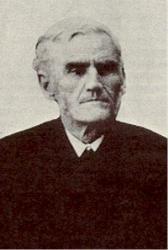
1823 - 1902 Person Name: William O. Cushing (1823-1902) Meter: 10.10.10.7 with refrain Author of "There'll Be No Dark Valley" in Seventh-day Adventist Hymnal Rv William Orcutt Cushing USA 1823-1902. Born at Hingham, MA, he read the Bible as a teenager and became a follower of the Orthodox Christian school of thought. At age 18 he decided to become a minister, following in his parents theology. His first pastorate was at the Christian Church, Searsburg, NY. He married Hena Proper in 1854. She was a great help to him throughout his ministry. He ministered at several NY locations over the years, including Searsburg, Auburn, Brookley, Buffalo, and Sparta. Hena died in 1870, and he returned to Searsburg, again serving as pastor there. Working diligently with the Sunday school, he was dearly beloved by young and old. Soon after, he developed a creeping paralysis that caused him to lose his voice. He retired from ministry after 27 years. He once gave all his savings ($1000) to help a blind girl receive an education. He was instrumental in the erection of the Seminary at Starkey, NY. He gave material aid to the school for the blind at Batavia. He was mindful of the suffering of others, but oblivious to his own. After retiring, he asked God to give him something to do. He discovered he had a talent for writing and kept busy doing that. He authored about 300 hymn lyrics. The last 13 years of his life he lived with Rev. and Mrs. E. E Curtis at Lisbon Center, NY, and joined with the Wesleyan Methodist Church there. He died at Searsburg, NY.
John Perry
==================
Cushing, William Orcutt , born at Hingham, Massachusetts, Dec. 31, 1823, is the author of the following hymns which appear in I. D. Sankey's Sacred Songs and Solos:—
1. Beautiful valley of Eden. Heaven.
2. Down in the valley with my Saviour I would go. Trusting to Jesus.
3. Fair is the morning land. Heaven.
4. I am resting so sweetly in Jesus now. Rest and Peace in Jesus.
5. I have heard of a land far away. Heaven.
6. O safe to the Rock that is higher than I. The Rock of Ages.
1. Ring the bells of heaven, there is joy today. Heavenly Joy over repenting Sinners.
8. We are watching, we are waiting. Second Advent anticipated.
Mr. Cushing has also several additional hymns in some American Sunday School collections, and collections of Sacred Songs.
-- John Julian, Dictionary of Hymnology
=================
Cushing, W. 0., p. 274, i. Other hymns are:—
1. O I love to think of Jesus . Thinking of Jesus.
2. There is joy in heaven! there is joy to-day. Angels joy over returning Sinners.
3. When He cometh, when He cometh. Advent.
--John Julian, Dictionary of Hymnology, Appendix, Part II (1907)
W. O. Cushing
Edmund S. Lorenz
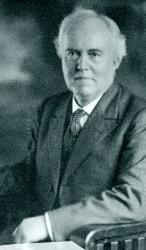
1854 - 1942 Meter: 10.10.10.7 with refrain Author of "Tell It to Jesus Alone" in Psalms, Hymns, and Spiritual Songs Pseudonymns: John D. Cresswell, L. S. Edwards, E. D. Mund,
====================
Lorenz, Edmund Simon. (North Lawrence, Stark County, Ohio, July 13, 1854--July 10, 1942, Dayton, Ohio). Son of Edward Lorenz, a German-born shoemaker who turned preacher, served German immigrants in northwestern Ohio, and was editor of the church paper, Froehliche Botschafter, 1894-1900.
Edmund graduated from Toledo High School in 1870, taught German, and was made a school principal at a salary of $20 per week. At age 19, he moved to Dayton to become the music editor for the United Brethren Publishing House. He graduated from Otterbein College (B.A.) in 1880, studied at Union Biblical Seminary, 1878-1881, then went to Yale Divinity School where he graduated (B.D.) in 1883. He then spent a year studying theology in Leipzig, Germany.
He was ordained by the Miami [Ohio] Conference of the United Brethren in Christ in 1877. The following year, he married Florence Kumler, with whom he had five children. Upon his return to the United States, he served as pastor of the High Street United Brethren Church in Dayton, 1884-1886, and then as president of Lebanon Valley College, 1887-1889.
Ill health led him to resign his presidency. In 1890 he founded the Lorenz Publishing Company of Dayton, to which he devoted the remainder of his life. For their catalog, he wrote hymns, and composed many gospel songs, anthems, and cantatas, occasionally using pseudonyms such as E.D. Mund, Anna Chichester, and G.M. Dodge. He edited three of the Lorenz choir magazines, The Choir Leader, The Choir Herald, and Kirchenchor. Prominent among the many song-books and hymnals which he compiled and edited were those for his church: Hymns for the Sanctuary and Social Worship (1874), Pilgerlieder (1878), Songs of Grace (1879), The Otterbein Hymnal (1890), and The Church Hymnal (1934).
For pastors and church musicians, he wrote several books stressing hymnody: Practical Church Music (1909), Church Music (1923), Music in Work and Worship (1925), and The Singing Church (1938). In 1936, Otterbein College awarded him the honorary D.Mus. degree and Lebanon Valley College the honorary LL.D. degree.
--Information from granddaughter Ellen Jane Lorenz Porter, DNAH Archives
Edmund S. Lorenz
Ira David Sankey

1840 - 1908 Person Name: Ira D. Sankey (1840-1908) Meter: 10.10.10.7 with refrain Composer of "[There'll be no dark valley when Jesus comes]" in Seventh-day Adventist Hymnal Sankey, Ira David, was born in Edinburgh, Pennsylvania, in 1840, of Methodist parents. About 1856 he removed with his parents to New Castle, Pennsylvania, where he became a member of the Methodist Episcopal Church. Four years afterwards he became the Superintendent of a large Sunday School in which he commenced his career of singing sacred songs and solos. Mr. Moody met with him and heard him sing at the International Convention of the Young Men's Christian Association, at Indianapolis, and through Mr. Moody's persuasion he joined him in his work at Chicago. After some two or three years' work in Chicago, they sailed for England on June 7, 1872, and held their first meeting at York a short time afterwards, only eight persons being present. Their subsequent work in Great Britain and America is well known.
Mr. Sankey's special duty was the singing of sacred songs and solos at religious gatherings, a practice which was in use in America for some time before he adopted it. His volume of Sacred Songs and Solos is a compilation from various sources, mainly American and mostly in use before. Although known as Sankey and Moody’s Songs, only one song, "Home at last, thy labour done" is by Mr. Sankey, and not one is by Mr. Moody. Mr. Sankey supplied several of the melodies. The English edition of the Sacred Songs & Solos has had an enormous sale; and the work as a whole is very popular for Home Mission services. The Songs have been translated into several languages.
--John Julian, Dictionary of Hymnology (1907)
Pseudonymns:
Harry S. Lower
Rian A. Dykes
====================
Sankey, I. D., p. 994, i. During the past fifteen years Mr. Sankey's Sacred Songs and Solos have had a very large sale, which has justified him in increasing the number of songs and hymns, including " New Hymns and Solos," to 1200. In 1906 he published My Life and Sacred Songs (London : Morgan & Scott). In addition to the "Story of his Own Life," the work contains an account of the most popular of his solos, with interesting reminiscences of the spiritual awakening of many who were influenced through his singing of them in public. In this respect it corresponds in some measure with G. J. Stevenson's Methodist Hymn Book, &c, 1883 (p. 1094, i.). It is an addition to the Sacred Songs and Solos, which will be held in esteem by many. In addition to his hymn, noted on p. 994, ii., Mr. Sankey gives details of the following:—
1. Out of the shadow-land into the sunshine. [Heaven Anticipated.] Mr. Sankey's account of this hymn is:—
"I wrote this hymn specially for the memorial service held for Mr. Moody in Carnegie Hall, where 1 also sang it as a solo. It is the last sacred song of which I wrote both the words and music. The idea was suggested by Mr. Moody's last words, 'Earth recedes; heaven opens before me . . . God is calling me, and I must go.' On account of its peculiar association with my fellow-labourer in the Gospel for so many years, the words are here given in full."
The hymn follows on p. 185, in 3 stanzas of 4 lines and a chorus.
2. Rejoice! Rejoice! our King is coming, [Advent.] Mr. Sankey writes concerning this hymn:—
"During one of my trips to Great Britain on the SS. City of Rome a storm raged on the sea. The wind was howling through the rigging, and waves like mountains of foam were breaking over the bow of the vessel. A great fear had fallen upon the passengers. When the storm was at its worst, we all thought we might soon go to the bottom of the sea. The conviction came to me that the Lord would be with us iu the trying hour, and sitting down in the reading room, I composed this hymn. Before reaching England the tune had formed itself in my mind, and on arriving in London I wrote it out, and had it published in Sacred Songs and Solos, where it is No. 524 in the edition. of 1888.
From Mr. Sankey's autobiographical sketch we gather that he was born at Edinburgh, in Western Pennsylvania, Aug. 28, 1840, joined Mr. Moody in 1871, and visited England for the first time in 1873. The original of the Sacred Songs, &c, of 23 pieces only, was offered as a gift to the London publishers of P. Phillips's Hallowed Song, and declined by them. It was subsequently accepted by Mr. K. O. Morgan, of Morgan & Scott, and is now a volume of 1200 hymns.
From a return kindly sent us by Messrs. Morgan & Scott, we find that the various issues of the Sacred Songs and Solos were:—
In 1873, 24 pp.; 1874, 72 pp. ; 1876, 153 hymns; 1877, 271 hymns; 1881, 441 hymns; 1888, 750 hymns; 1903, 1200 hymns.
In addition, The Christian Choir, which is generally associated with the Sacred Songs and Solos, was issued in 1884 with 75 hymns, and in 1896 with 281. The New Hymns & Solos, by the same firm, were published in 1888.
--John Julian, Dictionary of Hymnology, New Supplement (1907)
Ira David Sankey





